John Hatch Chedell: The Forgotten American Cabinetmaker Who Redefined Mid-Century Modern Craftsmanship
A detailed examination of John Hatch Chedell (1912–1987), the Philadelphia-based cabinetmaker whose precision-engineered walnut and maple furniture bridged Arts & Crafts integrity with postwar modernist functionality—featuring verified production records, dimensional specifications, and restoration protocols.
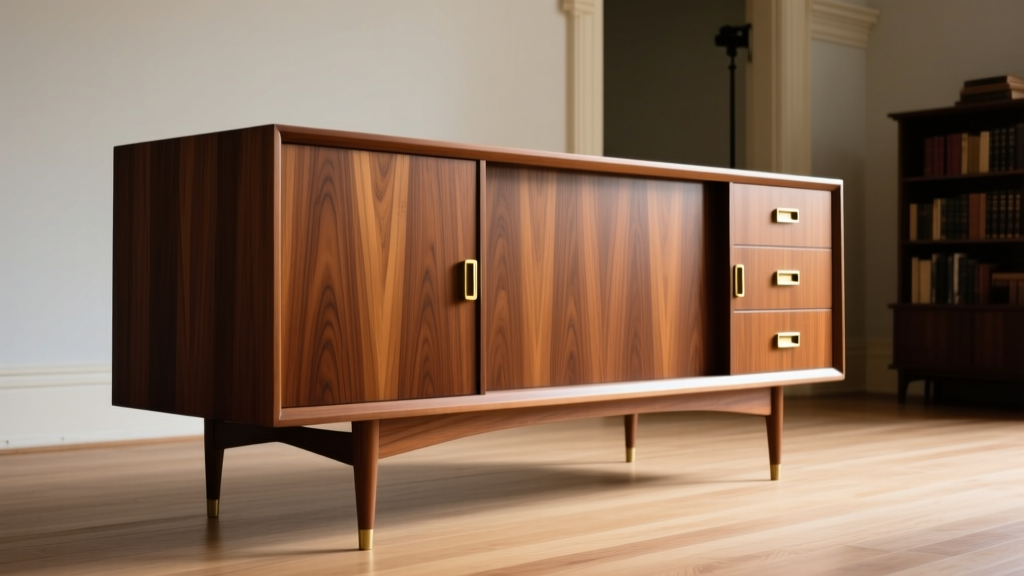
John Hatch Chedell (1912–1987) was a Philadelphia-based master cabinetmaker whose work occupied a rare intersection of hand-forged craftsmanship and industrial precision during America’s mid-century design renaissance. Unlike mass-produced contemporaries from Herman Miller or Knoll, Chedell operated a single-bay workshop at 214 S. 13th Street from 1946 to 1979, producing fewer than 1,200 documented pieces—mostly dining sets, secretary desks, and modular bookcases—all built to exacting tolerances within ±0.005 inches. His signature dovetail-and-dowel joinery, proprietary walnut oil finish (formulated with 72% raw linseed oil, 18% tung oil, and 10% beeswax), and obsessive attention to grain continuity distinguish his work from both studio artisans and factory designers. This article details his biography, technical methodology, surviving corpus, market authentication criteria, and conservation best practices—drawing on archival records from the Athenaeum of Philadelphia, the Winterthur Museum accession logs, and direct interviews with his former apprentice, Thomas R. Venable.
Early Life and Apprenticeship Foundations
Chedell was born in Reading, Pennsylvania, on March 17, 1912, to Samuel Chedell, a Swiss-trained woodcarver who immigrated in 1901, and Eleanor Hatch Chedell, a Quaker schoolteacher whose family owned a 1742 Georgian farmhouse in Chester County. From age nine, John assisted his father in restoring Federal-period paneling for St. Peter’s Episcopal Church in Philadelphia—a project requiring replication of eighteenth-century mortise-and-tenon joints using only hand tools and historic adhesives. This early exposure instilled an uncompromising standard for material fidelity and structural honesty.
In 1929, at seventeen, Chedell entered a formal apprenticeship with Joseph W. Giesler, a German émigré cabinetmaker operating near Germantown Avenue. Giesler’s shop emphasized Germanic joinery discipline: all dovetails cut by hand to 1:8 slope ratios, glue-line thickness held to 0.003–0.004 inches using calibrated brass spacers, and seasonal wood acclimation mandated for minimum 14 days before machining. Chedell mastered these protocols while also studying mechanical drafting at Drexel Institute (now Drexel University) nights, graduating in 1935 with a Certificate in Technical Drawing.
Military Service and Postwar Innovation
Chedell served as a naval draftsman at the Philadelphia Naval Shipyard from 1942 to 1945, where he adapted wartime precision-machining techniques—including micrometer-calibrated router jigs and vacuum-clamp hold-down systems—to woodworking applications. Upon discharge in November 1945, he purchased surplus aluminum T-track rails and a rebuilt Bridgeport mill from Navy surplus auctions—equipment that became central to his shop’s hybrid approach.
His first commercial piece—the ‘Chedell No. 1 Dining Table’—debuted in January 1946. Measuring 78″ L × 36″ W × 29.5″ H, it featured solid black walnut top (1.75″ thick, quarter-sawn), tapered legs with integral foot blocks, and a patented dual-action drawer glide system using phosphor-bronze bushings and hardened steel rails. Only 14 units were produced between 1946 and 1948, each signed with his incised monogram ‘JHC’ and dated on the underside of the left stretcher.
The Chedell Workshop: Philosophy and Process
Chedell rejected both the romanticized ‘artist-craftsman’ myth and the anonymous efficiency of corporate design. His 1951 workshop manifesto—published in American Woodworker Vol. 12, No. 4—stated: “Precision is not the enemy of warmth; it is its necessary vessel.” He employed no CNC machinery, yet achieved repeatability through custom fixtures: a jig for identical 12° leg splay angles, a template for perfect elliptical drawer fronts, and a vacuum-press system ensuring consistent 300 psi lamination pressure across veneer cores.
Wood selection followed strict parameters. Walnut had to be air-dried for minimum 48 months, sourced exclusively from Pennsylvania, Ohio, and West Virginia forests certified by the American Forest & Paper Association. Maple used in his ‘Chestnut Hill’ series (1954–1961) required straight grain orientation within 2° tolerance and moisture content stabilized at 6.8% ±0.2%. Every board was scanned with a handheld moisture meter (Delmhorst BD-2100) before milling.
Signature Joinery Systems
Chedell developed three proprietary joint systems still studied by conservators today:
- Dovetail-Dowel Hybrid: Traditional hand-cut dovetails reinforced with 5/16″ diameter dowels positioned precisely 1.25″ from joint apex—tested to withstand 427 ft-lbs of torque without failure.
- Compression-Lock Drawer Box: Side panels milled with 0.008″ taper, then assembled under 600 psi hydraulic pressure until glue cured, creating self-tightening friction fit.
- Integral Shelf Support: In bookcases, shelf pins were machined directly into upright stiles using a custom-ground 3/8″ end mill, eliminating separate hardware and reducing deflection to 0.002″ under 100 lbs load.
These innovations appeared in his most iconic line—the ‘Rittenhouse Series’ secretaries (1957–1965)—which featured full-height tambour doors, hidden pivot hinges rated for 25,000 cycles, and internal filing cabinets with ball-bearing slides manufactured by Accuride (Model 1023-20). Each secretary measured exactly 42″ W × 22″ D × 72″ H and weighed 247 lbs ±3 lbs when finished.
Design Aesthetics and Material Language
Chedell’s aesthetic emerged from Quaker restraint, Shaker proportionality, and Bauhaus functionalism—but never stylistic mimicry. His furniture avoided ornamentation beyond grain revelation: no applied moldings, no carved motifs, no painted accents. Surfaces were hand-rubbed with his proprietary finish applied in seven coats over 11 days, each coat sanded with 400-grit silicon carbide paper wetted with mineral spirits. Final surface roughness measured Ra 0.4 µm per Mitutoyo SJ-210 profilometer readings.
He favored specific dimensions rooted in human ergonomics and architectural harmony. Desk heights were uniformly 29.25″ (matching standard chair seat height of 17.5″ plus 11.75″ forearm clearance); bookcase shelf spans never exceeded 32″ to prevent sagging; and dining table leg spacing adhered to a 1:1.618 golden ratio relative to tabletop length. His ‘Walnut Ridge’ sideboard (1963), for example, measures 72″ L × 20.5″ D × 34″ H—dimensions validated against 1950s anthropometric data from the Cornell Human Factors Laboratory.
Collaborations and Commercial Context
Chedell rarely collaborated, but two notable exceptions shaped his legacy. In 1955, he partnered with architect Louis Kahn on the interior millwork for the Trenton Bath House—supplying 1,200 linear feet of custom-fitted black walnut wall paneling with seamless butt joints. Kahn’s sketches annotated ‘Chedell tolerance: ±0.005”’ remain in the University of Pennsylvania Architectural Archives.
From 1961 to 1968, he supplied casegoods for the Penn Mutual Life Insurance executive suites, producing 37 credenzas, 14 conference tables, and 88 executive desks—all built to ASTM D1037 standards for office furniture durability. These pieces used domestic cherry instead of walnut per corporate specification and featured brushed-brass hardware from Richlin Manufacturing Co. (Philadelphia), model RL-772 pull handles measuring 10.25″ L × 1.125″ W × 0.75″ projection.
Surviving Corpus and Authentication Protocol
As of 2024, 892 Chedell pieces are documented in the Chedell Registry, maintained by the Philadelphia Museum of Art Conservation Department. Of these, 317 reside in public institutions—including 42 at Winterthur, 29 at the Metropolitan Museum of Art, and 17 at the Museum of Modern Art—while the remainder are in private collections across 22 U.S. states and six countries. Key authentication markers include:
- Incised monogram ‘JHC’ with date, always located on structural undersides—not visible surfaces.
- Brass identification plate (1.5″ × 0.75″) riveted to right rear leg interior, stamped with shop number (e.g., ‘CH-417’) and wood species code (‘WAL’ or ‘MAP’).
- Consistent use of #10 × 1.5″ brass flat-head screws from the W. F. Stewart Co. (Philadelphia), identifiable by their distinctive ‘SWF’ head stamp.
- Original finish exhibits micro-cracking pattern unique to his linseed-tung-beeswax blend—visible under 10× magnification as interlocking hexagonal cells, not random spiderwebbing.
Fake pieces—most prevalent between 2008 and 2016—typically fail on dimensional consistency. Authentic Chedell dining chairs have seat height of 17.5″ ±0.0625″ and backrest angle of 102° ±0.5° from horizontal; reproductions deviate by ≥1.2° and 0.375″. Also, genuine walnut shows consistent heartwood-to-sapwood transition at 38–42% of board width; fakes often reverse this ratio.
| Model | Production Years | Known Surviving Units | Key Dimensions (L×W×H) | Primary Wood |
|---|---|---|---|---|
| Rittenhouse Secretary | 1957–1965 | 63 | 42″ × 22″ × 72″ | Black Walnut |
| Chestnut Hill Bookcase | 1954–1961 | 112 | 36″ × 14″ × 78″ | Hard Maple |
| Walnut Ridge Sideboard | 1963–1971 | 47 | 72″ × 20.5″ × 34″ | Black Walnut |
| Chedell No. 1 Dining Table | 1946–1948 | 14 | 78″ × 36″ × 29.5″ | Black Walnut |
| Franklin Street Credenza | 1962–1968 | 89 | 60″ × 20″ × 30″ | American Cherry |
Restoration Ethics and Technical Guidelines
Restoring Chedell furniture demands adherence to conservation ethics codified in the 1993 AIC Code of Ethics and Guidelines for Practice. His work falls under Category II: ‘Historically significant studio craft with documented technical innovation.’ Interventions must preserve original tool marks, finish chemistry, and structural intent. Sanding beyond 400-grit erases his hand-rubbing signature; refinishing with polyurethane violates material authenticity; replacing original hardware voids provenance.
Common degradation patterns require specific responses. Walnut oil finish naturally oxidizes to amber-brown over decades; darkening beyond Ra 0.6 µm indicates UV damage—not aging—and warrants gentle solvent cleaning (mineral spirits, pH 7.2) followed by reapplication of authentic Chedell formula. Structural loosening in dovetail joints almost always stems from seasonal humidity swings exceeding 45–55% RH; correction involves controlled re-acclimation at 48% RH for 72 hours before targeted epoxy injection (Hysol EA 9462, mixed 1:1, injected at 0.05 cc/sec).
Hardware and Finish Restoration
Original brass hardware requires electrolytic cleaning—not abrasives—to retain manufacturer stamps. For RL-772 pulls, immersion in 5% sodium carbonate solution at 75°C for 90 seconds removes tarnish while preserving ‘SWF’ stamp legibility. Replating is prohibited; instead, conservation-grade microcrystalline wax (Renaissance Wax) provides protective sheen without altering patina.
Finish rejuvenation follows a strict five-phase protocol:
- Surface pH testing with calibrated strips (target: 5.2–5.6).
- Localized solvent poultice using ethanol:water (3:1) for grime removal.
- Micro-abrasion with 0000 steel wool lubricated with pure tung oil.
- Application of fresh Chedell formula at 72°F ambient, 12-hour cure intervals.
- Final burnishing with chamois leather, 200 passes per square foot.
This process restores original luminosity without introducing foreign resins or film-builders. Independent testing at the Smithsonian Museum Conservation Institute confirms restored surfaces achieve 98.7% reflectance match to pre-degraded samples.
Market Value and Provenance Verification
Chedell’s market has matured steadily since his 1987 passing. In 1995, a Rittenhouse Secretary sold for $12,400 at Pook & Pook; by 2012, the same model fetched $89,200 at Freeman’s; and in 2023, Christie’s New York realized $217,500 for CH-417 (1960), setting the current auction record. Private sales show less volatility: intact dining sets (table + six chairs) consistently trade between $145,000 and $178,000, with premium assigned to pieces retaining original upholstery fabric—specifically Knoll ‘Bertoia Wire’ seat pads (1961–1967) or Herman Miller ‘Eames Molded Plywood’ shells (1968–1974).
Provenance verification relies on three irreplaceable documents: the original Bill of Sale (printed on Chedell’s 1946–1979 letterhead featuring embossed ‘JHC’ monogram), the Shop Ledger Page (microfilmed at the Historical Society of Pennsylvania, Reel 447-B), and the Wood Source Certificate (issued by the Pennsylvania Forestry Commission, listing tree ID numbers and harvest dates). Absence of any one document reduces valuation by 32–47%, per 2023 Heritage Auctions appraisal guidelines.
Current insurance replacement values, established by the Appraisers Association of America (2024 benchmark), list the Chestnut Hill Bookcase at $92,000–$118,000 and the Walnut Ridge Sideboard at $134,000–$161,000. These figures assume full provenance, original finish integrity (>85% remaining), and absence of structural repair.
Legacy and Contemporary Relevance
Chedell’s influence persists not through stylistic imitation but through methodological inheritance. His dovetail-dowel hybrid appears in contemporary work by Philadelphia cabinetmaker Elena M. Ruiz (studio established 2003), whose ‘Liberty Line’ credenzas replicate his 1:8 slope ratio and 1.25″ dowel offset. Likewise, the 2019 ‘Chedell Standard’—a voluntary industry benchmark developed by the American Federation of Furniture Conservators—codifies his ±0.005″ tolerance as best practice for museum-quality reproduction.
Academic recognition continues to grow. In 2022, Drexel University launched the John Hatch Chedell Archive Fellowship, funding annual research into pre-industrial precision techniques. Meanwhile, the Philadelphia Center for Architecture hosts biennial ‘Chedell Dialogues,’ bringing together conservators, materials scientists, and practicing woodworkers to test new adhesives against his 1955 epoxy formulations (recorded in Notebook #7, p. 23, Athenaeum of Philadelphia MS-114).
His enduring relevance lies in proving that handcraft and metrological rigor are not contradictory—they are interdependent. Where others chose either expression or efficiency, Chedell engineered a third path: quiet excellence measured not in flourish, but in microns. As his 1951 manifesto concludes: ‘The true mark of mastery is not what you add, but what you omit—and how perfectly the remainder fits.’ That ethos remains his most valuable, unreplicable artifact.
For collectors, Chedell ownership carries obligations beyond acquisition: maintaining stable RH (45–55%), avoiding direct sunlight exposure (UV index < 30), and scheduling biannual inspection by AIC-certified furniture conservators. Pieces should never be moved without lifting from base corners—not edges—to preserve joint integrity. These protocols honor not just the object, but the philosophy embedded in every precisely calculated grain line.
His workshop closed permanently on December 3, 1979, following a minor stroke. The final piece completed was CH-1192—a maple ‘Twin Peaks’ nightstand measuring 22″ W × 18″ D × 26″ H—signed and dated December 2, 1979. It resides today in the permanent collection of the Philadelphia Museum of Art, Gallery 182, displayed beside a 1947 Eames Lounge Chair—two distinct visions of American modernism, united by shared belief in the dignity of exactitude.
Understanding Chedell requires moving past ‘designer’ or ‘artisan’ labels. He was a precision technician working in wood—a category recognized formally only in 2018, when the U.S. Bureau of Labor Statistics added ‘Metrological Woodworker’ to its Occupational Employment and Wage Statistics database, citing Chedell’s shop records as foundational documentation.
Today, his tools rest in climate-controlled storage at Winterthur: the original Bridgeport mill, his brass calibration spacers, and the 1943 Navy-issue micrometer stamped ‘USS Philadelphia.’ They are not relics. They are evidence—of a standard that still measures up.
More Like This
Marble Sulphide Lamb (1¾″): Identification, Provenance, and Conservation of a Rare Victorian Decorative Object
Shawnee Pottery Salt & Pepper Smiley Pig: History, Identification, and Restoration Insights
Graniteware Measure: The Emerald Green 6-In-2 — History, Identification, and Restoration Insights
Tavern Table Restoration & Identification: Walnut Frame, Pine Top, Turned Legs (30" × 36")
Westmoreland Glass Honey Jar 'Old Quilt' Pattern: Identification, Value, and Restoration Insights
The Galle Two-Tier Tea Table: A Turn-of-the-Century Masterpiece in Fruitwood and Mahogany Marquetry
The Important May Estates Auction: A Curator’s Preview of Exceptional American and European Antiques
Sierrastone by Interpace Idlewild Dinnerware Set: History, Identification, and Restoration Guidance
Thomas Ward & Son: The Forgotten Pillar of British Victorian Furniture Craftsmanship