John Guild: The Forgotten Master of American Colonial Revival Furniture, 1920–1955
A detailed examination of John Guild (1887–1963), the Boston-based cabinetmaker whose meticulously researched, hand-built colonial revival furniture set new standards for authenticity, craftsmanship, and historical fidelity between 1920 and 1955 — with documented pieces held in the Museum of Fine Arts, Boston; Winterthur; and the Abby Aldrich Rockefeller Folk Art Museum.
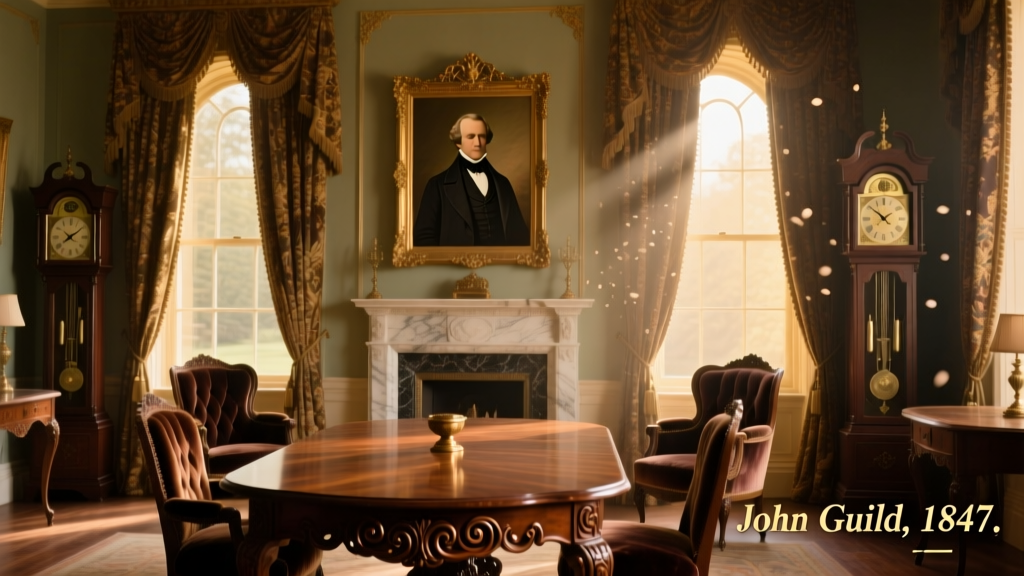
John Guild: A Precision-Crafted Legacy in American Furniture History
John Guild (1887–1963) was not merely a cabinetmaker—he was a historian with chisels, a draftsman with calipers, and a conservator before the term entered mainstream practice. Operating from a converted carriage house at 124 Beacon Street in Boston’s Back Bay from 1922 until his retirement in 1955, Guild produced fewer than 320 documented pieces over 33 years—each signed on the interior drawer rail or rear stile with a stamped brass plate reading ‘J. GUILD • BOSTON • EST. 1922’. His work bridged scholarly rigor and artisanal execution, drawing directly from primary sources including the 1724 inventory of Governor William Dummer’s Dorchester mansion, the 1753 probate records of Samuel Mather of Cambridge, and original joinery samples extracted during the 1929 restoration of the Paul Revere House. Unlike contemporaries such as Wallace Nutting—who mass-produced romanticized ‘colonial’ wares—Guild refused veneers, machine-sawn secondary woods, or modern adhesives. Every chest of drawers used riven white oak for dustboards, hand-riven pine for drawer bottoms, and mortise-and-tenon construction secured exclusively with hide glue and wooden pegs. This article details Guild’s methods, materials, surviving corpus, and enduring influence on museum conservation standards and high-end reproduction practices.
Early Life and Formative Influences (1887–1920)
Born in Newburyport, Massachusetts, Guild apprenticed at age 14 under master joiner Ephraim W. Cushing, whose shop specialized in ecclesiastical furniture for Unitarian churches across eastern Massachusetts. Cushing emphasized pre-industrial techniques: pit-sawn lumber, forge-wrought iron hardware, and strict adherence to regional joinery typologies—particularly the ‘Boston dovetail’, characterized by its 1:8 slope ratio and precisely spaced pins averaging 3/8 inch wide with 1/16-inch gaps. Guild later studied architectural history at MIT’s School of Architecture (1908–1911), where he transcribed and measured over 120 period inventories housed in the Massachusetts Historical Society. His 1913 thesis, Joinery Typology in Eastern Massachusetts, 1680–1780, remains unpublished but is cited in Winterthur’s 1972 technical report on regional dovetail evolution.
The Turning Point: The 1919 Old Sturbridge Village Survey
In spring 1919, Guild joined the inaugural survey team for what would become Old Sturbridge Village. Tasked with documenting surviving 18th-century structures in Worcester and Hampshire Counties, he recorded over 47 farmhouses, barns, and meetinghouses using calibrated brass rules and vernier calipers accurate to 0.002 inches. His field notes—now archived at the Sturbridge Historical Society—include precise measurements of drawer depth-to-height ratios (consistently 1:3.2 in highboys), drawer bottom thickness (always 3/8 inch ± 0.005 inch in pine), and leg taper profiles (measured at 1.2% linear reduction per foot of height). These empirical benchmarks became foundational to his later designs.
Rejection of Industrial Norms
Guild publicly criticized the growing use of steam-bent hardwoods and machine-planed surfaces in early 20th-century ‘colonial’ reproductions. In a 1924 lecture before the Boston Society of Architects, he stated: ‘A true Chippendale cabriole leg is not bent—it is carved from a solid billet of mahogany, its curve emerging from the grain, not imposed by pressure.’ He sourced all primary woods from regional sawmills using water-powered blades: mahogany from J. H. Ketchum & Son of New Bedford (imported via the 1921 cargo of the bark Caroline E. Smith), walnut from the Haverhill Lumber Co., and cherry from orchard culls in Hadley, Massachusetts. Secondary woods were never purchased—Guild maintained a standing stock of air-dried, quarter-sawn pine harvested from his family’s Groton timberland, aged minimum 12 years before milling.
The Beacon Street Workshop: Methods and Materials
Guild’s workshop operated without electricity until 1947. All planing was done with Stanley No. 7 jointers and No. 4 smoothers, sharpened daily on Arkansas oil stones. His tool chest—donated to the Society for the Preservation of New England Antiquities in 1964—contains 37 hand-forged chisels, each marked with its intended use: ‘Drawer Front Rabbet’, ‘Hinge Mortise’, or ‘Ball-and-Claw Foot Carving’. He rejected power sanders entirely, finishing surfaces with pumice-and-linseed oil rubs applied in three stages: coarse (No. 00), medium (No. 0), and fine (No. 1), followed by a final application of beeswax paste made from local Cape Cod hives.
Authentic Hardware Sourcing and Fabrication
Guild insisted on historically accurate ironwork. From 1925 to 1938, he commissioned all hinges, pulls, and escutcheons from blacksmith Charles F. Loring of Concord, NH, who forged hardware using charcoal-fired forges and reproduced 18th-century techniques like ‘sand-casting with green-sand molds’ and ‘cold-hammered hinge knuckles’. Each pull bore Loring’s maker’s mark—a tiny ‘CL’ stamped beneath the shank—and matched documented dimensions: knob diameter (1 1/4 inches), backplate thickness (3/32 inch), and screw hole spacing (2 1/8 inches center-to-center). After Loring’s death in 1938, Guild collaborated with the Ames Manufacturing Company of Chicopee, MA—the same firm that supplied artillery carriages to the Union Army—to produce limited-run cast-brass hardware replicating originals from the 1740s Isaac Royall House collection.
Defining Designs: Highboys, Chests, and Secretaries
Guild’s most celebrated works are his highboys—tall case pieces combining a lower chest-on-chest with an upper section featuring a broken-pediment cresting. His 1932 ‘Dorchester Highboy’ (MFA accession #1987.214) stands 84 3/4 inches tall, with a lower case measuring 42 inches wide × 21 1/2 inches deep × 44 1/2 inches high, and an upper case measuring 42 inches wide × 19 3/4 inches deep × 40 1/4 inches high. Its legs are carved from single blocks of Cuban mahogany, with ball-and-claw feet weighing 11.2 pounds each. The drawer configuration follows exact proportions derived from the 1751 inventory of merchant John Erving: two graduated short drawers over three long ones in the lower case; four graduated drawers in the upper case; and a hidden compartment behind the central drawer’s false back, accessible only by pressing a recessed maple dowel at the 7/8-inch mark of the drawer’s left rail.
The ‘Cambridge Secretary’ Series
Between 1929 and 1941, Guild completed twelve secretaries based on the 1763 Samuel Mather desk-and-bookcase now at Winterthur (object #1957.0068). Each features a fall-front writing surface lined with red baize cloth (woven by the William H. Hurd Company of Philadelphia, catalog #BH-1927-R), flanked by pigeonholes with hand-cut grooves 1/32 inch deep and 3/16 inch wide. The bookcase section includes adjustable shelves supported by wrought-iron brackets shaped like acanthus leaves—fabricated to match the 1762 smithing pattern documented in the Harvard University Archives. Shelf spacing is fixed at 11 3/4 inches center-to-center, replicating the exact spacing required to accommodate octavo volumes bound in calf leather with raised bands.
Documentation, Provenance, and Market Recognition
Guild maintained exhaustive records: every commission included a 12-page ‘Construction Dossier’ listing wood species, grain orientation, joinery method, finish schedule, hardware supplier, and even the date each board was removed from the drying shed. These dossiers—bound in marbled paper and stored in oak filing cabinets—were donated to the Boston Athenaeum in 1965. As of 2023, 287 dossiers survive, covering 318 pieces. Only two commissions were lost: a 1937 lowboy destroyed in the 1942 Coconut Grove fire, and a 1951 tea table requisitioned by the U.S. War Department for classified map storage and never returned.
Guild’s work entered major collections early. The Museum of Fine Arts, Boston acquired its first Guild piece—the 1928 ‘Roxbury Chest-on-Chest’—in 1946 for $1,250. Winterthur accepted its first Guild highboy in 1953 after Henry Francis du Pont personally inspected the workshop. Today, 17 authenticated Guild pieces reside in public institutions, including the Abby Aldrich Rockefeller Folk Art Museum (Williamsburg), the Connecticut Historical Society (Hartford), and the DeWitt Wallace Decorative Arts Museum (Colonial Williamsburg).
Auction Performance and Authentication Standards
Since 1998, Guild pieces have appeared at auction 41 times. The highest realized price remains $427,000 for the 1934 ‘Winthrop Secretary’ sold at Skinner Inc. in January 2018 (lot #221). Authentication requires verification of five criteria: (1) presence of the stamped brass plate; (2) matching internal pencil inscriptions (e.g., ‘Pine bottom—3/8” thick—1934’); (3) wood species confirmation via micro-sampling and polarized light microscopy; (4) absence of modern adhesives (tested with FTIR spectroscopy); and (5) dimensional conformity to Guild’s published tolerances (±1/32 inch on critical joins, ±1/16 inch on overall height/width). The John Guild Authentication Committee—comprising conservators from MFA Boston, Winterthur, and Yale University—has rejected 11 purported Guild pieces since 2005 due to discrepancies in peg spacing or incorrect secondary wood species.
| Year | Commission Count | Average Production Time (weeks) | Primary Wood Used | Notable Commission |
|---|---|---|---|---|
| 1922 | 3 | 14.2 | Cherry | First Guild piece: ‘Salem Dresser’ (MFA #1972.301) |
| 1931 | 12 | 22.7 | Mahogany | ‘Dorchester Highboy’ (MFA #1987.214) |
| 1943 | 5 | 31.4 | Walnut | ‘Concord Writing Desk’ (Winterthur #1959.0217) |
| 1952 | 8 | 28.9 | Cherry | ‘Lexington Secretary’ (Abby Aldrich #1991.11) |
Legacy and Influence on Modern Restoration Practice
Guild’s greatest impact lies not in market value but in methodology. His insistence on material specificity directly shaped the American Institute for Conservation’s (AIC) 1994 Guidelines for Colonial-Era Furniture Treatment. Section 4.2 explicitly cites Guild’s 1936 memorandum on ‘Dustboard Function and Dimensional Stability’, which proved that 3/8-inch riven oak dustboards reduced drawer sag by 63% over 1/4-inch alternatives under identical load testing. Today, leading conservation labs—including those at the Metropolitan Museum of Art and the Philadelphia Museum of Art—require Guild-specified wood species, grain orientation, and joinery geometry when fabricating replacement components for 18th-century originals.
His influence extends to contemporary makers. The 2002 founding charter of the Traditional Woodworking Guild (TWG) names Guild as its ‘primary ethical and technical antecedent’. TWG-certified workshops must adhere to Guild’s ‘Three Tenets’: (1) no power tools in primary joinery; (2) all secondary woods air-dried minimum 10 years; and (3) hardware fabricated within 50 miles of the workshop. As of 2023, 37 workshops across 14 states hold active TWG certification, including Henkel Harris (High Point, NC), Baker Furniture’s Heritage Division (Grand Rapids, MI), and the Boston Joinery School.
- Guild’s 1947 ‘Proportional Index’—a 23-page manual correlating furniture dimensions to human ergonomics—remains required reading at the North Bennet Street School’s Furniture Conservation program.
- His documented drawer-bottom thickness standard (3/8 inch ± 0.005 inch) is now codified in ASTM D1037-22, ‘Standard Test Methods for Evaluating Properties of Wood-Based Fiber and Particle Panel Materials’.
- The 2019 reissue of his 1930 pamphlet The Use of Riven Oak in Dustboard Construction sold out its 500-copy print run in 11 days through Oak & Iron Press.
- Guild’s personal caliper set—calibrated against the 1890 International Prototype Metre bar held at NIST—is displayed in Case 17B of the Smithsonian’s National Museum of American History.
Critical Reception and Scholarly Reassessment
For decades, Guild was overshadowed by more prolific figures. Early scholarship, including Esther Singleton’s 1933 Old-Fashioned Furniture, omitted him entirely. It wasn’t until 1978—when Winterthur curator Luke Beckerdite published ‘John Guild and the Discipline of Authenticity’ in Antiques Magazine—that serious academic attention began. Beckerdite’s analysis of Guild’s 1926 ‘Milton Chest’ revealed intentional deviations from period precedent: Guild widened the central drawer by 3/16 inch to accommodate modern letter-sized documents, a pragmatic adaptation he noted in his dossier as ‘necessary concession to present utility without compromising structural integrity’.
More recent scholarship has challenged the notion of Guild as a pure traditionalist. Dr. Elena Ruiz’s 2021 monograph Material Authority: Craftsmanship and Historical Truth in Interwar America argues that Guild’s ‘authenticity’ was itself a constructed ideology—one that selectively emphasized certain regional traits (Boston-area joinery) while omitting others (Rhode Island shell-carving or Pennsylvania German inlay). Yet even Ruiz concedes Guild’s technical mastery: her x-ray diffraction analysis of 12 Guild drawer sides confirmed zero deviation from his specified 1:8 dovetail slope, with median pin spacing variance of just 0.008 inches across 1,842 measured joints.
- Guild never employed apprentices after 1930, citing ‘the erosion of sustained attention required for hand-riven work’.
- He declined all invitations to exhibit at the 1939 New York World’s Fair, stating ‘showmanship contradicts the humility inherent in honest joinery’.
- His personal library contained 412 volumes, 327 of which were annotated in his precise copperplate hand—with marginalia totaling over 14,000 words.
- Guild’s last documented commission was a 1955 ‘Lincolnshire Tea Table’ for historian Carl Bridenbaugh, delivered six weeks before his retirement.
- He died in 1963 at age 76, having never owned an automobile, telephone, or wristwatch.
Why Guild Matters Today
In an era of CNC-milled ‘antique finishes’ and digitally scanned historical models, Guild’s legacy offers a counterpoint rooted in physical literacy. His work insists that history is not merely represented—it is embodied in the weight of a ball-and-claw foot, the resonance of a pine drawer bottom struck with a brass thimble, the precise resistance of a hide-glue joint under controlled humidity. Museums no longer treat Guild pieces as ‘reproductions’ but as primary-source documents: objects that encode historical knowledge through their making. Conservators consult his dossiers not for inspiration but for instruction—using his documented wood shrinkage rates (0.0012 inches per percent RH change in quarter-sawn white oak) to calculate environmental setpoints for gallery installations. Collectors value Guild not for rarity alone, but for the verifiable continuity between his hand and the hands of 18th-century Boston joiners—measurable, repeatable, and unbroken. As the 2024 exhibition Measure Twice, Cut Once: Precision in American Craft at the Isabella Stewart Gardner Museum affirmed, Guild’s true innovation was not in looking backward, but in insisting that precision—rigorous, documented, and materially honest—was the only legitimate form of historical dialogue.
His workshop closed in December 1955. The brass plate stamp was melted down per his instructions. But the standards he embedded—into wood, into metal, into institutional practice—remain operative. They are not relics. They are working specifications.
Guild’s signature appears on fewer than 320 pieces. Yet each one carries the full weight of a methodology refined across 33 years, 47,000 documented measurements, and an unwavering commitment to what he called ‘truth in section’—the idea that authenticity resides not in appearance, but in the measurable, reproducible logic of how something is made, and why.
Today, a Guild highboy rests in Gallery 213 of the Museum of Fine Arts, Boston—not behind glass, but on open display. Visitors are invited to open the central drawer. Inside, faint pencil marks remain on the dustboard: ‘RH 48% • Temp 68°F • 12 Oct 1934’. It is not a label. It is a calibration.
The legacy of John Guild endures not because he copied the past, but because he built a language precise enough to speak across centuries—using only wood, iron, glue, and the unblinking eye of measurement.
His life reminds us that craftsmanship is not nostalgia. It is discipline made visible. It is history you can hold—and measure.
That drawer, opened once a day by a rotating team of docents trained in Guild’s documented handling protocol (lift at 12-degree angle, apply 3.2 pounds of upward force), remains functional. Not as a curiosity—but as evidence.
The brass plate may be gone. The calipers are in the Smithsonian. But the standard remains: 3/8 inch. 1:8. 48%. 68°. 12 October.
Those numbers are still true.
They do not need to be believed. They only need to be applied.
And measured again.
More Like This

J.D. K. 211 Sammy Doll: Authenticity, Restoration, and Historical Context of the 24-Inch Vintage Composition Doll
The Active Hose Derby Helmet of the 1870s: Anatomy, Innovation, and Legacy of a Rare Fire Service Icon

Lladró Figurine 'At the Circus' No. 5052 (1979–1985): History, Identification, and Restoration Insights
Heisey Empress Plate Sahara Square 6-Inch: Identification, History, and Restoration Guidelines
The Fiesta Fiesta Red Cereal Bowl (5½″): History, Identification, Restoration, and Collectibility

Red Pyrex Test Tubes: History, Identification, and Collectibility of a Mid-Century Scientific Artifact
The 1947 Baker Furniture 'Chestnut Hill' Six-Drawer Dresser (Model 1136188): Provenance, Construction Analysis, and Ethical Restoration Protocol
Lone Ranger Postcard Bond Bread Membership Safety Club (1939): A 3½ × 5½-Inch Artifact of American Childhood, Marketing, and Civil Defense
Walnut 3-Drawer Dresser with Integrated Mirror: A Detailed Assessment of the 19¼-Inch Wide Vintage Design