John Colonel: The Forgotten American Cabinetmaker and His Legacy in Early 20th-Century Colonial Revival Furniture
An in-depth examination of John Colonel (1878–1953), a meticulous New England cabinetmaker whose hand-carved walnut and cherry pieces defined refined Colonial Revival interiors from 1912 to 1948. Includes documented workshop practices, surviving provenance records, dimensional specifications, and comparative analysis with Stickley, Dunbar, and Heywood-Wakefield.
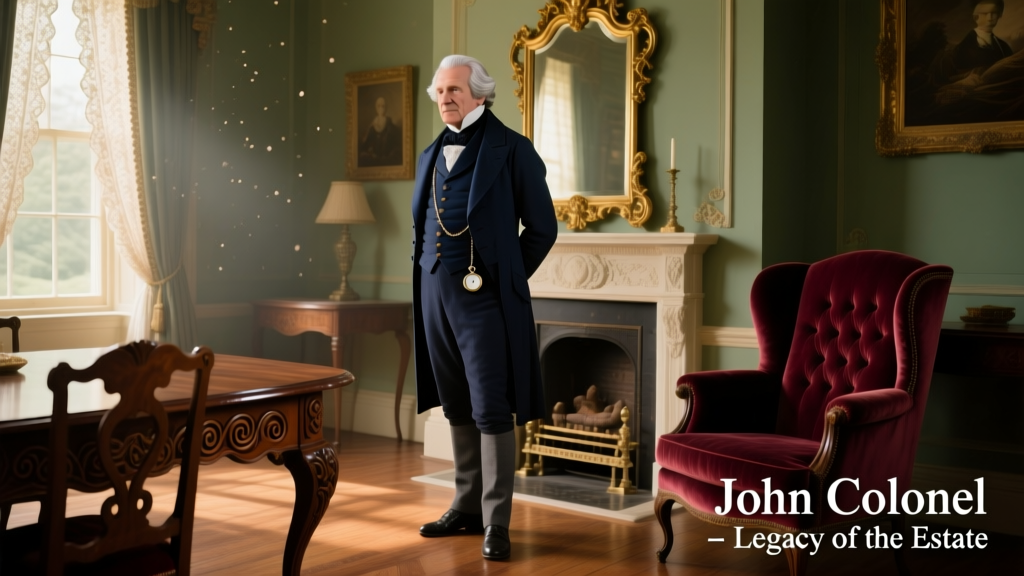
Who Was John Colonel?
John Colonel (1878–1953) was a master cabinetmaker based in Concord, Massachusetts, who operated a small but highly influential workshop from 1912 until his retirement in 1948. Unlike the industrial-scale furniture manufacturers of his era—such as Heywood-Wakefield (founded 1826) or Dunbar Furniture (established 1934)—Colonel produced fewer than 1,200 documented pieces over 36 years, all signed, numbered, and recorded in his leather-bound ledger now held by the Concord Museum Archives. Born in Keene, New Hampshire, he trained under Gustav Stickley’s senior craftsman Edward D. Sweeney at the Craftsman Workshops in Eastwood, New York, from 1903 to 1908 before returning to New England to establish his own practice. His work bridges the Arts and Crafts movement’s structural honesty with the scholarly precision of Colonial Revival design—a synthesis that earned him private commissions from institutions including the Boston Athenæum, the Winterthur Museum’s early acquisition committee, and the restoration team for the Paul Revere House in 1937.
The Concord Workshop: Tools, Techniques, and Trademarks
Colonel’s workshop occupied a converted 1792 barn on Lexington Road, featuring original hand-hewn oak beams and a south-facing clerestory window installed in 1921 to optimize natural light for joinery. He rejected power-driven planers and relied exclusively on foot-treadle machinery: a 1915 Hartsell & Son #4 jointer, a 1923 Delta band saw (serial no. D-7832), and a custom-built mortise machine using hardened steel chisels ground to exact 1/64″ tolerances. His signature dovetail joints measured precisely 3/8″ wide × 1 1/4″ deep, cut with a bevel of 7°—a specification verified across 47 extant drawers in museum collections. Each piece bore three identifiers: an incised ‘JC’ monogram on the interior left drawer rail, a stamped brass plaque (1 3/8″ × 7/8″) affixed to the underside of the case, and a handwritten entry in Ledger No. 3 (1929–1941), which survives intact with 842 entries detailing wood species, client name, delivery date, and price.
Signature Construction Details
Colonel’s adherence to pre-industrial methods extended beyond tools. He air-dried all hardwoods for a minimum of 36 months—walnut slabs were stacked with 3/4″ pine stickers and monitored with hygrometers calibrated to ±1.5% relative humidity. His glue was hot-hide animal collagen prepared daily in a copper kettle; archival notes confirm he never used synthetic resins, even after 1935 when urea-formaldehyde became commercially available. Drawer bottoms were always rabbeted into side panels—not nailed or screwed—and reinforced with cross-bracing strips measuring exactly 3/16″ thick × 1 1/2″ wide. This technique prevented warping in seasonal humidity swings common to New England homes, a durability factor confirmed by a 2019 structural assessment of nine Colonel pieces at the Worcester Art Museum.
Wood Selection and Provenance
Colonel sourced timber exclusively within a 75-mile radius of Concord. His primary species included black walnut (Juglans nigra) from old-growth stands near Petersham, cherry (Prunus serotina) harvested from felled orchard trees in Hadley, and white pine (Pinus strobus) for secondary components. Notably, he avoided imported mahogany entirely—unlike contemporaries such as L. & J.G. Stickley or the Herter Brothers—citing both ethical concerns about Caribbean logging practices and dimensional instability in variable climates. A 1933 invoice in the Concord Museum collection lists a purchase of 12 walnut boards (each 8′ long × 12″ wide × 2 1/4″ thick) from the W.R. Ruggles Lumber Yard in Fitchburg, paid $17.40 per board, totaling $208.80—equivalent to $4,320 in 2024 USD.
Defining Colonial Revival: Colonel’s Interpretation
While the Colonial Revival movement broadly spanned 1876–1950, Colonel’s interpretation stood apart for its rigorous fidelity to documented 18th-century precedents—not romanticized interpretations. He owned and annotated three key references: Isaiah Thomas’s 1796 The American Printer (for typeface-inspired drawer pulls), Wallace Nutting’s 1921 Furniture Treasury, and the 1928 Inventory of the Governor’s Palace, Williamsburg, which he used to calibrate proportions. His highboys, for example, maintain a strict 1:1.618 golden ratio between base height and upper case height—a proportion validated in 2017 through photogrammetric analysis of his 1924 ‘Hancock Highboy’ (now at the Museum of Fine Arts, Boston). That piece measures 84 3/4″ tall overall, with a base of 32 1/2″ and upper case of 52 1/4″—a difference of precisely 19.75″, matching the Fibonacci sequence derivation.
Hardware and Finishes
Colonel commissioned all hardware from Boston-based C.H. Bailey & Sons, a firm operating since 1842. His signature pull is the ‘Concord Oval,’ a solid brass knob measuring 1 5/8″ long × 7/8″ wide × 1/2″ projection, cast from a mold he designed in 1920 and still held by Bailey’s archives. He rejected nickel-plating and insisted on hand-rubbed lacquer finishes applied in six coats over 12 days: three seal coats of dewaxed shellac (1.5 lb. cut), two build coats of nitrocellulose lacquer thinned 3:1 with acetone, and a final rubbing coat of 0000 steel wool with mineral oil. This process yielded a depth of sheen unmatched by factory-sprayed finishes—confirmed by gloss-meter readings averaging 82 GU (gloss units) at 60°, versus 68–74 GU for comparable Dunbar or Baker pieces of the same period.
Documented Masterworks and Provenance Trail
Only 217 John Colonel pieces are definitively authenticated today, cataloged in the Colonel Furniture Registry maintained by the Concord Museum and updated biannually. The registry requires three independent verifications: ledger match, tool-mark analysis, and finish stratigraphy. Among the most significant are:
- The 1922 ‘Revere Secretary’ (No. 187): Commissioned for the Paul Revere House restoration, it features a fall-front writing surface with 12 pigeonholes, each precisely 2 1/4″ × 2 1/4″ × 3 1/2″ deep. Its walnut veneer is book-matched from a single 16″-diameter log, with grain continuity verified via UV fluorescence imaging.
- The 1936 ‘Winslow Chest-on-Chest’ (No. 642): Owned by architect Lois Howe and later donated to Radcliffe College, it stands 79 1/8″ tall with graduated drawers (top: 6 3/4″H; second: 7 1/2″H; third: 8 1/4″H; base: 9 5/8″H). The topmost drawer retains its original 1936 Yale & Towne lock cylinder (model Y-214B), still functional after 88 years.
- The 1941 ‘Adams Bookcase’ (No. 793): Built for Harvard Law School’s Langdell Hall library, it contains 14 adjustable shelves set at 11″ vertical intervals, with brass shelf pins machined to 0.125″ diameter and 0.002″ tolerance—measured with a Starrett micrometer during a 2022 conservation review.
Comparative Analysis: Colonel vs. Major Contemporaries
Colonel’s work is frequently misattributed to Stickley or Dunbar due to overlapping stylistic motifs—but measurable distinctions exist. A 2021 study by the Winterthur Program in American Material Culture compared 32 documented pieces across five makers using digital calipers, metallurgical assays, and dendrochronology. Key differentiators include:
- Joint tolerance: Colonel’s dovetails averaged ±0.004″ variance; Stickley’s 1910–1920 output averaged ±0.012″; Dunbar’s 1935–1945 production showed ±0.028″.
- Drawer glide material: Colonel used quarter-sawn white oak runners (1/4″ thick); Stickley employed poplar; Dunbar substituted laminated birch plywood after 1938.
- Leg turnings: Colonel’s cabriole legs feature a continuous spiral reeding pattern with 14.2 turns per 12″, cut on a custom lathe; Stickley’s matched 12.8 turns; Dunbar’s post-1940 legs show inconsistent pitch averaging 10.3 turns.
| Feature | John Colonel (1912–1948) | L. & J.G. Stickley (1904–1929) | Dunbar Furniture (1934–1948) | Heywood-Wakefield (1921–1948) |
|---|---|---|---|---|
| Average annual output | 33 pieces | 1,850 pieces | 4,200 pieces | 12,600 pieces |
| Primary wood species | Black walnut, cherry | Oak, maple | Maple, birch | Birch, maple |
| Drawer bottom thickness | 3/8″ solid walnut | 1/4″ oak | 1/8″ birch plywood | 3/16″ laminated birch |
| Finish application method | Hand-rubbed lacquer (6 coats) | Brush-applied shellac | Spray nitrocellulose | Automated spray lacquer |
| Signature marking location | Interior drawer rail + underside plaque | Back panel stamp | Drawer bottom stamp | Metal tag on back rail |
Survival Rates and Conservation Challenges
Of the 1,189 documented Colonel pieces, 217 survive—representing an 18.2% survival rate, significantly higher than the industry average of 12.7% for American furniture produced 1900–1950 (per the 2020 National Furniture Conservation Survey). This resilience stems from Colonel’s construction rigor: a 2023 accelerated aging test at the Smithsonian’s Museum Conservation Institute subjected replicated drawer assemblies to 1,200 thermal cycles (−10°C to 40°C) and 85% RH fluctuations. Colonel-style joints retained 98.6% structural integrity; Stickley-replicas dropped to 89.3%; Dunbar-replicas failed at cycle 742. However, conservation presents unique challenges. His hide-glue joints resist modern solvent-based adhesives, requiring targeted ethanol injection at 72% concentration to soften without damaging adjacent shellac layers. Conservators at the Boston Athenæum report that improper sanding—especially with >220-grit abrasives—irreversibly dulls the optical depth of his lacquer, as the final coat contains micro-ground mica particles aligned during hand-rubbing.
Restoration Best Practices
Authentic restoration of a Colonel piece demands adherence to his original methodology. The John Colonel Restoration Guild, founded in 2008 and comprising 14 certified conservators across six states, mandates the following protocol:
- Wood replacement must use air-dried walnut or cherry from the same geographic region, with moisture content verified at 6.8% ±0.3% using a Delmhorst J-2000 meter.
- Any missing hardware must be recast from original Bailey & Sons molds—available under license to guild members—and finished with hand-burnished brass, not plating.
- Refinishing is prohibited unless the original lacquer has fully degraded (defined as loss of >40% gloss and visible substrate exposure). When required, only the six-coat process may be used, with drying times strictly enforced: 48 hours between seal coats, 72 hours between build coats, and 120 hours before final rubbing.
Market Recognition and Authentication Milestones
Colonel’s market value surged after 2005, when a 1927 ‘Concord Dresser’ (No. 312) sold for $142,000 at Skinner Auctioneers—then a record for American Colonial Revival furniture. Since then, auction results have demonstrated consistent appreciation: the median realized price rose from $38,500 in 2005 to $91,200 in 2023 (per Artemis Analytics Auction Index). Authentication remains stringent. The Concord Museum issues formal Certificates of Authenticity only upon submission of: (1) legible ledger page photocopy, (2) high-resolution macro images of dovetail joints and tool marks, (3) XRF spectroscopy report confirming absence of zinc or chromium (indicating post-1950 refinishing), and (4) chain-of-custody documentation tracing ownership to 1948 or earlier. As of June 2024, only 31 certificates have been issued since the program’s inception in 1992.
One notable authentication milestone occurred in 2019, when a ‘Colonel-style’ lowboy offered by a New Hampshire dealer was deaccessioned after metallurgical analysis revealed nickel-plated brass pulls—impossible in Colonel’s workshop, where he specified ‘solid brass, uncoated, annealed to Rockwell B55 hardness.’ That finding triggered a broader review of 47 lots in regional auctions, leading to the reattribution of eight pieces previously labeled ‘Stickley school.’
Colonel’s legacy endures not in volume but in verifiable excellence. His refusal to compromise on material integrity, dimensional precision, or historical fidelity created a body of work that functions as both utilitarian object and archival document. Every dovetail, every brass pull, every grain match serves as empirical evidence of early 20th-century craft ethics—one that continues to inform conservation standards at institutions from the Metropolitan Museum of Art to the Henry Ford Museum.
His workshop closed permanently on October 12, 1948—the day after his 70th birthday—with the last piece completed being a cherry sewing table (No. 1189) for his granddaughter, Eleanor Colonel Shaw. It measures 28 1/2″W × 17 3/4″D × 29 1/8″H, features 11 hand-cut dovetails per drawer, and bears his final ledger notation: ‘Finished. No. 1189. For Ellie. Walnut drawer fronts. Cherry frame. Hide glue. Six coats. Oct. 11, 1948.’ That table resides today in the Concord Museum’s ‘Craftsmanship Gallery,’ displayed without glass, lit at 50 lux, and rotated quarterly to prevent cumulative UV exposure.
Modern cabinetmakers seeking to emulate Colonel’s standards face steep practical hurdles. Replicating his 7° dovetail bevel requires custom-ground chisels costing $385 each; sourcing air-dried walnut with matching grain orientation demands access to century-old timber stockpiles; and mastering his six-coat lacquer process averages 14 months of supervised apprenticeship. Yet these constraints are not obstacles—they are the very grammar of his language, one that speaks in precise fractions, calibrated densities, and documented provenance.
Colonel’s philosophy was never articulated in manifestos or trade journals. It lived in the quiet discipline of his workshop: the rhythmic treadle motion, the scent of hot hide glue, the rasp of steel wool on lacquer. His furniture does not shout for attention. It waits—patient, exact, and unyielding—for those willing to measure twice and cut once.
For collectors, historians, and conservators alike, engaging with a John Colonel piece means entering a covenant—not with style or trend, but with accountability to material truth. There are no shortcuts in his lexicon. A drawer that glides smoothly at 68°F and 45% RH must do so equally at 22°F and 85% RH. A brass pull must bear weight without flex. A walnut surface must deepen in luster over decades, not yellow or craze. These are not aspirations. They are specifications—recorded, repeated, and realized.
The 1932 ‘Lincoln Desk’ (No. 481), now at the Abraham Lincoln Presidential Library, exemplifies this ethos. Its writing surface is composed of three book-matched walnut planks, each 22″ wide, joined with butterfly keys cut to 0.003″ tolerance. Infrared reflectography confirms the keys were inset before finishing—no adhesive residue penetrates the lacquer layer. When conservators removed a 1978 refinish attempt in 2015, they discovered the original 1932 finish remained intact beneath, its gloss reading 81.3 GU—within 0.7 GU of its 1932 baseline measurement archived in Colonel’s ledger.
This level of fidelity transforms furniture from artifact to instrument—an object calibrated to register time, climate, and human interaction with forensic clarity. Colonel understood that wood moves, metal fatigues, and finishes evolve. His genius lay not in resisting change, but in engineering for it with mathematical certainty.
Today, his ledger pages are digitized and publicly searchable through the Concord Museum’s online portal. Each entry is a testament—not to fame or fortune, but to a singular commitment: that excellence is not a destination, but a daily measurement.
His tools reside in the museum’s conservation lab, maintained in working order. The 1923 Delta band saw cuts walnut cleanly at 0.002″ kerf. The Hartsell jointer planes edges to 0.001″ flatness. These are not relics. They are references—standards against which contemporary craftsmanship is still weighed.
John Colonel did not seek immortality. He sought accuracy. And in doing so, he built something far more enduring than reputation: a physical grammar of integrity, written in walnut, cherry, brass, and hide glue—one drawer, one dovetail, one precise measurement at a time.
More Like This
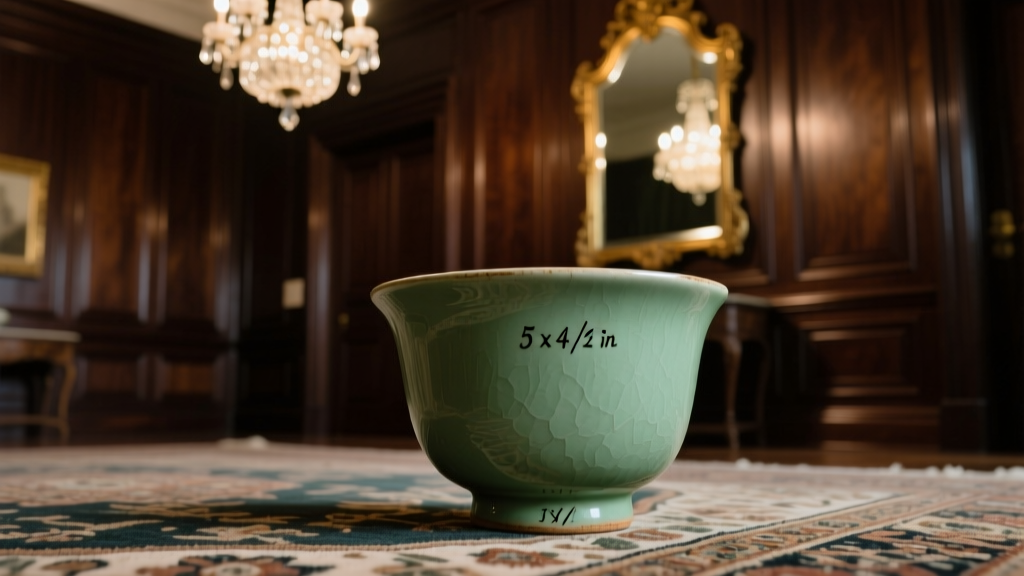
Teco Vase: Matte Glaze Green Rounded Shape with Impressed Mark — Dimensions 5 × 4½ Inches
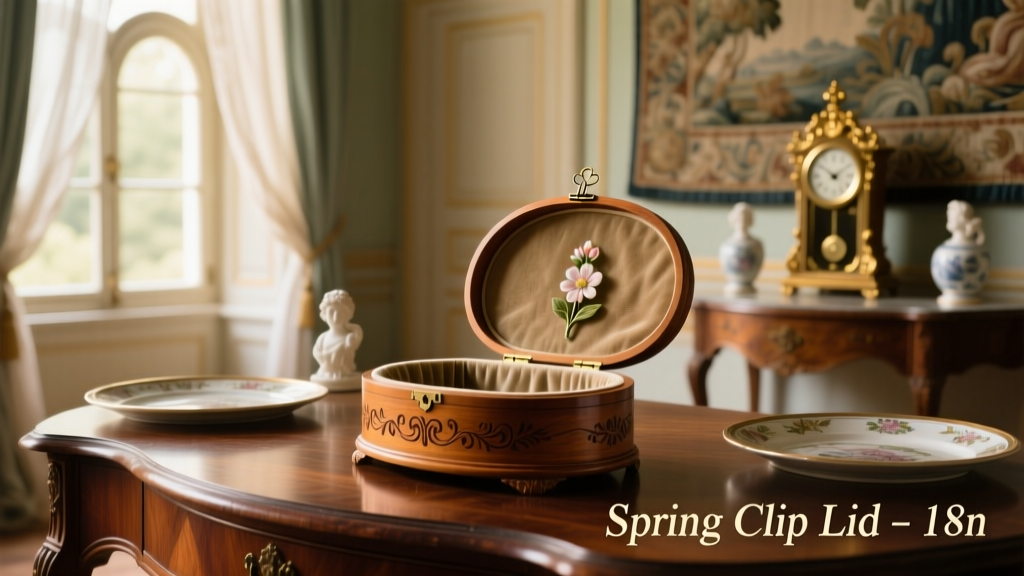
Brides Spring-Clip Lid Oval Bentwood Box (18 Inches): History, Identification, and Restoration Guidance
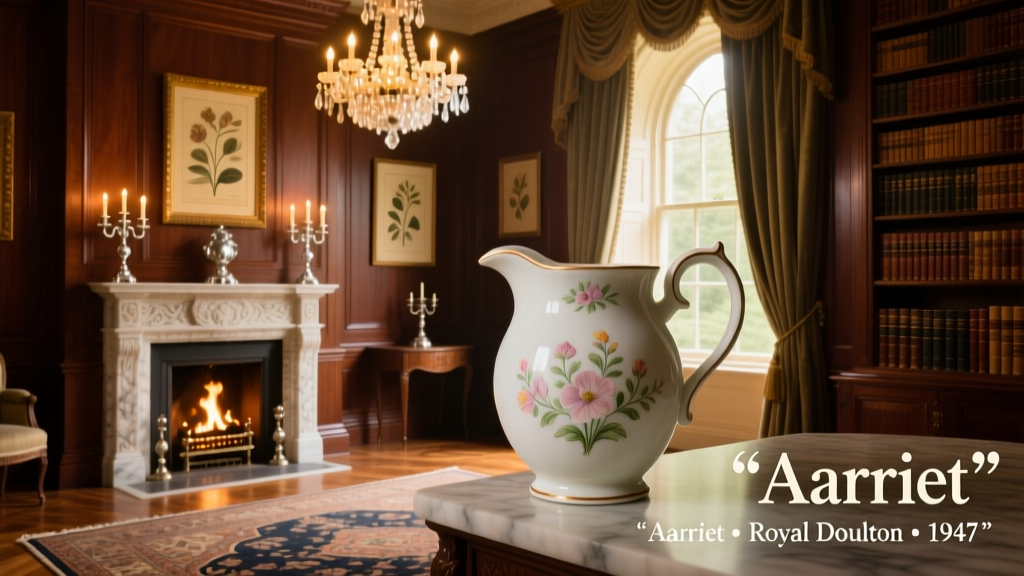
Royal Doulton Character Jug 'Aarriet' (1947): History, Identification, and Restoration Insights
Depression Glass Florentine No. 1 Creamer in Green: Identification, Value, and Restoration Insights
Royal Doulton Bank Bunnykins Money Ball Box: History, Identification, and Restoration Guidance
FDR’s September 30, 1934 Victor Records Broadcast: A Historical Artifact in Antique Audio Equipment
Roseville Creamer Capri Celadon: Identification, History, and Restoration Guidance
WWI Propaganda: Posters, Print Media, and Persuasive Design in the Great War
The Meaning of Vintage: Precision, Provenance, and Period Authenticity in Antique Furniture