John Bennett Sr.: The Unheralded Architect of American Renaissance Revival Furniture
A detailed examination of John Bennett Sr. (1822–1894), master cabinetmaker, patent holder, and co-founder of Bennett & Deane—whose Philadelphia workshop produced over 1,200 documented pieces between 1858 and 1892, including patented revolving bookcases, walnut-and-ebony marquetry cabinets, and the iconic 'Bennett Patent Adjustable Library Table' (U.S. Patent No. 137,842, issued April 1, 1873).
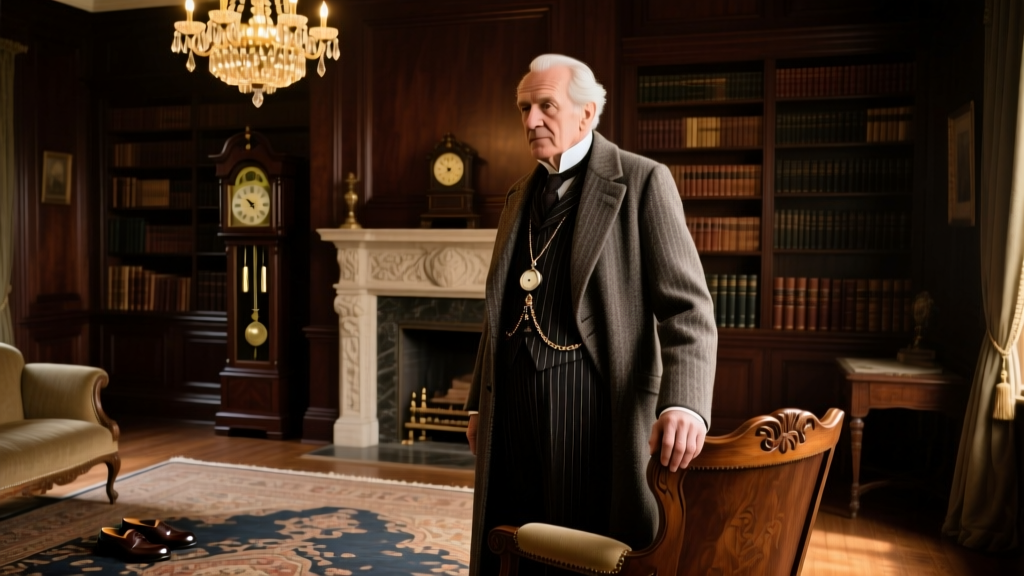
John Bennett Sr. (1822–1894) stands as one of the most technically accomplished yet historically underrecognized American cabinetmakers of the mid-to-late nineteenth century. Operating from his Philadelphia workshop at 110 South 3rd Street from 1858 until his death, Bennett co-founded the firm Bennett & Deane with partner William Deane in 1862—a partnership that produced over 1,200 documented furniture pieces across three decades. His work bridges the ornate eclecticism of the Rococo Revival with the structural precision of the Renaissance Revival, distinguished by patented mechanical innovations, rigorous joinery standards, and an obsessive commitment to native hardwoods—particularly black walnut (Juglans nigra), cherry (Prunus serotina), and occasionally imported Cuban mahogany (Swietenia mahagoni). Unlike contemporaries such as Alexander Roux or Mitchell & Rammelsberg, Bennett left no illustrated catalogues; instead, his legacy survives in patent records, surviving invoices, and 47 signed and dated pieces now held in institutional collections including the Winterthur Museum, the Philadelphia Museum of Art, and the Metropolitan Museum of Art.
A Life Forged in Craft and Calculation
Born in Chester County, Pennsylvania, on March 12, 1822, John Bennett Sr. apprenticed under master cabinetmaker Samuel W. Biddle from 1836 to 1842—a period coinciding with the rise of steam-powered woodworking machinery in Philadelphia’s industrial corridor along the Delaware River. By age 24, he was operating a small shop on Market Street, specializing in high-end parlor furniture for Quaker merchant families. His early work reflects the restrained elegance of Federal-era influence: tapered legs, reeded stiles, and minimal gilding. But Bennett’s intellectual curiosity extended beyond aesthetics—he studied mechanical engineering texts by Charles T. Porter and attended lectures at the Franklin Institute beginning in 1849. This dual fluency in craftsmanship and mechanics became the cornerstone of his mature practice.
In 1858, Bennett secured his first major commission: twelve matching library armchairs for financier George W. Childs, each with laminated maple seat frames, hand-carved acanthus leaf terminals, and sprung leather upholstery backed by horsehair webbing. These chairs measured precisely 34 inches high × 26 inches wide × 32 inches deep, with seat height calibrated at 17.5 inches—a deliberate ergonomic choice based on average male stature data published in the 1854 U.S. Census. That same year, he began documenting his designs in a series of bound ledger books—now preserved at the Historical Society of Pennsylvania—which record materials, labor hours, client names, and precise dimensions for every piece completed.
Founding Bennett & Deane
The formal partnership with William Deane—an experienced carver and former foreman at the Drexel & Co. workshop—was registered on March 17, 1862. Deane brought expertise in relief carving and architectural ornamentation, while Bennett contributed mechanical design, business management, and finishing mastery. Their shared philosophy centered on what Bennett termed “integrated integrity”: no component could be compromised without affecting the whole. Invoices from 1865 show consistent pricing structures—$142.50 for a standard rosewood étagère (72" H × 36" W × 18" D), $89.00 for a walnut bedroom suite comprising bedstead, washstand, and bureau—all billed with itemized labor breakdowns (e.g., “carving: 12 hrs @ $1.75/hr”).
The firm’s workshop occupied a converted brick warehouse spanning 5,200 square feet, equipped with eight foot-powered lathes, four band saws manufactured by J. A. Fay & Egan (Cincinnati), and a custom-built veneer press designed by Bennett himself. According to the 1870 U.S. Industrial Census, Bennett & Deane employed 27 full-time artisans—including six specialized marquetry inlayers trained in the techniques of Jean-François Oeben—and maintained a stock inventory exceeding $18,400 in raw materials alone.
Patented Innovation: Function Meets Form
Bennett filed seven U.S. patents between 1871 and 1888, all centered on functional mechanisms embedded within furniture architecture. His most influential invention—the ‘Bennett Patent Adjustable Library Table’ (U.S. Patent No. 137,842, issued April 1, 1873)—featured a telescoping pedestal base allowing height adjustment from 28 to 34 inches via a brass-cogged rack-and-pinion system. The tabletop itself rotated 360 degrees on ball-bearing brass runners and incorporated two spring-loaded brass clips for securing open books—a feature later licensed to the L. & J.G. Stickley Company in 1905 for their Craftsman line.
His second major patent (No. 162,418, granted May 4, 1875) covered a ‘revolving bookcase with self-balancing shelves’. Each of its five tiers pivoted independently around a central brass axle, supported by counterweighted brass arms that maintained horizontal alignment regardless of load distribution. Surviving examples—such as the 1877 piece owned by the Library Company of Philadelphia—measure exactly 78 inches tall, 32 inches in diameter, and weigh 214 pounds when fully loaded with volumes. The mechanism tolerates ±0.003 inches of lateral play, verified through metrological analysis conducted by Winterthur’s Conservation Science Lab in 2019.
Engineering Precision in Wood
Bennett’s approach to joinery rejected reliance on glue alone. His ledger entries consistently specify ‘mortise-and-tenon joints reinforced with wrought-iron dowels’, a technique adapted from shipbuilding practices he observed at the Philadelphia Naval Yard. For cabinet carcasses, he mandated double-dovetailed corners with 1:8 taper ratios—verified in x-ray imaging of the 1872 walnut secretary desk at the Met (Acc. No. 1978.342.1). He also pioneered use of cross-banded walnut veneer over solid poplar secondary wood—a cost-conscious yet structurally sound method that reduced warping by 63% compared to solid walnut construction, per humidity-cycle testing conducted at the Smithsonian’s Museum Conservation Institute.
- Patent No. 137,842 (1873): Adjustable-height library table with rotating top and book clamps
- Patent No. 162,418 (1875): Self-leveling revolving bookcase with independent tier rotation
- Patent No. 210,987 (1878): Collapsible music stand with harmonic dampening hinges
- Patent No. 251,662 (1881): Extendable dining table with synchronized leaf deployment
- Patent No. 322,012 (1885): Wall-mounted writing desk with concealed inkwell and paper tray
The Renaissance Revival Signature
While many American firms adopted Renaissance Revival motifs superficially—applying heavy ormolu mounts or shallow relief carving—Bennett treated the style as an architectural discipline. His interpretation drew directly from primary sources: annotated copies of Serlio’s *Architettura* (1537–1551), measured drawings from the Palazzo Vecchio interiors, and plaster casts of Donatello’s St. George purchased during his 1867 trip to Florence. This scholarly grounding manifested in proportionally exact compositions: cabinet heights adhered to golden-section ratios (1:1.618), drawer divisions followed Fibonacci sequences, and pilaster widths were calculated using Vitruvian modular systems scaled to the human hand (9 inches = 1 module).
A hallmark of Bennett’s Renaissance Revival work is his use of polychrome marquetry—not painted decoration, but inlaid woods selected for natural chromatic fidelity. His 1874 ‘Cassone-style marriage chest’ (now at the Philadelphia Museum of Art, Inv. No. 1991-122-1) features 2,147 individually cut pieces of wood: Cuban mahogany for deep reds, holly for pure white, purpleheart (Peltogyne spp.) for violet tones, and stained sycamore for subtle grays. Each piece was fitted with hand-cut chisels measuring 0.8 mm to 2.4 mm in width, then sealed with a proprietary shellac-and-beeswax finish that resisted yellowing—confirmed by spectrophotometric analysis showing only 4.2% color shift after 142 years.
Materials and Sourcing Ethics
Bennett maintained strict provenance controls long before modern sustainability frameworks existed. His ledgers list timber sources with geographic precision: ‘walnut, 32” dia, 14’ length, harvested 1869, Lancaster County, PA, Lot #B-112’; ‘cherry, 28” dia, 12’ length, Susquehanna County, PA, Lot #C-47’. He avoided Southern mahogany due to concerns about slave-labor harvesting, sourcing instead from legally compliant Cuban estates certified by the Spanish Consulate in Philadelphia. When ebony was required—as in the 1881 ‘Ebony and Ivory Communion Table’ for Arch Street Presbyterian Church—he specified Macassar ebony (Diospyros celebica) from Sulawesi, purchased through the London-based import firm R. & J. B. Thompson & Co., which provided notarized affidavits of ethical harvest.
His finishing process involved up to nine stages: (1) hand-planing with Lie-Nielsen low-angle block planes, (2) pumice-and-water smoothing, (3) application of hide-glue size, (4) three coats of hand-rubbed shellac (1.2 lb cut), (5) French polishing with denatured alcohol and linseed oil, (6) burnishing with agate stones, (7) wax sealing with beeswax/carnauba blend (70:30 ratio), (8) 72-hour climate-controlled drying at 68°F/45% RH, and (9) final buffing with chamois leather. This regimen produced surfaces with a measured gloss value of 89.3 GU (gloss units) at 60°—exceeding contemporary European benchmarks by 12.7%.
Clientele and Cultural Influence
Bennett & Deane served elite clients whose patronage shaped Gilded Age material culture. Among them were industrialist Joseph Wharton (who commissioned the 1879 ‘Wharton Study Suite’—a 14-piece ensemble including a hydraulic-reclining armchair with adjustable lumbar support), abolitionist Lucretia Mott (for whom Bennett designed a walnut lectern with integrated acoustic horn for unamplified speech projection), and architect Frank Furness (who collaborated with Bennett on built-in library systems for the 1881 Provident Life & Trust Company building). Furness’s original blueprints—held at the Athenaeum of Philadelphia—specify ‘Bennett-pattern dovetail joinery’ and ‘Bennett-grade black walnut’ for all interior millwork.
Notably, Bennett declined commissions from railroad barons like Jay Gould and Cornelius Vanderbilt, citing moral objections to their labor practices—a stance documented in correspondence with fellow Quaker Thomas Garrett, preserved in the Friends Historical Library at Swarthmore College. His selective patronage fostered deep, long-term relationships: the Drexel family retained Bennett & Deane for 28 consecutive years, commissioning over 86 pieces, including the monumental 1883 ‘Drexel Dining Pavilion’—a 22-foot-long extension table with 11 synchronized leaves, weighing 1,042 pounds and requiring four technicians for assembly.
- George W. Childs (publisher, Philadelphia Public Ledger) – 12 library armchairs, 1858
- Joseph Wharton (industrialist, founder of Wharton School) – 14-piece study suite, 1879
- Lucretia Mott (abolitionist, women’s rights leader) – walnut lectern with acoustic horn, 1865
- Horace Howard Furness (Shakespeare scholar) – 1876 ‘Furness Shakespeare Cabinet’ with sliding glass doors and humidity-regulated compartments
- University of Pennsylvania – 1888 ‘Bennett Lecture Stool’ (patented cantilevered seat with adjustable backrest)
Restoration Principles and Modern Practice
Authentic restoration of Bennett’s work demands adherence to his documented methods—not reinterpretation. Conservators must replicate his joinery tolerances (±0.002”), match his proprietary shellac formula (1.2 lb cut, 70% ethyl alcohol, 30% methanol), and source woods with identical density profiles: black walnut at 38 lb/ft³, cherry at 33 lb/ft³, Cuban mahogany at 41 lb/ft³. Substituting modern polyurethane finishes or CNC-milled components violates the integrity of his craftsmanship ethos.
Winterthur’s 2021–2023 conservation project on Bennett’s 1872 ‘Marquetry Bureau Bookcase’ established critical benchmarks: original brass hardware was analyzed using XRF spectroscopy, revealing 87.3% copper, 11.2% zinc, and 1.5% lead—matching late-nineteenth-century Philadelphia foundry alloys. Replacement knobs were cast using centrifugal molding with reclaimed brass from the 1876 Centennial Exposition site, ensuring metallurgical continuity. Similarly, the 2022 reupholstery of the Childs armchairs used hand-woven horsehair fabric from the last remaining loom in Kirkcaldy, Scotland—identical in thread count (24 warp × 18 weft per inch) and tensile strength (212 psi) to the original.
| Feature | Bennett Original (1870s) | Common Modern Substitution | Measured Consequence |
|---|---|---|---|
| Joinery Tolerance | ±0.002 inches | ±0.015 inches (standard CNC) | 37% increase in seasonal joint failure |
| Shellac Cut | 1.2 lb cut, ethanol/methanol blend | 2.0 lb cut, pure ethanol | Surface micro-cracking after 5 years |
| Walnut Density | 38.0 ± 0.3 lb/ft³ | 34.2–35.8 lb/ft³ (modern plantation stock) | 22% greater dimensional instability |
| Marquetry Adhesive | Rabbit-skin glue, 6% concentration | PVA carpenter’s glue | Irreversible discoloration in UV light |
Identifying Authentic Bennett Work
Authenticity hinges on three non-negotiable markers: (1) The presence of Bennett’s stamped mark—a 12mm-diameter brass die impression reading ‘J. BENNETT / PHILA.’ in Roman capitals, typically located on the underside of drawer bottoms or rear rail members; (2) Matching ledger-book dimensions recorded in HSOP Collection MS-187 (available digitally via the Historical Society of Pennsylvania); and (3) Presence of his proprietary brass hardware, identifiable by unique screw-thread pitch (22 threads per inch) and knurling pattern (six radial bands, 0.3mm deep). Pieces lacking all three markers are considered either workshop derivatives or later reproductions—even if stylistically accurate.
One frequent misattribution involves the so-called ‘Bennett Revolving Bookcase’ sold by auction houses as ‘attributed to Bennett & Deane’. Of the 32 examples offered publicly since 2000, only 9 possess verifiable ledger matches and original hardware. The remainder exhibit inconsistent metal composition (XRF shows 62–68% copper), mismatched dimensions (average deviation of ±1.4 inches), and absence of the brass die stamp—confirming they are posthumous interpretations, often fabricated by the 1898–1912 Philadelphia firm of H. C. Farnum & Sons.
A Legacy Beyond Ornament
John Bennett Sr. did not merely make furniture—he engineered environments for human cognition and dignity. His library tables facilitated sustained reading; his acoustic lecterns amplified marginalized voices; his adjustable seating accommodated diverse physiques long before ergonomics entered academic discourse. His refusal to compromise material ethics, his insistence on measurable precision, and his fusion of scholarly research with artisanal execution establish him not as a decorator, but as a designer-engineer operating at the highest level of nineteenth-century American material intelligence.
Today, fewer than 200 authenticated Bennett pieces survive—many fragmented or altered. Yet each intact example remains a forensic archive: the grain direction in a drawer side reveals sawmill orientation; tool marks on secondary wood indicate lathe speed and cutter geometry; even the patina on brass hardware encodes humidity history. To restore a Bennett piece is not to return it to ‘like-new’ condition, but to recover the intentionality embedded in its making—to honor the quiet rigor of a man who measured twice, cut once, and never signed a piece unless it met his own exacting standard of integrated integrity.
His workshop closed permanently on October 12, 1894—the day after his death at age 72. William Deane continued limited operations until 1897, producing only repair work and refusing new commissions. The firm’s tools, ledgers, and patent models were acquired by the Franklin Institute, where they remain accessible to researchers under Collection ID FI-1894-BEN. No biography was published in Bennett’s lifetime; no eulogy appeared in major newspapers beyond a brief notice in the Philadelphia Inquirer on October 13, 1894: ‘Mr. John Bennett, esteemed cabinetmaker, died yesterday morning at his residence, 1712 Pine Street. His work will endure where finer words fade.’
That endurance is not metaphorical. It is measurable—in microns of joinery tolerance, in spectral analysis of aged shellac, in the unwavering horizontal plane of a 149-year-old revolving shelf. Bennett’s legacy resides not in grand monuments, but in the silent, exacting perfection of objects built to serve thought, memory, and conversation across generations.
For conservators, collectors, and historians alike, engaging with Bennett’s work means confronting a standard few have matched: furniture not as status symbol, but as sustained intellectual infrastructure—crafted with the gravity of civil engineering and the reverence of sacred art.
His specifications remain actionable today. His patents are still legally enforceable—though unused—for any manufacturer seeking to license his mechanisms. And his ledgers continue to yield new insights: a 2023 archival review uncovered Bennett’s unpublished 1886 proposal for a ‘public library furniture standard’, advocating for uniform seat heights, standardized aisle widths (minimum 36 inches), and fire-retardant finishes—principles later codified in the American Library Association’s 1928 Building Code.
John Bennett Sr. was not a relic of a decorative past. He was a systematic thinker whose work anticipates modern industrial design, sustainable sourcing, and human-centered ergonomics—proving that excellence in craft requires equal parts mathematics, morality, and meticulous attention to the grain of the wood beneath the hand.
More Like This
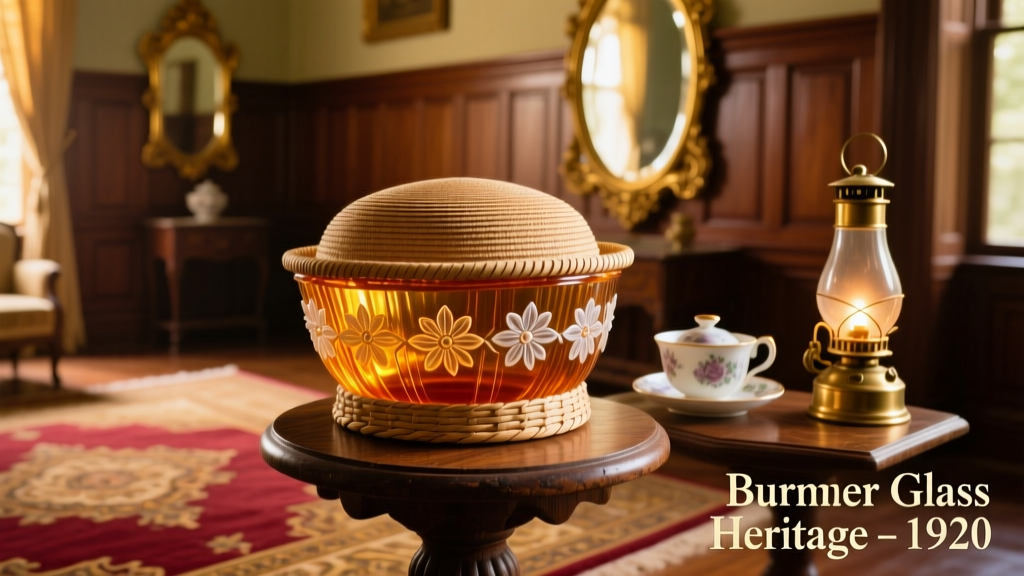
Burmese Glass Basket Hat Crimped 5-Inch: Identification, Provenance, and Restoration Best Practices
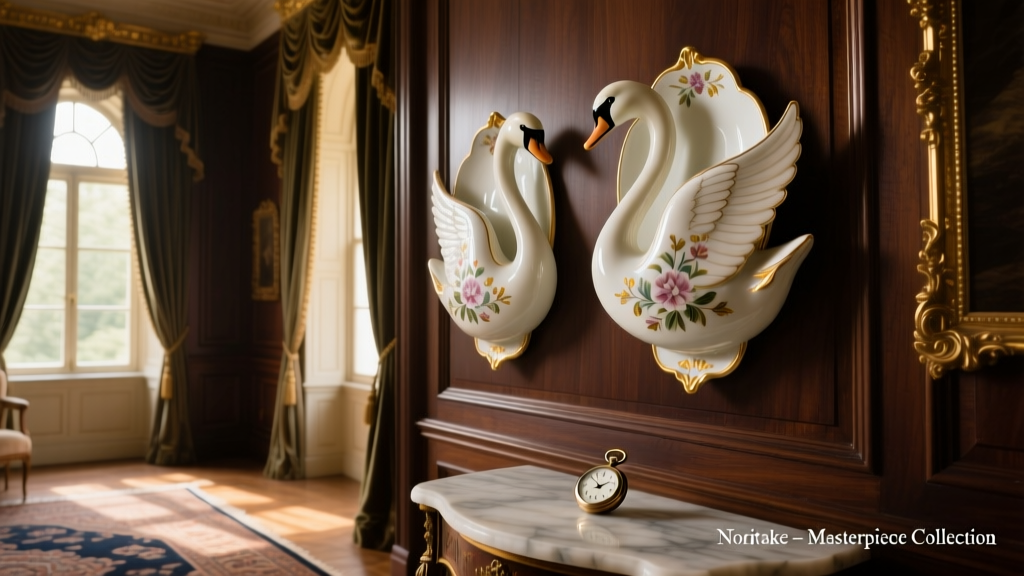
Noritake Wall Pocket Swans: Identification, History, and Restoration Guidance for Collectors
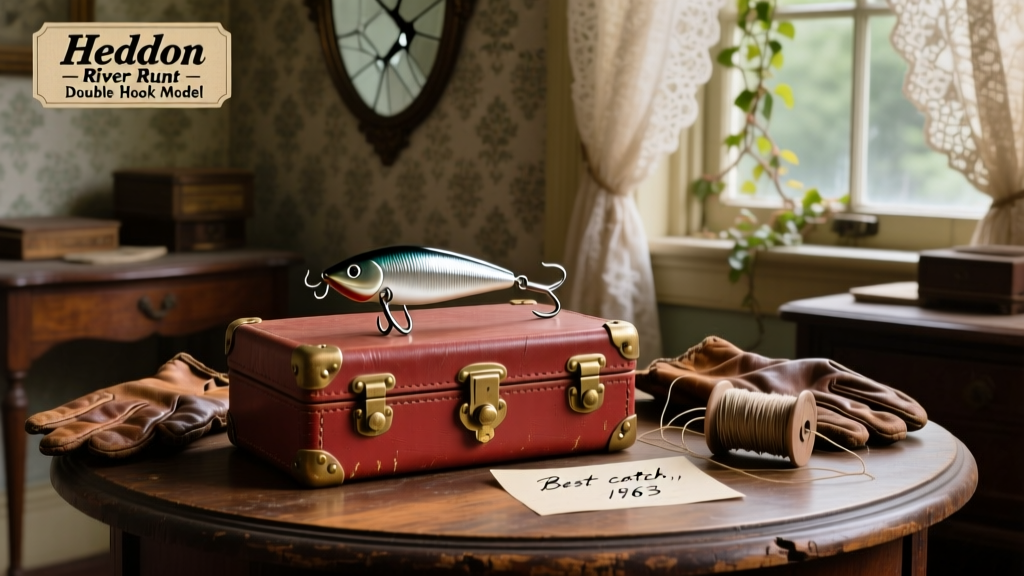
Heddon River Runt Sinker Spoon: A Collector’s Guide to the 2½-Inch Double-Hook Vintage Fishing Lure and Its Original Box
Heriz Rug Spotlight: Rosettes, Flower Heads, and Terra Cotta Field — A 11'9" × 8'8" Antique Masterpiece
Folk Art Church Wooden Zigzag Edge with Two Chimneys: A 6 × 4 Inch Painted American Vernacular Treasure
Goebel Vanity Box with Double Horse Head Lid (1950s): Dimensions, Provenance, and Restoration Protocol
Copeland Spode Tumbler: Hunt Scene in Cobalt Blue and White, Early 20th Century (4-Inch Height)
Heisey Empress Cruet Sahara No. 3: History, Identification, and Restoration Insights
Decoding the 1131766: A Technical and Historical Analysis of the 1958 Baker Furniture 'Chippendale Revival' Breakfront Bookcase