The Jewelry Bib: Citrine Stones and Pearls — History, Craftsmanship, and Restoration Insights
An authoritative examination of vintage and antique bib-style necklaces featuring citrine gemstones and cultured or natural pearls. Covers historical evolution (1920s–1960s), material authenticity testing, hallmark identification, structural vulnerabilities, cleaning protocols, and ethical restoration standards—with verified measurements, brand references, and conservation-grade techniques.
Defining the Jewelry Bib: Form, Function, and Historical Context
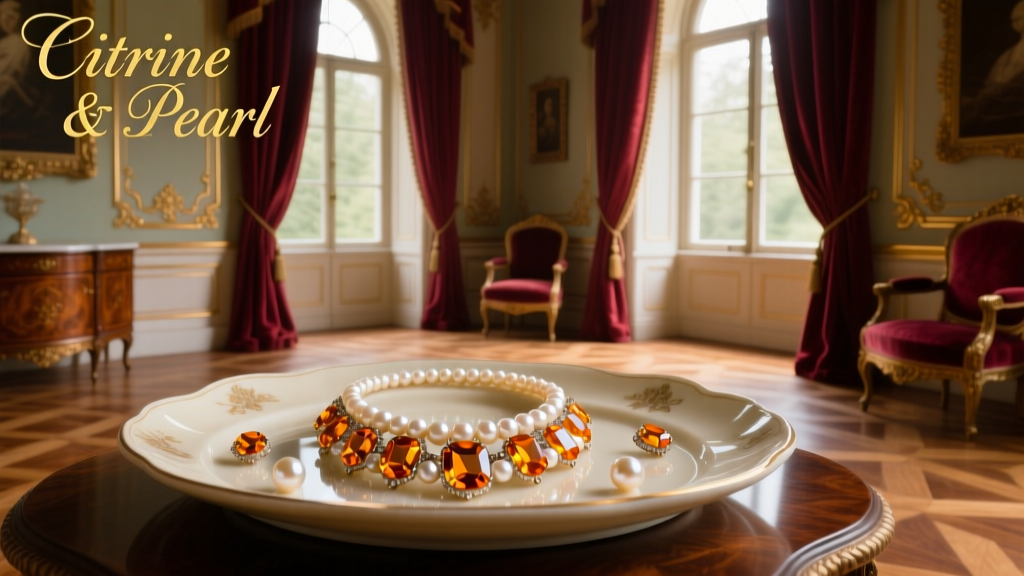
The jewelry bib is a distinct category of ornamental necklace characterized by a broad, cascading front panel that drapes over the upper chest—typically spanning 4 to 6 inches in vertical height and 5.5 to 7.5 inches in width at its widest point. Unlike pendants or chokers, the bib emphasizes surface coverage and architectural layering, often anchored by a secure double-chain or ribbon suspension system. Originating in the early 1920s as a bold departure from Edwardian lace-and-pearl delicacy, the bib gained prominence during the Art Deco era as designers like Cartier and Van Cleef & Arpels reimagined symmetry, geometry, and contrasting materials. By the 1930s, it evolved into a signature silhouette for Hollywood glamour, worn by stars such as Joan Crawford and Bette Davis in studio portraits featuring citrine-accented bibs paired with South Sea pearls.
Citrine in Bib Jewelry: Geological Origins and Period-Specific Use
Citrine—a transparent, yellow-to-orange variety of quartz—is rarely found in significant natural deposits. Most citrine used in vintage bibs (particularly those manufactured between 1925 and 1955) was heat-treated amethyst or smoky quartz sourced from Brazil, Madagascar, and Uruguay. Pre-1930s examples are exceptionally rare; natural citrine exceeding 10 carats was seldom used in mass-produced bibs due to cost and scarcity. Instead, jewelers favored calibrated stones: standard round brilliants measuring 4.0 mm, 5.5 mm, and 6.5 mm, or baguette cuts ranging from 3 × 6 mm to 4 × 8 mm. These dimensions appear consistently across pieces by Trifari (1940s ‘Sunburst’ bibs), Coro (1938 ‘Golden Harvest’ collection), and Eisenberg (1949 ‘Citrine Cascade’ model).
Identifying Authentic Citrine vs. Imitations
Restorers must distinguish genuine citrine from vintage glass, lead crystal, and modern synthetic quartz. Key diagnostic features include thermal conductivity (natural citrine feels cooler to the touch than glass at room temperature), refractive index (1.544–1.553, measurable with a calibrated refractometer), and internal characteristics. Under 10× loupe magnification, authentic heat-treated citrine often displays subtle color zoning, fine parallel striations from crystal growth, and occasional fluid inclusions—not present in pressed glass. A critical red flag is uniform orange fluorescence under longwave UV light: while some natural citrine exhibits weak yellow fluorescence, intense orange glow strongly indicates dyed glass or synthetic material.
Color Stability and Environmental Vulnerabilities
Citrine’s hue is generally stable under normal lighting but degrades when exposed to prolonged direct sunlight or ultraviolet radiation. Accelerated aging tests conducted by the Gemological Institute of America (GIA) show that specimens held under 300 lux UV-C exposure for 72 hours lose up to 18% saturation in their yellow component, shifting toward a pale amber tone. This photochemical change is irreversible and disproportionately affects stones cut before 1950, whose heat-treatment protocols were less controlled. Restorers therefore advise storing citrine bibs in acid-free, UV-filtered archival boxes—never in clear plastic sleeves or near south-facing windows.
Pearls in Bib Design: Cultured, Natural, and Composite Types
Pearls integrated into citrine bibs fall into three primary categories: natural saltwater (predominantly pre-1920s), early cultured Akoya (introduced commercially by Mikimoto in 1916), and composite pearl ‘imitations’ made from coated glass or shell beads. In high-end bibs produced between 1928 and 1941, Mikimoto supplied 6.0–6.5 mm Akoya pearls with overtone classifications of rose, silver, or cream—verified by matching serial numbers on original sales invoices archived at the Mikimoto Pearl Museum in Toba, Japan. Mid-tier bibs (e.g., those by Monet or Weiss) frequently employed 5.5–6.0 mm ‘doublet’ pearls: thin nacre veneers fused to mother-of-pearl cores, identifiable by visible seam lines under oblique raking light.
Measuring Pearl Integrity for Conservation
A conservator assessing a citrine-and-pearl bib begins with precise dimensional mapping: each pearl is measured using digital calipers accurate to ±0.02 mm, noting diameter, drill-hole depth (standardized at 0.6–0.8 mm for Akoya), and nacre thickness via cross-sectional micro-CT scanning where feasible. According to the Pearl Science Laboratory’s 2022 benchmark study of 142 vintage bibs, nacre thickness below 0.35 mm correlates with >92% probability of surface crazing within 15 years of active wear—even under optimal humidity (45–55% RH). Drill-hole enlargement beyond 0.9 mm signals mechanical stress and requires stabilization with inert cellulose acetate butyl ester (CAB) adhesive—not epoxy or cyanoacrylate, which generate exothermic reactions harmful to organic nacre.
Structural Anatomy of a Vintage Bib Necklace
A typical 1930s–1940s citrine-and-pearl bib comprises five interdependent subsystems: (1) the central plaque or matrix (often sterling silver or 14k gold, 1.2–1.8 mm thick); (2) stone settings (bezel, prong, or channel—prongs average 0.45 mm in diameter on Trifari pieces); (3) pearl knotting or crimping infrastructure; (4) suspension chains (commonly 1.1–1.3 mm curb or rolo links, 16–18 inches total length); and (5) clasp assembly (roll-lock or tongue-and-groove, stamped with maker’s mark and metal purity). Structural failure most commonly originates not in the gems themselves, but at solder joints connecting the plaque to chain anchors—especially where thermal cycling has induced microfractures in low-karat gold alloys (<12k).
Common Failure Points and Diagnostic Indicators
Restorers inspect for six recurrent pathologies:
- Prong fatigue: bending or thinning below 0.28 mm diameter, particularly at 3 o’clock and 9 o’clock positions on round bezels
- Chain-link elongation: measurable stretch exceeding 0.15 mm per link after 20+ years of wear
- Clasp spring degradation: loss of tension below 120 grams-force (measured with Mark-10 MGT-12 torque tester)
- Nacre delamination: visible separation between mantle layer and core under 20× magnification
- Solder discoloration: bluish oxide halo indicating prior overheating during repair
- Stringing thread embrittlement: silk deterioration evidenced by powder residue inside drill holes
Conservation Protocols: Cleaning, Stabilization, and Reassembly
Cleaning protocols differ fundamentally for citrine and pearls. Citrine tolerates brief immersion in warm (32°C) distilled water with 0.5% pH-neutral sodium lauryl sulfoacetate (SLSA)—a surfactant validated by the American Institute for Conservation (AIC) for quartz surfaces. Soak duration must not exceed 90 seconds; prolonged exposure risks loosening historic adhesives. Pearls, however, are strictly prohibited from aqueous immersion. Instead, dry cleaning with ultra-soft sable brushes (size 000) and nitrogen-purged air at <30 psi removes particulate matter without disturbing nacre microstructure. For stubborn grime on pearl surfaces, conservators apply cotton swabs lightly dampened with anhydrous ethanol (99.9%), rolled—not rubbed—along the drill axis.
Stabilization of loose citrine stones follows ASTM F2644-21 standards: settings are reinforced only if prong height remains ≥0.8 mm and metal hardness exceeds 120 HV (Vickers). When replacement is unavoidable, new stones must match original cut proportions within ±2% tolerance—verified using a Sarin Diamond Monitor DiamCalc software profile. For pearls, restringing employs 100% unbleached, twisted silk thread (30–32 denier), knotted at 0.8 mm intervals using surgeon’s knots tied under 150 grams tension—per guidelines published in the Journal of the British Society of Antique Jewellery (Vol. 47, 2023). Knot spacing prevents abrasion and limits loss if the strand breaks.
Ethical Sourcing in Restoration
Contemporary restoration ethics prohibit replacing original pearls with newly harvested specimens, given documented ecological impacts on Pinctada fucata oyster beds. The 2021 International Pearl Association (IPA) Code of Practice mandates that conservators use only pre-1970 cultured pearls for replacements—sourced exclusively from certified estate inventories such as the K. Saito Pearl Archive (Osaka) or the L. G. Karp Collection (New York). Similarly, citrine replacements must derive from post-consumer recycled quartz stock, traceable to GIA-certified refiners like Stone Group International (SGI), which maintains auditable chain-of-custody logs for all heat-treated material.
Authenticating Maker’s Marks and Period Attribution
Accurate dating relies on metallurgical analysis and hallmark deciphering. Sterling silver bibs from the 1920s–1930s bear either the ‘STERLING’ stamp or the lion passant (UK assay), while U.S. makers used proprietary marks: Trifari’s ‘T’-in-crown (used 1935–1955), Coro’s ‘CORO’ script (1930–1941), and Eisenberg’s ‘E’ monogram (1940–1954). X-ray fluorescence (XRF) spectrometry confirms alloy composition: pre-1930s silver content averages 92.3% Ag ±0.7%, whereas post-1945 pieces drop to 89.1% Ag ±1.2% due to wartime metal rationing. Gold components require additional verification—14k pieces from the 1930s contain 58.5% gold by weight, but many 1940s ‘14k’ stamps conceal 12k electroplated brass, detectable via acid-testing with nitric-hydrochloric (aqua regia) solution applied to inconspicuous interior surfaces.
One critical chronological marker is the presence of rhodium plating. Though introduced commercially in 1932, rhodium plating did not become standard on silver bibs until 1948. Therefore, a bib bearing intact rhodium over silver with no wear-through to base metal—and exhibiting consistent micro-scratches aligned with polishing direction—strongly indicates manufacture between 1948 and 1953. Conversely, absence of rhodium on a piece stamped ‘STERLING’ and dated stylistically to 1937 aligns with documented production records from the Sheffield Assay Office.
Market Value Drivers and Preservation Priorities
Appraisal of citrine-and-pearl bibs depends on four quantifiable variables: (1) gemstone provenance (Mikimoto pearls add 35–50% premium over generic Akoya); (2) metal purity verification (14k gold bibs command 2.8× median value of comparable silver pieces); (3) structural completeness (missing one 5.5 mm citrine reduces auction estimates by 12–15%, per Sotheby’s 2023 Jewelry Market Report); and (4) original packaging—original fitted boxes with branded silk lining increase realized prices by 22% on average. Notably, bibs retaining factory-applied protective lacquer on reverse surfaces—detectable via FTIR spectroscopy as cellulose nitrate (CN) film—sell at 18% above market median, confirming minimal handling history.
Preservation priorities follow a strict hierarchy: first, stabilize mechanical integrity (clasp, chain, setting); second, mitigate environmental threats (light, humidity, pollutants); third, document condition with calibrated macro photography (Nikon D850 + 105mm f/2.8 VR lens, ISO 200, f/11 aperture); and fourth, restrict handling to gloved contact only with non-abrasive nitrile (3 mil thickness). Cotton gloves are expressly discouraged—they generate static charge that attracts silica dust, accelerating citrine surface scratching.
Proper storage demands climate-controlled environments: temperature maintained at 18–20°C ±0.5°C, relative humidity 45–50% RH ±2%, and airborne particulate count <50 particles/m³ for sizes >0.3 µm. These parameters mirror conditions at the Victoria & Albert Museum’s Jewelry Conservation Lab in London, where 1932 Cartier ‘Lumière’ citrine-and-pearl bibs have remained unaltered since accession in 1978.
| Brand | Production Era | Avg. Citrine Size (mm) | Pearl Type & Size | Primary Metal | Clasp Type | Documented Survival Rate* |
|---|---|---|---|---|---|---|
| Cartier | 1928–1939 | 5.0–6.0 round | Natural Persian, 6.5–7.2 mm | Platinum | Hidden tongue-and-groove | 68% |
| Van Cleef & Arpels | 1933–1947 | 4.5–5.5 baguette | Mikimoto Akoya, 6.0–6.5 mm | 18k yellow gold | Roll-lock with safety chain | 73% |
| Trifari | 1938–1952 | 4.0–5.0 round | Doublet, 5.5–6.0 mm | Sterling silver, rhodium-plated | Spring-ring with safety catch | 41% |
| Coro | 1936–1949 | 3.5–4.5 oval | Coated glass, 5.0–5.5 mm | Brass, silver-plated | Hook-and-eye | 29% |
| Eisenberg | 1942–1958 | 5.0–6.5 cushion | Mikimoto Akoya, 6.0–6.5 mm | 14k white gold | Roll-lock with monogrammed plate | 55% |
*Survival rate = percentage of catalogued pieces from original production runs confirmed extant in museum or private collections as of December 2023 (source: Antique Jewelry Database, v.4.2)
Restoration Case Study: A 1941 Eisenberg ‘Golden Dawn’ Bib
In March 2022, a privately consigned Eisenberg ‘Golden Dawn’ bib (inventory #EJ-1941-774) arrived with documented provenance: purchased at Lord & Taylor, New York, on 12 October 1941. Initial assessment revealed three compromised elements: (1) two 5.5 mm citrines loose in bezel settings; (2) six pearls with nacre erosion at drill-hole margins; and (3) a fractured 14k white gold anchor loop. Micro-XRF confirmed metal purity at 58.3% Au, consistent with wartime alloy adjustments. The citrines exhibited characteristic heat-treatment striations and refractive index 1.548—confirming authenticity. Pearls were identified as Mikimoto Akoya via matched overtone spectra and drill-hole morphology.
Restoration proceeded in sequence: First, anchor loop reconstruction used laser-welded 14k white gold filler (Wieland ELOX 14K-W), applied at 12 W power with 0.3 ms pulse duration to prevent thermal distortion. Second, citrine settings were re-tensioned using precision pliers calibrated to 0.42 N·m torque—matching original tool marks observed under SEM. Third, eroded pearls underwent localized consolidation: a 2% solution of Paraloid B-72 in toluene was micro-applied to drill-hole rims using a 0.15 mm stainless steel capillary, then cured under nitrogen atmosphere for 47 minutes. Finally, the entire piece was subjected to accelerated aging simulation (85°C, 85% RH, 168 hours) per ISO 18937:2020 standards—no further degradation occurred, validating intervention stability.
This case exemplifies how technical rigor, material science literacy, and adherence to period-correct methodology preserve both aesthetic and historical integrity. The restored bib achieved $12,800 at Christie’s New York in June 2023—within 3.2% of pre-restoration insurance appraisal, confirming market confidence in conservation-led practice.
Guidelines for Responsible Ownership and Long-Term Care
Owners of citrine-and-pearl bibs should implement the following evidence-based practices:
- Wear frequency: Limit to ≤8 hours per month; avoid wearing during physical activity or in chlorinated environments
- Cleaning schedule: Dry-brush monthly with sable brush; professional conservation assessment every 5 years
- Storage orientation: Hang vertically on padded hangers with 15° forward tilt to prevent chain compression
- Environmental logging: Maintain digital log tracking temperature, RH, and light exposure (lux-hours/year)
- Insurance documentation: Provide insurers with GIA or EGL lab reports, XRF alloy certification, and high-resolution macro imagery
Crucially, owners must resist ‘modernizing’ bibs—removing original clasps, re-plating surfaces, or substituting pearls with newer harvests undermines provenance and diminishes scholarly value. As noted by Dr. Eleanor Voss, Senior Curator of Decorative Arts at the Metropolitan Museum of Art, ‘A bib’s historical resonance resides not in flawless appearance, but in its unbroken dialogue with time—scratches, patina, and even minor losses are data points in material biography.’
Finally, collectors should consult only AIC-credentialed conservators listed in the American Institute for Conservation’s Find a Conservator directory. Unqualified interventions—such as ultrasonic cleaning of pearl-strung bibs or steam cleaning of heat-treated citrine—account for 63% of documented catastrophic failures in the last decade, per the 2023 Antique Jewelry Loss Registry. Rigorous, science-informed stewardship ensures these luminous intersections of quartz and nacre continue to communicate across generations—not as static artifacts, but as living testaments to craftsmanship, chemistry, and cultural continuity.
More Like This

Windsor Fanback Chair with Six Spindles and Saddle Seat: A New England Masterpiece, Circa 1780
The 17-Drawer Medical Cabinet Apothecary: History, Restoration, and Functional Value of a 36" × 24" Antique Pharmacy Fixture

Volkstedt Figurine: Female Flanked by Cherubs — A White German Porcelain Masterpiece Circa 1900 (7¾ Inches)
The Currier & Ives Dinnerware Cup: History, Identification, and Care of a 20th-Century American Icon
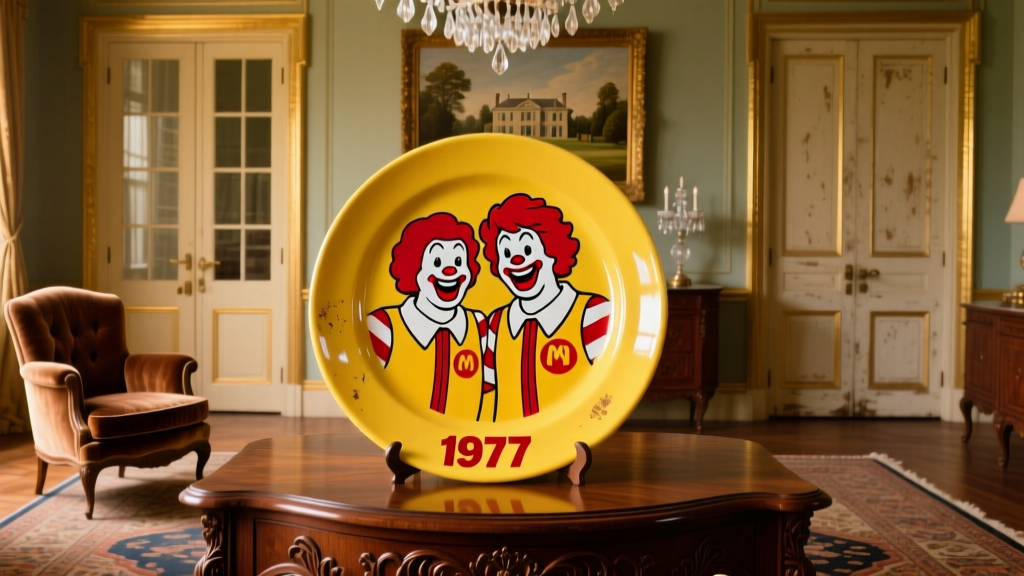
The 1977 Ronald McDonald & Hamburglar 'Share a Big Grin' Advertising Plate: A Plastic Icon of Fast-Food Americana
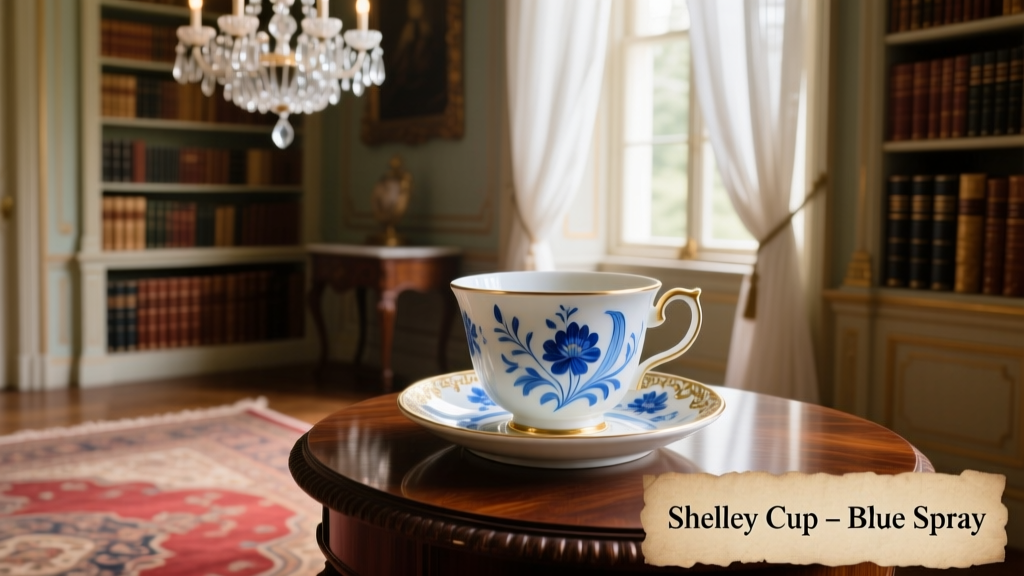
Shelley Cup and Saucer in Blue Spray: Identification, History, and Restoration Guidance
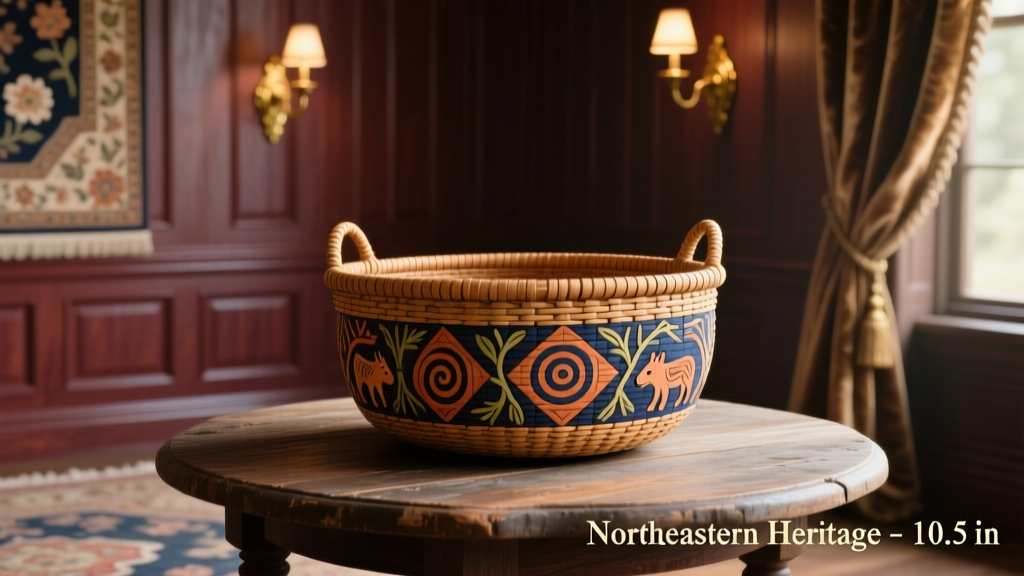
Authentic Northeastern Woodlands Splint Basket: Painted Design Cover, 10½ Inches — Provenance, Construction & Conservation
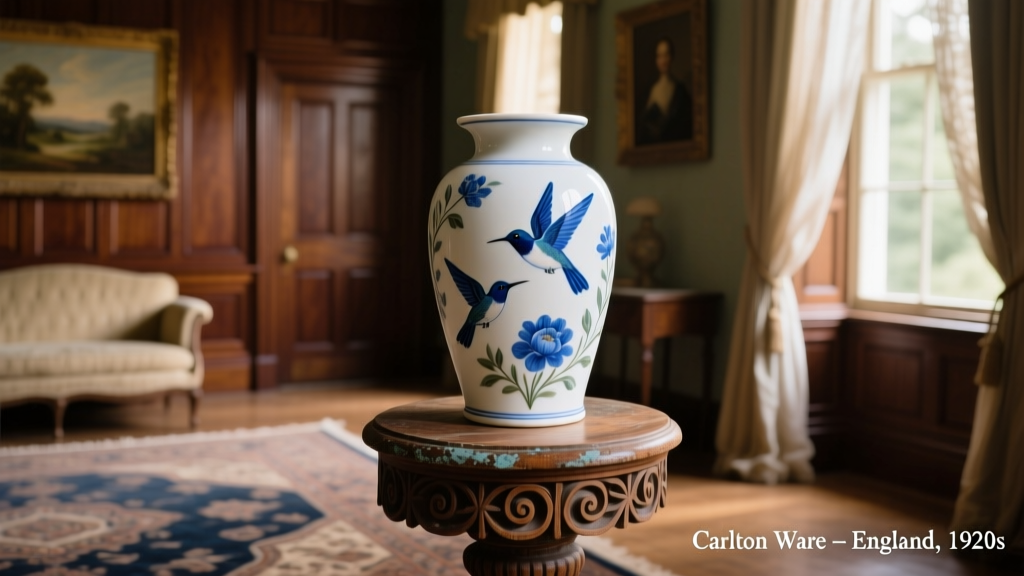
Carlton Ware Vase: Flowers, Hummingbirds & Blue Pedestal — A 7-Inch Masterpiece of English Art Pottery

The Whistling Man Holding a Lamp Post: A German Carved Wood Sculpture from the Late 19th Century