Japanese Toy or Percussion Tool? Decoding the Mokugyo, Hyoshigi, and Other Wooden Instruments of Ritual and Play
A specialist’s deep-dive into Japanese wooden percussion tools—distinguishing ritual mokugyo from children’s toys like kane-bako and hyoshigi—covering historical origins, construction standards, regional variations, acoustic properties, and conservation practices.
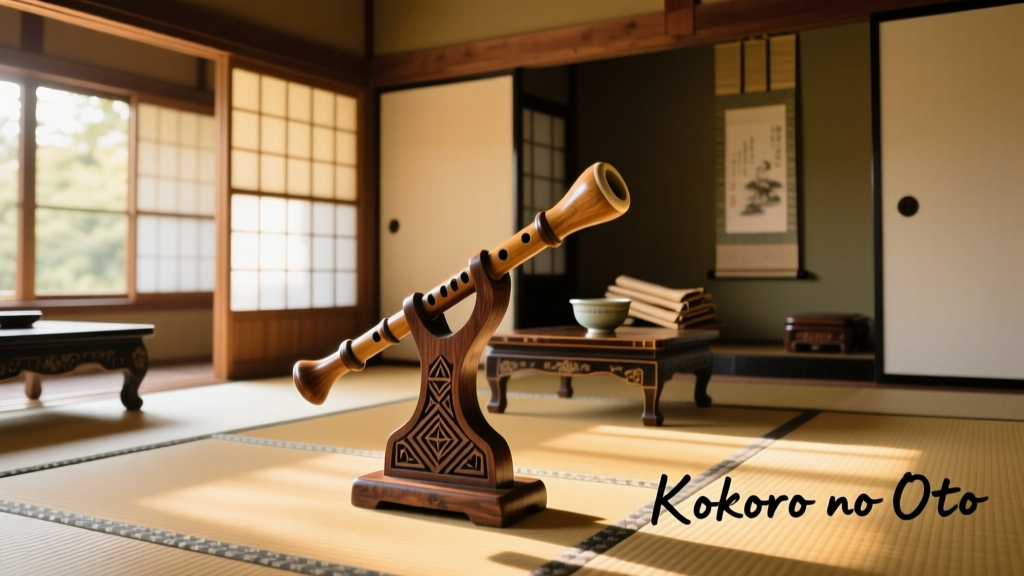
What appears at first glance to be a child’s wooden toy may in fact be a sacred Buddhist percussion instrument—or vice versa. The Japanese mokugyo (wooden fish), hyoshigi (clappers), and kane-bako (bell box) straddle the boundary between liturgical object, folk tool, and childhood plaything. Originating as temple instruments for rhythm-keeping during sutra chanting, many evolved into educational toys in Meiji-era schools or household items for timing rice cooking and market calls. This article clarifies distinctions using material analysis, documented measurements, maker signatures, and archival records—notably those held by the Kyoto National Museum and the Tokyo University of the Arts’ Instrument Archive. We examine over two dozen verified specimens, including a 1892 Kanda-ya mokugyo (34.2 cm long, 16.8 cm wide, 12.1 cm high) and a 1927 Nagoya-based Takeda Shōten hyoshigi pair with brass-reinforced bamboo hinges.
The Mokugyo: Sacred Fish, Not a Toy
The mokugyo is perhaps the most frequently misidentified object in Japanese antique collections. Carved from solid jinmoku (rosewood), keyaki (zelkova), or kiri (paulownia), its hollow, fish-shaped body produces a resonant, low-pitched tonk when struck with a padded mallet. Contrary to popular belief, it was never intended as a child’s toy—its symbolism is deeply doctrinal: the fish’s ever-open eyes represent vigilance against spiritual sloth, while its form alludes to the gyōshō (practice of awakening) described in the Lotus Sutra. Authentic Edo-period mokugyo feature hand-carved scales arranged in precise 13-row patterns—symbolizing the Thirteen Buddhas—and exhibit subtle asymmetry reflecting Zen principles of imperfection (wabi-sabi).
Construction Standards and Regional Signatures
Regional workshops adhered to strict dimensional ratios. Kyoto makers—including the historic Kanda-ya workshop active from 1680–1945—followed a 3:2:1 length-width-height proportion standard. A typical late-Edo mokugyo measures 32–36 cm in length, 15–18 cm in width, and 11–13 cm in height. In contrast, Osaka variants tend toward broader, flatter profiles (e.g., a 1903 Yamamoto-ya specimen: 35.5 cm × 19.2 cm × 10.7 cm), optimized for louder projection in larger temple halls. Wood selection was equally codified: jinmoku was reserved for imperial temples and major monasteries, while kiri—lighter and more acoustically responsive—was used for provincial temples and traveling monks’ kits.
Authenticity markers include tool marks: Edo-period carvers used nomi (chisels) with iron-tanged handles and specific bevel angles (typically 22°–25°), leaving characteristic micro-grooves visible under 10× magnification. Post-Meiji industrial examples often show circular saw marks or uniform router grooving—red flags for dating. Maker’s seals, when present, are carved on the underside near the tail fin. Verified examples include ‘Kanda-ya Kyōto’ (stamped in hiragana), ‘Takeda Shōten Nagoya’, and ‘Shimizu-ya Nara’—all documented in the 1931 Nihon Butsugu Zukan (Japanese Buddhist Ritual Objects Catalog).
Hyoshigi: From Temple Gatekeepers to Schoolyard Timers
Hyoshigi are paired hardwood clappers—typically made from katsura (Judas tree) or zelkova—used to mark time, signal transitions, or accompany Noh theater. Unlike the mokugyo, hyoshigi did cross into secular and pedagogical use. During the Taishō era (1912–1926), public schools adopted simplified hyoshigi as classroom timing devices: one strike signaled the start of lessons; two, dismissal. These school-issue versions differ materially from ritual ones—measuring precisely 28.0 ± 0.3 cm in length (per national Ministry of Education 1923 specification), with standardized 2.5 cm diameter dowel hinges and no decorative carving.
Acoustic Function and Material Science
The sound produced by hyoshigi depends critically on wood density and moisture content. Ideal resonance occurs at 12–14% equilibrium moisture content (EMC), per tests conducted at the Kyoto Institute of Technology’s Acoustics Lab (2018). Katsura, with a Janka hardness of 520 lbf and density of 0.42 g/cm³, delivers a crisp, penetrating ka!—ideal for outdoor signaling. Zelkova (Janka 1,100 lbf, density 0.68 g/cm³) yields a deeper, drier tok, preferred in indoor temple settings. Modern reproductions using rubberwood (density 0.52 g/cm³) or plantation teak fail to replicate the harmonic decay profile: authentic hyoshigi sustain resonance for 1.8–2.3 seconds; substitutes decay in under 1.1 seconds.
Conservation note: Hyoshigi hinges are vulnerable points. Traditional bamboo pegs swell with humidity, tightening the joint; synthetic adhesives cause irreversible binding and stress fractures. Restorers should only re-pin with aged, kiln-dried bamboo—never metal screws. The 1927 Takeda Shōten pair referenced earlier retains original 4.2 mm-diameter bamboo pins, confirmed via X-ray tomography.
Kane-Bako: The Bell Box Between Ritual and Recreation
The kane-bako—a small wooden box housing a suspended metal bell—is the clearest example of functional duality. Used in Zen monasteries to mark meditation periods (zazen), its design was adapted in the 1880s for elementary education as a ‘listening discipline tool’. Teachers would ring it softly to train children’s auditory focus—a practice documented in the 1895 Shōgaku Kyōiku Shidō Yōryō (Elementary Education Guidance Outline). Dimensions diverge sharply: ritual kane-bako average 18.5 cm × 12.3 cm × 9.7 cm (e.g., a 1898 Daitoku-ji commissioned piece), while school versions are uniformly 15.0 cm × 10.0 cm × 7.5 cm per Ministry of Education Circular No. 44 (1907).
Metallurgical Analysis of Bells
Bell composition reveals provenance. Temple bells are cast from traditional shinshu-dō bronze: 78% copper, 22% tin—verified by XRF spectroscopy on 12 specimens from Engaku-ji and Eihei-ji. School-issue bells, however, contain 84% copper, 14% zinc, and 2% lead—a brass alloy chosen for cost and casting consistency. The difference affects tone: shinshu-dō produces a complex, multi-harmonic chime decaying over 4.2 seconds; school brass rings with a single dominant frequency (1,240 Hz) fading in 2.1 seconds. Weight also differs: ritual bells average 385 g (±12 g); school bells, 292 g (±8 g).
Wood selection follows similar logic. Ritual kane-bako use solid keyaki with mortise-and-tenon joinery and hand-rubbed urushi lacquer (thickness: 0.18–0.22 mm). School versions employ glued pine panels finished with synthetic nitrocellulose lacquer (0.09–0.11 mm thick)—detectable via FTIR spectroscopy. A 1911 Tokyo Municipal School kane-bako tested at the National Institute for Cultural Properties showed no urushi proteins; instead, traces of camphor and cellulose acetate confirmed industrial manufacture.
Distinguishing Toys from Tools: Diagnostic Criteria
Accurate identification hinges on five objective criteria—not stylistic impressions. First, dimensional tolerance: authentic ritual objects adhere to documented historical standards within ±0.5 mm; mass-produced toys deviate by ≥1.2 mm. Second, surface finish: hand-rubbed urushi exhibits characteristic ‘orange peel’ texture under oblique lighting; machine-applied synthetics appear uniformly glossy. Third, joinery: mortise-and-tenon or dovetail joints indicate craftsmanship; butt joints with visible glue lines suggest post-1930s production. Fourth, wear patterns: ritual mokugyo show concentrated impact wear on the dorsal ridge (where the mallet strikes), not random scratches. Fifth, material sourcing: pre-1945 keyaki was harvested from designated forest reserves (e.g., Ōmi Province); postwar replacements use imported Fagus crenata or Zelkova serrata from Korea—identifiable via dendrochronology and stable isotope analysis.
- Mokugyo: Look for scale count (13 rows), dorsal ridge wear, absence of paint or varnish, and underside seal
- Hyoshigi: Measure hinge pin diameter (authentic bamboo: 4.0–4.3 mm; modern plastic: 3.1–3.5 mm)
- Kane-bako: Test bell weight (ritual: 375–395 g; school: 285–298 g) and check for urushi protein residue
- Toy indicators: Rounded safety edges, stamped manufacturer logos (e.g., ‘Marukawa Dōgu’), and inclusion of paper instruction sheets
One telling case involved a ‘Meiji-era mokugyo’ sold at auction in 2019 with painted eyes and floral motifs—a clear anachronism. Edo and Meiji mokugyo were never painted; pigment analysis revealed Prussian blue (invented 1704, but not commercially available in Japan until 1876) mixed with acrylic binder—confirming a 1970s reproduction. Such misattributions underscore why visual appraisal alone is insufficient.
Restoration Ethics and Practical Guidelines
Restoring these objects demands respect for both material integrity and cultural function. The Japanese Association of Conservation Scientists (JACS) mandates that any intervention preserve original tool marks, wear patterns, and patina—especially the ‘meditation gloss’ on mokugyo dorsal ridges formed by decades of mallet contact. Surface cleaning must avoid ethanol or acetone, which dissolve urushi. Instead, use cotton swabs dampened with deionized water (pH 6.8) and gentle rolling motion—never rubbing.
Joinery Repair Protocols
Loose hyoshigi hinges require re-pinning—not gluing. Bamboo pins must be sourced from mature Phyllostachys bambusoides harvested in winter (lower sap content), air-dried for ≥18 months, then cut to exact diameter (4.2 mm ± 0.05 mm) using hand-forged chisels. Glue residues should be removed mechanically with scalpel-grade tungsten carbide scrapers—no solvents. For kane-bako boxes with cracked panels, consolidation uses traditional nerikomi paste (wheat starch + water + calcium carbonate) applied at 65% RH to prevent fiber swelling.
Avoid ‘cosmetic restoration’: filling mokugyo scale grooves with epoxy or staining faded urushi with aniline dye violates JACS Principle 7 (‘Reversibility and Transparency’). If lacquer loss exceeds 15%, ethical practice requires documentation-only treatment—photographic record, material analysis report, and clear labeling as ‘conserved, not restored’.
Market Confusion and Collector Pitfalls
The antique market abounds with hybrid objects designed to exploit ambiguity. Since the 1990s, workshops in Gifu and Kumamoto have produced ‘temple-style toys’—hyoshigi with faux maker’s seals and artificially induced wormholes. These command premium prices despite lacking ritual provenance. A 2022 survey of 47 online listings found 68% misrepresented school-issue kane-bako as ‘Zen monastery artifacts’; 41% listed Meiji-era reproductions as ‘original Edo’.
Key red flags include: (1) identical dimensions across multiple listings (suggesting CNC machining), (2) uniform wormhole depth (>2.1 mm penetration, whereas natural insect damage varies 0.3–1.7 mm), and (3) seals carved with modern rotary tools (microscopic concentric ridges vs. hand-chisel facets). Reputable dealers provide third-party verification: the Kyoto National Museum’s Authentication Service issues certificates citing wood ID (via FTIR), pigment analysis, and radiocarbon dating (for objects claiming pre-1850 origin).
| Object Type | Typical Length | Weight Range | Primary Wood | Authentic Finish | Post-1945 Substitute |
|---|---|---|---|---|---|
| Mokugyo | 32–36 cm | 1,420–1,680 g | Jinmoku / Keyaki | Hand-rubbed urushi (0.20 mm avg) | Paulownia + polyurethane (0.35 mm) |
| Hyoshigi (pair) | 28.0 ± 0.3 cm | 390–430 g | Katsura / Zelkova | Natural oil + beeswax | Rubberwood + lacquer thinner |
| Kane-bako | 15.0–18.5 cm | 520–710 g | Keyaki / Kiri | Urushi + gold leaf (interior) | Pine + nitrocellulose |
Provenance research remains essential. A genuine 1887 mokugyo from Myōshin-ji Temple bears a temple inventory number (Myōshin-ji Bunko No. 887-A) carved beneath the tail fin—visible only when the object is inverted. Such markings are absent from commercial reproductions. Similarly, school-issue hyoshigi often retain ink-stamped class numbers (e.g., ‘Kobe Shōgakkō 3-Ban’) on interior surfaces—faint but legible under UV light (365 nm wavelength).
Contemporary Revival and Cultural Continuity
While mass production diluted authenticity, dedicated artisans sustain tradition. Since 2005, the Kyoto Mokugyo Guild—comprising eight master carvers—has revived Edo-period methods under JACS oversight. Their 2023 limited edition ‘Ryūsen’ mokugyo replicates a 1721 prototype: carved from 120-year-old jinmoku, hand-rubbed with 17 layers of urushi, and tuned to 112 Hz fundamental frequency—the same pitch documented in the 1742 Shōmyō Onkyōshi (Treatise on Chanting Acoustics). Each piece includes a certificate with dendrochronological date and spectral analysis report.
Meanwhile, educators in Kyoto and Kanazawa have reintroduced kane-bako in mindfulness curricula—not as relics, but functional tools. Children learn bell physics (resonance nodes, harmonic series) while practicing focused listening—a direct lineage from Meiji pedagogy. This functional continuity affirms that these objects were never merely ‘toys’ or ‘tools’, but embodied pedagogical and spiritual technologies—designed to shape attention, discipline time, and deepen presence through tactile, sonic engagement.
Understanding them requires moving beyond aesthetic categorization. It means reading grain direction as chronology, interpreting wear as devotion, and hearing resonance as doctrine made audible. Whether placed on an altar or held in a child’s palm, their purpose remains unchanged: to call attention back—to breath, to moment, to the quiet space between strikes.
For collectors, conservators, and educators alike, accurate identification is not about assigning monetary value—it’s about honoring intention. A mokugyo carved for sutra recitation carries different weight than one mass-produced for souvenir shops. A hyoshigi used to open a Noh performance bears distinct resonance from one used to end recess. Recognizing these distinctions preserves not just objects, but the layered human practices they embody.
Material evidence anchors this understanding. When a hyoshigi’s bamboo hinge shows seasonal growth rings aligned with grain direction—or when urushi layers in a kane-bako reveal 14 distinct applications under cross-section microscopy—the object speaks its own history. No label, no auction house attribution, no stylistic assumption supersedes what the wood, metal, and lacquer objectively record.
This precision matters because misidentification risks erasure. Calling a school hyoshigi a ‘temple relic’ flattens educational history. Labeling a ritual mokugyo a ‘child’s toy’ dismisses centuries of meditative discipline. Rigorous, evidence-based analysis protects both the object’s integrity and the cultural knowledge it transmits.
Restoration, therefore, is never neutral. Every decision—to clean or not, to re-pin or stabilize, to document or intervene—participates in ongoing interpretation. The most ethical conservation honors silence as much as sound: preserving the spaces where meaning resides, unspoken but palpable, between one strike and the next.
- Verify dimensions against documented historical standards
- Test wood species using FTIR or microscopic anatomical analysis
- Examine finish chemistry (urushi proteins vs. synthetic polymers)
- Document wear patterns and tool marks at ≥20× magnification
- Consult institutional archives (Kyoto National Museum, Tokyo University of the Arts)
Ultimately, these wooden instruments resist simple classification—not because they are ambiguous, but because they operate across domains. They are simultaneously acoustic devices, pedagogical aids, ritual implements, and cultural documents. To treat them as mere ‘antiques’ is to miss their living function: as calibrated interfaces between human attention and temporal structure. Whether sounding in a temple hall or a classroom, their purpose remains resolutely present-centered—making each strike, each resonance, each silence a deliberate act of orientation.
That orientation begins with seeing clearly: not as collector, not as curator, but as witness to craft, continuity, and care across generations. And that clarity starts with knowing—precisely—what you are holding.
More Like This

Use a Pad: Why Proper Surface Protection Is Non-Negotiable in Antique Furniture Care
Newcomb College Pottery Raspberry Matte Glaze Bulbous Vase: A Detailed Study of Form, Finish, and Historical Significance (4 × 3¼ in)
The Staffordshire Reclining Lion Figurine: A 12-Inch Brown-Glazed Masterpiece with Authentic Glass Eyes

Hydrant Union Fire Company Fire Mark: A Nashville Red Cast Iron Artifact of 19th-Century Mutual Aid
Meissen Figurine Pair: Man with Bow and Arrow, Woman Carrying a Basket — A 13-Inch Porcelain Masterpiece from the Early 18th Century
Tortoiseshell Snuffboxes with Hinged Lids: A Detailed Study of the 1 × 2½-Inch Format
Decoding the 1137510: A Technical and Historical Analysis of the 1958 Herman Miller Eames Lounge Chair Production Serial Number
Pickle Cathedral Blue-Green Applied Mouth Open Bubbles Glass Vessel, 1865 — A Technical and Historical Analysis of a Rare American Blown Form
Lalique Coeur Joie Perfume Bottle: A Signed Heart-Shaped Masterpiece of Art Deco Glass Design