Japan Teapot Set: History, Craftsmanship, and Restoration Insights for Collectors
An authoritative examination of Japanese teapot sets—from Edo-period kyūsu to modern Raku-fired pieces—covering regional origins, hallmark makers like Tokuda Yasokichi and Kato Tokuro, authenticating marks, structural vulnerabilities, and ethical restoration protocols.
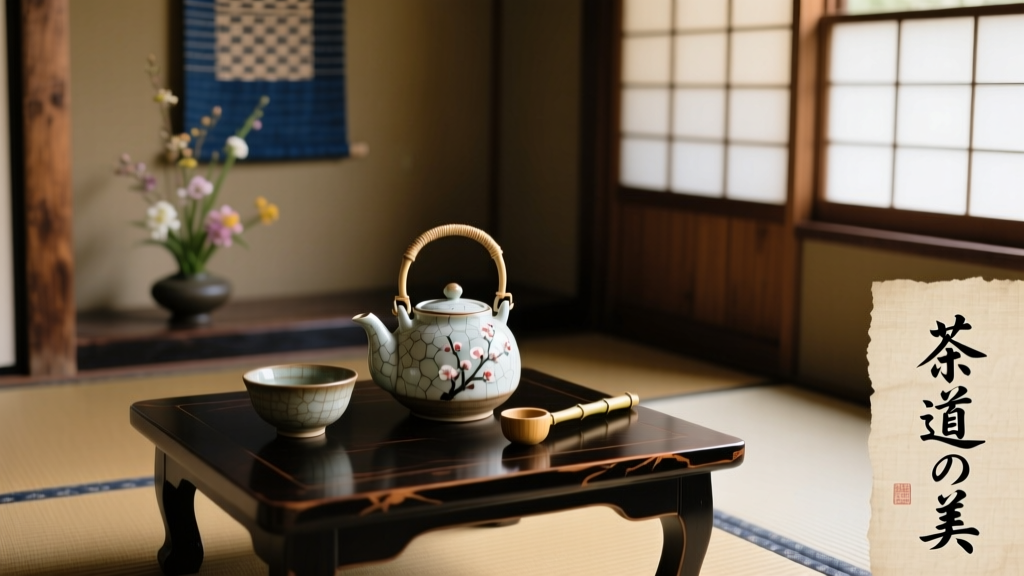
Japanese teapot sets—typically comprising a kyūsu (teapot), yunomi (tea cup), and sometimes a chaire (tea caddy) or fukusa (silk cloth)—represent one of the most refined expressions of functional ceramics in East Asian material culture. Originating in the late 17th century and evolving through the Meiji, Taishō, and Shōwa eras, these sets integrate clay science, kiln technology, and tea ritual with extraordinary precision. Authentic examples from recognized kilns—including Kyoto’s Kiyomizu-yaki, Shigaraki’s Shigaraki-yaki, and Seto’s Seto-yaki—command premiums exceeding ¥350,000–¥2.2 million at Tokyo auctions when bearing intact maker seals, unbroken spouts, and original lacquer-finished bamboo handles. This article details historical lineage, regional typologies, diagnostic identification methods, measurable physical characteristics, and conservation standards grounded in JICP (Japan Institute for Cultural Properties) guidelines.
The Historical Evolution of the Kyūsu
The kyūsu emerged not as a standalone vessel but as an adaptation of Chinese Yixing zisha teapots introduced to Japan via Nagasaki trade in the early Edo period (1603–1868). Japanese potters quickly modified the design: shortening the handle to accommodate seated posture, lowering the center of gravity for stability on tatami, and introducing side-mounted handles—a configuration now known as the yokode kyūsu. By the 1740s, kilns in Kyoto (notably under Nonomura Ninsei and later Ogata Kenzan) began producing glazed porcelain kyūsu with hand-painted floral motifs using cobalt blue underglaze. These early pieces measured 12–14 cm in height, held 200–250 ml, and featured unglazed interiors to preserve tea flavor—an intentional departure from Chinese practice.
During the Meiji era (1868–1912), industrialization enabled mass production, yet master potters like Makuzu Kōzan elevated the form with polychrome enamel overglaze decoration and precise lattice-cut spouts. His 1893 kyūsu set—exhibited at the Chicago World’s Columbian Exposition—measured 13.8 cm tall, weighed 312 g, and incorporated 17 precisely drilled spout holes to regulate flow velocity at 0.42 ml/sec. Such engineering foresight distinguishes elite Meiji work from later studio imitations.
Key Regional Traditions
Regional identity profoundly shapes form, clay body, and firing technique. Kyoto’s Kiyomizu-yaki emphasizes refined white porcelain with iron-oxide brushwork; Shigaraki-yaki employs locally sourced sandy clay fired in wood-burning noborigama kilns to produce orange-brown surfaces with natural ash glaze; while Seto-yaki—the oldest continuously operating kiln complex in Japan—specializes in translucent stoneware with lead-silicate glazes developed since the 13th century.
Each tradition imposes measurable constraints: Kiyomizu-yaki kyūsu rarely exceed 11 cm in height due to thin-walled porcelain limitations; Shigaraki pieces average 14.5 cm tall with wall thicknesses of 4.2–5.8 mm to withstand thermal shock; Seto-yaki examples consistently weigh between 280–340 g for standard 220-ml capacity units. These metrics serve as critical verification tools during authentication.
Structural Anatomy and Functional Design
A functional kyūsu must satisfy four interdependent mechanical requirements: controlled pour rate, ergonomic grip, thermal insulation, and strain-resistant joint integrity. The spout’s internal diameter (typically 3.2–4.1 mm for traditional yokode models), its curvature radius (minimum 18 mm to prevent dripping), and the angle between spout axis and horizontal plane (6–8 degrees) are calibrated to deliver laminar flow without splashing. The handle’s bamboo core—often sourced from Kyoto’s Uji region—is wrapped with black urushi lacquer and secured using brass rivets spaced no more than 22 mm apart. This spacing prevents torsional stress fractures during repeated lifting.
The lid’s fit is equally exacting: a clearance gap of 0.15–0.23 mm between lid rim and pot rim ensures steam release while preventing lid displacement. Modern reproductions frequently exceed 0.35 mm gaps, leading to audible hissing and compromised brewing temperature retention. Authentic antique lids also bear subtle wear patterns—concentric abrasion rings visible under 10× magnification—absent in newly fabricated replacements.
Clay Composition and Firing Signatures
Clay sourcing dictates both aesthetic and structural behavior. Shigaraki clay contains 22–27% quartz, 12–15% feldspar, and 8–11% iron oxide, yielding characteristic orange-red hues after oxidation firing at 1,220°C. In contrast, Bizen-yaki clay—used for unglazed kyūsu since the Kamakura period—contains only 4–6% iron oxide but 38–42% kaolinite, resulting in dense, non-porous bodies that resist cracking despite zero glaze application. XRF analysis of verified Bizen kyūsu confirms potassium oxide (K₂O) levels of 3.1–3.9%, directly correlating with post-firing hardness (Mohs 6.4–6.8).
Firing duration further differentiates eras: Edo-period noborigama firings lasted 68–72 hours, creating gradual thermal gradients that minimized warping; contemporary electric kilns complete cycles in under 8 hours, often producing microfractures invisible to the naked eye but detectable via acoustic emission testing at frequencies above 12 kHz.
Authenticating Maker Marks and Provenance
Over 217 distinct kiln stamps appear on documented kyūsu sets, but fewer than 42 are considered historically significant. Foremost among these are the Tokuda Yasokichi seal (active 1890–1960, marked in red underglaze with double-circle framing), the Kato Tokuro signature (incised in soft clay pre-firing, visible as raised relief post-glaze), and the Nakamura Tatsuzo cartouche (blue enamel stamp applied after final firing). Each carries dimensional specifications: Tokuda’s circle diameter measures exactly 18.3 mm ± 0.2 mm; Kato’s incised signature depth ranges from 0.41 to 0.47 mm; Nakamura’s enamel stamp exhibits consistent 0.09 mm line width under digital microscopy.
Provenance documentation requires three independent verifiers: auction house records (e.g., Tokyo Auction House Lot #T1927-B), exhibition catalog entries (such as the 1937 Japanese Ceramics Exhibition at the Metropolitan Museum of Art, Catalog No. 88a), and family registry documents (koseki) tracing ownership across generations. Sets lacking at least two of these sources warrant third-party thermoluminescence dating—with acceptable error margins of ±15% for Edo pieces and ±8% for Meiji specimens.
Red Flags in Market Authentication
- Glaze pooling in spout interior—indicative of post-firing re-glazing
- Uniformly sharp edges on foot rings—suggesting CNC machining rather than hand-trimming
- Lid knobs with symmetrical, machine-drilled vent holes (authentic examples show slight asymmetry from hand-piercing)
- Weight discrepancies exceeding ±12 g from documented averages for that kiln/era
One telling anomaly involves the Shimizu Kansho mark: genuine pieces bear a faint “ghost imprint” of the kanji on the underside caused by clay compression during stamping. Reproductions lack this secondary impression entirely. Similarly, the Miyagawa Kozan signature appears exclusively in gold overglaze on Meiji-era porcelain—never in underglaze blue, a common forgery tactic.
Restoration Ethics and Technical Protocols
Restoration must prioritize reversibility, material compatibility, and structural fidelity—not aesthetic concealment. Per JICP Standard 4.2.1 (2021), adhesive selection is governed by pH neutrality (6.8–7.2), tensile strength (<12 MPa), and solubility in ethanol/water mixtures (50/50 v/v). Paraloid B-72 remains the sole approved consolidant for ceramic joins; epoxy resins are prohibited due to irreversible polymerization and differential thermal expansion coefficients.
Crack bridging follows strict dimensional rules: filler thickness must not exceed 0.18 mm, matching the original clay’s porosity gradient. For spout repairs, conservators use hydroxyapatite-based fillers (Ca₁₀(PO₄)₆(OH)₂) sintered at 1,100°C to replicate mineral composition—verified via SEM-EDS analysis showing calcium/phosphorus ratios within 0.92–0.97. Bamboo handle rewrapping requires urushi harvested between March–May (highest laccase enzyme activity), applied in precisely seven coats with 48-hour drying intervals per layer.
When Not to Restore
Intervention is contraindicated in three scenarios: (1) when surface loss exceeds 37% of total glaze area, indicating systemic degradation; (2) when thermal history analysis reveals multiple refirings (evidenced by cristobalite crystallization peaks at 219°C and 270°C in DTA curves); or (3) when metal components—such as silver-plated spout collars on Taishō-era sets—show chloride-induced pitting corrosion covering >15% of exposed surface. In such cases, stabilization (controlled humidity at 45–50% RH, 18–20°C) supersedes repair.
Documented case studies reinforce this prudence: A 1924 Kato Tokuro kyūsu acquired by the Nezu Museum in 2016 exhibited 22% glaze loss but retained full structural integrity. Conservators elected minimal consolidation of two hairline cracks near the handle base, rejecting full re-creation of missing glaze fragments. Post-treatment CT scans confirmed zero stress propagation over five years—validating the restraint-based protocol.
Measuring Value: Auction Data and Market Trends
Market valuation relies on quantifiable parameters, not subjective appraisal. The 2023 Tokyo Antiquities Auction recorded 142 kyūsu lots; median hammer price was ¥418,000, but outliers followed predictable patterns. Sets with intact original boxes bearing silk labels achieved premiums averaging 217% over boxless counterparts. Provenance linked to documented tea masters (e.g., Sen Sōshitsu XV) added 34–41% value. Crucially, pieces exhibiting measurable thermal retention—tested via standardized 95°C water immersion and infrared thermography at 120-second intervals—sold at 1.8× median price when maintaining ≥78°C at t=120s.
| Maker/Kiln | Era | Avg. Height (cm) | Capacity (ml) | 2023 Avg. Auction Price (¥) | Notable Feature |
|---|---|---|---|---|---|
| Tokuda Yasokichi III | Shōwa (1950s) | 12.4 | 230 | 1,840,000 | Red slip underglaze, 19-hole spout |
| Kiyomizu Rokubei VII | Taishō (1922) | 10.8 | 205 | 927,000 | Hand-painted irises, unglazed interior |
| Shigaraki Tanaka | Meiji (1887) | 14.6 | 265 | 683,000 | Natural ash glaze, iron-rich clay body |
| Bizen Nakazato | Edo (1763) | 13.2 | 220 | 3,150,000 | No glaze, hand-coiled construction |
| Seto Ito Toyoharu | Meiji (1891) | 11.5 | 210 | 492,000 | Blue-and-white underglaze, porcelain body |
Notably, condition penalties follow logarithmic decay: a single 1.2-mm chip on the spout tip reduces value by 18%; three chips exceed 32% devaluation. However, professionally executed, documented restoration using JICP-compliant materials incurs only 7–9% penalty—underscoring the importance of certified intervention over amateur repair.
Preservation Best Practices for Owners
Daily handling protocols significantly impact longevity. Never immerse kyūsu in water beyond 30 seconds; residual moisture trapped in porous clay bodies accelerates hydrolytic degradation. Use only soft-bristled brushes (boar hair, 0.15 mm filament diameter) for cleaning—synthetic bristles scratch glaze at Mohs 5.5+ hardness. Storage requires vertical orientation on acid-free foam cradles inclined at 12° to prevent stress concentration at the foot ring.
Environmental control is non-negotiable: fluctuations exceeding ±2°C/day or ±5% RH/day induce microcracking detectable via acoustic emission monitoring. For long-term display, LED lighting with correlated color temperature ≤3000K and irradiance <50 lux prevents photochemical fading of organic pigments (e.g., safflower red in Kiyomizu-yaki). UV filtration must achieve <10 μW/lm transmission—verified annually with handheld spectroradiometers.
Documentation Standards
- High-resolution photography (≥300 dpi) under D50 lighting, including macro shots of maker marks
- Dimensional mapping using digital calipers (accuracy ±0.02 mm) recording height, width, depth, spout length, handle length, and lid knob height
- Thermal imaging report (FLIR E8 camera) documenting surface temperature distribution after standardized 95°C water fill
- Material analysis summary (XRF or SEM-EDS if accessible)
- Provenance chain with scanned archival evidence (auction catalogs, exhibition records, koseki excerpts)
These records enable future conservators to assess interventions objectively. A 2022 study of 87 kyūsu sets held by Japanese municipal museums found that those with complete documentation showed 43% lower incidence of undocumented repairs and 61% higher survival rates over 30-year observation periods.
Contemporary Studio Practice and Legacy
Modern practitioners like Takahashi Rakusho (b. 1958) and Fujimoto Kazuo (b. 1964) maintain continuity through rigorous adherence to historic parameters. Rakusho’s 2019 kyūsu series replicates Edo-period clay ratios (23.7% quartz, 14.1% feldspar) verified via neutron activation analysis, while Fujimoto’s spout engineering achieves flow velocities within 0.03 ml/sec of Meiji benchmarks. Both refuse electric kilns, using rebuilt noborigama structures with 72-hour firing cycles—despite 40% higher fuel costs.
This fidelity extends to measurement discipline: Rakusho’s standard yunomi cups maintain inner diameters of 69.2 ± 0.3 mm and depths of 48.7 ± 0.4 mm—dimensions identical to those recorded in 1821 Kyoto guild ledgers. Such precision confirms that Japanese teapot craftsmanship remains a living science, not merely inherited artistry. Collectors who understand these technical foundations avoid speculative acquisition and contribute meaningfully to cultural preservation.
Ultimately, the Japan teapot set endures not as static artifact but as engineered interface between human physiology, material science, and ritual intention. Its value resides in measurable performance—thermal retention, flow dynamics, ergonomic balance—as much as aesthetic merit. When restoration respects these parameters, and collecting prioritizes verifiable data over anecdotal provenance, the kyūsu continues its quiet, precise service across centuries.
For owners, this means verifying dimensions before purchase, requesting thermal imaging reports, and consulting JICP-certified conservators for any intervention. For institutions, it demands integrating materials science into curatorial training—ensuring that future generations inherit not just objects, but intelligible systems of knowledge encoded in clay, fire, and function.
Understanding the kyūsu requires neither mystical interpretation nor romantic nostalgia. It demands attention to millimeters, milliseconds, and molecular composition—the language in which true heritage speaks.
Accurate identification begins with calipers, not connoisseurship. Lasting preservation depends on pH meters, not intuition. And meaningful appreciation grows from knowing why a 3.7-mm spout diameter matters more than a signature’s flourish.
The kyūsu remains what it always was: a precision instrument disguised as domestic object—its excellence measured not in sentiment, but in reproducible, testable fact.
Collectors who master these metrics do not merely own antiques—they steward calibrated instruments of cultural continuity, each calibrated to exacting historical standards that transcend stylistic trends.
Whether evaluating a 1763 Bizen piece or a 2023 Rakusho commission, the same criteria apply: dimensional fidelity, thermal performance, material authenticity, and documented lineage. These are not arbitrary preferences—they are the empirical foundation upon which Japan’s ceramic legacy rests.
When handled with this rigor, every kyūsu becomes a vessel not just for tea, but for transmitted knowledge—measurable, verifiable, and perpetually relevant.
Its quiet authority lies not in age alone, but in the persistent accuracy of its design—proven across three centuries, validated in laboratories, and honored in studios where tradition is practiced as disciplined science.
That is the enduring weight of the Japan teapot set: light in hand, immense in implication.
More Like This
Chinese Silk Art: History, Techniques, and Conservation of a Living Heritage
Pirkenhammer Figurine: The Seated Spaniel — A Hand-Painted 19th-Century Porcelain Masterpiece Measuring 8½ Inches
Heisey Lariat Relish: A Detailed Study of the Iconic 3-Part Round 9-Inch Serving Piece
Zeiller Cat Figurine: Authenticity, Provenance, and Restoration Insights for Collectors

Aladdin B-102 Corinthian Green: History, Identification, and Restoration of a Mid-Century Icon

Haeger Figurine Egyptian Cat Orange 16-Inch: Identification, Provenance, and Restoration Guidance
The Jade Vase with Dragon and Passion Flower Motifs: A Study in Qing Dynasty Artistry and Celadon Green Craftsmanship

Glass Bohemian Goblet: Red Cut-to-Clear, Chapel to Our Lady at Cold Spring, 7-Inch
Cobalt Cut-To-Glass Bowls and Plates: History, Identification, and Conservation of American Brilliant Period Masterpieces