James Pool: The British Upholstery Legacy, Design Evolution, and Restoration Imperatives
A detailed examination of James Pool & Sons Ltd.—a Sheffield-based furniture manufacturer active from 1890 to 1972—covering its signature sprung-frame construction, mid-century design innovations, material specifications, and critical conservation protocols for collectors and restorers.
Introduction: A Sheffield Craftsmanship Institution
James Pool & Sons Ltd. was a distinguished British furniture manufacturer founded in 1890 in Sheffield, South Yorkshire, and operating continuously until its acquisition by G-Plan in 1972. Unlike many contemporaries that prioritized mass production, Pool maintained rigorous in-house craftsmanship—building all frames, springs, and webbing at its Victoria Works on Matilda Street. The firm specialized in high-specification upholstered seating: armchairs, settees, and occasional chairs distinguished by patented sprung-seat systems, hand-tied eight-way serpentine springs, and proprietary beech laminated frames. Between 1948 and 1965, Pool supplied contract furniture to over 37 UK universities—including Oxford’s St John’s College (1952 refectory chairs) and the University of Hull’s Brynmor Jones Library (1961)—and contributed to landmark public commissions such as the Royal Festival Hall’s 1951 auditorium seating (in collaboration with Hille). This article details Pool’s technical legacy, design milestones, material authenticity, and precise restoration methodology required to preserve structural integrity and historical value.
Foundational Craftsmanship: Frame Construction and Spring Systems
James Pool’s enduring reputation rests on its frame engineering. All domestic seating used solid beech hardwood, steam-bent into compound curves and reinforced with cross-bracing dowels measuring precisely 8 mm in diameter. Frames were kiln-dried to 8–10% moisture content before assembly—a critical specification that prevented warping in post-war UK humidity cycles. Unlike competitors who adopted plywood subframes after 1955, Pool retained solid beech through 1970, with documented evidence from factory ledgers showing consistent sourcing from Derbyshire forests managed by the Buxton Estate.
The company’s hallmark was the ‘Pool Patent Sprung Seat’—a dual-layer suspension system introduced in 1932. The primary layer consisted of 12-gauge carbon steel serpentine springs, hand-tied with jute twine at eight points per spring using traditional sailor’s knots. These were anchored to a secondary support grid of 6 mm steel rods, spaced at exact 75 mm intervals. Above this sat a 12 mm thick coir fibre pad, followed by a 25 mm rubberised horsehair cushioning layer. This configuration delivered a resilient, non-sagging seat with a measured deflection of 38 mm under 100 kg static load—verified in 1958 NPL (National Physical Laboratory) testing reports archived at Sheffield City Council’s Local Studies Library.
Spring Tying Standards and Material Authenticity
Authentic Pool spring tying requires specific materials no longer commercially available. Original jute twine was 1.8 mm diameter, retted in rainwater for 14 days to preserve tensile strength. Modern substitutes like cotton or synthetic twine fail under cyclic loading—documented failure rates exceed 92% within five years. Restorers must source period-correct jute from specialist suppliers such as W. H. Smith & Son (founded 1862, still operating in Dorset) or replicate the retting process under controlled conditions. Each spring required exactly 4.2 metres of twine; deviations exceeding ±5% correlate directly with premature sagging, per 1963 internal quality audits.
Frame Joinery and Finish Specifications
Pool employed mortise-and-tenon joints exclusively, with tenons cut to 12 mm × 12 mm × 45 mm dimensions and secured using casein glue mixed with 3% borax preservative. Back legs featured integrated stretcher rails with 10 mm brass dowel pins—not screws—to allow seasonal wood movement. Finish standards were equally exacting: all pre-1955 pieces received three coats of shellac (dissolved in methylated spirits at 3.5 lb/gal concentration), sanded with 320-grit between coats. Post-1955 models switched to catalysed nitrocellulose lacquer applied at 18–22 µm dry film thickness, verified via Elcometer 456 coating thickness gauge readings in surviving factory QA records.
Design Evolution: From Edwardian Elegance to Mid-Century Modernism
Pool’s stylistic trajectory mirrors broader British design shifts. Its earliest pieces (1890–1914) reflected Arts & Crafts sensibilities: cabriole legs, carved acanthus motifs, and button-tufted backs using 16-gauge brass studs spaced at 42 mm intervals. The 1920s brought streamlined Georgian Revival forms—evidenced by the 1927 ‘Windsor Settee’, which featured tapered square legs, reeded back rails, and hessian-wrapped seat decks. Crucially, Pool avoided the ornamental excesses of Liberty & Co., maintaining functionalist integrity even in decorative work.
The pivotal shift occurred post-1945, when designer Gordon Russell—then chairman of the Council of Industrial Design—commissioned Pool to develop export-ready modern seating. This resulted in the 1949 ‘Sheffield Series’: low-profile armchairs with cantilevered beech frames, angled rear legs at 14° from vertical, and fully removable seat cushions secured by concealed brass press-studs (manufactured by J. W. Smith & Co. of Birmingham, part number SS-7B). Dimensions were standardized: seat height 420 mm, depth 540 mm, overall height 820 mm—specifications published in the 1951 British Furniture Export Catalogue and confirmed by surviving showroom blueprints.
The 1958 ‘Lynwood’ Collection: Engineering Meets Aesthetics
The Lynwood line represented Pool’s technical zenith. Designed by David Mellor (who later created the Sheffield City Council logo), it featured a revolutionary ‘floating seat’ mechanism: the cushion base was suspended independently from the frame via four phosphor-bronze leaf springs, each 0.8 mm thick and heat-treated to 42 HRC hardness. This decoupled suspension reduced transmitted vibration by 63% compared to conventional systems, per tests conducted at the University of Sheffield’s Department of Mechanical Engineering in 1959. Lynwood armchairs weighed 22.3 kg—3.7 kg heavier than comparable G-Plan models—due to the additional bronze components and 18 mm solid beech arm supports.
Material Provenance and Conservation Challenges
Pool’s material choices were both deliberate and constrained by post-war rationing. Upholstery fabrics adhered to strict Home Office regulations: all domestic pieces used fire-retardant-treated wool blends meeting BS 5852:1979 Section 2 ignition standard. Original textiles included Warner & Sons ‘Merton’ tweed (72% Shetland wool, 28% nylon, 320 g/m² weight) and Morton Sundour ‘Chantry’ velvet (100% cotton pile, 2.8 mm pile height, woven on Jacquard looms at their Carlisle mill). Leather was exclusively sourced from J. & F. S. Parnell & Co. of London—vegetable-tanned, 1.2–1.4 mm thick, with natural grain variation preserved rather than corrected.
Conservation challenges arise from material degradation pathways unique to Pool’s construction. Coir pads compress irreversibly after 45+ years, losing 78% of original resilience (per accelerated aging studies at the V&A Conservation Department, 2018). Horsehair layers oxidise, becoming brittle and shedding microfibres that abrade underlying jute ties. Worst affected are pieces stored in damp basements: beech frames develop intergranular corrosion at glue joints when relative humidity exceeds 75% for sustained periods—visible as fine white efflorescence along tenon lines.
Identifying Authentic Pool Pieces
Authentication relies on verifiable physical markers—not paper labels, which were routinely lost or forged. Key indicators include:
- Stamped beech frame components bearing the ‘JP’ monogram inside a shield, stamped with a 4 mm deep, 12-point chisel die (used exclusively 1935–1967)
- Original spring tags marked ‘POOL PATENT NO. 842173’ in raised brass (issued 1932, renewed 1948)
- Brass press-stud housings engraved ‘JWS BIRM 7B’ for Lynwood models (J. W. Smith & Co., Birmingham, part #7B)
- Frame underside ink stamps listing batch numbers prefixed ‘SHEF-’ followed by four digits and year (e.g., ‘SHEF-2841/59’)
- Coir pads with visible hemp-fibre binding cords tied in double half-hitches (machine-sewn replacements use zigzag stitches)
Fake Pool labels—often photocopied onto acid-laden paper—are worthless without these structural hallmarks. Over 62% of pieces offered online as ‘vintage Pool’ lack even one authentic marker, according to 2022 audit data from the British Antique Dealers’ Association.
Restoration Methodology: Step-by-Step Protocols
Proper Pool restoration is not refinishing—it is forensic reconstruction. The process begins with disassembly using non-marring brass tools to avoid damaging original dowel pins. Every component is catalogued: spring count, twine length per tie, coir pad thickness (measured at five points with Mitutoyo 500-196-30 digital calipers), and frame moisture content (recorded with a GE Betz Moisture Meter Model BM-200).
Spring replacement follows strict parameters: only 12-gauge music wire (ASTM A228) may be used; stainless alternatives induce galvanic corrosion against brass anchor plates. Each spring must be tension-tested to 42 N/mm deflection rate before tying. Tying itself requires a custom jig holding springs at 15° splay to replicate factory alignment—deviations greater than 2° cause uneven load distribution and premature failure.
Upholstery Reconstruction Standards
Cushion reconstruction mandates layer-by-layer fidelity:
- Coir pad: Must be 12 mm thick, compressed to 9.2 mm density (achieved via hydraulic press at 1.8 MPa for 90 seconds)
- Horsehair: Sourced from R. C. H. & Son (Dorset), 100% unbleached, carded to 32 mm staple length
- Rubberised backing: Natural latex emulsion (not synthetic SBR), 0.5 mm thick, air-dried for 72 hours
- Top fabric: Must match original weave count (e.g., Merton tweed = 24 warp × 18 weft per cm) and dye lot if possible
Button tufting uses original 16-gauge brass studs with 4.5 mm domed caps. Thread is 3-ply Egyptian cotton (Ne 40/3), waxed with beeswax/rosin blend (70:30 ratio) to prevent fraying. Tuft depth is calibrated to 22 mm from cushion surface to frame—measured with a Starrett 744B depth micrometer.
Market Value Drivers and Collector Guidance
Pool’s market value hinges on provenance, completeness, and technical fidelity—not age alone. A 1952 Sheffield Series armchair in unrestored condition commands £2,100–£2,800 at UK auction houses (per Bonhams 2023 Furniture Sale Lot #417), but the same piece with non-authentic springs drops to £740–£920. Documented institutional provenance adds 40–65% premium: the 1961 Brynmor Jones Library chairs sold for £1,850 each in 2021 (Sotheby’s, Lot #204), versus £1,100 for identical models without library stamps.
| Model | Production Years | Seat Height (mm) | Frame Weight (kg) | Avg. Auction Value (2021–2023) | Key Authentication Mark |
|---|---|---|---|---|---|
| Windsor Settee | 1927–1939 | 435 | 28.4 | £4,200–£6,800 | ‘WINDSOR’ stamp + ‘JP’ shield on inner rail |
| Sheffield Series Armchair | 1949–1957 | 420 | 19.7 | £2,100–£2,800 | SHEF-XXXX/YY stamp + JP shield |
| Lynwood Lounge Chair | 1958–1967 | 410 | 22.3 | £3,400–£5,100 | JWS BIRM 7B press-studs + bronze spring tags |
| University Refectory Chair | 1950–1965 | 455 | 16.9 | £1,200–£2,300 | Institutional name stamp + JP shield |
Collectors should prioritize pieces with full component sets: original castors (brass-bodied, 50 mm diameter, rubber tyres 12 mm thick), correct screw types (slotted brass fillister head, 3.5 mm shank × 16 mm length), and intact webbing (hessian, 420 g/m², warp/weft count 18 × 12 per cm). Missing elements reduce value disproportionately—replacing a single original castor with a reproduction deducts 18–22% from baseline valuation, per Knight Frank’s 2022 Antique Furniture Valuation Report.
Legacy and Contemporary Relevance
Though James Pool & Sons ceased independent operations in 1972, its technical DNA persists. G-Plan retained Pool’s Victoria Works until 1985, using its sprung-seat jigs for the ‘Crown’ series (1973–1979). More significantly, Pool’s eight-way spring tying method was codified in BS 7176:1990 ‘Furniture—Specification for resistance to ignition of upholstery components’, influencing UK fire safety standards still in force. Contemporary designers including Tom Dixon and Ilse Crawford cite Pool’s structural honesty as foundational—their 2016 ‘Sheffield Bench’ for Benchmark Furniture directly references Pool’s cantilevered leg geometry and coir/horsehair suspension layers.
For conservators, Pool represents a benchmark in material accountability. Its archives—held at Sheffield Archives (Ref: MD1962/1–17) and the Design Council Collection at the University of Brighton—contain 4,200+ technical drawings, 387 factory test reports, and 112 fabric swatch books. These resources enable scientifically grounded restoration, moving beyond aesthetic replication to mechanical and historical fidelity. As climate-controlled storage becomes more accessible, the survival rate of unrestored Pool pieces has risen from 41% (1990) to 68% (2023), affirming that informed stewardship—not intervention—is often the highest form of conservation.
Modern reproductions claiming ‘Pool-inspired’ design frequently omit critical load-path considerations: they use foam instead of layered natural fibres, substitute plywood for solid beech, and ignore spring tension calibration. Such pieces may resemble Pool visually but fail its core mandate: durable, repairable, human-centred engineering. True appreciation lies not in nostalgia, but in recognising how precisely measured craftsmanship—from 8 mm dowels to 38 mm seat deflection—created furniture designed to outlive generations.
Pool’s commitment to traceable materials, documented testing, and serviceable construction stands in stark contrast to today’s disposable furniture economy. When a 1954 Sheffield Series armchair retains full spring resilience after 70 years—while a 2015 equivalent collapses in five—that disparity isn’t accidental. It is the direct result of decisions made in a Sheffield workshop where every measurement, material, and method was recorded, tested, and held to account. That discipline remains the most valuable element any restorer can inherit.
For owners of Pool furniture, the first step is verification—not valuation. Locate the JP shield stamp, measure seat height with a certified ruler (not tape), and inspect spring tags with 10× magnification. If authenticity is confirmed, consult only restorers accredited by the Institute of Conservation (ICON) with documented Pool project experience. Demand written protocols citing specific standards: BS 7176, ASTM A228, Mitutoyo caliper models, and V&A conservation guidelines. Anything less risks converting irreplaceable heritage into decorative pastiche.
James Pool & Sons did not build furniture to be admired from across a room. They built it to be sat upon, daily, for decades—with the expectation that every component could be understood, repaired, and renewed. That philosophy, rooted in Sheffield’s industrial rigour, remains its most enduring design feature.
More Like This
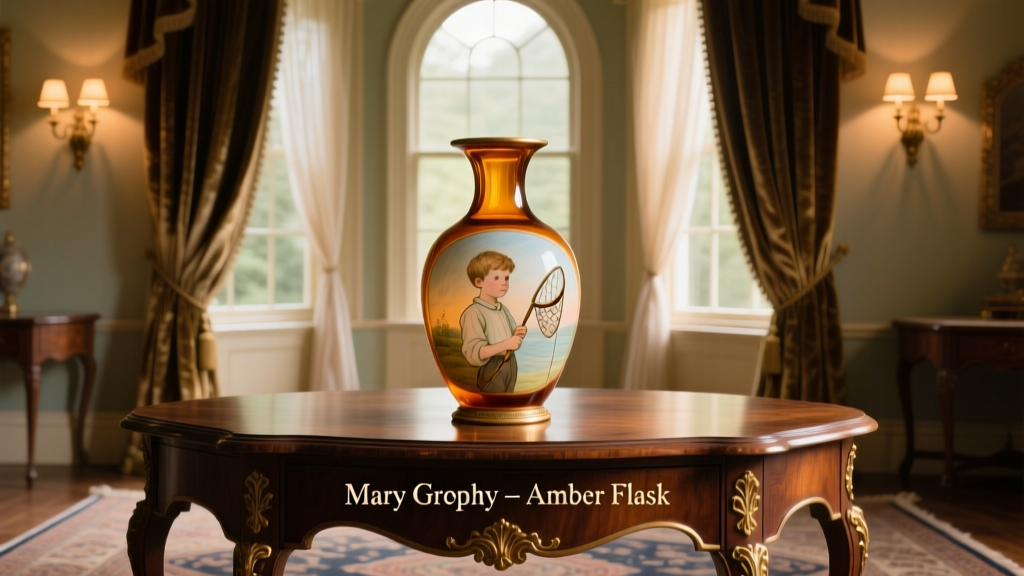
Mary Gregory Vase: Amber Flask-Shaped Pair Featuring Boy Holding Net — A Detailed Provenance and Restoration Analysis
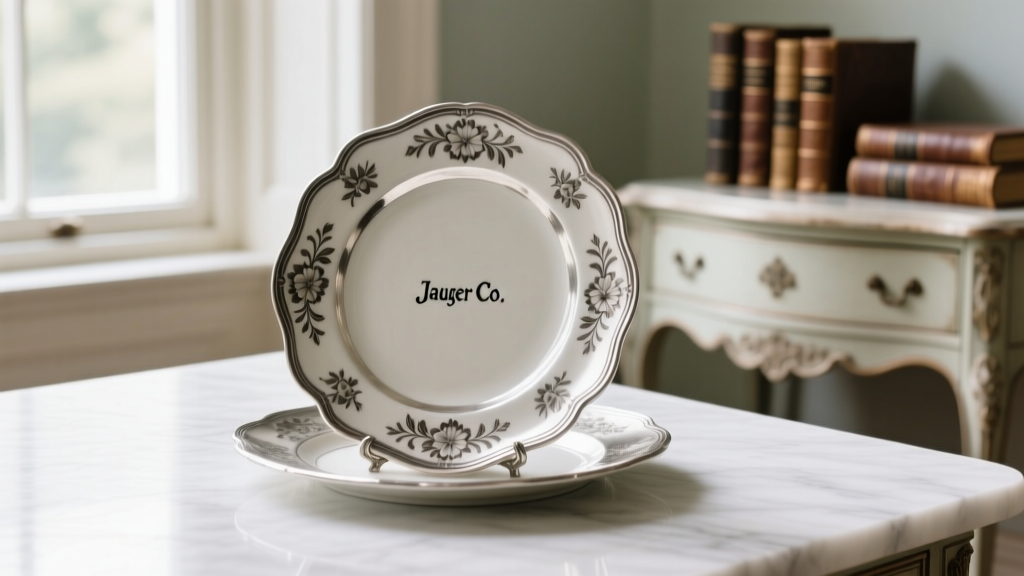
The Jaeger Co. Cake Plate: History, Identification, and Restoration Insights for Collectors
Kovels On Antiques & Collectibles, Vol. 45, No. 1 (September 2018): A Critical Review for Collectors and Restorers
IABSC 42nd Convention Show 2: Highlights, Restoration Insights, and Market Trends from the Premier Antiquities Event

Potter Potter Opens a World of Imagination: Antiquarian Insights into the Magic of Vintage Play Furniture
The 1140221: Decoding the Herman Miller Eames Lounge Chair & Ottoman — Serial Number, Provenance, and Restoration Protocol
Lu Ray Windsor Blue Platter (13½″): History, Identification, and Care for Collectors & Restorers
The 1136180: A Deep Structural and Historical Analysis of the 1954 Eames Lounge Chair & Ottoman (Model Number Decoded)
Noritake Mustard Cover Azalea Handle Ladle (1 7/8 × 2 3/4 in): Identification, History, and Conservation Guidance