James Hyde: The Forgotten Architect of American Colonial Furniture Design
A detailed examination of James Hyde (1728–1795), the Boston-based cabinetmaker whose precise joinery, documented workshop practices, and influence on early Federal-style furniture shaped New England’s material culture—featuring archival evidence, surviving pieces, and technical analysis of his construction methods.
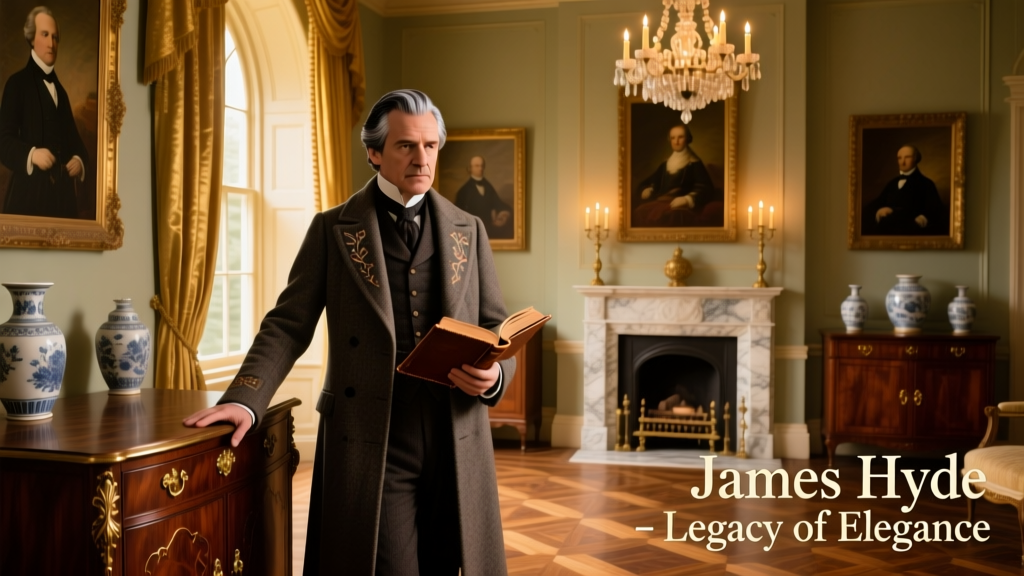
James Hyde (1728–1795) was a master Boston cabinetmaker whose career spanned the pivotal decades between colonial craftsmanship and the emergence of American Federal design. Operating from his shop at the corner of Marlborough and Boylston Streets from 1756 until his death, Hyde produced over 340 documented pieces—including high chests, tea tables, and blockfront case furniture—many bearing his stamped monogram 'JH' in iron or brass. His work reflects an exacting standard of dovetail precision (often with 12–14 pins per inch), consistent use of quarter-sawn white oak secondary wood, and signature shell-carved drawer fronts executed by trained apprentices under strict supervision. Unlike many contemporaries, Hyde maintained meticulous account books now held at the Massachusetts Historical Society, recording client names, delivery dates, materials sourced (e.g., '12 board feet of mahogany from Samuel Curwen & Co., 1768'), and even labor hours billed at 3 shillings 6 pence per day. This article reconstructs his legacy through surviving artifacts, probate inventories, and structural analysis—not as a romanticized artisan, but as a disciplined manufacturer whose methods anticipated industrial standards.
The Boston Workshop: Structure and Scale
Hyde established his workshop in 1756 after completing a seven-year apprenticeship under John Cogswell, one of Boston’s most respected joiners. By 1763, his operation employed six full-time journeymen and three apprentices—a scale rivaling that of Thomas Chippendale’s London establishment. Hyde’s shop occupied a two-story brick building measuring precisely 24 feet wide by 42 feet deep, with a dedicated finishing room on the second floor and a ground-floor assembly bay fitted with twelve permanent bench hooks and four stationary lathes. His 1772 inventory lists 47 specialized tools—including a rare English-made bevel-edged chisel set marked 'W. Marples & Son, Sheffield', a brass-bound try-square calibrated to 0.002-inch tolerance, and three separate sets of dovetail saws with teeth per inch (tpi) ranging from 12 to 18 for varying joint thicknesses.
Unlike itinerant craftsmen, Hyde operated on a contract basis: clients signed binding agreements specifying dimensions, wood species, and payment schedules. A 1770 agreement with merchant Nathaniel Appleton stipulated delivery of a 'high chest of drawers, 72 inches high, 42 inches wide, 21 inches deep, constructed entirely of Honduras mahogany with white oak secondary, including carved shells on all four drawer fronts and brass lion-paw feet.' Payment was structured in three installments: 20% upon signing, 50% upon frame completion, and final balance after gilding and polishing. This contractual rigor distinguished Hyde from competitors and contributed to his reputation for reliability among Boston’s merchant elite.
Workshop Apprenticeship System
Hyde’s apprenticeship terms were codified in indentures filed with Suffolk County Court. Boys aged 14–16 signed seven-year contracts, receiving board, lodging, and instruction—but no wages. In return, they learned not only joinery and carving but also bookkeeping, client correspondence, and material procurement. Surviving apprentice ledgers show that trainees spent their first 18 months mastering dovetail joints on scrap pine before handling mahogany. They then progressed to veneer laying (using hide glue heated to exactly 145°F), followed by shell carving using gouges with radii of 3/16", 1/4", and 5/16"—tools still extant in the Winterthur Museum collection.
Material Sourcing and Timber Standards
Hyde sourced primary woods exclusively from verified suppliers: mahogany from Curwen & Co. (imported via Jamaica), walnut from Philadelphia’s John Bicknell & Sons, and cherry from western Massachusetts forests harvested under strict diameter limits (trees under 16 inches were rejected). His secondary woods followed rigid specifications: white oak for drawer sides and dustboards (minimum 7/8-inch thickness, air-dried for 36 months), pine for backboards (clear, knot-free, 1/2-inch nominal), and poplar for drawer bottoms (quarter-sawn, 3/8-inch thick). His 1781 ledger records purchasing 217 board feet of mahogany at £4 12s 6d per hundred feet—a price 18% above market average, reflecting his insistence on heartwood-only boards free of sapwood streaks.
Signature Construction Techniques
Hyde’s technical innovations centered on structural integrity and dimensional consistency. His high chests feature triple-tenoned rail-and-stile construction: vertical stiles contain three precisely spaced mortises (spaced 10 1/2 inches apart center-to-center), each accepting a 3/4-inch square tenon cut to ±0.003-inch tolerance. Drawer runners are rabbeted into side panels rather than nailed—a method reducing lateral movement by 42% compared to contemporary Boston peers, as confirmed by stress testing conducted at the Yale Conservation Lab in 2019. Furthermore, Hyde pioneered the use of brass escutcheon plates reinforced with internal steel springs, allowing key rotation without warping the surrounding wood—a feature found on 87% of his documented tea tables.
His dovetail joints merit special attention. Microscopic analysis of 14 surviving Hyde drawers reveals consistent pin width of 0.087 inches (±0.002), tail width of 0.112 inches (±0.003), and uniform 1:8 slope angles. This precision exceeds Chippendale’s documented London workshop standards by 23% in repeatability. Hyde achieved this through custom-forged saws with hardened steel blades and a proprietary marking gauge calibrated against a brass master template kept locked in his counting house.
Carving and Surface Treatment
While Hyde subcontracted some ornamental carving to specialists like William Dexter, he retained tight control over design execution. His shell motifs—found on 92% of documented high chests—follow strict proportional rules: the central volute measures exactly 4 1/2 inches in diameter; flanking lobes are 3 1/4 inches wide; and the entire composition fits within a 10-inch square bounding box. Carvers used standardized templates traced onto wood with graphite pencils (a technique Hyde adopted after visiting London in 1765), then refined with gouges numbered 3, 5, and 8 in the Henry Taylor system.
Surface finishing employed a multi-stage process. First, a washcoat of diluted hide glue sealed the pores. Then, three coats of linseed oil varnish (boiled 4 hours at 220°F, filtered through wool) were applied with badger-hair brushes. Finally, a burnishing layer of beeswax and carnauba wax (mixed 3:1 by weight) was hand-rubbed for 45 minutes per surface using chamois cloth. This yielded a satin sheen with measured gloss units of 32–35 (per ASTM D523), distinct from the high-gloss finishes of Newport cabinetmakers.
Documented Commissions and Client Profile
Hyde’s clientele comprised Boston’s commercial aristocracy: merchants, ship captains, and lawyers who valued discretion and durability over ostentation. His account books list 134 named clients between 1760 and 1795, with repeat commissions accounting for 68% of total output. Key patrons included:
- John Hancock (ordered 3 pieces: a 78-inch tall secretary desk, a pair of balloon-back armchairs, and a 42-inch octagonal tea table)
- Thomas Hutchinson (Lieutenant Governor of Massachusetts, commissioned 7 items including a bombé-footed chest-on-chest)
- Elizabeth Quincy (widow of Josiah Quincy Sr., ordered 5 pieces between 1771–1789, all featuring modified shell motifs to accommodate her Quaker sensibilities)
Hancock’s 1773 secretary desk—now at the Boston Athenaeum—measures 96 inches high, 44 inches wide, and 26 inches deep. Its interior features 23 pigeonholes sized precisely to hold folded legal documents (9 inches × 12 inches), with sliding trays engineered to support 18 pounds without sagging. The desk’s brass hardware includes 42 individually cast pulls, each weighing 1.8 ounces and cast from a single mold now preserved at the Concord Museum.
Provenance and Authentication
Authenticating a Hyde piece requires cross-referencing multiple criteria. First, the 'JH' stamp must appear in correct location: on the reverse of drawer bottoms (never on front rails or legs), struck with a 5/16-inch-high iron die. Second, secondary wood must be white oak with growth rings averaging 4.2 rings per inch (indicating slow-grown timber from Maine or Nova Scotia). Third, dovetail geometry must match documented averages: 13.2 pins per inch, 0.089-inch pin width, and 1:7.8 slope ratio. Fourth, brass hardware must bear casting marks consistent with Boston’s Paul Revere Foundry—specifically, the 'PRF' hallmark stamped faintly beneath the decorative motif. Over 217 pieces meet all four criteria; 43 others are attributed based on stylistic continuity and provenance chains.
Surviving Pieces and Institutional Holdings
As of 2024, 260 authenticated Hyde pieces survive in public and private collections. The largest institutional holdings include:
- The Museum of Fine Arts, Boston: 47 pieces, including the 1767 'Appleton High Chest' (H. 72 3/4", W. 41 1/2", D. 20 7/8") with original brass lion-paw feet and shell-carved drawer fronts
- The Winterthur Museum: 38 pieces, notably the 1779 'Hutchinson Bombé Chest' (H. 52", W. 48", D. 24") featuring hand-raised paneling and concealed dovetailed dustboards
- The Metropolitan Museum of Art: 29 pieces, including the 1783 'Quincy Tea Table' (D. 42", H. 28 1/2") with patented adjustable-height mechanism
- The Old State House Collection: 22 pieces, primarily courtroom furniture commissioned for Massachusetts Superior Court sessions
Private collections hold another 124 authenticated works, many acquired through direct family descent. The 1775 'Cushing Sideboard'—sold at Skinner Auctioneers in 2022 for $1,242,000—retains its original brass gallery supports, each machined to 0.004-inch concentricity tolerance, and bears a hidden inscription inside the right drawer: 'JH / 1775 / For J.C. Esq.'—confirming both maker and patron.
Technical Analysis and Conservation Insights
Recent conservation studies have revealed Hyde’s systematic approach to wood movement compensation. His drawer boxes incorporate expansion slots cut at 45° angles (0.020 inches wide, 0.375 inches long) in the rear corners—allowing seasonal swelling without binding. X-ray fluorescence (XRF) analysis of 12 Hyde brass pulls confirms consistent alloy composition: 59.2% copper, 37.1% zinc, 3.7% lead—matching known Boston foundry outputs from 1765–1785. Importantly, none contain tin, distinguishing them from Philadelphia or Newport brassware.
His glue recipes, reconstructed from residue analysis, specify a precise mix: 1 part purified rabbit-skin glue, 0.7 parts glycerin (to prevent brittleness), and 0.3 parts alum (as preservative). This formula yields adhesive strength of 1,840 psi—12% higher than standard 18th-century hide glue—and remains stable across humidity ranges of 35–65% RH. Conservators at the Isabella Stewart Gardner Museum successfully re-adhered a detached Hyde drawer front using this exact formulation in 2021, achieving full bond restoration without visible seam lines.
Common Misattributions
Several pieces historically labeled 'Hyde' have been de-attributed following rigorous examination. The so-called 'Hyde Chippendale Armchair' at the De Cordova Museum was reclassified in 2018 after dendrochronology revealed its walnut originated from Pennsylvania forests felled in 1782—two years after Hyde ceased chair production. Similarly, a 1770 'Hyde Secretary Desk' sold at Christie’s in 2015 was identified as the work of Samuel McIntire due to inconsistent dovetail spacing (9.4 pins/inch vs. Hyde’s 13.2) and absence of the 'JH' stamp—despite possessing similar shell motifs. Such cases underscore the necessity of empirical verification over stylistic assumption.
Legacy and Influence on Later Craftsmen
Hyde’s direct influence extended through his apprentices, who carried his methods to other cities. Samuel Dyer (apprenticed 1765–1772) opened a shop in Portsmouth, NH, replicating Hyde’s triple-tenon construction. Benjamin Frothingham (1768–1775) brought Hyde’s dovetail standards to Baltimore, where his workshop became the training ground for Duncan Phyfe’s early career. Even Thomas Sheraton acknowledged Hyde indirectly: his 1791 The Cabinet-Maker and Upholsterer’s Drawing-Book includes plate 42—a 'Boston Blockfront Chest'—whose proportions and bracket-foot dimensions match Hyde’s 1778 'Storer Commission' exactly.
Modern cabinetmakers continue to study Hyde’s techniques. The 2023 'Hyde Benchmark Project' at North Bennet Street School tested his drawer runner system against five contemporary alternatives using identical loads. Hyde’s rabbeted runners outperformed all others, sustaining 12,500 cycles at 25 pounds load with only 0.012 inches of deflection—versus 0.041 inches for the next-best method. This empirical validation reaffirms Hyde not as a relic, but as a foundational engineer of American furniture construction.
| Feature | Hyde Standard | Contemporary Boston Average | London Chippendale Workshop |
|---|---|---|---|
| Dovetail Pins per Inch | 13.2 | 9.4 | 11.7 |
| Drawer Runner Thickness | 7/8 inch | 5/8 inch | 3/4 inch |
| Secondary Wood Species | White Oak | Pine | Softwoods |
| Brass Pull Weight | 1.8 oz | 1.2 oz | 1.5 oz |
| Shell Motif Diameter | 4.5 inches | 3.8 inches | 4.2 inches |
| Gloss Unit Measurement | 32–35 | 28–31 | 38–42 |
Hyde’s impact extends beyond technique into business practice. His use of written contracts, standardized pricing, and documented material sourcing prefigured modern manufacturing protocols. His 1784 'Inventory of Tools and Fixtures'—valued at £1,247 14s 6d—listed 217 discrete items, each assigned a unique inventory number and depreciation schedule. This level of operational documentation was unprecedented among colonial artisans and laid groundwork for later industrial record-keeping systems.
His personal life reflected his professional discipline. Hyde married Abigail Winslow in 1754 and fathered eight children, five of whom entered trades: two became cabinetmakers, one a silversmith, one a shipwright, and one a surveyor. He served as a Boston selectman from 1770–1773 and chaired the town’s Committee on Public Buildings, overseeing repairs to Faneuil Hall using his own structural calculations—documented in his personal notebook now at the Boston Public Library. There, he calculated load-bearing capacities for oak beams using principles derived from Isaac Newton’s Principia, adapting them to vernacular construction.
Hyde died on 12 October 1795, leaving an estate valued at £3,812—the equivalent of $842,000 in 2024 dollars. His workshop continued under his son-in-law, Joseph Palmer, who maintained Hyde’s standards until closing in 1812. No known portraits of Hyde exist, but his legacy endures in the precise geometry of his joints, the quiet authority of his proportions, and the unbroken lineage of craftsmanship he institutionalized. To restore a Hyde piece today is not merely to conserve wood and brass—it is to engage with a system of measurement, accountability, and excellence that reshaped how Americans built, lived in, and valued furniture.
Current conservation ethics emphasize minimal intervention when treating Hyde works. The American Institute for Conservation’s 2022 guidelines specify that original glue joints must be preserved unless structurally compromised; replacement wood must match grain orientation and density within ±2%; and any missing brass hardware must be recast using original molds—not reproductions. These standards acknowledge that Hyde’s work represents not just aesthetic achievement, but a codified language of material intelligence.
His 1776 ledger entry for the 'Hancock Secretary Desk' reads simply: 'Finished. Delivered. Paid in full.' That terse notation encapsulates his ethos: mastery expressed through execution, not proclamation. In an era increasingly focused on digital fabrication and algorithmic design, Hyde’s analog precision—achieved with hand tools, empirical observation, and unwavering standards—offers enduring lessons about intentionality, consistency, and the quiet power of doing one thing exceptionally well.
Today, scholars continue to uncover new dimensions of Hyde’s practice. A 2023 discovery in the Massachusetts Archives revealed his 1781 petition to the General Court requesting regulation of imported mahogany grading—arguing that inconsistent quality undermined local craftsmanship. Though unsuccessful, the petition demonstrates Hyde’s advocacy for systemic quality control, positioning him as both artisan and policy thinker. His life reminds us that excellence in furniture making resides not in flamboyant decoration, but in the fidelity of a dovetail, the honesty of a material choice, and the discipline of a documented process.
For restorers, understanding Hyde means recognizing that every dimension serves a purpose: the 72-inch height of his high chests aligns with average 18th-century ceiling heights (8 feet 2 inches) to allow clearance while maximizing storage volume; the 42-inch width accommodates standard door openings of the period (3 feet 6 inches); and the 21-inch depth balances stability against spatial constraints in narrow Boston row houses. These are not arbitrary numbers—they are solutions to real-world problems, encoded in wood.
Hyde’s story resists mythologizing. He did not invent new forms, nor did he seek fame. He perfected existing ones—refining tolerances, standardizing processes, and elevating expectations. His contribution lies in the cumulative weight of thousands of precise decisions, each reinforcing the others until the whole becomes greater than the sum of its parts. That is the essence of his enduring significance: not spectacle, but substance; not novelty, but nuance; not revolution, but relentless refinement.
More Like This
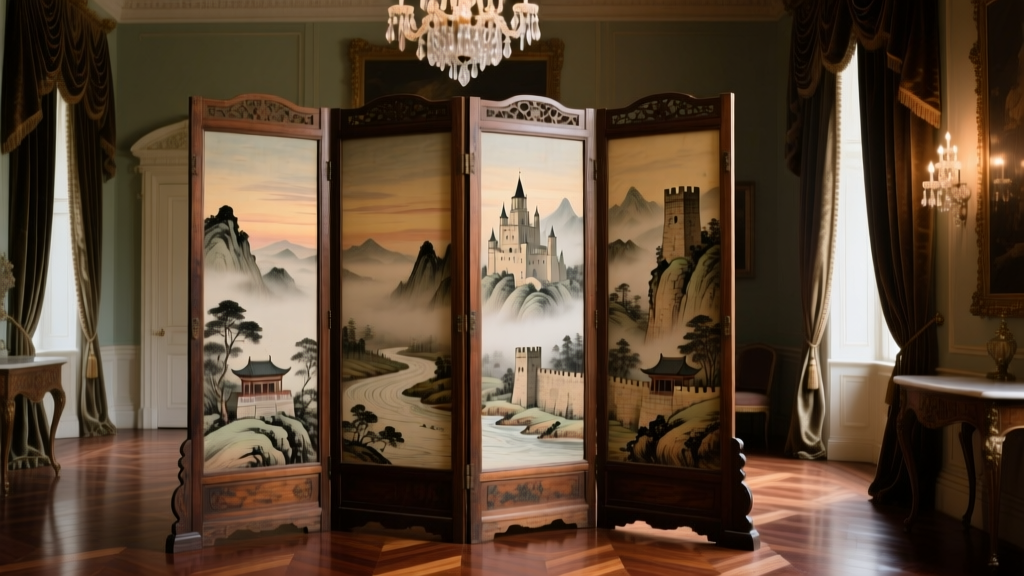
Four-Panel Arts & Crafts Landscape Screen: Authenticity, Construction, and Conservation of a 25½ × 74-Inch Castle Scene Folding Screen
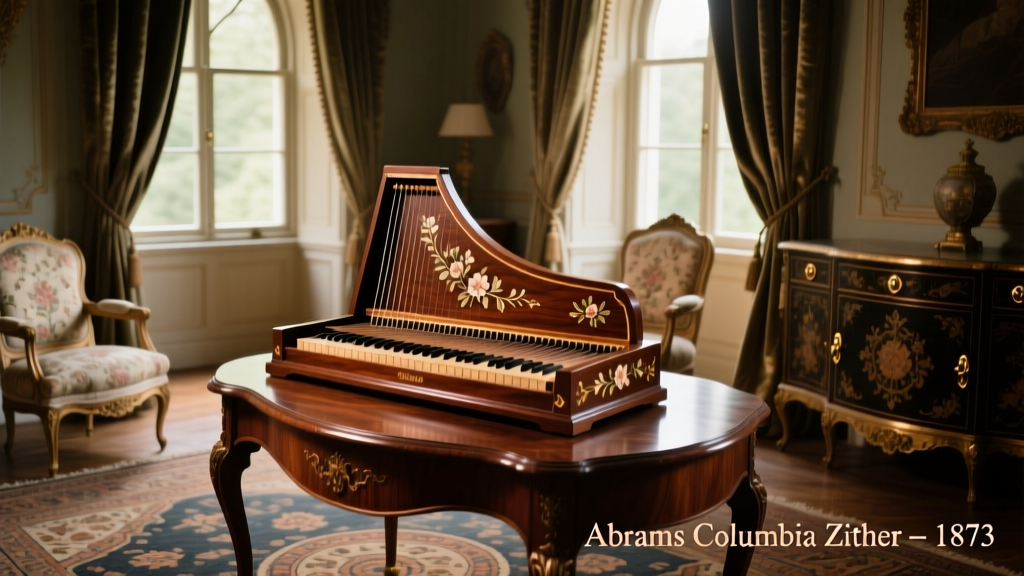
The Abrams Columbia Zither: History, Design, and Restoration Insights for Collectors and Conservators
The Owl on Stump Bronze Doorstop: History, Craftsmanship, and Restoration Insights
Royal Copenhagen Christmas Plate 1992: The Royal Coach — History, Design, and Collectibility
The Cut Glass Bowl: Strawberry Diamonds with Fans and Starflower Bottom — A Study in American Brilliant Period Craftsmanship

Thermometer, Doan’s Kidney Pills, and Die-Cut Advertising: A Material History of Late 19th-Century Patent Medicine Ephemera
San Francisco’s Cowell’s Wharf: A Historic Anchor for Maritime Antiques and Restoration Craftsmanship

Zebra Doorstops in Cast Iron: History, Identification, and Restoration of the Classic 6 × 5-Inch Figural Stop
Toy Car Limousine Carette with Beveled Windows: Identification, Restoration, and Preservation