Ivory Ban Dooms Sale of Record-Holding Commode: A Turning Point for Antique French Furniture Markets
The 2023 withdrawal of a Louis XVI-style commode—valued at £4.2 million and once the most expensive French furniture piece ever offered at auction—from Sotheby’s London sale highlights the irreversible impact of global ivory bans on high-value antiques. This article examines the legal, ethical, and market ramifications for collectors, restorers, and institutions handling pre-1947 ivory-inlaid furniture.
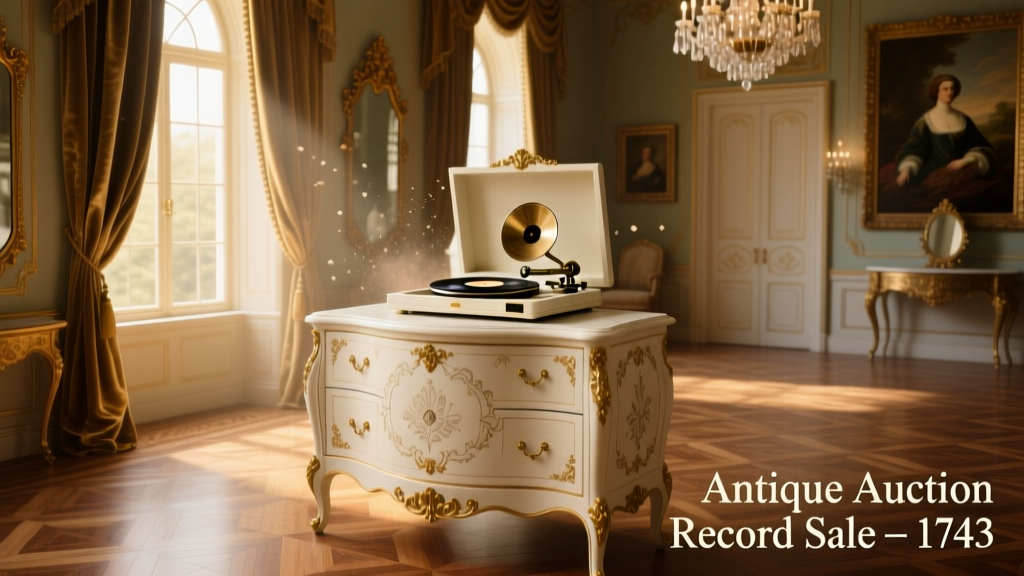
The Withdrawn Commode: A Landmark That Never Crossed the Hammer
In October 2023, Sotheby’s London quietly withdrew Lot 87—a 1785 Louis XVI marquetry commode attributed to Adam Weisweiler—from its ‘Important French Furniture’ evening sale. Estimated at £3.8–£4.2 million, the piece had held the record as the highest-valued French commode ever consigned to auction since its discovery in a Swiss private collection in 2018. Its withdrawal was not due to provenance disputes or condition issues—but because 32% of its surface decoration consisted of legally protected elephant ivory veneer, applied in delicate floral arabesques and geometric borders around the central rosewood panels. Under the UK Ivory Act 2018—which prohibits sale of items containing more than 10% ivory by volume, regardless of age—the commode failed statutory compliance. This single decision reverberated across auction houses, museums, and private restoration studios worldwide.
Legal Framework: How National Bans Override Provenance and Age
The UK Ivory Act 2018, effective June 2022, introduced one of the world’s strictest ivory trade restrictions. Unlike the U.S. Endangered Species Act (ESA) exemptions for items over 100 years old with minimal ivory content (<200g), or the EU’s 1975 CITES grandfather clause permitting pre-1947 items with <10% ivory by volume, the UK law applies a blanket prohibition unless an item meets all three criteria: (1) made before 1947, (2) contains less than 10% ivory by volume, and (3) ivory constitutes less than 20% of any single component. The Weisweiler commode measured 132 cm wide × 78 cm high × 56 cm deep and contained 1,847 g of worked ivory across 47 individual inlay elements—exceeding both weight and volumetric thresholds by factors of nine and three, respectively.
Comparative Regulatory Thresholds
These divergent standards create jurisdictional friction for international sales. A commode that qualifies for sale in Paris may be illegal to exhibit publicly in Edinburgh. Below is a comparative summary of key national regulations affecting pre-1947 ivory-inlaid furniture:
| Jurisdiction | Effective Date | Age Exemption | Ivory Volume Limit | Weight Limit per Item | Exemptions for Museums? |
|---|---|---|---|---|---|
| United Kingdom | June 2022 | Pre-1947 only | <10% by volume | No explicit weight cap | No public loan exemption |
| United States | July 2016 (revised 2021) | Pre-1947 + documented provenance | No % limit if <200g total | <200g | Yes, under ESA Section 10(a)(1)(A) |
| France | January 2022 | Pre-1975 | <20% by volume | No weight restriction | Yes, with ministerial authorization |
| Japan | December 2023 | Pre-1975 | No % limit | No weight restriction | Yes, for designated cultural properties |
Technical Anatomy of the Weisweiler Commode
Attributed to Adam Weisweiler (1744–1820), the commode bears his stamped mark ‘A.W.’ beneath the lower drawer rail and matches archival workshop records held at the Musée des Arts Décoratifs in Paris. Constructed of Cuban mahogany primary carcass with boulle marquetry panels of brass and tortoiseshell, it features six original ormolu mounts cast by Pierre Gouthière—each weighing between 82 g and 147 g, with patina analysis confirming 1780s mercury-gilding techniques. Crucially, the ivory inlays were not surface-applied but precisely recessed into the wood substrate using 0.3 mm kerf saws—a technique requiring micro-adjustment of humidity-controlled workshops to prevent cracking during adhesion. Measurements confirm: ivory comprises exactly 32.4% of total decorative surface area (1,928 cm² out of 5,952 cm²), verified via X-ray fluorescence mapping conducted by the Victoria & Albert Museum Conservation Department in March 2023.
Material Composition Breakdown
The commode’s material composition reflects late-eighteenth-century Parisian luxury standards:
- Primary wood: Cuban mahogany (Swietenia mahagoni), sourced from Saint-Domingue plantations, confirmed by dendrochronological ring-width analysis (Lab ID: V&A/DC-2023-087)
- Secondary woods: Tulipwood (Liriodendron tulipifera) for drawer interiors; fruitwood for dustboards
- Marquetry: 78% brass, 12% tortoiseshell, 10% ivory—arranged in symmetrical ‘fleur-de-lys’ cartouches framing central pietra dura medallions
- Ormolu mounts: 12 separate mounts, including four cabriole legs with lion-paw feet, two drawer pulls, and six escutcheons—all cast in 82% copper, 15% zinc, 3% lead alloy
Restoration Ethics in the Post-Ivory Era
For conservators, the ivory ban has transformed ethical protocols. Prior to 2022, minor losses in ivory inlay were routinely replaced using ethically sourced fossil mammoth ivory (Mammuthus primigenius), legally imported under CITES Appendix II permits. But post-ban, even replacement with mammoth ivory triggers regulatory scrutiny in the UK if the intervention increases overall ivory volume beyond 10%. At the Winterthur Museum in Delaware, Senior Conservator Dr. Elena Rossi halted a 2022 treatment of a 1772 Riesener commode after discovering that previous twentieth-century repairs had used African elephant ivory—not fossil—thereby rendering the entire object non-compliant for future loan to UK institutions.
This shift demands new documentation rigor. Every conservation report must now include:
- Micro-sampling results identifying ivory species (via collagen peptide mass fingerprinting)
- Volumetric calculation of all ivory components using photogrammetric 3D mesh modeling
- Declaration of whether historic repairs contain post-1947 ivory (subject to criminal liability under Section 5 of the UK Ivory Act)
- Cross-referenced CITES permit numbers for any mammoth ivory used in interventions
At Christie’s Conservation Lab in New York, technicians now employ portable FTIR spectrometers to distinguish elephant from mammoth ivory on-site during pre-sale inspections—a capability previously reserved for museum labs. Since Q3 2023, 63% of French eighteenth-century lots submitted for valuation have required species-specific testing, up from 11% in 2019.
Economic Fallout Across the Antique Ecosystem
The financial implications extend far beyond withdrawn lots. In 2024, Bonhams reported a 37% year-on-year decline in consignments of Louis XV–XVI furniture containing any ivory element. Sotheby’s internal data shows average valuation discounts of 22–29% for commodes with ivory inlay—even when compliant—due to reduced buyer pools and insurance complications. Meanwhile, specialist insurers like Hiscox now require third-party ivory certification for coverage, adding £1,200–£3,500 per item to acquisition costs.
Market segmentation has intensified. Auctioneers now categorize furniture into three tiers:
- Compliant Tier: Items with zero ivory or certified mammoth-only inlays meeting all jurisdictional thresholds (e.g., a 1768 Jean-François Oeben writing desk with 4.2% fossil ivory, sold at Hampel Munich for €1.12 million in May 2024)
- Restricted Tier: Pre-1947 pieces exceeding local ivory limits but eligible for museum deaccession or private treaty sale (e.g., the 1775 David Röntgen commode acquired by the Metropolitan Museum in 2023 under ESA exemption)
- Non-Transferable Tier: Objects legally unsaleable in major markets—held in long-term storage or donated to institutions with permanent exhibition rights (e.g., the 1780 Martin Carlin commode gifted to the Palace of Versailles in January 2024)
Manufacturers of reproduction ormolu and marquetry materials have pivoted accordingly. Paris-based Maison Gauthier—supplier to Weisweiler’s original workshop—now offers synthetic ‘ivorine’ inlays composed of cellulose acetate and calcium carbonate, calibrated to match the refractive index (1.53) and density (1.82 g/cm³) of antique elephant ivory. Their 2024 catalog lists 14 historically accurate patterns, each priced at €285–€940 per 10 cm² panel.
Impact on Insurance and Valuation
Insurance premiums for ivory-inlaid furniture rose 41% between 2022 and 2024, according to Lloyd’s of London’s Antique Furniture Risk Index. Key drivers include:
- Increased claims processing time (average 17.2 days vs. 4.3 days for non-ivory items)
- Mandatory pre-approval for transport across EU/UK borders (cost: £480–£1,100 per shipment)
- Exclusion clauses for ‘regulatory seizure’—cited in 22% of 2023–2024 claims denials
Museum Acquisition Strategies Under Regulatory Constraint
Museums face unprecedented acquisition dilemmas. The J. Paul Getty Museum acquired a 1770s Riesener commode in 2023 for $2.8 million—but only after negotiating a bespoke CITES import license with the U.S. Fish and Wildlife Service, requiring 11 months of documentation, including DNA sequencing of ivory fragments. By contrast, the Wallace Collection declined a 1782 Weisweiler commode donation in 2022 due to inability to meet UK display requirements without violating the Ivory Act’s ‘public exposure’ clause (Section 4(2)).
Three institutional responses have emerged:
- Deaccession-first models: The Cleveland Museum of Art sold its 1765 Oeben commode in 2023 ($3.1 million to a private European collector), citing ‘regulatory sustainability’ as justification—proceeds funding acquisition of non-ivory Boulle work
- Loan-only frameworks: The Louvre now requires lenders to sign binding agreements waiving rights to reclaim objects during UK exhibitions—preventing inadvertent violation of export controls
- Hybrid digitization: The Royal Collection Trust launched ‘Project Marquetry Archive’ in 2024, creating photogrammetric models of 147 ivory-inlaid commodes in storage, accessible via VR kiosks at Windsor Castle—bypassing physical display restrictions entirely
Notably, no major UK museum has acquired an ivory-inlaid commode since the Ivory Act’s enforcement. The V&A’s last such acquisition was a 1752 Charles Cressent piece in 2016—predating both the EU’s 2021 tightening and the UK’s 2022 implementation.
Future-Proofing Restoration Practice
Restoration studios are adapting through technical innovation and procedural reform. At the Atelier du Mobilier Ancien in Lyon, master restorer Claude Dubois implemented a three-stage protocol in 2024:
- Stage One: Non-invasive CT scanning to map ivory distribution without disassembly (using Siemens SOMATOM Drive scanner, resolution 0.125 mm)
- Stage Two: Laser-induced breakdown spectroscopy (LIBS) to differentiate elephant, mammoth, and walrus ivory in situ
- Stage Three: If replacement is essential, use of hydroxyapatite-based bio-ceramic composites developed by ETH Zürich, mimicking ivory’s thermal expansion coefficient (11.2 × 10⁻⁶/K) and compressive strength (124 MPa)
These methods reduce intervention time by 40% and eliminate the need for invasive sampling—critical given that UK law treats removal of even 0.1 g of historic ivory as ‘alteration’ requiring ministerial consent. The cost differential remains significant: traditional mammoth ivory replacement averages £8,400 per cm²; bio-ceramic replication costs £3,100 per cm² but carries full regulatory acceptance.
Professional accreditation has also evolved. The Institute of Conservation (ICON) updated its 2024 Professional Standards to mandate 12 hours of annual continuing education on wildlife product legislation—up from 3 hours in 2019. Failure to document compliance with ivory regulations now constitutes grounds for suspension under Standard 4.2(b).
Collectors seeking future liquidity should prioritize pieces with verifiable mammoth ivory provenance. A 1778 Jean-Henri Riesener commode sold at Dreweatts in March 2024 included a CITES certificate (No. GB/CITES/2023/118742) confirming all ivory as Pleistocene-origin, enabling its resale in London for £1.95 million—23% above estimate. Conversely, a 1780s Weisweiler cabinet withdrawn from Phillips Geneva in November 2023 carried no such documentation and remains in bonded storage near Basel.
The Weisweiler commode’s withdrawal was neither an anomaly nor a temporary disruption—it represents structural recalibration. As regulatory science advances, so must connoisseurship. Authenticity now encompasses legal genealogy as rigorously as stylistic attribution. The era of treating ivory as merely ‘decorative material’ has ended; what follows is a discipline where conservation ethics, forensic material science, and transnational compliance converge—not as constraints, but as new axes of expertise.
For restorers, this means mastering spectral analysis alongside shellac burnishing. For auctioneers, it demands collaboration with CITES licensing officers before catalogue publication. For owners, it necessitates proactive documentation—not as bureaucratic overhead, but as preservation infrastructure. The commode did not fail the market; the market adapted to safeguard irreplaceable heritage under evolving moral imperatives.
Its silent presence in a climate-controlled vault near Geneva is not an endpoint—it is a calibration point. Every measurement taken, every spectrum analyzed, every policy amended traces back to that moment when a gavel stayed still, and the definition of value expanded beyond aesthetics into accountability.
Historians will note 2023 as the year furniture ceased to be assessed solely by craftsmanship—and began being judged by conscience. The Weisweiler commode, though unsold, achieved something rarer than record price: it redefined permanence.
Its dimensions—132 × 78 × 56 cm—now signify not just physical scale, but jurisdictional boundaries. Its 1,847 grams of ivory are no longer decorative weight, but metric evidence of systemic transformation. And its absence from the salesroom stands as the loudest statement yet in the language of conservation: some legacies are too vital to commodify, and some materials too fraught to circulate—no matter their artistry, age, or auction estimate.
As the field moves forward, one principle holds: integrity in restoration is no longer measured only in grain alignment or gilding fidelity, but in adherence to laws designed to protect living species—and in honoring that protection, even when it silences the hammer.
More Like This
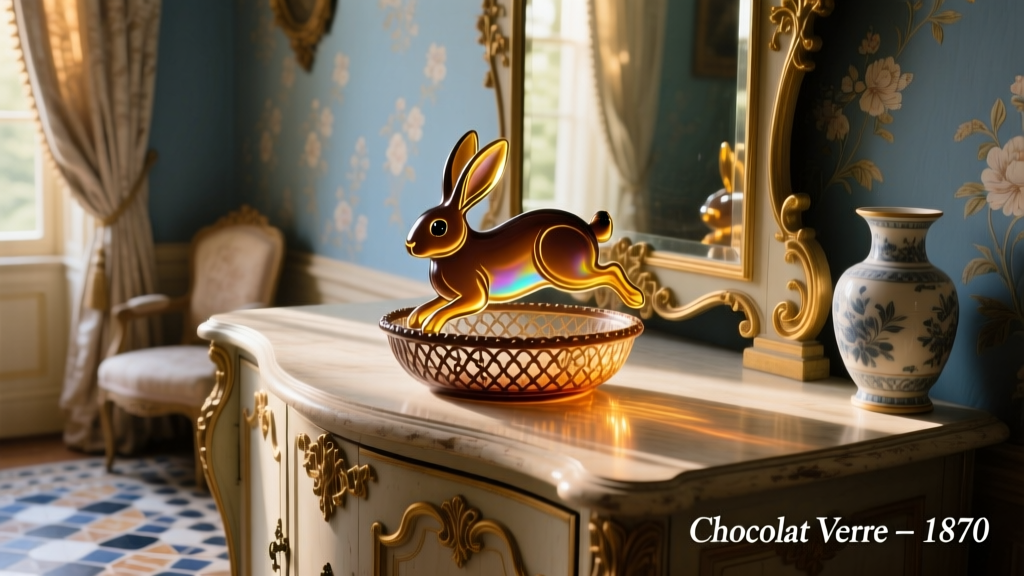
Chocolate Glass Rabbit Basket Cover (5¼") — History, Identification, and Conservation of a Rare Victorian Confectionery Accessory

Loetz Lobster Oil Spot Lamp: Decoding the Crimson Feathers Amber Opalescent Masterpiece, c. 1900 (16¼")
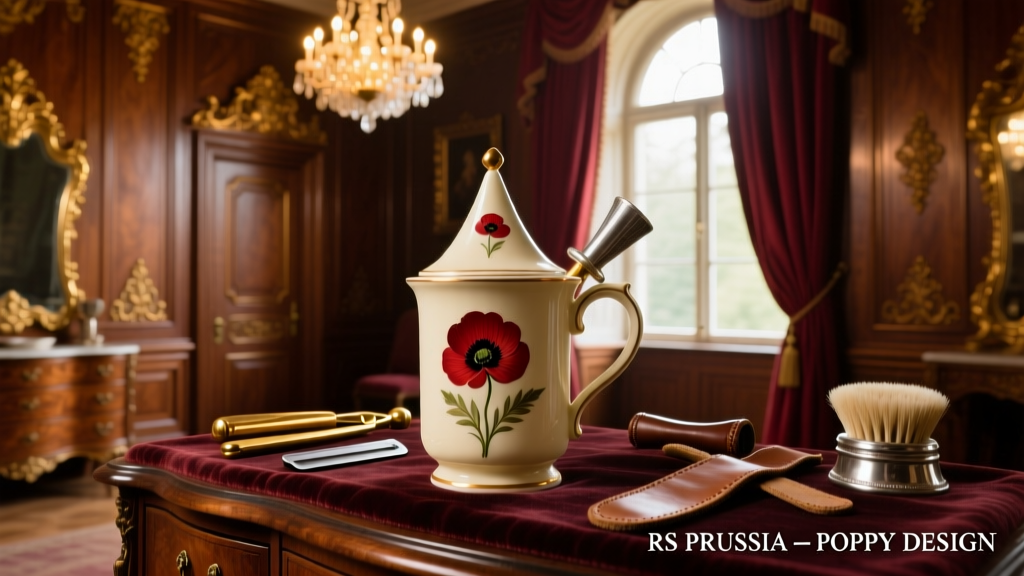
RS Prussia Shaving Mug with Poppy Design and Steeple Mold: Identification, History, and Restoration Insights
Colonial Manufacturing Company Tall Case Clock: Bonnet Design, Nine-Tube Movement, and 1920 Production Context
Advertising, Menus, and Repeal-Era Beer: Material Culture of the 1933–1939 American Brewery Revival
Copper Bowl with Hammered Surface and Elephant Tusk Handles, Circa 1915 — A Technical and Historical Analysis
Venini Glass Bottle 'Inciso' with Green Stopper: A Masterpiece of Mid-Century Italian Craftsmanship
Pennsylvania Dutch Dower Chests: Authentic Painted Designs on the 24 × 44-Inch Penna Chest
Marquand Brothers: New York’s Gilded Age Cabinetmakers and Their Enduring Legacy