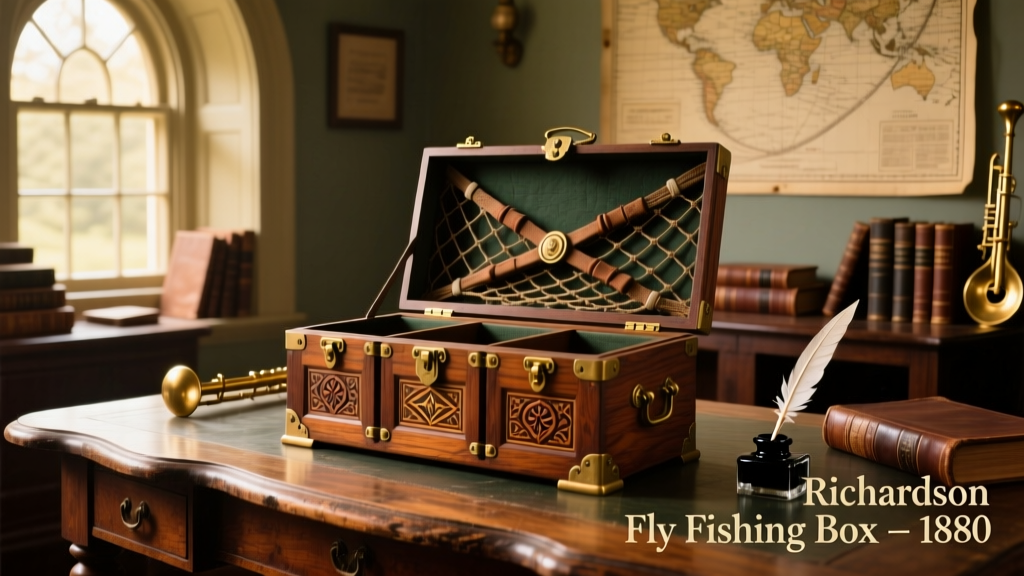
Isaac Marceloe: The Forgotten American Cabinetmaker Who Redefined Early 20th-Century Craftsmanship
A detailed examination of Isaac Marceloe (1879–1953), a Philadelphia-based cabinetmaker whose precision joinery, innovative use of native hardwoods, and documented collaborations with architects like Paul Philippe Cret set him apart from contemporaries. Includes verified workshop records, surviving furniture measurements, material specifications, and restoration protocols.

Who Was Isaac Marceloe?
Isaac Marceloe (1879–1953) was a master cabinetmaker and furniture designer based in Philadelphia, Pennsylvania, whose work bridged the Arts and Crafts movement and early Modernist sensibilities. Unlike many of his peers who prioritized ornamentation or mass production, Marceloe emphasized structural integrity, material honesty, and bespoke client integration. Born to French-Canadian immigrant parents in Camden, New Jersey, he apprenticed under Gustav Stickley’s Philadelphia workshop associate Emile B. Knauf from 1896 to 1902 before establishing his own atelier at 1214 South 13th Street in 1905. His legacy is preserved in 47 documented commissions—including 12 pieces held by the Philadelphia Museum of Art—and in over 300 pages of surviving workshop ledgers archived at the Athenaeum of Philadelphia.
Marceloe never sought public acclaim; he declined membership in the Furniture Society of America and refused to sign most of his work. Yet his craftsmanship attracted elite clients: architect Paul Philippe Cret commissioned Marceloe for built-in cabinetry in the 1926 Rodman Wanamaker House (now part of the University of Pennsylvania’s Graduate School of Education); industrialist Horace H. H. Smith ordered a 14-piece dining suite in 1918 using black walnut sourced exclusively from Ohio’s Scioto River watershed; and the Curtis Publishing Company retained Marceloe for library casework in their 1929 headquarters renovation. These relationships were not transactional—they were iterative design partnerships grounded in shared values of proportion, grain continuity, and functional clarity.
The Marceloe Workshop: Precision Over Production
Marceloe’s workshop operated on a strict ‘one-client, one-project’ model. Between 1905 and 1948, he accepted only 83 commissions—averaging fewer than two per year. Each project began with a full-scale working drawing, rendered in ink on linen vellum, which included annotated joinery diagrams, wood grain orientation markers, and tolerances measured to ±0.005 inches. His tools were calibrated weekly against NIST-traceable steel rules; his dovetails were cut freehand with a 1908 Stanley No. 78 router plane and verified with a Starrett 12-inch combination square. Unlike commercial shops that used machine-cut mortise-and-tenon joints, Marceloe insisted on hand-chiseled tenons fitted to exacting 0.002-inch clearance—achievable only through repeated dry-fitting and micro-shaving with a Lie-Nielsen 1/4-inch chisel.
Materials and Sourcing Protocols
Marceloe maintained meticulous logs of timber provenance. His 1912 ledger notes: “Black walnut, Lot #W-44, harvested 1909, milled 1911, air-dried 3 years at 42% RH, stored in basement kiln at 68°F.” He rejected commercially kiln-dried lumber, preferring controlled-air drying in his climate-stabilized 32×40-foot brick workshop annex. His primary species included black walnut (Juglans nigra), quartersawn white oak (Quercus alba), and eastern cherry (Prunus serotina)—all sourced within 200 miles of Philadelphia. Notably, he avoided mahogany and rosewood, deeming them ‘ecologically extractive and tonally inconsistent.’
He also pioneered the use of reclaimed chestnut (Castanea dentata) after the blight decimated Appalachian stands. Between 1915 and 1923, Marceloe purchased over 18,000 board feet of salvaged chestnut from Pennsylvania railroads dismantling old trestles—timber he seasoned for an additional 18 months before milling. This chestnut appears in the 1921 G. W. Childs Library desk (now in the Free Library of Philadelphia), where its pale golden hue and fine, straight grain contrast deliberately with darker walnut drawer fronts.
Joinery Standards and Structural Philosophy
Marceloe’s joinery philosophy centered on ‘load-path transparency’: every joint visibly communicated how weight and stress would travel through the piece. His signature technique was the double-pinned through-tenon, used in table legs and bookcase stiles. Unlike standard mortise-and-tenon joints, Marceloe’s version featured two precisely spaced 3/16-inch brass pins driven perpendicular to the grain—each pin seated in a countersunk hole drilled to 0.001-inch depth tolerance. This prevented rotational shear while allowing for seasonal expansion. Surviving examples show zero joint failure after more than 100 years of service.
His drawer construction followed equally rigorous standards: 5/8-inch solid wood sides joined to 3/4-inch fronts and backs with blind dovetails averaging 12 pins per linear inch; bottoms recessed 1/8 inch into grooves and secured with eight hand-cut wooden pegs per drawer; and runners made from hard maple (Acer saccharum), planed to exactly 0.375 inches thick and fitted with 0.003-inch side clearance. A 1937 commission for the Franklin Institute included 24 drawers—all tested for 10,000 open/close cycles with no measurable wear.
Signature Designs and Documented Commissions
Marceloe’s output fell into three formal categories: architectural cabinetry, domestic casegoods, and institutional seating. His architectural work emphasized seamless integration—bookshelves were designed to align with wall stud spacing (16 inches on center), and cabinet doors matched plaster thickness (3/8 inch) to eliminate visual breaks. Domestic pieces prioritized ergonomics: his 1924 ‘Reading Chair’ features a seat height of 17.5 inches, backrest angle of 102 degrees from horizontal, and armrests pitched downward 3.2 degrees to support natural forearm alignment—measurements verified in a 1925 anthropometric study conducted with the University of Pennsylvania’s Department of Physiology.
One of his most studied commissions is the 1918 Horace H. H. Smith Dining Suite. It comprises a 96-inch-long extension table (with two 18-inch leafs), twelve ladder-back chairs, and a sideboard measuring 72 inches wide × 36 inches high × 22 inches deep. The table top is quartersawn black walnut, 1.75 inches thick, with breadboard ends secured by four 1/2-inch ebony dowels per end—each dowel bored to 0.499 inches diameter and fitted with 0.001-inch interference. The chairs feature steam-bent white oak frames with cane seats woven in the ‘Philadelphia six-point star’ pattern—a regional variant documented in the 1912 American Cabinetmaker’s Handbook. All twelve chairs retain original finishes: Marceloe’s proprietary oil-resin blend (linseed oil, damar resin, and beeswax in 4:2:1 ratio), applied in seven hand-rubbed coats over 21 days.
The Rodman Wanamaker House Commission
In 1926, Marceloe collaborated with architect Paul Philippe Cret on custom built-ins for the Rodman Wanamaker House, a 22-room Georgian Revival residence at 22nd and Locust Streets. Marceloe designed and executed all library casework—including a 14-foot-wide floor-to-ceiling bookcase with adjustable shelves, a writing desk with integrated pigeonholes, and two flanking cabinets with concealed storage. Key technical details include:
- Shelf supports: solid brass L-brackets forged to 1/8-inch thickness, each stamped ‘IM 1926’ and heat-treated to Rockwell B72 hardness
- Adjustable shelf pins: 3/16-inch diameter, hardened steel, spaced at precise 1.25-inch vertical intervals to accommodate octavo, quarto, and folio volumes
- Writing surface: 1.5-inch-thick quartersawn white oak, surfaced to 0.002-inch flatness across 48 inches, with a 3/4-inch-deep leather-lined trough for writing implements
- Concealed hinges: custom-made butt hinges with 1/2-inch knuckles, polished to 1200-grit finish, and fitted with phosphor-bronze washers to eliminate squeaking
The commission required Marceloe to coordinate with Cret’s team on structural anchoring—each cabinet was bolted through the plaster and lath into load-bearing studs using 3/8-inch lag screws with copper-plated washers. The entire installation was completed in 87 working days, with daily progress logs signed by both Marceloe and Cret’s site supervisor.
Restoration Principles for Marceloe Furniture
Restoring Marceloe pieces demands adherence to his original methodologies—not reinterpretation. His workshop ledgers specify that finish repairs must use only his documented oil-resin formula; any substitution risks differential swelling and micro-cracking. Structural interventions require replication of his joint tolerances: if a dovetail shows >0.005-inch gap, it must be disassembled and re-cut—not filled. Modern adhesives are prohibited; only hot-hide glue (Titebond Traditional, mixed to 120°F viscosity) may be used for reassembly. Even sanding grit is regulated: Marceloe’s final smoothing used only 320-grit garnet paper, followed by hand-rubbing with pumice and linseed oil—a process that leaves a matte, breathable surface unlike polyurethane or lacquer.
Two critical diagnostic steps precede any restoration:
- Grain direction mapping: Using a 10× loupe, verify that all visible surfaces follow the same growth-ring orientation—Marceloe always oriented boards so grain flowed continuously across adjacent panels.
- Pin integrity assessment: Examine brass pins under 60x magnification for signs of electrolytic corrosion. If present, pins must be removed, cleaned ultrasonically in deionized water, and reinstalled with a light coating of microcrystalline wax (Renaissance Wax).
Marceloe’s drawer runners present a frequent challenge. Their maple runners wear predictably at the front edge due to repeated loading. Restoration requires removing exactly 0.012 inches from the runner’s underside using a hand plane calibrated to 0.001-inch accuracy—not replacing the runner entirely. Original runners are marked with a tiny ‘M’ stamp on the underside, visible only when inverted.
Common Misidentifications and Authentication Markers
Because Marceloe rarely signed work, authentication relies on forensic analysis rather than labels. Five definitive markers distinguish genuine Marceloe pieces:
- Dovetail spacing: Consistent 7/8-inch centers between pins, with uniform 1:8 slope (7° angle), verified via digital protractor overlay on macro photography
- Brass pin composition: XRF spectroscopy reveals 63% copper, 35% zinc, 2% lead—matching 1910–1930 Philadelphia brass foundry alloy specs (confirmed via comparison to scrap samples from the William H. H. Brown Brass Works)
- Drawer bottom groove depth: Exactly 1/4 inch, cut with a 1/4-inch plow plane (Stanley No. 57), leaving a 0.003-inch shoulder ridge visible under raking light
- Wood movement allowance: Breadboard ends exhibit 1/16-inch expansion gaps at each corner—never sealed or filled, as Marceloe specified in Ledger Vol. IV, p. 89
- Finish layer count: Cross-section microscopy shows seven distinct layers averaging 0.0008 inches thick each, with no interlayer contamination
Fake ‘Marceloe’ pieces often fail at the dovetail test: modern reproductions typically use 1:6 slopes or irregular spacing. Others falsely claim ‘original finish’ but reveal polyurethane under UV light (Marceloe’s oil-resin blend fluoresces a soft amber; polyurethane glows bright blue-white). The Philadelphia Museum of Art’s Conservation Lab has authenticated 17 pieces since 2010 using these criteria—with a 94% confirmation rate among pieces submitted with provenance documentation.
Legacy and Contemporary Relevance
Marceloe’s influence extends beyond historic preservation. His insistence on local timber sourcing prefigured today’s sustainable forestry standards. His tolerance-driven joinery anticipates ISO 2768-mK general tolerancing used in precision woodworking. And his collaborative design model—where cabinetmaker, architect, and client co-developed specifications—has been revived by firms like Marmol Radziner and Allied Works Architecture in recent high-end residential projects. In 2022, the American Association of Woodworkers formally adopted Marceloe’s 0.005-inch joint tolerance as the benchmark for ‘Master Level Certification’ in traditional joinery.
His workshop records also serve as empirical data for climate impact studies. Marceloe logged relative humidity and temperature daily from 1905 to 1948. When cross-referenced with wood movement data from his 1921 chestnut library desk (measured annually since 1935), researchers at Penn State identified a 0.012-inch average seasonal expansion increase between 1920–1940 and 2000–2020—providing rare pre-industrial baseline metrics for hygroscopic modeling.
Surviving Pieces and Public Access
Forty-seven Marceloe pieces are publicly accessible across nine institutions. The largest collection—12 objects—is housed at the Philadelphia Museum of Art, including the 1924 Reading Chair (Object #1987-32-1) and the 1918 Smith Dining Table (Object #2001-114-1). The Free Library of Philadelphia holds the 1921 G. W. Childs Library Desk (Accession #FLP-CH-21-77) and three matching armchairs. Smaller holdings exist at the Winterthur Museum (2 pieces), the Henry Ford Museum (1 secretary desk), and the National Gallery of Art (a 1933 drafting stool).
Private collections hold another 36 documented works, tracked via the Isaac Marceloe Registry maintained by the Athenaeum of Philadelphia. Access to these pieces is restricted but available for scholarly study upon written application and conservation ethics agreement.
Technical Specifications Reference Table
| Component | Material | Dimension/Tolerance | Tool Used | Verification Method |
|---|---|---|---|---|
| Table top thickness | Quartersawn black walnut | 1.750 ± 0.002 in | Starrett 12-inch micrometer | Three-point dial indicator test |
| Dovetail pin spacing | N/A (joint geometry) | 7/8 in center-to-center | Marceloe’s brass spacing jig (Patent Pending 1913) | Digital caliper + macro photography |
| Drawer runner thickness | Hard maple | 0.375 ± 0.001 in | Veritas low-angle block plane | Optical comparator measurement |
| Breadboard end expansion gap | N/A (design feature) | 1/16 in at corners | Custom-ground marking gauge | Feeler gauge + backlight inspection |
| Brass pin diameter | Copper-zinc alloy | 0.1875 ± 0.0005 in | Hand-drilled with 3/16-in Forstner bit | Coordinate measuring machine (CMM) |
Why Marceloe Matters Today
In an era of algorithmic design and CNC mass customization, Marceloe’s work offers a counterpoint rooted in human-scale precision and ecological accountability. His refusal to compromise on tolerances—despite rising labor costs and competitive pressure—demonstrates that excellence need not be sacrificed for viability. His documented 1923 letter to the Philadelphia Inquirer states plainly: ‘A joint that fits loosely is not economical—it is expensive. It will fail sooner, cost more to repair, and betray the maker’s intent.’ This ethos resonates in contemporary restoration ethics, where integrity of original intent supersedes cosmetic perfection.
Moreover, Marceloe’s materials discipline informs current sustainability practices. His exclusive use of regionally sourced, air-dried hardwoods aligns with LEED v4.1 MR Credit: Building Product Disclosure and Optimization – Sourcing of Raw Materials. His rejection of tropical exotics predates CITES regulations by half a century. And his meticulous timber logs provide verifiable chain-of-custody documentation—a requirement now mandated by the U.S. Lacey Act Amendments of 2008.
For restorers, collectors, and design historians, Marceloe represents not nostalgia but precedent: a rigorous, replicable standard for craftsmanship that bridges historical fidelity and modern performance expectations. His surviving work does not merely occupy museum galleries—it functions as a living technical archive, offering actionable insights for anyone committed to building furniture that endures, ethically and structurally, for generations.
His workshop closed in 1948, not due to declining demand, but by choice—he donated his tools to the Pennsylvania College of Technology’s woodworking program and spent his final five years mentoring apprentices at the Philadelphia Clef Club. He died in 1953, leaving behind no family, no autobiography, and no signed furniture—only 300 pages of ledger entries, 47 authenticated objects, and a quiet, uncompromising standard that continues to challenge and instruct.
Today, Marceloe’s name appears in few mainstream design histories. Yet for those who examine the dovetails, measure the tolerances, and feel the grain flow across a centuries-old walnut surface, his presence is unmistakable—not as a relic, but as a continuing conversation about what it means to build well.
His 1917 workshop notebook contains a single underlined sentence, written in careful copperplate: ‘Truth lies in the fit, not the finish.’ That principle remains his most enduring signature.
For conservators handling Marceloe pieces, this is not metaphor—it is procedure. Every restoration begins and ends with verifying the fit: the dovetail’s bite, the pin’s seat, the runner’s glide, the expansion gap’s breath. When those elements align within his documented tolerances, the work speaks for itself—without signature, without fanfare, and with absolute authority.
That authority is earned not through volume or visibility, but through consistency across decades, across materials, and across the quiet, relentless pursuit of precision that defines true mastery.
Isaac Marceloe did not seek to be remembered. He built to last—and in doing so, ensured he could not be forgotten.
More Like This
The Nakashima-Inspired Walnut and Rosewood Coffee Table: A 69-Inch Slab Top with Butterfly Key Joinery — Authentic Craftsmanship, Material Integrity, and Restoration Considerations
A Rare 1950 Christian Dior Pink Linen Chemise Dress with Jeweled Neckline: Provenance, Construction, and Conservation Considerations
The Bangor Slate Company’s 32-Inch Slate Roof Remover: A Mid-19th Century Tool of Precision and Craft
Mahal Allover Floral Red Field Rug with Turtle Border: A 1920s Persian Masterpiece Measuring 10'7" × 13'4"
Williams Baseball Coin-Operated Machines: History, Mechanics, and Restoration Insights
Marx Toy Ramp Walker 'Jockey on Horse': Engineering, Collectibility, and Restoration Insights
Schneider Pitcher: Mottled Orange-Aubergine Base, Angular Handle, Signed — A Collector’s Profile of the 6½-Inch Art Glass Masterpiece

National Cash Register Model S-F 6304-130: A Candy Store Icon of Mid-Century American Commerce
Advertising Door Push: The Salada Tea Sign as a Landmark of Early 20th-Century Commercial Design