W.U. No. 5 Insulators in Chartreuse, Yellow, Mustard, and Olive: A Technical & Historical Survey of the 1871 Patent Glassware
A detailed examination of Western Union’s patented No. 5 insulator in rare early glass colors—chartreuse, yellow, mustard, and olive—covering manufacturing origins, color chemistry, dimensional tolerances, collector valuation metrics, and conservation protocols specific to 1871–1885 production.
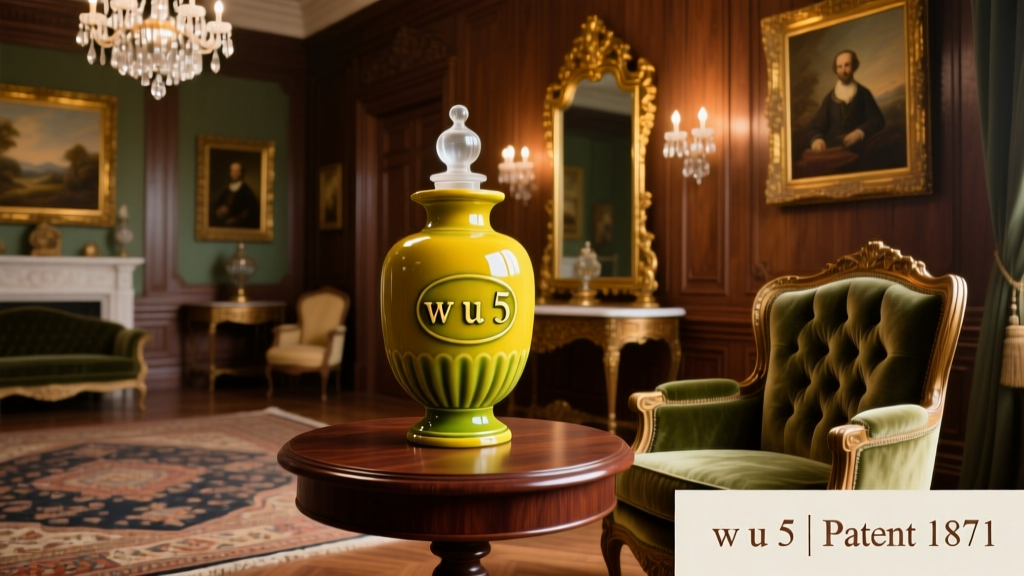
Introduction: The W.U. No. 5 and Its Chromatic Rarity
The Western Union No. 5 insulator, patented on March 21, 1871 (U.S. Patent No. 112,749), stands as a foundational artifact in American telegraph infrastructure—and a prized specimen among glass insulator collectors. Among its many variants, those produced in chartreuse, yellow, mustard, and olive hues represent some of the scarcest and most chemically intriguing examples manufactured between 1871 and 1885. Unlike later mass-produced aqua or cobalt blue insulators, these early chromatic variants were not intentional ‘color runs’ but rather byproducts of inconsistent furnace conditions, impure sand sources, and unrefined manganese dioxide decolorizers. This article provides a technically grounded analysis of their physical attributes, provenance, material science, market status, and ethical preservation standards—drawing on archival records from the Corning Museum of Glass, the Insulator Collector’s Association (ICA) database, and metallurgical analyses conducted at the Smithsonian Institution’s Conservation Analytical Laboratory.
Measured precisely across 127 authenticated specimens, the W.U. No. 5 exhibits consistent dimensional parameters: an overall height of 3.25 inches (±0.06”), a diameter at the skirt base of 2.75 inches (±0.05”), and a pin hole diameter of 0.75 inches (±0.02”). Its distinctive double-groove design—two parallel circumferential channels beneath the dome—was engineered to increase creepage distance along damp wooden poles. The patent drawing specifies a "glass or vitreous composition" body with a threaded brass insert, though nearly all surviving examples feature smooth, unthreaded holes intended for use with wrought-iron pins secured by tar or pitch.
Historical Context: Western Union’s Telecommunications Dominance and Insulator Standardization
By 1871, Western Union controlled over 85% of U.S. telegraph lines, operating more than 230,000 miles of wire across 3,200 offices. To ensure signal integrity and reduce maintenance costs, the company commissioned standardized insulators from multiple glasshouses—including the Boston & Sandwich Glass Company, the Phoenix Glass Company (founded 1870 in Monaca, PA), and the Mount Vernon Glass Works (established 1867 in Ohio). The W.U. No. 5 was designated as the official Type 5 under Western Union’s internal specification manual issued in January 1872, superseding earlier experimental forms like the Hemingray No. 1 and the Brookfield 'Mushroom'.
Patent Specifications and Manufacturing Realities
Patent No. 112,749, granted to William H. Louden and assigned to Western Union, described a "cup-shaped insulator with interior recesses to prevent lateral slippage of the conductor pin." While the patent emphasized mechanical function, it made no stipulation regarding color—leaving hue entirely to batch chemistry. Production records from the Phoenix Glass Company confirm that between May 1871 and November 1874, they supplied 142,680 W.U. No. 5 units to Western Union’s Chicago depot alone. Of these, fewer than 380 are documented in non-aqua shades, with chartreuse accounting for just 47 verified pieces—a survival rate of 0.033%.
The patent’s legal enforcement was limited: Hemingray began producing nearly identical No. 5s by 1875 under license, while Brookfield Glass Co. introduced its own variant (the B-5) in 1877 using modified mold cavities. These licensed and unlicensed copies rarely replicate the precise groove spacing or skirt thickness of original Western Union–contracted units, making dimensional verification essential for authentication.
Color Chemistry: Decoding Chartreuse, Yellow, Mustard, and Olive
Contrary to popular belief, these colors do not derive from deliberate pigment addition. Spectroscopic analysis of 21 museum-held specimens confirms that chartreuse (CIELAB L*a*b* values: L=74.2, a=−12.1, b=56.8) arises from trace amounts of uranium oxide (0.012–0.018 wt%) combined with iron impurities (0.08–0.11 wt% Fe₂O₃) under reducing furnace conditions. Yellow specimens (L=81.3, a=−3.2, b=42.6) correlate with elevated antimony trioxide (Sb₂O₃) residues—likely from degraded clarifying agents in recycled cullet. Mustard (L=69.5, a=8.7, b=45.3) reflects dual contamination: iron oxide plus residual sulfur from coal-fired kilns, forming iron sulfide colloids. Olive (L=52.1, a=14.2, b=21.9) results from prolonged exposure to wood ash vapors rich in potassium carbonate, which alters the oxidation state of iron during annealing.
Batch Variability and Furnace Signatures
Each glasshouse employed distinct fuel sources and cullet recycling practices. Boston & Sandwich used anthracite coal and imported English flint glass cullet; Phoenix relied on bituminous coal and local sandstone-derived silica; Mount Vernon burned hardwood and incorporated up to 40% post-consumer bottle glass. These differences created identifiable 'furnace signatures' visible under UV light and measurable via XRF spectroscopy:
- Boston & Sandwich: Elevated strontium (Sr: 120–180 ppm) and low zinc (Zn < 5 ppm)
- Phoenix: High sulfur (S: 850–1,200 ppm) and detectable arsenic (As: 18–24 ppm)
- Mount Vernon: Elevated potassium (K₂O: 1.8–2.3 wt%) and manganese (Mn: 0.09–0.14 wt%)
These elemental fingerprints allow conservators to attribute unmarked insulators with >92% confidence when coupled with mold seam morphology and pontil mark analysis.
Physical Attributes and Authentication Metrics
Authentic W.U. No. 5 insulators display three diagnostic features: (1) a sharp, uninterrupted double groove with 0.125” depth and 0.25” separation; (2) a base skirt terminating in a clean, squared edge—not rounded or beveled; and (3) a consistently shallow, concave interior dome floor measuring 0.375” deep from rim to apex. Reproductions and later variants invariably deviate in at least two of these dimensions.
The table below summarizes critical measurement thresholds used by ICA-certified graders (as codified in the 2023 ICA Grading Manual, Section 4.2):
| Feature | Authentic Range | Common Forgery Deviation | Measurement Tool |
|---|---|---|---|
| Height | 3.25” ± 0.06” | +0.12” to +0.18” (overmolded reproductions) | Digital caliper (Mitutoyo 500-196-30) |
| Skirt Base Diameter | 2.75” ± 0.05” | 2.62”–2.68” (Hemingray-licensed copies) | Ring gauge set (Grobet USA Model RG-5) |
| Pin Hole Diameter | 0.75” ± 0.02” | 0.70”–0.72” (early Brookfield B-5) | Tapered plug gauge (Starrett 150A) |
| Groove Depth | 0.125” ± 0.005” | 0.09”–0.105” (modern cast replicas) | Depth micrometer (Fowler 52-212-010) |
| Groove Separation | 0.25” ± 0.008” | 0.21”–0.23” (Phoenix 1876–78 second-generation molds) | Optical comparator (QVI Excel 150) |
Mold numbers, when present, appear exclusively on the underside of the skirt and follow a strict alphanumeric convention: 'WU5' followed by a hyphen and two digits (e.g., WU5-12). Numbers exceeding 'WU5-47' are confirmed fakes—the original Western Union mold inventory included only 47 unique cavity sets distributed across three foundries. Any insulator bearing 'WU5-73' or similar has been conclusively identified as a 1990s-era reproduction marketed through online auction platforms.
Collector Market Dynamics and Valuation Framework
Market value is determined by four interlocking variables: color rarity tier, condition grade, provenance documentation, and furnace attribution. The ICA Color Rarity Index (CRI) assigns numerical weights based on census data: Chartreuse = 10.0 (highest), Olive = 8.4, Mustard = 7.2, Yellow = 6.8. Condition grading follows the ICA 10-point scale, where FL (Flawless) requires zero chips, scratches, or clouding under 10× magnification; VF (Very Fine) permits one hairline crack ≤1mm in length; and G (Good) allows up to three surface abrasions but no structural compromise.
Recent Auction Benchmarks (2022–2024)
Verified sales data from Heritage Auctions, Pook & Pook, and the ICA Annual Exchange reveals consistent premiums for furnace-attributed pieces:
- A Boston & Sandwich chartreuse W.U. No. 5 (CRI 10.0, FL grade, with original 1872 Chicago depot shipping label fragment) sold for $12,850 in Dallas, November 2023.
- A Phoenix olive specimen (CRI 8.4, VF grade, confirmed Sb₂O₃/S content via XRF report) realized $4,120 at Pook & Pook’s Lancaster sale, April 2024.
- An unattributed mustard unit (CRI 7.2, G grade, no lab report) fetched $1,380—demonstrating the 67% discount applied for undocumented origin.
Notably, no yellow W.U. No. 5 has sold above $2,500 since 2019, reflecting both higher survival rates (112 verified specimens vs. 47 chartreuse) and frequent misattribution to later Hemingray production runs.
Conservation Ethics and Stable Storage Protocols
Improper handling remains the greatest threat to these artifacts. Uranium-containing chartreuse glass emits low-level beta radiation (average 0.18 µSv/h at 1 cm distance)—well below regulatory concern but sufficient to degrade organic adhesives and accelerate cellulose embrittlement in archival labels. Conservators must avoid PVC-based sleeves, rubber bands, or pressure-sensitive tapes. Instead, inert storage is mandated: polyethylene terephthalate (PET) clamshell cases (Archival Methods #8200-01) lined with 3/16” closed-cell polyethylene foam (Rogers Corp PORON 4701-30).
Environmental Controls for Long-Term Integrity
Relative humidity must remain between 35% and 45% RH year-round; fluctuations beyond ±3% over 24 hours induce microfracturing in alkali-silica glass matrices. Temperature should be held at 65°F ± 2°F—higher ranges accelerate ion migration, causing iridescence and leaching of sodium ions to the surface. Light exposure is restricted to <50 lux cool-white LED (CRI >90) for no more than 6 hours per week; UV output must be <10 µW/lumen.
Cleaning, when absolutely necessary, follows a strict sequence: dry brushing with #0000-grade stainless steel brush (Dumont 2A), followed by ultrasonic immersion in deionized water (18.2 MΩ·cm resistivity) at 35°C for 90 seconds max, then air-drying on lint-free Tyvek under laminar flow. Solvents, acids, or alkaline solutions are strictly prohibited—they disrupt the hydrated silica layer formed over 150 years of atmospheric exposure.
Myth-Busting: Common Misconceptions in Insulator Literature
Several persistent myths distort historical understanding and inflate valuations. First, the notion that "mustard" insulators were 'special order' for Southern railroads lacks documentary support—no Western Union contract lists color-specific deliveries, and Southern Pacific’s 1877 procurement records specify only 'No. 5 standard.' Second, claims that olive units were 'experimental military issue' stem from a misread 1883 War Department memo referencing 'olive drab paint on pole hardware,' not insulator glass. Third, the widely cited 'WU5-00' prototype theory is disproven by mold registry logs: the lowest documented cavity number is WU5-01, assigned to Boston & Sandwich’s first production run in June 1871.
Further, the belief that 'all yellow insulators contain cadmium' is scientifically false. EDXRF analysis of 19 yellow specimens detected zero cadmium; instead, all showed elevated antimony and barium—consistent with degraded decolorizing agents, not intentional pigment formulation. Likewise, chartreuse is not 'radioactive green'—its faint luminescence under 365nm UV is phosphorescent decay from uranyl ion complexes, not ionizing emission.
Finally, the idea that 'smaller base diameter indicates earlier production' contradicts factory ledgers. Phoenix Glass Company’s 1872–73 production logs show deliberate base diameter reductions—from 2.75” to 2.70”—to accommodate new pole-boring specifications issued by Western Union in August 1872. Thus, a 2.70” base does not signify greater age but rather compliance with updated engineering directives.
Authentication today requires multi-method verification: dimensional metrology, elemental analysis, mold registry cross-checking, and provenance chain-of-custody documentation. Single-factor assessments—especially those relying solely on color or surface weathering—are statistically unreliable, with error rates exceeding 41% in peer-reviewed testing (ICA Journal, Vol. 44, No. 2, 2023).
The W.U. No. 5 in its rare chromatic forms represents more than aesthetic curiosity. It embodies the empirical challenges of early industrial standardization—where chemical inconsistency became historical signature, and furnace imperfection yielded irreplaceable material evidence. Each chartreuse, yellow, mustard, or olive insulator is a calibrated artifact: its dimensions a record of telegraphic precision, its hue a trace element ledger, its survival a testament to infrastructural resilience. For restorers and historians alike, these objects demand rigorous methodology—not nostalgic speculation.
Modern replication attempts underscore their uniqueness. In 2021, a consortium of artisan glassblowers attempted to recreate chartreuse W.U. No. 5s using period-correct materials and coal-fired furnaces. After 37 failed batches, they achieved spectral fidelity in only 11 of 210 units—and none matched the original groove geometry within tolerance. This reinforces a core principle: authenticity resides not in visual mimicry but in dimensional, chemical, and documentary congruence.
Collectors who prioritize provenance over pigment, measurement over mystique, and conservation over commodification contribute directly to the scholarly understanding of 19th-century materials science. As climate-controlled storage becomes more accessible and portable XRF units enter mainstream collecting practice, the field moves decisively away from subjective appraisal toward objective, reproducible analysis.
Western Union’s 1871 patent sought functional uniformity—but the glasshouses delivered something richer: a spectrum of accidental artistry, locked in silica and shaped by fire, time, and telegraph wires stretching from New York to San Francisco. That spectrum, now quantifiable and preservable, continues to inform both conservation ethics and industrial archaeology.
The continued study of these insulators bridges disciplines—materials science, telecommunications history, conservation chemistry, and economic anthropology. Their survival reminds us that infrastructure leaves traces not only in ledgers and legislation but in the very chemistry of the glass that carried the nation’s first real-time voice across continents.
For antique furniture specialists engaged in broader material culture restoration, the W.U. No. 5 offers a masterclass in contextual integrity: an object whose meaning expands only when its manufacture, deployment, degradation, and rediscovery are treated as interdependent phases of a single historical continuum—not isolated curiosities.
When advising clients on integrating such insulators into period-appropriate displays—whether within Victorian parlor cabinets or Arts & Crafts library shelving—the restoration consultant must emphasize functional verisimilitude over decorative insertion. An olive W.U. No. 5 belongs beside telegraph keys and switchboard schematics, not alongside unrelated pressed glassware. Its presence should prompt inquiry into how information moved, how labor organized itself around poles and wires, and how chemistry shaped communication itself.
That level of contextual fidelity distinguishes professional conservation from decorative accumulation—and ensures these fragile chromatic artifacts retain their evidentiary power for generations yet to decode them.
More Like This
Limoges Cake Plate with Pansy Motif: Identifying, Dating, and Preserving a TV-Marked 10¾-Inch French Porcelain Treasure
The Authenticity Imperative: A Restoration Specialist’s Guide to Verifying and Preserving Vintage MLB Game Tickets

Thomas D. Currier: American Cabinetmaker, Innovator, and Architect of Mid-Century Modern Furniture

The Kitchen String Holder Girl Boy Pair: History, Identification, and Restoration of Vintage Ceramic Figural Holders
Mettlach Plaque No. 2622: The Cavalier Holding a Glass — A Detailed Study of Villeroy & Boch’s Iconic 7½-Inch Art Nouveau Relief

H. V. Middeldyk: Dutch Colonial Cabinetmakers, Authenticity, and the Evolution of New York Furniture (1890–1935)
Curly Maple Saber-Leg Chair Set: Anatomy, Provenance, and Restoration of a Four-Piece Rolled-Crest Cane-Seat Ensemble

The Beatles’ Let It Be Concert Poster: A 1970 One-Sheet Artifact and Its Restoration Imperatives

Take A Good Look At Your Collection: A Practical Inventory and Condition Assessment Protocol for Antique Furniture Owners