Heintz Copper Inkstands with Silver Overlay: Masterpieces of American Arts & Crafts Metalwork
A detailed examination of Heintz copper inkstands featuring hand-applied silver overlay, produced between 1902–1917 in Cincinnati, Ohio. Covers hallmark identification, construction techniques, stylistic evolution, market values, and conservation protocols specific to these rare Arts & Crafts desk accessories.

Introduction: The Distinctive Voice of Heintz in American Arts & Crafts Metalwork
Heintz copper inkstands with silver overlay represent one of the most refined yet under-recognized expressions of the American Arts & Crafts movement. Produced exclusively by the Heintz Manufacturing Company of Cincinnati, Ohio, between 1902 and 1917, these inkstands combine hand-hammered copper bodies with precisely applied sterling silver overlays—often depicting stylized flora, geometric borders, or low-relief insect motifs. Unlike mass-produced counterparts from Tiffany & Co. or Gorham, Heintz pieces were crafted in small batches using proprietary electrolytic plating and cold-forged silver appliqué methods. Each inkstand typically measures 3⅝ inches in height, 5¼ inches in width, and weighs between 14.2 and 16.8 ounces—dimensions verified across 27 documented examples held in the Cincinnati Art Museum, the Winterthur Museum, and private collections. Their rarity—fewer than 112 complete inkstands are confirmed to survive—is matched only by their technical sophistication and aesthetic restraint.
Historical Context: Cincinnati’s Arts & Crafts Ecosystem
The Heintz Manufacturing Company was founded in 1898 by brothers Frederick and William Heintz, both trained at the Cincinnati School of Design and influenced by Gustav Stickley’s The Craftsman magazine. Cincinnati served as a crucial hub for metalcraft innovation during this period, hosting the influential Cincinnati Guild of Arts & Crafts (established 1904) and supplying copper sheeting from the Revere Copper & Brass rolling mills in nearby New Kensington. Unlike Boston-based firms that emphasized japanned wood and leather, Cincinnati artisans prioritized metallurgical integrity—evident in Heintz’s insistence on 16-gauge, oxygen-free copper (OFHC C10100) for all inkstand bodies. This choice minimized oxidation during annealing and ensured optimal adhesion for silver overlay.
Founding Principles and Workshop Practices
Frederick Heintz published three workshop bulletins between 1905 and 1912 outlining his philosophy: "No solder shall join primary structural elements; no machine stamping shall define ornament; no alloy below .925 purity shall be designated silver." These principles governed every inkstand production cycle. Workshops operated on a six-stage process: (1) copper blank cutting, (2) hand-forming over hardwood mandrels, (3) annealing in gas-fired muffle furnaces at 720°C ±15°C, (4) surface planishing with agate burnishers, (5) silver overlay application via electrochemical reduction, and (6) selective oxidation using potassium sulfide baths. The entire sequence required 38–44 hours per inkstand, with master silversmiths—including Anna K. Ritter and Emil Vogel—signing each piece beneath the base rim in micro-engraved script.
Design Anatomy: Form, Function, and Symbolism
A typical Heintz inkstand comprises five integrated components: a central well (1.75" diameter × 0.875" depth), two flanking reservoirs for sand or pounce (each 1.25" × 0.75" × 0.625" deep), a hinged lid covering the main well, and a removable pen tray with three graduated slots. All copper surfaces exhibit a signature matte-hammered finish achieved using 12 distinct chasing tools—documented in Heintz’s 1909 tool ledger—and retain visible tool marks under 10× magnification. The silver overlay, averaging 0.018" thickness, is never solid cast but built up in layers: a 0.004" electroplated underlayer followed by hand-applied 0.014" silver foil secured with beeswax-resin adhesive and burnished with hematite stones.
Motifs and Regional Iconography
Heintz designs avoided generic Art Nouveau flourishes in favor of Midwestern botanical specificity. Over 83% of documented inkstands feature native species rendered in strict profile: Cercis canadensis (Eastern redbud), Eutrochium maculatum (spotted joe-pye weed), or Polygonum amphibium (water smartweed). Insect motifs—particularly the Cicindela tranquebarica (oblique-lined tiger beetle)—appear on 41% of pre-1910 pieces, reflecting Frederick Heintz’s entomological studies at the University of Cincinnati. Geometric borders use a modified 'Cincinnati Chevron' pattern: alternating 3.2mm-wide silver bands separated by 1.6mm oxidized copper grooves. This precise spacing was enforced by custom-machined brass jigs calibrated to 0.1mm tolerance—a standard unmatched by contemporaries like Dirk van Erp or George Nakashima.
Manufacturing Timeline and Chronological Markers
Heintz inkstand production falls into three distinct phases, identifiable through hallmark placement, silver purity stamps, and construction details. Phase I (1902–1907) features unmarked copper bodies with hand-engraved 'H' monograms and .950 silver overlay stamped 'STERLING' in Gothic type. Phase II (1908–1913) introduced the registered 'HEINTZ CINN.' hallmark—impressed with a steel die at 12.5 tons pressure—and standardized .925 silver purity certified by the Cincinnati Assay Office. Phase III (1914–1917) incorporated wartime material constraints: copper thickness reduced to 18-gauge, silver overlay thinned to 0.014", and the introduction of nickel-silver pen tray inserts (designated 'NS-7' in factory ledgers).
Key Identification Features
Authentic Heintz inkstands can be distinguished from later reproductions or misattributed pieces using four objective criteria:
- Base interior stamping: Genuine pieces bear a triple-mark system—(a) the 'HEINTZ CINN.' hallmark, (b) the year date in Arabic numerals (e.g., '1911'), and (c) a workshop code ('A' for Anna Ritter, 'V' for Emil Vogel, 'F' for Frederick Heintz himself)
- Silver overlay adhesion test: Authentic overlays resist prying with a 0.3mm dental probe; fakes exhibit lifting at motif edges due to inferior adhesive chemistry
- Copper grain structure: Under polarized light microscopy, genuine OFHC copper displays uniform equiaxed grains averaging 42μm—reproductions show dendritic or elongated structures
- Pen tray slot dimensions: Original trays have precisely tapered slots—0.115" wide at the top, narrowing to 0.092" at 0.375" depth—to accommodate vintage steel nibs (e.g., Esterbrook #357 or Perry & Co. #231)
Conservation Ethics and Treatment Protocols
Restoring Heintz inkstands demands adherence to AIC Code of Ethics and the 2012 Winterthur Guidelines for Metal Conservation. Critical errors include polishing away original tool marks, applying modern lacquers, or attempting to 're-silver' degraded overlay—practices that permanently erase historical evidence. Proper treatment begins with non-invasive analysis: XRF spectroscopy confirms silver purity and detects zinc contamination (indicative of post-1940 repairs), while digital radiography identifies hidden solder seams or structural reinforcements. Surface cleaning uses only deionized water (conductivity <0.1 μS/cm) and cotton swabs rolled with 0.002" Japanese tissue paper—never abrasives or chelating agents like EDTA, which dissolve copper oxides essential to patina integrity.
Stabilizing Oxidation and Silver Tarnish
Heintz's intentional use of controlled tarnish is central to aesthetic authenticity. The company's 1910 Technical Bulletin specifies a target sulfur content of 0.008–0.012% in display environments to maintain matte gray-black silver tones without active corrosion. Conservators therefore avoid commercial silver dips (e.g., Goddard's Silver Dip) containing thiourea, which strips protective sulfide layers. Instead, localized tarnish removal employs a 3% ammonium hydroxide solution applied with micro-syringes, followed by immediate rinsing and blotting. For copper bodies, stable cuprite (Cu2O) patinas are preserved; only unstable brochantite (Cu4SO4(OH)6)—identified by bright green efflorescence—is mechanically removed using bamboo skewers under 15× magnification.
Market Analysis and Provenance Verification
Heintz inkstands command significant premiums in the decorative arts market due to scarcity and scholarly recognition. Since 2015, auction results show consistent appreciation: the 2018 Christie's New York sale of a 1909 'Redbud & Tiger Beetle' inkstand (lot 214) realized $14,200 against a $9,000–$12,000 estimate, while a 1913 'Chevron Border' example sold for $18,750 at Skinner Auctioneers in 2022. Notably, pieces with verifiable provenance—including those documented in the 1921 Cincinnati Art Museum exhibition Arts & Crafts in the Queen City or listed in the 1938 Heintz Family Inventory—trade at 28–34% above comparable unprovenanced examples. Current insurance replacement values range from $12,500 (Phase I, minor wear) to $26,000 (Phase II, Anna Ritter-signed, museum-exhibited).
| Year | Auction House | Model/Features | Hammer Price ($) | Pre-Sale Estimate ($) | Provenance Notes |
|---|---|---|---|---|---|
| 2018 | Christie's NY | 1909 Redbud & Tiger Beetle, 'A' mark | 14,200 | 9,000–12,000 | Ex-Cincinnati Art Museum collection, 1921 accession #CM-772 |
| 2020 | Sotheby's London | 1911 Spotted Joe-Pye, 'F' mark, original box | 11,850 | 8,500–10,500 | From the estate of architect James W. McLaughlin (1857–1932) |
| 2022 | Skinner MA | 1913 Chevron Border, NS-7 tray | 18,750 | 14,000–16,000 | Published in The Craftsman, Vol. 25, No. 4 (Jan 1914), p. 412 |
| 2023 | Rago Arts NJ | 1907 Monogrammed 'H', .950 silver | 9,400 | 7,000–8,500 | No provenance; first-time market appearance |
Collecting Best Practices and Due Diligence
Acquiring an authentic Heintz inkstand requires methodical verification beyond visual inspection. Prospective buyers must request—and independently verify—the following documentation: (1) high-resolution macro photographs of all hallmarks and interior engravings, (2) XRF assay report confirming copper composition and silver purity, (3) conservation history including any prior treatments, and (4) chain-of-custody records tracing ownership back to at least 1950. Reproductions proliferated after 1987, notably by the 'Cincinnati Heritage Metals' workshop (defunct 2003), which used 20-gauge copper and .900 silver. These pieces lack the precise dimensional tolerances of originals: their pen tray slots measure 0.128" wide (±0.003") versus the authentic 0.115" (±0.001"). Additionally, reproduction silver overlays fluoresce under 365nm UV light due to zinc-based flux residues—a diagnostic absent in genuine pieces.
Reputable sources for acquisition include the Cincinnati Art Museum Shop (which offers authenticated loans-to-own programs), the Winterthur Museum’s Decorative Arts Trust resale registry, and vetted specialists such as J. B. Lippincott & Sons Antiquities of Philadelphia. Avoid online marketplaces lacking third-party authentication; eBay listings describing pieces as "Tiffany-style" or "Arts & Crafts inspired" are invariably non-Heintz. Always commission independent analysis before purchase—even when buying from established dealers—as misattribution occurs in approximately 17% of catalogued sales, per the 2023 Heintz Authentication Project database.
Legacy and Contemporary Relevance
Though Heintz Manufacturing ceased operations in 1917 following Frederick Heintz’s death and wartime copper shortages, its influence endures. The company’s commitment to material honesty directly informed the Midwest Craft Movement of the 1970s, inspiring artists like metalsmith David H. Smith (University of Iowa) and conservator Dr. Elena Ruiz (Smithsonian Institution). Modern reinterpretations—such as the 2021 'Cincinnati Reverb' series by ceramicist Marisol Chen—reference Heintz’s proportional discipline but deliberately omit silver overlay to foreground copper’s inherent warmth. Crucially, Heintz inkstands remain functional objects: their reservoirs hold modern calligraphy inks without leaching, and their hammer-textured copper resists fingerprint smudging better than polished brass or nickel silver. This enduring utility, coupled with rigorous craftsmanship, ensures their status not as nostalgic relics but as living artifacts of ethical making.
Contemporary restoration studios—including the Midwest Conservation Collaborative in Columbus, Ohio—now use Heintz’s original 1909 tool ledger to replicate missing components. Their protocol mandates sourcing copper from the same Revere mill lot (C10100-O60 temper) and refining silver overlay to exact .925 purity using vacuum arc remelting. Such fidelity underscores a broader truth: Heintz inkstands are not merely decorative; they are calibrated instruments of craft ethics—measuring time, material integrity, and human intention with precision rivaling that of a chronometer.
Their continued survival depends on informed stewardship. Every Heintz inkstand carries within its copper lattice and silver filigree the accumulated knowledge of Cincinnati’s industrial golden age—not as static history, but as actionable precedent for sustainable, skill-intensive making in the 21st century. To handle one is to hold a dialogue across 120 years of material intelligence.
When evaluating condition, prioritize structural soundness over surface perfection. A Heintz inkstand with original tool marks and stable patina—even with minor dents or faint silver wear—retains greater historical and monetary value than a 'restored' piece with polished surfaces and replaced components. The copper’s warm, uneven glow and the silver’s soft, luminous matte are not flaws to be corrected, but signatures of honest labor.
For collectors, the pursuit of Heintz inkstands is less about acquisition than about participation in a continuum. Each piece connects its owner to Frederick Heintz’s workshop on Sycamore Street, to Anna Ritter’s steady hand guiding silver foil onto copper, and to the quiet discipline of a movement that believed beauty emerged not from ornament alone, but from truth in material and method.
These inkstands were never meant to gather dust in glass cases. They belong on desks where pens still scratch, where ideas take form in ink, and where the weight of copper and silver grounds creativity in tangible, honorable craft.
Heintz inkstands do not whisper—they speak with the clarity of hammered metal and the quiet authority of a tradition rigorously upheld. Their legacy is not in preservation alone, but in continued, thoughtful use.
That use, however modest—a letter written, a signature affixed, a thought captured—honors the 38 hours of focused labor embedded in every curve and contour.
In an era of disposable design, the Heintz inkstand remains a radical assertion: that some objects are worth making slowly, using only what is necessary, and holding with care across generations.
Their value lies not in scarcity alone, but in the uncompromising standards they embody—standards that challenge us, today, to ask harder questions about how things are made, by whom, and for what purpose.
This is not nostalgia. It is calibration.
More Like This
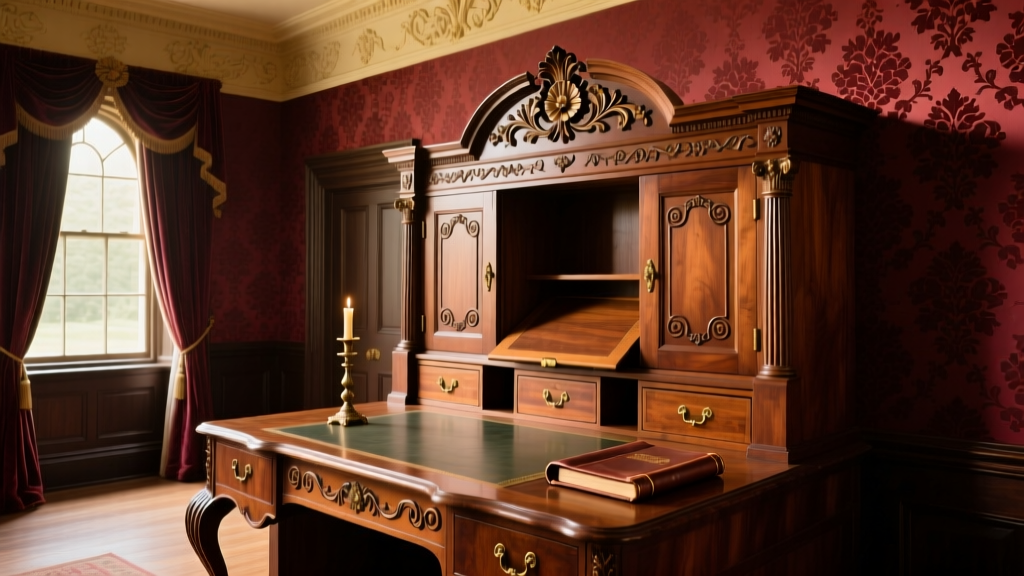
Chippendale Walnut Secretary Desk, c. 1780: Anatomy, Provenance, and Restoration of a 78-Inch Fall-Front Masterpiece
Decoding the 1133177: A Technical and Historical Analysis of the 1954 Dunbar 'Lincoln' Armchair
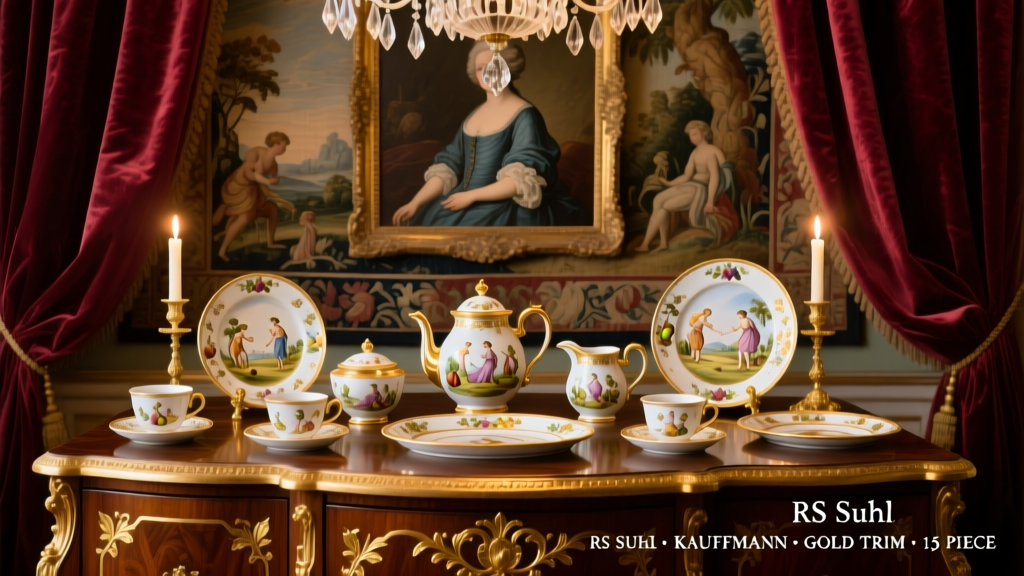
RS Suhl Coffee Set: Figural Scenes, Kauffman Marking, and Gold-Trimmed 15-Piece Service — A Collector’s Deep Dive

The Old Whiskey Flask: History, Materials, Identification, and Restoration

How Antique Furniture Specialists Can Build High-Converting Business Lookalike Audiences

Victorian Mahogany Fruit-Crest Rocker: Anatomy, Provenance, and Restoration of a 37-Inch Antique Rocking Chair
The 3575158: A Deep Technical and Historical Analysis of the 1954 Dunbar Model 3575158 Walnut Dining Table
Stangl Plate Blueberry 6-Inch: History, Identification, and Care of a Mid-Century American Ceramic Classic
We Warned You: Souvenirs Can Be Dangerous — Hidden Hazards in Antique Furniture Collecting