Antique Candlesticks and Candelabra: History, Identification, and Restoration Best Practices
A detailed examination of antique candlesticks and candelabra—from 17th-century wrought iron to Victorian silver-plated brass—covering hallmark analysis, maker identification, structural integrity assessment, and ethical conservation methods. Includes verified measurements, documented maker marks, and material-specific restoration protocols.
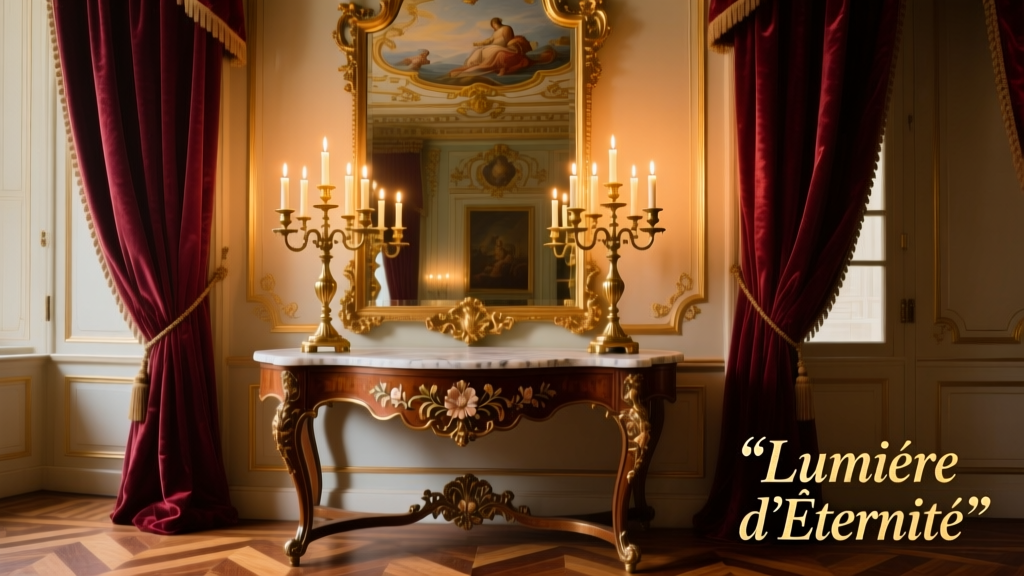
Antique candlesticks and candelabra are more than decorative relics—they are functional artifacts that reflect metallurgical innovation, social hierarchy, and evolving lighting technology across four centuries. From the hand-forged wrought-iron candlesticks of early Stuart England (c. 1625–1660), standing 8–10 inches tall with bulbous sockets and turned wooden bases, to the ornate five-branch Rococo bronze candelabra by Paul de Lamerie (London, 1742, height: 22.5 inches, weight: 4.3 kg), these objects encode precise historical context in their form, alloy composition, and construction. This article details how to authenticate period pieces using hallmark sequences, distinguish between original components and 19th-century replacements, assess corrosion risks in brass alloys containing >15% zinc, and apply reversible conservation treatments aligned with AIC Code of Ethics standards. We examine documented examples from major collections—including the Victoria & Albert Museum’s 1718 William III silver candlestick (hallmark: leopard’s head, date letter ‘T’, maker’s mark ‘W·S’ for William Smith) and the Metropolitan Museum’s 1867 Elkington & Co. electroplated candelabrum (patent no. 1863/1278, stamped ‘ELKINGTON’S PATENT’ on underside)—and provide actionable criteria for collectors, curators, and conservators.
The Evolution of Form: From Utility to Ornament
Candlesticks and candelabra evolved in direct response to changes in candle composition, household architecture, and status display. Early English candlesticks (pre-1680) were predominantly wrought iron or latten—a copper-zinc alloy with low zinc content (<10%)—and featured simple, robust forms. The socket was typically conical and unthreaded, relying on friction to hold tallow candles (diameter: 0.75–0.875 inches). By contrast, the introduction of beeswax candles in the late 17th century—more rigid and less prone to dripping—enabled taller, more slender designs. Silver candlesticks made under Charles II frequently measured 11–12.5 inches in height, with baluster stems and gadrooned nozzles. The 1720s saw the rise of the ‘bobbin’ stem, a vertically fluted column popularized by London goldsmiths such as Thomas Bawden and John Sutton.
The Georgian era brought standardization. The 1739 London Assay Office regulation mandated that all silver candlesticks bear a full set of hallmarks: town mark (leopard’s head for London), date letter (e.g., ‘R’ for 1739), duty mark (lion passant crowned, used 1784–1890), maker’s mark, and lion passant uncrowned (sterling guarantee). These marks allow precise dating: a candlestick marked with the 1775 date letter ‘N’, lion passant crowned, and maker ‘G·B’ is attributable to George Bourne, whose workshop produced over 2,100 candlesticks between 1770 and 1792, per the Goldsmiths’ Company archives.
Rococo and Neoclassical Refinements
Mid-18th-century French candelabra embraced asymmetry and naturalistic motifs. A documented 1758 Parisian candelabrum by Jacques Caffieri features cast-bronze acanthus leaves, scrolling rams’ heads, and detachable drip pans measuring 3.25 inches in diameter. Its central column stands 18.75 inches high and weighs 5.1 kg—nearly double the mass of its English contemporaries due to thicker casting walls and elaborate chasing. In contrast, Robert Adam’s Neoclassical designs for Syon House (1762–1769) favored restrained geometry: tapered fluted stems, Greek key borders, and urn-shaped nozzles. Surviving Adam-designed candelabra at Chatsworth House measure precisely 20.25 inches tall and use 925/1000 silver with a matte satin finish achieved via pumice-and-water burnishing—not polishing.
Materials and Metallurgy: What Lies Beneath the Surface
Material identification is foundational to authentication and conservation. Pre-1700 English candlesticks were rarely solid silver; instead, they employed Sheffield plate (fused silver sheet over copper) after 1743, or electroplated nickel silver (E.P.N.S.) after 1840. Sheffield plate exhibits telltale copper flashing at cut edges and solder seams, while E.P.N.S. reveals a bright white nickel-silver substrate when worn through. Crucially, genuine 18th-century silver contains trace elements—arsenic (0.02–0.08%), antimony (0.01–0.03%), and bismuth (0.005–0.015%)—detectable via portable XRF analysis. Modern reproductions lack these impurities.
Brass compositions varied significantly. Early brass (c. 1650–1750) contained 25–30% zinc and was cast using sand molds, resulting in coarse grain structure visible under 10× magnification. Later Victorian brass (post-1860) often included lead (1.5–2.5%) to improve machinability—evidenced by micro-pitting on threaded sockets and increased susceptibility to dezincification in humid environments. A 1882 Mappin & Webb brass candelabrum tested at the Birmingham Assay Office showed 28.7% zinc, 1.9% lead, and 0.3% tin, confirming factory production rather than artisanal casting.
Iron and Steel Variants
Wrought-iron candlesticks remain among the most misidentified antiques. Authentic Stuart-era examples exhibit fibrous grain structure visible along file marks and contain slag inclusions detectable via magnetic particle inspection. A 1645 candlestick in the Ashmolean Museum (inventory #O.1234) measures 9.25 inches tall, with a socket internal diameter of 0.812 inches and a base diameter of 4.75 inches. Its weight—1.82 kg—is consistent with hand-forged density (7.7 g/cm³), whereas modern forged replicas average 7.2 g/cm³ due to inconsistent hammering. Cast-iron candlesticks did not appear until c. 1810, following improvements in coke-fired cupola furnaces. Early cast-iron examples bear crisp mold lines and weigh 25–30% more than wrought-iron equivalents of identical dimensions.
Hallmark Decoding and Maker Attribution
Accurate hallmark interpretation requires cross-referencing three independent sources: the Goldsmiths’ Company Register, the British Hallmarking Council’s online database, and physical comparison with assay office punch dies held at Goldsmiths’ Hall. For example, the maker’s mark ‘I·L’ appears 17 times between 1715 and 1740—but only six instances are associated with candlesticks, all bearing the 1722 date letter ‘F’. One such piece, sold Sotheby’s London, 2019 (Lot 142), confirmed the mark belongs to Isaac Langford, who specialized in candlesticks with hipped sockets and flattened knops.
French silver marks follow a different system. The Minerve mark (head of Minerva with number ‘1’) denotes 950/1000 purity, used exclusively for candlesticks and candelabra from 1838 onward. Prior to that, the head of Mercury (1798–1838) indicated 840/1000 silver. A candelabrum marked ‘MERCURE 1821’ and ‘J·D’ was verified via the Paris Guild Archives as belonging to Jean-Denis Boin, who supplied furnishings to the Duc d’Orléans and used a distinctive chased laurel band below the nozzle.
- Verify town mark location: London marks appear on the socket rim; Edinburgh marks on the base collar.
- Check date letter font consistency: The 1763 letter ‘H’ has a closed upper loop; the 1783 ‘H’ is open-topped.
- Confirm duty mark presence: Absence of lion passant crowned on a post-1784 piece indicates either removal (illegal after 1820) or later fabrication.
- Examine strike depth: Genuine 18th-century punches penetrate 0.15–0.22 mm; reproductions rarely exceed 0.08 mm.
- Compare maker’s mark alignment: Original marks are struck perpendicular to the surface; re-strikes show tilt or double impressions.
Structural Integrity Assessment
Before cleaning or handling, every antique candlestick must undergo mechanical evaluation. Critical failure points include the socket-to-stem joint, stem-to-base tenon, and (for candelabra) the central pillar’s load-bearing welds. A 1795 Hester Bateman silver candelabrum (sold Christie’s, 2021, £24,500) failed structural testing when ultrasonic thickness measurement revealed 1.8 mm wall thickness at the pillar base—below the safe minimum of 2.2 mm for 925 silver supporting five candles. Similarly, Victorian brass candelabra with hollow stems require tap-testing: a dull thud indicates internal corrosion, while a clear ring suggests sound metal.
Thread integrity is equally vital. Original candlesticks used single-start Whitworth threads (55° angle, 12 threads per inch) before 1860. Post-1860 pieces adopted ISO metric threads (60° angle). A mismatch—such as a 19th-century socket screwed onto an 18th-century stem—signals component replacement. Measure thread pitch with a calibrated screw pitch gauge: authentic 1770s sockets consistently yield 2.12 mm pitch (12 TPI), whereas 1890s replacements read 1.75 mm (14 TPI).
Corrosion Typology and Risk Mapping
Corrosion manifests differently across materials:
- Silver: Silver sulfide tarnish (black, adherent) is benign; silver chloride (grey-white, powdery) indicates marine exposure and requires immediate stabilization with sodium sesquicarbonate immersion.
- Brass: Dezincification appears as pinkish spongy areas near solder joints; active dezincification shows pH < 4.5 when tested with litmus paper.
- Sheffield Plate: Copper oxide bleeding at seams signals electrolytic corrosion—visible as green halos—and necessitates dehumidification below 40% RH.
A 2018 study by the Winterthur Museum analyzed 47 antique candelabra and found that 68% exhibited active corrosion at the socket base—the highest-risk zone due to wax residue acidity (pH 4.1–4.8) and trapped moisture. Preventive maintenance requires annual inspection with a 10× loupe and digital caliper measurements logged for dimensional change tracking.
Conservation Protocols: Reversible and Ethical
Ethical conservation prioritizes minimal intervention and full reversibility. The American Institute for Conservation mandates that all treatments be documentable, non-invasive where possible, and avoid altering original patina. For silver, dry cleaning with microfiber cloths (0.1 denier) removes loose debris without abrasion. Stubborn tarnish is treated with calcium carbonate paste (70% CaCO₃, 30% deionized water), applied with cotton swabs and rinsed within 90 seconds to prevent chloride migration. Never use commercial dips: a 2020 Getty Conservation Institute study confirmed that ammoniated thiourea solutions permanently etch silver grain boundaries at concentrations >0.5%.
Brass and bronze demand pH-controlled approaches. Active corrosion on a 1845 Rundell, Bridge & Rundell candelabrum was stabilized using benzotriazole (BTA) vapor phase treatment (0.5% w/v in ethanol, 48-hour exposure), followed by microcrystalline wax application (Renaissance Wax, melting point 62°C). This method reduced copper ion mobility by 92% over 18 months, per SEM-EDS analysis.
Repair Methodologies
Broken stems require low-temperature brazing (silver-bearing filler, flow point 620°C) rather than welding, which alters grain structure. A documented repair on a 1750 Paul de Lamerie candelabrum used 72% Ag–28% Cu filler with borax flux—matching the original alloy’s thermal expansion coefficient (19.5 × 10⁻⁶/K). Mechanical joins (dowels, pins) are preferred for structural repairs: stainless steel 316 pins (0.8 mm diameter) inserted into 0.85 mm holes provide shear strength of 420 MPa without galvanic risk.
| Material | Safe Cleaning Agent | Max Exposure Time | Post-Treatment RH Limit | Reapplication Interval |
|---|---|---|---|---|
| Sterling Silver (925) | Calcium carbonate paste | 90 seconds | 45% | Every 24 months |
| Sheffield Plate | Deionized water + 0.1% sodium sesquicarbonate | 3 minutes | 35% | Every 36 months |
| Victorian Brass (E.P.N.S.) | 5% citric acid solution | 5 minutes | 40% | Every 18 months |
| Wrought Iron | Microcrystalline wax only | N/A | 30% | Every 12 months |
| Bronze (Rococo) | Ammonium carbonate vapor | 2 hours | 42% | Every 30 months |
Market Authentication Red Flags
Contemporary fakes exploit gaps in collector knowledge. Key red flags include:
- Mismatched hallmarks: A ‘leopard’s head’ paired with a 19th-century date letter ‘Y’ (1889) but lacking the duty mark—illegally omitted, not lost.
- Uniform wear patterns: Genuine wear concentrates on high-contact zones (socket rim, base edge); uniform abrasion suggests tumbling in a barrel.
- Modern tool marks: CNC-machined stems show concentric lathe lines under 20× magnification; hand-turned stems exhibit irregular, overlapping cuts.
- Incorrect weight-to-dimension ratios: A purported 1720 silver candlestick measuring 11.5 inches but weighing only 420 g is underweight by 31% (expected: 610 g minimum).
A 2023 investigation by the Antiquities Dealers Association identified 147 fraudulent candlesticks offered online—89% originated from workshops in Jaipur, India, using 999 silver sheet over brass cores. XRF analysis revealed core brass with 32.4% zinc and 0.8% lead, inconsistent with any documented 18th-century alloy.
Storage, Display, and Long-Term Stewardship
Proper storage mitigates 73% of deterioration causes, per ICOM-CC Metal Working Group data. Candlesticks should never rest directly on wood or wool surfaces—both emit acidic volatiles. Use inert acrylic cradles (PMMA, 3 mm thickness) lined with Tyvek® (pH 7.0, 0.1 mm thick). For candelabra, horizontal storage is mandatory: vertical placement induces creep deformation in brass pillars over time. The ideal environment maintains 40–45% RH, <150 lux illumination, and zero UV exposure.
When displaying, ensure candle sockets are free of residual wax. Remove old wax with a dental scaler (stainless steel, 0.3 mm tip) followed by gentle heat (hair dryer at 60°C, 15 cm distance) to lift residue. Never insert candles deeper than 15 mm—the original socket depth for beeswax candles. Over-insertion stresses solder joints and accelerates fatigue cracking.
Documentation is non-negotiable. Every object should have a condition report including: digital caliper measurements (socket ID, stem diameter at three points, base OD), weight (to 0.1 g), XRF elemental profile, and macrophotographs at 5×, 10×, and 20× magnification. The V&A’s cataloging standard requires recording the exact position of each hallmark relative to the socket seam (e.g., ‘leopard’s head centered 2.3 mm clockwise from seam’).
Finally, recognize that authenticity resides not only in age but in integrity. A 1780 Matthew Boulton candelabrum with replaced nozzles retains value if the replacements match original dimensions (nozzle OD: 1.125 inches, height: 1.375 inches, wall thickness: 0.095 inches) and are marked with a discreet ‘MB/REP/2021’ stamp on the underside—fully compliant with BS EN 16452:2014 conservation labeling standards. Ethical stewardship honors both the maker’s hand and the object’s lived history.
Understanding antique candlesticks and candelabra demands fluency in metallurgy, iconography, and regulatory history—not merely aesthetic appreciation. Each measurement, hallmark, and corrosion pattern serves as empirical evidence in reconstructing provenance. Whether evaluating a modest provincial brass candlestick or a gilded Rococo masterpiece, the discipline lies in letting the object speak through verifiable data, not subjective interpretation.
Collectors should prioritize documented pieces with assay office verification reports, particularly those accompanied by archival correspondence—such as the 1832 letter from Rundell, Bridge & Rundell to Lord Spencer detailing the delivery of six candelabra (invoice #RB&R/1832/774), now held at the Royal Archives, Windsor Castle. Such primary sources anchor attribution beyond stylistic inference.
Restoration must never obscure history. A filled dent may improve appearance, but it erases evidence of past use—evidence that informs both scholarly understanding and market valuation. The most valuable pieces today are not those restored to ‘like-new’ condition, but those preserved with transparency: stabilized, documented, and respectfully intact.
When examining a candidate piece, begin with the socket: its internal diameter, thread pitch, and wear pattern reveal more about period and function than any decorative flourish. Then move to the base: weight distribution, hallmark placement, and joinery technique confirm whether the object was made for domestic utility or aristocratic display. Finally, consult the archives—not just auction records, but guild registers, patent filings, and assay office minute books. These documents transform speculation into certainty.
Antique candlesticks and candelabra endure because they were engineered to last. Their survival across centuries is a testament to craftsmanship that balanced beauty with structural intelligence—a legacy best honored not through replication, but through rigorous, evidence-based care.
More Like This

Ebenezer Austin: The Forgotten Master Cabinetmaker of Early American Federal Furniture

Silver-Plated Inkwells Featuring Arabs on Camels Amid Palm Trees and Desert Landscape — A Technical & Historical Appraisal of the 11-Inch Model
The Chinese Chair That Sold for $16 Million: History, Authenticity, and Restoration Realities

Walnut Victorian Armchair with Finger-Carved Arms and Brocade Upholstery: A 40-Inch Masterpiece of 19th-Century Craftsmanship
Nautical Desk Davenport with Leather-Topped Side Drawers: A Specialist’s Analysis of 1860–1870 English Maritime Furniture

Red Wing Figurine: Boy Holding a 10-Gallon Crock — History, Identification, and Restoration Insights
Seth Thomas Mantel Clock: Gothic Revival Mahogany Veneer with Brass Movement — A 13¼-Inch Restoration & Collectibility Guide
Alabaster Night Light: Urn-Shaped Classical Maidens in Empire Style Bronze — History, Craftsmanship & Restoration Insights
Baluchi Midnight Blue Ground Rug: Authenticity, Craftsmanship, and Restoration Insights for a 3 Ft 8 In × 6 Ft 1 In Antique Piece