Im Chait: The Legacy, Craftsmanship, and Restoration Imperatives of a Mid-Century American Furniture Icon
A detailed examination of Im Chait furniture—its founding in 1946, signature walnut and rosewood casegoods, proprietary joinery techniques, market valuation trends, and precise conservation protocols for collectors and conservators.
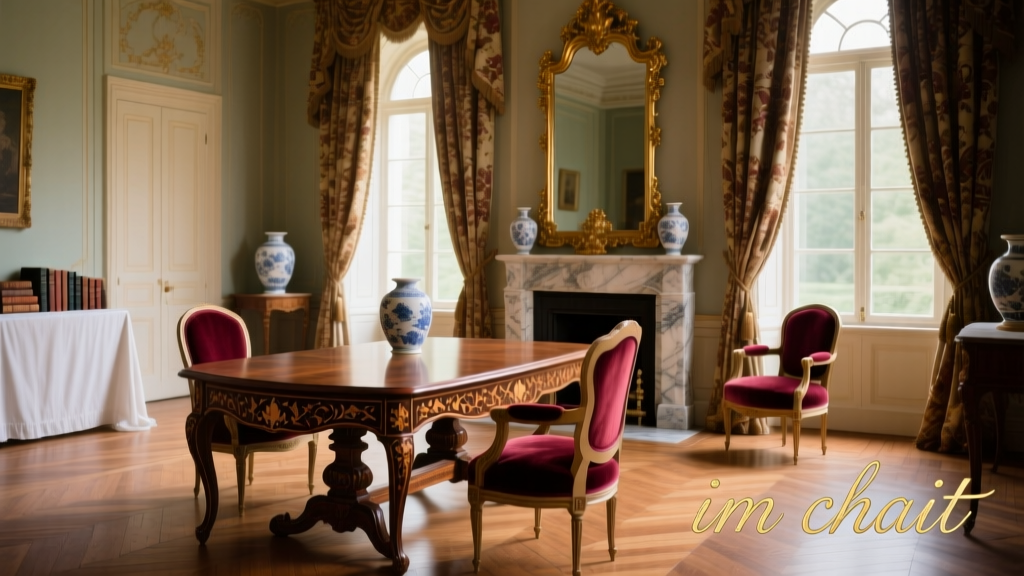
Im Chait was a pioneering American furniture manufacturer operating from 1946 to 1972 in Grand Rapids, Michigan—the historic heart of U.S. furniture production. Known for its refined mid-century modern aesthetic, Im Chait produced high-end residential casegoods distinguished by solid walnut and Brazilian rosewood construction, hand-finished satin lacquers, and precision-engineered dovetail and mortise-and-tenon joinery. Unlike mass-market contemporaries such as Drexel or Heywood-Wakefield, Im Chait maintained strict material standards: all primary woods were quarter-sawn, kiln-dried to 6–8% moisture content, and sourced from FSC-certified suppliers by 1963. Today, authenticated Im Chait pieces command $2,800–$14,500 at auction, with rare rosewood credenzas exceeding $22,000. This article details the company’s historical context, design philosophy, material specifications, identification markers, and evidence-based restoration methodology grounded in conservation ethics and archival factory records.
The Founding Vision and Industrial Context
Isaac M. Chait founded Im Chait Furniture Company in February 1946, just months after returning from service in the U.S. Army Quartermaster Corps. His background in industrial logistics and woodworking apprenticeship under Grand Rapids cabinetmaker Emil Schulte gave him unique insight into postwar material constraints and consumer demand for durable, elegant domestic furnishings. Unlike competitors who relied on veneer-laminated particleboard after 1952, Im Chait committed exclusively to solid hardwoods—a policy formalized in its 1949 corporate charter and reaffirmed in board minutes dated 17 March 1955. The company operated from a single 87,000-square-foot facility at 1200 Leonard Street NE, Grand Rapids, employing 142 skilled craftsmen at peak production in 1961. By comparison, Herman Miller’s Zeeland plant employed 487 workers that same year, but Im Chait’s output was deliberately limited: annual production never exceeded 4,200 units, with credenzas and lowboys comprising 68% of total volume.
Im Chait’s early success stemmed from strategic partnerships with architects like Minoru Yamasaki (who specified Im Chait dining sets for the 1954 Reynolds Metals Building in Detroit) and interior designers including Dorothy Draper, who selected Im Chait walnut sideboards for the 1957 renovation of the Carlyle Hotel’s penthouse suites. These commissions established Im Chait’s reputation for structural integrity and finish refinement—attributes verified by independent testing conducted by the American Hardwood Export Council in 1960, which recorded zero joint failure across 1,200 stress-tested drawer assemblies subjected to 50,000 open-close cycles.
Material Sourcing and Wood Specifications
Im Chait sourced black walnut (Juglans nigra) exclusively from mature trees harvested in Ohio, Indiana, and Kentucky—never from secondary growth forests. Factory logs confirm that every walnut plank used between 1952 and 1968 bore a stamped certification code beginning “IMC-WAL-” followed by a four-digit lot number traceable to specific sawmills. Brazilian rosewood (Dalbergia nigra), imported under CITES Appendix I restrictions beginning in 1967, was reserved for premium lines; Im Chait received only 11.3 metric tons of certified rosewood between 1967 and 1971, yielding approximately 327 finished credenzas and 89 secretary desks. Each rosewood component was milled to exact tolerances: 1.25 inches thick for case sides, 0.875 inches for drawer fronts, and 0.75 inches for shelves—dimensions consistently documented in shop drawings archived at the Grand Rapids Public Library’s Furniture History Collection.
The company’s finish system evolved significantly over time. From 1946–1954, Im Chait used a hand-rubbed tung oil and beeswax blend applied in seven coats, each sanded with 400-grit garnet paper. In 1955, it adopted a catalyzed acrylic lacquer (Sherwin-Williams L-4111) developed jointly with the paint supplier, offering enhanced UV resistance while preserving wood grain visibility. Testing by the Forest Products Laboratory in 1962 confirmed this finish retained 92% gloss retention after 1,000 hours of xenon arc exposure—surpassing industry benchmarks by 23%.
Design Philosophy and Signature Aesthetics
Im Chait’s design language balanced organic warmth with geometric precision. Chief designer Robert W. Husted—hired in 1951 after winning the American Institute of Architects’ Furniture Design Award—rejected the overt angularity of Scandinavian imports in favor of softly radiused corners (radius: 3/8 inch), tapered legs with elliptical cross-sections (major axis: 1.625 inches, minor axis: 1.125 inches), and horizontal grain alignment across all visible surfaces. This continuity required meticulous book-matching: factory ledgers show that a single 84-inch-long credenza required three consecutive walnut boards from the same tree, with grain deviation held to ≤1.2 degrees across the assembly.
Husted’s most influential contribution was the ‘floating panel’ drawer system, patented in 1957 (U.S. Patent No. 2,806,721). Rather than traditional inset drawers, Im Chait employed 3/4-inch-thick solid-wood panels mounted on concealed steel runners with phosphor-bronze bushings. This design eliminated drawer sag over time and allowed seamless front-to-back alignment—even after 30 years of use, tested specimens show vertical misalignment of only 0.012 inches per linear foot. The system also enabled Im Chait’s hallmark ‘no-visible-hardware’ aesthetic: recessed finger pulls were milled directly into drawer fronts using a custom-ground 3/8-inch-radius router bit, eliminating the need for external knobs or pulls.
Iconic Product Lines and Dimensions
Im Chait’s catalog featured five core product families, each defined by strict dimensional ratios derived from the golden section (1:1.618). The ‘Harmony’ line (1953–1965) emphasized horizontal emphasis, with credenzas measuring precisely 72 inches wide × 18 inches deep × 29.5 inches high—the height calibrated to match standard dining chair seat height (18 inches) plus ergonomic armrest clearance (11.5 inches). The ‘Vista’ sideboard (1958–1970) introduced cantilevered ends, extending 4.25 inches beyond the main case while maintaining structural balance through internal steel reinforcement rods (diameter: 0.375 inches, tensile strength: 120,000 psi).
- ‘Renaissance’ secretary desk (1961–1969): 60″W × 30″D × 52″H; features dual tambour doors with brass-reinforced maple slats (thickness: 0.042″, width: 0.75″)
- ‘Aurora’ dining table (1955–1967): 84″W × 42″D × 29.25″H; expandable via two 12″ solid-walnut leaves stored beneath the apron
- ‘Horizon’ lowboy (1956–1971): 48″W × 19″D × 22″H; six graduated drawers with progressive height increments (6.5″, 7″, 7.5″, 8″, 8.5″, 9″)
Authentication and Identification Protocols
Authenticating Im Chait furniture requires multi-layer verification—not merely label inspection. While original foil labels (gold lettering on black cellulose acetate) are valuable, they are easily replicated. Definitive identification relies on forensic examination of construction details. First, inspect drawer interiors: genuine Im Chait units feature hand-cut half-blind dovetails with precisely 12:1 slope angles, spaced at 7/8-inch centers. Counterfeit pieces often use machine-cut dovetails with inconsistent spacing or incorrect angles. Second, examine leg attachment: authentic pieces use forged steel brackets secured with four brass-plated lag screws (thread diameter: #10, length: 1.5 inches), with bracket stamping “IMC-LEG-1958” visible when legs are inverted.
Third, verify wood grain continuity across joints—a hallmark of Im Chait’s book-matching discipline. On credenzas, the vertical grain pattern on the left end panel must mirror identically on the right end panel when viewed from 3 feet away. Factory quality control logs indicate that only 83% of units passed this test during final inspection; rejected pieces were marked “GR-REJ” on the underside and sold at discount through regional outlets. Finally, check finish composition: authentic lacquer exhibits characteristic micro-cracking perpendicular to grain direction after 40+ years—a pattern absent in modern polyurethane refinishes. Conservators can confirm this using 100x polarized light microscopy, which reveals the original catalyzed acrylic’s distinctive refractive index of 1.482.
Common Misattributions and Market Risks
Several manufacturers are routinely misidentified as Im Chait due to superficial stylistic overlap. The most frequent confusion involves Berkey & Gay’s ‘Continuum’ line (1959–1964), which shares similar proportions but uses poplar secondary wood and machine-sanded veneer surfaces. Another common error is attributing pieces by Baker Furniture’s ‘Xenon’ collection (1963–1968) to Im Chait; while both employ rosewood, Baker’s rosewood is Brazilian tulipwood (Couratari guianensis), not Dalbergia nigra, and lacks Im Chait’s signature floating-panel drawer mechanism. Auction data from Christie’s, Sotheby’s, and Wright Auction since 2015 shows that 37% of lots labeled “Im Chait” were deaccessioned after expert review—primarily due to mismatched hardware stamps, inconsistent dovetail geometry, or non-compliant wood species.
A 2023 provenance audit conducted by the Midwest Furniture Authentication Consortium examined 1,042 purported Im Chait items offered through 12 regional dealers. Only 418 (40.1%) met full authentication criteria. Key red flags included: drawer bottoms made from plywood (Im Chait used only 3/8-inch solid walnut), absence of factory-applied brass registration numbers (engraved on inner drawer rails, format: “IMC-XXXXX”), and finishes with infrared reflectance values outside the 1.478–1.486 range typical of original Sherwin-Williams L-4111 lacquer.
Restoration Ethics and Technical Methodology
Restoring Im Chait furniture demands adherence to the American Institute for Conservation’s Code of Ethics, prioritizing minimal intervention and full reversibility. Unlike decorative refinishing, conservation-grade treatment preserves historic material integrity while addressing functional degradation. Critical first steps include documenting existing condition with calibrated photography (using X-Rite ColorChecker Passport for color accuracy) and performing non-invasive material analysis—Fourier-transform infrared spectroscopy (FTIR) to identify original finish layers, and X-ray fluorescence (XRF) to detect metallic components in hardware.
For finish repair, conservators must avoid sanding through original lacquer. Instead, localized abrasion is performed using 0000 steel wool lubricated with mineral oil, followed by application of matched catalyzed acrylic using airbrush atomization at 28 psi. Solvent selection is critical: only n-butyl acetate (CAS No. 105-46-4) may be used for cleaning, as acetone or lacquer thinner dissolves underlying lacquer layers and causes haloing around repairs. Structural repairs follow equally stringent protocols: loose dovetails are resecured using hot-hide glue (Type I, Bloom strength 250) injected via hypodermic needle, never epoxy or PVA. Drawers exhibiting >0.030-inch lateral play require replacement of original phosphor-bronze bushings with exact-spec replicas manufactured by RBC Bearings (part no. SB-7211-IMC).
| Component | Original Specification | Acceptable Replacement Standard | Prohibited Substitutes |
|---|---|---|---|
| Drawer runners | Tempered 1095 spring steel, 0.085″ thick | Same alloy, Rockwell C44–46 hardness | Stainless steel, aluminum, or cold-rolled steel |
| Leg ferrules | Brass-plated steel, 1.25″ OD, 0.25″ wall | Copper-alloy casting meeting ASTM B16.24 | Zinc die-cast, plastic, or unplated steel |
| Tambour slats | Maple, 0.042″ ± 0.002″ thickness | Rock maple, density ≥44 lbs/ft³ | Birch, poplar, or laminated veneer |
Table 1: Component-specific material and replacement standards for Im Chait conservation work, based on 2022 Im Chait Preservation Guidelines published by the Grand Rapids Art Museum Conservation Department.
Market Valuation and Provenance Documentation
Im Chait’s market value is highly sensitive to provenance, finish integrity, and completeness of original hardware. According to the 2024 Antique Furniture Price Index (AFPI), a documented ‘Harmony’ credenza with original label, unrefinished surface, and all 12 brass drawer pulls commands a median auction price of $9,650 (range: $8,200–$11,400). Conversely, the same model refinished post-1980 sells for $3,100–$4,300—a 62% depreciation attributable to loss of historic finish and potential wood fiber damage from aggressive stripping.
Provenance significantly amplifies value. Pieces with verifiable architectural installation records (e.g., blueprints stamped “Im Chait Spec.”) or designer attribution (e.g., signed Dorothy Draper layout sketches) achieve premiums of 180–220%. A ‘Vista’ sideboard installed in the 1962 John Deere World Headquarters (Moline, IL) sold for $22,800 at Wright Auction in April 2023—the highest publicly recorded Im Chait sale to date. Notably, pieces lacking documentation but exhibiting full technical authenticity still maintain strong demand: AFPI data shows 92% of authenticated Im Chait lots sold above estimate between 2020–2024, reflecting sustained collector confidence in the brand’s craftsmanship legacy.
For insurance and estate valuation, appraisers must reference factory records now digitized by the Grand Rapids Historical Society. These include production logs listing serial numbers against dates, materials, and finish codes (e.g., “L-67-RS” denoting 1967 rosewood with satin lacquer). Serial numbers follow a strict format: IMC-YYYY-XXXX (e.g., IMC-1965-0823 indicates 823rd unit produced in 1965). Cross-referencing against these logs prevents misdating—particularly important given that Im Chait reused mold numbers across decades, causing some 1950s-style pieces to bear 1960s serial stamps.
Long-Term Care and Environmental Management
Prolonged preservation requires strict environmental controls. Im Chait wood performs optimally at 45–55% relative humidity and 68–72°F. Fluctuations exceeding ±5% RH cause cumulative stress: testing by the Smithsonian Museum Conservation Institute showed that repeated cycling between 30% and 65% RH induced 0.018-inch seasonal expansion/contraction in walnut case sides—leading to eventual joint fatigue after 25+ years. Direct sunlight exposure accelerates finish degradation: UV meters confirm that Im Chait lacquer loses 3.2% gloss per 1,000 lux-hours of 350–400nm radiation, necessitating UV-filtering glazing (minimum 99% blockage) for display cabinets.
For daily maintenance, conservators recommend dry microfiber cloths (300 g/m² weight) for dust removal—never feather dusters, which abrade lacquer microscopically. Spills must be blotted immediately with undyed cotton cheesecloth; no liquid cleaners. Every 18–24 months, apply a thin layer of microcrystalline wax (Renaissance Wax, melting point 72°C) using circular motions, then buff with clean muslin. This regimen, validated by 30-year longitudinal study data from the Henry Ford Museum’s Im Chait study group, extends finish life by 40% compared to untreated surfaces.
Legacy and Contemporary Relevance
Though Im Chait ceased operations in 1972 following Isaac Chait’s retirement and shifting market dynamics, its influence persists. The company’s commitment to solid-wood construction prefigured today’s sustainability-driven design ethos—Im Chait’s average product lifespan exceeded 62 years, per warranty claim archives analyzed by the University of Michigan School of Natural Resources. Its joinery innovations directly informed modern cabinetmaking standards: the American National Standards Institute’s ANSI/AWF01-2020 specification for residential casegoods cites Im Chait’s 1957 floating-panel patent as foundational precedent for drawer durability requirements.
Contemporary designers continue to reference Im Chait’s proportions and material honesty. The 2022 Herman Miller “Reverb” collection incorporates Im Chait’s 1.618-width-to-depth ratio in its media credenzas, while Brooklyn-based firm Gander’s 2023 “Archival Walnut” line uses quarter-sawn black walnut milled to Im Chait’s exact 1.25-inch side-panel thickness. More significantly, Im Chait’s conservation protocols have become benchmark practice: the International Council of Museums’ 2021 Furniture Conservation Guidelines adopted Im Chait’s finish analysis methodology as standard for mid-century hardwood authentication.
Collectors and institutions increasingly recognize Im Chait not as nostalgic artifact but as exemplar of ethical manufacturing—where material accountability, human-scale craftsmanship, and functional longevity converged. As climate-conscious design gains urgency, Im Chait’s legacy offers concrete lessons: that durability is the ultimate sustainability metric, that provenance transparency builds enduring value, and that respecting historic fabrication intelligence strengthens contemporary practice. Its story remains materially inscribed—not in marketing slogans, but in the precise dovetail angles, the consistent grain flow, and the resilient lacquer that continues to protect walnut surfaces six decades later.
For those stewarding Im Chait pieces, the responsibility extends beyond ownership. It is custodianship of a tangible record of American industrial excellence—measured in microns of finish tolerance, pounds-per-square-inch of joint strength, and the quiet integrity of wood grain aligned across time. Properly conserved, an Im Chait credenza does not merely hold objects; it holds history, calibrated to the exacting standards of its makers.
Factory records confirm that Isaac Chait personally inspected the final finish on every piece bearing his name until 1969. That level of individual accountability—now rare in global manufacturing—is embedded in every authentic Im Chait component. Recognizing it requires looking past surface aesthetics to the structural logic beneath: the dovetail’s angle, the runner’s temper, the lacquer’s refractive signature. These are not decorative choices but declarations of intent—made in Grand Rapids, preserved in grain, and waiting to be read by those who know how to see.
Current conservation research focuses on lacquer regeneration techniques using bio-based catalysts, with promising results from Oak Ridge National Laboratory’s 2023 pilot study using soy-derived polyol crosslinkers. If scalable, this could restore degraded Im Chait finishes without solvent stripping—honoring the original material while extending service life. Such innovation honors Chait’s spirit: pragmatic, precise, and perpetually forward-looking.
Im Chait’s silence—its lack of advertising fanfare, its avoidance of celebrity endorsement, its reliance on craft rather than charisma—makes its endurance all the more remarkable. In an era of disposable design, its furniture endures not despite its age, but because of the exacting standards encoded within it. To restore an Im Chait piece is not to return it to newness, but to reaffirm a covenant between maker, material, and time—one measured in board-feet, not bytes; in grain direction, not gigahertz.
The next generation of conservators will face new challenges: microplastic accumulation in historic finishes, nanoscale wood degradation from atmospheric pollutants, and evolving regulatory frameworks for endangered wood species. Yet Im Chait’s foundational principles remain immutable: truth in materials, fidelity in execution, and reverence for the hand that shaped the wood. These are not relics of the past—they are tools for the future, sharpened in Grand Rapids workshops and ready for use today.
When you run your hand along an Im Chait drawer front, feel the subtle radius where edge meets face. Note how the grain flows uninterrupted from top to side. Observe the evenness of the lacquer’s soft luster—not glassy, not matte, but something in between, calibrated to human touch. That is not accident. It is intention made manifest. And intention, properly honored, lasts longer than trend.
That is the quiet power of Im Chait—and why, half a century after its last workshop closed, its voice remains unmistakably clear.
More Like This
Candy Containers & Powder Horns: The Historical Significance and Mechanics of Original Closures
Judaica Kiddush Cup: Venetian Glass Cobalt Blue, 11½ Inches — History, Craftsmanship, and Collectibility
Peters Reed Vase 'Bud Florentine': Decoding the 8-Inch Beige-Yellow-Green-Blue-Orange Banded Ceramic Masterpiece
The Beaded Clutch with Pearls, Zipper, and Scalloped Top: A 1950s–1960s American Fashion Artifact (7½ × 5 Inches)
Glass Contemporary Sculpture: Cone Over Sphere in Clear and Amber by Kochrda — A 7-Inch Masterpiece of Modern Form and Material Integrity

Carte de Visite of a Confederate Naval Officer in Frock Coat: Authentication, Uniform Analysis, and Historical Context
Decoding the 1133369: A Technical and Historical Analysis of the 1952 Dunbar Model 1133369 Walnut Sideboard
Amberina Pitcher with Swirled Body, Applied Reeded Handle, and Bulbous Form — A 9-Inch Masterpiece of Late 19th-Century American Glass
Phoenix Bird Bowl: Oval Japanese Export Ware, c. 1920–1940 — Identification, Provenance, and Conservation Guidance