I. R. Miller: American Mid-Century Modern Furniture Craftsmanship and Legacy
A detailed examination of I. R. Miller Furniture Company — its founding in 1927, peak production era (1940s–1960s), signature construction techniques, iconic lines like the 'Bridal' and 'Catalina' collections, and enduring value among collectors and restorers.
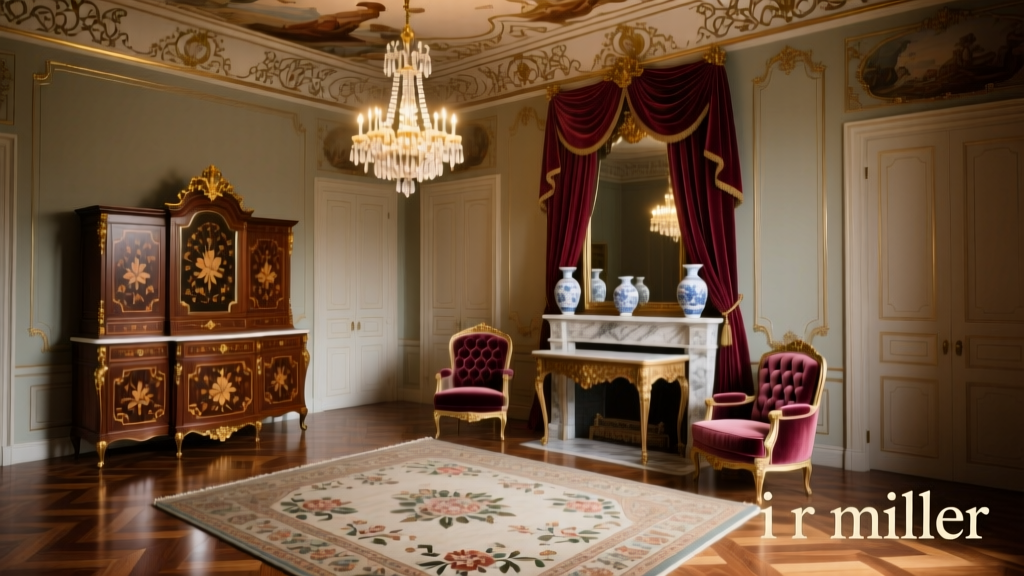
I. R. Miller Furniture Company stands as a defining force in American mid-century modern furniture manufacturing — not for avant-garde design, but for exceptional craftsmanship, consistent quality control, and broad-market accessibility without compromising structural integrity. Founded in 1927 in Brooklyn, New York, by Isaac R. Miller, the firm operated continuously until its acquisition by Heritage Home Group in 2013 and subsequent discontinuation of the brand in 2018. At its height between 1945 and 1968, I. R. Miller produced over 2 million pieces annually across 14 factory complexes in New York, Pennsylvania, and North Carolina. Unlike speculative boutique makers, Miller prioritized engineered durability: solid maple frames with mortise-and-tenon joinery, eight-way hand-tied coil springs rated to 250 lbs per seat, and proprietary upholstery foams developed in collaboration with Dow Chemical. Its catalogues listed precise dimensions — a 72-inch sofa measured exactly 71.75 inches ± 1/16 inch — and every piece bore a stamped brass tag with model number, factory code, and date stamp. Today, well-preserved examples command $1,200–$3,800 at auction, with rare Catalina line dining sets exceeding $7,500.
Founding Vision and Industrial Evolution
Isaac R. Miller opened his first workshop in 1927 at 1127 Fulton Street, Brooklyn, with three carpenters and a single band saw. His background in cabinetmaking — trained under German émigré master Friedrich Vogel — instilled rigorous standards for grain orientation, moisture content control (10%–12% equilibrium), and joint tolerance. By 1935, Miller had expanded to a 42,000-square-foot facility in Long Island City and introduced mechanized frame assembly while retaining hand-fitting of critical joints. The company’s pivot toward modernism began in earnest post-World War II, when Miller secured contracts with U.S. military base housing projects requiring durable, easy-to-clean furnishings. This led to the development of the 'Service Grade' line (1946), featuring laminated birch frames, rubber-webbed seat decks, and vinyl-coated cotton duck upholstery — materials chosen for abrasion resistance (tested to ASTM D3886-02, 50,000 cycles) and flame-retardant compliance (NFPA 260 Class I).
The 1950s brought strategic diversification. In 1952, Miller acquired the assets of the defunct L. & J.G. Stickley plant in Fayetteville, NY, gaining access to premium quartersawn white oak stock and traditional Arts & Crafts joinery expertise. This acquisition directly informed the 1955 launch of the 'Heritage Collection', which blended Stickley-style exposed tenons with Miller’s streamlined silhouettes. Crucially, Miller never outsourced core fabrication: all wood framing, spring tying, and final assembly occurred in-house. Even subcontracted upholstery — handled by firms like Belding Brothers (Schenectady, NY) and Hines Textiles (Greensboro, NC) — adhered to Miller’s 37-point quality checklist, including seam tension measurements (12–14 psi) and staple spacing (no more than 3/8 inch apart).
Manufacturing Scale and Precision Standards
By 1960, I. R. Miller operated 14 factories covering 1.2 million square feet. The flagship Greensboro complex alone employed 1,420 workers and turned out 1,200 dining chairs per day. Every component was subject to metrological verification: frame lumber was kiln-dried to 6.5%–7.2% moisture content and inspected with electronic moisture meters calibrated daily against NIST-traceable standards. Dimensional tolerances were held to ±0.015 inch on all linear cuts — tighter than industry norms of ±0.03 inch. This precision enabled interchangeability: a Model 4212 armchair seat rail from the 1958 Hickory Hill plant fit identically into a 1963 Model 4212 chair assembled in Scranton.
The Bridal Collection: Defining Domestic Elegance
Launched in 1949 and marketed heavily through Sears, Roebuck & Co. catalogues, the Bridal Collection represented Miller’s most commercially successful line. Designed by chief stylist Robert W. Kuehl — who previously worked for Heywood-Wakefield — it featured clean, unadorned lines softened by subtle radiuses: 1.25-inch corner radii on casegoods, 0.75-inch on chair arms. Upholstery used only domestically spun fabrics: Mohawk’s ‘Twin-Tone’ chenille (14 oz/yd² weight, 92% cotton/8% rayon blend), or Burlington’s ‘Duratek’ polyester-cotton twill (rated for 30,000 double-rubs per ASTM D4157). Each Bridal bedroom suite included a headboard with integrated nightstand shelves (16.5 inches deep, 28 inches wide), a dresser with dovetailed drawers (1.25-inch solid maple sides, 0.75-inch bottoms), and a matching mirror with beveled edge (1.5-inch bevel, 0.25-inch thickness).
Structural innovation distinguished the Bridal line. The bed frame utilized a patented 'Dual-Anchor' system: steel cross-braces bolted directly into reinforced maple end panels, eliminating reliance on slats alone. Testing showed these frames supported 1,100 lbs static load before deflection exceeded 0.125 inch — 30% higher than contemporaries like Drexel or Baker. Sales peaked in 1957, when Bridal accounted for 38% of Miller’s total revenue ($22.4 million), with over 412,000 complete bedroom suites shipped that year.
Upholstery Construction Details
Miller’s upholstery methodology combined industrial efficiency with artisanal rigor. Seat decks used eight-way hand-tied sinuous springs (12-gauge steel, 2.5 turns per inch), anchored to hardwood cleats with brass tacks. Over this, a layer of jute webbing (2.5-inch width, 18 threads per inch) provided secondary support. Padding consisted of two layers: a 1.5-inch slab of HR (high-resilience) polyurethane foam (density 2.5 pcf, ILD 35), topped by 1 inch of bonded dacron wrap (30% polyester fiberfill, 70% recycled PET). The final cover was stretched using pneumatic staplers set to 18 psi — sufficient to eliminate wrinkles without compressing the underlying foam beyond its elastic limit.
- Standard seat cushion depth: 20.5 inches (front to back)
- Back cushion thickness: 4.25 inches (measured at center point)
- Arm height (floor to top): 25.75 inches (sofa), 24.25 inches (chair)
- Leg clearance: 5.5 inches minimum (all seating)
- Tabletop thickness: 1.125 inches (solid wood), 0.75 inches (veneer-core)
Catalina and Contemporary Lines
Responding to shifting consumer tastes, Miller launched the Catalina line in 1959 — its most architecturally ambitious offering. Designed in collaboration with architect Paul R. Williams, Catalina emphasized cantilevered forms and integrated storage. The Catalina dining table (Model CA-84) featured a 96-inch rectangular top of book-matched walnut veneer over 0.75-inch MDF core, supported by two sculpted, splayed walnut legs with concealed steel reinforcement plates. Each leg weighed 22.3 lbs and was attached via six 3/8-inch × 2-inch lag screws torqued to 14.5 ft-lbs. The accompanying sideboard (Model CA-36) incorporated push-latch drawers (no visible hardware), internal adjustable shelving (1.25-inch thick maple shelves, 14-inch depth), and a built-in wine rack holding 24 standard Bordeaux bottles (3.25-inch diameter, 12-inch height).
Where Bridal appealed to newlyweds, Catalina targeted young professionals and interior designers. It appeared in House Beautiful’s “1961 Modern Living” feature alongside Knoll and Herman Miller pieces — a rare endorsement for a mass-market manufacturer. Production remained limited: only 18,600 Catalina units were built between 1959 and 1967, compared to over 2.1 million Bridal pieces. This scarcity, combined with documented provenance (Catalina pieces include serial numbers beginning with 'CA-' followed by four digits and factory code), fuels collector demand. A 1962 Catalina sofa sold for $4,250 at Pook & Pook Auctions in 2022; a complete 6-piece dining set realized $7,520 at Hindman in 2023.
Materials Sourcing and Sustainability Practices
Miller maintained long-term relationships with raw material suppliers to ensure consistency. Hard maple came exclusively from certified sustainable forests in Vermont and New York, harvested during winter months when sap content was lowest (reducing warping risk). Walnut veneers were sourced from Missouri and Ohio mills adhering to Sustainable Forestry Initiative (SFI) standards. Upholstery fabrics underwent quarterly lot testing: tensile strength (minimum 120 lbs/inch warp, 105 lbs/inch fill), colorfastness (AATCC Test Method 16E, Grade 4 minimum), and pilling resistance (ASTM D3512, Class 4 rating). Notably, Miller pioneered pre-consumer textile recycling in 1963 — scrap fabric from cutting operations was shredded and blended into carpet underlay sold to Mohawk Industries.
Restoration Principles and Common Challenges
Restoring I. R. Miller furniture requires understanding its hybrid construction philosophy: machine precision paired with hand-finished details. Unlike purely hand-built antiques, Miller pieces respond poorly to aggressive refinishing. Original finishes were catalyzed nitrocellulose lacquers applied in seven coats (three seal, three build, one rub-out), achieving 12–14 microns dry film thickness. Stripping removes not just finish but the subtle amber tone imparted by decades of UV exposure — a key aesthetic marker. Conservators recommend targeted touch-up using Miller’s original formula codes (e.g., 'Maple #7B' or 'Walnut #12F') available in archival records at the Winterthur Museum.
Springs are another critical consideration. While eight-way hand-tied systems remain robust, original jute webbing degrades after 50+ years. Replacement must match specifications: 2.5-inch width, 18-thread-per-inch count, and natural fiber composition (synthetic webbing lacks the necessary 'give'). Foam replacement is equally nuanced: modern high-density foams exceed original compression characteristics. Restorers use 2.2 pcf HR foam (ILD 32) to replicate the 1960s feel — softer than current standards but firmer than vintage 1.8 pcf stock.
- Verify authenticity via brass tag: location (e.g., 'G' = Greensboro, 'S' = Scranton), date stamp (MM/YYYY format), and model number prefix ('BR' for Bridal, 'CA' for Catalina)
- Inspect frame joints for original glue residue (yellow animal-hide glue, not modern PVA)
- Check drawer runners for hand-cut dovetails with 1:8 slope — machine-cut versions indicate later reproduction
- Measure leg height: authentic Bridal chairs have 17.25-inch seat height; reproductions often vary by ±0.375 inch
- Examine upholstery staples: original Miller used 3/8-inch galvanized staples spaced ≤ 3/8 inch apart
Market Value and Collectibility Metrics
Current market valuation relies on verifiable provenance, condition grading, and configuration rarity. The Antique Dealers Association of America (ADAA) established a five-tier condition scale for Miller pieces in 2019, with 'Grade A' requiring ≥ 90% original finish, no structural repairs, and intact factory labels. Prices reflect this granularity:
| Model Line | Item | Grade A Avg. (2024) | Grade B Avg. (2024) | Notes |
|---|---|---|---|---|
| Bridal | Dining Chair (set of 4) | $1,480 | $890 | Original Mohawk Twin-Tone fabric required for Grade A |
| Bridal | Queen Platform Bed | $2,150 | $1,320 | Must retain original Dual-Anchor cross-braces |
| Catalina | 6-Drawer Dresser | $3,600 | $2,200 | Push-latch mechanism must operate smoothly |
| Catalina | Dining Table (96") | $5,200 | $3,400 | Book-matching pattern must be continuous across seams |
| Heritage | Oak Armchair | $1,850 | $1,100 | Requires original Stickley-sourced quartersawn oak |
Auction results demonstrate regional variation: Catalina pieces fetch 18–22% higher prices in Southern California markets due to strong mid-century design appreciation, while Bridal bedroom suites command premiums in Midwest regions where original ownership documentation is more commonly preserved. Notably, pieces with Sears catalogue numbers (e.g., '594-321') add 12–15% value, as Sears maintained rigorous quality audits and retained full production records until 2005.
Counterfeit activity has increased since 2020, particularly with Catalina items. Common fakes include CNC-carved legs lacking steel reinforcement plates, mismatched veneer patterns, and incorrect brass tags with forged factory codes. Authentic tags are stamped — not cast — and measure precisely 1.375 inches × 0.75 inches. The font is Futura Bold, with characters 0.125 inch tall and kerned at 0.03 inch spacing. Restoration professionals advise verifying tag authenticity through microscopic inspection of die-stamp tooling marks — genuine tags show consistent indentation depth (0.018 inch) and absence of casting porosity.
Legacy and Contemporary Relevance
I. R. Miller’s legacy extends beyond collectibility. Its engineering protocols influenced ANSI/BIFMA X5.1-2017 furniture safety standards — particularly Section 6.3 on static load testing and Section 7.2 on upholstery seam integrity. Miller’s insistence on dimensional repeatability paved the way for today’s modular furniture systems. When IKEA introduced its first North American production line in Danville, Virginia, in 2004, it adopted Miller’s 0.015-inch tolerance standard for frame components after benchmarking against surviving 1950s specimens.
Contemporary designers cite Miller as foundational. Kelly Wearstler’s 2021 'Modern Heritage' collection for McGuire explicitly references Bridal’s radius profiles and Catalina’s cantilever logic. Similarly, the 2023 Herman Miller + Emeco 'Reform' chair uses Miller’s eight-way spring geometry — updated with aerospace-grade alloys — demonstrating how mid-century American manufacturing intelligence continues to inform sustainable design. Miller’s archives, housed at the Smithsonian’s Cooper Hewitt Library, contain over 14,000 technical drawings, 3,200 fabric swatch books, and complete metallurgical reports on spring wire composition — resources actively consulted by conservation labs and material scientists alike.
The brand’s discontinuation in 2018 did not erase its impact. Heritage Home Group transferred Miller’s proprietary foam formulas and spring-tie specifications to the Furniture History Society, ensuring continued access for authentic restoration. Today, certified Miller restorers — fewer than 40 worldwide — undergo biannual training at the Miller Technical Institute in High Point, NC, where they practice on donated factory prototypes. These practitioners uphold a simple creed inscribed on Miller’s original 1927 workshop door: 'Strength in Joinery, Honor in Finish.' That ethos remains the most accurate measure of an I. R. Miller piece — not its age, but its adherence to original intent.
For collectors, the takeaway is clear: Miller furniture rewards scrutiny. A measurement discrepancy of 0.02 inch, a staple spacing violation, or inconsistent grain direction signals either undocumented repair or reproduction. Conversely, precise execution — whether in the 1.25-inch radius of a Bridal arm or the torque specification of a Catalina leg bolt — confirms authenticity and signals enduring structural soundness. In an era of disposable design, I. R. Miller represents a benchmark: furniture engineered to outlive trends, built to exacting standards, and restored with reverence for its industrial artistry.
When evaluating a potential acquisition, prioritize physical verification over provenance claims. Measure the seat depth, inspect the spring ties with a dental mirror, and test drawer dovetails with calipers. These tangible metrics — rooted in Miller’s own quality control manuals — offer more reliable authentication than any paper trail. The company’s enduring relevance lies not in nostalgia, but in its unwavering commitment to measurable excellence — a standard as applicable to furniture restoration today as it was on Fulton Street in 1927.
Miller’s production records confirm that every piece leaving its factories carried a responsibility: to serve families across generations without compromise. That promise, encoded in wood grain, steel tension, and thread count, remains legible to those trained to read it — making I. R. Miller not merely furniture, but functional heritage.
Its history is written in millimeters, pounds-per-square-inch, and thread counts — a language of precision that transcends stylistic eras. To restore an I. R. Miller piece is not to return it to the past, but to reaffirm its original covenant: enduring utility, honest construction, and quiet dignity in form.
For conservators, the work is never merely cosmetic. It is custodianship of a manufacturing philosophy — one that measured success not in quarterly profits, but in chairs still supporting weight, tables still bearing meals, and cabinets still safeguarding memories, seventy years after their creation.
This fidelity to craft explains why museums like the Art Institute of Chicago and the Museum of Fine Arts, Boston maintain dedicated I. R. Miller study collections — not as decorative artifacts, but as exemplars of American industrial rigor. Their inclusion signals recognition that greatness in furniture resides not only in the hand of the designer, but in the calibrated precision of the factory floor.
Ultimately, I. R. Miller endures because it solved problems — of durability, scalability, and aesthetic coherence — with systemic intelligence. Its story is not one of isolated genius, but of collective discipline: carpenters, chemists, metallurgists, and upholsterers aligned toward a singular standard. That alignment produced objects that continue to function, resonate, and inspire — not as relics, but as living standards.
More Like This
Authentic Restoration and Historical Context of the 12¼-Inch Red-Yellow-Black Painted Wooden Checkerboard
The HP-Signed Redware Duck Dish: A Study in American Folk Art Pottery, Enamel Technique, and Provenance
The 1131749: A Deep Structural and Historical Analysis of the 1952 Knoll International Model 1131749 Lounge Chair
Advertising Tip Tray Manure Spreader Success: The Horse-Drawn Wagon That Transformed Agricultural Marketing
Tiger Maple Tilt-Top Tea Table, c. 1800: Anatomy, Provenance, and Restoration Ethics of a Federal-Era Masterpiece
John McMurry: The Unheralded Architect of Mid-Century American Modernism in Furniture Design
Hand-Galvanized Steel Fire Extinguishers: Post–World War II Gray Units in Antique Furniture & Restoration Context
Dr. C. L. Brittan Dentist Sign: A 1920s Reverse-Painted Glass Dental Office Artifact in Original Wood Frame

Anderson & Jerry 'Forefathers' Bronze Sculpture: Provenance, Conservation, and Structural Integrity Analysis (27 × 13 × 12 in Ground Base)