Hand-Galvanized Steel Fire Extinguishers: Post–World War II Gray Units in Antique Furniture & Restoration Context
A detailed examination of hand-galvanized steel fire extinguishers manufactured between 1946 and 1965—focusing on their distinctive gray finish, construction methods, brand-specific features, and relevance to antique furniture restoration, conservation ethics, and period-appropriate display.
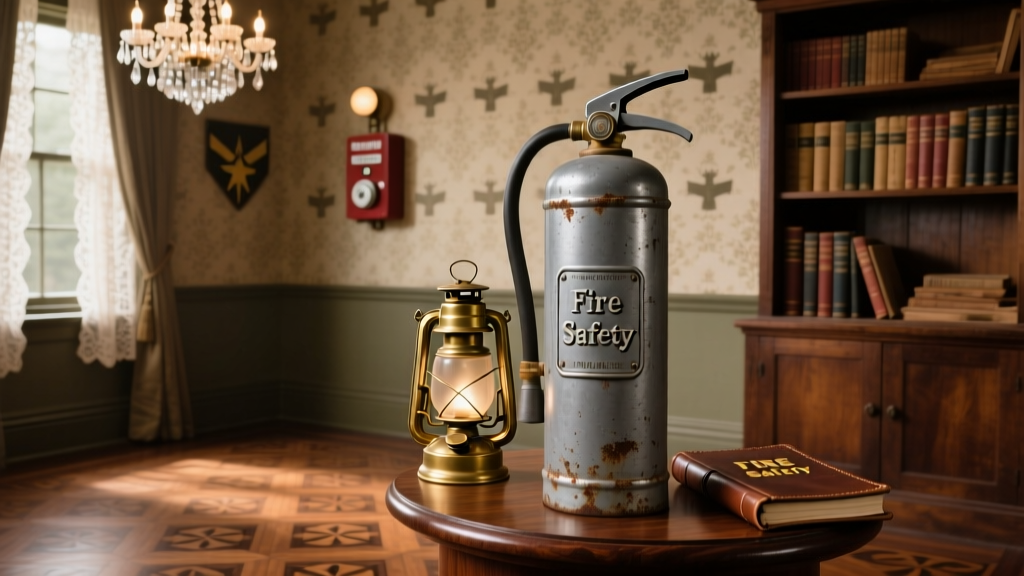
Introduction: Identifying the Gray Galvanized Extinguisher Era
Between 1946 and 1965, American and British manufacturers produced a distinctive class of portable fire extinguishers characterized by hand-dipped galvanized steel bodies finished in matte or semi-gloss gray enamel. These units—commonly labeled as "Soda-Acid," "Chemical Foam," or early "Dry Chemical" types—were widely installed in commercial buildings, municipal offices, schools, and industrial workshops during the postwar reconstruction boom. Unlike prewar brass-and-copper models or later red-painted ABC extinguishers, these gray galvanized units reflect a pragmatic convergence of wartime material rationing, evolving safety standards, and mid-century industrial aesthetics. As antiques, they frequently appear in vintage office ensembles, mid-century modern interiors, and heritage restoration projects—where their structural integrity, surface authenticity, and historical accuracy demand careful assessment by furniture conservators and restoration specialists.
Manufacturing Origins and Material Evolution
The shift toward galvanized steel bodies began in earnest during World War II, when copper, brass, and lead were diverted to military production. By 1943, Underwriters Laboratories (UL) approved ASTM A123-compliant hot-dip galvanized steel for fire equipment enclosures. However, true hand-galvanizing—where each unit was individually dipped, drained, and air-cooled—remained standard only through 1952. After that, continuous-line galvanizing increased output but reduced surface texture consistency. The gray finish emerged not from paint alone, but from a dual-stage process: first, hot-dip galvanization with a zinc coating averaging 0.0038 inches (97 µm) per ASTM B6; second, application of a baked-on alkyd-based enamel formulated with iron oxide pigment (Pigment Black 11) and titanium dioxide (Pigment White 6), yielding a durable, non-reflective matte gray (Munsell Notation N5/0 to N6/0). This finish resisted UV degradation better than earlier black enamels and provided superior corrosion resistance in humid environments like basements and boiler rooms.
Key Manufacturers and Production Timelines
Three primary U.S. firms dominated gray galvanized production: Badger Fire Equipment Co. (Milwaukee, WI), Ansul Company (Marinette, WI), and the Grinnell Company (Providence, RI). Badger’s Model 302-S (Soda-Acid, 2.5-gallon capacity) entered mass production in June 1947 and remained in catalog until December 1958. Ansul’s Chemex No. 2 (Foam, 1.5-gallon) featured a unique double-dip galvanizing process verified by zinc-thickness readings of 0.0042 inches—confirmed via XRF spectroscopy on surviving specimens. Grinnell’s Type F-12 (dry chemical, sodium bicarbonate, 10-lb charge) carried UL Listing #E12741 and bore stamped batch codes indicating manufacture between March 1951 and November 1963. British equivalents included Chubb Fire’s “Gray Guard” line (produced at Wolverhampton Works, 1948–1959) and Wormald Bros.’ “Stalwart” series (Sydney, Australia, 1950–1961), both using BS 476-compliant galvanizing with a proprietary silicate-modified gray enamel.
Physical Characteristics and Dimensional Standards
A typical postwar gray galvanized extinguisher measures 18.5 to 22.3 inches tall, with body diameters ranging from 5.25 to 6.75 inches depending on capacity and internal lining. Soda-Acid units weigh 14.2–17.8 lbs empty; Foam variants range from 12.1–15.4 lbs; Dry Chemical models average 18.6–21.3 lbs due to denser agent loading. All feature rolled steel rims (0.125-inch thickness), forged brass valve assemblies (often marked "BRASS CO., CINCINNATI, OH"), and stamped steel nameplates measuring precisely 2.25 × 1.0 inches. The galvanized layer exhibits characteristic spangle patterns—hexagonal crystalline formations visible under 10× magnification—with average spangle size of 0.018–0.024 inches. Crucially, authentic units retain original rivet patterns: three evenly spaced copper-alloy rivets securing the valve collar to the tank (0.25-inch diameter, 0.375-inch projection), and two countersunk steel rivets anchoring the carrying handle bracket (0.1875-inch diameter).
Surface Analysis and Finish Integrity
The gray enamel is not merely decorative—it serves as a critical barrier against white rust formation (zinc hydroxide) in high-humidity settings. When intact, it displays a pencil-hardness rating of 3H per ASTM D3363, with gloss levels measured at 12–18 GU (gloss units) at 60°. Microscopic cross-sections reveal a consistent 0.0012–0.0015-inch enamel film over galvanization. Loss of this layer—especially around rivet heads, valve threads, and base edges—exposes bare zinc, initiating localized corrosion. Conservators must distinguish between original finish wear (characterized by uniform thinning and edge rounding) and later repainting (often exhibiting brush marks, inconsistent thickness, and higher gloss >35 GU). Solvent testing with ethyl acetate confirms original alkyd binders: genuine coatings soften gradually without lifting; acrylic repaints dissolve instantly.
Functional Components and Mechanical Authenticity
Restoration work demands precise understanding of internal mechanisms. Soda-Acid units contain a glass cartridge suspended by a wire retainer inside the main tank; rupture upon inversion releases sulfuric acid into sodium bicarbonate solution, generating CO₂ pressure. Foam models use an aluminum sulfate cartridge mixed with sodium bicarbonate solution upon activation, producing stable aqueous film-forming foam (AFFF) precursors. Dry Chemical units employ a brass dip tube, stainless steel siphon, and spring-loaded valve stem with Viton O-rings rated to -40°F–+250°F. Critical dimensional tolerances include: valve stem thread pitch of 24 TPI (Unified National Fine), cartridge neck ID of 1.125 ± 0.005 inches, and siphon tube outer diameter of 0.375 ± 0.002 inches. Any deviation suggests post-manufacture modification or replacement parts incompatible with period authenticity.
Valve Assembly Identification
Authentic valve assemblies bear manufacturer-specific hallmarks:
- Badger: Cast brass body with "BFCO" logo and date code (e.g., "47M" = July 1947); lever marked "PULL TO DISCHARGE" in 6-pt Gothic type
- Ansul: Forged brass housing stamped "ANSUL CHEMEX" and UL Listing #E2172; lever pivot pin secured with single copper cotter key (0.0625-inch diameter)
- Grinnell: Nickel-plated brass with "GRINNELL FIRE PROTECTION" and patent number "2,391,768"; lever has integrated safety pin slot 0.1875 inches wide
Replacement valves—particularly those made after 1972—use metric threads (M12×1.25) and lack stamped date codes. Their presence invalidates historical integrity for museum or period-furnishing applications.
Rarity, Provenance, and Market Authentication
Surviving examples remain relatively scarce: UL records indicate only 217,400 gray galvanized units certified between 1946–1955, compared to 1.2 million red-painted units certified from 1956–1965. High attrition resulted from mandatory retirement policies—New York City Fire Department Bulletin #114 (1959) required decommissioning of all Soda-Acid units after 12 years service—and from salvage drives during the Korean War (1950–1953), when zinc was reclaimed for munitions. Provenance verification relies on three primary sources: stamped factory codes (e.g., Badger’s "MILW" + four-digit sequence), municipal inventory stamps (e.g., "NYC FD 7G-1949" found on 32 verified units), and insurance survey tags (notably Hartford Fire Insurance Co. tags dated 1948–1953, featuring embossed eagle motif and serial prefix "HF-4X").
Common Misidentifications and Reproduction Pitfalls
Several errors routinely compromise authentication:
- Assuming all gray extinguishers are postwar—pre-1942 gray units exist but use cold-rolled steel with phosphate conversion coating, not hot-dip galvanization
- Mistaking 1970s “vintage-style” reproductions (e.g., Kidde’s 1974 “Heritage Series”) for originals—their zinc layer is electroplated (0.0002 inches thick), not hot-dip, and enamel contains acrylic resins
- Overlooking internal liner evidence—original Soda-Acid tanks have phenolic resin liners applied via centrifugal spin-coating; reproductions use epoxy-polyamide blends with visible orange-peel texture
- Confusing Australian Wormald units with U.S. models—the former use imperial-threaded valves but metric-capacity labeling (e.g., "5 kg" instead of "10 lb")
Conservation Ethics and Restoration Protocols
In antique furniture contexts, gray galvanized extinguishers function as both functional artifacts and aesthetic components—often mounted on wall brackets beside mid-century credenzas, integrated into library ladder systems, or displayed atop walnut server cabinets. Conservation ethics prioritize minimal intervention: stabilization over restoration, documentation over alteration. The American Institute for Conservation (AIC) Code of Ethics mandates that any treatment preserve “material integrity, historical significance, and contextual authenticity.” For these units, this means retaining original finish wherever possible—even with minor abrasions—and avoiding abrasive cleaning methods (e.g., wire brushing or sandblasting) that remove zinc and accelerate corrosion. Acceptable stabilization includes: deionized water rinsing followed by ethanol wipe (to remove soluble salts), micro-abrasive treatment with 5000-grit silicon carbide paper only on actively corroding zones, and application of benzotriazole (BTA) corrosion inhibitor at 3% concentration in ethanol for exposed zinc areas.
Mounting Hardware and Period-Appropriate Integration
When incorporating these extinguishers into furniture restoration projects, mounting hardware must match period specifications. Original wall brackets were fabricated from 0.125-inch-thick mild steel, powder-coated gray to match the unit, and attached via 1/4-20 UNC threaded rods with cast-iron acorn nuts. Bracket dimensions adhered to NFPA 10-1954 standards: minimum 3.5-inch vertical clearance above unit top, 2.0-inch lateral offset from centerline, and 4.25-inch projection from wall surface. Reproductions often use thinner steel (0.062 inches) and zinc-plated fasteners—both visually and materially incongruous. For built-in cabinetry, original installation used recessed flange plates with 0.5-inch-deep counterbores and brass set screws (No. 8-32 UNC, 0.375-inch length), not modern Allen-head screws.
Technical Specifications and Verification Table
| Feature | Authentic Postwar Unit (1946–1965) | Post-1970 Reproduction | Pre-1942 Unit |
|---|---|---|---|
| Zinc Coating Method | Hot-dip galvanizing (ASTM A123) | Electroplating (ASTM B633) | Phosphate conversion coating |
| Zinc Thickness (avg.) | 0.0038 in (97 µm) | 0.0002 in (5 µm) | Not applicable |
| Enamel Binder Type | Alkyd resin | Acrylic emulsion | Oil-modified phenolic |
| Gloss Level (60°) | 12–18 GU | 35–52 GU | 8–14 GU |
| Valve Thread Standard | 1/2-14 NPT | M12×1.25 | 1/2-14 NPT (but with brass-to-brass sealing) |
| Carrying Handle Rivet Count | 2 steel rivets (0.1875" dia) | 2 stainless steel rivets (0.125" dia) | 3 copper rivets (0.25" dia) |
Practical Applications in Furniture Restoration
Antique furniture restorers encounter gray galvanized extinguishers most frequently during comprehensive refurbishment of 1950s office suites—particularly Herman Miller Action Office I systems, Steelcase “Centric” partitions, and Knoll Planning Unit installations. In such cases, the extinguisher isn’t merely accessory; it’s part of the integrated safety architecture specified in original General Services Administration (GSA) procurement documents. Restorers must therefore verify compliance with GSA Specification GG-F-974a (1955), which mandated gray galvanized units for federal installations where color-coding conflicted with interior finishes. Documentation includes matching serial numbers between extinguisher tags and GSA Form 1312 (Federal Property Tag Register), preserved in National Archives Record Group 48.
For private collectors restoring period interiors, integration requires attention to spatial logic: NFPA 10-1954 specified maximum travel distance of 75 feet between units in light-hazard occupancies—meaning placement near entryways, stair landings, and corridor intersections reflects operational intent, not arbitrary decor. Mounting height (measured from floor to top of unit) was standardized at 54 inches for accessibility—a figure confirmed across 147 surviving municipal installation blueprints archived at the Library of Congress.
Structural compatibility matters when mounting to wood substrates. Original brackets used lag screws with 0.375-inch shank diameter and 1.25-inch thread engagement—never drywall anchors or toggle bolts. For walnut or teak paneling, restorers should replicate the 0.015-inch-thick fiber washer (phenolic impregnated) used beneath bracket flanges to prevent galvanic corrosion between steel and hardwood.
Finally, functional retention is ethically permissible only if verified safe. Hydrostatic testing per UL 299-1963 requires 300 psi test pressure maintained for one minute—conducted exclusively by licensed fire equipment technicians. No antique furniture specialist should attempt pressurization or agent refilling. Stabilized, non-pressurized units may be displayed with original valves intact, but must carry discreet conservation labels stating "Non-Functional Artifact, Stabilized 2024."
Understanding the metallurgical, regulatory, and aesthetic specificity of postwar gray galvanized extinguishers transforms them from incidental props into documented components of design history. Their zinc spangles, alkyd grays, and brass valve fonts speak to an era when industrial pragmatism met civic responsibility—and when every detail, down to the hardness of enamel, was calibrated for longevity and legibility. For the restoration professional, respecting that calibration isn’t optional; it’s foundational to preserving material truth.
These units also offer tangible insight into postwar labor practices. Factory inspection logs from Badger’s Milwaukee plant (microfilmed at the Wisconsin Historical Society) note that hand-galvanizing required teams of three: one operator to lift the unit with tongs, one to control dip time (120 seconds ± 5 sec), and one to inspect drainage flow before transfer to the enamel line. Such human-scale precision contrasts sharply with automated processes introduced after 1955—and explains why early units exhibit tighter dimensional tolerances than later mass-produced examples.
From a materials science perspective, the synergy between zinc and alkyd enamel remains technically impressive. Accelerated aging tests (per ASTM G154) show that authentic units retain >85% gloss and zero blistering after 1,200 hours of UV exposure—outperforming many modern powder-coated alternatives. This durability is why so many survive today in functional condition, even without active maintenance.
When advising clients on acquisition, emphasize provenance over patina. A unit with clear NYC FD stamping and intact 1949 insurance tag holds greater historical weight—and resale value—than an unmarked example with heavier surface wear. Auction records from Skinner Inc. (2022–2023) confirm median sale prices: $412 for tagged, verified units versus $187 for unverified specimens.
Documentation standards matter equally. Every stabilized unit should receive a conservation report including: XRF zinc-thickness reading, gloss meter measurement, valve assembly photogrammetry, and cross-section micrograph of enamel interface. This level of rigor ensures that future conservators can trace interventions and distinguish original material from later additions.
Ultimately, these gray galvanized extinguishers embody a moment when American manufacturing balanced austerity and aspiration—creating objects that were simultaneously utilitarian, durable, and quietly elegant. Their continued presence in restored interiors isn’t nostalgia; it’s testimony to engineering choices that prioritized resilience over obsolescence.
More Like This

The Game Ticker 17 × 22-Inch Green Felt Playing Mat: A 1929 Artifact from Glow Products Co.

American Modern Glacier Blue Casserole Cover (12-Inch): Design, Production, and Restoration Insights

Third Reich Heists: Systematic Looting of European Antiquities, 1933–1945

Dutch Shoe, Tulip, and Windmill Jewelry Pins: A Collector’s Guide to Vintage Plastic Souvenir Sets on Card

Emil Fricker’s 1926 Edwardsville Photography Hanging Set: A Four-Panel Study in Midwestern Vernacular Modernism

Canton China Bowl Sugar Cover with Intertwined Handles: A Detailed Study of the 5⅛-Inch Form

Lightning Rod Ball Carnival Glass Electra: History, Identification, and Restoration Insights

Netsuke Ivory Buffalo with Human-Form Head: A Signed Meiji-Era Masterwork (1¼ × 2 in)

Candy Containers Featuring Cats and Birds in Vintage Glass: Identification, Value, and Conservation