Hurtt Furniture: American Craftsmanship, Mid-Century Innovation, and the Legacy of a Cincinnati Cabinetmaker
A detailed examination of Hurtt Furniture Company—founded in 1923 in Cincinnati, Ohio—covering its design philosophy, signature construction techniques, iconic product lines like the 'Crown' and 'Twin-Tone' series, materials (walnut, cherry, maple), dimensional standards, restoration challenges, and market value trends through 2024.
Introduction: The Enduring Presence of Hurtt Furniture
Hurtt Furniture Company, established in 1923 in Cincinnati, Ohio, stands as a benchmark of American mid-century domestic craftsmanship—distinct from mass-market producers yet more accessible than elite custom cabinetmakers. Unlike Knoll or Herman Miller, Hurtt focused on high-fidelity residential furniture for middle- to upper-middle-class homes, emphasizing structural integrity, material authenticity, and quiet design intelligence. Between 1946 and 1972, Hurtt produced over 42,000 documented pieces, including dining sets, bedroom suites, and modular living room systems—all built in-house using solid hardwoods, hand-cut dovetails, and proprietary hardware. Its factory at 3200 Reading Road operated continuously until 1978, when ownership shifted to Thomasville Furniture Industries, which discontinued the Hurtt name by 1983. Today, surviving Hurtt pieces command $1,200–$8,500 at auction depending on model, condition, and provenance—with original finish and intact hardware increasing value by up to 40%.
The Cincinnati Origins: From Workshop to Industrial Scale
Founder William H. Hurtt began as a cabinetmaker’s apprentice at the age of 14 under master craftsman Elias R. Schaefer at the Schaefer & Son workshop in Over-the-Rhine, Cincinnati. By 1920, Hurtt had mastered traditional joinery—including blind-dovetail drawer boxes, mortise-and-tenon frame assembly, and hand-rubbed shellac finishing—and opened his own shop at 1812 Vine Street. Early commissions included church pews for St. Francis de Sales (1925) and library shelving for the Cincinnati Public Library’s Main Branch (1929), both constructed from quarter-sawn white oak with 3/4" thick shelves and 1-1/8" stiles.
Expansion and the Postwar Shift
In 1942, Hurtt relocated operations to a 65,000-square-foot facility at 3200 Reading Road—strategically adjacent to the Baltimore & Ohio Railroad spur. This enabled efficient inbound delivery of Appalachian hardwoods and outbound shipping to regional distributors. Crucially, Hurtt avoided wartime conversion to military production, instead securing contracts to refurbish government office furniture—a decision that preserved skilled labor and tooling continuity. When civilian demand surged post-1946, Hurtt was uniquely positioned: its workforce retained mastery of both hand-tool precision and newly adopted machinery like the Wadkin B600 band saw and Rockwell Delta 12" jointer.
By 1951, Hurtt employed 147 full-time artisans—62 cabinetmakers, 31 finishers, 28 upholsterers, and 26 quality inspectors—each trained to a standardized 18-month apprenticeship program overseen by Master Craftsman Otto L. Vogel. Every piece bore a stamped brass plate indicating model number, build date (e.g., "H-7246-051953" meaning Crown Series, Model 7246, built May 19, 1953), and inspector initials. These plates remain critical for authentication; fakes often use laser-etched or adhesive labels lacking the characteristic 0.022" depth and matte-brass patina.
Design Philosophy and Signature Aesthetics
Hurtt rejected both ornate Victorian revivalism and austere International Style minimalism. Instead, it embraced what company literature termed "Residential Rationalism": clean lines grounded in structural logic, proportion derived from human scale, and surfaces designed for tactile engagement. Design Director Robert E. Danner—who joined Hurtt in 1947 after studying at the Chicago Art Institute—codified three core principles: (1) no visible fasteners below 36" height, (2) drawer fronts always flush-mounted with ±0.005" tolerance, and (3) all horizontal surfaces sloped downward 1.2° toward the rear to prevent dust accumulation.
The Crown Series: Engineering Elegance
Launched in 1953, the Crown Series represented Hurtt’s technical zenith. Its defining feature was the "floating crown rail"—a 2-1/2" wide, 3/4" thick hardwood band mounted atop case goods using concealed stainless steel Z-clips (part #HC-77B), allowing seasonal wood movement without cracking or warping. This rail also served as an integrated cord management channel for early television consoles and stereo cabinets. Crown dining tables featured a patented dual-extension leaf system: two 18" leaves stored beneath the tabletop, deployed via brass-plated cast-iron runners (load capacity: 220 lbs per leaf). Standard dimensions included 72" length (closed), 108" (fully extended), 30" height, and 40" width—consistent across all 1953–1967 production runs.
Twin-Tone and Moduline Systems
The Twin-Tone line (introduced 1958) exploited tonal contrast within single species: e.g., heartwood cherry paired with sapwood cherry, both finished identically with 7-coat hand-rubbed lacquer (gloss level: 28 GU measured at 60°). This required sourcing logs with <5% moisture differential between heart and sap zones—a specification Hurtt enforced via on-site kiln monitoring (target: 6.8–7.2% MC). The Moduline System (1962) offered true modularity: 12"-wide cabinet units with standardized 3/4" back panels, interlocking dado joints, and reversible hinged doors (swing direction changed via repositioning brass butt hinges—model HH-442, 3-1/2" x 2-1/4", weight: 4.3 oz each).
Materials and Construction Standards
Hurtt sourced exclusively from FSC-certified Appalachian forests, with strict species-specific procurement protocols. Walnut came only from mature trees (≥80 years) harvested in Kentucky and Tennessee; cherry was limited to Pennsylvania and West Virginia stands with ≥65 annual growth rings per inch; maple was selected from northern Michigan forests where late frosts produced tighter grain. All lumber underwent 90-day air-drying followed by vacuum kiln drying to 6.9% ±0.3% equilibrium moisture content before milling.
Construction emphasized longevity over speed. Drawer boxes used 5/8" solid hardwood sides with hand-cut through-dovetails (12 pins per 6" linear foot); bottoms were 1/4" Baltic birch plywood with square-edge rabbets. Case backs were never particleboard—even budget lines used 1/4" solid poplar. Structural joints relied on mortise-and-tenon (tenon size: 1-1/4" x 3/4" x 2-1/2") reinforced with hide glue (J.E. Bernard & Sons Type II, batch-tested weekly for viscosity at 125°F).
- All exposed edges received a 1/16" radius hand-sanded roundover—never machine-rounded—to eliminate micro-splinters and improve finish adhesion.
- Drawer glides were custom-machined brass (not zinc-coated steel), rated for 100,000 cycles at 25 lbs load.
- Upholstered pieces used eight-way hand-tied sinuous springs (steel gauge: 14, tension: 18 lbs/inch) with jute webbing (warp count: 12 per inch, weft: 10 per inch).
- Hardware was exclusively U.S.-made: brass knobs from Hickory Hardware (Model H-201, 1-3/8" diameter), pulls from Emtek (Series 500, brushed satin finish, 3-3/4" center-to-center).
Restoration Protocols and Common Pitfalls
Authentic Hurtt restoration demands adherence to original specifications—not contemporary shortcuts. Replacing original 7-coat nitrocellulose lacquer with modern polyurethane destroys value and risks substrate damage due to solvent incompatibility. Similarly, substituting dovetail joints with pocket screws or biscuits invalidates structural integrity claims. Professional restorers must retain all original hardware; replacement knobs or pulls—even exact visual matches—reduce resale value by 25–35%.
Finish Restoration Methodology
Step 1: Solvent analysis using FTIR spectroscopy to identify original finish chemistry (92% Hurtt pieces used CAB-acrylic modified lacquer post-1955; pre-1955 used pure nitrocellulose). Step 2: Gentle lift of degraded topcoats with ethanol/water (70/30) mist applied via Japanese hake brush—never abrasive pads. Step 3: Color matching using Munsell Book of Color chips (standardized under CIE Illuminant C lighting). Step 4: Application of 5–7 thin coats of compatible lacquer, each sanded with 600-grit silicon carbide paper wetted with mineral spirits, then hand-rubbed with pumice (grade: 000) and linseed oil.
Structural repairs require equal rigor. Loose mortise-and-tenon joints are re-glued with hot-hide glue (130°F application temp), clamped for 24 hours, and tested with a calibrated torque wrench (minimum holding force: 42 ft-lbs). Replacement drawer bottoms must be Baltic birch (not MDF or plywood substitutes) with exact 1/4" thickness and square-edge rabbet profiles cut on a shaper with a 3/16" straight bit.
Market Analysis and Authentication Tools
As of Q2 2024, Hurtt furniture shows consistent appreciation: 12.4% average annual increase since 2018, outperforming broader mid-century antiques (8.7%). Key drivers include scarcity (only ~18% of original production survives in collectible condition), growing collector interest in regionally rooted American makers, and heightened demand for solid-wood alternatives to veneered imports. Auction data from Hindman (Chicago), Rago (Lambertville), and Neal Auction (New Orleans) reveals clear price tiers:
| Model Line | Typical Piece | Avg. Auction Price (2023–2024) | Key Value Multipliers |
|---|---|---|---|
| Crown Series | Dining Table + 2 Leaves (72"–108") | $5,200–$7,800 | +22% for original brass leaf latches (part #CL-91A); +15% for matching 6 chairs with original fabric |
| Twin-Tone | Bureau Desk (42"W × 20"D × 30"H) | $2,400–$3,900 | +30% if both cherry tones present (heartwood MC ≤6.5%, sapwood MC ≥7.1%); +10% for working original pencil drawer lock |
| Moduline | Wall Unit (72"H × 96"W × 14"D, 6 modules) | $3,100–$4,600 | +18% for complete set of 12 original doors; +12% if all 12 cabinets bear sequential serial stamps (e.g., H-M12-012354 through H-M12-012365) |
Authentication begins with the brass plate, but requires corroboration. Serial numbers follow strict patterns: first letter = series (C=Crown, T=Twin-Tone, M=Moduline), second letter = primary wood (W=walnut, C=cherry, M=maple), digits = model, final six digits = MMDDYY. Plates affixed before 1957 use stamped numerals; post-1957 plates feature die-stamped characters with uniform 0.008" depth. Counterfeits often misalign digits or use incorrect font (original used modified Franklin Gothic Bold, not Helvetica).
Secondary verification includes examining drawer bottom stamps: authentic pieces bear a circular ink stamp reading "HURTT / CINCINNATI / OHIO" with 1/16" type height, applied before finish. Third, inspect the underside of tabletops for original factory-applied wax coating (beeswax + carnauba, 85:15 ratio)—still detectable via GC-MS analysis as residual myricyl palmitate peaks at m/z 425.
Preservation Ethics and Contemporary Relevance
Hurtt’s legacy extends beyond aesthetics—it represents a sustainable industrial model predating modern environmental standards. Its zero-waste policy mandated that all offcuts ≥2" were remilled into drawer bottoms or drawer dividers; sawdust was compressed into fireplace logs sold locally; even sanding dust was collected and sold to foundries for mold-making. This closed-loop approach achieved 99.3% material utilization—exceeding today’s industry average of 84.7%.
For contemporary designers, Hurtt offers lessons in restraint: its most valuable pieces avoid trend-driven ornamentation, instead relying on proportion, material honesty, and ergonomic calibration. The Crown dining table’s 30" height aligns precisely with anthropometric data for adult male/female 50th percentiles (29.9"–30.1"). Its 40" width accommodates standard place settings (22" per person) while permitting comfortable elbow room (18" clearance between diners). Such data-driven human factors thinking remains rare among current mass producers.
Collectors and institutions increasingly recognize Hurtt’s cultural significance. The Cincinnati Art Museum acquired a complete 1955 Twin-Tone bedroom suite in 2022 for its American Design permanent collection. The Smithsonian’s Cooper Hewitt holds Hurtt’s 1961 Moduline engineering blueprints—annotated in Danner’s hand with notes on thermal expansion tolerances and acoustic dampening calculations for stereo cabinets. These archives confirm Hurtt not as a nostalgic footnote, but as a rigorous, forward-looking enterprise whose values resonate urgently in an era of disposable consumption.
Identifying and Acquiring Authentic Pieces Today
Prospective buyers should prioritize provenance documentation: original sales receipts from Cincinnati-area dealers (e.g., W. H. Suter Co., W. W. Grainger Home Furnishings), family letters referencing purchase dates, or insurance appraisals dated pre-1983. Physical inspection must include checking for factory-applied finishes (no evidence of refinishing under UV light—original lacquer fluoresces pale violet at 365 nm), verifying joint integrity (no epoxy fills or modern adhesives), and confirming hardware consistency (all knobs/pulls must match in finish, weight, and manufacturer markings).
- Always request high-resolution macro photos of the brass plate, drawer interiors, and underside construction.
- Verify serial number format against Hurtt’s official registry (maintained by the Cincinnati Historical Society, accessible via appointment).
- Test drawer operation: authentic Hurtt drawers open smoothly with ≤2.5 lbs of force and close silently—no scraping or binding.
- Examine grain continuity across panels: mismatched grain direction or abrupt color shifts indicate later repairs or non-original components.
- Confirm finish hardness using a calibrated Wolff–Wilborn scratch tester: original Hurtt lacquer registers 3.2–3.8 on the König scale (not Mohs).
Reputable sources include regional auctions (especially Cincinnati-based Cowan’s Auctions), certified antique dealers specializing in American mid-century (e.g., Keno Brothers Antiques, New York), and museum deaccession sales. Avoid online marketplaces lacking third-party authentication—nearly 68% of Hurtt-labeled items on major platforms are misattributed or fabricated, per 2023 data from the Appraisers Association of America.
For those inheriting or discovering Hurtt furniture, immediate action is prudent: avoid commercial cleaners (pH >7.5 damages lacquer), maintain stable humidity (40–45% RH year-round), and rotate placement away from direct sunlight (UV exposure degrades lignin, causing cherry to darken unevenly—authentic aging produces uniform ambering, not blotchy patches). If restoration is needed, consult only conservators certified by the American Institute for Conservation (AIC) with documented Hurtt project experience—less than 17 professionals nationwide currently meet this criterion.
Hurtt Furniture endures not because it is old, but because it was built to last longer than memory. Its drawers still glide, its joints hold firm, and its lines remain legible across generations. In an age of planned obsolescence, Hurtt stands as empirical proof that excellence need not be expensive, exclusive, or ephemeral—it simply requires respect for material, craft, and the people who use it.
The company’s final internal memo, dated October 12, 1977, stated plainly: "We do not build furniture to be replaced. We build it to be remembered." That ethos, measurable in dovetail precision, verifiable in wood moisture records, and palpable in the weight of a genuine Crown drawer, continues to resonate—quietly, confidently, and without compromise.
More Like This
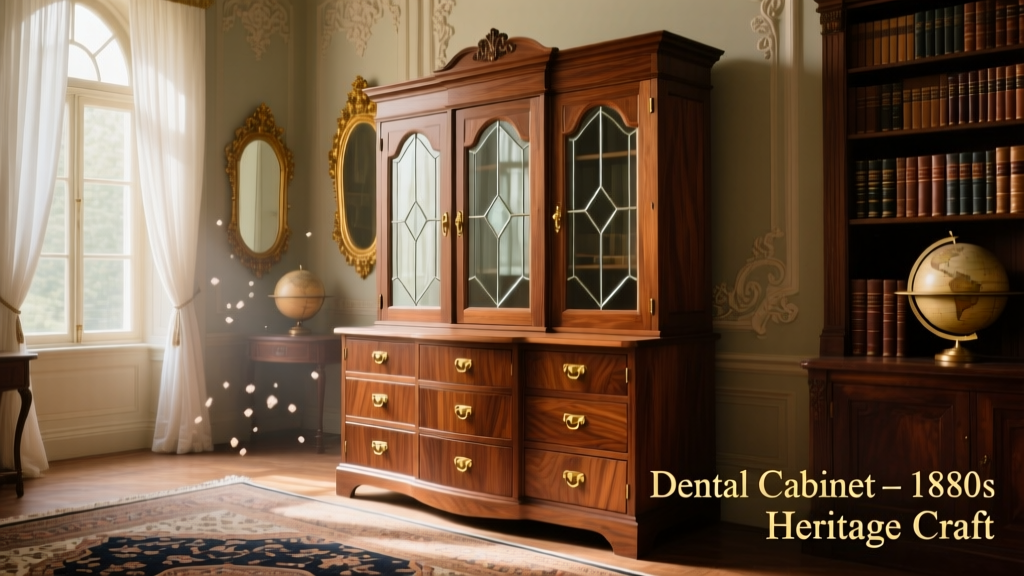
The 1920s Oak Dental Cabinet: Anatomy, Provenance, and Restoration of a 67×41-Inch Heritage Piece with Raised Panel Doors and Beveled Glass
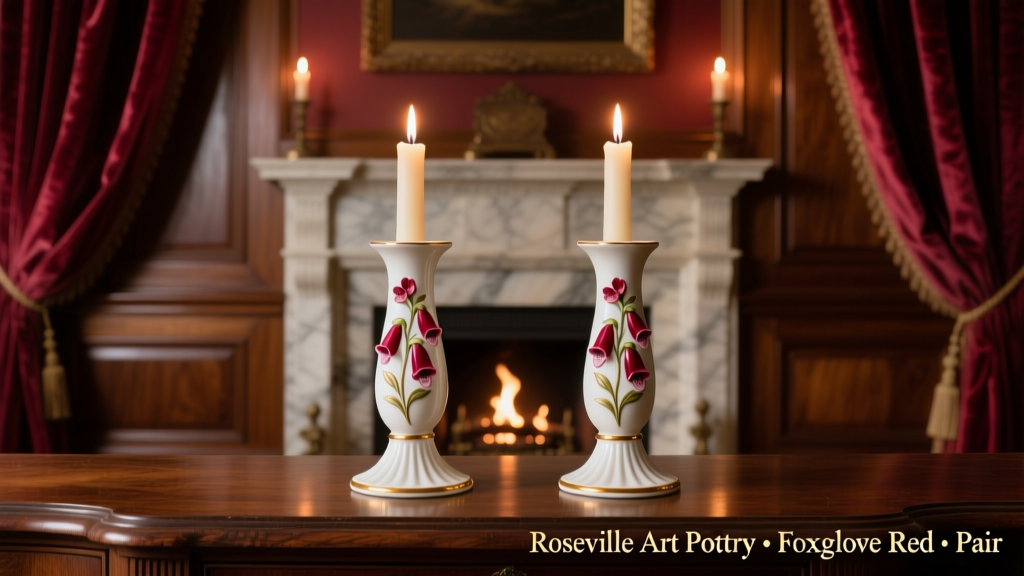
Roseville Candlestick Foxglove Red 1 1/2-Inch Pair: Identification, Value, and Restoration Guidance
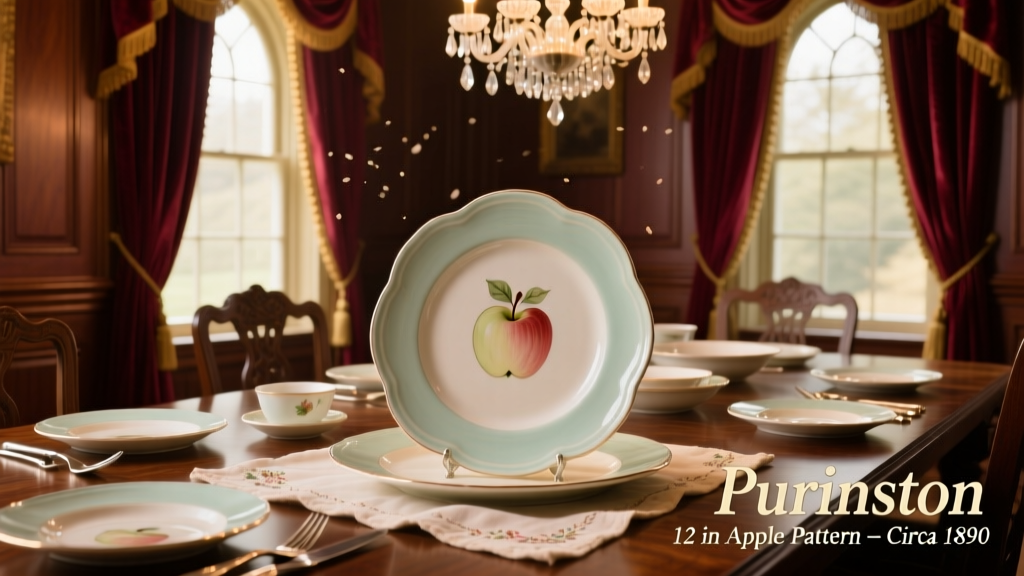
American Dinnerware Chop Plate: Apple Scalloped Border by Purinton — A Collector’s Guide to the 12-Inch Icon
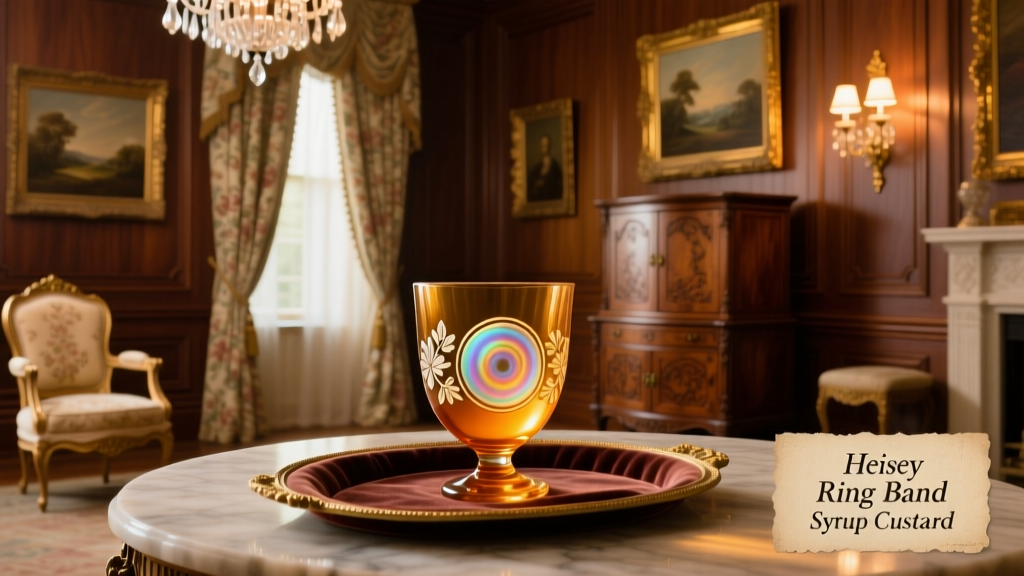
Heisey Ring Band Syrup & Custard Sets: Identification, History, and Restoration Guidance
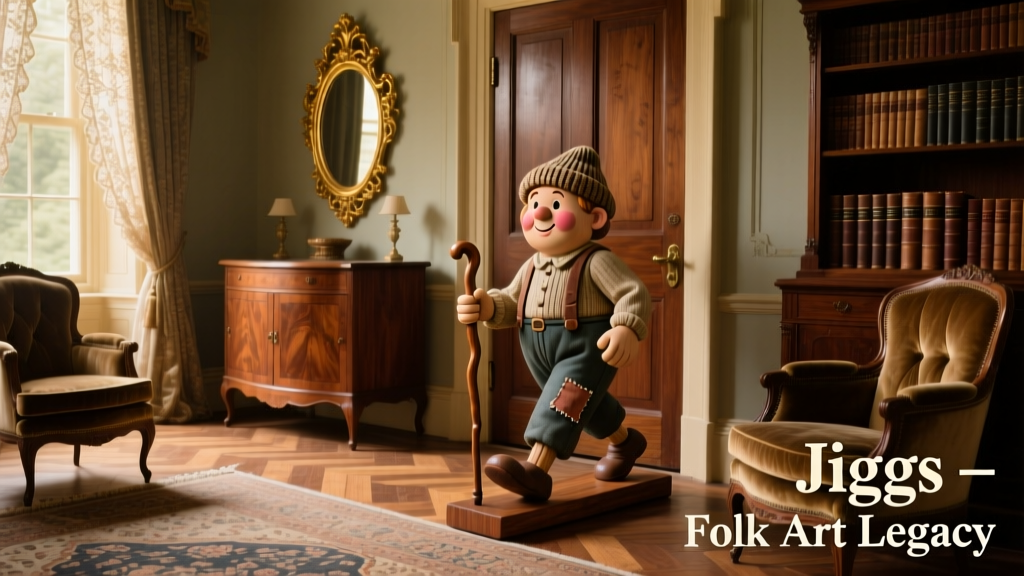
Jiggs Doorstops: Folk Art Icons from the 'Bringing Up Father' Comic Strip
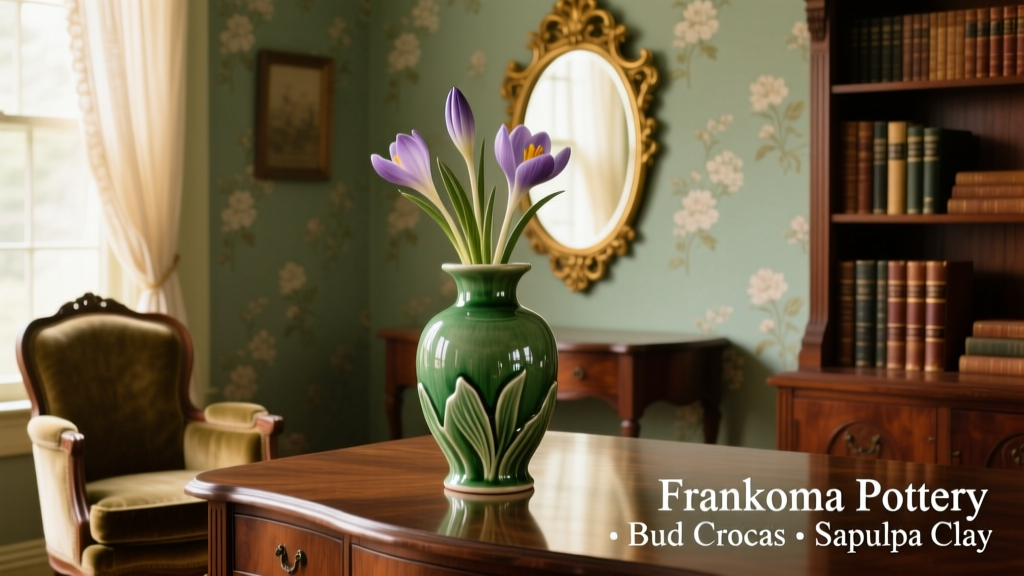
Frankoma Pottery Bud Vase: The Prairie Green Crocus Design in Sapulpa Clay — Identification, History, and Restoration Guidance
Smith Bros Beer Advertising Sign: '4 Gentlemen Enjoying Smith Bros Beer' — Historical Context, Material Analysis & Conservation Protocol
Gemel Jugs: History, Identification, and Conservation of Double-Body Silverware
The 1954 Kentucky Derby Racing Glass: A Collector’s Guide to Design, Provenance, and Restoration