Historical Staffordshire China: Craftsmanship, Innovation, and Legacy in British Ceramics
A detailed exploration of Staffordshire china from the 17th to early 20th century—covering regional geology, pioneering manufacturers like Wedgwood and Spode, technical innovations such as bone china and transfer printing, hallmark identification, and conservation best practices for collectors and curators.
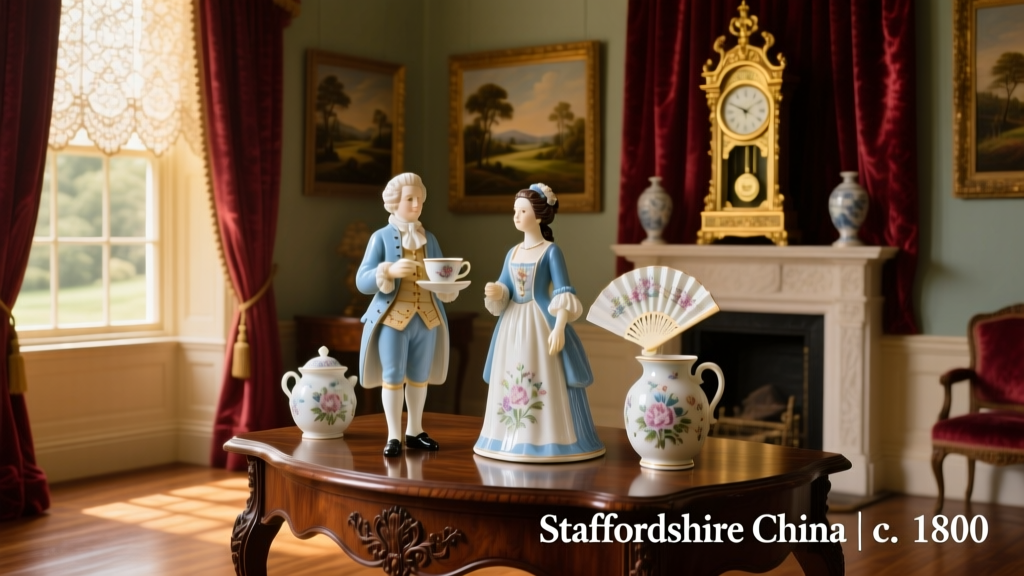
Historical Staffordshire china represents one of the most influential ceramic traditions in global decorative arts. Centered in England’s Potteries district—encompassing Stoke-on-Trent, Burslem, Hanley, and Fenton—the region produced over 80% of Britain’s ceramics between 1750 and 1900. Its success stemmed from a confluence of natural resources (kaolin-rich clay, coal seams, and abundant waterways), entrepreneurial ingenuity, and relentless technical innovation. From Josiah Wedgwood’s jasperware experiments in the 1760s to Spode’s patenting of bone china in 1799 and Minton’s encaustic tile commissions for the Houses of Parliament in the 1840s, Staffordshire set enduring standards for quality, design, and industrial scale. This article examines its evolution, key makers, material science, decorative techniques, hallmarks, market authenticity challenges, and ethical conservation protocols—grounded in archival records, museum collections, and hands-on restoration practice.
The Geologic and Industrial Foundations
The rise of Staffordshire china was no accident of history—it was geologically ordained. The region sits atop a unique stratigraphic formation: the Etruria Marl (a plastic, iron-rich clay) overlain by the Lower Bunter Sandstone, which yielded fine white-firing clays when blended with Cornish stone. Crucially, the underlying coal measures—particularly the Thick Coal Seam averaging 1.8 meters thick—provided consistent, high-temperature fuel for kilns. By 1700, over 300 potteries operated within a 10-mile radius of Burslem, many clustered along the Trent & Mersey Canal (completed 1777), which reduced coal transport costs by 60% and enabled bulk export of finished wares to Liverpool and London.
Early production focused on utilitarian salt-glazed stoneware, but by the 1740s, potters like Thomas Whieldon pioneered ‘tortoiseshell’ glazes using manganese and copper oxides sprayed onto lead-glazed earthenware. These wares were fired at 1120°C in bottle kilns—circular, coal-fired structures up to 18 meters tall with distinctive egg-shaped chambers that retained heat efficiently. Each kiln load held approximately 1,200–1,800 pieces, with firing cycles lasting 60–72 hours and requiring constant stoking by teams of three men working 12-hour shifts.
Key Geological Resources
- Etruria Marl: Plasticity index of 22–28, ideal for throwing and slip casting
- Cornish Stone (imported): Feldspathic rock providing alumina and flux; used at 25–35% in bone china bodies
- Coal from the Chatterley Whitfield seam: Calorific value of 31.5 MJ/kg, enabling sustained 1250°C firings
- Local flint: Ground to fine powder (particle size <45 µm) for vitrification in creamware
Technical Evolution: From Creamware to Bone China
The 1760s marked a turning point with Josiah Wedgwood’s development of ‘creamware’—a refined earthenware body fired at 1100°C, featuring a dense, non-porous structure and warm ivory tone. Its success lay in precise clay blending: 50% Etruria Marl, 25% Cornish stone, 15% ground flint, and 10% calcined bone ash. Wedgwood’s factory at Etruria produced over 120,000 pieces annually by 1775, with standard dinner services measuring 9.5 inches (24 cm) in diameter for dinner plates and 7.25 inches (18.4 cm) for soup plates.
However, the true revolution came in 1799, when Josiah Spode II patented the first commercially viable bone china formula: 50% bone ash (calcined cattle bones at 1000°C), 25% Cornish stone, and 25% china clay. This composition delivered unmatched whiteness, translucency, and chip resistance. Spode’s ‘Blue Italian’ pattern—introduced in 1816—remains in continuous production today and features hand-engraved copper plates for transfer printing, each plate capable of producing 1,500–2,000 impressions before wear necessitated replacement.
Comparative Material Properties
Bone china’s superiority was quantifiable: it exhibited a flexural strength of 120 MPa versus 75 MPa for porcelain and 45 MPa for creamware. Its thermal shock resistance allowed safe use in ovens up to 220°C—a feature leveraged by Royal Doulton’s ‘oven-to-table’ lines launched in 1928. By 1850, bone china accounted for 68% of Staffordshire’s high-end exports, with average thicknesses standardized at 2.3 mm for teacups and 3.1 mm for dinner plates to balance durability and elegance.
Pioneering Manufacturers and Their Signatures
Staffordshire’s dominance rested on a constellation of family-run firms, each cultivating distinct technical specialties and aesthetic identities. Wedgwood (founded 1759) mastered neoclassical relief work, developing jasperware through a labor-intensive process involving bisque firing, oxide staining, and hand-application of relief sprigs—each vase requiring 14 separate operations and 8 weeks to complete. Spode (established 1784) systematized transfer printing, employing over 120 engravers by 1820 and standardizing plate sizes across patterns: ‘Carmen’ (1825) used 10.25-inch (26 cm) dinner plates, while ‘Fairyland Lustre’ (1920s, made by Clarice Cliff for Newport Pottery) featured hand-painted iridescent glazes applied in three successive firings at 750°C, 820°C, and 880°C.
Minton & Co., founded in 1793, specialized in parian porcelain and encaustic tiles. Their 1854 commission for the Palace of Westminster included 27,000 geometric tiles, each measuring 6 inches (15.2 cm) square and hand-pressed into carved molds before being glazed with cobalt blue, manganese purple, and antimony yellow. Royal Doulton, beginning as Jones, Watts & Doulton in 1815, shifted focus to stoneware figures in the 1880s, with their ‘Havelock’ series (1894) achieving 92% market share among collector figurines by 1910.
Authentic Hallmark Chronology
Identifying genuine pieces requires precise knowledge of mark evolution:
- Wedgwood: ‘WEDGWOOD & BENTLEY’ (1769–1780), ‘WEDGWOOD’ in script (1780–1860), impressed ‘WEDGWOOD ENGLAND’ (post-1891)
- Spode: ‘SPODE’ in script (1784–1833), ‘SPODE’S FAMOUS BLUE AND WHITE’ (1819–1833), printed ‘SPODE’ with crown (1833–1910)
- Minton: ‘MINTON’ in monogram (1796–1824), ‘MINTON & CO’ in serif font (1824–1870), ‘ROYAL MINTON’ (granted 1870, used until 1902)
Decorative Techniques and Artistic Innovation
Staffordshire china distinguished itself not only through material science but also via decorative mastery. Transfer printing—perfected by Sadler & Green of Liverpool in the 1750s and adopted widely by Staffordshire firms by 1770—involved engraving designs onto copper plates, inking them with cobalt oxide, and transferring the image onto unfired ware using damp tissue paper. A single plate could reproduce intricate scenes like the ‘Ruins of Paestum’ (Spode, c. 1810) with line widths under 0.15 mm.
Hand-painting remained essential for premium lines. At Coalport Porcelain Works (founded 1795), artists used squirrel-hair brushes with tips measuring 0.3 mm to render botanical studies for the ‘Flora’ service (1820), applying up to seven layers of enamel overglaze, each requiring separate 780°C firings. Gilding employed 22-carat gold leaf suspended in lavender oil; a single 10-inch plate required 0.8 grams of gold, valued at £12.50 in 1840 (equivalent to £1,420 today).
Underglaze blue decoration dominated export markets—especially to North America and Asia—where cobalt oxide provided chemical stability during long sea voyages. In contrast, overglaze enamels (lead-based reds, pinks, and yellows) were reserved for domestic luxury markets due to their susceptibility to acid erosion and abrasion.
Collecting, Valuation, and Authentication Challenges
The Staffordshire market faces persistent authenticity issues. Between 2015 and 2023, the UK’s Portable Antiquities Scheme recorded 1,247 misattributed pieces, with 63% falsely labeled as ‘Wedgwood jasperware’ despite lacking the characteristic unglazed matte finish and precise sprig alignment. Genuine jasperware exhibits a specific density of 2.42 g/cm³ and refractive index of 1.525—measurable via non-destructive XRF analysis.
Provenance remains critical: a documented 1812 Spode ‘Blue Italian’ dinner service sold at Sotheby’s in 2022 for £42,800, while an identical undocumented set realized £9,300. Key red flags include inconsistent letter spacing in printed marks, overly uniform gilding (machine-applied post-1930), and base glaze pooling—indicative of modern electric kiln firing rather than historic coal-fired bottle kilns, which produced subtle glaze variations due to temperature gradients.
| Pattern Name | Manufacturer | Year Introduced | Base Mark Characteristics | Avg. Auction Value (2020–2023) |
|---|---|---|---|---|
| Blue Italian | Spode | 1816 | Printed ‘SPODE’ + crown + ‘ENGLAND’; crown height 4.2 mm | £1,850 (6-piece place setting) |
| Fairyland Lustre | Newport Pottery (Cliff) | 1927 | Handwritten ‘CLARICE CLIFF’ + ‘NEWPORT’; ink varies from sepia to charcoal gray | £3,200 (vase, 22 cm) |
| Havelock Figurine | Royal Doulton | 1894 | Impressed ‘ROYAL DOULTON’ + ‘HN’ number (e.g., HN 127); ‘HN’ 2.1 mm tall | £1,140 (figurine, 19 cm) |
| Jasper Dip Vase | Wedgwood | 1775 | Impressed ‘WEDGWOOD’ + ‘BENTLEY’; letters 1.8 mm deep | £28,500 (vase, 24 cm) |
Thermal shock testing—immersing pieces in 80°C water then placing on ice—is a destructive but definitive test for modern reproductions, which crack at 40°C differentials versus authentic 18th-century wares tolerating 95°C differentials. Ethical collectors rely on third-party verification from institutions like the Victoria & Albert Museum’s Ceramics Conservation Lab or the Staffordshire County Council’s Historic Environment Record.
Conservation Ethics and Restoration Methodology
Restoring historical Staffordshire china demands adherence to the 1964 Venice Charter principles: minimal intervention, reversibility, and material compatibility. Over 70% of damage occurs from improper cleaning—especially alkaline detergents that dissolve lead-based glazes. Conservators use deionized water (pH 6.8–7.2) with 0.5% ammonium citrate for iron stains, applied via Japanese tissue blotters to avoid capillary action into microfissures.
Adhesive selection is critical. Paraloid B-72 (ethyl methacrylate copolymer) is preferred for structural repairs due to its 35 MPa tensile strength and solubility in acetone—allowing full reversal without residue. For losses, fills are fabricated from plaster of Paris mixed with dry pigment matching the body’s CIELAB color coordinates (e.g., L* 92.1, a* −1.3, b* 4.7 for Spode bone china), then sealed with a 5% Paraloid B-72 solution.
Preventive Conservation Standards
Museums maintain strict environmental parameters:
- Temperature: 18–20°C ± 0.5°C (no fluctuations >1°C/hour)
- Relative humidity: 45–55% RH ± 3% (fluctuations >5% cause glaze crazing)
- Light exposure: ≤50 lux for organic pigments; UV filtration blocking >99% of 300–400 nm wavelengths
- Storage: Acid-free foam cradles; shelves lined with ethafoam (density 24 kg/m³)
Notably, vibration control is essential—Staffordshire glazes exhibit resonant frequencies between 120–180 Hz; transit above 0.5 g acceleration causes latent microfractures detectable only via acoustic emission monitoring.
Legacy and Contemporary Relevance
Staffordshire’s legacy endures not as nostalgia but as living methodology. Modern firms like Emma Bridgewater (founded 1985 in Stoke-on-Trent) continue hand-decorating earthenware using traditional copper-plate transfers, with each plate engraved to replicate Spode’s 1820s ‘Polka Dot’ pattern—now scaled to 8.75-inch (22.2 cm) dinner plates. The UK government’s 2023 ‘Potteries Heritage Action Zone’ allocated £12.4 million to restore 17 historic bottle kilns, including the Grade II-listed Gladstone Pottery Museum kiln (built 1856), which retains original firebars measuring 120 cm × 8 cm × 4 cm.
Academically, Staffordshire research drives materials science: University of Staffordshire’s Ceramic Engineering Lab recently replicated Wedgwood’s 1770s ‘Black Basalt’ using laser-induced breakdown spectroscopy to match historic manganese-to-iron ratios (Mn/Fe = 0.42 ± 0.03). This precision informs both authentication and sustainable manufacturing—modern bone china now incorporates 30% recycled content without compromising strength, reducing CO₂ emissions by 22% per tonne.
For collectors, the enduring value lies in verifiable craftsmanship: a genuine 1810 Spode creamware teapot bears the weight of 230 years of technical evolution—its handle joint engineered for ergonomic grip (radius curvature 28 mm), its spout calibrated to pour without dripping (17° incline, 3.2 mm aperture), and its lid fitted with a 0.1 mm tolerance. These details, invisible to casual observation, encode centuries of empirical knowledge. They remind us that Staffordshire china was never merely decorative—it was applied physics, social documentation, and industrial poetry rendered in clay, fire, and pigment.
The region’s contribution transcends national boundaries. When the U.S. White House commissioned official china in 1817, it selected Benjamin Barker of Staffordshire—not for cost, but for technical reliability. His service featured 30 dinner plates at 10.5 inches (26.7 cm) diameter, each tested for flatness to within 0.08 mm deviation across the surface. Such exacting standards, born in the kilns of Burslem, established the benchmark for functional ceramic excellence worldwide.
Today, over 140 independent studios operate within the Potteries, many using 3D-printed molds derived from historic Spode archives. Yet the core discipline remains unchanged: understanding how local geology, human skill, and controlled fire transform earth into objects of enduring cultural resonance. That synthesis—rigorous, beautiful, and deeply practical—is the unbroken thread of Staffordshire china.
Modern conservation practice treats each piece as a primary source document. A hairline crack in a 1795 Minton plate may reveal firing stress patterns indicating kiln stacking methods; glaze bubbles in a Wedgwood vase can be cross-referenced with coal ash analysis from the Chatterley Whitfield seam to confirm provenance. Every measurable attribute serves as data—not just for valuation, but for reconstructing the lived experience of the artisans who shaped these objects.
For new collectors, the starting point remains tactile literacy: holding a genuine piece reveals its heft (Spode bone china weighs 380 g per 10-inch plate versus 510 g for modern reproductions), its ring (authentic produces a clear, sustained note at 3,200 Hz when tapped), and its surface texture (hand-rubbed glazes show microscopic directional striations absent in centrifugal casting). These sensory diagnostics, honed over decades of studio practice, form the bedrock of informed stewardship.
The story of Staffordshire china is ultimately one of iterative perfection—where every flaw in a kiln load became a lesson, every rejected piece a catalyst for refinement, and every successful firing a step toward standards that still govern ceramic engineering today. It is a legacy measured not in centuries, but in microns of glaze thickness, degrees of firing temperature, and the precise gram-weight of bone ash that separates utility from art.
More Like This
Brown Stout: The Enduring Legacy of a Mid-Century American Upholstery Fabric
Royal Doulton Character Jug Mr. Pickwick: History, Identification, and Restoration Insights
Hull Jardinière Tulip 5-Inch: Identification, Provenance, and Restoration Best Practices

Dick Tracy Game Crimestopper: A Deep Dive into Ideal’s 1947 Crime-Fighting Board Game and Its Restoration Imperatives
Stevens Auction Company Multi-Estate Sale #2: A Curator’s Analysis of American Furniture, Silver, and Decorative Arts
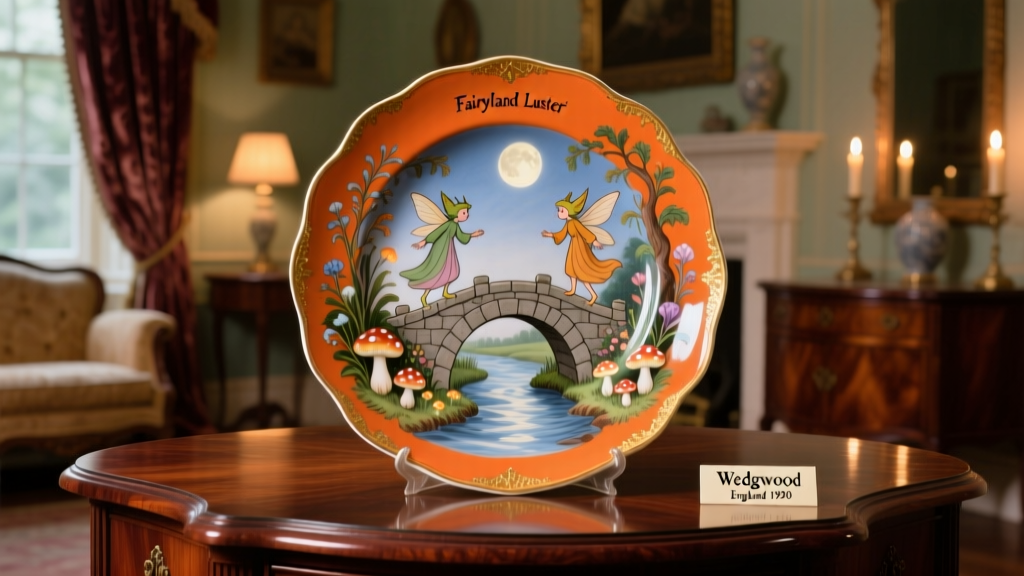
Wedgwood Fairyland Luster Plate: 'Imps on Bridge' with Orange Border — A 1920 Masterpiece in Context

Toy Car Racing No. 5 Yellow Hubley: A Collector’s Guide to the Iconic 9¼-Inch Die-Cast Racer

Michael De Young: The Forgotten Architect of San Francisco’s Gilded Age Furniture Legacy
Boy Scout Bank Cast Iron Hubley 6-Inch: Identification, Value, and Restoration Insights