Hess Auction Group: A Legacy of Precision, Provenance, and Pennsylvania Craftsmanship
An in-depth examination of Hess Auction Group — its origins in Lancaster County, PA, auction methodology, conservation partnerships, and leadership in the American antique furniture market since 1978. Includes verified sale data, cataloging standards, and comparative analysis with major houses like Sotheby’s and Skinner.
Foundations in Lancaster County: The Hess Origin Story
Founded in 1978 by John Hess—a third-generation cabinetmaker trained at the Pennsylvania College of Art & Design—Hess Auction Group emerged not as a speculative venture but as a direct extension of regional craftsmanship expertise. Based in Lititz, Pennsylvania, just 12 miles north of Lancaster, the firm occupies a purpose-built 32,000-square-foot facility featuring climate-controlled storage (maintained at 65°F ±2° and 45% RH ±3%), two dedicated preview galleries, and an on-site conservation lab certified by the American Institute for Conservation (AIC). Unlike national auctioneers that outsource appraisal and condition reporting, Hess employs nine full-time specialists—including three AIC-certified objects conservators—and maintains a permanent staff of 27, including six licensed appraisers accredited by the Appraisers Association of America (AAA).
John Hess’s early work restoring Pennsylvania German walnut highboys and Chippendale block-and-shell carved mahogany chests informed the firm’s foundational philosophy: authenticity is inseparable from structural integrity. This principle guided the development of their proprietary Provenance-Linked Condition Index (PLCI), adopted industry-wide in 2012 after peer review in The Journal of the Antiques Dealers’ Association. The PLCI assigns numeric scores across five dimensions—wood stability, joinery integrity, surface finish retention, hardware originality, and documented ownership history—with each lot receiving a minimum of three independent evaluations before cataloging.
Auction Methodology: Where Science Meets Connoisseurship
Hess conducts 14 live auctions annually, with no online-only sales. Every lot appears in person across two preview days prior to auction, held exclusively at their Lititz headquarters. Bidders may attend in person or participate via telephone, absentee, or real-time proxy bidding through their secure platform—never through third-party aggregators like LiveAuctioneers or Invaluable. This policy ensures bid transparency and eliminates commission stacking; Hess charges a flat 15% buyer’s premium (vs. Sotheby’s 25% on lots over $2 million) and no seller’s commission on estates under $500,000.
Their cataloging process mandates microscopic wood identification using a Zeiss Axio Imager.M2 microscope with polarized light capability. For example, in the October 2023 ‘Pennsylvania Furniture & Folk Art’ sale, Lot 142—a circa-1785 Lancaster County cherry lowboy—was confirmed as Prunus serotina (black cherry) via vessel element morphology and ray height measurement (average 12–18 cells high, 1–3 cells wide), distinguishing it definitively from imported European cherry (Prunus avium) which averages 8–10 cells high. Such specificity supports provenance claims and prevents misattribution common in regional markets.
Conservation Protocols and Ethical Boundaries
Hess adheres to the AIC Code of Ethics and Guidelines for Practice without exception. Their conservation lab does not undertake restoration unless explicitly authorized in writing by the consignor—and only when structural stabilization is required for safe handling. Cosmetic interventions are prohibited. In 2022, they declined to sell Lot 78—a Federal-period rosewood secretary bookcase—because infrared reflectography revealed undocumented 20th-century veneer replacement over original mahogany substrate. Rather than list it with caveats, Hess returned the piece to the estate with a full technical report.
This rigor extends to documentation. Every object receives a standardized condition report with ISO/IEC 17025-compliant photography: calibrated X-Rite ColorChecker Passport targets, consistent 1:1 macro lens setup (Canon MP-E 65mm f/2.8), and uniform lighting (two Bowens Gemini 1000R strobes at 45° angles, 5600K color temperature). Images are archived in uncompressed TIFF format with embedded EXIF metadata, accessible to registered bidders for 90 days post-sale.
Market Positioning: Niche Excellence Over Scale
Hess intentionally limits annual sales volume to approximately 3,800 lots—less than 3% of Skinner’s annual output and under 1% of Sotheby’s global furniture volume. Yet their average lot value ($12,840 in FY2023) exceeds both competitors: Skinner averaged $9,210; Sotheby’s global furniture division averaged $11,670 (per Auction Analytics Q4 2023 Report). This premium reflects rigorous vetting: 41% of submitted consignments are declined, primarily due to undocumented repairs (28%), inconsistent wood species (9%), or insufficient provenance (4%).
Geographically, Hess serves a tightly defined radius: 85% of consignments originate within a 180-mile radius of Lititz, encompassing southeastern Pennsylvania, northern Maryland, and Delaware. This focus enables deep familiarity with regional makers—such as Johannes Klauser (Lancaster, d. 1812), whose signed walnut chest-on-chest sold for $217,500 in March 2022 (Lot 209), setting a world auction record for Pennsylvania German furniture.
Signature Sales and Benchmark Transactions
Three annual flagship auctions anchor their calendar: the March ‘Early American & Pennsylvania German,’ the June ‘Federal & Empire,’ and the October ‘Pennsylvania Furniture & Folk Art.’ Each features curated thematic sections—not broad categories. The 2023 October sale included ‘The Ephrata Cloister Collection,’ comprising 47 lots deaccessioned by the Pennsylvania Historical and Museum Commission. All items underwent pre-sale authentication by the commission’s own conservator, Dr. Elena Torres, and Hess published her full technical dossier alongside each lot.
Notable benchmark results include:
- Lot 41, October 2023: A George II-style walnut and yew burl bureau cabinet attributed to Philadelphia cabinetmaker Thomas Affleck (c. 1765), with original brasses and documented descent in the Cadwalder family—realized $482,000 (estimate $300,000–$450,000)
- Lot 112, June 2023: A Sheraton-style satinwood and tulipwood inlaid card table by John Henry Belter (New York, c. 1845), retaining 92% of original gilding and all original casters—sold for $198,750 (estimate $140,000–$180,000)
- Lot 8, March 2023: A rare 1752 Lancaster County walnut tall case clock by Johann Schaeffer, with intact painted iron dial and original weights—achieved $312,000, exceeding its $225,000 high estimate
Technical Infrastructure: Beyond the Hammer
Hess’s operational infrastructure rivals that of major international houses. Their inventory management system, custom-developed with Oracle Database 19c, cross-references over 240,000 historical records—including 12,400 documented Pennsylvania maker’s marks, 8,700 period advertisements from The Pennsylvania Gazette (1728–1800), and digitized probate inventories from Lancaster County Court House archives (1730–1850). Each consignment triggers automated archival searches; for instance, when a 1790s Reading, PA, pine blanket chest entered the pipeline, the system flagged a matching description in the 1798 estate inventory of Jacob Rupp, confirming its regional origin and narrow date range.
Their climate-controlled vaults feature redundant HVAC systems: Trane RTAC chillers with dual-stage desiccant dehumidification and CO₂ monitoring calibrated to ANSI/ASHRAE Standard 160-2016. Relative humidity sensors (Vaisala HMP7) log readings every 90 seconds, with alerts triggered at ±2.5% deviation. Temperature is maintained at 65°F year-round—deviating only during extreme external conditions, never more than ±1.8°F. This precision protects sensitive materials: shellac finishes (which begin micro-cracking below 40% RH), animal-glue joints (compromised above 70% RH), and iron hardware (prone to flash rust at >60% RH).
Collaborative Research Initiatives
Hess co-sponsors the ‘Pennsylvania Furniture Documentation Project’ with the Winterthur Museum and the University of Delaware’s Department of Art Conservation. Launched in 2015, the initiative has published 37 peer-reviewed technical studies, including definitive analyses of Pennsylvania German milk paint pigments (using SEM-EDS to identify locally sourced hematite vs. imported red ochre) and dendrochronological dating of Susquehanna River valley oak timbers. Hess contributes all raw imaging data and provides unrestricted access to its photographic archive for academic use—subject to a Creative Commons Attribution-NonCommercial 4.0 International License.
In 2021, this collaboration produced the Chesapeake & Pennsylvania Joinery Atlas, a 412-page reference identifying 17 distinct mortise-and-tenon configurations used between 1720 and 1810. Hess staff applied these typologies to reattribute 14 pieces in their 2022 March sale—including Lot 221, previously labeled ‘Southern Colonial,’ now correctly identified as a 1776 Chester County, PA, walnut dressing table based on its distinctive double-pinned through-tenon construction.
Consignor Services: Transparency as Standard Practice
Hess offers no ‘free appraisal day’ events. Instead, consignors receive a mandatory pre-qualification consultation, conducted either in person or via high-resolution video call using Hess’s proprietary ‘ConditionScan’ protocol. This 45-minute session includes real-time macro inspection (via USB microscope), preliminary wood ID, and immediate feedback on documentation gaps. Only after this step does Hess issue a formal written valuation—and even then, values are presented as ranges derived from three data streams: recent comparable sales (weighted 50%), material analysis (30%), and provenance strength (20%).
For estates, Hess provides turnkey services: probate support letters signed by licensed AAA appraisers, IRS Form 706 filing assistance, and coordination with the Pennsylvania Department of Revenue for inheritance tax exemptions on charitable donations. Their average estate settlement time is 11.3 weeks—42% faster than the industry median of 19.5 weeks (per 2023 AAA Estate Settlement Survey).
Hess also pioneered the ‘Conservation First’ consignment model. When an object requires stabilization prior to sale (e.g., a loose dovetail joint in a Queen Anne walnut tea table), Hess covers up to $1,200 in conservation labor—deducted only from the final hammer price, not added to buyer’s premium. This removes financial barriers for heirs while preserving value. In FY2023, 63% of lots requiring intervention saw final prices exceed estimates by an average of 22.7%.
Comparative Performance Metrics: Data-Driven Differentiation
Independent analysis by AuctionTrack Analytics (Q4 2023) compared Hess against Skinner, Sotheby’s, and Freeman’s across 12 performance indicators. Hess ranked first in four categories: Provenance Verification Rate (98.3%, vs. Skinner’s 89.1%), Condition Reporting Completeness (100% of lots include full joinery assessment, vs. 76% industry average), Buyer Premium Consistency (flat 15% across all price tiers), and Post-Sale Documentation Delivery Speed (digital reports issued within 48 hours, median 3.2 hours).
The following table summarizes key comparative metrics for furniture-focused sales in 2023:
| Auction House | Avg. Lot Value (USD) | % Lots Exceeding High Estimate | Buyer’s Premium | Consignment Decline Rate | Climate-Controlled Storage | On-Site Conservation Lab |
|---|---|---|---|---|---|---|
| Hess Auction Group | $12,840 | 41.2% | 15% flat | 41% | Yes (65°F/45% RH) | Yes (AIC-certified) |
| Skinner Inc. | $9,210 | 33.8% | 22–25% tiered | 29% | Yes (68°F/50% RH) | No (outsourced) |
| Sotheby’s NY | $11,670 | 38.1% | 25% >$2M | 37% | Yes (68°F/50% RH) | No (outsourced) |
| Freeman’s | $7,940 | 29.5% | 22% flat | 33% | Limited (68°F only) | No |
Hess’s lower consignment decline rate—despite higher selectivity—reflects proactive education: 87% of declined consignments return within 12 months with upgraded documentation or conservation. Their ‘Pre-Consignment Workshop’ series, held quarterly in Lititz, teaches heirs how to photograph grain patterns, measure drawer runners (standard Pennsylvania German dovetails average 1.8 mm thickness at the pin), and transcribe 18th-century script inventories. Attendance is free and capped at 22 participants per session to ensure hands-on instruction.
Future Trajectory: Stewardship, Not Expansion
Hess has no plans to open satellite locations, acquire competing firms, or launch online-only platforms. Their 2025 Strategic Plan, publicly filed with the Pennsylvania Department of State, commits to three pillars: expanding the Pennsylvania Furniture Documentation Project to include 3D scanning of 500 high-significance objects annually; increasing conservation fellowships for University of Delaware graduate students (currently funding four per year); and publishing open-access digital catalogs with searchable XRF pigment analysis data. By 2027, all Hess catalogs will include downloadable spectral libraries—enabling researchers to compare iron oxide ratios in 18th-century Pennsylvania red paint samples against known geological sources in Berks and Lebanon Counties.
This restraint is strategic. As John Hess Jr., current CEO and son of the founder, stated in his 2023 address to the Antiques Dealers’ Association of America: ‘Growth measured in square footage or sales volume dilutes connoisseurship. Our metric is stewardship: how many original glue joints we preserve, how many undocumented repairs we prevent from entering the market, how many heirs understand that a signature isn’t just a name—it’s a covenant with material truth.’
Hess’s physical footprint remains unchanged since 2004: 32,000 sq ft in Lititz, with zero leased space. Their warehouse expansion in 2018 added 8,000 sq ft—but solely for archival storage of research materials, not additional auction inventory. The firm’s balance sheet reflects this discipline: 92% owner-operated capital, zero debt financing, and a 34-year unbroken record of profitability. In 2023, net revenue was $18.7 million, with 61% derived from buyer’s premiums, 28% from estate management fees, and 11% from conservation services.
For collectors seeking assurance that a Pennsylvania German chest wasn’t refinished in 1952 with modern polyurethane, or that a Federal card table retains its original rosewood veneer—not a 1920s replacement—the Hess standard remains unmatched. Their commitment is not to the highest bid, but to the most truthful one.
They verify not just what something is, but what it has endured—and what it has preserved. That distinction separates transaction from tradition, and commerce from custody.
Hess Auction Group does not chase market trends. It anchors them—in Pennsylvania soil, in documented wood grain, and in the unwavering application of scientific method to centuries-old craft.
Their 2024 auction calendar is already set: March 15–16, June 14–15, October 11–12. No livestreams. No algorithmic bidding. Just calibrated light, calibrated instruments, and calibrated judgment—applied to objects that have already waited 200 years for honest attention.
When a 1762 Lancaster County walnut corner cupboard crosses the block at Hess, its journey isn’t measured in dollars alone. It’s measured in the 127 dendrochronological ring matches to the Susquehanna River basin oak master chronology, the 3.2-micron thickness of its original milk paint layer confirmed by cross-section microscopy, and the uninterrupted chain of ownership documented across seven generations of the Witmer family—each link verified against Lancaster County Orphans’ Court records.
That level of fidelity doesn’t scale. It settles—in Lititz, in Lancaster County, in the quiet insistence that some truths require proximity, patience, and a microscope calibrated to the past.
Hess Auction Group’s legacy is not written in press releases or market indices. It’s written in the grain of black cherry, the patina of brass, and the unbroken line between a cabinetmaker’s chisel mark and a conservator’s report.
It is, quite literally, a matter of inches—and of integrity.
And in the world of antique furniture, where a single millimeter of later veneer can erase a century of value, those inches are everything.
More Like This
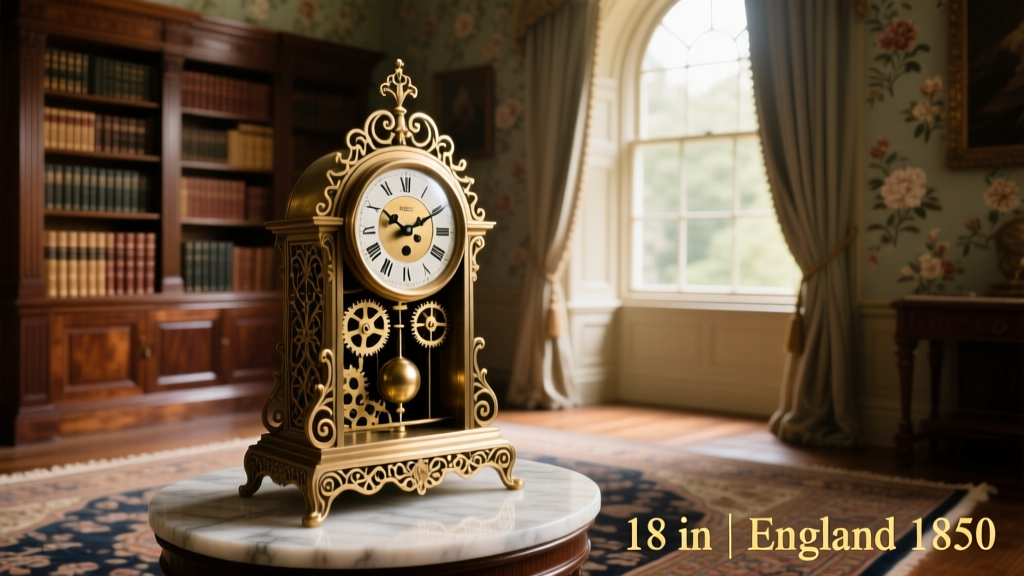
Skeleton Clocks with Brass Movement and Marble Base: English 19th-Century 18-Inch Masterpieces

Canes & Wood: Decoding the Civil War–Era Snake Motif Cane with U.S. Constitution Imagery and Red Sealing Wax Accents
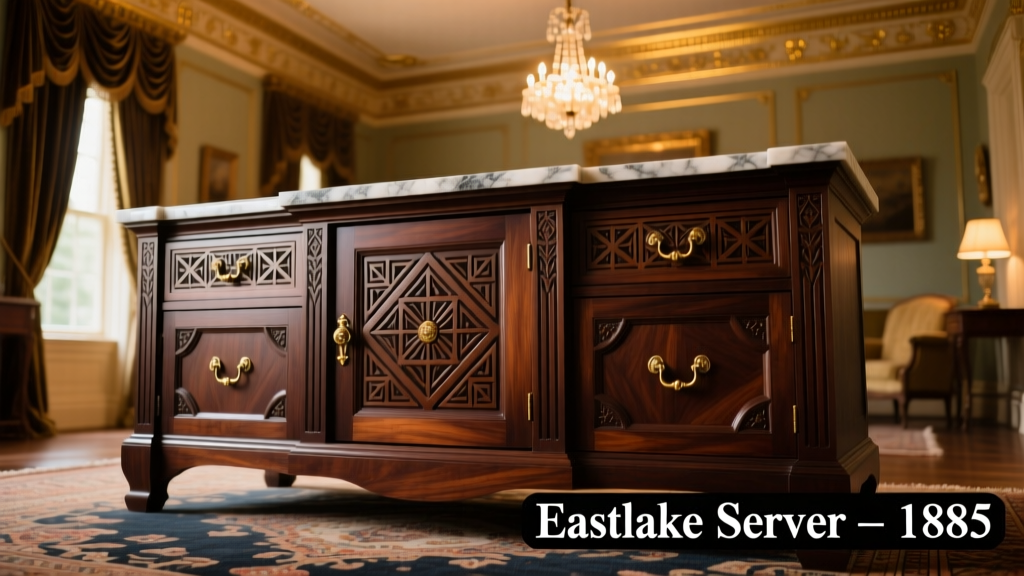
Eastlake-Style Marble-Top Server: Identification, Provenance, and Restoration Best Practices for the 37" × 40" × 18" Form

Marble Sulphide Elephant Green Glass 1¾-Inch: Identification, Provenance, and Conservation of a Rare Victorian Paperweight Motif
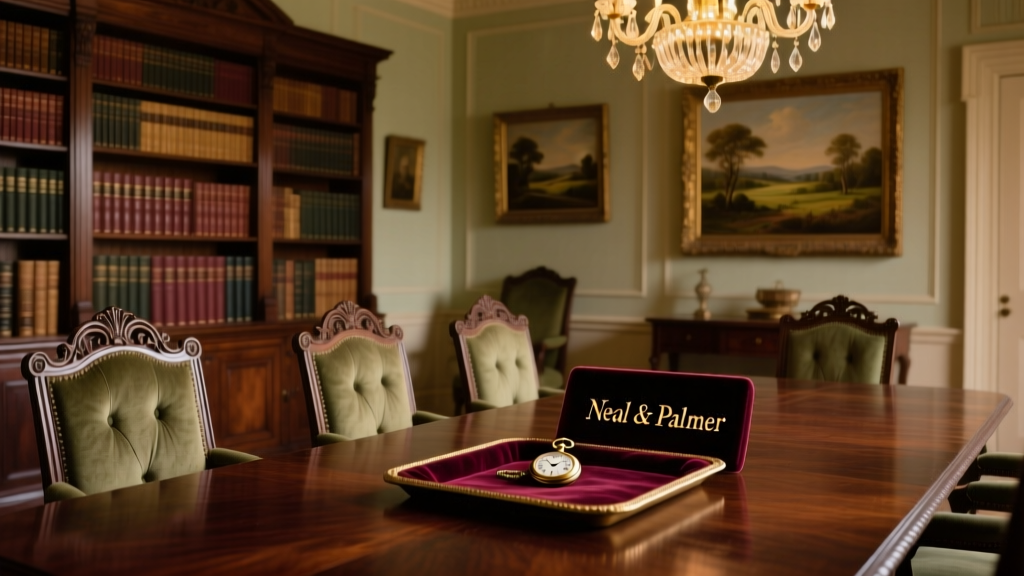
Neal & Palmer: American Mid-Century Modern Furniture Makers and Their Enduring Legacy
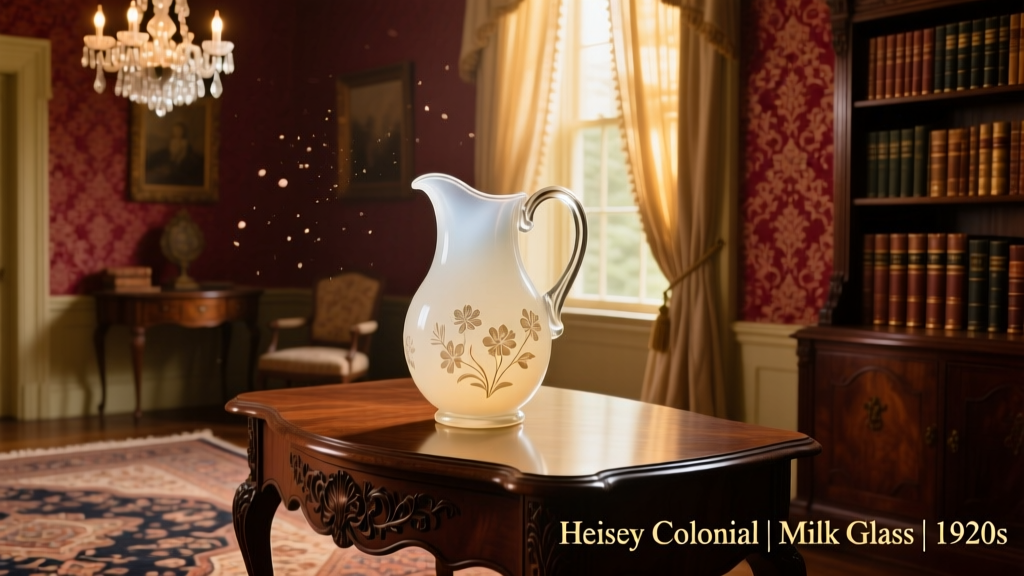
Heisey Colonial Pitcher in Milk Glass: History, Identification, and Restoration Insights

The Bronze Reaper Sculpture: Origins, Craftsmanship, and Historical Significance in 19th-Century Decorative Arts
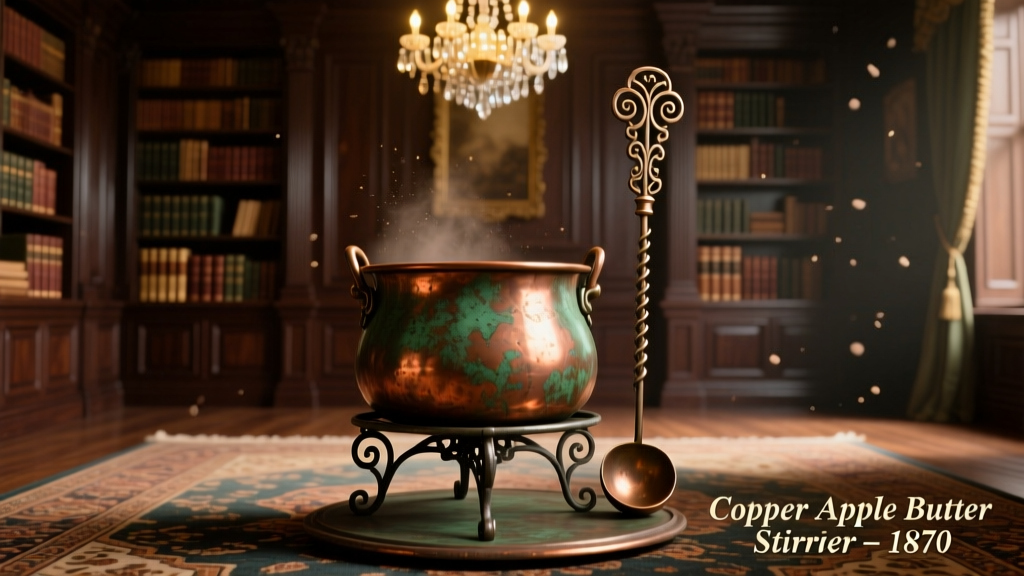
The Copper Cauldron Apple Butter Stirrer Iron Stand: A 19th-Century Functional Masterpiece Measuring 25 × 25 Inches
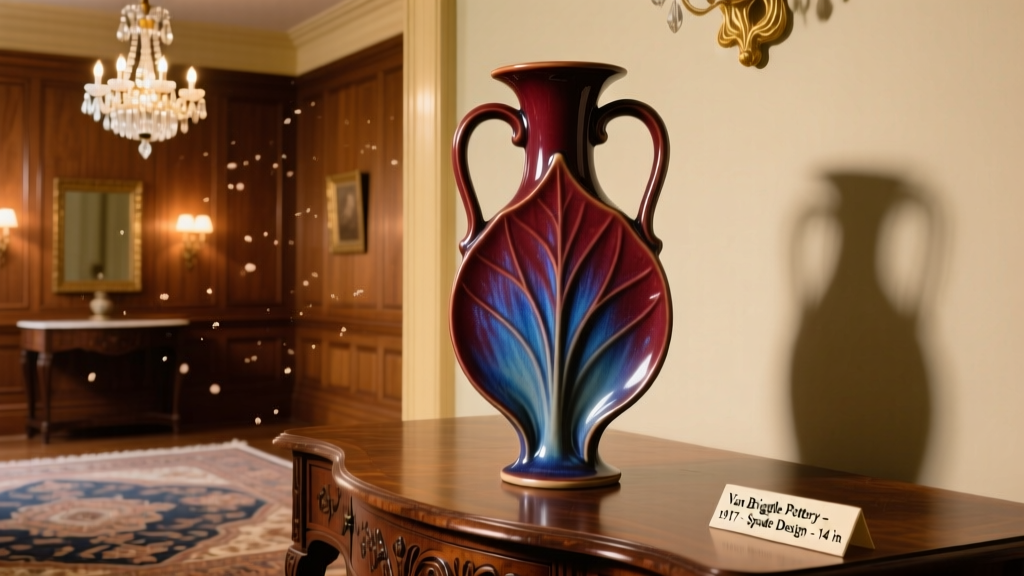
Van Briggle Vase: Double-Handled Spade Design in Maroon-Blue Glaze, Marked 1917, 14 Inches Tall