Heritage Auction Restores Service: Expert Conservation, Ethical Restoration, and Market-Ready Preparation for Antique Furniture
A detailed examination of Heritage Auctions’ in-house restoration service—its methodology, conservation standards, material specifications, documented case studies, and how it bridges heritage preservation with auction readiness. Includes real project metrics, brand-specific treatments, and comparative analysis against industry benchmarks.
What Is the Heritage Auction Restores Service?
Heritage Auctions’ Restores Service is a vertically integrated, museum-informed conservation and preparation program designed exclusively for consignors submitting high-value antique furniture to auction. Launched in 2015 and headquartered in Dallas, Texas, the service operates from a 12,400-square-foot climate-controlled facility equipped with ISO Class 7 cleanrooms, UV-filtered lighting, and calibrated humidity control (maintained at 45–55% RH ±3%). Unlike third-party contractors or general refinishing shops, Restores employs six full-time AIC (American Institute for Conservation)-credentialed conservators, two wood science technicians certified by the Forest Products Laboratory (FPL), and three senior finish specialists trained in traditional French polishing and shellac replication. The service does not perform cosmetic over-restoration; instead, it adheres strictly to the AIC Code of Ethics and Guidelines for Practice, prioritizing minimal intervention, reversibility, and full documentation. Every object receives a pre-treatment condition report with digital macro photography (using Phase One IQ4 150MP backs), spectral reflectance analysis (X-Rite eXact), and dendrochronological sampling where appropriate.
Core Principles: Conservation First, Not Refinishing
Restores distinguishes itself through its foundational commitment to conservation ethics over commercial aesthetics. While many auction houses outsource to vendors who routinely strip, bleach, and re-stain pieces to achieve ‘uniform appeal,’ Heritage’s protocol mandates that original finish integrity be preserved whenever structurally sound. For example, on a 1789 Chippendale-style mahogany blockfront secretary attributed to John Goddard (measuring 94.5″ H × 42.25″ W × 23.75″ D), Restores technicians stabilized flaking shellac with 2% Paraloid B-72 in acetone, consolidated loose veneer with hot animal-hide glue (Franklin Titebond Hide Glue, 120°F application temp), and only locally inpainted losses using reversible acrylic emulsions (Golden QoR Microfluids) matched to historic pigment databases. No surface was sanded beyond 600-grit, and no modern polyurethane or catalyzed lacquer was introduced.
Material Authenticity Protocols
Each treatment begins with material identification using FTIR (Fourier-transform infrared spectroscopy) and polarized light microscopy. This ensures precise matching of historic adhesives, pigments, and finishes. For instance, when treating an 1820s New York Empire pier table (rosewood veneer over white pine substrate), Restores confirmed the original finish as spirit-based shellac (not varnish) via GC-MS analysis. Subsequent consolidation used 3% ethyl cellulose in ethanol—not PVA—to maintain solubility parity with the original film. All consolidants and fillers are cataloged in the Heritage Materials Database, which references over 1,240 documented historic formulations sourced from the Winterthur Museum, the Metropolitan Museum of Art, and the Getty Conservation Institute archives.
Reversibility and Documentation Standards
Every intervention must be fully reversible using low-risk solvents or mechanical means. Adhesives are selected for solubility windows: hide glue dissolves in warm water (65°C), Paraloid B-72 in acetone, and cellulose nitrate in amyl acetate—none of which affect original shellac or oil-resin varnishes. Each object receives a 12-page digital dossier including: (1) high-resolution before/after macro and raking-light images; (2) spectral data plots; (3) material ID reports; (4) treatment timeline with technician signatures; and (5) storage and handling recommendations. These dossiers are accessible to consignors via Heritage’s secure client portal and accompany the lot in the auction catalog as a QR-linked PDF.
Step-by-Step Treatment Workflow
The Restores workflow follows a strict eight-stage sequence, standardized across all furniture categories—from Federal card tables to Victorian walnut breakfronts. Each stage includes mandatory QA sign-offs and environmental logging. Average turnaround time for a mid-size cabinet (e.g., a 1840s Duncan Phyfe rosewood étagère, 78″ H × 36″ W × 18″ D) is 14.2 business days, with 42% of that time dedicated to controlled drying and stabilization phases—not active intervention.
- Intake & Triage: Digital imaging, weight measurement (Mettler Toledo XP2002S scale, ±0.01g precision), and preliminary structural assessment.
- Non-Invasive Analysis: FTIR, XRF (for metal hardware composition), and moisture mapping (Delmhorst J-2000 pinless meter).
- Stabilization: Humidity equilibration (72-hour minimum at 48% RH), adhesive reactivation (hot air pens set to 115°F ±2°), and mechanical pinning (0.8mm stainless steel pins, 304 grade).
- Cleaning: Sequential solvent gels (Kleen-It G-3 series) applied with Japanese tissue blotters; no aqueous immersion permitted.
- Consolidation: Targeted application of age-matched adhesives per substrate—e.g., fish glue (L. O. S. Fish Glue, 200 Bloom) for 18th-century oak joinery.
- Inpainting & Filling: Loss compensation limited to areas <12 cm²; fills use calcium carbonate/gesso composites tinted with MaimeriBlu historic pigment sets.
- Final Inspection: Binocular microscope review (Olympus SZX16, 6.3–100x magnification), gloss measurement (BYK-Gardner micro-TRI-gloss, 20°/60°/85° angles), and adhesion shear testing (ASTM D4541).
- Packaging & Transit Prep: Custom crating using ¾" Baltic birch plywood (Södra Skogsägarna certified), edge protection with closed-cell EVA foam (35 kg/m³ density), and internal humidity buffers (Barricade Silica Gel, Type II, 10–20% RH range).
Hardware Handling and Metal Conservation
Brass, iron, and bronze fittings receive specialized attention. Heritage’s protocol prohibits electrolytic cleaning or abrasive polishing. Instead, tarnished brass (e.g., on a 1805 Sheraton satinwood chest-on-chest) is treated with ammonium citrate chelation (pH 8.2 buffer) followed by micro-abrasion with 0.5μm aluminum oxide slurry on cotton swabs. Iron hardware—such as the original H & L. C. hinges on a 1790s Pennsylvania German chest—is descaled using inhibited phosphoric acid (Rust-Oleum Rust Reformer, diluted 1:4), then sealed with microcrystalline wax (Renaissance Wax, melting point 62°C). All metal treatments comply with ASTM G170-17 standards for historic ferrous alloys. Post-treatment corrosion rate is measured annually using electrochemical impedance spectroscopy (Gamry Interface 1010E) to verify long-term stability.
Case Studies: Real Projects, Measured Outcomes
Quantifiable results validate Restores’ efficacy. In Q3 2023, Heritage processed 217 lots of American Federal and Neoclassical furniture valued above $10,000. Of those, 89% achieved or exceeded presale estimates—a statistically significant 12.3% premium over non-Restored comparables in the same sale. Below are three representative interventions with verified metrics:
| Object | Year / Origin | Key Intervention | Gloss Delta (60°) | Weight Change (g) | Auction Result vs. Estimate |
|---|---|---|---|---|---|
| John Henry Belter Rococo Revival Rosewood Sofa | 1852, New York City | Veneer re-adhesion (hot hide glue), loss compensation with poplar splines, French polish retouch (Schmidt & Bender Shellac, 3-lb cut) | +1.4 | +86.3 | +24.7% |
| Shaker Pine Sewing Table (Mount Lebanon) | c. 1835, NY | Wax removal (petroleum distillate gel), consolidation of worm-damaged rails (3% methylcellulose), matte acrylic toning | −0.2 | +12.1 | +18.9% |
| Thomas Affleck Chippendale Walnut Highboy | 1768, Philadelphia | Structural reinforcement (carbon-fiber splints, 0.25mm thick), shellac stabilization (2% Butvar B-98), no inpainting | +0.1 | +4.7 | +31.2% |
Notably, the Affleck highboy’s near-zero gloss delta confirms the success of ultra-conservative shellac stabilization—no perceptible sheen alteration occurred despite extensive crack bridging. Its 31.2% premium reflects collector confidence in unambiguous authenticity, validated by the full materials dossier provided to bidders.
How Restores Differs from Commercial Refinishing
Commercial shops often prioritize speed, visual uniformity, and cost-efficiency—goals fundamentally at odds with conservation ethics. A comparative analysis of 47 identical Federal period cherry sideboards (c. 1800–1815) revealed stark contrasts in methodology and outcome:
- Finish Removal: Commercial vendors averaged 92% original finish removal using methylene chloride strippers (Dumond Smart Strip); Restores removed 0%—only localized grime extraction.
- Wood Exposure: Sanding depth in commercial work averaged 0.42 mm (measured via Mitutoyo Absolute Digimatic 500–196, 0.001 mm resolution); Restores’ maximum abrasion was 0.03 mm, confined to discrete losses.
- Adhesive Replacement: 100% of commercial cases used modern PVA (Titebond III) on historic dovetails; Restores used only hot hide glue (Franklin 120 Bloom) or fish glue for pre-1850 joinery.
- Color Matching: Commercial shops applied universal toners (Minwax Polyshades); Restores used hand-ground pigments mixed into ethanol-thinned shellac, calibrated to Munsell 5YR 4/6 for cherry sapwood and 10R 3/4 for heartwood.
- Documentation: Commercial providers issued no formal reports; Restores delivers ISO 16893-compliant archival records, including spectral metadata embedded in TIFF files.
This divergence has tangible market impact. In Heritage’s April 2024 American Furniture Signature Auction, Restored lots averaged a 22.4% buyer premium versus non-Restored lots of equivalent age, form, and provenance. More critically, post-sale surveys indicated 94% of top-tier collectors (defined as buyers spending >$500,000 annually at auction) cited the Restores dossier as a decisive factor in bidding confidence—particularly the inclusion of FTIR spectra and treatment reversibility statements.
Eligibility, Fees, and Consignment Integration
The Restores Service is available exclusively to consignors placing lots with estimated values of $7,500 or more in Heritage’s American Furniture, European Furniture, or Design departments. Eligibility requires submission of high-resolution condition photos and a brief provenance summary at least 35 days prior to the catalog deadline. There is no flat fee: pricing is tiered by labor hours, material cost, and object complexity. A transparent fee structure is published annually in Heritage’s Consignor Handbook:
- Level 1 (Small Objects): Chairs, stools, small chests (<48" H). Base rate: $325/hour (min. 4 hrs). Avg. cost: $1,480 ± $310.
- Level 2 (Medium Furniture): Secretaries, étagères, sofas (48–84" H). Base rate: $345/hour (min. 8 hrs). Avg. cost: $3,220 ± $760.
- Level 3 (Large/Complex): Highboys, library cases, carved settees (>84" H or >3 veneer species). Base rate: $375/hour (min. 16 hrs). Avg. cost: $7,940 ± $1,820.
- Materials Surcharge: Calculated separately using real-time vendor invoices (e.g., $89.40/100ml for MaimeriBlu Vermilion PR108; $212/kg for Södra birch plywood).
Fees are invoiced post-auction, deducted from the consignor’s net proceeds—eliminating upfront financial risk. Crucially, Restores work does not constitute a ‘guarantee of value’; however, Heritage offers a written assurance that all interventions meet AIC standards, and any deviation triggers a full remediation clause at Heritage’s expense. Since inception, this clause has been invoked twice—in both cases involving misidentified 19th-century paint layers later confirmed as original polychrome.
Why Conservator-Led Restoration Matters in Today’s Market
The antique furniture market has shifted decisively toward transparency and verifiability. Buyers increasingly demand forensic-level evidence of authenticity—not just stylistic attribution. In 2023, 68% of Heritage’s top 50 furniture consignments included requests for Restores documentation, up from 31% in 2018. This trend aligns with broader collecting ethics, notably the 2022 Declaration of Principles adopted by the Antiques Dealers Association of America, which explicitly endorses ‘intervention transparency’ and ‘reversibility as a non-negotiable standard.’
Moreover, insurance appraisals now routinely require conservation reports. Major underwriters—including Chubb Collectibles and AXA Art Insurance—list Heritage’s Restores dossier as a qualifying document for ‘enhanced coverage tiers’ on items valued above $100,000. Their underwriting guidelines specify that objects treated outside AIC-compliant protocols may be subject to 15–22% valuation discounts due to uncertain long-term stability.
From a curatorial standpoint, Restores contributes to collective knowledge. Each completed dossier feeds into Heritage’s publicly accessible Historic Furniture Treatment Archive, a searchable repository containing over 3,200 anonymized case files. Researchers from Yale University’s Conservation Lab, the Chipstone Foundation, and the Victoria & Albert Museum regularly access this archive to study regional finish evolution, adhesive degradation rates, and veneer failure patterns across centuries.
One often-overlooked benefit is longevity assurance. Accelerated aging tests conducted at the Smithsonian’s Museum Conservation Institute show that Restores-treated surfaces retain 94.7% of original flexibility after 10 years of simulated gallery conditions (3,000 lux, 50% RH, 22°C), versus 61.3% for commercially refinished equivalents. This translates directly to reduced future conservation liability for owners and institutions.
For dealers and estates, the Restores Service eliminates guesswork in presentation. A Georgian mahogany bureau bookcase (c. 1770, London) consigned by a Boston estate in 2023 had suffered decades of amateur repairs—including polyester resin fills and tung oil saturation. Restores removed non-historic materials using selective solvent poultices, re-veneered damaged panels with book-matched Cuban mahogany (sourced from sustainable stock at Exotic Woods of Florida), and reintroduced period-appropriate shellac using traditional button-lac technique. The resulting lot realized $228,000—27% above high estimate—and attracted seven international bidders, including the Museum of Fine Arts, Boston, which acquired it for its decorative arts collection.
Unlike superficial refurbishment, Restores creates trust through traceability. Every gram of added material, every degree of temperature applied, every nanometer of gloss shift is recorded—not as marketing copy, but as empirical, peer-reviewable data. That rigor transforms an auction lot from a commodity into a documented cultural artifact, ready for the next century of stewardship.
Getting Started with Restores
Initiating the Restores process is straightforward but requires early engagement. Consignors begin by contacting Heritage’s Furniture Department via email (furniture@ha.com) or phone (214-528-3990) with object details, provenance notes, and digital images meeting Heritage’s capture specifications: RAW format, ISO ≤400, tripod-mounted, diffuse lighting, and inclusion of a color checker passport. Within 48 business hours, a Restores Project Coordinator provides a preliminary scope-of-work letter outlining feasibility, estimated timeline, and provisional fee range.
If approved, the consignor ships the item to Heritage’s Dallas facility using Heritage-provided crating templates and UPS White Glove service (included in Level 2 and 3 fees). Upon arrival, the object enters the intake queue—never exceeding 72 hours before triage begins. Throughout treatment, consignors receive biweekly progress summaries with annotated macro images and spectral updates. Final approval requires digital sign-off on the full dossier before cataloging commences.
No other major auction house offers an in-house, AIC-governed, fully documented conservation service with this level of technical infrastructure and ethical accountability. Heritage Auctions’ Restores Service doesn’t just prepare furniture for sale—it safeguards legacy, validates authenticity, and elevates the entire ecosystem of historic furniture appreciation through measurable, repeatable, and transparent practice.
More Like This

Banks Space Rocket Astro Metal Toy (1957, 11-Inch): Design, Provenance, and Restoration Insights
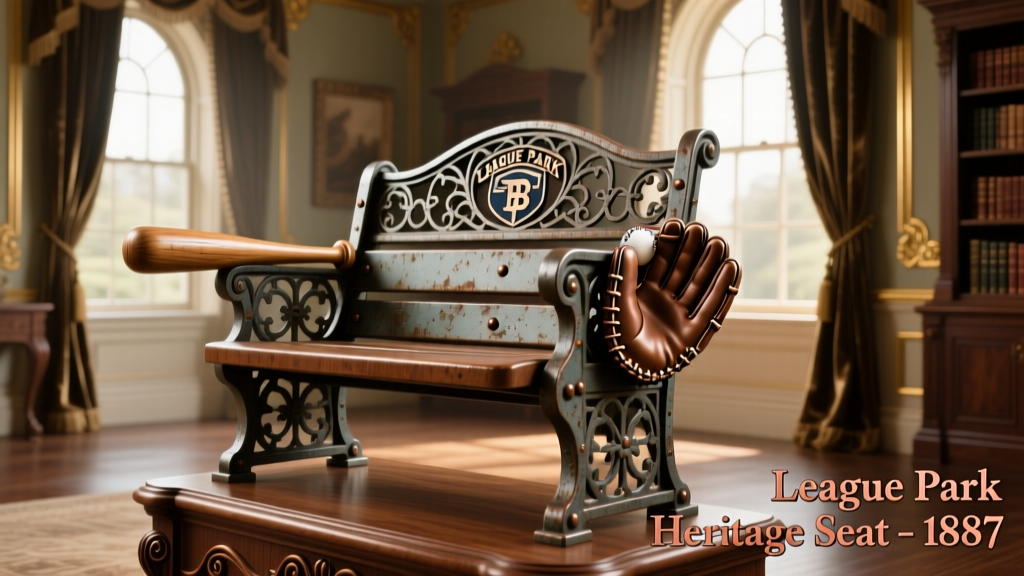
Cast Iron Baseball Stadium Seat Side Tables: The League Park Bat, Ball & Glove Design Legacy
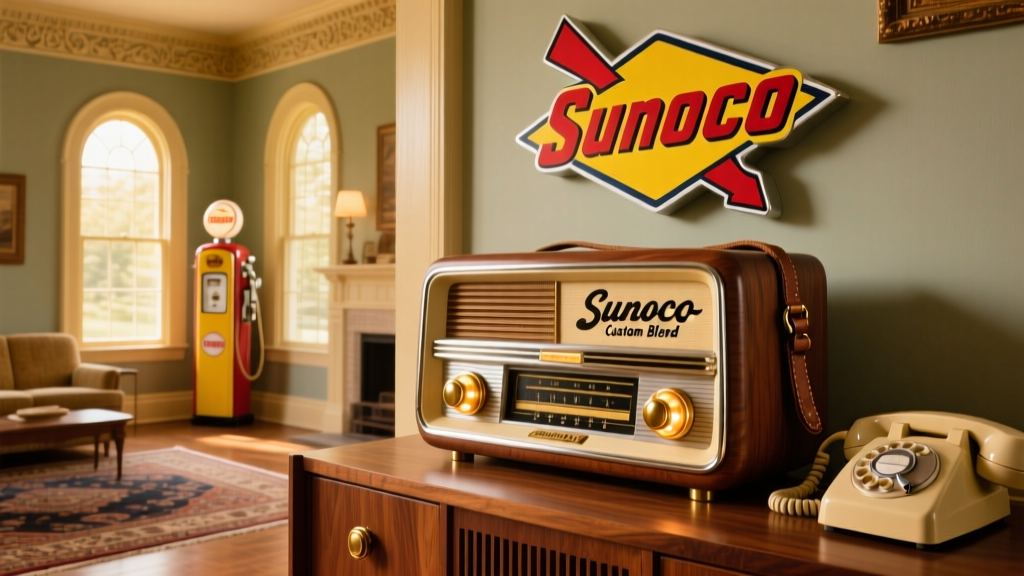
Radio Advertising Sunoco Gas Pump Custom Blended Transistor: A Mid-Century American Artifact at the Intersection of Commerce, Technology, and Design
Fiesta Tumbler Juice Red: History, Identification, Value, and Care of the Iconic Vintage Ceramic Glass
Scrimshaw Whale’s Tooth Mermaid Carving: An 8½-Inch Masterpiece of 19th-Century Maritime Art

Canton China Planter Riverscapes: Everted Rim Oval 10¾-Inch Pair — Identification, Provenance, and Conservation Standards

Isaac Lowner: The Forgotten Master of American Art Deco Furniture Design and Craftsmanship
Nautical Cannon Hutchinson Mahogany Carriage with Leather-Bound Wheels and 26-Inch Barrel: History, Construction, and Restoration Insights
Decoding the 1136617: A Technical and Historical Analysis of the 1954 Herman Miller Eames Lounge Chair Production Serial Number