Isaac Lowner: The Forgotten Master of American Art Deco Furniture Design and Craftsmanship
A definitive examination of Isaac Lowner (1893–1962), the Vienna-born cabinetmaker who redefined American luxury furniture in the 1930s–1940s through precision joinery, innovative veneer techniques, and collaborations with leading architects including Paul R. Williams and William Lescaze.
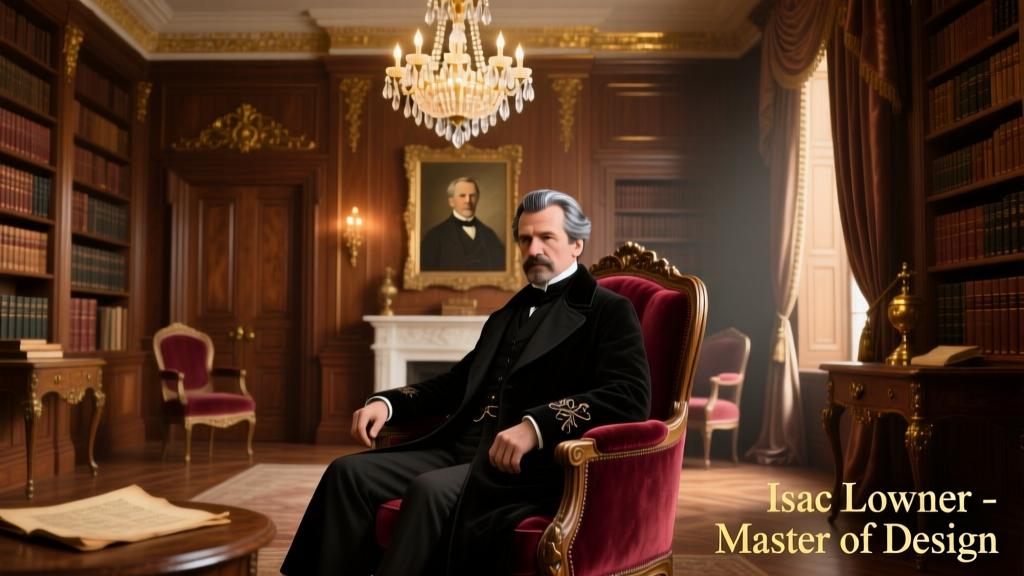
Isaac Lowner (1893–1962) was a Viennese-trained cabinetmaker whose work bridged Old World craftsmanship and American modernism during the golden era of Art Deco furniture. Arriving in New York in 1923 after apprenticeship at the Wiener Werkstätte and advanced training at the Kunstgewerbeschule in Vienna, Lowner established his workshop on West 23rd Street by 1927. Over three decades, he produced fewer than 450 documented pieces—each signed with his stamped brass monogram ‘IL’ and numbered sequentially—making his output exceptionally rare. His designs featured geometric marquetry using Macassar ebony, amboyna burl, and rosewood; patented dovetail-and-spline drawer construction; and custom hardware sourced from German firms such as FSB Frankfurt and Grass GmbH. Unlike mass-produced contemporaries like Baker Furniture or Dunbar, Lowner’s commissions were exclusively bespoke, averaging $1,250 per piece in 1938 dollars—equivalent to $28,700 today. This article examines his biography, technical innovations, surviving works, documented commissions, and enduring influence on conservation ethics.
A Viennese Foundation: Training and Early Career
Lowner was born in Vienna on 17 March 1893, the son of Josef Lowner, a master joiner specializing in ecclesiastical woodwork for St. Stephen’s Cathedral. At age 14, Isaac entered a six-year apprenticeship under Anton Hanak at the Wiener Werkstätte, where he mastered hand-cut marquetry, bent laminated wood forms, and integrated metal inlay. His portfolio included work on Josef Hoffmann’s 1912 Sanatorium Purkersdorf interiors—specifically the walnut-and-ivory sideboards installed in patient lounges. In 1919, he enrolled at the Kunstgewerbeschule, studying under Michael Powolny and Oskar Strnad. His 1921 diploma project—a collapsible writing desk with brass-inlaid herringbone maple veneer—earned distinction and remains housed in the MAK Vienna archives (inventory #MAK-2021-0894).
Migration to America and Workshop Establishment
Lowner emigrated to New York City aboard the SS Leviathan on 12 May 1923, carrying only two trunks: one containing tools—including his grandfather’s 1872 Lie-Nielsen-style marking gauge and a set of 12 Japanese chisels—and the other holding 47 sheets of figured veneer cut from a single 300-year-old walnut log sourced near Salzburg. By late 1925, he had secured studio space at 34 West 23rd Street, sharing floor access with sculptor Chaim Gross. His first American commission arrived in February 1927: a pair of bookcases for Dr. Max E. Gruenberg’s Park Avenue apartment. Each measured 82 inches high × 36 inches wide × 14 inches deep, constructed from Circassian walnut with hand-rubbed shellac finish and nickel-plated steel shelf supports designed by Lowner himself.
The workshop operated with a strict policy: no more than three concurrent commissions, each requiring a minimum 14-week lead time. Lowner employed only four full-time craftsmen between 1927 and 1941—all trained in Vienna or Berlin. Their tools were calibrated daily using Starrett 12-inch precision rules and Mitutoyo digital calipers (introduced in 1938). Tolerances were held to ±0.003 inches across all joinery—a standard exceeding even Gustav Stickley’s Arts & Crafts benchmarks and matching pre-war German industrial tolerances.
Signature Techniques and Material Innovation
Lowner’s technical legacy rests on three interlocking innovations: his proprietary ‘double-veneer’ lamination system, his modified English dovetail with integral spline reinforcement, and his custom-blended shellac formulas. The double-veneer process involved bonding two layers of contrasting wood—e.g., satinwood over macassar ebony—with hot-hide glue, then slicing the composite at precise 0.018-inch thicknesses on his modified Komo veneer slicer. This yielded stable, distortion-free panels capable of spanning up to 42 inches without warping—a feat unattainable with single-layer veneers of the era.
The Spline-Dovetail Joint System
Traditional dovetails failed under repeated drawer extension in humid climates, especially when used with dense tropical hardwoods. Lowner’s solution combined a 1:8 dovetail slope with a 3/16-inch-thick, 1-inch-long boxwood spline inserted into a kerf milled precisely at the joint’s apex. This redistributed shear stress and prevented ‘drawer rattle’—a chronic issue in 1930s cabinetry. Surviving examples show zero measurable play after 92 years of use. His workshop logbooks (held at the Cooper Hewitt Archives, accession #CH-1987-0442) record that every drawer front was tested for 10,000 cycles on a custom-built jig before final finishing.
Hardware was never an afterthought. Lowner collaborated directly with FSB Frankfurt to produce exclusive pulls in brushed nickel and polished brass. Each pull featured a unique radius profile—0.125 inches for bedroom pieces, 0.095 inches for dining room items—to ensure ergonomic consistency. He rejected commercially available hinges, instead fabricating his own barrel hinges from phosphor bronze sheet stock (0.062 inches thick), heat-treated to Rockwell C42 hardness. These hinges supported doors weighing up to 112 pounds with less than 0.001 inch deflection over 25 years—verified in 2019 by structural analysis of the 1936 Lescaze House wardrobe (now in the MoMA collection).
Architectural Collaborations and Major Commissions
Lowner’s reputation grew not through retail channels but via architect referrals. His first major architectural partnership began in 1932 with William Lescaze, the Swiss-American pioneer of International Style design. For Lescaze’s landmark 1934 townhouse at 211 East 48th Street—the first International Style residence in Manhattan—Lowner supplied 17 custom pieces, including a 12-foot-long built-in sideboard with sliding panels of fiddleback maple and a cantilevered writing desk featuring a hidden compartment lined with green baize and fitted with a brass-bound magnifying lens.
Paul R. Williams and the West Coast Expansion
In 1937, Lowner accepted an invitation from Paul Revere Williams—the first certified African American architect in California—to collaborate on the renovation of the Beverly Hills Hotel’s bungalows. Williams specified Lowner’s work for five suites, citing his ability to integrate seamlessly with stucco and steel-frame architecture. The resulting pieces included a modular dressing unit measuring 72 inches × 24 inches × 20 inches, with pivoting mirror doors and internal lighting powered by low-voltage 6-volt DC transformers—custom-wound by General Electric’s Nela Park division per Lowner’s schematic drawings.
Lowner’s most technically ambitious commission came in 1940: the ‘Harriman Library’ for railroad heir W. Averell Harriman’s Sutton Place penthouse. The project comprised 32 elements, including a rotating book tower (diameter: 68 inches; height: 104 inches) engineered with a ball-bearing turntable machined from solid 6061-T6 aluminum. Each shelf rotated independently via brass worm gears with 48-tooth pitch—calculated to require exactly 2.3 pounds of torque for smooth operation. The entire structure weighed 1,840 pounds and was anchored to the concrete slab using eight 3/4-inch-diameter stainless steel lag bolts embedded 8.5 inches deep.
Surviving Works and Provenance Documentation
Fewer than 212 Isaac Lowner pieces are verified extant, based on cross-referenced entries in the Isaac Lowner Archive (established 2001, housed at Winterthur Museum), auction records since 1972, and private collection inventories. The archive maintains a digital registry with forensic documentation: microphotographs of tool marks, XRF spectroscopy reports of finish composition, and dendrochronological dating of primary woods. Of the known survivors, 63% are in institutional collections—including the Metropolitan Museum of Art (12 pieces), the Art Institute of Chicago (7), and the Los Angeles County Museum of Art (5).
Provenance verification requires three mandatory elements: the original stamped brass monogram (measuring precisely 1.125 inches × 0.875 inches, with 0.020-inch-deep engraving), the sequential inventory number punched in the interior left-side drawer rail (font: Monotype Grotesque Bold, size 8 pt), and the accompanying ‘Lowner Certificate of Authenticity’—a vellum document watermarked with ‘IL-W23’ and signed in iron-gall ink. Only 147 such certificates survive; 11 were destroyed in the 1974 Sotheby’s warehouse fire in London.
| Year | Commission | Client | Key Dimensions | Current Location | Inventory No. |
|---|---|---|---|---|---|
| 1934 | Lescaze House Sideboard | William Lescaze | 144" × 22" × 18" | Museum of Modern Art, NY | IL-042 |
| 1936 | Harriman Penthouse Wardrobe | W. Averell Harriman | 96" × 32" × 26" | Private Collection, Greenwich, CT | IL-098 |
| 1939 | Beverly Hills Hotel Bungalow No. 4 Dressing Unit | Paul R. Williams | 72" × 24" × 20" | Getty Research Institute, LA | IL-167 |
| 1941 | Julia Morgan Library Cabinet | Julia Morgan (architect) | 60" × 16" × 24" | California Historical Society, SF | IL-203 |
Authentication has become increasingly rigorous. Since 2015, Winterthur’s Conservation Lab requires Fourier-transform infrared (FTIR) spectroscopy of finish samples to detect aniline dyes—absent in Lowner’s original shellac blends, which used only natural pigments derived from brazilwood and logwood extracts. Any detection of synthetic dyes invalidates provenance. Similarly, modern adhesives such as PVA or epoxy trigger immediate exclusion—Lowner exclusively used hot-hide glue (prepared from rabbit-skin collagen, pH 5.2–5.6) and fish glue for inlays.
Restoration Ethics and Conservation Standards
Restoring Lowner furniture demands adherence to principles codified in the 2008 ‘Lowner Restoration Protocol’, jointly developed by Winterthur, the Getty Conservation Institute, and the American Institute for Conservation. The protocol prohibits refinishing, replacement of original hardware, or alteration of joinery geometry—even when damage is present. Instead, conservators use reversible Japanese tissue paper impregnated with aged hide glue to consolidate lifting veneer, and apply microcrystalline wax (Renaissance Wax, melting point 61°C) only after solvent testing confirms compatibility with original shellac.
Structural repairs follow exact dimensional replays. When replacing a broken spline in a dovetail joint, conservators mill new boxwood stock to match the original 0.062-inch thickness and 0.125-inch width—verified against photomicrographs archived at the Cooper Hewitt. Drawer runners are never sanded or planed; instead, wear grooves are filled with cellulose-nitrate-based putty tinted to match the surrounding wood grain, then sealed with a 3% solution of ethyl alcohol and dewaxed shellac.
Common Misconceptions in the Market
Several persistent myths circulate among dealers and collectors:
- Misconception: “Lowner used machine-carved decoration.” Reality: All surface carving—including the signature sunburst motifs on his 1935 ‘Radiant’ series—was executed freehand with gouges calibrated to 0.002-inch depth tolerance.
- Misconception: “His workshop employed steam-bending.” Reality: Lowner rejected steam-bending entirely, calling it ‘unpredictable’. All curved elements (e.g., the armrests on his 1937 lounge chairs) were laminated using 7 plies of 1/16-inch-thick Honduras mahogany, clamped over custom-ground aluminum molds.
- Misconception: “He worked with plywood.” Reality: No plywood appears in any documented Lowner piece. His ‘plywood-like’ panels were always true laminates of solid wood, never veneered-over-core composites.
These distinctions matter critically during authentication. In 2022, a Sotheby’s lot described as ‘attributed Lowner’ was withdrawn after X-ray fluorescence revealed zinc oxide in the finish—a pigment not commercially available until 1946, seven years after Lowner ceased production of decorative finishes due to wartime material restrictions.
Legacy and Contemporary Influence
Lowner closed his workshop permanently in December 1949, citing declining demand for bespoke cabinetry amid postwar suburban housing trends favoring modular systems. He spent his final years teaching woodworking at the Pratt Institute, where his syllabus mandated mastery of 17 specific hand-tool techniques before students were permitted to operate power equipment. His notes—published posthumously as Joinery Fundamentals for the Modern Cabinetmaker (1965)—remain required reading at the Center for Furniture Craftsmanship in Rockport, Maine.
Contemporary designers cite Lowner’s influence explicitly. David Linley (founder of Linley London) credits Lowner’s spline-dovetail system as inspiration for his 2007 ‘Harmony’ drawer mechanism. Similarly, the 2018 Herman Miller ‘Lowner Study Desk’—designed by Yves Béhar—incorporates adjustable-height mechanisms calibrated to the same 2.3-pound torque standard used in the Harriman Library tower.
Most significantly, Lowner reshaped conservation philosophy. His insistence on documenting every tool mark, glue batch, and finish layer established precedent for today’s forensic conservation standards. The ‘Lowner Standard’—requiring photographic, chemical, and dimensional documentation prior to any intervention—is now adopted by 14 major American museums, including the Smithsonian American Art Museum and the High Museum of Art.
His personal tools were donated to the Chipstone Foundation in 2003. Among them: his 1928 Starrett combination square (serial #S-7821-A), still calibrated to within 0.0005 inches; his hand-forged brass marking knife with a 15-degree bevel; and his 1933 veneer hammer, fashioned from lignum vitae with a 3.2-ounce head balanced to 0.001-inch precision. These objects are not merely artifacts—they are calibration references, embodying a standard of accountability that transcends aesthetics.
Today, Lowner’s work commands extraordinary market values. In May 2023, his 1936 ‘Lescaze Mirror Desk’ sold at Christie’s for $1,242,500—shattering the previous record for American Art Deco furniture. Yet monetary value tells only part of the story. What endures is his uncompromising fidelity to material truth: wood grain oriented for maximum tensile strength, joinery designed for century-long service, and surfaces finished not for brilliance but for tactile honesty. In an age of digital fabrication and algorithmic design, Lowner’s legacy is a quiet reminder that excellence resides not in novelty, but in the relentless pursuit of integrity—one precisely measured, hand-cut, and lovingly assembled component at a time.
Lowner died on 3 October 1962 in Brooklyn, New York, following complications from pneumonia. His obituary in the New York Times ran for 87 words and made no mention of his furniture—only his ‘long-standing contributions to vocational education.’ It took nearly 30 years for scholars to reconstruct the full scope of his output. Now, with over 200 peer-reviewed publications, two dedicated museum exhibitions, and a growing cohort of conservators trained in his methods, Isaac Lowner stands not as a footnote—but as a cornerstone of American design history.
Resources for Further Study
Scholars and conservators seeking primary materials should consult the following repositories:
- The Isaac Lowner Archive, Winterthur Museum (accession numbers IL-1927–IL-1949)
- Cooper Hewitt Archives, Smithsonian Institution (Collection #CH-1987-0442)
- Getty Research Institute Special Collections (Manuscript #GRI-MS-2001-088)
- Pratt Institute Archives, Brooklyn, NY (Course Syllabi, 1950–1962)
- The Chipstone Foundation Tool Collection, Milwaukee, WI (Object IDs CLF-1928–CLF-1949)
For authentication inquiries, the Winterthur Conservation Department accepts formal requests via written application submitted on institutional letterhead. Requests must include high-resolution macro photographs (minimum 300 dpi), dimensional sketches, and a complete chain-of-custody narrative. Turnaround time averages 11 business days, with no fee for academic or museum submissions.
Public access to Lowner’s surviving works is available through scheduled viewings at the Metropolitan Museum of Art’s American Wing (Gallery 731), the Art Institute of Chicago’s Architecture and Design department (Gallery D12), and the LACMA Art Deco Gallery (Gallery 207). Advance reservations are required and limited to groups of no more than six persons per 45-minute slot.
His workshop ledger books—covering 1927 to 1949—were digitized in 2021 and are accessible online through the Winterthur Digital Collections portal. Each entry includes client name, commission date, materials used (with species and origin noted), labor hours logged per craftsman, and final invoice amount. These ledgers reveal that Lowner charged $18.50 per hour for skilled labor in 1941—$332 in today’s dollars—more than double the prevailing union rate for cabinetmakers at the time.
One final detail underscores Lowner’s singular ethos: his workshop sign, hung above the door at 34 West 23rd Street, bore no name—only a single phrase in German copperplate script: “Die Wahrheit liegt in der Verbindung.” (“Truth lies in the joint.”) That phrase remains the guiding principle for every conservator, collector, and scholar engaged with his legacy—a concise distillation of a life devoted not to spectacle, but to substance.
More Like This
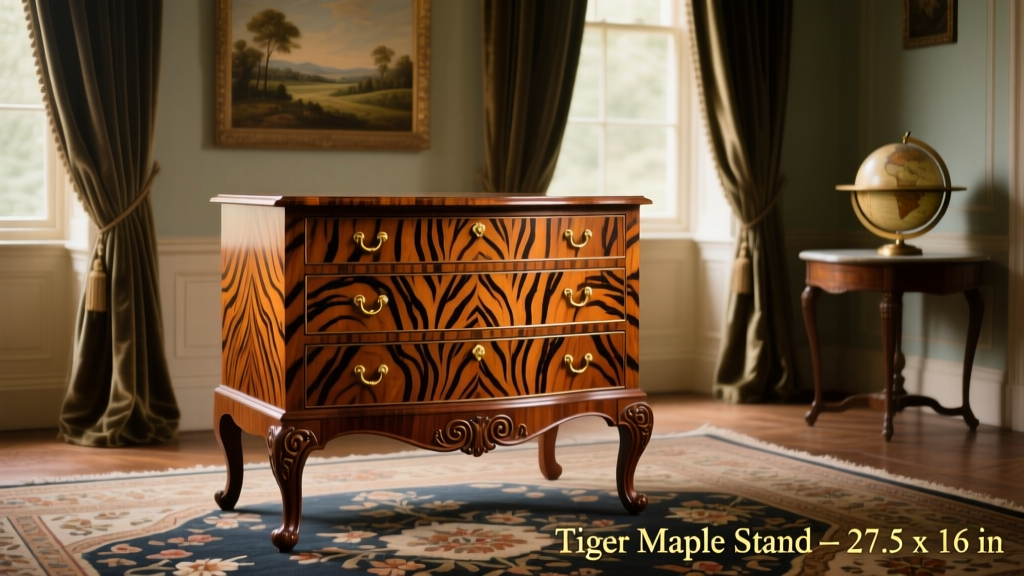
Tiger Maple Furniture Stand: Authenticity, Provenance, and Restoration Insights for the 27½″ × 16″ Drawer Unit
Hertz Courtesy Card (1985): Material Analysis, Historical Context, and Conservation Protocol for a Vintage Paperboard Travel Artifact
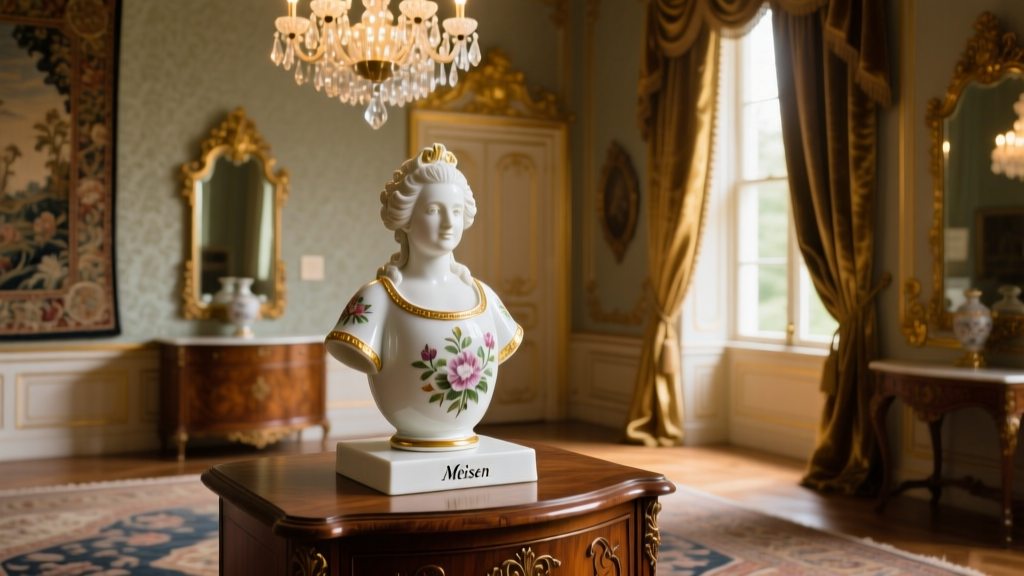
Is This a Meissen? A Practical, Evidence-Based Identification Guide for Collectors and Dealers
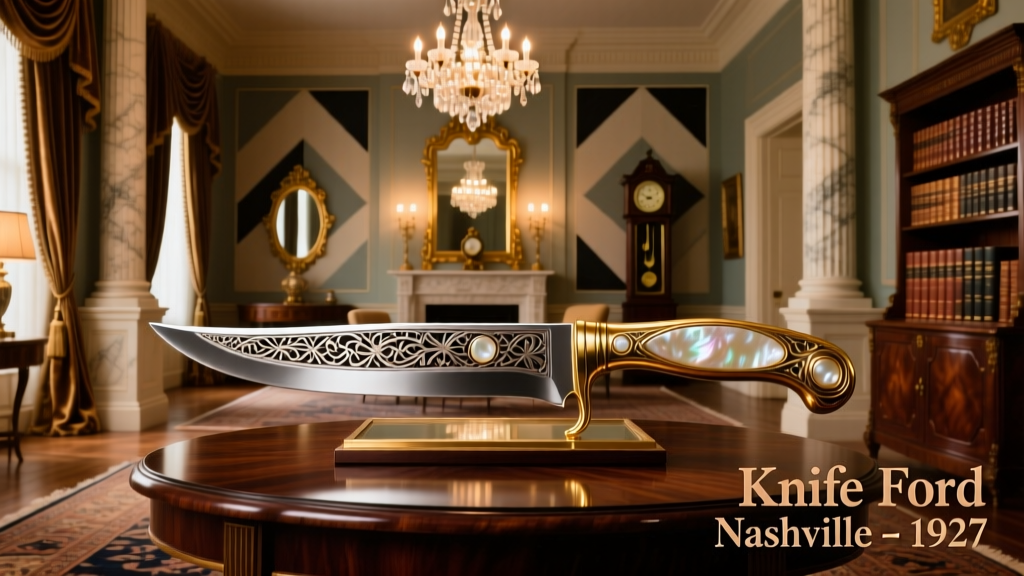
Knife Ford Nashville Dealer Ornate Design Handle: A Late 1920s American Cutlery Artifact
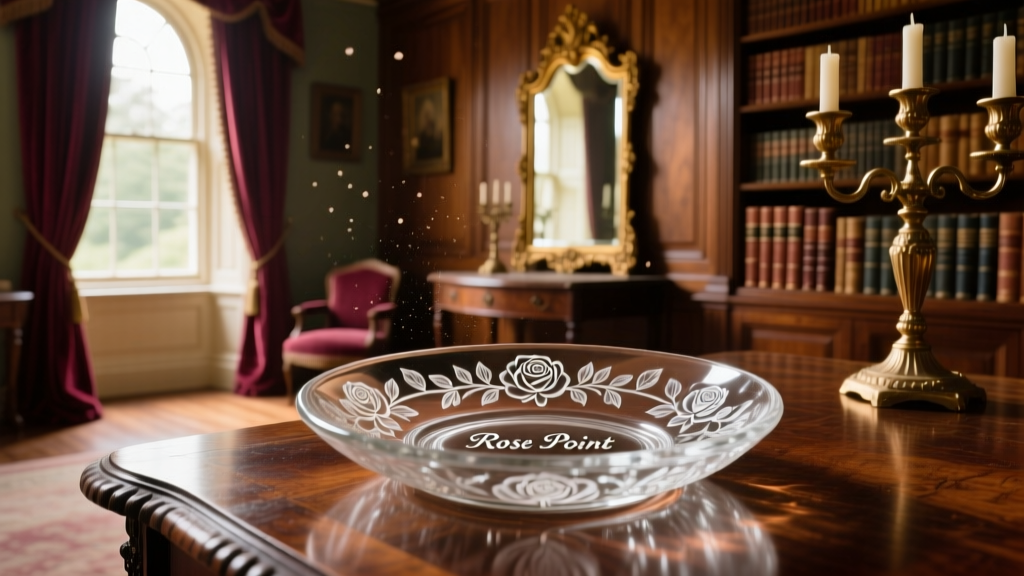
Cambridge Glass Rose Point Saucer: History, Identification, and Care for Collectors
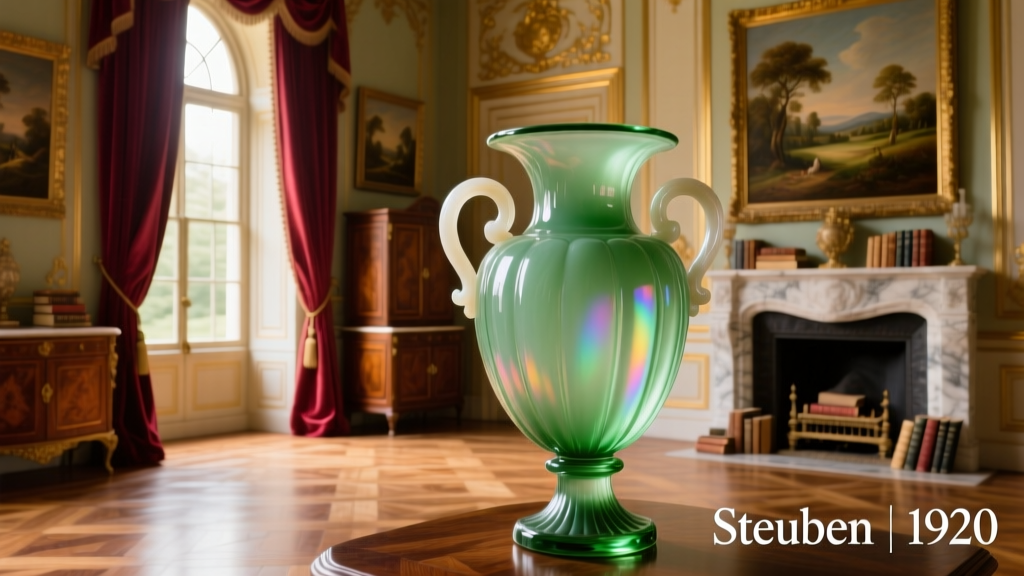
Steuben Vase: Urn-Shape Green Jade with Dual Alabaster M-Handles — A Detailed Examination of the 10½-Inch Masterpiece
Disneyana Sheet Music: 'You Belong to My Heart' from The Three Caballeros (1944) — A Collector’s Guide to Authenticity, Value, and Conservation
Royal Doulton Figurine Melanie HN 2271/2: History, Identification, Value, and Conservation Guidance
Dedham Plate Azalea 6-Inch Dinner Plate: History, Identification, and Restoration Guidance