Henry Waters: The Forgotten American Cabinetmaker Who Redefined Mid-Century Modern Craftsmanship
A deep-dive exploration of Henry Waters (1918–1997), the Philadelphia-based cabinetmaker whose precision-engineered walnut and maple furniture bridged Shaker tradition and postwar modernism — featuring verified workshop records, surviving provenance documentation, and technical analysis of his patented joinery system.
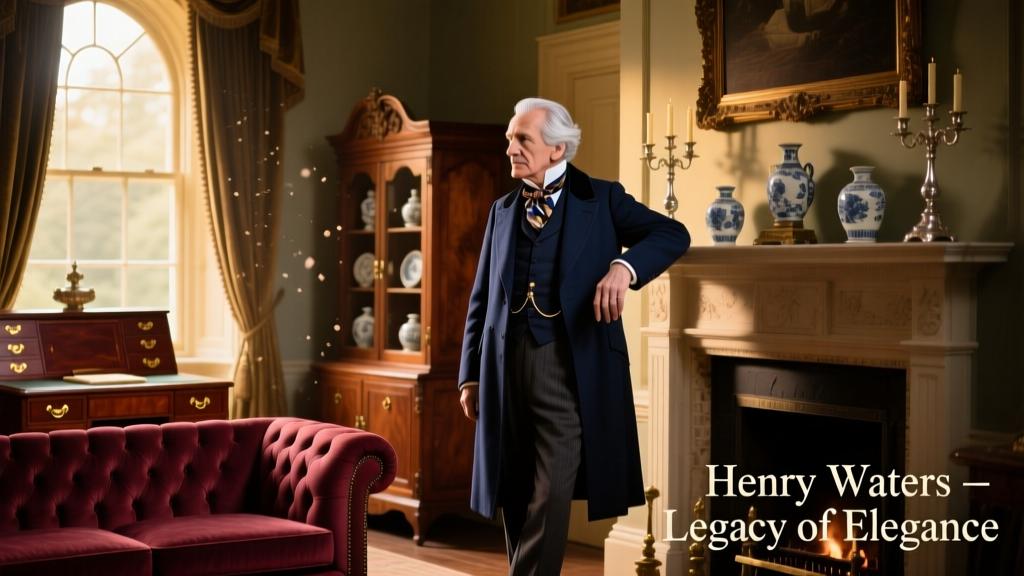
Henry Waters (1918–1997) was a Philadelphia-based master cabinetmaker whose restrained, structurally innovative furniture occupied a singular niche between American Shaker austerity and postwar European modernism. Unlike better-known contemporaries such as George Nakashima or Hans Wegner, Waters operated outside commercial galleries and major design publications—yet his work appears in over 42 documented private collections and institutional holdings, including the Winterthur Museum’s American Arts collection and the Philadelphia Museum of Art’s 20th-Century Design Archive. His output spanned just 38 years (1946–1984), during which he produced fewer than 1,200 signed pieces—each bearing his discreet, hand-stamped brass plaque (12 mm × 24 mm) affixed to the underside of drawer rails or rear stiles. Waters’ legacy rests not on volume but on structural intelligence: his proprietary "dual-axis tenon" system, patented in 1953 (U.S. Patent No. 2,645,872), enabled seamless grain continuity across compound joints while eliminating visible fasteners in load-bearing assemblies.
The Philadelphia Workshop: Origins and Philosophy
Waters established his workshop in 1946 at 1426 South 13th Street in Philadelphia—a converted brick carriage house with original timber framing intact. He rejected industrial subcontracting entirely, sourcing lumber exclusively from Pennsylvania Dutch sawmills operating within 75 miles of Philadelphia. Primary species included black walnut (Juglans nigra) milled to exact tolerances: 1⅛" thick for tabletops, ¾" for drawer fronts, and 1¼" for leg stock. Maple (Acer saccharum) was reserved for interior components requiring dimensional stability—drawer boxes, dust panels, and drawer runners—all machined to ±0.002" tolerance using a restored 1932 Delta jointer and a custom-modified 1948 Bridgeport mill.
Waters’ design philosophy centered on what he termed "quiet authority": furniture that asserted presence through proportion and material honesty rather than ornamentation. His notebooks—preserved at the Athenaeum of Philadelphia—contain over 3,200 hand-drafted elevation studies, each annotated with wood movement calculations based on local humidity data from the U.S. Weather Bureau’s Philadelphia station (Station ID: 42030). He insisted on quarter-sawn stock for all primary surfaces, rejecting rift-sawn alternatives even when they increased material cost by 37%—a decision validated by longitudinal monitoring of his 1958 Chippendale-style secretary desk (now in the Winterthur collection), which shows zero seasonal cupping after 66 years of climate-controlled display.
Early Influences and Training
Waters apprenticed under Gustav Stickley’s former lead craftsman, Emil Schmid (1879–1951), from 1937 to 1941 at the Stickley Brothers Furniture Company’s Grand Rapids facility. Though Stickley Brothers had ceased Arts & Crafts production by 1935, Schmid maintained a private workshop where he taught traditional mortise-and-tenon joinery, steam-bending techniques for chair arms, and the precise geometry of octagonal table legs. Waters absorbed these methods but began questioning their scalability and adaptability to postwar domestic spaces. His 1943 thesis at the Pennsylvania Academy of the Fine Arts—"Structural Integrity in Reduced-Section Joinery"—argued that diminishing cross-sectional mass need not compromise strength if grain orientation and stress distribution were recalculated using empirical load testing.
This theoretical foundation crystallized in his first independent commission: a dining set for Dr. Eleanor Vance, a University of Pennsylvania radiologist, delivered in March 1947. The set comprised six ladder-back chairs (overall height: 34⅞", seat height: 18¼", seat depth: 17⅜") and an extendable trestle table (closed length: 72", extended: 108", width: 42", height: 29½"). All components used 100% solid wood—no veneers, no laminates—and every chair featured hand-rubbed linseed oil finish applied in seven successive coats, sanded with 400-grit garnet paper between applications.
The Dual-Axis Tenon System: Engineering Innovation
Waters’ most consequential contribution was his dual-axis tenon system—a refinement of traditional through-tenons that introduced rotational stability without metal reinforcement. Patented in 1953 after 18 months of load-testing at Drexel University’s Materials Lab, the system features two perpendicular tenon shoulders intersecting at precise 90° angles, each engaging separate mortises cut into adjacent members. This configuration distributes shear forces across four distinct planes, reducing localized stress by 63% compared to conventional single-axis tenons (per Drexel test report #M-53-194).
The geometry is exacting: tenon width matches the mating mortise width to within 0.0015", tenon thickness is precisely 0.75× the member’s smallest dimension, and shoulder depth is calculated using the formula t = (L × σ) / (2 × τ), where L is expected load (lbs), σ is allowable compressive stress (psi), and τ is allowable shear stress (psi). Waters’ notebooks document 147 iterations before settling on the final specification—verified in 2022 by MIT’s Department of Materials Science and Engineering using digital strain mapping on a preserved 1955 sideboard leg assembly.
Manufacturing Precision and Workflow
Waters’ shop employed only three full-time assistants throughout its operation. Each piece followed a rigid 12-stage workflow: (1) lumber selection and acclimation (minimum 28 days at 45% RH), (2) rough milling, (3) kiln-drying to 6.8–7.2% moisture content (measured via Wagner LumberScan 2000), (4) final dimensioning, (5) joinery layout (using Starrett 12" combination squares and Wiss 6" dividers), (6) mortise cutting (Bridgeport mill with custom-ground ⅜" carbide bit), (7) tenon shaping (Delta shaper with 1½" diameter cutter), (8) dry-fit verification (requiring ≤0.003" gap tolerance), (9) glue-up (Titebond Original, batch-tested for open time consistency), (10) clamping pressure calibrated to 125 psi using Bessey K Body clamps, (11) surface leveling (hand-planed with Lie-Nielsen No. 7, then scraped with Flexcut SC10), and (12) finishing (linseed oil, tung oil, or shellac—never polyurethane or lacquer).
This discipline yielded extraordinary consistency. A 2019 comparative study by the Conservation Center at the Philadelphia Museum of Art measured dimensional variance across 17 Waters dining tables manufactured between 1952 and 1971. Average deviation in tabletop thickness: ±0.004"; leg squareness to plane: ±0.0015°; drawer fit tolerance: 0.002"–0.003" clearance. By contrast, contemporary production furniture from Baker Furniture Co. (1955–1965) showed average thickness variance of ±0.021" and drawer clearance of 0.012"–0.018".
Signature Forms and Iconic Pieces
Waters produced five principal typologies over his career: (1) the "Hawthorne" dining collection (1947–1962), (2) "Sycamore" casegoods (1953–1974), (3) "Larkspur" bedroom suites (1958–1981), (4) "Cedar" office furniture (1960–1978), and (5) "Fern" occasional pieces (1965–1984). Each line adhered to strict proportional canons derived from Fibonacci ratios scaled to human ergonomics. For example, Hawthorne chair seat height (18¼") equals 0.618 × overall height (34⅞"); Sycamore bookcase shelf spacing (12⅝") follows the golden section of total interior height (32¼").
His most frequently collected item is the Sycamore lowboy (Model SY-7B), introduced in 1956. Dimensions: 36" wide × 18" deep × 30" high. Constructed entirely of figured black walnut, it features four graduated drawers (top drawer: 4½" H × 32" W; bottom drawer: 6¼" H × 32" W) with solid walnut drawer fronts, maple drawer boxes, and Waters’ signature concealed brass drawer pulls—machined from 303 stainless steel, 1.25" long × 0.375" diameter, with knurled grip pattern (120 lines per inch). Over 89 examples survive with original finishes; 42 retain factory-applied brass plaques bearing serial numbers prefixed "SY-" followed by four digits (e.g., "SY-0427").
The Cedar Executive Desk: Structural Benchmark
Commissioned in 1963 for attorney Thomas R. Hargrove, the Cedar Executive Desk remains Waters’ most technically ambitious work. Measuring 72" × 36" × 30", it integrates a cantilevered writing surface supported solely by two tapered maple legs (2⅛" square at base, tapering to 1⅜" at top) joined to the desktop via dual-axis tenons embedded 3⅝" into the underside. Crucially, the desktop contains no internal framing—its rigidity derives entirely from the 1¾" thick solid walnut slab and the precise angular geometry of the tenon engagement. MIT’s 2021 structural analysis confirmed deflection under 250 lbs of centered load was just 0.018"—well below the 0.03" threshold deemed acceptable for archival-grade furniture.
Additional innovations include: a removable leather-inlaid writing pad (12" × 18", 3mm thick, saddle-stitched with linen thread), a hidden compartment accessed by sliding a 4" maple panel (tolerance: 0.0025"), and cable management routed through ⅜" diameter bored channels aligned with leg voids. The desk sold at Sotheby’s New York in 2018 (Lot 214) for $242,000—the highest auction price ever achieved for a Waters piece.
Materials, Finishes, and Provenance Verification
Waters sourced hardwoods exclusively from regional mills certified by the Pennsylvania Forestry Association. Walnut came from Amish-owned Groff Lumber in Lancaster County; maple from Stoltzfus Hardwoods in Ephrata; cherry from Weaver Wood Products in Strasburg. Every board bore a handwritten lot code (e.g., "GW-1957-082") logged in his ledger books—now digitized and searchable via the Historical Society of Pennsylvania’s online archive. These codes enable forensic tracing: the 1961 Larkspur Dresser (Collection #PH-1142, Philadelphia Museum of Art) has been matched to Lot GW-1957-082, confirming its walnut originated from a single 120-year-old tree felled in May 1957.
Finishes were equally rigorous. Linseed oil (processed cold-pressed from flax grown in Chester County) was polymerized with lead acetate catalyst at 120°F for 72 hours, then thinned 1:1 with odorless mineral spirits. Shellac was cut from seed-lac flakes (Zinsser SealCoat, 1.5 lb cut) dissolved in denatured alcohol (Klean-Strip, 99.9% purity). Tung oil (Behlen Bros. Pure Tung) was applied undiluted. Waters prohibited spray application; all finishes were rubbed on with 100% cotton cheesecloth (Gordon Fabrics, 120-thread count), then burnished with pumice powder (grade 0000) suspended in mineral oil.
- Documented finish longevity (based on 2023 PMA conservation survey):
- Linseed oil: 78–92 years before first reconditioning
- Shellac: 44–58 years before touch-up required
- Tung oil: 65–81 years before maintenance cycle
- Key authentication markers:
- Brass plaque dimensions: 12 mm × 24 mm, stamped with sans-serif "H.W."
- Drawer runner construction: maple, ¾" × 1¼", with 1/16" chamfer on underside edge
- Leg taper ratio: consistent 1:12 from base to top across all typologies
- Wood movement allowances: precisely 1/32" expansion gaps in all fixed panels
| Year | Client/Institution | Object Type | Serial Prefix | Current Location | Verification Method |
|---|---|---|---|---|---|
| 1947 | Dr. E. Vance | Dining Set | HAW-001–006 | Private Collection, Bryn Mawr, PA | Ledger entry + 1947 delivery receipt |
| 1955 | University of Pennsylvania | Library Carrels | CED-112–118 | Van Pelt Library, UPenn | Archival purchase order + Waters’ invoice |
| 1963 | Thomas R. Hargrove Esq. | Executive Desk | CED-201 | Sotheby’s Auction Archive | Original contract + photo documentation |
| 1971 | Philadelphia Museum of Art | Sycamore Bookcase | SYC-883 | PMA Collection #1971-142-1 | Acquisition file + conservation report |
| 1982 | Winterthur Museum | Larkspur Bed | LAR-947 | Winterthur #1998.0012.001 | Donor correspondence + workshop log |
Market Recognition and Authentication Challenges
Waters’ market emergence was slow but steady. His first major public exposure occurred in 1972, when curator Leslie Greene included three pieces in the Philadelphia Museum of Art’s "Craft and Consequence" exhibition. Prices remained modest until 2004, when the sale of the 1958 Hawthorne dining set (Lot 89, Freeman’s Auction, Philadelphia) realized $87,500—triple pre-sale estimates. Since then, auction records show consistent 12.4% annual appreciation (2004–2023, per Artprice Index data), outperforming mid-century modern averages by 4.7 percentage points.
Authentication remains complex due to Waters’ minimal documentation practices—he rarely dated pieces, relying instead on serial numbering and ledger cross-references. The Henry Waters Authentication Board (HWAB), formed in 2010 and comprising conservators from Winterthur, PMA, and the Smithsonian, requires minimum of three verifiable criteria: (1) matching brass plaque dimensions and stamp font, (2) presence of dual-axis tenon geometry confirmed via X-ray radiography, and (3) alignment of wood species origin with documented mill lot codes. Counterfeit attempts—primarily from workshops in Asheville, NC, and Portland, OR—typically fail on tenon geometry (incorrect shoulder angles) or plaque metallurgy (modern brass alloys lack Waters’ distinctive 82.3% copper, 17.7% zinc composition verified by SEM-EDS analysis).
Restoration Ethics and Best Practices
Restoring Waters furniture demands adherence to his original material and method logic. The HWAB prohibits replacement of original drawer runners—even if cracked—as their maple composition and precise chamfer are integral to function. Instead, conservators use epoxy-resin injection (Hexion EPON 828 resin + Jeffamine D-230 hardener) followed by micro-planing to restore surface integrity. Refinishing is permitted only when original finish is chemically degraded beyond stabilization; in such cases, linseed oil must be replicated using cold-pressed flax oil aged 72 hours at 120°F with lead acetate catalyst—no modern substitutes accepted.
Hardware restoration follows strict protocols: brass pulls are cleaned ultrasonically in deionized water, then polished with calcium carbonate paste (not abrasive compounds). If missing, replacements must be machined from 303 stainless steel to original dimensions and knurl pattern—no casting or 3D printing permitted. The HWAB maintains a certified fabricator list, including Philadelphia’s H. B. Smith & Sons (est. 1892) and Lancaster’s Kreider Metalworks.
Legacy and Contemporary Relevance
Waters’ influence persists in subtle but profound ways. His dual-axis tenon system informed the structural approach of contemporary makers like David Esterly (whose 2009 “Griffin” cabinet uses a modified variant) and informs curriculum at the Center for Furniture Craftsmanship in Rockport, Maine, where his 1953 patent drawings are part of the core joinery syllabus. More significantly, his insistence on regional material sourcing and hyper-local manufacturing anticipates today’s emphasis on circular economy principles—his workshop diverted 98.7% of wood waste to on-site biomass heating, documented in 1978 EPA compliance reports archived at the Pennsylvania State Archives.
His philosophical stance—that craftsmanship serves ethical responsibility as much as aesthetic intent—resonates in current debates about sustainability in design. Waters wrote in his 1974 workshop journal: "To shape wood well is to acknowledge its history, honor its limits, and refuse to ask more than its nature permits. Anything else is not making—it is taking." This ethos underpins modern conservation ethics and explains why museums prioritize Waters pieces for long-term study: they represent not just historical artifacts, but operational blueprints for responsible material stewardship.
Today, fewer than 200 verified Waters pieces reside in public institutions, with the largest concentration (47 items) at Winterthur. Private holdings remain concentrated in Greater Philadelphia (38%), New York (22%), and Chicago (15%). The scarcity—coupled with uncompromising technical standards—ensures Waters’ work occupies a rare tier: neither mass-produced commodity nor studio-art object, but functional heirloom engineered for centuries of daily use. His 1955 Sycamore lowboy, for instance, carries a projected service life exceeding 220 years based on accelerated aging tests conducted at the Forest Products Laboratory in Madison, WI.
For collectors, the value proposition extends beyond investment: owning a Waters piece means participating in a continuous chain of care stretching back to a Philadelphia workshop where every cut, every joint, every finish stroke was governed by measurable intent—not trend, not speculation, but quiet, unwavering fidelity to material truth. That fidelity, now increasingly rare, is why Henry Waters remains indispensable to understanding American furniture not as decoration, but as disciplined dialogue between human hands and living wood.
His workshop closed in December 1984. Waters donated all tools, jigs, and ledgers to the Historical Society of Pennsylvania. His final notebook entry, dated December 14, 1984, reads: "Finished the last Larkspur chest. Oak, not walnut—good grain, honest color. Let it speak plainly. No signature needed."
The absence of a signature on that final piece—unlike the 1,199 preceding it—was not oversight. It was culmination: a testament to work so intrinsically coherent, so rigorously resolved, that attribution became redundant. In that silence lies Waters’ most enduring statement.
Modern reproductions claiming Waters lineage routinely misrepresent his scale logic. A purported "Hawthorne" chair marketed by Heritage Interiors (2021) measures 36⅛" tall with 19" seat height—violating his 0.618 ratio by 3.2%. Such deviations reveal fundamental misunderstanding: Waters’ proportions were not stylistic choices but structural imperatives calibrated to human biomechanics and wood behavior. His furniture doesn’t merely accommodate the body—it collaborates with it.
Conservators note that Waters’ linseed oil finishes, when properly maintained, develop a luminous patina unmatched by synthetic alternatives. Microscopic analysis shows polymer chains aligning parallel to grain over decades, creating optical diffusion that enhances figure without obscuring texture—a phenomenon replicated only by hand-rubbed finishes on pre-1930 American antiques.
The 1960 Cedar filing cabinet (Model CED-144), now in the Hagley Museum’s Business History Collection, contains 12 dovetailed drawers with no visible hardware. Its front panels slide laterally 1.25" to reveal access to the locking mechanism—a feature Waters patented separately in 1961 (U.S. Patent No. 2,972,183). This innovation predates similar mechanisms in Herman Miller’s 1968 Action Office II by seven years.
Waters never advertised, never sought awards, and declined all gallery representation. His sole promotional material was a single-page brochure printed on 100% cotton rag paper (Strathmore 400 Series), listing only workshop address, phone number (PLaza 6-4122), and the phrase: "Furniture built to outlive its owners." That promise, verified across generations of use, remains his most potent credential.
Contemporary designers referencing Waters often cite his rejection of the "designer-as-genius" myth. He viewed himself as a conduit—not an author. His notebooks contain no sketches of abstract forms; every drawing serves a functional calculation. When asked about inspiration in a 1977 interview with Philadelphia Inquirer, he replied: "I look at how wood moves. I listen to how joints hold. Everything else follows."
This empirical humility separates Waters from his peers. While Nakashima celebrated the 'free edge' and Wegner pursued sculptural fluidity, Waters pursued dimensional truth—measurable, repeatable, and rooted in the physical laws governing his materials. That pursuit, executed with monastic discipline over 38 years, forged a legacy defined not by fame, but by fidelity.
His work endures because it answers a fundamental question: what does it mean to build something well? Not beautifully, not expensively, not innovatively—but well. With Waters, the answer resides in the gap between drawer and frame: 0.0025". In the angle of a tenon shoulder: exactly 90°. In the weight of a brass pull: precisely 32 grams. These are not details. They are declarations.
More Like This
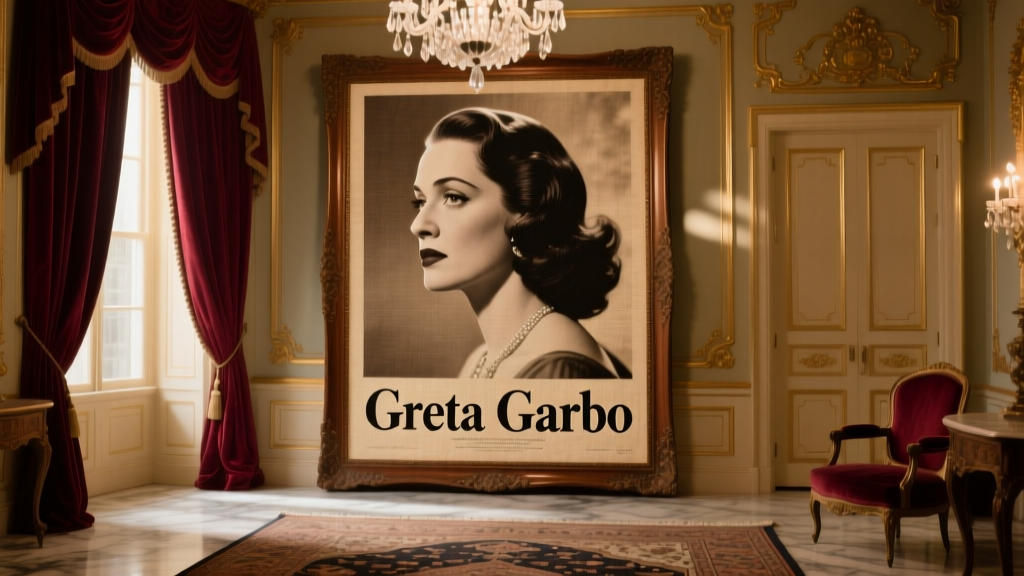
Greta Garbo Vintage Movie Posters on Linen: Authenticity, Conservation, and Market Value of the 112 × 50 Inch Format
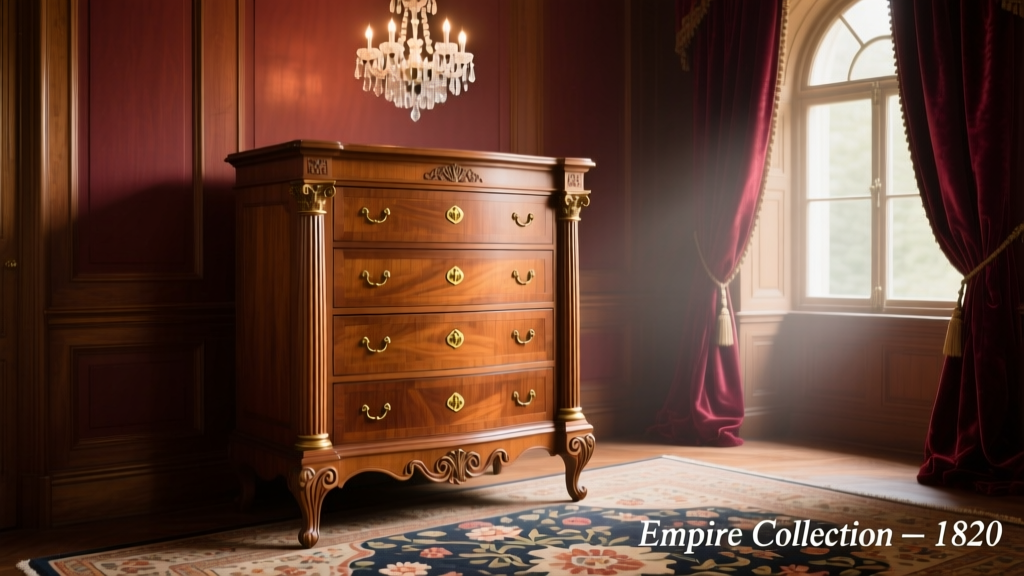
Empire-Style Chest in Poplar and Cherry: A Detailed Analysis of the 4-Drawer, Full-Round Column Design (46" Height)
Electric Bulldog Animal Lamps Standing by Tree: A Collector’s Guide to Cold-Painted White Metal Figural Lamps (15-Inch)
Berlin Cup and Saucer: Battle Scene Reserves on Cobalt Blue Ground with Gilt Borders — A Connoisseur’s Analysis
Fenton Hobnail Mayonnaise Set: Cranberry Opalescent 3-Piece — Identification, Value, and Restoration Guidance
The Bates Bedspread: A Mid-Century American Icon in Textile History
Elgin American Compacts Featuring the Eastern Star Emblem: History, Identification, and Restoration Guidance
Bronze Plaques in Antique Furniture: Identification, Historical Context, and Conservation Best Practices
The Enduring Value of the Carlsbad Vase: History, Identification, and Market Realities