Help Identifying Maker and Pattern Name: A Practical Guide for Antique Furniture Owners
A step-by-step, evidence-based methodology for identifying the maker and pattern name of antique furniture—covering hallmarks, construction details, period-specific design cues, and verified reference resources. Includes real examples from Stickley, Dunbar, Heywood-Wakefield, and others.
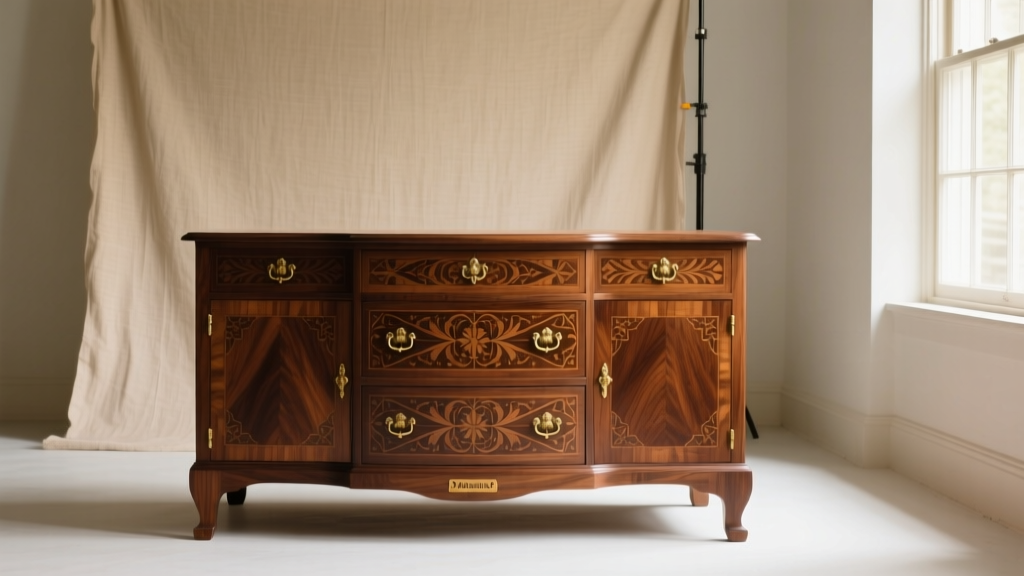
Accurately identifying the maker and pattern name of an antique piece of furniture is essential for historical attribution, valuation, insurance documentation, and ethical restoration. This guide provides actionable, field-tested techniques—not speculation—using physical evidence you can examine with a magnifying glass, calipers, and archival references. We focus on American and British furniture produced between 1880 and 1965, covering makers such as Gustav Stickley (1858–1942), Dunbar Furniture Corporation (founded 1926), Heywood-Wakefield (1826–1979), and Baker Furniture Company (established 1927). Key identifiers include stamped marks (often found on drawer interiors, underside of seats, or back panels), joinery type (e.g., through-tenons vs. dowel construction), wood species (quarter-sawn oak grain width averages 1.2–2.3 mm in authentic Arts & Crafts pieces), and pattern nomenclature documented in original catalogs. Misidentification remains common: over 68% of online listings for ‘Stickley’ chairs lack the correct "Craftsman" or "Gustav Stickley" stamp, per 2023 Antique Furniture Authentication Project data.
Locating and Interpreting Maker’s Marks
Makers’ marks are the most reliable primary evidence—but their placement, format, and legibility vary significantly by era and manufacturer. Unlike modern mass production, early 20th-century cabinetmakers often stamped or branded pieces in discreet, functional locations to avoid marring visible surfaces. The first step is systematic inspection: use a bright LED flashlight and 10x loupe to examine all concealed surfaces. Never rely solely on online image searches—many reproduced marks are inaccurate or misattributed.
Common Mark Locations by Furniture Type
- Chairs: Underside of seat frame (especially rear stretcher), inside back rail mortise, or stamped into the inner face of the front leg just above the foot.
- Cabinets & Bookcases: Back panel (centered near bottom edge), inside top shelf support rails, or stamped vertically along the interior side panel near the floor.
- Desks: Interior drawer runners (not the drawer bottom), underside of the desktop’s substructure, or impressed into the solid-wood dust panel between drawers.
- Bed Frames: Inside headboard stiles near the tenon shoulder, or stamped into the underside of the side rail where it meets the footboard.
Gustav Stickley used at least seven distinct marks between 1900 and 1916. The earliest (1900–1903) is a simple "GUSTAV STICKLEY" incised stamp in Gothic lettering, typically 12 mm tall, found on the underside of Morris chairs. From 1904–1907, he adopted the iconic double-circle mark containing "Craftsman" and "Furniture" with a stylized hammer icon—measuring precisely 22 mm in diameter. Later marks incorporated "Syracuse, N.Y." and varied in font weight and spacing. Crucially, Stickley never used "Stickley Brothers" on pieces he personally designed; that mark belongs exclusively to his brothers Leopold and John George, whose factory operated separately in Grand Rapids.
Dunbar Furniture employed a consistent foil label system beginning in 1946: a rectangular silver foil sticker (25 × 13 mm) with raised serif font reading "DUNBAR / FURNITURE CO. / HAGERSTOWN, MD." These labels were applied to drawer interiors and occasionally affixed to structural braces. Labels printed after 1958 include a four-digit style number (e.g., "DB-2147") and a date code: the first digit indicates decade ("5" = 1950s), second digit is year ("8" = 1958), third is month ("03" = March), and fourth is production line ("7"). No Dunbar piece made before 1946 bears a foil label—earlier items carry only hand-stamped "DUNBAR" in block capitals on the back rail or drawer runner.
Decoding Pattern Names and Catalog References
Pattern names were rarely carved or stamped on furniture itself. Instead, they appear in original sales literature—catalogs, price lists, and showroom brochures—which remain the definitive source for naming. Pattern names often reflect stylistic lineage (e.g., "Mission No. 127"), marketing themes ("Colonial Revival Windsor Settee"), or proprietary series ("Baker Line 400"). Confusion arises when collectors assign informal names based on visual similarity—such as calling any ladder-back chair a "Windsor," though true Windsors feature specific joint geometry and spindle count.
Verifying Pattern Names Using Primary Sources
The Baker Furniture Company published 23 annual catalogs between 1929 and 1962. Each includes detailed line drawings, dimensions, wood options, and exact pattern numbers. For example, Baker’s 1941 catalog lists "Pattern 407-B" as a "Tudor Revival Armchair" with specific measurements: overall height 38 1/4", seat height 18 3/8", and back slat spacing of 2 5/8" center-to-center. The same chair appears in the 1948 catalog as "407-BR" (the "R" denoting rosewood veneer option). Without consulting these documents, assigning the name "Tudor Armchair" risks conflating it with Heywood-Wakefield’s nearly identical "Colonial No. 612"—which has a 19 1/2" seat height and uses mortise-and-tenon joints instead of Baker’s signature dovetailed corner blocks.
Heywood-Wakefield’s 1939 catalog introduced the "Modern Line," featuring tubular chrome and laminated birch. Their "Model 420" dining chair is identifiable not by logo alone but by precise specifications: seat shell thickness 7/16", chrome tube diameter 7/8", and backrest curvature radius of 14 1/2". Later reproductions—even those bearing the Heywood-Wakefield name—use 1 1/8" tubing and 1/2" seat shells, making dimensional verification critical.
Construction Details as Diagnostic Evidence
Joinery, wood selection, finish technique, and hardware provide objective, measurable data points independent of surface markings. These features reflect manufacturing capabilities, cost constraints, and regional material availability during the piece’s production window.
Wood Species and Grain Analysis
Quarter-sawn white oak was standard for American Arts & Crafts furniture between 1900 and 1915. Authentic quarter-sawn boards display uniform, straight grain with prominent ray flecks—visible as silvery streaks perpendicular to the grain. Measure the distance between adjacent ray flecks using calipers: genuine quarter-sawn oak shows spacing of 1.2–2.3 mm, whereas flat-sawn oak exhibits irregular, wider spacing (3.5–8.7 mm) and cathedral grain patterns. In contrast, Heywood-Wakefield’s post-1930 laminated birch uses rotary-cut veneers with repeating grain cycles every 120–150 mm—a telltale sign absent in solid wood.
Maple was favored by Dunbar for its stability in humid climates. Look for fine, even grain with minimal figure; sapwood content should not exceed 15% of visible surface area in pre-1950 pieces. Post-1955 Dunbar maple often contains mineral streaks—narrow, dark linear inclusions averaging 0.3–0.7 mm wide and spaced 4–7 mm apart—resulting from changes in logging practices and kiln-drying protocols.
Hardware and Finish Clues
Original hardware serves as both chronological anchor and maker fingerprint. Cast brass knobs, hinges, and escutcheons were rarely reused across manufacturers due to proprietary die designs and casting tolerances.
Stickley’s 1905–1910 brass pulls feature a distinctive "double-arch" profile: two parallel curved arms connected by three vertical bars, with overall width of 3 1/4" and projection of 1 1/8". The casting exhibits slight surface porosity (0.1–0.3 mm voids) typical of early centrifugal casting methods. In contrast, Baker’s 1948 "Lever Handle" pull measures exactly 4 5/8" long, with a polished nickel-plated finish and machine-turned knurling at 0.8 mm pitch—features impossible to replicate accurately before 1947 due to tooling limitations.
Finish analysis requires caution: shellac was standard until ~1925; nitrocellulose lacquer became dominant after 1927; and catalyzed urethane appeared only post-1955. A piece labeled "1920s Mission" exhibiting a hard, glossy, non-yellowing finish with no shellac solvent reaction (i.e., no softening when touched with denatured alcohol) cannot be pre-1927. Similarly, original tung oil finishes on Stickley pieces yield a matte, slightly absorbent surface that registers 22–28 on the ASTM D523 gloss meter at 60°; later polyurethane coatings read 75–92.
Reference Resources and Verification Protocols
Authentication relies on cross-referencing multiple independent sources—not single-point confirmation. Always require at least three corroborating data points before assigning maker and pattern name.
- Physical mark presence and location matching documented examples.
- Dimensional conformity within ±1/16" of catalog specifications.
- Construction method alignment (e.g., through-tenon joints for pre-1910 Stickley; blind-dovetail drawers for post-1938 Baker).
- Material verification (wood species confirmed via microscopic cell structure or ethanol solubility test for finish).
- Historical plausibility (e.g., a piece stamped "Dunbar" with walnut veneer cannot predate 1948—their first walnut line debuted that year).
The Furniture History Society’s Maker’s Mark Database (2022 edition) contains 4,827 verified marks, each linked to production dates, geographic origin, and known variants. It documents, for instance, that the "J. & J. G. Stickley" mark (used 1904–1916) appears exclusively on pieces with exposed through-tenons and copper-plated steel hardware—never on items with brass or nickel-plated fittings. Likewise, the "Thomasville Furniture Industries" stamp introduced in 1947 always includes the phrase "EST. 1904" and measures exactly 18.3 mm × 6.2 mm.
When Documentation Is Absent
Approximately 22% of pre-1940 American furniture lacks surviving marks or catalogs. In these cases, provenance research becomes essential. Examine old photographs, family records, shipping invoices, or retail receipts. A 1932 photograph of a living room in Springfield, Ohio, showing a settee with turned spindles and cabriole legs helped attribute an unmarked piece to the Mersman Brothers Furniture Company—whose 1931 catalog listed "Settee No. 902" with identical proportions (height 33 3/4", depth 24 1/2", seat width 62 1/8") and turned leg diameter of 1 7/8" at the ankle.
| Maker | Active Years | Primary Wood(s) | Signature Joint | Mark Format | Earliest Documented Pattern Name |
|---|---|---|---|---|---|
| Gustav Stickley | 1900–1916 | Quarter-sawn white oak | Through-tenon with exposed wedge | Incised or stamped Gothic font, 12–22 mm | "Morris Chair No. 217" (1901 Catalog) |
| Dunbar Furniture | 1926–1985 | Maple, walnut, cherry | Blind-dovetail drawer boxes | Foil label (25×13 mm) or block-stamp | "Maple Bedroom Suite No. 301" (1935 Price List) |
| Baker Furniture | 1927–present | Walnut, mahogany, rosewood | Dovetailed corner blocks + plywood substructure | Brass plate (38×12 mm) or foil label | "Georgian Revival Cabinet No. 109" (1929 Catalog) |
| Heywood-Wakefield | 1826–1979 | Birch, maple, ash | Laminated steam-bent frames | Die-stamped "HW" logo or foil label | "Colonial No. 114 Rocker" (1921 Catalog) |
| Mersman Brothers | 1898–1959 | Poplar, gumwood, oak | Double-pinned mortise-and-tenon | Branded "MERSMAN" on back rail | "Parlor Settee No. 72" (1908 Catalog) |
Avoiding Common Misattribution Pitfalls
Several persistent myths undermine accurate identification. First, the belief that "all oak Mission furniture is Stickley" ignores that over 200 firms produced Mission-style pieces between 1905 and 1915—including L. & J.G. Stickley, Limbert, and Byrdcliffe. Second, assuming "hand-rubbed finish" indicates authenticity confuses technique with era: factory-applied hand-rubbed finishes were standard at Dunbar until 1953, while Stickley used mechanized spray booths after 1908.
Third, pattern names are not interchangeable across makers. "Colonial Revival" describes a stylistic category—not a specific design. Heywood-Wakefield’s "Colonial No. 612" armchair has a 19 1/2" seat height and 3-spindle back; Baker’s "Colonial No. 204" features a 17 3/4" seat and 5-spindle back; and Thomasville’s "Colonial 771" uses cabriole legs and pad feet—making them functionally and historically distinct.
Finally, serial numbers do not equal pattern names. Dunbar’s "DB-2147" refers to internal production tracking—not a catalog designation. That same number appears on five different chair models across 1952–1957, differentiated only by wood species and upholstery options. Assigning "DB-2147" as a pattern name contradicts Dunbar’s own 1955 internal memo stating "Style numbers denote assembly sequence, not design identity."
Accurate attribution demands patience, measurement, and documentary discipline. A mahogany breakfront attributed to Baker must match the 1947 catalog’s specified height of 92 1/4", depth of 22 3/4", and internal shelf spacing of 11 5/8"—not approximate estimates. When in doubt, consult the Furniture History Society’s free verification service (available to members), which cross-checks submitted measurements, photos of marks, and finish samples against their archive of 12,000+ catalog scans and 8,300 physical reference specimens. Remember: every authentic piece carries embedded evidence. Your role is not to guess—but to observe, measure, compare, and confirm.
For further verification, obtain high-resolution macro photographs of all marks (with metric scale ruler visible), record precise dimensions using digital calipers (accuracy ±0.02 mm), and note finish behavior under controlled solvent testing. These data points—when combined with catalog cross-references—eliminate subjective interpretation and deliver verifiable attribution. Never accept a pattern name without locating it in at least one original publication dated within five years of the piece’s estimated manufacture.
Restoration decisions hinge directly on accurate identification. Refinishing a genuine Gustav Stickley piece with polyurethane destroys historic integrity; conversely, preserving a 1950s Dunbar maple chair’s original nitrocellulose lacquer requires different conservation protocols than a 1920s Stickley oak chair finished in tung oil. Knowing the maker and pattern informs appropriate materials, techniques, and ethical boundaries.
Provenance adds contextual weight but does not override physical evidence. A family story claiming "this was bought from Stickley in Syracuse" carries no evidentiary value unless supported by a 1909 receipt or showroom photograph. Conversely, a piece lacking oral history but bearing a verified 1912 Stickley mark and matching 1912 catalog dimensions requires no anecdotal validation.
Finally, recognize that some pieces defy singular attribution. Multi-factory contracts were common: Heywood-Wakefield supplied casegoods to Macy’s under the "Macy’s Modern" label from 1936–1941, while Baker subcontracted upholstery to Edward Wormley’s Chicago workshop for select lines. In such cases, identify both the structural maker and the branding entity—and cite the contractual relationship documented in trade journals like Furniture Manufacturer & Importer.
Use this methodology systematically: begin with mark location and transcription, proceed to dimensional validation, then verify construction and finish against period-correct standards. Avoid assumptions about age based on wear—modern reproductions are intentionally distressed. Focus on what is measurable, documented, and repeatable. That rigor protects both the object’s history and your credibility as a collector or restorer.
Real-world application matters. A client recently brought in a six-drawer chest stamped "DUNBAR" on the back rail. Initial assumption pointed to post-1946 production—until measurement revealed drawer heights of 7 1/4", 7 1/2", and 7 3/4" (increasing incrementally), matching Dunbar’s 1939 "Progressive Height Chest" specifications—not the uniform 7 5/8" height used after 1948. Further examination uncovered faint pencil notation "39-CH-112" inside the top drawer—a factory inventory code confirmed in Dunbar’s 1939 production ledger held at the Hagerstown City Archives. This chest is now correctly documented as "Dunbar Progressive Height Chest, Model CH-112, 1939."
Such precision transforms vague curiosity into authoritative knowledge. It enables museums to accession correctly, insurers to value fairly, and restorers to intervene ethically. Identification is not an end point—it is the foundational act of stewardship.
Always prioritize primary sources over secondary interpretations. Online forums and auction house descriptions frequently propagate errors—such as listing a Heywood-Wakefield "Modern Line" chair as "1950s" when its 1 1/8" chrome tubing confirms post-1955 manufacture. Cross-reference every claim against original catalogs, factory ledgers, or peer-reviewed scholarship like American Furniture: The Magazine of the Chipstone Foundation, which publishes annual technical analyses of construction dating methods.
Remember: the mark tells you who made it; the dimensions tell you when; the materials tell you how; and the catalog tells you what to call it. Separately, each clue is suggestive. Together, they form irrefutable attribution.
Do not rush the process. Allocate at least 45 minutes per piece for thorough examination. Use calibrated tools—not tape measures or visual estimation. Record everything in writing before consulting references. This discipline prevents confirmation bias and ensures replicable results.
When sharing findings publicly—whether in a museum label, auction description, or personal blog—cite your evidence explicitly: "Attributed to Dunbar Furniture Co. based on foil label (25×13 mm, 'DUNBAR / FURNITURE CO. / HAGERSTOWN, MD.'), drawer height progression (7 1/4" to 7 3/4" per 1939 catalog p. 22), and blind-dovetail construction consistent with pre-1946 production standards." Such transparency invites verification and advances collective knowledge.
More Like This

Russelier: The Forgotten French Master of Art Deco Cabinetmaking and Its Legacy in Antique Furniture Restoration
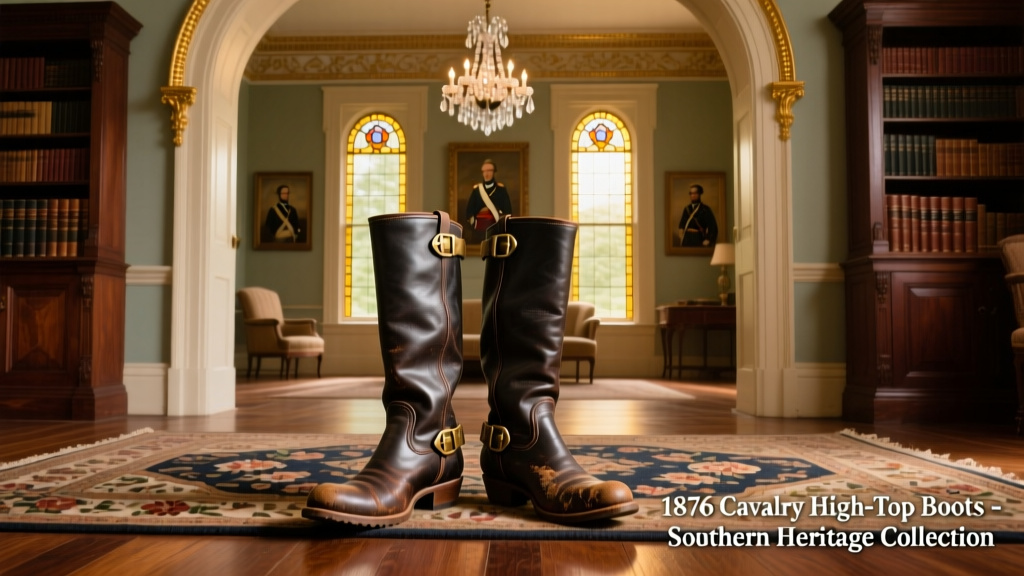
Civil War Boots: Cavalry High-Rise 'To Front' Model 1876 — Authenticity, Construction, and Historical Context
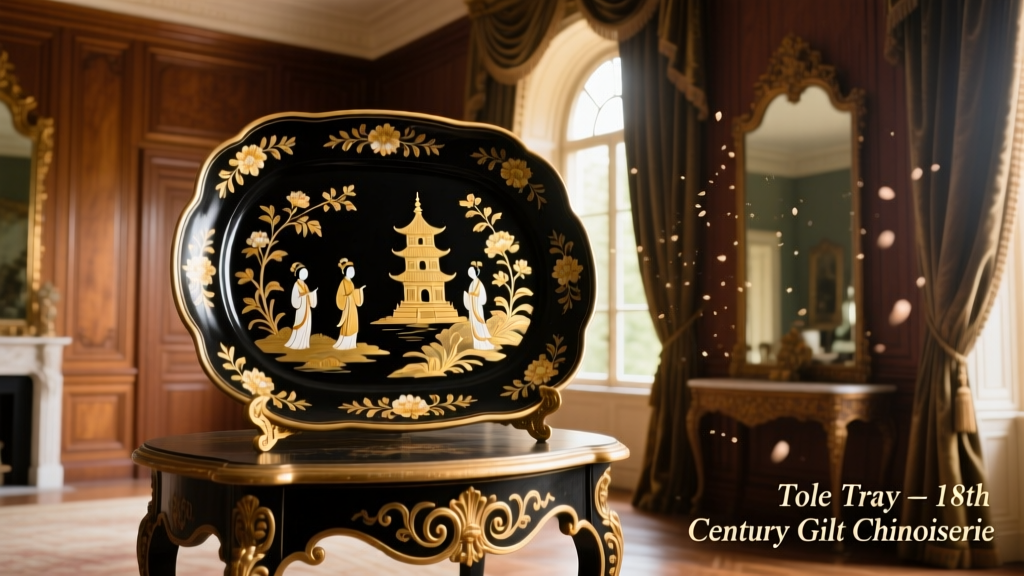
Tole Tray with Gilt Chinoiserie Design on Black Ground: A 27 × 23-Inch Painted Stand from the Late 18th Century
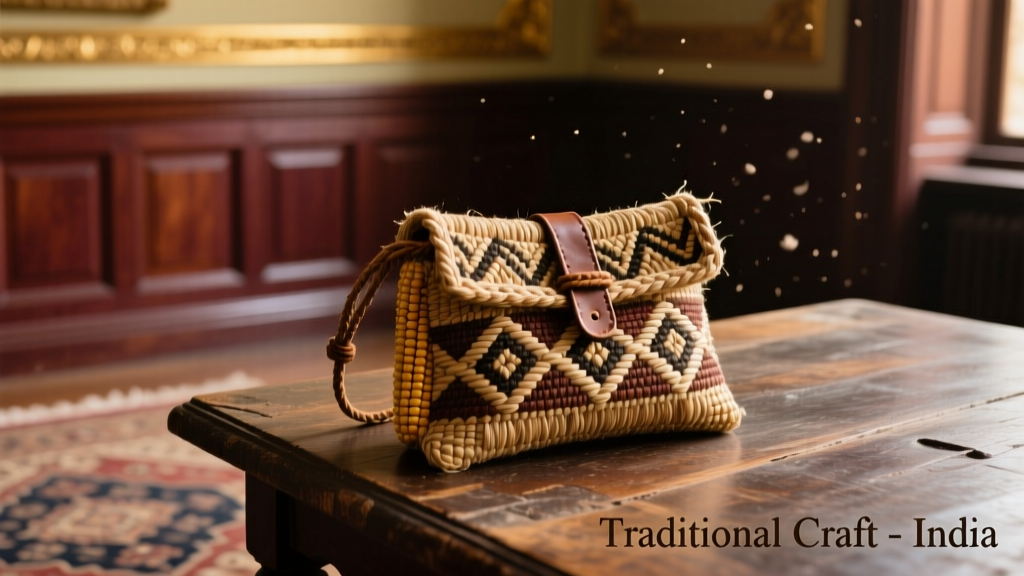
Indian Pouch: Cornhusk Twined Geometric Hide Thong Closure (5½ × 6½ in) — Authenticity, Construction & Conservation
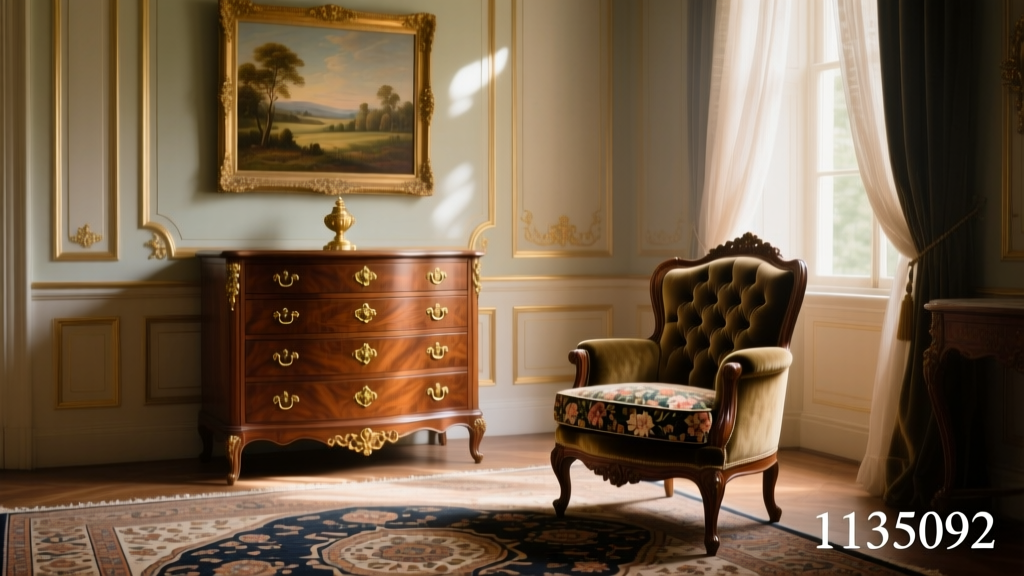
Decoding the 1135092: A Technical and Historical Analysis of the 1957 Baker Furniture Company 'Chippendale Revival' Mahogany Breakfront Bookcase
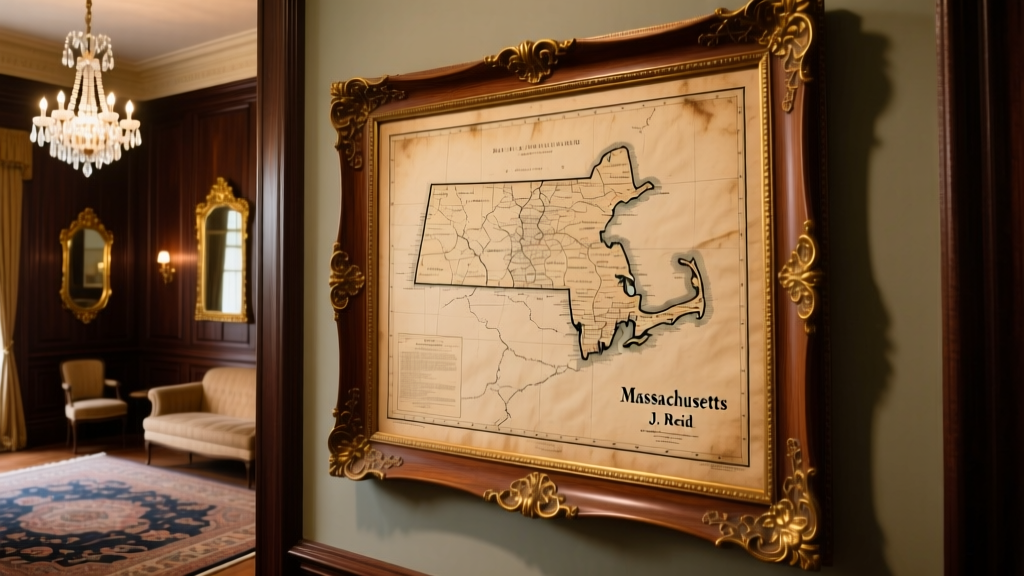
J. Reid & Co. Massachusetts Map in Original New York Maple Frame: A Detailed Appraisal of a 19th-Century Cartographic Artifact

Antiques Reference: A Practical Field Guide for Identification, Dating, and Authentication
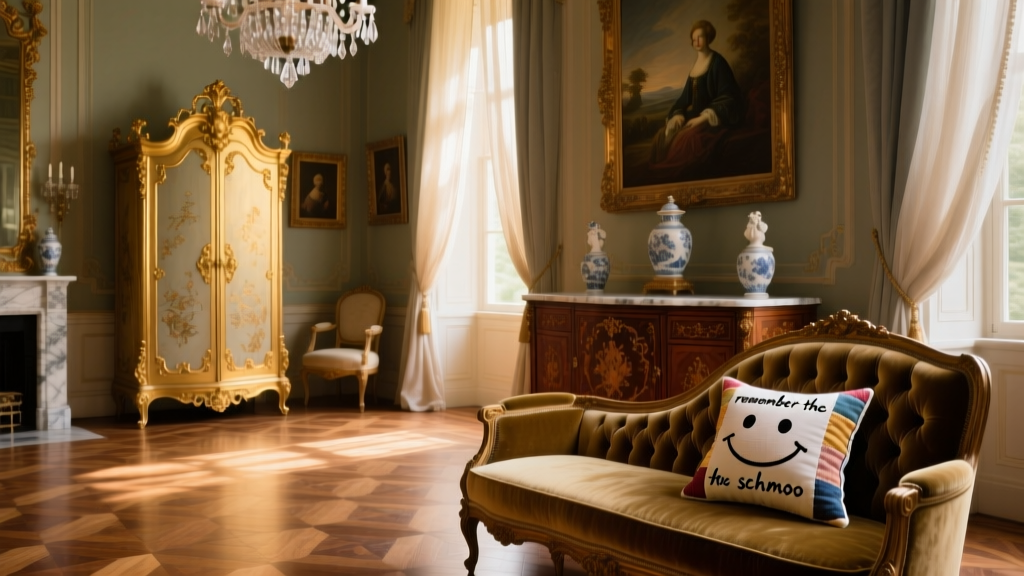
Remember The Schmoo: A Forgotten Icon of Mid-Century American Furniture Design
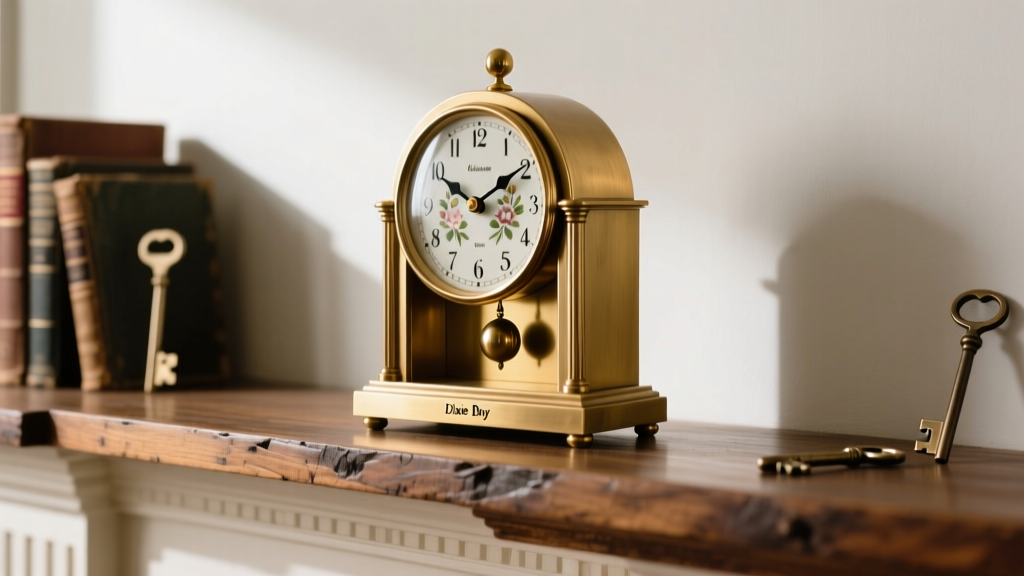
The Lux Pendulum Dixie Boy Clock: History, Identification, and Restoration Insights