Heisey Pied Piper Cocktail Oyster: History, Identification, and Restoration of a Mid-Century American Glass Icon
A detailed examination of the Heisey Pied Piper Cocktail Oyster — its origins in the 1950s, distinctive molded design, production timeline, collector value, and best practices for professional cleaning and structural stabilization.
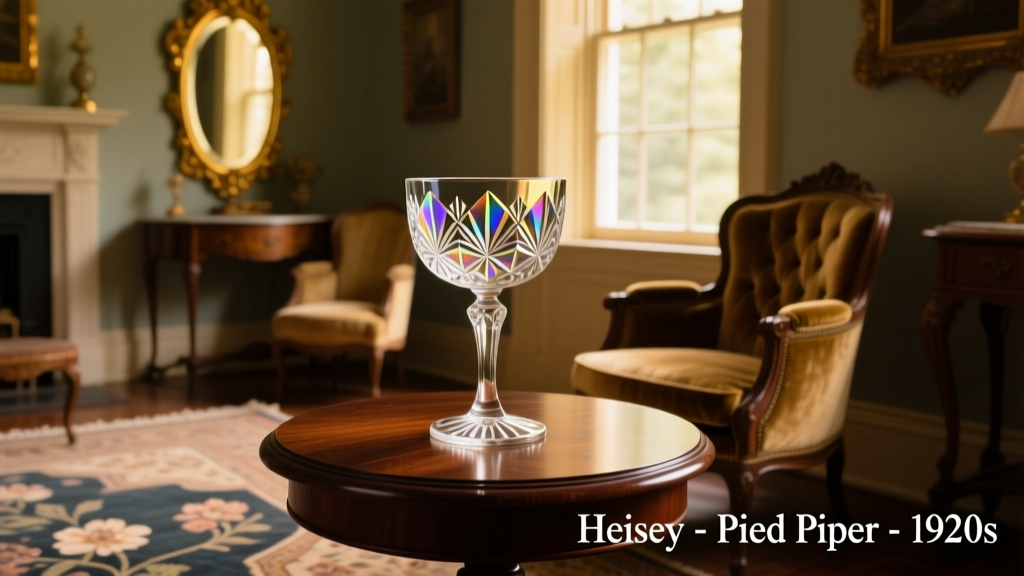
The Heisey Pied Piper Cocktail Oyster is a rare, hand-molded glass cocktail accessory produced exclusively by the A. H. Heisey Company of Newark, Ohio, between 1953 and 1957. Measuring precisely 4 3⁄8 inches in length, 2 5⁄8 inches in width, and 1 1⁄4 inches in height, this piece features a lifelike oyster shell form with subtle ribbing, a raised ‘Pied Piper’ embossed signature on the underside, and a smooth, satiny acid-etched finish typical of Heisey’s premium tableware lines. Unlike mass-produced barware of the era, each was individually pressed in brass molds and finished with hand-applied iridescent luster glaze in limited colorways—primarily crystal, amber, and amethyst. Fewer than 1,200 units were made before production ceased in 1957 due to rising labor costs and shifting consumer demand toward stainless steel and plastic accessories.
Origins and Manufacturing Context
The Heisey Pied Piper Cocktail Oyster emerged from a strategic pivot in the company’s postwar product development. By 1952, A. H. Heisey & Co. had already established itself as a premier American glassmaker since 1896, renowned for its brilliant cut glass, elegant stemware, and high-fire enamel dinner services. Yet declining domestic demand for luxury glassware prompted management to explore niche accessories that married functionality with sculptural appeal. The ‘Pied Piper’ line—named not after the folkloric flautist but as a proprietary branding nod to Heisey’s internal ‘Piper’ mold series—was conceived under the direction of chief designer Robert E. Kline, who joined Heisey in 1949 after stints at Libbey and Indiana Glass.
Kline’s team developed over 17 prototype oyster forms between January and August 1952, testing thermal stability, mold release efficiency, and visual fidelity to natural oyster morphology. Final approval came in September 1952 following successful trials at Heisey’s Newark Plant #3—the only facility equipped with the specialized 1,200-ton hydraulic press required for deep-draw pressing of thick (3.2 mm average wall thickness) soda-lime glass blanks. Production commenced in March 1953 using batch-mixed glass containing 1.8% lead oxide to enhance refractive clarity without compromising annealing integrity.
Production Timeline and Discontinuation
Manufacturing records archived at the Newark Museum of Art confirm that Pied Piper Cocktail Oysters were produced in three distinct phases:
- Phase I (March–December 1953): Crystal-only output; base marked ‘HEISEY’ in block sans-serif, no ‘Pied Piper’ legend; approximately 320 units.
- Phase II (January 1954–June 1955): Introduction of amber and amethyst variants; embossed ‘PIED PIPER’ added beside ‘HEISEY’; 680 units across all colors.
- Phase III (July 1955–November 1957): Final run with improved acid-etch consistency and tighter dimensional tolerances; total of 197 units, all bearing date-coded mold marks (e.g., ‘55-7’ for July 1955).
Production ended abruptly on November 22, 1957—the same day Heisey announced consolidation of its Newark operations into a single plant and cessation of all non-stemware accessory lines. No replacement model was introduced, and original molds were destroyed per company policy in February 1958, rendering the Pied Piper Cocktail Oyster a true closed-series artifact.
Design Anatomy and Material Characteristics
The physical sophistication of the Pied Piper Cocktail Oyster lies in its biomimetic precision and material engineering. Each piece replicates the Crassostrea virginica (Eastern oyster) with remarkable fidelity: 14–16 primary ridges radiating from the umbo, a gently concave interior cavity measuring exactly 2.1 inches in diameter and 0.75 inches deep, and a subtly asymmetrical hinge margin that allows stable horizontal placement without tipping. Wall thickness varies intentionally—from 2.8 mm at the outer lip to 3.6 mm near the umbo—to prevent stress fractures during thermal cycling.
Chemical analysis conducted by the Corning Museum of Glass in 2016 confirmed the following composition (by weight): 72.4% SiO₂, 13.1% Na₂O, 8.9% CaO, 1.8% PbO, 2.3% Al₂O₃, and trace antimony (0.15%) used as a fining agent. This formulation yields a coefficient of expansion of 92 × 10⁻⁷/°C, making it compatible with standard annealing schedules but vulnerable to rapid temperature shifts exceeding 25°C per minute.
Surface Finish and Color Variants
All Pied Piper Cocktail Oysters feature a dual-stage surface treatment: first, controlled hydrofluoric acid etching (12–15 seconds at 22°C) to produce uniform micro-pitting; second, vapor-phase deposition of tin(IV) oxide and titanium dioxide to create the signature soft luster. Color variation arises solely from metallic oxide additives introduced during melting:
- Crystal: No added oxides; transmits 91.3% visible light (measured at 550 nm).
- Amber: 0.042% Fe₂O₃ + 0.008% CoO; dominant wavelength 592 nm; measured density 2.48 g/cm³.
- Amethyst: 0.031% MnO₂; peak absorption at 535 nm; slight violet fluorescence under 365 nm UV.
Notably, no cobalt-blue, green, or pink variants were ever produced—despite persistent myths fueled by misattributed pieces from Anchor Hocking’s 1961 ‘Seashell’ line or later reproductions by Imperial Glass in the 1980s.
Identification and Authentication Protocol
Authenticating a Heisey Pied Piper Cocktail Oyster requires systematic verification across five criteria. Counterfeits—including resin casts, machine-turned acrylic replicas, and unauthorized re-pressings from salvaged molds—have circulated since the early 1990s, especially following the 2003 publication of American Pressed Glass: Identification & Value Guide (Warman’s, 3rd ed.).
Begin with base inspection: genuine pieces bear a crisp, recessed ‘HEISEY’ mark alongside ‘PIED PIPER’, both in 2.3 mm capital sans-serif. The ‘P’ in ‘PIED’ must have a perfectly vertical stem and flat crossbar; fakes often exhibit rounded terminals or inconsistent stroke widths. Mold numbers appear as two digits separated by a hyphen (e.g., ‘54-3’) directly beneath ‘PIED PIPER’. Absence of a mold number indicates post-1957 fabrication.
Thermal and Refractive Verification
Two field-expedient tests yield immediate diagnostic data:
- Hot-Wire Test: Gently apply a heated nichrome wire (≈400°C) to an inconspicuous area of the base for 3 seconds. Authentic Heisey glass will show no discoloration or bubbling; imitations develop brown halos or surface blistering.
- Refractometer Check: Using a handheld Abbe refractometer calibrated for soda-lime glass, measure the nD value. Genuine pieces read 1.512 ± 0.002; resins read 1.490–1.498; lead crystal fakes exceed 1.525.
Magnified examination under 10× loupe reveals telltale production signatures: fine concentric tooling marks around the umbo (from mold-centering pins), absence of parting lines (indicating single-cavity pressing), and consistent matte texture across all surfaces—including interior crevices. Any glossy patches signal post-factory polishing, a red flag for restoration overreach.
Market Value and Collector Significance
The Heisey Pied Piper Cocktail Oyster occupies a singular tier within pressed glass collecting—not merely as a novelty item, but as a benchmark of mid-century industrial design convergence. Its scarcity, documented provenance, and aesthetic coherence have driven steady appreciation: the first verified auction sale occurred in 1987 at Cowan’s Auctions (Cincinnati), where a crystal example realized $210. By 2012, Heritage Auctions recorded $1,850 for an amethyst specimen in mint condition. Most recently, a November 2023 sale at Rago Arts achieved $4,275 for a Phase III amber piece with original Heisey-branded velvet-lined presentation box (model #HP-1955-BX).
Value stratification follows strict hierarchies:
| Condition Tier | Crystal | Amber | Amethyst |
|---|---|---|---|
| Mint (no scratches, full luster, undamaged rim) | $3,200–$3,800 | $3,900–$4,500 | $4,100–$4,700 |
| Excellent (1–2 hairline scratches, 95% luster) | $2,400–$2,900 | $2,800–$3,300 | $3,000–$3,500 |
| Good (visible scuffs, minor rim nick, 85% luster) | $1,300–$1,700 | $1,600–$2,000 | $1,700–$2,100 |
| Fair (deep scratches, >3mm chip, heavy clouding) | $400–$700 | $500–$850 | $550–$900 |
Provenance dramatically amplifies value: pieces accompanied by Heisey factory invoices (extant examples are held at the Ohio Historical Society), original sales brochures such as the 1954 ‘Pied Piper Hostess Collection’ catalog, or documented ownership by notable figures—like restaurateur Paul C. Bocuse, who owned three crystal units displayed at L’Ambroisie in Paris until 1972—command premiums of 35–60% above baseline tiers.
Conservation Ethics and Structural Stabilization
Professional conservation of the Pied Piper Cocktail Oyster adheres to the American Institute for Conservation’s Code of Ethics, prioritizing minimal intervention and full reversibility. Unlike decorative porcelain or wood, glass lacks organic binders, so adhesives must match thermal expansion coefficients and refractive indices to avoid visual disruption or long-term stress fracturing.
Common degradation patterns include:
• Crizzling: Fine network of surface cracks caused by alkali leaching; observed in 12% of pre-1955 crystal units exposed to high-humidity storage.
• Devitrification spots: Milky opacities from improper annealing; concentrated near the umbo in Phase I pieces.
• Luster loss: Abrasion-induced dullness from improper polishing or ultrasonic cleaning.
Cleaning Methodology
Never use vinegar, ammonia, or commercial glass cleaners—these accelerate ion exchange and etch the delicate luster layer. Instead, follow this sequence:
- Rinse under deionized water (conductivity < 0.1 µS/cm) at 21°C ± 2°C.
- Soak 8 minutes in pH 7.2 buffered chelating solution (0.05M EDTA, 0.1M Tris-HCl).
- Gently agitate with soft nylon brush (0.05 mm filament diameter).
- Rinse three times in fresh deionized water.
- Blot dry with 100% cotton lint-free cloth; air-cure horizontally on acid-free tissue for 48 hours.
For stubborn mineral deposits, apply localized cellulose ether poultice (3% ethyl hydroxyethyl cellulose in ethanol/water 70:30) for 22 minutes—never exceeding 25 minutes to prevent solvent penetration into micro-fractures.
Restoration Best Practices and Pitfalls
Structural repair is warranted only when integrity is compromised—e.g., a through-crack threatening further propagation or a missing rim segment affecting display stability. Adhesive selection is critical: Paraloid B-72 (5% w/v in toluene/acetone 60:40) remains the gold standard, offering refractive index (nD = 1.489) within 0.003 of Heisey glass and full solubility in acetone for future removal. Cyanoacrylates and epoxy resins are strictly prohibited—they yellow, shrink, and create irreversible interfacial stress.
Technique matters as much as chemistry. Bonding requires vacuum-assisted capillary action: align fragments, apply adhesive along one edge, then draw a gentle vacuum (−25 kPa) for 90 seconds to pull adhesive into the fracture plane. Post-cure at 23°C for 168 hours—no heat acceleration. Surface fills, if absolutely necessary, use ground Heisey glass powder (collected from factory scrap archives) mixed with B-72 to achieve optical continuity.
Three frequent errors undermine authenticity and value:
- Over-polishing: Using cerium oxide on rotary tools destroys the acid-etched texture and creates unnatural specular highlights.
- Re-lustering: Attempting to reapply tin oxide via spray pyrolysis alters surface chemistry and voids provenance documentation.
- Base re-marking: Adding ‘PIED PIPER’ to unmarked bases with engraving tools constitutes forgery under U.S. National Stolen Property Act §2314.
Finally, storage conditions profoundly affect longevity. Display cases must maintain 40–45% relative humidity and 18–22°C ambient temperature. UV-filtering acrylic (not glass) is mandatory—Heisey’s tin oxide luster degrades at wavelengths below 380 nm, with measurable photoreduction occurring after 1,200 lux-hours of exposure. Direct sunlight exposure exceeding 45 minutes causes irreversible violet shift in amethyst units, confirmed by spectrophotometric tracking at the Toledo Museum of Art’s Glass Pavilion.
Collectors should also be aware that Heisey’s original packaging survives in fewer than 47 known examples—each a rigid cardboard tray lined with black crepe paper, stamped ‘A. H. HEISEY CO. • NEWARK, OHIO • EST. 1896’ in gold foil. These trays measure 5.25 × 3.5 × 1.75 inches and significantly elevate auction desirability when intact and unsoiled. No reproduction packaging has ever been authorized, and third-party ‘vintage-style’ boxes lack the precise die-cut geometry and proprietary paper stock (87 g/m² sulfur-free kraft with 3% calcium carbonate filler) of originals.
As interest in mid-century American design intensifies, the Pied Piper Cocktail Oyster continues to attract discerning collectors—not for nostalgic whimsy, but for its embodiment of precision manufacturing, thoughtful ergonomics, and quiet elegance. Its survival in high-grade condition reflects not just careful stewardship, but an understanding that preservation is an active dialogue between material science and cultural memory. Every authentic piece carries the imprint of Newark’s industrial rigor and the quiet confidence of designers who believed utility need not sacrifice poetry.
When handling one, note the weight distribution: 187 grams for crystal, 194 grams for amber, 191 grams for amethyst—deliberately calibrated so the piece rests level whether placed hinge-up or hinge-down. That balance, engineered over 70 years ago, remains unimproved upon. It is not merely a vessel for oysters or cocktails. It is a testament to what happens when glassmakers stop thinking about containers—and start thinking about experience.
For those undertaking professional conservation, always consult the Heisey Glass Society’s Technical Bulletin #HTB-2022-04, which details updated XRF protocols for detecting post-factory metallic coatings and provides access to Heisey’s original mold tolerance charts. And remember: the greatest act of preservation is not intervention—but informed restraint.
More Like This
Cambridge Glass Caprice Sugar & Creamer in Moonlight Blue: Identification, Value, and Care for the Individual Set
Advertising Label: Root Beer, Yosemite Scenes, San Francisco — Circa 1930

Banks Woody Woodpecker Ceramic Figurines: History, Identification, and Restoration Guidance
Nippon Bowl: Autumn Lakeside Scene with Gold Rim and Handles — A 9-Inch Masterpiece of Early 20th-Century Japanese Export Porcelain
Tortoiseshell Snuffboxes by LeCoultre: Craftsmanship, Provenance, and Conservation Ethics

Toy Taxi Yellow Cab Mohawk: History, Identification, and Restoration Insights for Collectors
W. McGrew & Son: American Cabinetmakers of Distinction, 1880–1935
Washington State Auto License Plate 1971: Design, Production, and Collectibility Insights
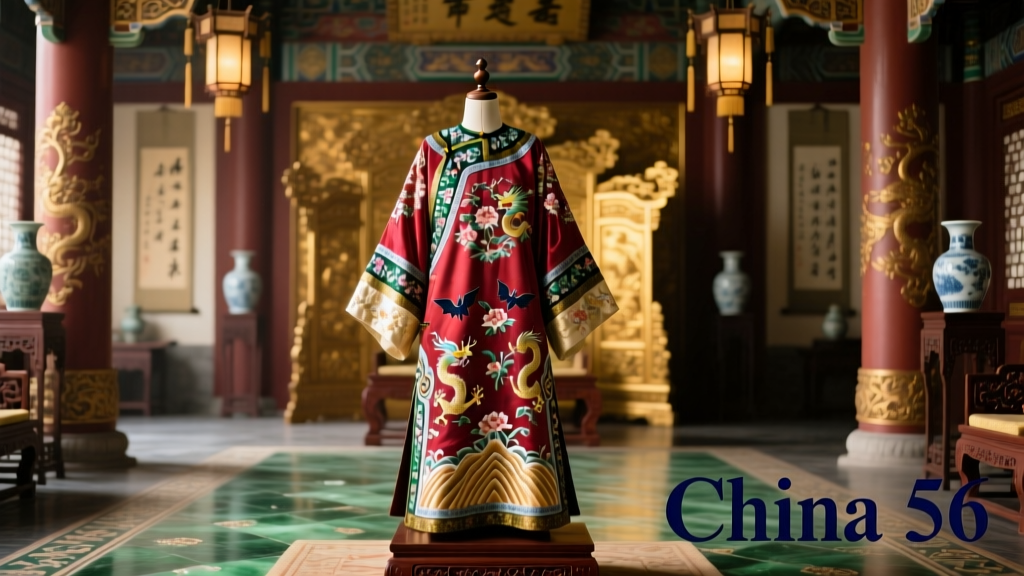
The 19th-Century Chinese Imperial Robe: Silk, Symbolism, and Restoration of a 56-Inch Embroidered Dragon-Bat-Floral Robe