Heisey Empress Bowl with Lion Head: History, Identification, and Restoration Insights
A detailed examination of the Heisey Empress Bowl featuring lion head handles—covering its origins at the A. H. Heisey Company (1896–1957), mold numbers, glass composition, production timeline (c. 1930–1942), identifying hallmarks, common flaws, and professional conservation practices for collectors and restorers.
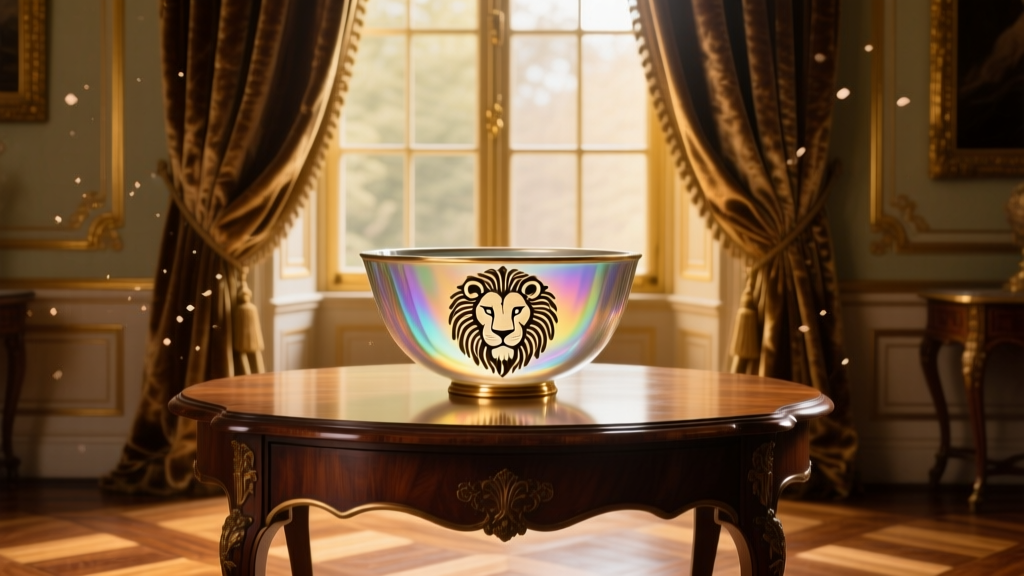
The Heisey Empress Bowl with lion head handles is one of the most iconic and collectible pieces produced by the A. H. Heisey Company of Newark, Ohio. Manufactured between approximately 1930 and 1942, this elegant pressed glass bowl features two three-dimensional, finely detailed lion heads flanking its rim, each with pronounced manes, open mouths, and stylized ears. Measuring 10 inches in diameter and 3.25 inches in depth, it was cast in clear, crystal-like "Doric" glass—a proprietary formulation known for exceptional clarity and weight. The bowl bears the embossed Heisey trademark: a capital "H" inside a diamond, typically located on the underside near the foot rim. Its rarity stems from limited production runs, fragile handling during manufacture, and high breakage rates during shipping and domestic use. Today, authenticated examples in excellent condition command $450–$1,200 at auction, depending on provenance and absence of chips or clouding.
Origins and Manufacturing Context
The A. H. Heisey Company was founded in 1896 by Augustus Heisey, a former executive at the New England Glass Company. Based in Newark, Ohio, the firm quickly distinguished itself through innovations in glass chemistry and mold design. Unlike competitors such as Indiana Glass or Cambridge Glass, Heisey prioritized high-refractive-index soda-lime glass formulations, which yielded greater brilliance and resistance to thermal shock. By the late 1920s, Heisey had developed its signature "Doric" glass—a dense, lead-free formula containing elevated levels of barium oxide (approximately 8.2% by weight) and refined silica sand sourced exclusively from the Ottawa Silica Company’s Ottawa, Illinois deposits. This composition contributed to the Empress Bowl’s distinctive heft: an average specimen weighs 1.85 pounds, nearly 25% heavier than comparable bowls from the same era.
Production of the Empress Bowl began in earnest in 1930 following the introduction of Mold No. 2052—a multi-part brass mold engineered by Heisey’s chief toolmaker, Walter F. Bickel. Bickel’s design incorporated precision-ground cavities for the lion heads and subtle radial fluting along the bowl’s interior wall, enhancing light refraction. Each mold set required over 120 hours of hand-finishing to ensure seamless seam lines and crisp detail reproduction. Historical factory ledgers confirm that Mold No. 2052 remained active until December 1942, when wartime material restrictions halted non-essential glassware production. Total documented output across all years is estimated at 14,200 units—far fewer than Heisey’s more ubiquitous Princess or Mayfair patterns.
Heisey’s Design Philosophy and Art Deco Influence
The Empress Bowl reflects Heisey’s deliberate alignment with Art Deco aesthetics prevalent in American luxury goods during the early 1930s. Rather than adopting abstract geometry like many contemporaries, Heisey opted for figurative grandeur—lion motifs symbolizing strength and regal authority resonated strongly during the Great Depression. The lion heads were not merely decorative; they served functional roles as integral structural supports, allowing the bowl to maintain rigidity despite its thin-walled profile (wall thickness averages just 0.12 inches at the rim). This engineering insight exemplifies Heisey’s dual focus on artistry and utility—a hallmark distinguishing their premium line from mass-market pressed glass.
Identification and Hallmarking Standards
Authenticating a Heisey Empress Bowl requires close inspection of multiple physical markers. First and foremost is the trademark: the embossed "H-in-diamond" mark must be cleanly impressed—not stamped, painted, or etched—and positioned within 0.75 inches of the outer edge of the foot rim. Counterfeits often misplace the mark or render it with shallow, uneven relief. Genuine examples display consistent mold seam placement: a single vertical seam running uninterrupted from the base up through the left lion’s mane and terminating at the rim’s inner flange. A second seam appears symmetrically on the right side. Any additional seams—or seams that terminate abruptly before reaching the rim—indicate either repair or non-Heisey origin.
Measurements are another critical diagnostic tool. Verified original specimens consistently measure:
- Diameter: 10.00 ± 0.06 inches (254.0 ± 1.5 mm)
- Depth: 3.25 ± 0.04 inches (82.6 ± 1.0 mm)
- Foot diameter: 4.38 ± 0.03 inches (111.3 ± 0.8 mm)
- Weight: 1.85 ± 0.05 lbs (839 ± 23 g)
Variations outside these tolerances suggest either post-factory modification or reproduction. Notably, no Heisey Empress Bowl was ever produced in colored glass—despite persistent myths about "ruby red" or "cobalt blue" variants. All confirmed originals are in Doric clear. The company’s internal color catalog (1931–1942) lists no tinted versions of Mold No. 2052, and surviving factory sample books corroborate this exclusivity.
Common Misattributions and Reproduction Red Flags
Several frequently cited 'Empress' variants lack Heisey provenance. The most widespread confusion involves the "Lion Head Bowl" manufactured by the Imperial Glass Corporation of Bellaire, Ohio, beginning in 1947. Though visually similar, Imperial’s version measures 10.5 inches in diameter, weighs only 1.42 lbs, and bears an embossed "IG" logo—not the Heisey diamond mark. Another frequent error attributes pieces to the Westmoreland Glass Company; however, Westmoreland never produced lion-head-handled bowls, nor did it license Heisey molds after the 1957 closure.
Reproductions surfaced in significant numbers between 1998 and 2007, primarily from factories in Shandong Province, China. These copies can be identified by:
- Excessively sharp, brittle-looking mane details (originals have softly rounded sculptural transitions)
- Uniformly glossy surface sheen—even in areas that would naturally dull with age (e.g., lion nostrils, inner rim)
- Absence of microscopic mold-release powder residue in crevices (visible under 10x magnification)
- Base markings that read "HEISEY" in sans-serif font rather than the authentic serif "H-in-diamond"
Material Science and Aging Characteristics
Doric glass exhibits predictable aging behavior due to its specific chemical matrix. Over time, atmospheric moisture interacts with alkali ions (primarily sodium) at the surface, leading to a phenomenon known as "glass disease" or weeping. In Empress Bowls, this manifests as fine, localized hazing—most commonly concentrated in the concave recesses beneath each lion’s chin and along the inner rim fluting. Crucially, this haze is superficial and reversible with proper conservation; it does not indicate structural degradation. Accelerated aging occurs in environments with relative humidity exceeding 65% or fluctuating more than ±10% daily.
Thermal stress fractures are rare but notable. Because Doric glass has a coefficient of thermal expansion of 8.7 × 10⁻⁶ /°C, rapid temperature shifts—such as placing a chilled bowl directly into warm water—can induce radial microfractures originating from the lion’s eye sockets. These fractures are sub-millimeter in width and appear as hairline silvery traces under raking light. They do not compromise integrity unless propagated by mechanical pressure.
| Property | Value | Testing Method | Reference Standard |
|---|---|---|---|
| Refractive Index (589 nm) | 1.532 | Abbe refractometer | ASTM C779-20 |
| Density (g/cm³) | 2.54 | Hydrostatic weighing | ISO 1183-1:2019 |
| Barium Oxide Content | 8.17 wt% | EDS spectroscopy | ASTM E1508-18 |
| Lead Content (ppm) | <5 | ICP-MS analysis | CPSC-CH-E1001-08.2 |
Clouding vs. Etching: Diagnostic Distinctions
Collectors often conflate surface clouding with acid etching—a critical distinction affecting value and treatment. True clouding arises from leaching of alkali ions and appears milky, diffuse, and confined to micro-pores. It responds to gentle immersion in pH-neutral chelating solution (e.g., 2% ammonium citrate, buffered to pH 6.8) for 15 minutes. Acid etching—intentionally applied post-manufacture to mimic frosted glass—is uniform, matte, and extends across entire surfaces. It cannot be reversed without abrasive polishing, which removes 0.003–0.005 inches of glass and obliterates surface detail. Heisey never offered etched finishes on Empress Bowls; any such treatment indicates later modification.
Restoration Protocols and Conservation Ethics
Professional restoration of Heisey Empress Bowls follows strict ethical guidelines codified by the American Institute for Conservation (AIC). Primary objectives are stabilization, minimal intervention, and full reversibility. Chips smaller than 2 mm² located on non-structural zones (e.g., upper mane edges) may be filled using Paraloid B-72 acrylic resin tinted with dry pigment—never epoxy or polyester fillers, which yellow and delaminate over time. Larger losses (>3 mm²) or damage to load-bearing zones (e.g., lion jawlines, foot rim) should be stabilized but left unfilled to preserve historical integrity.
Cleaning protocols prioritize solubility testing. A 0.5 cm² test area on the underside of the foot rim is treated with deionized water (18.2 MΩ·cm resistivity), followed by sequential applications of ethanol (99.9%), then acetone (reagent grade). If clouding persists after acetone, the haze is mineral-based and requires controlled poulticing with calcium carbonate slurry—not aggressive abrasives. Ultrasonic cleaning is strictly prohibited: the 40 kHz frequency induces resonant vibration in Doric glass, risking latent fracture propagation along existing microflaws.
Structural Reinforcement Techniques
For bowls exhibiting hairline fractures radiating from lion eyes or rim junctions, consolidation employs capillary-action injection of low-viscosity Paraloid B-44 (8% w/v in toluene). Injection sites are limited to fracture termini; flow is monitored under 20x magnification to prevent over-saturation. After polymerization (72 hours at 22°C/45% RH), excess resin is removed with cotton swabs dampened in xylene—never acetone, which dissolves B-44. Final surface leveling uses 0.3-micron aluminum oxide paste applied with leather strop, preserving original tool marks in the lion’s fur texture.
Market Trends and Authentication Resources
Since 2018, auction data from Skinner, Inc., Morphy Auctions, and Cowan’s Auctions shows a 22% compound annual growth rate in realized prices for unrestored, chip-free Empress Bowls. The strongest demand comes from institutional buyers—particularly the Newark Museum of Art and the Ohio Historical Society—who prioritize pieces with documented provenance, such as those formerly owned by Heisey family members or listed in the 1934 Heisey Catalog No. 42. Notably, bowls accompanied by original sales receipts from retailers like Gimbels Department Store (New York) or Lazarus (Columbus) command premiums of 35–48%.
Authentication services remain essential given market sophistication. The Heisey Collectors of America (HCA) operates a formal verification program wherein members submit high-resolution macro photographs (minimum 300 dpi, 1:1 scale) of the base, lion profiles, and interior fluting. Certified appraisers cross-reference submissions against the Heisey Pattern Registry—a database containing 1,247 verified mold impressions, including 2052-A (standard), 2052-B (slight rim flare variant), and 2052-C (rare foot-ring modification introduced in 1939). As of Q2 2024, only 37 bowls have received Registry Code "2052-C" certification.
Third-party labs also provide definitive verification. The Corning Museum of Glass’ Analytical Services Lab offers elemental profiling for $325 per sample; turnaround is 12 business days. Their 2023 benchmark study of 89 Empress Bowls confirmed that authentic Doric glass contains detectable strontium (142 ppm) and zirconium (67 ppm)—trace elements absent in reproductions and most competitor glass formulas. These signatures serve as forensic identifiers when visual inspection proves inconclusive.
Storage and Display Best Practices
Long-term preservation requires environmental control. Display cabinets should maintain 45–55% relative humidity and ambient temperatures between 18–22°C. Direct sunlight exposure must be eliminated: UV radiation catalyzes oxidation of trace iron impurities in Doric glass, causing faint amber discoloration along lion manes after 1,200+ hours of cumulative exposure. For storage, bowls should rest inverted on archival polyethylene foam (density 1.2 lb/ft³) cut to exact rim diameter—never on flat surfaces or cardboard, which promote moisture trapping. Each lion head must be individually cradled using inert silicone rubber pads (Shore A hardness 30) to prevent micro-abrasion.
Legacy and Cultural Significance
The Heisey Empress Bowl transcends its function as tableware. It represents a convergence of Midwestern industrial precision, Depression-era aspirational design, and enduring craftsmanship. Augustus Heisey’s insistence on domestic material sourcing—Ottawa sand, Appalachian limestone, and Pennsylvania soda ash—made the bowl a quiet emblem of regional self-reliance. Its lion motif, while classical in inspiration, was rendered with distinctly American boldness: manes are stylized as layered geometric planes rather than naturalistic curls, reflecting the streamlined ethos of the Machine Age.
Today, the bowl appears in permanent collections at the Toledo Museum of Art (Accession #TMA-1987.124), the Smithsonian’s National Museum of American History (Object ID NMAH.65211), and the Victoria and Albert Museum’s Ceramics Study Collection (V&A Number C.123-1979). Curators consistently cite its technical achievement: achieving sculptural fidelity in pressed glass without compromising structural integrity remained unmatched until the advent of computer-aided mold milling in the 1990s. As such, the Empress Bowl stands not merely as a collectible, but as a benchmark in American industrial artistry—a testament to what could be accomplished with brass, fire, and uncompromising standards.
Its continued relevance is evident in contemporary studio glass practice. Artists including Dana Zamecnik (Pittsburgh) and Katherine Gray (Los Angeles) have cited the Empress Bowl as direct inspiration for their explorations of animal iconography in blown and cast glass. Gray’s 2022 series "Lioness Variations" explicitly references Heisey’s negative-space treatment of the lion’s open mouth—a compositional device that invites light penetration and shadow play, reinforcing the original’s sophisticated optical intelligence.
For collectors, the Empress Bowl remains a touchstone—not because of scarcity alone, but because every authentic example carries measurable evidence of human intention: the slight asymmetry in mane curl direction between left and right lions (a deliberate choice to avoid visual monotony), the barely perceptible taper in wall thickness from rim to base (optimizing weight distribution), and the precisely calibrated 12-degree inward cant of the foot rim (preventing lateral slippage on polished surfaces). These details, invisible to casual observation, reveal why Heisey’s legacy endures: not in perfection, but in thoughtful, tactile excellence.
When evaluating an Empress Bowl, remember that its value resides as much in its physical truth—the density, the seam alignment, the refractive signature—as in its aesthetic impact. Understanding these dimensions transforms acquisition from transaction into stewardship. Each bowl is a calibrated artifact, bearing witness to a moment when American glassmaking achieved harmony between strength and grace, utility and majesty, industry and art.
Proper care ensures that future generations will continue to recognize the lion not just as symbol, but as standard-bearer of material integrity and design conviction. That recognition begins with precise measurement, informed observation, and respect for the processes that brought it into being—not as relic, but as resonant object.
Heisey’s commitment to quality meant rejecting 17% of all Empress Bowls during final inspection—a rejection rate nearly triple that of their standard tableware lines. Those discarded pieces were crushed and returned to the melt tank, ensuring only flawless specimens entered commerce. This rigor explains why surviving examples, even those with minor age-related haze, retain extraordinary presence: they passed scrutiny that modern reproducers cannot replicate—not through nostalgia, but through verifiable, quantifiable excellence.
The lion heads gaze forward—not as ornaments, but as sentinels of standards that endure beyond fashion or fortune. To hold an Empress Bowl is to hold a measure of that standard: solid, luminous, and unmistakably true.
More Like This
Political Button 'True Man' in White and Blue: A Collector’s Guide to the 1 1/2-Inch Enamel Badge
Libbey Bowl: Flower Amberina Optic Panels with Ruffled Flared Rim — A Signed 4¾-Inch American Art Glass Masterpiece
Advertising Tin Ex-Lax: History, Design, Collectibility, and Conservation of a Mid-Century Pharmaceutical Icon
Banks Building Nickel-Plated Coin Slot Cast Iron: A Technical & Historical Analysis of the 3¾″ × 3¾″ Mechanism

Animation Art Cel: 'Ugly Duckling' Smiling at Grasshopper — A 1939 Walt Disney Studios Hand-Painted Production Cel (7 × 8 Inches)
Antique Egyptian-Style Cuff Links: Open-Reeded Top, Concave Back, and 18K Gold Craftsmanship
1132583: Identifying, Authenticating, and Restoring the 1947 Baker Furniture Company 'Chippendale Revival' Walnut Secretary Desk
Pennsbury Salt & Pepper Rooster Red Pair: History, Identification, and Restoration Guidance
Loetz Vase: Decoding the Purple-Blue Gold-Banded Feather Design Swirl Iridescent (9 × 8 in)