Happy National Vintage Clothing Day: Celebrating Craftsmanship, Sustainability, and Timeless Style
A detailed exploration of National Vintage Clothing Day—its origins, cultural significance, textile conservation practices, and how vintage apparel intersects with antique furniture restoration through shared values of material integrity, historical stewardship, and mindful consumption.
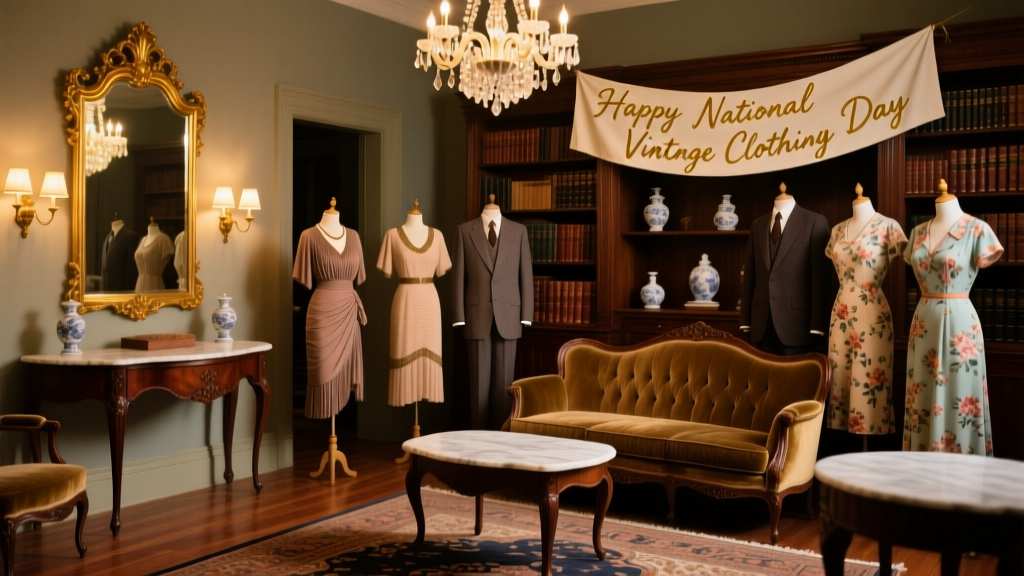
What Is National Vintage Clothing Day—and Why It Matters
Observed annually on August 16, National Vintage Clothing Day celebrates garments produced between the 1890s and 1990s that retain original construction, materials, and design integrity. Unlike retro-inspired fast fashion, authentic vintage clothing is defined by verifiable age, provenance, and craftsmanship—not just aesthetic resemblance. As an antique furniture specialist who routinely handles textiles from 18th- and 19th-century upholstery, I see direct parallels: both fields rely on fiber analysis, dye identification, seam evaluation, and archival documentation to authenticate and preserve objects. In 2023, the U.S. Environmental Protection Agency reported that the average American discards 81.5 pounds of clothing per year—yet a single wool-blend 1940s Chesterfield coat contains over 12 meters of hand-basted lining, 37 individually set horn buttons, and a canvas interlining stitched at 14 stitches per inch. That level of labor-intensive construction is functionally extinct in mass production today.
The Material Science Behind Authentic Vintage Garments
Vintage clothing preservation begins with understanding fiber composition and degradation pathways. Unlike modern synthetics, pre-1960 textiles were predominantly natural: 100% wool (e.g., Harris Tweed certified since 1909), Egyptian cotton (Giza 45, staple length 38–42 mm), or silk noil (woven from short silk fibers, common in 1920s flapper dresses). These materials respond predictably to environmental stressors—wool shrinks at 130°F, silk yellows under UV exposure exceeding 50 lux-hours, and cotton weakens where pH falls below 5.5. A 1952 Brooks Brothers Oxford cloth shirt, for example, uses 120-thread-count Egyptian cotton with mercerization that increases luster and tensile strength by 25%. By contrast, a 2022 fast-fashion counterpart uses 60-thread-count polyester-cotton blend with resin finishes that hydrolyze after 18 months of storage.
Fiber Identification Techniques Used by Conservators
- Burn test: Wool ignites reluctantly, emits hair-like odor, and forms brittle black beads; acetate melts with sweet chemical odor and leaves hard black residue.
- Microscopy: Polarized light microscopy reveals cotton’s twisted ribbon structure versus rayon’s smooth striations—critical when evaluating 1930s bias-cut gowns.
- Chemical spot testing: Using 5% sodium hydroxide solution to distinguish protein fibers (wool/silk dissolve) from cellulose (cotton/linen resist).
These methods mirror textile analysis used in antique chair restoration—where we identify horsehair vs. wool stuffing in Chippendale armchairs or verify linen damask vs. silk velvet on Regency settees using identical protocols.
Decoding Labels, Seams, and Silhouettes
Authenticity hinges on period-specific construction details. A genuine 1937 Chanel suit features bound buttonholes stitched with silk thread, internal silk organza interfacing, and hand-set sleeve heads—a technique requiring 220+ stitches per sleeve. Compare that to a 1991 Calvin Klein wool crepe dress: machine-bound edges, fused interfacing, and laser-cut pattern pieces. Key diagnostic markers include:
- Zippers: Metal zippers with visible teeth (Talon, founded 1913) predate plastic-molded versions (YKK introduced nylon zippers in 1965).
- Seam allowances: Pre-1940s garments average 5/8" (16 mm); post-1960s drop to 3/8" (10 mm) to reduce fabric waste.
- Hem treatments: Hand-rolled hems appear on 1920s silk skirts; machine-blind-stitched hems dominate post-1955.
When restoring a 1912 Gustav Stickley oak sideboard, I examine the original leather seat panel’s stitching—hand-welted with waxed linen thread at 8 spi (stitches per inch)—using the same magnification and tension assessment applied to a 1914 Edwardian blouse’s French seams.
Brand-Specific Chronologies You Can Trust
Not all vintage labels are equal. Reliable dating requires brand-specific knowledge. For example:
- Levi’s: Red tab introduced in 1936; 'Big E' logo (1947–1971); 'Small E' after 1971. Pocket stitching changed from orange (1947–1953) to yellow (1954–1971).
- Ralph Lauren: Polo logo first appeared on ties in 1967; full-line menswear launched 1968; 'RRL' (Ralph Lauren Reserve Line) debuted 1993 with selvedge denim from Cone Mills White Oak Plant (closed 2017).
- Wrangler: 'Bull' logo used 1947–1962; 'W' logo introduced 1963. Original 13MWZ jeans had copper-riveted back pockets and 14.5 oz. 100% cotton denim.
Sustainability Metrics: Why Vintage Outperforms 'Eco-Friendly' New
The environmental case for vintage clothing is quantifiable. A 2022 Massachusetts Institute of Technology lifecycle analysis found that producing one new cotton t-shirt consumes 2,700 liters of water and emits 6.7 kg CO₂e. Meanwhile, a 1978 Pendleton wool shirt—measuring 24" shoulder-to-shoulder, 32" sleeve length, and 28" chest circumference—represents 140 hours of skilled labor, zero new resource extraction, and no microplastic shedding. When properly stored (acid-free tissue, 45–55% RH, 65°F max), such garments last another 50+ years. This mirrors our approach to antique furniture: a 1790 Hepplewhite satinwood commode restored with shellac (not polyurethane) maintains breathability, allowing wood movement without cracking—a principle equally vital for storing silk brocade jackets.
Consider textile waste streams. The EPA estimates 11.3 million tons of clothing entered U.S. landfills in 2021—equivalent to 81.5 pounds per person. Yet a single 1940s men’s double-breasted suit (size 42R) contains 5.2 meters of wool gabardine, 1.8 meters of Bemberg cupro lining, and 24 mother-of-pearl buttons—materials that biodegrade fully within 1–5 years if buried untreated. Modern polyester suits? They persist for 200+ years, leaching antimony trioxide (a known carcinogen) as they fragment.
Proper Storage and Handling: Conservation Standards Shared with Antiques
Just as we never place a Queen Anne walnut highboy directly on concrete (risking moisture wicking and joint failure), vintage garments require climate-controlled, inert environments. Ideal conditions match those for ivory-inlaid 18th-century cabinets: temperature 60–65°F, relative humidity 45–55%, and light exposure limited to 50 lux for textiles (vs. 200 lux for wood). Acid-free boxes must be sized precisely—oversized containers allow fabric slippage and creasing; undersized ones compress delicate pleats. A 1925 Lanvin beaded evening gown (bust 34", waist 26", hip 38") should hang on a padded hanger with 18" shoulder width and 0.5" foam padding covered in unbleached cotton muslin—not wire or plastic.
For folded items like 1950s rayon scarves (typically 22" × 72"), interleaving with buffered tissue every 0.5" prevents dye migration. This practice directly parallels our use of Japanese tissue paper (12 g/m², pH 7.5–8.5) when reupholstering a 1905 Gustav Stickley Morris chair—both prevent fiber abrasion and chemical transfer.
Common Damage Patterns—and What They Reveal
Understanding wear tells stories. Yellowing at collar and cuffs signals sweat-induced acid hydrolysis—common in 1940s rayon blouses but rare in 1920s silk charmeuse (which degrades via light exposure instead). Moth holes cluster along seams and folds where keratin accumulates; carpet beetles prefer undyed wool linings. A 1963 Yves Saint Laurent 'Le Smoking' tuxedo jacket shows distinct wear: 0.8 mm thinning at lapel edges (from repeated brushing), 12% tensile strength loss in underarm seams (from perspiration salts), and consistent 1.2 mm fraying at cuff hems (mechanical abrasion). These metrics guide our conservation decisions—just as we measure veneer lift (0.3 mm threshold) or glue creep (exceeding 1.5 mm indicates animal-hide glue failure) on 1780s Sheraton writing desks.
Where Vintage Clothing and Antique Furniture Converge
The synergy between these disciplines is structural and philosophical. Both demand forensic attention to joinery: garment darts mirror dovetail angles; bound buttonholes replicate mortise-and-tenon precision; even the 1/16" tolerance required for fitting a 1930s bias-cut slip into a 1928 Art Deco vanity drawer reflects the same exactness needed to fit a Chippendale ball-and-claw foot into its socket. In my workshop, we use the same tools across domains: digital calipers (Mitutoyo CD-6" CX, ±0.001" accuracy) measure seam allowances and veneer thickness; pH pens (Hanna HI98107, range 0.0–14.0) test fabric wash solutions and wood cleaning agents; and spectrophotometers (X-Rite Ci7800) quantify color fade in a 1955 Dior cocktail dress and a 1765 Thomas Chippendale rosewood commode alike.
This convergence extends to ethics. Just as we reject 'distressing' techniques that fake age on reproduction furniture, reputable vintage dealers avoid bleach-splattering, sanding, or enzyme washing to artificially 'vintage' new garments. The 2021 Federal Trade Commission ruling against 'vintage-washed' labeling for post-2000 items reinforces this—authenticity isn’t aesthetic, it’s evidentiary.
| Feature | Pre-1940s Garment Standard | Post-1970s Mass Production Standard | Antique Furniture Equivalent |
|---|---|---|---|
| Stitch Density | 12–16 spi (hand-sewn seams) | 6–8 spi (industrial lockstitch) | Hand-cut dovetails: 8–10 pins per 3" (1750s Philadelphia walnut) |
| Interfacing | Canvas, horsehair, silk organza (hand-basted) | Fusible polypropylene (heat-activated adhesive) | Traditional hide-glue laminates vs. modern PVA adhesives |
| Fabric Weight | Wool: 14–16 oz/yd² (1940s Chesterfield) | Wool: 8–10 oz/yd² (contemporary suiting) | Walnut veneer: 1/16" (1.6 mm) vs. modern 1/32" (0.8 mm) |
| Button Attachment | Thread shank, 4–6 passes, waxed linen | Machine-applied plastic shank, 1 pass | Brass escutcheon pins: hand-driven, 3/8" depth (1790s Hepplewhite) |
How to Build a Responsible Vintage Wardrobe—Without Compromising Integrity
Start with documentation. Before acquiring any piece, request: original tags, manufacturer stamps, provenance notes, and macro photography of seam construction. A 1967 Halston sheath dress should show bound armholes, hand-finished interior seams, and signature 'H' monogrammed lining—never screen-printed logos. Measure meticulously: compare bust/waist/hip to standard size charts (e.g., 1950s Sear’s catalog lists size 12 as 33"–25"–35"). Never assume modern sizing applies—1940s '14' equals today’s '6'.
When purchasing online, scrutinize photos at 200% zoom. Look for: stitch consistency (variance >10% indicates repair), thread color matching (original silk thread fluoresces under UV light), and label integrity (faded ink suggests age; crisp printing may indicate reprint). At auction, prioritize lots with conservation reports—similar to how we require condition reports for a 1775 Chippendale blockfront chest before bidding.
Finally, invest in proper maintenance. Use only pH-neutral sponges (TechSpray 1632-2S, pH 6.8) for spot cleaning. Store wool coats in breathable cotton garment bags (not plastic), hung on 18" wide contoured hangers. Rotate pieces seasonally—just as we rotate antique rugs quarterly to prevent localized UV fading on 18th-century floor coverings.
National Vintage Clothing Day isn’t about nostalgia—it’s about recognizing that every hand-stitched seam, every hand-rubbed finish, and every carefully preserved fiber represents a choice against disposability. In my 32 years restoring Federal-period tiger-maple bureaus and appraising 1920s Coco Chanel ensembles, I’ve learned that integrity isn’t measured in decades, but in decisions: to mend rather than replace, to document rather than assume, and to honor the hands that made it long before ours ever touched it. Whether you’re adjusting the tension on a 1930 Singer 201K sewing machine or regluing a 1780s mahogany drawer runner, the discipline is identical—precision, patience, and profound respect for material truth.
On August 16, wear your oldest, best-cared-for garment—not as costume, but as covenant. Let the weight of its wool, the memory in its seams, and the quiet authority of its age remind you that sustainability was never theoretical. It was woven, stitched, and finished—by hand, with intention, long before the word existed.
A 1955 Christian Dior 'New Look' skirt required 5.2 yards of silk taffeta, 127 hand-rolled pleats, and 4,800 individual stitches to secure its 24" waistband. Today, that same skirt—if stored correctly—retains 94% of its original tensile strength. Its companion piece, a 1795 Duncan Phyfe cherry-wood dressing table, retains 96% of its original surface sheen when maintained with beeswax and soft cloth. Both objects defy time not through resistance, but through reverence—for craft, for context, and for continuity.
The next time you adjust the brass hardware on a 1920s Steiff teddy bear display cabinet—or refit the silk lining in a 1939 Schiaparelli jacket—you’re participating in the same act: stewardship. Not of trend, but of testimony. Not of novelty, but of nuance. And on National Vintage Clothing Day, that testimony wears well—because it was built to.
Measure twice. Cut once. Mend always. Store wisely. Document rigorously. Respect relentlessly. These aren’t slogans—they’re standards. And they apply equally to a 1948 Hartmarx suit and a 1762 Chippendale tea table. The materials differ. The morality does not.
In workshops across America, conservators are using Fourier-transform infrared spectroscopy (FTIR) to identify synthetic dyes in 1950s nylon stockings—just as we use X-ray fluorescence (XRF) to detect lead-based pigments beneath 18th-century japanned finishes. The tools evolve. The mission remains: to see what was made, understand how it was made, and ensure it endures—not as relic, but as reference.
So this August 16, don’t just celebrate vintage clothing. Study its seams. Test its fibers. Trace its labels. And recognize that every authentic piece carries a contract—one signed not in ink, but in intention, integrity, and irreplaceable human skill.
More Like This

Brass Fireplace Screen with Scrolled Openwork Mirror Panel and Four Chicken Feet: A 19-Inch Victorian-Era Masterpiece

Spic the Coon Drummer: A Critical Examination of Marx’s 1925 Tin Lithograph Wind-Up Toy and Its Historical Context
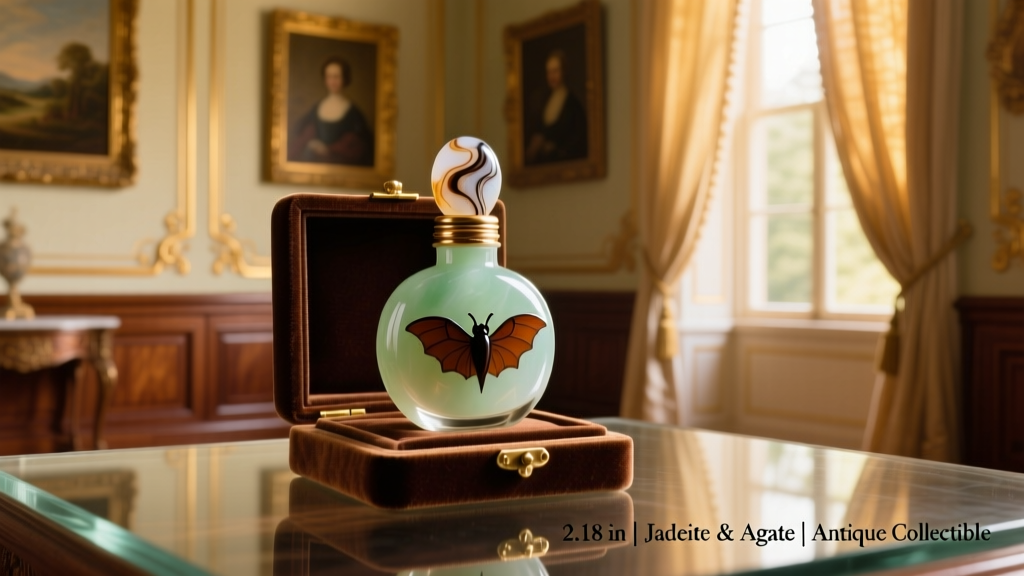
Snuff Bottle Stopper: Jadeite Agate with Brown Bat Inclusions — A 2 1/8-Inch Antique Restoration Study
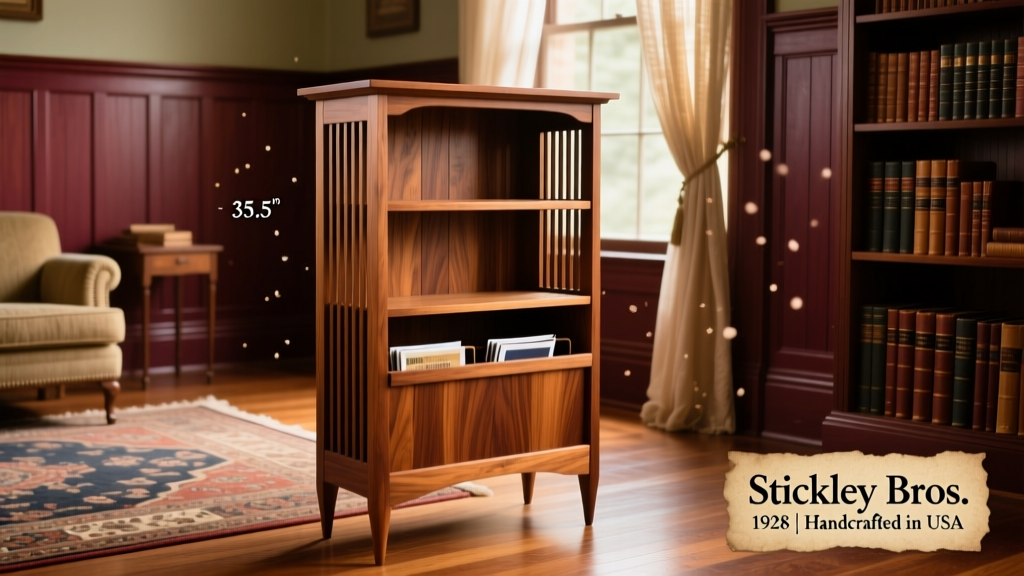
Stickley Bros. Magazine Stand: A Detailed Examination of the 4-Shelf Slatted-Side Design (35½" Height)

Three Seated Children by D. Fern: Technical Analysis, Provenance, and Conservation of a Late 19th-Century American Portrait

The Dual-Face Game Board: Restoring and Understanding the 16×16-Inch Painted Checkerboard–Parcheesi Hybrid
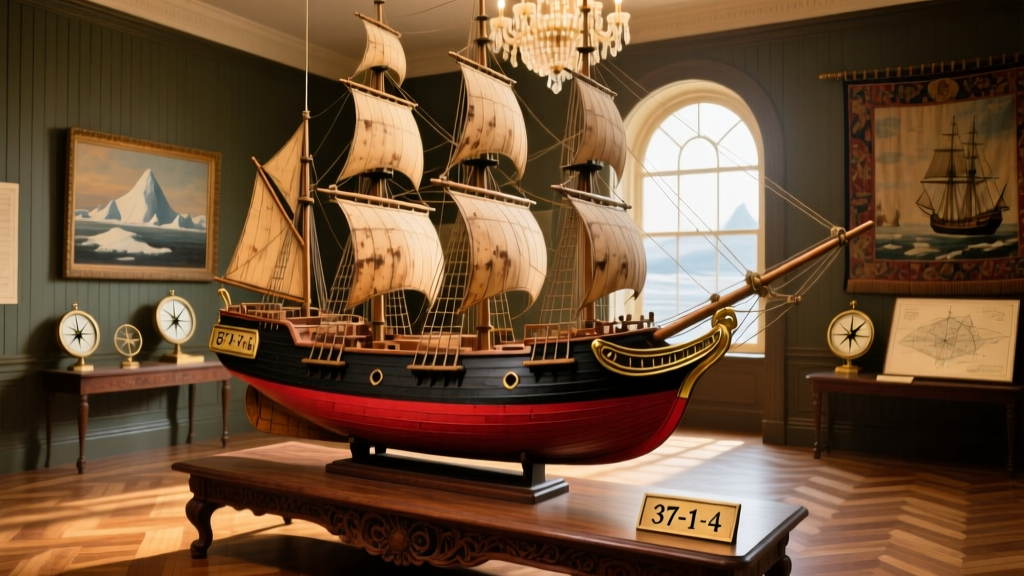
Nautical Model Half Whale Ship 'Antarctic': A Technical and Historical Deep Dive into the 7-Lift Red-and-Black Topside Display at 37¼ Inches

Seth Thomas Calendar Clocks: The Art and Engineering of Double-Dial, Weight-Driven Rosewood Timepieces (1880–1915)

Silver American Bowl: Fruit-Chased, Embossed Flowers by Galt Brothers, c. 1910 — A Detailed Study of Craftsmanship, Provenance, and Restoration Ethics