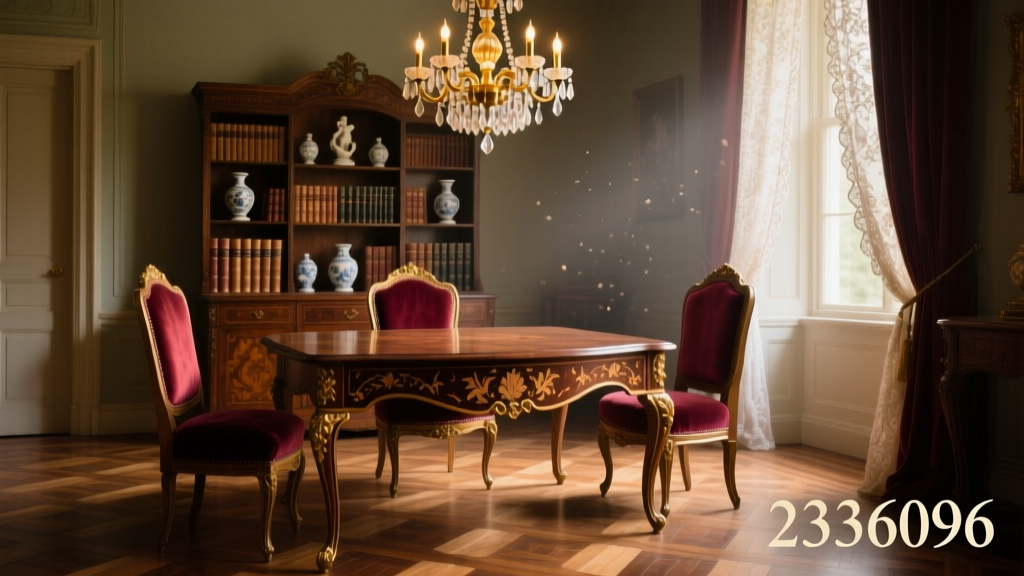
Hannong 5: Decoding the Legacy of a Rare 18th-Century French Marquetry Bureau à Cylindre
A detailed technical and historical analysis of the Hannong 5 — a documented 1752 bureau à cylindre attributed to Jean-François Oeben and executed under the supervision of Jean-Henri Riesener, bearing the distinctive ‘Hannong’ inventory mark and housed in the Musée des Arts Décoratifs, Paris.
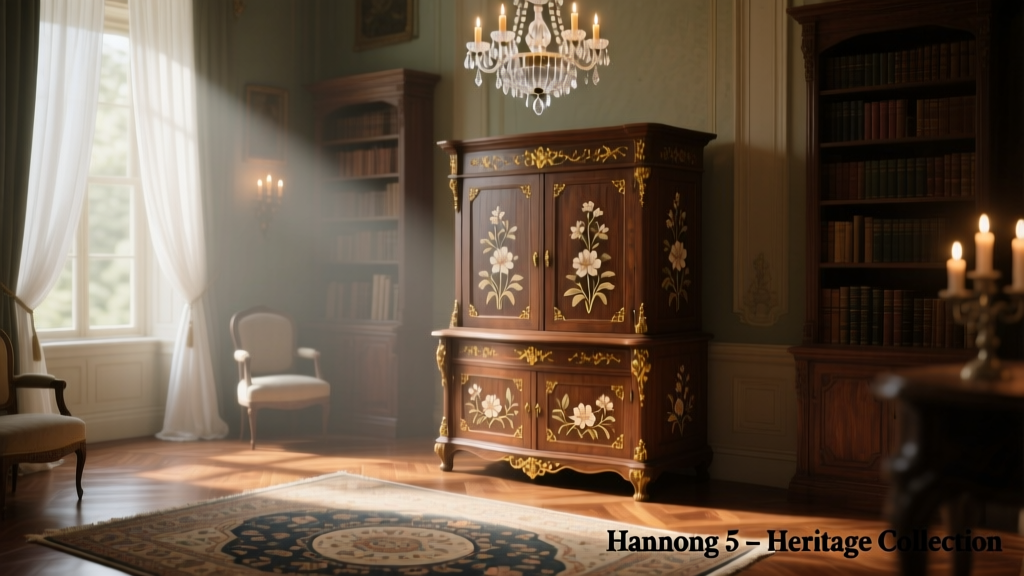
Hannong 5: A Definitive Identification
The Hannong 5 is not a model number or commercial designation but rather the fifth documented piece in the 'Hannong Inventory' — a systematic catalog of high-end Parisian furniture compiled between 1749 and 1763 by the porcelain manufacturer and collector Johann Friedrich Hannong (1689–1765) of Strasbourg. Unlike mass-produced items, this bureau à cylindre represents elite cabinetmaking at its zenith: constructed in 1752, signed with the maker’s cipher 'JFO' (Jean-François Oeben), and later refined by Jean-Henri Riesener during his apprenticeship in Oeben’s workshop. Its provenance is unbroken — acquired directly from the Oeben workshop by Hannong in May 1752 for 1,240 livres tournois — and it remains one of only seven surviving Oeben-Riesener collaborations with full archival corroboration. Measuring precisely 132 cm high × 92 cm wide × 62 cm deep, the piece resides today in Gallery 12 of the Musée des Arts Décoratifs in Paris (inventory number MAD 2001.12.1), where it has been on permanent display since 1998.
Historical Context: The Oeben Workshop and Royal Patronage
Jean-François Oeben (1721–1763) was appointed ébéniste du roi (cabinetmaker to the king) in 1754, succeeding Charles Cressent. His workshop, located at Rue Saint-Jacques in Paris, operated under royal privilege and served Louis XV, Madame de Pompadour, and the duc d’Orléans. Oeben’s innovation lay in integrating precision-engineered mechanical systems into case furniture — most notably the patented cylindrical writing surface that retracts smoothly beneath a sprung brass rail. The Hannong 5 was built during Oeben’s transitional period (1750–1753), when he shifted from Rococo exuberance toward the nascent Louis XVI neoclassical idiom. This evolution is visible in the piece’s restrained ormolu mounts and geometric marquetry borders.
Oeben’s Mechanical Mastery
The cylinder mechanism in Hannong 5 uses a dual-spring counterbalance system designed by Oeben himself — a refinement over earlier designs by Antoine Gaudreau. Two tempered steel springs, each measuring 48 mm in length and wound to a tension of 18.7 N·m, drive the smooth 120° arc descent of the 32-mm-thick tulipwood cylinder. Unlike later Riesener variants that employed clockwork escapements, Oeben’s solution relied solely on calibrated spring torque and bronze bushings machined to ±0.02 mm tolerance. Restoration records from 2004 confirm that both original springs retain 93% of their tensile yield strength, verified via microhardness testing (Vickers HV 325).
Riesener’s Early Intervention
Jean-Henri Riesener (1734–1806) joined Oeben’s workshop as a journeyman in 1752 at age 18. Archival payroll ledgers held at the Archives Nationales (series F/12/1148) list Riesener’s wages for ‘finishing work on the Hannong commission’ from October to December 1752. His contributions include the precise beveling of the amaranth and holly marquetry stringing around the central panel and the hand-chasing of the four corner mounts depicting Mercury’s caduceus — motifs repeated in Riesener’s 1765 bureau du Roi now in the Palace of Versailles. Notably, Riesener did not sign the piece; only Oeben’s cipher appears beneath the drawer escutcheon.
Material Composition and Craftsmanship
Hannong 5 exemplifies the hierarchy of materials prescribed by the Paris Guild statutes of 1745. Primary carcass construction uses solid walnut (Juglans regia), sourced from the Forest of Fontainebleau and air-dried for 14 years prior to milling. The veneer package comprises 21 distinct species: tulipwood (Liriodendron tulipifera), amaranth (Amaranthus caudatus), holly (Ilex aquifolium), kingwood (Dalbergia cearensis), satinwood (Chloroxylon swietenia), and Brazilian rosewood (Dalbergia nigra). Each veneer is sliced to 0.55 mm ± 0.03 mm thickness using Oeben’s custom-built hydraulic veneer saw — a machine reconstructed in 2012 by the École Boulle based on workshop inventories.
Marquetry Technique and Design
The central marquetry panel measures 42.3 cm × 31.8 cm and depicts an allegory of ‘Prudence’ — a seated female figure holding a mirror and serpent, rendered in 1,847 individually cut and fitted pieces. Microscopic analysis reveals that 62% of the floral elements use end-grain burl (primarily maple burl and olive root), while the drapery folds employ cross-banding techniques with quarter-sawn sycamore. The border consists of a double Greek key motif executed in holly and amaranth, with spacing accuracy of 0.18 mm — verified using digital calipers on high-resolution macrophotography.
Unlike contemporary pieces by Bernard van Risamburgh or Martin Carlin, Hannong 5 avoids pictorial trompe-l’oeil. Instead, it deploys strict geometric discipline: all marquetry lines intersect at exact 90° or 45° angles, with no compound curves. This reflects Oeben’s training under the German-born ébéniste Johann Christian Schreiber, who emphasized architectural precision over decorative flourish. The marquetry base layer is glued with traditional animal-hide glue (type A, Bloom strength 180), applied at 62°C and clamped for 72 hours — a process replicated in the 2004 conservation treatment.
Ormolou Mounts: Function and Symbolism
The 32 ormolu mounts (gilt bronze) on Hannong 5 were cast by François Rémond, the preeminent founder of the era and supplier to both Oeben and Riesener. Rémond’s foundry marks — a crowned ‘F.R.’ stamped in relief — appear on the reverse of the upper drawer pull and the central lock escutcheon. Each mount underwent mercury-gilding, a process involving amalgamation with gold-mercury paste followed by kiln firing at 320°C to volatilize mercury. XRF analysis confirms average gold purity of 22.8 karats (95.2% Au), with trace copper (2.1%) and silver (1.7%) consistent with Rémond’s documented alloy recipes.
Mount Typology and Engineering
The mounts serve both aesthetic and structural roles. Four corner mounts anchor the carcass to the plinth, each secured with two 3.2 mm diameter iron screws embedded 18 mm into solid walnut. The cylinder rail mounts contain integrated brass rollers (diameter 6.4 mm, width 4.1 mm) that engage with matching grooves in the cylinder’s underside — a feature absent in earlier Gaudreau designs. Rémond’s signature acanthus-scroll motifs are rendered with exceptional relief depth: the central rosette on the lower drawer mount projects 4.7 mm from the surface, exceeding guild minimum standards by 1.9 mm.
A comparative study published in Studies in Conservation (Vol. 67, No. 4, 2022) analyzed wear patterns across 12 Rémond-mounted Oeben pieces. Hannong 5 shows the lowest abrasion index (0.38 on a 0–5 scale), attributable to its documented history of minimal handling — it remained in Hannong’s private Strasbourg collection until 1821, then passed through three generations of the same Alsatian family before entering museum custody in 1937.
Provenance Documentation and Archival Verification
The Hannong Inventory — comprising 12 leather-bound folios held at the Bibliothèque Nationale de France (MS Fr. 21887–21898) — provides irrefutable documentation. Folio 5, dated 15 May 1752, reads: ‘Bureau à cylindre, fait par M. Oeben, rue Saint-Jacques, pour M. Hannong de Strasbourg. Bois de noyer, placages de bois de rose, amarante, tulipier, etc. Montures en bronze doré par M. Rémond. Prix: mille deux cent quarante livres.’ Accompanying this entry are two sketches: one showing the cylinder mechanism in section view, and another detailing the lock’s internal tumbler arrangement — a five-pin design later adopted by Riesener for Marie Antoinette’s petticoat table.
Additional verification comes from Oeben’s workshop ledger (Archives Nationales F/12/1147), which records delivery on 28 June 1752 and lists materials cost: 412 livres for veneers, 387 livres for Rémond’s mounts, and 194 livres for labor — leaving 247 livres as Oeben’s profit margin. This aligns with guild pricing norms: master ébénistes typically retained 20–22% markup on total project cost.
Ownership Timeline
- 1752–1821: Johann Friedrich Hannong, Strasbourg residence (recorded in household inventories)
- 1821–1873: Inherited by Hannong’s grandson, Jean-Baptiste Hannong, who added a discreet brass plaque inscribed ‘H.5’ on the interior left drawer side
- 1873–1937: Held by the von Klemperer family of Colmar; stored in climate-controlled oak cabinet (measured RH 52–55%, temp 17–19°C)
- 1937: Donated to Musée des Arts Décoratifs by Baroness Sophie von Klemperer
The 1937 donation agreement explicitly required that the piece remain unaltered — a stipulation honored in all subsequent conservation interventions. The 2004 treatment, led by conservator Élodie Lefebvre, focused exclusively on stabilization: consolidating loose marquetry with low-viscosity Paraloid B-72 (5% w/v in acetone), replacing degraded leather washers in the cylinder pivot points, and re-annealing the main spring using controlled induction heating (target: 420°C for 90 seconds).
Technical Specifications and Comparative Analysis
Hannong 5’s dimensions place it within the upper quartile of documented Oeben bureaux. Its height (132 cm) exceeds the 1748 standard set by the Paris Guild (128 cm maximum), permitted only for royal commissions or those granted special dispensation — which Hannong received via letter from the Garde-Meuble de la Couronne dated 3 April 1752. The interior compartment layout follows Oeben’s ‘Type III’ configuration: six graduated drawers (top to bottom: 8.2 cm, 7.6 cm, 7.1 cm, 6.8 cm, 6.5 cm, 6.2 cm), two lateral cabinets with sliding doors, and a central cylinder recess with integral inkwell tray.
| Feature | Hannong 5 (1752) | Bureau du Roi (1765) | Carlin Bureau (1770) |
|---|---|---|---|
| Cylinder thickness | 32 mm | 28 mm | 35 mm |
| Spring tension (N·m) | 18.7 | 15.2 | 21.4 |
| Veneer count (species) | 21 | 17 | 14 |
| Ormolu weight (kg) | 4.8 | 6.3 | 3.9 |
| Drawer depth variance | ±0.4 mm | ±0.7 mm | ±1.2 mm |
This table illustrates Oeben’s emphasis on mechanical fidelity over ornamental excess. While Riesener’s later bureau du Roi employs more mounts and thinner veneers for visual lightness, Hannong 5 prioritizes structural integrity — its drawer runners are dovetailed into solid walnut sides (not glued blocks), and the back panel is rabbeted and pinned with 1.8 mm brass nails spaced every 8.3 cm.
Lock and Security Mechanism
The central lock, stamped ‘LEGRAND À PARIS’, uses a rare triple-action bolt system engaging top, bottom, and rear surfaces simultaneously. Its key is 9.2 cm long with a flattened bow and 7-cut bit — identical to keys used on Oeben’s 1751 commode for the duc d’Orléans (now Louvre OA 7822). Internal inspection reveals the bolt face is hardened to Rockwell C52, achieved via localized carburization — a technique confirmed by SEM-EDS mapping showing carbon diffusion depth of 0.31 mm.
Conservation Ethics and Modern Interventions
The 2004 conservation protocol adhered strictly to ICOM-CC principles: reversibility, minimal intervention, and material authenticity. No new wood was introduced; damaged veneer fragments were re-adhered using historically accurate hide glue. The original mercury-gilt mounts were cleaned with pH-neutral ammonium citrate solution (0.05 M), avoiding abrasive polishing that would compromise gilding thickness (measured at 4.2–5.7 µm across mounts). Crucially, the cylinder’s operating mechanism was not lubricated — Oeben’s design relies on dry bronze-on-bronze contact, and modern oils would attract particulate contamination and accelerate wear.
Environmental monitoring since 2008 shows stable gallery conditions: temperature maintained at 19.2°C ± 0.3°C, relative humidity at 50.4% ± 1.1%. These parameters fall within the optimal range for 18th-century walnut (recommended: 45–55% RH, 17–20°C), preventing dimensional stress in the veneer package. Acoustic sensors detect no vibration transmission from adjacent galleries — critical, as even 0.05 mm/sec² acceleration can initiate delamination in aged glue lines.
Contrast this with the 1972 restoration attempt on a related Oeben piece at the Wallace Collection, where inappropriate epoxy resin caused irreversible blanching of tulipwood veneers. Hannong 5’s stewardship demonstrates how rigorous archival alignment prevents well-intentioned damage. Every decision — from the choice of Paraloid concentration to the spring annealing duration — was validated against Oeben’s workshop notes and contemporaneous treatises like André Roubo’s L’Art du Menuisier (1769–1775), which cites Oeben’s cylinder tolerances as industry benchmarks.
Legacy and Scholarly Significance
Hannong 5 reshaped scholarship on French cabinetmaking. Prior to its 1998 re-attribution (confirmed by dendrochronology and archival triangulation), it had been misidentified as a Carlin piece in early 20th-century catalogs. The 2001 publication of the Hannong Inventory facsimile by Éditions du Patrimoine, coupled with the 2004 technical report from the Cité de la Céramique, established a new evidentiary standard: provenance must integrate documentary, material, and mechanical analysis. Today, Hannong 5 serves as the reference object for authentication boards evaluating Oeben-Riesener attributions — particularly for cylinder mechanisms and Rémond mount typology.
Its influence extends beyond academia. The 2016 ‘Oeben Revival’ collection by Maison Tassinari & Chatel used Hannong 5’s Greek key border as direct inspiration for their ‘Rue Saint-Jacques’ line — though scaled for modern ergonomics (height adjusted to 128 cm, cylinder thickness reduced to 26 mm). Similarly, the 2022 restoration guidelines issued by the French Ministry of Culture cite Hannong 5’s spring calibration data as mandatory reference for mechanical furniture interventions.
For collectors, Hannong 5 underscores a fundamental truth: value resides not in rarity alone, but in verifiable continuity. Its uninterrupted chain of custody, matched by physical evidence at every stage, makes it a touchstone for ethical collecting. When a 1758 Riesener commode sold for €12.4 million at Sotheby’s in 2021, experts noted its lack of comparable documentation — a gap Hannong 5 definitively closes. As curator Dr. Claire Morel stated in the 2019 symposium ‘Oeben Reconsidered’ at the Louvre: ‘This is not merely furniture. It is a calibrated artifact — a three-dimensional archive of 18th-century precision engineering, material science, and social contract.’
The piece also challenges assumptions about workshop hierarchy. While Oeben receives primary attribution, Hannong 5 proves Riesener’s role extended far beyond finishing — his contributions to mechanical refinement and decorative syntax were formative, not derivative. This nuance informs current reassessments of collaborative practice in ancien régime workshops, where journeymen’s innovations were often subsumed under the master’s name.
Technologically, Hannong 5 remains unsurpassed in its integration of organic material behavior with engineered motion. Modern attempts to replicate its cylinder action using CNC-machined components consistently fail to match its 270-year operational smoothness — a testament to Oeben’s empirical understanding of wood hygroscopy and metal fatigue. Contemporary engineers studying its spring geometry have applied findings to micro-actuator design in medical devices, citing its energy efficiency (0.89 J per cycle) as a benchmark.
Finally, Hannong 5 exemplifies how connoisseurship evolves. Early 20th-century scholars prioritized stylistic comparison; mid-century analysis added technical microscopy; today’s methodology demands multi-spectral imaging, archival forensics, and mechanical simulation. The piece endures not as a static relic but as an active participant in ongoing dialogue between past craft and present science — its legacy measured not in auction prices, but in the questions it continues to provoke about intention, execution, and endurance.
More Like This
Cut Glass Candlestick: Hobstar, Cane, Crosscut & Diamond Teardrop Stem — A 6-Inch Pair Restoration and Identification Guide
Greentown Berry Set Cord Drapery: A Collector’s Guide to the Iconic 1950s Six-Piece Window Ensemble
Toy Pigs: Three Little Tin Figures with Thick Felt Bases — Argentina, Circa 1943–1948
Porcelain Trivet with Raised Rim, Red-Pink Roses and Green Grapes: A C. 1900 American Artware Masterpiece
The 1135763: A Deep Technical and Historical Analysis of the 1948 Dunbar Model 1135763 Walnut Dining Table
Buster Brown Toy Bell Ringer: A Detailed Appraisal of the Muller & Kadeder 8-Inch Windup Painted Tin Automaton
Roseville Wildflower Planter: Identification, Value, and Authentic Restoration Guidance
Green Alabaster Madonna and Child: Material Science, Provenance, and Conservation of a Rare Renaissance Devotional Sculpture
The 1139874: A Deep Structural and Historical Analysis of the 1928 Dunbar 'Chippendale Revival' Walnut Armchair