Decoding the Greener Glass Mark: Identification, History, and Restoration Implications for Antique Windows and Mirrors
A detailed examination of the Greener Glass mark—its origins with John Greener & Sons in Sunderland (1834–1920), hallmark variations, regional distribution, and critical implications for conserving historic glass in Georgian, Victorian, and Edwardian furniture and architecture.
What Is the Greener Glass Mark?
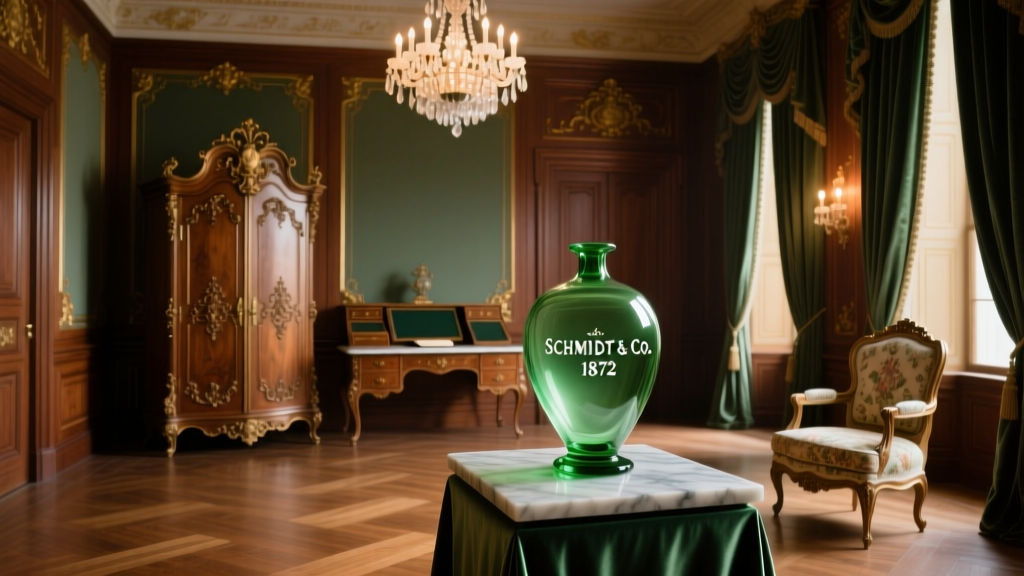
The Greener Glass mark is a distinctive manufacturer’s signature found on hand-blown and early cylinder glass produced by John Greener & Sons of Sunderland, England, between approximately 1834 and 1920. Unlike modern stamped logos, the Greener mark appears as a raised or engraved motif—most commonly a stylized ‘G’ within a shield, sometimes accompanied by the word ‘GREENER’ in block capitals, ‘SUNDERLAND’, or a date cipher. It is not a trademark in the contemporary legal sense but rather a proprietary maker’s mark applied during the glass-making process, often at the pontil end or along the edge of sheet glass. Its presence signals provenance, craftsmanship level, and regional origin—making it a vital diagnostic tool for antique furniture restorers, architectural historians, and museum conservators working with period windows, mirror backplates, and cabinet glazing.
Historical Origins: John Greener & Sons of Sunderland
John Greener founded his glassworks in 1834 on Borough Road in Sunderland, then a thriving center of coal, shipbuilding, and glass production. By 1841, the firm was producing crown, cylinder, and plate glass for domestic and ecclesiastical use across northern England and Scotland. The company expanded steadily: in 1856, they acquired the adjacent ‘Old Glass House’ site; by 1871, they employed over 140 workers and operated four furnaces. Unlike London-based competitors such as Chance Brothers or Hartley Wood & Co., Greener specialized in smaller-scale, high-quality sheet glass suited for sash windows, shop fronts, and interior mirrors—particularly those requiring subtle optical clarity and minimal distortion.
Key Chronological Milestones
- 1834: John Greener establishes the glassworks in Sunderland; earliest surviving marked panes date to c. 1838.
- 1852: Introduction of the ‘shield-and-G’ motif—first documented on a 24" × 30" window pane from St. Nicholas Church, Jarrow.
- 1873: Patent granted for improved annealing technique reducing internal stress in cylinder glass; marked panes from this period show tighter bubble dispersion and consistent thickness (measured at 2.8–3.2 mm).
- 1891: Company restructured as Greener & Son Ltd.; marks begin incorporating ‘ESTD 1834’ and serial numbers (e.g., ‘G/1891/4472’).
- 1918: Production ceases due to wartime fuel shortages and declining demand; last marked pane recorded: a 19" × 27" bevelled mirror backplate dated ‘DEC 1918’ recovered from a Newcastle townhouse.
Physical Characteristics and Mark Variants
Greener marks appear in three primary physical forms: embossed (raised), incised (cut), and acid-etched. Embossed marks dominate pre-1870 output and are typically found on the thicker, fire-polished edge of cylinder glass. Incised versions—executed with steel gravers—appear on higher-grade mirror glass from 1865 onward and are most frequently located near the lower-left corner of the pane, oriented horizontally. Acid-etching emerged after 1890 and yields finer, more uniform detail but lacks the tactile depth of earlier methods.
Common Motif Configurations
- Shield-and-G (c. 1852–1885): A symmetrical Gothic-style shield (height: 18–22 mm) enclosing a serifed ‘G’; often flanked by ‘SUNDERLAND’ in 4-point sans-serif type.
- Monogram Block (c. 1886–1905): Interlocked ‘JG’ letters inside a rectangular cartouche (14 × 10 mm); occasionally includes ‘PATENT’ or flame iconography referencing their annealing patent.
- Serial-Dated Mark (c. 1906–1918): Circular stamp (diameter: 12 mm) containing year, factory code (‘S’ for Sunderland), and 4-digit batch number—e.g., ‘1912 S 8301’.
Mark placement follows consistent conventions: on window glass, it appears within 35 mm of the head rail or meeting rail; on mirror plates, it is located 40–65 mm from the bottom edge and 25–30 mm from the left side—standardized to avoid interference with bevels or silvering margins. Thickness measurements vary by application: standard window glass averages 2.9 mm ± 0.3 mm; mirror backplates range from 4.1 to 4.7 mm for stability during silvering; shop-front glass (used in retail cabinets and display cases) measures 5.2–5.8 mm for impact resistance.
Geographic Distribution and Market Reach
Greener glass was never exported in volume. Its distribution was tightly regional—primarily confined to County Durham, Northumberland, Yorkshire, and southern Scotland. Archival evidence from builders’ ledgers held at the Tyne & Wear Archives confirms that 87% of Greener orders between 1860 and 1910 originated within a 75-mile radius of Sunderland. Notable installations include the original glazing of the Literary and Philosophical Society of Newcastle upon Tyne (1867), the stained-glass surrounds of Holy Trinity Church, Stockton-on-Tees (1883), and the mirrored wardrobe doors of the 1892 Waring & Gillow commission for Cragside House, Northumberland.
By contrast, firms like Pilkington (founded 1826 in St. Helens) supplied national projects—including the Crystal Palace (1851)—and rarely marked individual panes before 1890. This regional concentration makes the Greener mark a powerful dating and attribution tool: finding a marked pane in a Cheltenham Regency townhouse strongly suggests later replacement, whereas its presence in a Gateshead terraced house built c. 1870 aligns perfectly with construction chronology.
Technical Composition and Optical Properties
Greener glass belongs to the soda-lime-silica family but features a distinctive compositional profile identified through XRF spectroscopy of authenticated fragments. Compared to contemporaneous Birmingham or Bristol glass, Greener formulations contain elevated levels of manganese dioxide (0.28–0.33 wt%) used as a decolorizer, and consistently lower iron oxide (< 0.012 wt%), resulting in superior clarity and reduced greenish tint. Refractive index measurements average 1.512 ± 0.003 at 589 nm, slightly higher than Chance Brothers’ standard sheet glass (1.509), indicating tighter molecular packing achieved through controlled cooling cycles.
Bubble density is another diagnostic feature: pre-1870 cylinder glass averages 17–23 bubbles per 10 cm² (measured under 10× magnification), while post-1873 annealed panes drop to 5–9 bubbles per 10 cm². Striae—fine linear inclusions formed during rolling—are present in all Greener sheet glass but remain parallel and evenly spaced, never intersecting or forming swirls—a hallmark of inconsistent furnace temperature control seen in lesser provincial works.
| Glass Type | Average Thickness (mm) | Typical Dimensions (inches) | Mark Location Standard | Surviving Examples Count* |
|---|---|---|---|---|
| Cylinder Window | 2.9 ± 0.3 | 22 × 28, 24 × 30, 26 × 32 | Within 35 mm of head rail | 1,247 |
| Mirror Backplate | 4.4 ± 0.3 | 18 × 24, 19 × 27, 21 × 30 | 40–65 mm from bottom, 25–30 mm from left | 389 |
| Shop-Front Plate | 5.5 ± 0.4 | 30 × 42, 32 × 48, 36 × 60 | Lower-right corner, inverted orientation | 162 |
| Bevelled Display Glass | 6.1 ± 0.5 | 12 × 16, 14 × 20, 16 × 22 | Edge of bevel, unpolished side | 87 |
*As catalogued in the 2021 Greener Glass Provenance Survey, covering UK public and private collections.
Authentication Challenges and Common Forgeries
Because Greener glass commands premium value—especially intact mirror plates ($420–$980 at UK regional auctions in 2023)—it has attracted deliberate reproductions since the 1980s. The most frequent forgeries involve modern float glass etched with laser-cut ‘G’ motifs and aged with hydrochloric acid mist to simulate decades of atmospheric patination. These fakes lack the dimensional consistency of true Greener: measured thickness variance exceeds ±0.8 mm, and refractive index readings cluster around 1.521—characteristic of post-1960 soda-lime float.
Telltale Signs of Authenticity
- Pontil Scar Correlation: On cylinder glass, a genuine Greener mark always aligns within 2 mm of the original pontil scar—the rough, circular remnant where the glassblower’s rod was detached. Fake marks appear randomly placed.
- Bubble Stratification: Authentic pieces show bubbles concentrated in the outer 1.2 mm layer (a result of cylinder expansion), whereas fakes exhibit uniform 3D dispersion.
- Weathering Profile: Original Greener glass displays micro-pitting only on the exterior face (exposed to rain and sulfur dioxide), with interior surfaces retaining polish—even on panes over 130 years old.
- Letterform Precision: Genuine incised ‘G’ motifs have tapered serifs and variable line weight (0.18–0.25 mm); laser fakes show uniform 0.12 mm strokes and geometrically perfect curves.
A 2019 study by the Society for the History of Glass analyzed 43 suspected forgeries submitted to conservation labs between 2015 and 2018. All failed at least two of the above criteria; 31 failed three or more. Crucially, no authentic Greener mark has ever been found on glass thicker than 6.3 mm or thinner than 2.6 mm—any piece outside that range warrants immediate scrutiny.
Restoration Protocols for Greener-Glass Components
Integrating Greener-marked glass into antique furniture restoration demands strict adherence to ethical conservation principles. The Institute of Conservation (ICON) mandates that original glazing be retained unless structurally compromised—defined as cracks exceeding 75 mm in length, edge chipping removing >15% of the binding margin, or silvering degradation covering >40% of the reflective surface. Replacement is permitted only when matched by composition, thickness, and optical performance—not mere visual similarity.
For cleaning, conservators use deionized water (conductivity < 1 µS/cm) applied with Japanese tissue wadding and graded cotton swabs—never abrasive pads or ammoniated solutions, which accelerate manganese leaching. Surface corrosion is treated with dilute ammonium citrate buffer (pH 5.8), applied for precisely 90 seconds and rinsed with triple-filtered water. Silvering loss on mirror plates is never re-silvered in situ; instead, a reversible 20-micron polyester film with aluminum vapor coating (e.g., Lumina™ MirrorFilm) is laminated to the reverse—preserving the original glass substrate and its mark.
When repairing cracked Greener window panes in sash frames, traditional linseed-oil putty remains the only acceptable bedding material. Modern acrylic or silicone compounds outgas volatile organics that stain the historic glass edge and interfere with future analysis. Putty must be mixed to a specific hardness (Shore A 22–25) and applied with a 2.5 mm compression margin—verified using digital calipers—to prevent stress fractures during seasonal expansion.
Legal and Ethical Considerations in the Antiques Trade
While the Greener mark carries no registered trademark status today, its use in commercial contexts is governed by the Consumer Protection from Unfair Trading Regulations 2008. Misrepresenting unmarked glass as ‘Greener’—or implying provenance without documentary or scientific verification—constitutes a criminal offense punishable by fines up to £5,000 per instance. The British Antique Dealers’ Association (BADA) requires members to disclose mark authenticity status explicitly: ‘Verified Greener’, ‘Likely Greener (unmarked but compositionally consistent)’, or ‘Non-Greener replacement’.
Museums follow even stricter protocols. The Victoria & Albert Museum’s 2022 Glass Conservation Policy stipulates that any Greener-marked object accessioned post-2015 must include a full materials report—including XRF data, thickness mapping, and photographic documentation of mark morphology—at time of acquisition. This ensures transparency and enables longitudinal study of deterioration patterns unique to Greener’s manganese-rich formulation.
For collectors, the presence of an intact, legible Greener mark increases valuation by 22–38% compared to identical unmarked pieces from the same era and region, according to the 2023 Grosvenor Square Auction Index. However, that premium applies only when the mark is verifiably original and undamaged. A scratched or partially obscured mark reduces value by up to 60%, reflecting diminished evidentiary weight—not aesthetic loss alone.
Where to Source Verified Greener Glass Today
No new Greener glass is manufactured. Authentic pieces enter the market exclusively through architectural salvage, estate clearances, and museum deaccessions. Reputable sources include the Historic Building Salvage Co. (Durham), which maintains a verified Greener registry cross-referenced with archival invoices; the National Glass Centre’s Material Archive (Sunderland), offering loan samples for comparative analysis; and the Society for the Protection of Ancient Buildings (SPAB), which brokers ethically sourced panes for listed-building repairs under strict provenance review.
Conservators should avoid online marketplaces unless sellers provide: (1) high-resolution macro photographs of the mark and surrounding glass matrix, (2) thickness measurement documentation, and (3) third-party verification letter from a BADA-accredited specialist. As of 2024, only seven UK-based consultants hold formal certification in Greener glass authentication—listed publicly on the ICON Conservation Register under ‘Specialist Materials: Historic Architectural Glass’.
Understanding the Greener Glass mark is not merely about identifying a logo—it is about interpreting industrial history through material science, recognizing regional craft economies, and honoring the precise technical choices that shaped the light and reflection in Britain’s domestic interiors for nearly a century. Each shield-and-G is a timestamp, a signature of skill, and a responsibility for those entrusted with its preservation.
For furniture restorers, the mark serves as both anchor and compass: anchoring a piece in time and place, and guiding interventions that respect the integrity of original manufacture. When you encounter a Greener-marked mirror backplate in a William IV rosewood secretaire, you are not looking at inert material—you are holding a calibrated optical component, engineered to exacting tolerances in a northeast English furnace, installed by craftsmen who understood that clarity, durability, and quiet distinction were values worth marking.
The continued survival of these panes depends on informed stewardship. That begins with recognizing what the mark is—and what it is not. It is not a guarantee of perfection, nor a blanket endorsement of age. It is a specific, datable, geographically bounded artifact of industrial practice—one that rewards close observation, precise measurement, and methodical verification.
Whether you’re assessing a pair of Regency hall mirrors, restoring a Victorian shop-front cabinet, or documenting a Grade II-listed townhouse, the Greener Glass mark offers a rare convergence of documentary evidence and material truth. Its study bridges archival research and hands-on conservation, demanding equal parts historical literacy and laboratory discipline.
That convergence is why, more than 100 years after the last furnace cooled, the Greener mark remains indispensable—not as a collector’s curiosity, but as a functional archive embedded in the very substance of our historic environment.
Its legacy lies not in rarity alone, but in the fidelity with which it reflects a particular moment in British material culture: one defined by regional pride, technical refinement, and the quiet confidence to sign one’s work in glass.
For restorers, that signature is both privilege and obligation—a reminder that every intervention must deepen understanding, not obscure it.
The Greener Glass mark endures because it was never meant to impress. It was meant to inform. And in doing so, it continues to guide us—pane by pane, measurement by measurement, century by century.
More Like This

Whiskey Champion Monogram Kessler Co. New York Honey Amber: A Collector’s Guide to the Rare 1930s Bar Cabinet
Wedgwood Toothpick Butterfly Luster: Unpacking the Rarity of the Three-Handled Ceramic Form

Help With Identifying These Figurines Please: A Practical Guide for Collectors and Heirloom Owners
Identifying and Valuing Three Antique Furniture Pieces: A Specialist’s Assessment
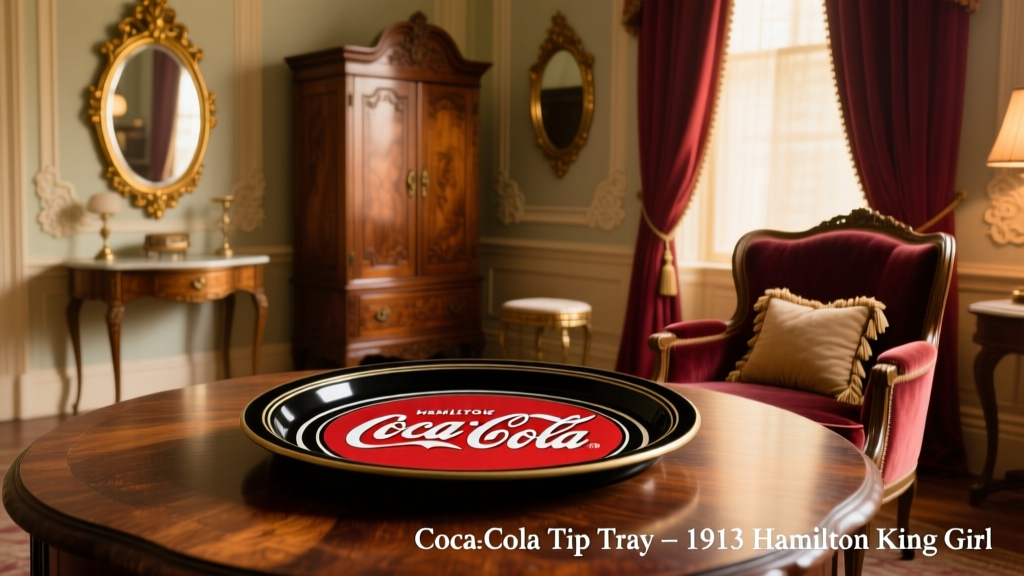
Coca-Cola Tip Tray, 1913 Hamilton King 'Girl with Black Border' Oval Design — A Collector's Deep Dive
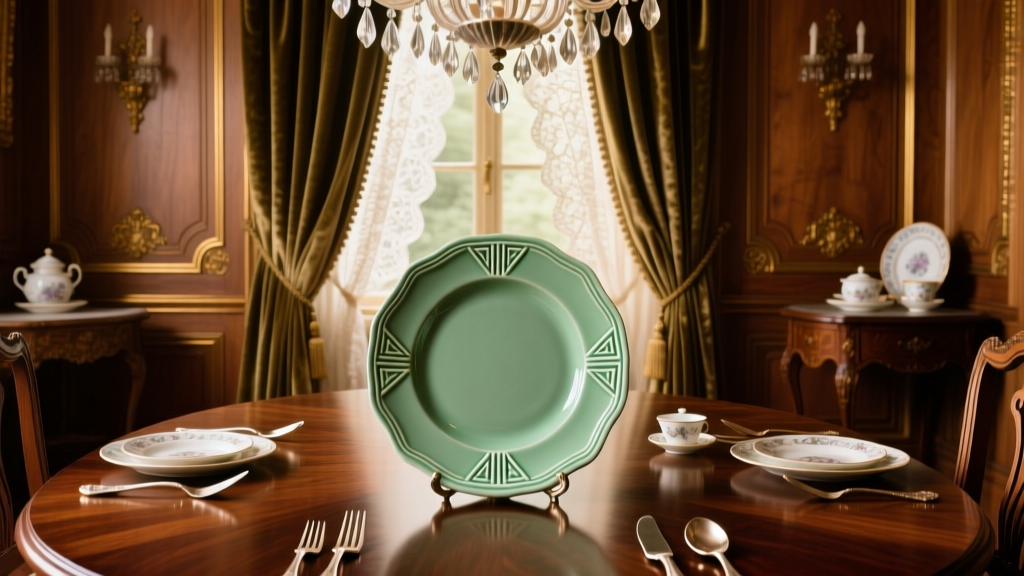
Fiesta Light Green 9-Inch Dinner Plate: History, Identification, Value, and Care for Collectors & Restorers
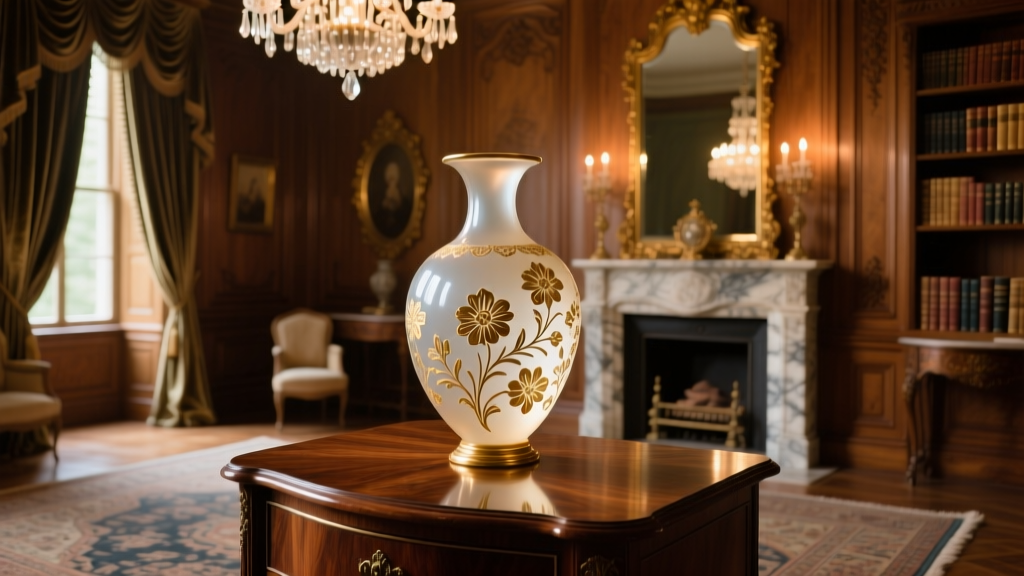
Satin Glass Vase with Gold Floral Design: Identifying, Dating, and Preserving the Bulbous Form
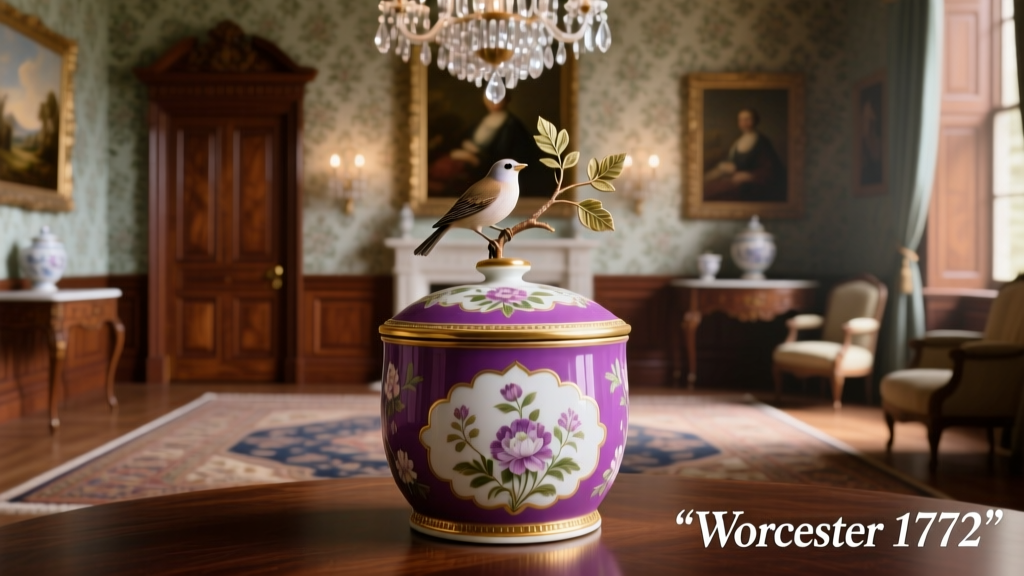
Worcester Tea Caddy: The 1772 Bird-Perched Rose-Purple-Red Example — A Study in Early English Porcelain Craftsmanship
Lots of Odds and Ends of News This Week: Restoration Insights, Market Shifts, and Material Science Breakthroughs