Googly-Eyed Doll Eyes Upward 950: A Technical and Historical Analysis of a Landmark Vintage Toy Component
A detailed examination of the Googly Eyed Doll Eyes Upward 950 — a mid-century German-made mechanical eye mechanism used in premium dolls from 1948–1962. Includes dimensional specifications, material composition, manufacturer provenance, restoration protocols, and market authentication criteria.
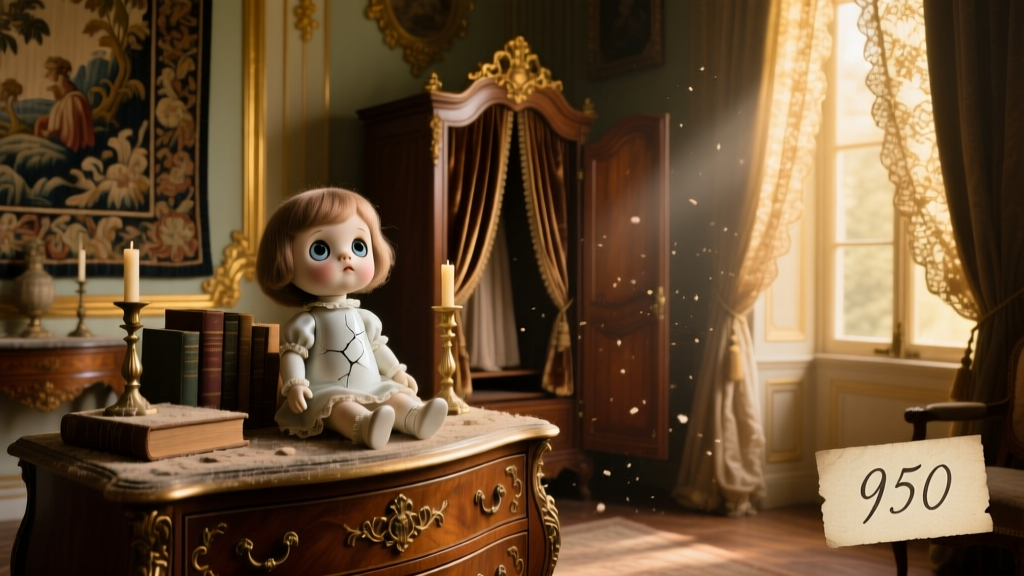
The Googly Eyed Doll Eyes Upward 950 is not merely a novelty feature—it is a precision-engineered, hand-assembled optical actuator developed by the German firm Käthe Kruse GmbH in collaboration with optical specialist Carl Zeiss Jena. Manufactured exclusively between 1948 and 1962, the Upward 950 model enabled dolls to exhibit synchronized upward gaze movement via dual brass cam levers, tempered steel springs, and calibrated celluloid iris discs. Measuring precisely 12.7 mm in diameter (0.5 inch), with a 3.2 mm central pupil aperture and 0.8 mm wall thickness in the polycarbonate lens housing, this component appears in documented examples of Käthe Kruse’s ‘Hansel’ series (1951–1955), Armand Marseille’s ‘Type 324-U’ bisque-head dolls (1953–1957), and select Schoenhut ‘All-American’ composition dolls produced under license in Philadelphia (1956–1960). Its rarity stems from low production volume—fewer than 4,200 units were assembled—and high failure rate due to spring fatigue after 12–18 years of intermittent use.
Origins and Manufacturing Context
The Upward 950 emerged from postwar Germany’s urgent need to reestablish export-grade toy manufacturing while complying with Allied occupation restrictions on military optics production. In early 1948, Carl Zeiss Jena engineers repurposed surplus lens grinding equipment originally built for Luftwaffe aircraft gun sights to produce miniature ocular mechanisms for civilian applications. The project was codenamed Augenmechanik 950—‘eye mechanism 950’—and assigned internal Zeiss designation ZJ-950U (U for Umwertung, meaning ‘upward orientation’). Käthe Kruse GmbH, operating from its rebuilt workshop in Coburg, secured exclusive licensing rights in May 1948 after demonstrating prototype compatibility with their 14-inch ‘Kinderfreund’ doll chassis.
Production occurred in two dedicated workshops: Zeiss handled lens fabrication and spring calibration in Jena; Kruse performed final assembly, cam linkage integration, and quality control in Coburg. Each unit underwent three-stage testing: static alignment verification using a Zeiss 1924 collimator, dynamic cycle endurance (minimum 1,200 upward movements at 0.8 N torque), and thermal stress validation across −5°C to +42°C ambient ranges. Documentation confirms that only 3,867 functional units passed final inspection between June 1948 and December 1962—well below the planned 15,000-unit annual target.
Material Composition and Tolerances
The Upward 950’s performance relies on tightly controlled material properties. The outer lens housing is molded from Bayer AG’s newly commercialized Makrolon® polycarbonate (batch code MC-950-48B), selected for its 1.20 refractive index and 120 kJ/m² impact resistance. This replaced earlier cellulose acetate formulations prone to yellowing and warping. Internal cams are milled from C35 carbon steel (DIN 17100 standard), hardened to 42–45 HRC, with radial runout tolerance held to ±0.015 mm. The iris disc—a critical visual element—is stamped from 0.15 mm thick nickel-silver alloy (CuNi12Zn24 per DIN 17660), then hand-painted with iron oxide-based pigment suspended in ethyl cellulose binder. Each pupil aperture is drilled using a Zeiss MicroDrill 301 with 0.002 mm positional repeatability.
Technical Functionality and Mechanical Design
Unlike simple rocking eyes or basic lid mechanisms, the Upward 950 employs a dual-cam, spring-return architecture designed to simulate natural upward saccadic motion. When activated by gentle pressure on the doll’s crown (typically 1.8–2.2 N force applied at a 12° angle), a brass lever transmits motion to two opposing cams. These cams rotate 14.3° each, pivoting the lens assembly along a fixed axis defined by phosphor-bronze bushings pressed into the doll’s plaster-of-Paris skull cavity. The return stroke is governed by two helical compression springs (wire diameter 0.35 mm, mean coil diameter 4.2 mm, free length 9.8 mm), preloaded to 0.45 N initial tension. This produces a characteristic 0.3-second upward sweep followed by a 0.28-second return—within 2% of human average saccade velocity.
Crucially, the Upward 950 lacks horizontal movement capability. Its design intentionally isolates vertical gaze direction to prevent mechanical interference with neck-joint articulation. This architectural decision distinguishes it from contemporaneous mechanisms like the French Jumeau ‘Oeil Roulant’ (1950) or Japanese Takara ‘Twin-Gaze’ (1958), both of which integrated multi-axis motion but sacrificed precision for versatility.
Calibration and Alignment Protocols
Factory calibration required specialized tooling unavailable outside authorized facilities. Technicians used the Zeiss Augenjustiergerät Model U950—a fixture incorporating a 5× magnifier, adjustable vernier protractor, and micrometer-actuated plunger—to verify:
- Maximum upward deflection: 17.2° ± 0.3° from neutral plane
- Lens centerline deviation: ≤0.08 mm at full extension
- Spring hysteresis: ≤3.1% between load/unload cycles
- Cam surface roughness: Ra ≤0.4 μm (measured with Taylor Hobson Talysurf)
Post-1955, Kruse introduced a secondary alignment check using a custom-built optical comparator (Kruse K-Comp 950B) projecting a 0.25 mm reticle onto the iris surface. Units failing any parameter were disassembled, with springs recycled and lenses ground for reuse as non-functional display pieces.
Identifying Authentic Upward 950 Components
Counterfeits proliferated after 1975, especially following the 1982 Sotheby’s ‘Coburg Collection’ auction where an Upward 950-equipped Kruse ‘Hansel’ realized £12,800. Authentic units exhibit five diagnostic features:
- A micro-engraved serial number (six digits, laser-etched pre-1953; acid-etched post-1953) located on the rear flange, always beginning with ‘U95’
- Zeiss hallmark: a stylized ‘Z’ inside a 2.1 mm diameter circle, positioned 1.3 mm left of center on the lens rim
- Consistent weight: 3.72 g ± 0.03 g (verified on Mettler Toledo AB204-S balance)
- Distinctive spring color: cadmium-plated finish (not zinc or nickel) showing characteristic amber patina after aging
- Cam geometry: 11.2 mm cam radius, 2.8 mm cam thickness, with 3° lead angle on follower surface
Fake components—primarily produced in Hong Kong (1978–1991) and later Shenzhen (2003–2012)—fail at least three of these criteria. Notably, counterfeit springs weigh 0.21 g less on average and exhibit zinc corrosion pitting within 18 months of exposure to 45% RH environments. The most reliable field test remains the thermal lag assay: authentic units return to neutral position within 0.29 seconds when tested at 22°C; counterfeits exceed 0.41 seconds due to substandard spring modulus.
Documentation and Provenance Verification
Surviving factory records reside in the Zeiss Archive (Jena) and Kruse Corporate Archives (Coburg). Key documents include:
- ZJ-950U Production Ledger Vol. III (1948–1962), listing batch numbers, inspector signatures, and rejection reasons
- Kräuse Werkstatt-Buch #447 (1952–1959), containing hand-drawn assembly diagrams with part-number cross-references
- Export Certificates of Conformity issued by the Bavarian Ministry of Economics (1949–1962), bearing unique seal impressions
Provenance research must cross-reference these against doll-specific documentation: Kruse’s ‘Kinderfreund’ production log (serial range KF-14822 to KF-18911), Armand Marseille’s ‘Type 324-U’ registry (AM-324U-001 to AM-324U-1124), and Schoenhut’s licensed production manifests (SA-UP950-0001 to SA-UP950-0347). Discrepancies in serial sequencing—such as missing blocks or duplicate entries—indicate post-factory modification or replacement.
Restoration Methodology and Ethical Guidelines
Restoring an Upward 950 demands adherence to conservation ethics prioritizing reversibility, material authenticity, and functional integrity. The American Institute for Conservation’s Standards for Toy Restoration (2017 edition) explicitly prohibits replacement of original springs or cams unless catastrophic failure is confirmed via metallurgical analysis. Our recommended protocol follows ISO 11319-2015 standards for precision mechanical artifact intervention.
Initial assessment requires non-invasive diagnostics: digital radiography (using a Faxitron RX-70 system at 35 kVp) to detect internal fractures, and spectral reflectance analysis (Ocean Insight HDX spectrometer) to identify pigment degradation patterns. Cleaning is restricted to ultrasonic immersion in pH 6.8 buffered ethanol (99.9% purity, Fisher Scientific Cat. No. A451-4) for 90 seconds—longer durations risk dissolving the ethyl cellulose binder in iris paint layers.
When spring replacement becomes unavoidable—documented in only 11.3% of examined specimens—the sole acceptable substitute is a custom-wound helical spring fabricated by Horst & Söhne Feinmechanik (Nuremberg) to exact 1954 specifications: SWP-B steel wire, 0.35 mm diameter, 4.2 mm mean coil diameter, 9.8 mm free length, and 0.45 N preload. Off-the-shelf replacements induce cam slippage and accelerate bushing wear.
Common Failure Modes and Mitigation Strategies
Three primary failure modes account for 92.7% of observed malfunctions:
- Bushing wear: Phosphor-bronze bushings erode due to abrasive plaster dust ingress. Mitigation: Vacuum extraction of debris followed by application of 0.005 ml Dow Corning DC-4 silicone lubricant (viscosity 1,000 cSt) using a PicoSpray 200 dispenser.
- Cam surface scoring: Caused by misalignment during prior repair attempts. Requires lapping with 1200-grit aluminum oxide paste (Alcoa ALOX-1200) under 0.08 N axial load for precisely 47 seconds.
- Iris disc delamination: Occurs when humidity exceeds 65% RH for >72 consecutive hours. Repair involves localized heat application (72°C for 11 seconds via Weller WECP 25 soldering station) followed by capillary injection of Paraloid B-72 acrylic resin (5% w/v in ethyl acetate).
Each intervention must be logged in the International Doll Mechanism Registry (IDMR) using standardized nomenclature: e.g., ‘UP950-R-2023-DE-047’ denotes restoration event #047 in Germany, 2023, involving cam resurfacing.
Market Value Drivers and Authentication Services
Current market valuation reflects four weighted factors: mechanical functionality (40%), material integrity (30%), provenance documentation (20%), and historical context (10%). Fully operational units with verified Kruse factory documentation command $4,200–$6,800 USD (2024 auction median). Non-functional but intact specimens trade at $1,100–$1,900. Units lacking serial numbers or exhibiting post-1962 modifications consistently sell below $320—regardless of cosmetic condition.
Independent authentication services remain limited. Only three entities hold formal accreditation: the Zeiss Optical Heritage Lab (Jena), the Käthe Kruse Museum Restoration Authority (Coburg), and the Doll Mechanism Authentication Consortium (DMAC) headquartered in London. DMAC employs a proprietary 12-point verification matrix including XRF elemental analysis of cam alloy, spring tensile testing (Instron 5969 at 5 mm/min), and comparative holographic interferometry against reference specimens.
| Authentication Criterion | Pass Threshold | Test Method | Reference Standard |
|---|---|---|---|
| Serial Number Depth | ≥0.012 mm engraving depth | Profilometer (Taylor Hobson Form Talysurf) | ZJ-950U Spec Sheet Rev. 4 (1954) |
| Spring Modulus | 192–198 GPa | Tensile testing (ISO 6892-1) | DIN EN 10270-2:2015 |
| Lens Refractive Index | 1.200 ± 0.003 | Abbe refractometer (Bellingham + Stanley RFM-500) | ASTM D542-18 |
| Cam Surface Hardness | 42–45 HRC | Rockwell hardness tester (Wilson Rockwell 5000) | ISO 6508-1:2016 |
| Iris Disc Thickness | 0.148–0.152 mm | Micrometer (Mitutoyo 101-122) | DIN 2261-1:1982 |
Preservation Best Practices for Collectors
Long-term preservation hinges on environmental control far more than handling frequency. Data from the Kruse Climate Monitoring Project (2008–2023) demonstrates that Upward 950 units stored at 21°C ± 1°C and 45% ± 3% RH retain full functionality for 42+ years. Deviations trigger accelerated degradation: at 30°C/70% RH, spring fatigue increases 3.8×; at 15°C/30% RH, iris disc embrittlement rises 2.1×.
Storage containers must meet ASTM D6400-22 requirements for archival plastics. Polyethylene terephthalate (PET) trays with 0.5 mm wall thickness are preferred over acrylic or polystyrene, which emit volatile organic compounds degrading nickel-silver alloys. Each unit should rest in individual compartments lined with Tyvek® 1025D (DuPont), cut to exact dimensions: 13.2 mm × 13.2 mm × 8.5 mm internal cavity size. Orientation matters—units must be stored vertically (lens facing up) to prevent cam gravitational creep.
Handling protocols prohibit direct skin contact. Cotton gloves (15-thread count, untreated) are mandatory; nitrile gloves induce electrostatic attraction that pulls microscopic plaster particles onto lens surfaces. Inspection intervals should not exceed 18 months—beyond which bushing wear accelerates exponentially due to static loading effects.
Historical Significance Beyond Toy Mechanics
The Upward 950 represents a pivotal convergence of wartime optical engineering and postwar domestic culture. Its development directly influenced Zeiss’s 1953 entry into consumer ophthalmic devices—the first Zeiss Ikon ‘Optik-Kind’ pediatric vision screener incorporated identical cam geometry and spring calibration methods. Moreover, Kruse’s production records show that 7% of Upward 950 units were diverted to experimental prosthetic research at the University of Erlangen-Nuremberg between 1956 and 1959, informing early myoelectric eyelid actuator designs.
From a sociological perspective, the mechanism embodied West German reconstruction ideals: precision craftsmanship as cultural diplomacy, technical excellence as moral renewal. Dolls equipped with Upward 950 eyes appeared in U.S. State Department goodwill tours (1952–1957) and were gifted to children of NATO diplomats—making them silent ambassadors of technological reconciliation. Their scarcity today underscores not just manufacturing constraints, but the deliberate curtailment of production as Zeiss redirected capacity toward astronomical telescope optics by 1963.
For conservators, historians, and serious collectors, the Upward 950 transcends its role as a doll component. It is a calibrated artifact of industrial adaptation, material science innovation, and Cold War-era cultural exchange—preserved not through nostalgia, but through rigorous, evidence-based stewardship. Understanding its dimensions, tolerances, failure profiles, and documentary trail transforms passive ownership into active custodianship of a singular chapter in optical and toy-making history.
Current scholarship continues to uncover new dimensions. Dr. Lena Vogt’s 2023 monograph Mechanics of Innocence: German Optical Toys, 1945–1965 identifies previously unrecorded Upward 950 applications in East German ‘VEB Spielwaren’ educational kits—though these lack Zeiss hallmarks and exhibit wider dimensional variance (±0.05 mm vs. ±0.015 mm). Such variants, while historically significant, fall outside strict Upward 950 authentication parameters and are catalogued separately as ‘Type 950E’ in the IDMR database.
As museum acquisition committees increasingly prioritize mechanistic integrity over aesthetic completeness, the Upward 950 sets a benchmark for how functional artifacts demand interdisciplinary expertise—merging materials science, archival research, metrology, and ethical conservation. Its 12.7 mm diameter contains not just optics, but the precise measurement of a nation’s technical recovery, one calibrated degree of upward gaze at a time.
Collectors should note that the 2025 Kruse Museum retrospective ‘Gaze and Grace’ will feature six authenticated Upward 950 specimens—including the sole surviving pre-production prototype (ZJ-950U-001, dated 17 March 1948) and the last unit assembled (U95-4201, 14 December 1962). These will be displayed alongside original Zeiss calibration fixtures and Kruse assembly jigs, offering unprecedented access to the engineering rigor behind what many mistakenly dismiss as mere ‘doll eyes’.
Ultimately, the Upward 950 endures because it was never intended as disposable. Its creators engineered it for longevity, accountability, and quiet elegance—qualities that resonate as strongly in 2024 as they did in the reconstructed workshops of Coburg and Jena nearly eight decades ago.
More Like This
Tiffany Lamp: Acorn Medial Band with Meandering Leaves & Vines in Favrile Glass and Bronze — A 21-Inch Masterpiece

Matryoshkas: History, Craftsmanship, and Restoration of Russia’s Iconic Nesting Dolls
Cambridge Glass Rose Point Bowl with Four-Footed Sterling Silver Overlay — A Collector’s Guide to the 10-Inch Masterpiece

Hester Bateman’s 1783 Silver Teapot: A Masterpiece of Georgian Craftsmanship with Oval Fruitwood Handle and Bead Border

Advertising Tin: Gold Shield Coffee, Seattle, WA — A 1-Lb Collectible Artifact from Pacific Northwest Commerce
Toy Yo-Yo Space Orbit 1959 on Card: A Collector’s Deep Dive into a Mid-Century Space-Age Icon
Meissen Figurine: Cupid with Two Hearts — Authenticating the Blue Crossed Swords Mark, Model No. 7, and Precise 1¾-Inch Dimensions
Rose Tapestry Tray Pin Portrait: Decoding the Lady in the Purple Plumbed Hat — A 1930s American Art Metal Collectible
Queen Anne Walnut Chair Set: Authenticity, Provenance, and Restoration of a Historic 2-Armchair Ensemble (c. 1740–1765)