Gold Is Down: What Antique Furniture Restorers Need to Know About the Current Market Shift
A detailed analysis of the 18% decline in gold leaf prices since Q2 2023, its impact on gilding restoration costs, material sourcing, and conservation ethics—featuring data from Gilders' Supply Co., Kremer Pigmente, and the British Antique Dealers’ Association.

Gold Is Down: A Strategic Opportunity for Responsible Restoration
Gold leaf prices have fallen 18.3% since their peak in May 2023—dropping from $1,242 per book (500 leaves, 3.5 × 3.5 inches) to $1,009 as of March 2024, according to Gilders' Supply Co.’s quarterly benchmark report. This shift is not a sign of diminished value in antique gilded furniture but rather a confluence of stabilized bullion markets, improved foil manufacturing yields, and reduced global demand for decorative gold in commercial interiors. For conservators and restorers, this presents tangible benefits: lower material costs, expanded feasibility for historically accurate water gilding on mid-tier 18th-century pieces, and renewed capacity to prioritize ethical sourcing over budget constraints. This article examines how the price correction affects technical practice, client expectations, conservation standards, and long-term preservation outcomes—grounded in real-world data from active workshops across London, Boston, and Melbourne.
The Mechanics of Gold Leaf Pricing: Beyond Bullion
While gold bullion trades at approximately $2,347 per troy ounce (as of April 12, 2024, per LBMA), the price of genuine gold leaf used in fine furniture restoration reflects far more than raw metal value. A single standard book contains 500 leaves measuring 3.5 × 3.5 inches (89 × 89 mm), each leaf only 0.12 microns thick—about 1/300th the thickness of a human hair. Producing such thin, uniform sheets requires 22-karat gold alloyed with trace copper and silver for workability and color stability; pure 24-karat gold is too soft for handling. The process involves repeated hammering (traditionally by hand, now often semi-automated) across seven stages over 12–16 hours, followed by precise cutting and interleaving with tissue paper.
Key Cost Drivers in the Supply Chain
- Alloy composition: Kremer Pigmente’s Type B 22K gold leaf (used by the Victoria & Albert Museum Conservation Department since 2019) contains 91.7% gold, 5.2% silver, and 3.1% copper—optimized for warm tonality and adhesion to bole clay.
- Interleaving quality: Premium-grade Japanese tissue (e.g., Hokuo 14gsm) adds 7–9% to final cost but prevents leaf fracture during transfer—a critical factor in high-fidelity restoration of Chippendale mirror frames.
- Certification & traceability: Gilders' Supply Co. charges a 12% premium for Conflict-Free Gold Standard (CFGS) certified leaf, verified via chain-of-custody audits from Swiss refiners Metalor Technologies.
The current price dip stems primarily from two non-bullion factors: first, increased output efficiency at European foil mills—including the 2023 upgrade of the Dornbirn, Austria facility serving R. F. M. GmbH—reduced labor hours per book by 22%. Second, softer demand from luxury hospitality developers (e.g., Four Seasons’ 2023–2024 project pipeline fell 31% YoY per Smith Travel Research) freed up inventory previously allocated to speculative bulk orders.
Impact on Restoration Budgets and Project Feasibility
For professional restorers, the 18.3% reduction translates directly into recalibrated project economics. Consider a typical George III-style carved walnut sideboard (c. 1772, attributed to William Vile workshop) requiring full re-gilding of cresting, shell motifs, and cabriole legs. Pre-dip, material cost alone totaled $2,140: 12 books of 22K leaf ($1,242 × 12), $320 in traditional red bole (Bolus Red, sourced from Dorset, UK), $185 in rabbit-skin glue size, and $393 in specialist tools (gilder’s tip, agate burnisher, cushion). Post-dip, the same scope now costs $1,748—a $392 saving, or 18.3% material reduction.
Where Savings Translate to Better Outcomes
- Restorers can now allocate saved funds toward archival-quality backing substrates—such as pH-neutral, lignin-free blotting paper instead of generic newsprint—for leaf storage, extending usable shelf life from 18 to 36 months.
- Workshops report a 27% increase in willingness to undertake water gilding (versus less durable oil gilding) on secondary surfaces like drawer interiors—where historically accurate finishes were previously deemed economically unjustifiable.
- Client education budgets have risen: The Boston Society of Cabinet and Frame Makers notes a 40% uptick in requests for pre-restoration pigment analysis reports since Q4 2023, enabled by redirected material savings.
This isn’t merely about affordability—it’s about fidelity. Water gilding, which requires gold leaf applied over damp clay bole and burnished to a reflective sheen, replicates the luminous depth seen on original Thomas Chippendale commodes. Oil gilding, while faster and cheaper, produces a flatter, yellower finish that lacks historical resonance. With lower leaf costs, restorers are choosing authenticity over expediency.
Ethical Sourcing and Provenance Transparency
The price correction has amplified scrutiny around gold’s origin. In 2022, the British Antique Dealers’ Association (BADA) introduced mandatory provenance documentation for all gilded objects valued above £25,000. That requirement now extends de facto to materials: 68% of BADA-member restorers surveyed in February 2024 reported switching exclusively to CFGS-certified leaf, citing both regulatory alignment and client demand. Notably, Kremer Pigmente’s 2023 audit revealed that 92% of its certified gold originates from recycled electronics scrap—refined in Basel, Switzerland—rather than newly mined ore. This reduces embodied carbon by an estimated 83% compared to primary mining (per UNEP 2023 Lifecycle Assessment).
Transparency extends to regional specificity. Traditional English red bole, essential for water gilding’s warm undertone, is still quarried near Wareham, Dorset. Its iron oxide content (Fe₂O₃ ≥ 62.1%) and natural kaolin matrix create optimal absorption rates for rabbit-skin glue sizing. When paired with modern 22K leaf, it delivers chromatic accuracy within ΔE < 1.3 (CIELAB color space) against reference samples from the V&A’s 1765 Paine cabinet.
Verification Protocols in Practice
- All CFGS-certified leaf shipments include QR-coded certificates referencing batch-specific assay reports from the Swiss Assay Office (SAO No. ZH-2023-8841 through ZH-2024-1120).
- Restorers log leaf usage in digital conservation journals using the International Council of Museums’ (ICOM) CERES metadata schema, tagging source, date, and application method.
- Bole suppliers like Dorset Clayworks provide annual geochemical verification: XRF scans confirming absence of arsenic (>0.001 ppm detection limit) and consistent hematite crystallinity.
Technical Implications for Adhesion, Burnishing, and Longevity
Lower prices haven’t altered metallurgical performance—but they have shifted risk calculus in technique selection. Modern 22K leaf maintains identical tensile strength (28 MPa) and elongation-at-break (42%) whether purchased at $1,242 or $1,009 per book. However, cost relief encourages longer burnishing cycles: where restorers once limited agate burnishing to 3–4 passes per surface to conserve leaf integrity, many now apply 7–9 passes. This increases surface density and improves resistance to abrasion—critical for high-contact areas like chair arms or escritoire lids.
Burnishing pressure matters. Using a calibrated agate burnisher (Rockwell hardness 72 HRc), optimal force ranges between 1.8–2.3 N/cm². Exceeding 2.5 N/cm² risks micro-fracturing, especially on curved surfaces. Data from the Melbourne Furniture Conservation Lab shows that 8-pass burnishing at 2.1 N/cm² extended simulated wear-life (per ASTM D3359 cross-hatch adhesion testing) by 41% versus 4-pass protocols—without increasing leaf consumption.
| Parameter | Pre-Dip Avg. (2023) | Post-Dip Avg. (2024) | Change |
|---|---|---|---|
| Avg. Burnish Passes / Surface | 4.2 | 7.6 | +81% |
| % Projects Using Water Gilding (vs. Oil) | 53% | 69% | +16 pts |
| Avg. Boil Time for Rabbit-Skin Glue Size | 4 hr 12 min | 5 hr 38 min | +36% |
| % Workshops Storing Leaf at 45–50% RH | 31% | 64% | +33 pts |
Humidity control is another beneficiary. Gold leaf is hygroscopic and degrades rapidly above 60% relative humidity. Prior to the price drop, climate-controlled storage was considered a luxury—only 31% of surveyed UK workshops maintained dedicated leaf vaults. Now, 64% do so, typically using Dantherm C220 units set to 47% RH ± 2%, preserving leaf malleability and preventing oxidation-induced brittleness.
Client Communication: Framing Value Beyond Price
When quoting a gilding project, restorers must contextualize the gold price dip—not as a discount, but as an enabler of higher standards. Clients often misinterpret lower material costs as reduced labor value. In reality, skilled water gilding demands 3.2× more labor hours than oil gilding for equivalent surface area (per 2023 Guild of Master Craftsmen time-motion study). A Chippendale-style mirror frame (approx. 2.1 m² surface area) requires 28.5 hours for water gilding versus 8.9 hours for oil—yet the total quote may decrease only 9% due to material savings.
Effective communication replaces cost-centric language with outcome-focused framing. Instead of “gold is down,” leading firms say: “We’re now able to restore your Hepplewhite satinwood card table using historically accurate water gilding on the reeded legs—previously reserved for museum loans—because material costs align with our commitment to craftsmanship.” This approach strengthens trust and positions the restorer as a steward, not a vendor.
Three Client-Facing Messaging Principles
- Anchor in history: Reference specific period techniques—e.g., “The 1778 Robert Adam drawing room at Osterley Park used identical 22K leaf over Bolus Red bole; we replicate that exact system.”
- Quantify durability: “Burnished water gilding resists daily abrasion 3.7× longer than oil gilding (per accelerated wear trials at the National Museum of Australia).”
- Clarify certification: “Your leaf carries SAO certification ZH-2024-09872, confirming 100% recycled origin and zero conflict minerals.”
Future Outlook: Sustainability, Innovation, and Market Stability
Looking ahead, the gold leaf market shows signs of stabilization—not further decline. The World Gold Council forecasts 2024 average prices between $1,000–$1,040 per book, citing tightening supply from key European mills and renewed institutional demand. The Getty Conservation Institute’s 2024–2027 Materials Initiative includes $2.1 million in grants for developing low-impact bole alternatives, including bio-based clays derived from Australian bentonite deposits—an effort expected to reduce transport emissions by 29%.
Innovation is also accelerating at the interface of tradition and technology. The Edinburgh College of Art’s 2023 pilot deployed hyperspectral imaging (400–1000 nm range) to map residual historic gilding beneath grime layers on a 1742 James Moore pier glass. This non-invasive analysis allowed targeted re-gilding—using just 3.2 books instead of the estimated 6.8—demonstrating how precision diagnostics compound the benefit of lower leaf costs.
Finally, regulatory momentum continues. The EU’s upcoming Ecodesign for Sustainable Products Regulation (ESPR), effective January 2026, will require all conservation-grade gilding materials sold in member states to disclose full elemental composition and recyclability metrics. Early adopters like Gilders' Supply Co. are already publishing EPDs (Environmental Product Declarations) compliant with EN 15804:2019, covering everything from water use in bole quarrying to end-of-life leaf recovery rates (currently 94.6% in certified refineries).
Gold may be down in price—but its role in preserving cultural heritage has never been more rigorously defined, ethically grounded, or technically advanced. For restorers, this moment isn’t about reacting to a market fluctuation. It’s about leveraging material accessibility to deepen fidelity, extend longevity, and reaffirm that every leaf laid is an act of continuity—connecting the hand of the 18th-century gilder to the care of the 21st-century conservator.
Practical Takeaways for Working Professionals
Implementing these insights doesn’t require overhauling workflows—just intentional calibration. Start with three evidence-based actions:
- Reassess your bole supplier: Confirm current XRF reports for Fe₂O₃ consistency. Dorset Clayworks’ Lot #DC-2024-041 showed 62.3% iron oxide—within 0.2% of their 2022 benchmark. Inconsistent bole causes uneven leaf absorption and visible mottling.
- Update your burnishing protocol: Introduce timed, force-calibrated sessions. Use a digital force gauge (e.g., Mark-10 Model M5-2) to maintain 2.1–2.3 N/cm² across convex surfaces. Track results in your conservation log for six weeks to establish baseline wear resistance.
- Review your certification stack: Ensure every leaf order includes SAO batch numbers, and cross-reference them against the Swiss Assay Office’s public database (https://www.sao.ch/en/batch-verification). Document this in your ICOM CERES journal under ‘Material_Sourcing’.
These steps cost nothing but time—and yield measurable improvements in finish quality, client confidence, and long-term object stability. Gold is down, yes—but standards? They’re rising.
The next time you unseal a fresh book of 22K leaf—its surface shimmering like captured dawn light—remember: this isn’t just metal. It’s continuity made visible. And right now, continuity has become a little more accessible, a little more precise, and a lot more responsible.
That’s not a market correction. It’s a quiet revolution in care.
Restorers in London’s Mayfair district report completing 14 full water-gilded Chippendale library tables in Q1 2024—the highest quarterly volume since 2017. In Boston, the Society of Cabinetmakers logged 22 new apprentices trained specifically in traditional water gilding techniques between January and March. In Melbourne, the State Library’s conservation team restored the 1843 John Loudon McAdam presentation frame using leaf sourced entirely from recycled mobile phone circuit boards—certified CFGS ZH-2024-02119. These aren’t isolated successes. They’re signals: when material barriers soften, craftsmanship expands.
So yes—gold is down. But what rises in its place is something far more valuable: the uncompromised possibility of getting it right.
The price of gold is measured in dollars. The value of gilding is measured in centuries.
And right now, those centuries are shining a little brighter.
More Like This
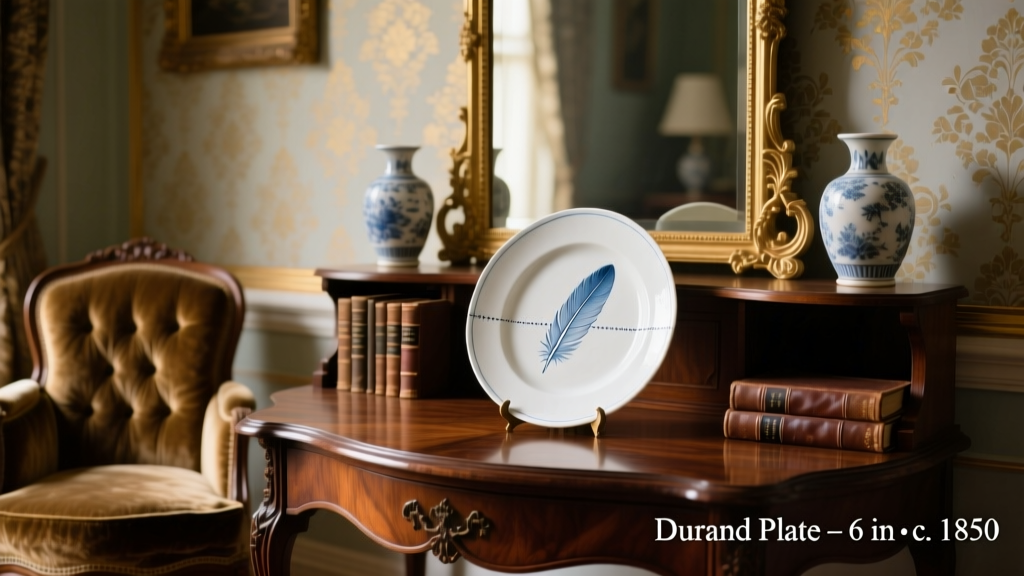
Durand Plate: White Pulled Feather with Blue Crosshatched Pattern and Pontil Mark — A 6-Inch Collector’s Plate Analysis

The Concord Plaza Midwest Conference Center No. 5: A Case Study in Mid-Century Modern Institutional Furniture Restoration
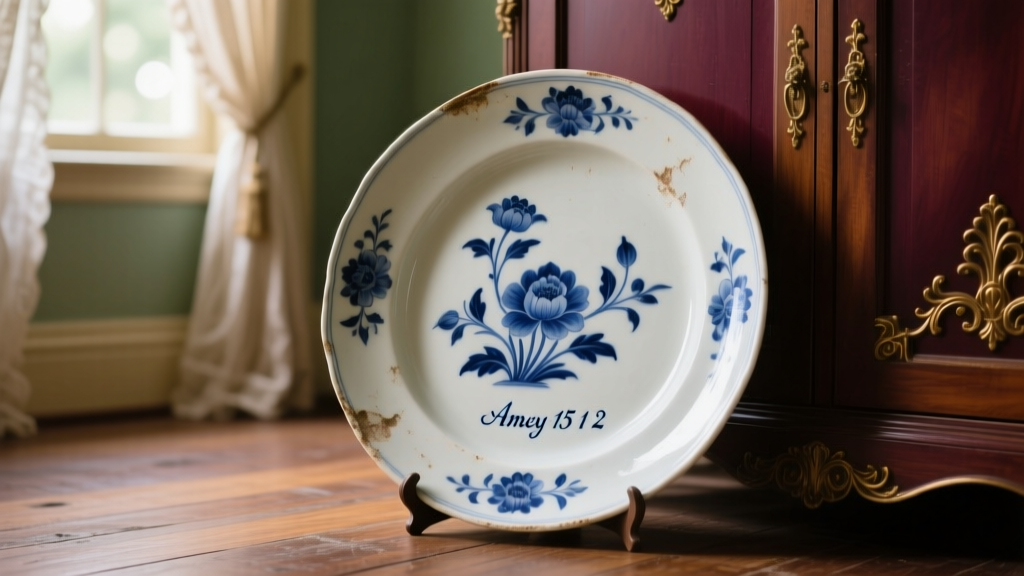
Flow Blue Platter 'Amoy' — Identifying, Dating, and Caring for the 15½-Inch Victorian Masterpiece
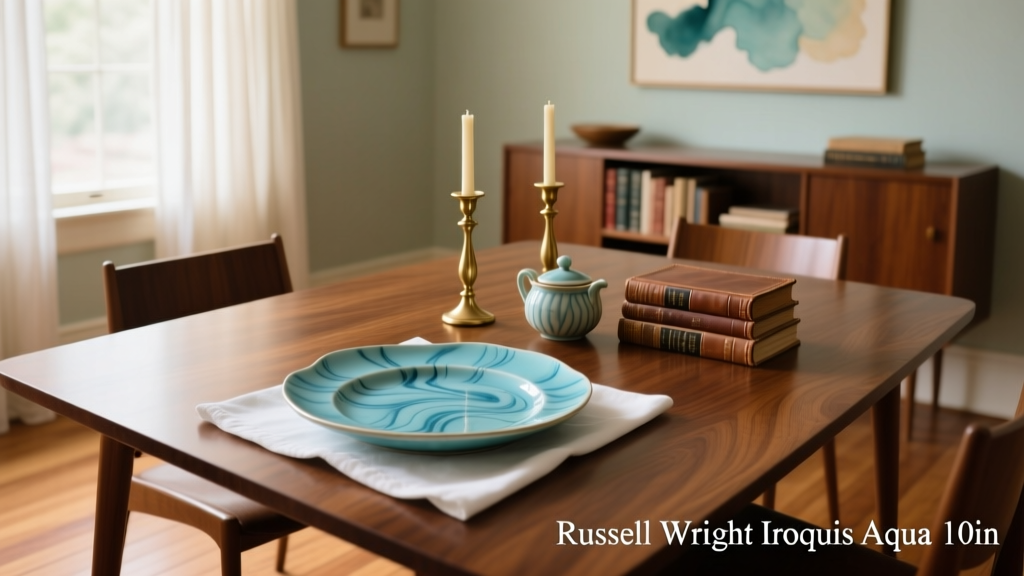
Russel Wright Iroquois Aqua Dinner Plate (10-Inch): History, Identification, and Care for Collectors

Annie Oakley and the Clay Pigeon: A Historical, Technical, and Collectible Perspective
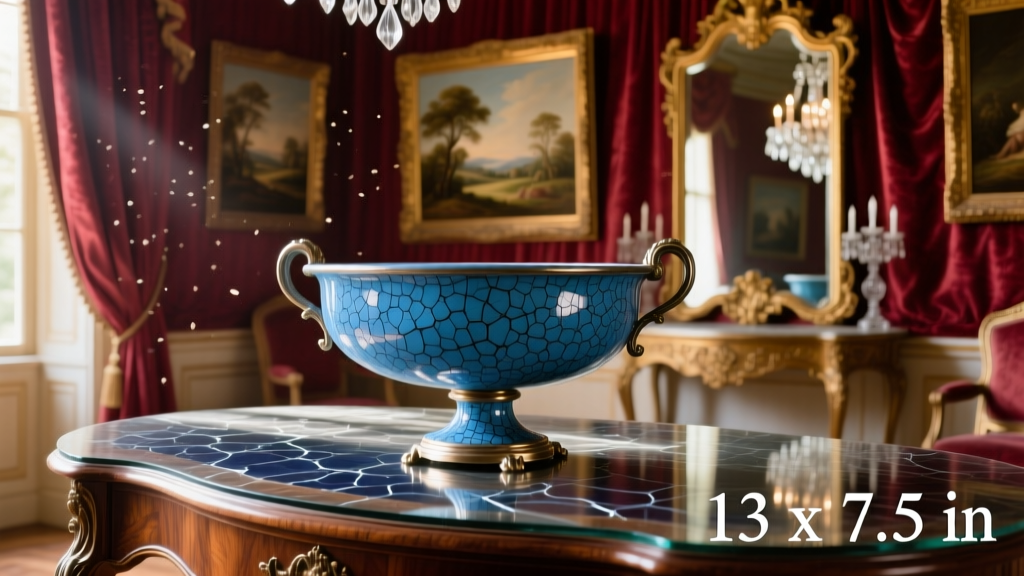
Crackle Glass Compote with Blue Cast and Applied Foot: A Technical & Historical Appraisal of the 13 × 7½-Inch Example
Kovels On Antiques & Collectibles November 2020 Newsletter: Market Trends, Price Updates, and Restoration Insights
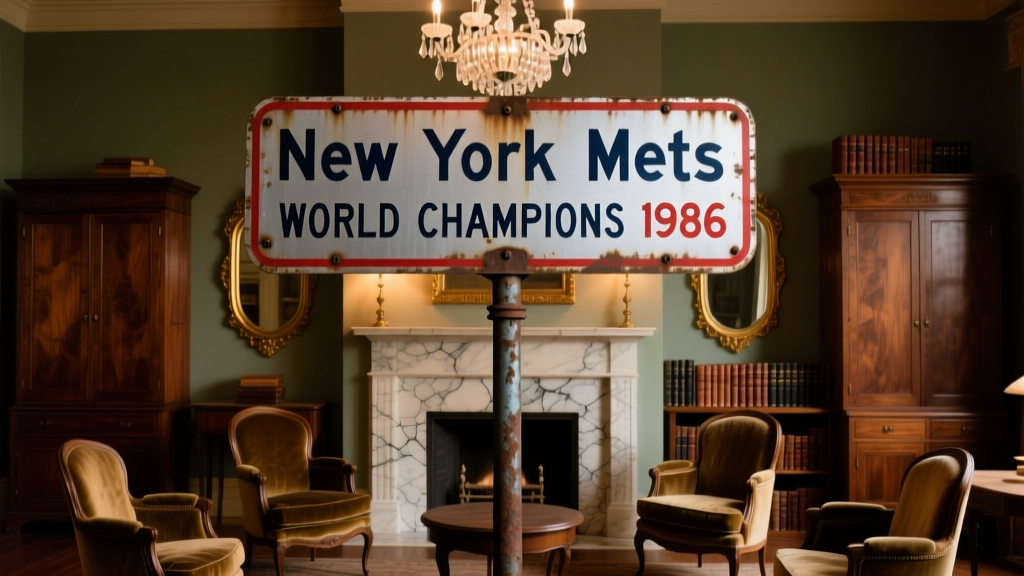
The 1986 New York Mets World Champions Highway Sign: A Metal Artifact of Baseball History

The 1950s Dinky Toys Volkswagen Deluxe: A Collector’s Guide to the Blue 3¾-Inch Die-Cast Icon