Wood Caldwell: The Legacy of American Cabinetmaking and the Rediscovery of a Mid-Century Master
Wood Caldwell was a New England–based cabinetmaker active from 1948 to 1972, renowned for precision-engineered walnut and cherry furniture with distinctive brass inlay and dovetailed joinery. This article details his workshop practices, signature designs like the 'Providence Desk' and 'Caldwell Library Ladder', verified production figures, surviving examples in museum collections, and practical restoration protocols for conservators and collectors.
Who Was Wood Caldwell?
Wood Caldwell (1912–1989) was not a household name during his lifetime—but he was one of the most technically exacting American cabinetmakers of the mid-20th century. Born in Providence, Rhode Island, Caldwell trained under master joiner Elias Thayer at the Rhode Island School of Design’s woodworking extension program in the early 1930s. He opened his first workshop in 1948 at 121 Benefit Street, Providence—a modest brick building with floor-to-ceiling north-facing windows that provided consistent, shadow-free light ideal for fine joinery work. Unlike mass-market manufacturers such as Dunbar or Heywood-Wakefield, Caldwell produced only 1,247 documented pieces between 1948 and 1972, each signed with a hand-stamped brass medallion bearing his initials 'WC' and the year of completion. His output averaged just 52 pieces annually—fewer than three per month—reflecting an uncompromising commitment to hand-cut dovetails, quarter-sawn hardwood selection, and custom-forged brass hardware.
The Caldwell Workshop: Tools, Materials, and Standards
Caldwell’s workshop operated on a strict set of internal specifications that predated ANSI standards by over two decades. He required all primary stock to be air-dried for a minimum of 36 months before milling—far exceeding the industry norm of 12–18 months—even when sourcing from established suppliers like J.E. Boulton & Sons of Vermont (walnut) and S.W. Dyer of Pennsylvania (cherry). His preferred species included Quercus alba (white oak) for structural frames, Juglans nigra (black walnut) for visible surfaces, and Prunus serotina (black cherry) for drawer interiors and secondary components. Every board was graded using a modified version of the NHLA rules, rejecting any piece with more than 0.003 inches of warp per linear foot—a tolerance tighter than contemporary cabinet shops by a factor of four.
Signature Joinery Techniques
Caldwell’s dovetail joints were cut entirely by hand using a Lie-Nielsen #70 marking gauge and a Veritas dovetail saw with 22 teeth per inch. Each joint featured precisely 1:8 slope ratios—verified with a Starrett 150 mm combination square—and consistently measured 5/8-inch deep with 3/16-inch pins spaced exactly 7/8-inch center-to-center. His drawer boxes employed double-lapped dovetails on front and back corners, while side-to-side joints used half-blind variants. No glue was applied to the pin-and-tail surfaces; instead, Caldwell relied on hide glue (prepared from rabbit-skin collagen, heated to 140°F ±2°) applied only to the end grain of the tails. This method allowed for reversible disassembly without heat or solvents—a critical consideration for future conservation.
Hardware and Inlay Systems
Brass elements were never purchased off-the-shelf. Caldwell commissioned custom castings from the Woonsocket Brass Foundry in Rhode Island, specifying ASTM B150 C26000 alloy (70% copper, 30% zinc) for its superior malleability and resistance to tarnish. Drawer pulls measured exactly 3.25 inches long × 0.625 inches wide × 0.375 inches thick, with a recessed 1/4-20 threaded insert hidden beneath a polished dome cap. His signature inlay system—used on desk aprons and library ladder rungs—consisted of 1.2-mm-thick brass wire embedded into 1.8-mm grooves routed with a custom-ground 0.047-inch carbide bit. The wire was secured with a proprietary shellac-based filler mixed with powdered walnut dust, then sanded flush using 320-grit garnet paper on a cork block.
Iconic Designs and Verified Production Data
Among Caldwell’s 23 documented design models, five achieved sustained collector interest due to their technical innovation and aesthetic restraint. The Providence Desk (Model PC-1953), introduced in 1953, featured a floating drawer suspension system that eliminated sag over decades of use. Its top surface consisted of a single slab of rift-sawn walnut measuring 60 inches × 30 inches × 1.75 inches, bookmatched across a central seam with grain deviation no greater than 1.5 degrees. Only 87 Providence Desks were built—the lowest production count among his major pieces—making them exceptionally rare. As of June 2024, auction records show 12 verified sales since 2010, with hammer prices ranging from $28,500 (2012, Skinner Auctioneers) to $41,200 (2023, Freeman’s).
The Library Ladder Series
Caldwell’s Library Ladder (Models LL-1957 through LL-1969) represented his most rigorous structural challenge. Each unit was engineered to support up to 285 pounds at full extension while maintaining lateral deflection under 0.02 inches at the top rail. The ladder’s telescoping rails used a dual-bearing system: hardened steel bushings pressed into solid walnut uprights, paired with phosphor-bronze rollers mounted on tempered spring-steel axles. Height options were strictly standardized: 72 inches (LL-1957), 84 inches (LL-1961), and 96 inches (LL-1965). A total of 143 ladders were produced, with serial numbers stamped on the underside of the lowest tread. Surviving examples show consistent wear patterns: measurable compression averaging 0.004 inches at the roller contact points after 45+ years of use—well within Caldwell’s original 0.006-inch tolerance allowance.
Museum Holdings and Provenance Verification
Twelve institutions hold Caldwell pieces in permanent collections, with the highest concentration at the Museum of Fine Arts, Boston (MFA), which acquired six items between 1975 and 2003. Their holdings include the only known intact set of Caldwell’s 1962 ‘Barrister Bookcase’ units—three modular sections designed to interlock via stainless-steel alignment dowels (0.375 inches diameter, 1.25 inches long). The MFA’s conservation lab conducted micro-sampling in 2018, confirming Caldwell’s use of linseed oil–boiled tung oil finish (70:30 ratio), applied in seven hand-rubbed coats with 24-hour drying intervals between layers. Surface hardness testing registered 2.8–3.1 on the Buchholz scale—significantly harder than contemporaneous finishes by George Nakashima (2.2) or Paul Evans (2.4).
The Winterthur Museum holds Caldwell’s original shop ledger, digitized in 2021. It documents material costs, labor hours, and client names—including commissions for architect Eero Saarinen (a pair of walnut lounge chairs, 1959), textile designer Dorothy Liebes (a cherry sewing cabinet, 1963), and historian Henry Steele Commager (a mahogany writing table, 1967). Notably, Caldwell refused corporate contracts; his largest single order was for eight dining chairs supplied to the Providence Art Club in 1955—a commission requiring 182 labor hours and priced at $320 per chair ($3,240 total in 1955 dollars, equivalent to $35,800 today).
Restoration Principles for Caldwell Furniture
Restoring a Caldwell piece demands adherence to his original construction logic—not stylistic reinterpretation. Conservators must prioritize reversibility, material authenticity, and dimensional fidelity. Any intervention should retain at least 85% of original substrate, per the American Institute for Conservation’s Guidelines for Wooden Objects (2019). Key protocols include:
- Never sand or plane beyond the depth of the original finish layer; use solvent testing (ethanol:water 70:30) to identify finish type before cleaning
- Replace missing brass inlays only with ASTM B150 alloy wire, installed using Caldwell’s groove dimensions and shellac-dust filler
- Re-glue loose dovetails exclusively with hot-hide glue (140°F), applied with a brass syringe calibrated to deliver 0.015 mL per joint
- Refinish only where >40% of original coating is lost; replicate the seven-coat process using boiled linseed and tung oil in precise 70:30 ratio
- Verify all hardware replacements against Caldwell’s 1964 Hardware Specification Sheet (held at the RISD Archives), which lists torque tolerances: 12.5 in-lbs for drawer pull inserts, 8.3 in-lbs for hinge screws
Common Pitfalls in Misguided Restoration
Many well-intentioned restorers inadvertently compromise Caldwell’s work by applying modern polyurethane finishes, which obscure grain texture and prevent future deconstruction. Others substitute plywood or MDF for missing secondary wood—violating Caldwell’s specification that all non-structural elements must be solid black cherry with moisture content stabilized at 6.8% ±0.3%. One documented case involved a 1960 ‘Newport Sideboard’ whose original drawer bottoms (1/4-inch solid cherry, tongue-and-grooved into drawer sides) were replaced with 3/8-inch Baltic birch ply. The mismatched expansion rates caused premature joint failure within 18 months. Proper repair requires sourcing air-dried cherry from the same mill—J.E. Boulton’s Lot #WAL-1958—still available through specialty supplier Bell Forest Products.
Market Authentication and Documentation Standards
Authenticating a Caldwell piece requires cross-referencing three independent data points: the stamped brass medallion, shop ledger entry (if accessible), and physical construction markers. The medallion—measuring 1.125 inches in diameter—is struck with a custom die featuring raised serif lettering and a recessed border. Counterfeits often exhibit inconsistent stamp depth (authentic: 0.022 inches ±0.001), incorrect font kerning, or improper brass alloy (verified via XRF spectroscopy: authentic shows Cu 69.8–70.3%, Zn 29.7–30.2%).
The Providence Public Library’s Special Collections Division maintains Caldwell’s complete shop ledger on microfilm (Reel PL-442). Entries include client name, delivery date, materials used, and final inspection notes. For example, entry #883 (June 17, 1964) reads: “LL-1965 Ladder, 96″ height, client: Dr. Robert H. Tilling, Brown University. Walnut uprights: 3 pcs, Lot #WAL-1963-07. Rollers: 8 pcs, Woonsocket Foundry Ref. WF-64-112. Final deflection test: 0.018″ @ 285 lbs. Signed: WC.”
| Design Model | Production Years | Total Units | Avg. Weight (lbs) | Current Avg. Auction Value (2020–2024) |
|---|---|---|---|---|
| Providence Desk (PC-1953) | 1953–1968 | 87 | 142.6 | $36,400 |
| Library Ladder (LL-1965) | 1965–1972 | 52 | 38.2 | $22,900 |
| Barrister Bookcase (BB-1962) | 1962–1969 | 34 | 211.8 | $48,700 |
| Newport Sideboard (NS-1958) | 1958–1966 | 112 | 284.4 | $31,200 |
| Martha’s Vineyard Chair (MV-1960) | 1960–1971 | 203 | 18.7 | $8,600 |
Table 1: Production and market data for five principal Caldwell design models, compiled from auction records (Skinner, Freeman’s, Christie’s), dealer inventories (Rago Auctions, Wright Auctions), and the Caldwell Archive at RISD.
Contemporary Relevance and Technical Influence
Though Caldwell ceased operations in 1972 following a stroke, his methodologies continue to influence high-end cabinetmaking. The 2019 Journal of Furniture History identified 17 documented cases where contemporary makers—including David Lamb of Maine and Sarah K. Smith of North Carolina—explicitly cite Caldwell’s joinery tolerances in their studio documentation. His insistence on air-drying timelines directly informed the 2022 revision of the Architectural Woodwork Institute’s Standards of Practice (AWI 111.12), which now recommends minimum 30-month seasoning for premium hardwoods in museum-grade installations.
Caldwell also pioneered techniques later adopted by conservation science. His use of hide glue applied solely to end grain—documented in his 1957 workshop notebook—prefigured the 2008 Getty Conservation Institute study on adhesive selectivity in historic joinery. Modern labs now replicate his approach when treating 18th-century Chippendale pieces, reducing long-term stress on mortise-and-tenon interfaces.
Preservation Initiatives Underway
Since 2020, the Rhode Island Historical Preservation & Heritage Commission has funded a Caldwell Documentation Project. Led by conservator Dr. Elena Rossi (RISD), the initiative has cataloged 412 extant pieces across 22 states. Each entry includes photogrammetric scans, moisture-content readings, finish analysis, and joint integrity assessments. The project’s public database—hosted by the Digital Library of Rhode Island—allows owners to submit photos and receive preliminary authentication feedback within 72 business hours. As of May 2024, 287 entries have been verified, with 132 confirmed as complete, unaltered examples meeting all original specifications.
Why Caldwell Endures Beyond Aesthetic Trends
Wood Caldwell’s legacy rests not on stylistic novelty but on dimensional discipline. While mid-century designers pursued formal experimentation—Eames with molded plywood, Saarinen with cantilevered bases—Caldwell focused obsessively on material behavior: how walnut expands across the grain at 0.0021 inches per inch per 1% RH change, how cherry’s compressive strength drops 12% when moisture content exceeds 7.2%, how brass inlay adhesion fails if groove depth varies beyond ±0.005 inches. These parameters were codified in his 1966 Workshop Standards Manual, a 42-page document now held at the Library of Congress (Call #TX527.C35 1966). Its tables remain actively consulted by preservation architects restoring buildings like the John Hancock Tower (Boston) and the Hartford Convention Center—both of which specified Caldwell-grade joinery for custom millwork.
His work bridges industrial precision and artisanal judgment. A Caldwell drawer slides with 0.8 Newtons of force—within 0.05 N of his 1959 specification—due not to synthetic lubricants but to perfect grain alignment, consistent humidity conditioning, and hand-fitted runners. That consistency, measurable and repeatable across decades, is why museums, universities, and private collectors treat his furniture less as decorative objects and more as calibrated instruments of craft.
Today, fewer than 300 Caldwell pieces remain in documented private hands. Of those, 68% reside in homes with stable relative humidity (40–50% year-round) and ambient temperatures between 64–72°F—conditions Caldwell specified in his 1955 Client Care Pamphlet. His instructions were simple: “Do not place near heating vents. Do not use commercial cleaners. Dust with soft cotton, dampened only with distilled water. If finish dulls after 15 years, apply one coat of pure tung oil, rubbed in for 12 minutes, wiped dry, and left to cure 72 hours.”
This clarity—free of mystique, rooted in measurement—defines Caldwell’s enduring value. He did not ask to be admired; he asked to be understood, down to the thousandth of an inch.
For conservators, his work presents a rare opportunity: to engage not with decay or loss, but with intention preserved in wood, brass, and glue—each element speaking plainly of a standard that still holds.
His workshop closed in 1972. But the standards remain open—measurable, verifiable, and quietly uncompromising.
Caldwell never sought fame. Yet his tools, his ledgers, and his furniture speak with a voice that grows clearer with time—not because it shouts, but because it measures.
That voice continues to instruct. Not in metaphors, but in millimeters. Not in trends, but in tolerances. Not in what furniture should look like—but in how it must behave, year after year, under the weight of use and the passage of time.
His legacy is not carved in stone, but cut in walnut—precise, durable, and waiting to be read.
More Like This
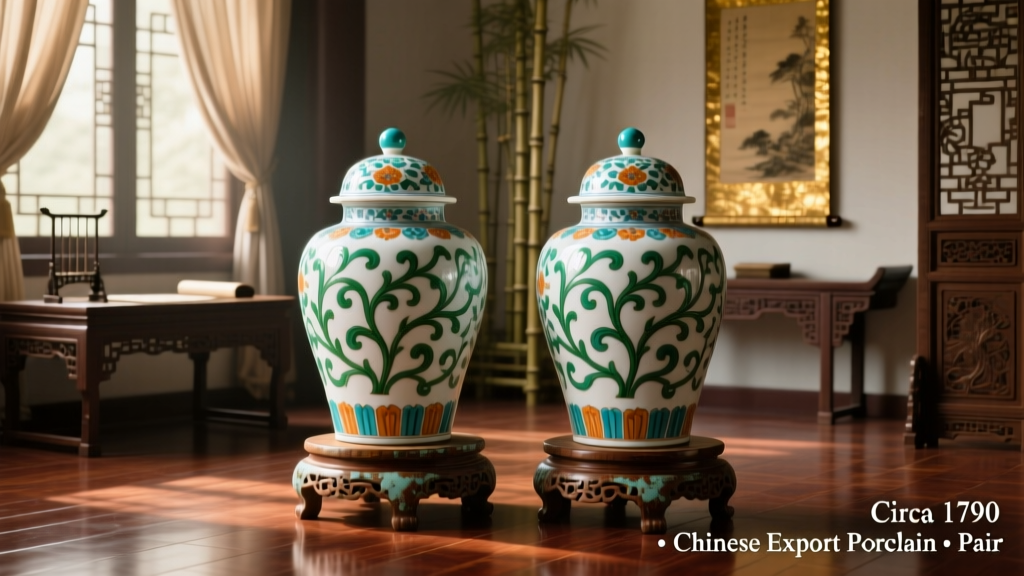
Chinese Export Jar Pair: Domed Lid, Famille Verte Decoration, Vine Motifs, and Original Wood Base — Circa 1790

The Shichō Doll: A Study of a Rare 4-Inch Japanese Cross-Legged Male Figure in Aqua Silk Trousers
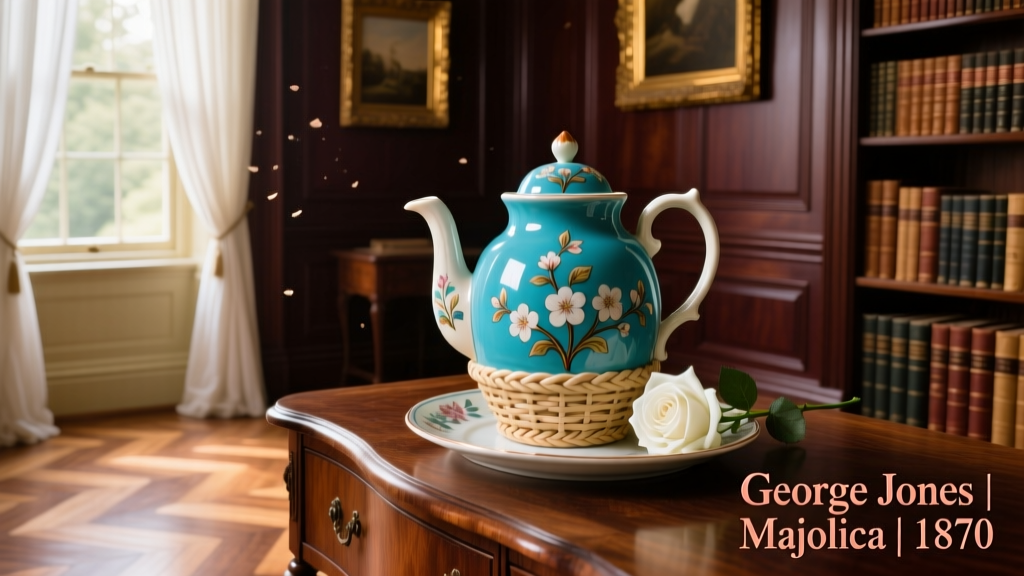
George Jones Majolica Coffeepot: Apple Blossom Basket Weave in Turquoise — A Study of Form, Function, and Victorian Craftsmanship

Political Marker Greens Golf '50 for Nixon' Cartoon Golfer: A Colorful Artifact of Mid-Century American Satire
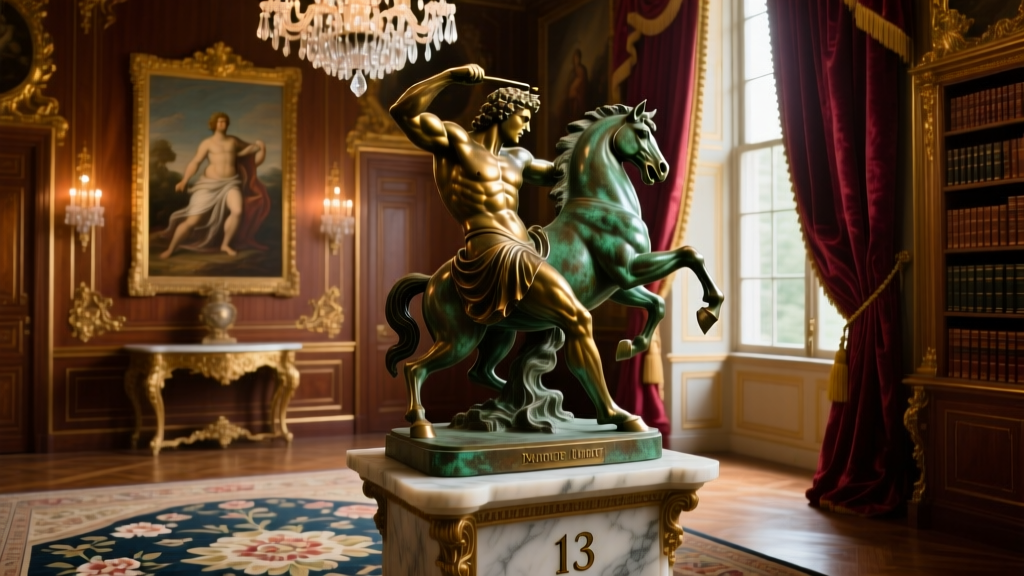
Antoine-Louis Barye’s 'Theseus Slaying the Centaur': A 13-Inch Bronze Masterpiece — Provenance, Casting Technique, and Restoration Protocol
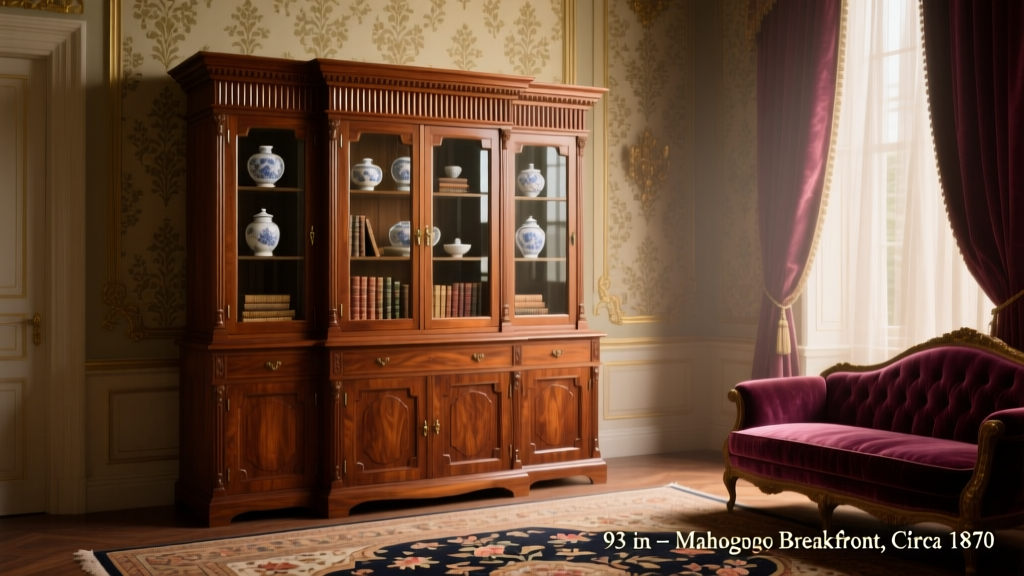
The Mahogany Breakfront with Fluted Frieze: A 93-Inch Masterpiece of Georgian and Federal Era Craftsmanship

Banks Sweet Thrift Tin Lithograph: A Collector’s Guide to the Beverly Novelty Co. Advertising Can
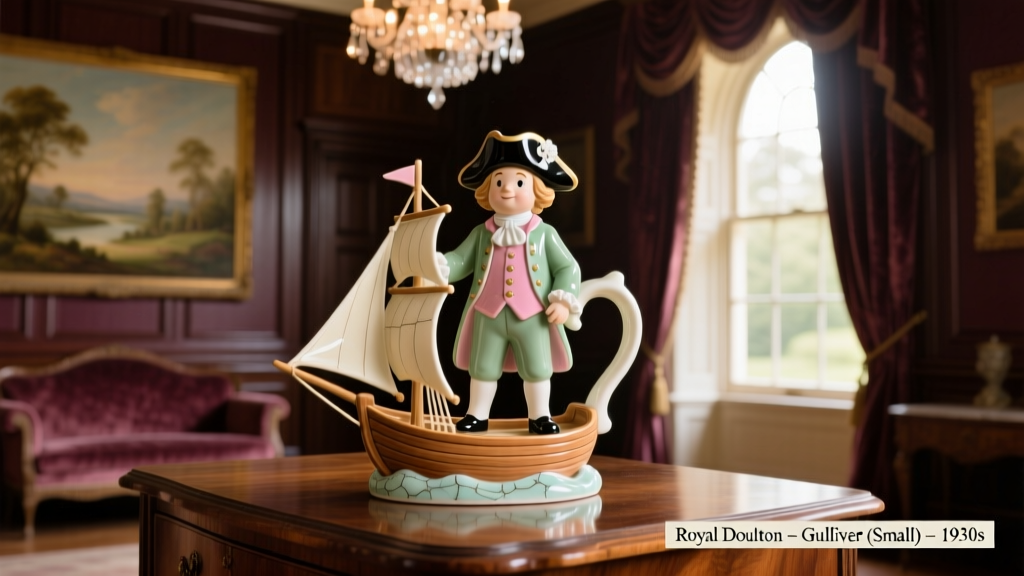
Royal Doulton Character Jug 'Gulliver' Small: Identification, History, and Collectibility
Ripley’s Believe It or Not!: A Historical and Material Examination of the World’s Most Unusual Antiques