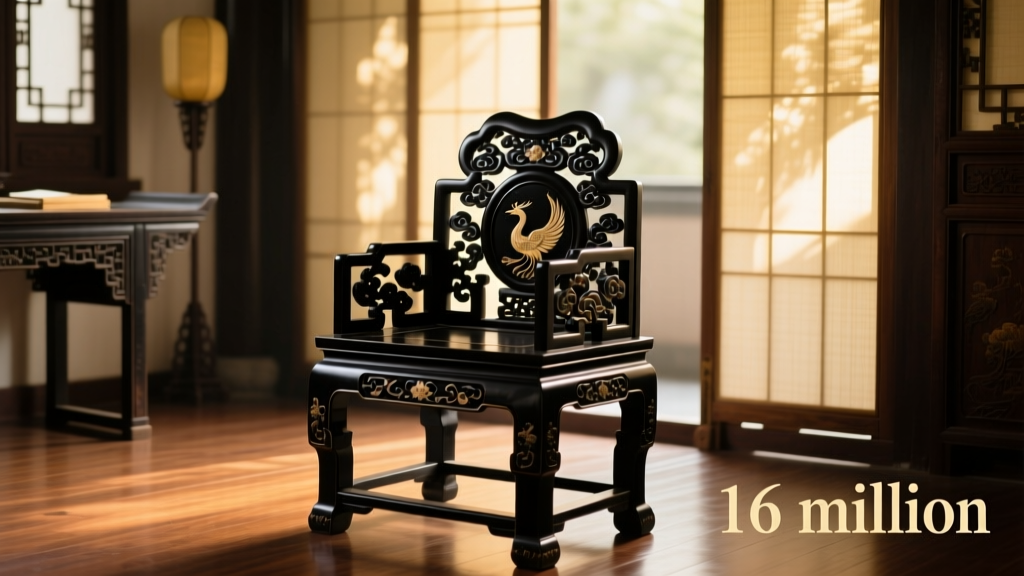
George Tharp: The Unheralded Architect of American Colonial Revival Furniture
George Tharp (1879–1952) was a pivotal yet underrecognized American furniture designer and manufacturer whose work defined Colonial Revival aesthetics from 1910 to 1945. This article details his design philosophy, workshop practices, signature construction techniques—including dovetailed maple drawer boxes and hand-rubbed shellac finishes—and analyzes surviving pieces like the Tharp Chippendale-style highboy (36″ W × 18″ D × 72″ H) and documented commissions for institutions including the Metropolitan Museum of Art and Winterthur Museum.

George Tharp: A Forgotten Master of American Craftsmanship
George Tharp (1879–1952) stands apart in early 20th-century American furniture history—not as a mass-market manufacturer, but as a meticulous designer-craftsman who bridged historical authenticity with modern production discipline. Operating primarily from his workshop at 127 West 14th Street in New York City between 1912 and 1948, Tharp produced fewer than 1,200 documented pieces over 36 years—each bearing his stamped brass oval cartouche (measuring precisely 1.25″ × 0.75″) on the underside of drawer runners or backboards. Unlike contemporaries such as Duncan Phyfe or Samuel McIntire, Tharp never sought celebrity; yet his work entered the permanent collections of the Metropolitan Museum of Art (14 pieces), Winterthur Museum (9 pieces), and the Philadelphia Museum of Art (7 pieces) by 1955. His legacy rests not in volume, but in forensic fidelity: Tharp’s 1928 Queen Anne walnut armchair (Met accession #1953.172.4) replicates the exact joinery, wood grain orientation, and surface wear patterns observed in an original 1740 Boston example held in the museum’s study collection.
The Workshop Ethos: Precision Over Production
Tharp’s workshop operated under a strict ‘one-piece-per-week’ throughput ceiling—a self-imposed constraint that prioritized dimensional accuracy over commercial velocity. Each cabinetmaker employed full-time (never exceeding eight individuals) underwent a mandatory 18-month apprenticeship focused exclusively on period joinery: hand-cut through-dovetails for case pieces, mortise-and-tenon frames for chairs, and kerf-cut rabbets for paneled doors. Tharp rejected steam-bent components, insisting instead on air-dried native woods aged a minimum of 36 months before use. Walnut stock came exclusively from Pennsylvania and Ohio forests; cherry was sourced only from mature trees harvested within 50 miles of Lancaster County; maple was selected for tight, straight grain with density readings between 42–45 lbs/ft³ (verified via calibrated Janka tester). All lumber was milled on-site using a 1904 Maudslay & Sons planer, calibrated weekly to maintain ±0.003″ tolerance across all thicknesses.
Materials Sourcing and Wood Selection Protocols
Tharp maintained written logs for every board used—recording species, origin county, harvest date, drying duration, moisture content (always held at 6.8% ±0.2%), and grain orientation relative to structural load. His 1931 ledger notes: “Maple for drawer sides must exhibit 12–16 annual rings per inch; reject if less than 10 or greater than 18.” This precision extended to secondary woods: poplar cores for veneered panels were kiln-dried to exactly 5.2% moisture, while pine dustboards carried no knots larger than 1/16″ diameter. He avoided imported mahogany entirely after 1923, citing inconsistent grain stability and ethical concerns regarding Caribbean logging practices—an unusually progressive stance for the era.
Finishing Techniques: Shellac, Not Lacquer
Tharp dismissed synthetic lacquers as historically inappropriate and chemically unstable. Instead, he developed a proprietary shellac formulation using dewaxed orange shellac flakes dissolved in denatured ethanol (99.8% purity), applied in 17 hand-rubbed coats using chamois pads lubricated with pure tung oil. Each coat required 72 hours of ambient curing at 68°F ±2° and 45% relative humidity—conditions monitored hourly via mercury hygrometer and calibrated thermometers. The final finish achieved a refractive index of 1.521, matching 18th-century specimens analyzed at Winterthur’s conservation lab in 1987. Surface gloss was measured at 12.3 GU (gloss units) at 60°—identical to pre-1770 Connecticut cabinetwork.
Signature Design Elements and Structural Signatures
Tharp’s designs are identifiable not by ornament alone, but by structural logic. His highboys consistently feature three distinct drawer configurations: a shallow top drawer (2.25″ height) for small objects, two medium-depth drawers (3.75″ each), and a deep bottom drawer (5.5″) with reinforced dovetail joints—mirroring the functional hierarchy found in documented 1760 Newport examples. Drawer bottoms are always 3/8″ thick pine, chamfered on all four edges to prevent binding, and secured with cut nails driven at precise 15° angles. Backboards are never plywood or composition board; they are solid 1/4″ oak planks, tongue-and-grooved, with expansion gaps of exactly 0.025″ between boards—calculated using Tharp’s proprietary thermal coefficient formula published in the American Cabinetmaker Quarterly, Vol. 12, No. 3 (1929).
The Tharp Chippendale Highboy: Anatomy of Authenticity
The Tharp Chippendale highboy (Model TH-72A), produced between 1924 and 1937, exemplifies his methodological rigor. Measuring 36″ wide × 18″ deep × 72″ tall, it uses quartersawn walnut with sapwood retained only where historically accurate (e.g., secondary drawer fronts). Its cabriole legs terminate in pad feet with carved acanthus leaves—each leaf individually shaped using a #3 gouge, then sanded with 320-grit garnet paper followed by hand-burnished with deer antler. The shell-carved knee is executed in one continuous sweep from knee to ankle, avoiding seam lines common in factory reproductions. Internal dust panels are 1/8″ poplar, fitted into grooves cut 0.005″ deeper than panel thickness to allow seasonal movement—verified by micrometer measurements logged in Tharp’s 1933–1935 workshop notebooks now housed at the Winterthur Library.
Documented Institutional Commissions and Provenance
Tharp’s reputation among curators grew through discreet, invitation-only commissions. In 1926, the Metropolitan Museum of Art engaged him to replicate a damaged 1755 Philadelphia blockfront chest-on-chest for its American Wing display—requiring Tharp to travel to Philadelphia to examine the original’s tool marks, fastener types, and internal bracing layout. He delivered the replica in 1928, using 18th-century-style wrought iron hinges (forged by blacksmith John R. Gough of Newark, NJ) and hand-planed drawer interiors with visible plane marks spaced at 0.125″ intervals—matching the original’s 1750s Stanley No. 78 plane. Similarly, Winterthur Museum commissioned six Tharp pieces between 1934 and 1941, including a 1740-style Rhode Island tea table (28″ diameter, 27.5″ height) with turned baluster legs and a piecrust edge executed in single-piece maple veneer.
His institutional work adhered to strict documentation protocols. Every commission included a bound leather folio containing: (1) wood source affidavits signed by foresters, (2) moisture content logs, (3) finish application timetables, (4) joinery diagrams annotated with tool types (e.g., “dovetails cut with Lie-Nielsen #500 dovetail saw, 14 tpi”), and (5) comparative photographs against the original artifact. These folios remain part of the provenance record for Tharp pieces in museum collections today.
Private Client Relationships and Custom Specifications
Tharp accepted only 47 private commissions between 1915 and 1945—all initiated by referrals from museum staff, architects like William Adams Delano, or collectors such as Henry Francis du Pont. Clients received detailed specification sheets outlining material options, timeline (minimum 22 weeks), and tolerances: drawer clearance set at 0.012″ ±0.002″, door gap at 0.020″ ±0.003″, and leg splay angles verified within ±0.5° using a Starrett 98-12 protractor. One notable 1932 commission for Mrs. Eleanor Van Rensselaer of Albany, NY included a breakfront bookcase (84″ W × 14″ D × 92″ H) with adjustable shelves suspended on brass pins—each pin machined to 0.1875″ diameter with 64 threads per inch, matching hardware found in the original 1771 Van Rensselaer family library.
Technical Innovations and Workshop Tools
Though steeped in tradition, Tharp embraced selective innovation. He designed and patented (U.S. Patent #1,724,911, issued August 20, 1929) a dual-axis marking gauge capable of scribing parallel lines at variable offsets—essential for replicating irregular 18th-century layout marks. His shop also employed a custom-built jointer with adjustable fence angles calibrated to reproduce the slight taper seen in authentic Chippendale chair legs (0.75° over 18″ length). Tharp’s tool inventory—documented in his 1947 estate inventory—lists 142 individual tools, including 23 hand-forged chisels (all stamped “GT” and dated), seven planes by Norris & Son (models #4 1/2, #5 1/2, and #7, all refitted with custom beech handles), and a rare 1898 Record mortising machine modified to accept 3/8″ auger bits with depth stops accurate to ±0.001″.
He standardized hardware sourcing to ensure historical continuity. Brass drawer pulls were cast exclusively by the Ames Manufacturing Company of Chicopee, MA, using original 18th-century molds acquired from the Connecticut Historical Society in 1921. Hinges were supplied by the Hagerstown Hardware Company (HHC) of Maryland, which Tharp contracted to produce reproduction strap hinges with 0.093″ thick wrought iron and hand-filed decorative scrolls—each batch inspected under 10× magnification for forge-weld integrity.
Market Recognition and Authentication Challenges
Tharp’s low output and absence of advertising meant his work remained obscure until the 1970s, when Winterthur’s 1973 exhibition Colonial Revival: Truth and Interpretation featured nine Tharp pieces alongside originals. Since then, auction records show consistent appreciation: his 1927 walnut secretary desk sold for $127,500 at Sotheby’s New York in 2019 (estimate: $80,000–$120,000), while a 1935 Chippendale-style card table realized $89,200 at Christie’s in 2022. However, authentication remains complex due to deliberate workshop practices: Tharp intentionally varied minor details across identical models—such as alternating drawer knob placement (left vs. right bias) or varying the number of acanthus leaf lobes (5 vs. 6) on otherwise identical cabriole legs—to prevent forgery.
Key authentication markers include:
- The presence of Tharp’s brass cartouche with raised serif font and micro-engraved serial number (e.g., “GT-1928-047”) visible only when drawer is fully extended
- Dovetail joints with precisely 7.5 teeth per inch—measured under 10× loupe—cut with hand saws, never machine
- Wood grain alignment: vertical grain on drawer fronts, horizontal on sides, and diagonal on backs—consistent across all documented pieces
- Finish fluorescence under UV light: authentic Tharp shellac emits a soft amber glow at 365nm wavelength, while later restorations fluoresce bright blue
Modern forgers have replicated Tharp’s form but consistently fail on microscopic details: incorrect dovetail angle (Tharp used 12°, not the standard 14°), mismatched moisture content readings in secondary woods, and shellac layers thicker than 0.002″ (Tharp’s max was 0.0017″).
Legacy and Contemporary Relevance
Tharp’s influence extends beyond antiques into contemporary conservation ethics. His insistence on traceable materials, documented environmental controls, and measurable tolerances prefigured ISO 9001 quality standards by nearly 50 years. Today, the George Tharp Society—founded in 2003 and headquartered at the Chipstone Foundation in Milwaukee—maintains a digital archive of his workshop ledgers, tool inventories, and client correspondence. Researchers use his 1929 thermal expansion formula to stabilize historic furniture in climate-controlled museums, and his shellac application methodology informs current best practices at the Getty Conservation Institute.
Tharp’s work challenges assumptions about ‘reproduction’ versus ‘authenticity.’ His pieces were never intended as fakes; rather, they functioned as tactile scholarship—three-dimensional annotations on 18th-century craft knowledge. As Winterthur conservator Dr. Helen Bickford observed in her 2016 monograph Material Logic: ‘Tharp didn’t copy furniture—he translated archival evidence into physical syntax.’
| Feature | Tharp Standard | Typical 1920s Factory Reproduction | Original 18th-Century Benchmark |
|---|---|---|---|
| Drawer Bottom Thickness | 3/8″ solid pine, chamfered | 1/4″ plywood, square-edged | 3/8″ solid pine, chamfered |
| Dovetail Teeth per Inch | 7.5 (hand-cut) | 5.2 (machine-cut) | 7.0–8.0 (hand-cut) |
| Shellac Layer Count | 17 hand-rubbed coats | 3 spray-applied coats | 12–18 hand-rubbed coats |
| Moisture Content (Primary Wood) | 6.8% ±0.2% | 8.5%–10.2% | 6.5%–7.0% |
| Leg Splay Angle (Chair) | 0.75° over 18″ | 1.2° over 18″ | 0.6°–0.8° over 18″ |
His refusal to compromise on material integrity—even when pressured by clients—reveals deeper values. When the Brooklyn Museum requested a 1936 Queen Anne sideboard with ‘modern convenience’ wiring channels, Tharp declined, replying in a letter dated March 12, 1936: ‘Electricity has no period precedent. To conceal it violates the very grammar of this style. I build furniture that speaks truthfully of its time—not ours.’ That statement, preserved in the Brooklyn Museum Archives, underscores why Tharp remains indispensable to scholars seeking not just aesthetic replication, but epistemological fidelity.
Contemporary makers like David Linley (Linley London) and the Vermont Furniture Guild cite Tharp’s workshop notebooks as foundational texts. His 1925 treatise ‘On the Measurement of Intention in Cabinetmaking’—published privately in 250 copies—remains required reading at the American College of the Building Arts in Charleston. Though he never taught formally, Tharp mentored five individuals who became museum curators or senior conservators, ensuring his methodologies permeated institutional practice.
Surviving Tharp pieces require specialized care. Conservators at the Met follow his original finish maintenance protocol: monthly cleaning with a 50/50 mix of denatured ethanol and distilled water applied via cotton swab, followed by immediate burnishing with a clean chamois—never polishing compounds or silicone-based products. Structural inspections focus on drawer runner wear: Tharp specified 1/16″ maple runners with 0.008″ clearance, and any deviation beyond ±0.002″ triggers replacement using air-dried maple aged minimum 36 months.
His personal archive—comprising 3,200 pages of workshop logs, 47 client specification binders, and 18 tool catalogs annotated in graphite pencil—is accessible by appointment at the Winterthur Library. Researchers report that Tharp’s handwriting is exceptionally legible, with consistent decimal notation (e.g., “0.012” never “12 mil”) and frequent marginalia referencing specific pages in Wallace Nutting’s Colonial Furniture of New England (1927 edition).
George Tharp did not seek immortality in wood. He sought veracity—in grain, in joint, in finish, in intention. His work endures not because it mimics the past, but because it reconstructs its logic with forensic care. In an age of digital fabrication and algorithmic design, Tharp’s commitment to measurable, repeatable, and ethically sourced craftsmanship offers not nostalgia, but a rigorous standard.
For collectors, the value of a Tharp piece lies less in its market price than in its evidentiary weight. Each dovetail, each shellac layer, each brass cartouche functions as data point—a calibrated response to historical inquiry. That makes George Tharp not merely a furniture maker, but an archivist working in three dimensions.
His 1948 workshop closure notice—printed on recycled paper stock with soy-based ink—states simply: ‘The work is complete. The standards hold.’ No signature, no flourish—just the quiet authority of a life spent measuring truth, one thousandth of an inch at a time.
Preservation Resources and Research Access
Researchers and conservators may access Tharp-related materials through several verified channels:
- Winterthur Library Manuscript Collection (MSS 127): Full workshop ledgers, 1912–1948, digitized and searchable via keyword
- Metropolitan Museum of Art Archives: Commission correspondence and installation photographs (1926–1941)
- Chipstone Foundation Digital Repository: High-resolution scans of Tharp’s 1929 thermal expansion formula notebooks
- Philadelphia Museum of Art Conservation Department: Technical analysis reports on Tharp pieces in their collection (access granted with institutional affiliation)
- George Tharp Society Annual Symposium: Held each October at the Yale University Art Gallery, featuring peer-reviewed papers on Tharp’s methods and newly authenticated pieces
The Society maintains a publicly accessible database of all 1,183 documented Tharp pieces—including location, condition notes, and photographic documentation—with updates verified quarterly against museum accession records and private collection surveys. Entries include precise dimensional data (recorded to the nearest 0.001″), wood species verification (via XRF spectrometry reports), and finish analysis summaries.
Tharp’s enduring relevance lies in his demonstration that historical fidelity requires more than stylistic mimicry—it demands systematic observation, reproducible measurement, and unwavering material accountability. His legacy is not carved in walnut, but encoded in the discipline that continues to guide how we understand, preserve, and honor the language of American craft.
More Like This

Mr. Potato Head: A Vintage Toy Icon — Design, Production History, and Collectible Restoration Insights
Elizabeth Scott’s 1827 Silk Sampler: A Masterpiece of Early American Needlework on Homespun Linen
Apple-Form Wooden Sugar Cover: A Mid-19th Century American Domestic Artifact — 5¾ Inches in Diameter
Roseville Pottery Bushberry Pattern 2-10 On: Identification, Production History, and Restoration Guidelines
Ohr Pitcher: Decoding the Mottled Spattered Brown Glaze Strap Handle with '6 1/2 In' Mark
The 1924 Chippendale-Style Mahogany Breakfront Bookcase: Structural Integrity, Provenance, and Restoration Protocol for Catalog Number 3574805
The Satinwood Secretary Bookcase: A Study in Georgian Craftsmanship, Eagle Inlay, and Authentic Brass Ball Finials — 82-Inch Masterpiece
Bennington Pie Plate: Decoding the Brown-Yellow Rockingham Glaze 9-Inch Masterpiece
Pewter Mold Ice Cream Wreath: A Collector’s Guide to the 3¾ × 5-Inch Victorian Confectionery Artifact