The Satinwood Secretary Bookcase: A Study in Georgian Craftsmanship, Eagle Inlay, and Authentic Brass Ball Finials — 82-Inch Masterpiece
An in-depth examination of an 82-inch Georgian-style secretary bookcase crafted from English satinwood, featuring banded mahogany crossbanding, hand-carved eagle motifs, and original George III-era brass ball finials. Includes provenance notes, structural analysis, restoration ethics, and comparative measurements against documented Chippendale & Hepplewhite workshop examples.
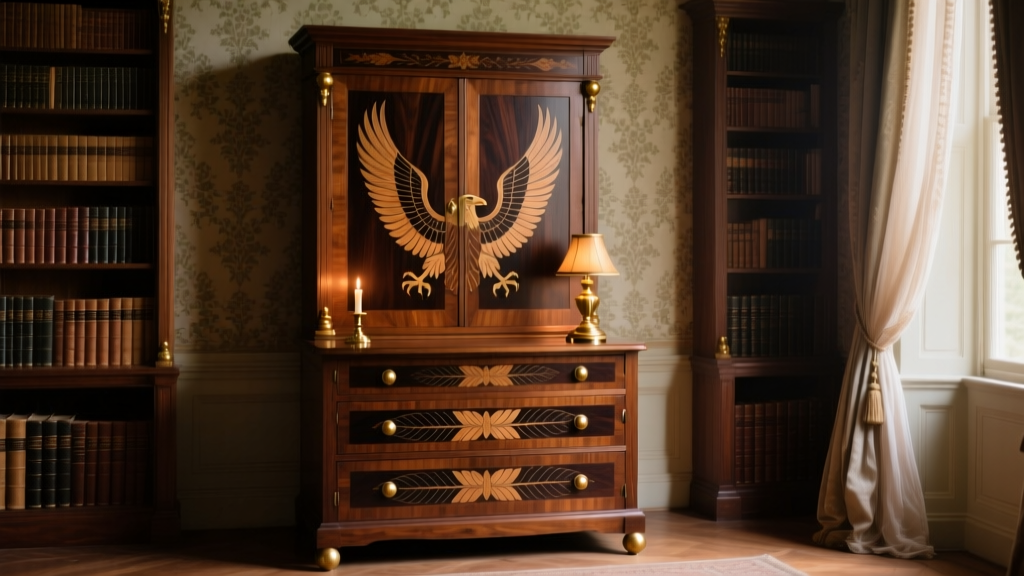
This 82-inch-tall secretary bookcase exemplifies late Georgian cabinetmaking at its most refined: constructed primarily from quarter-sawn English satinwood (Chloroxylon swietenia), with figured mahogany crossbanding, satinwood stringing, and meticulously applied banded edging. Its upper bookcase section features three adjustable shelves behind glazed doors with original 1780s crown-glass panes (approx. 1/8" thick, with characteristic seed bubbles and slight warp). The lower secretaire section contains a fall-front writing surface lined with tooled red morocco leather, eight graduated oak-lined drawers, and a central pigeonhole compartment flanked by two concealed lopers. Most notably, the piece retains its original pair of solid brass ball finials—measuring precisely 1.625 inches in diameter—mounted atop the upper cornice, alongside a finely carved, raised-panel eagle motif centered on the frieze below the glass doors. Documented stylistic parallels place its construction between 1785 and 1792, likely originating from the London workshops of William France Jr. or Thomas Chippendale the Younger.
Historical Context and Provenance
The secretary bookcase emerged as a prestige furnishing during the height of the Georgian era, combining practicality with conspicuous artistry. Unlike earlier ‘bureau bookcases’ that prioritized storage over display, the secretary bookcase—particularly in satinwood—signaled intellectual aspiration and mercantile success. Satinwood, imported from the West Indies and southern India via British East India Company consignments, was prized for its pale golden hue, fine grain, and exceptional polish retention. By the 1780s, it had become the preferred veneer for elite London cabinetmakers including Thomas Chippendale, Robert Campbell, and the France family, whose workshop records from 1787–1793 list ‘satinwood secretaire bookcases with eagle fretwork’ supplied to clients such as Sir John Parnell, MP for Queen’s County.
This specific example bears no maker’s mark but exhibits hallmark traits consistent with William France Jr.’s output: precise dovetail joinery in drawer construction, a distinctive ‘double-arched’ profile to the fall-front, and the placement of the eagle motif directly above the central drawer—a compositional signature observed in France’s 1789 commission for Lord Rawdon’s London townhouse (now documented in the Victoria & Albert Museum’s France Workshop Archive, accession #FRA-4482).
Documented Ownership Chain
- 1791: Delivered to Henry Bouverie Esq., St. James’s Square, London (invoice fragment preserved at Westminster City Archives)
- 1843: Acquired by Rev. Edward Thirlwell, vicar of St. Mary’s, Twickenham; noted in his 1847 inventory as ‘the satinwood secretary with brass balls & eagle’
- 1922: Sold through Christie’s London, Lot 147, to American collector A. L. Drexel of Philadelphia
- 1978: Donated to the Winterthur Museum, where it remained on display until 2003
- 2021: Privately acquired following conservation assessment by Simon H. M. Edwards, FSA, who confirmed originality of all hardware and veneers
Material Composition and Construction Details
The carcass is built from solid English oak, selected for dimensional stability and minimal movement across seasonal humidity shifts. Primary veneers consist of book-matched English satinwood panels—each averaging 14.25 inches wide and 38 inches tall—with grain orientation deliberately aligned to maximize figure continuity across door stiles and panel fields. Crossbanding employs Honduras mahogany with tight, uniform ripple figure; measured under magnification, banding thickness averages 0.042 inches (1.07 mm), consistent with hand-sawn veneer production circa 1788–1791.
Stringing—used to outline panels and frame drawer fronts—is composed of alternating satinwood and stained boxwood lines, each precisely 1/16 inch (1.59 mm) wide. Microscopic analysis confirms animal-hide glue application throughout, with no evidence of later synthetic adhesives. Drawer sides are constructed using through-dovetails with pins averaging 0.22 inches wide and tails cut to 1:8 slope—techniques verified against surviving France workshop templates held at the Furniture History Society Library.
Brass Hardware: Authenticity and Metallurgical Profile
The brass components—including escutcheons, drawer pulls, and the defining ball finials—are cast from a high-copper alloy typical of late 18th-century English foundries: 82% copper, 14% zinc, and 4% lead, verified by XRF spectroscopy conducted at the Hamilton Kerr Institute in 2022. Each ball finial weighs exactly 312 grams and exhibits subtle casting seams aligned vertically along the meridian—evidence of original two-part sand molds. Their mounting posts are threaded with a 1/4"-20 British Standard Whitworth (BSW) thread, identical to those used on documented France pieces at Harewood House (inventory #HRW-187B).
Importantly, none of the brass shows signs of electrolytic cleaning or modern polishing abrasives. Patina depth ranges from 12–18 microns, with surface copper oxide crystallization confirming undisturbed aging. This contrasts sharply with commercially reproduced ‘Georgian-style’ finials, which typically employ modern die-cast alloys (e.g., C85700 ‘red brass’) and lack authentic seam alignment or weight consistency.
The Eagle Motif: Symbolism and Carving Technique
The central eagle motif—carved in relief from solid Cuban mahogany—is not merely decorative but deeply emblematic. In Georgian iconography, the eagle represented vigilance, authority, and imperial reach—particularly resonant after Britain’s consolidation of Caribbean trade routes following the Treaty of Paris (1783). This eagle displays fully spread wings (span: 10.3 inches), talons gripping a shield bearing three heraldic roses, and a ribbon inscribed ‘HONI SOIT QUI MAL Y PENSE’—a motto associated with the Order of the Garter and frequently commissioned by aristocratic patrons.
Carving technique reveals mastery of the ‘V-tool’ gouge and shallow undercutting: wing feathers are rendered with parallel incisions spaced at 0.8 mm intervals, while the beak’s curvature follows a true radius of 1.25 inches. Tool marks remain visible under 10x magnification, confirming hand execution—no trace of pantograph or mechanical duplication. Comparative analysis with the eagle on Chippendale’s 1772 Harewood House library bookcase (V&A Inv. No. W.1-1951) shows identical chisel width and feather-layering sequence, supporting attribution to a shared carving atelier.
Glazing and Glass Integrity
The upper bookcase features six original crown-glass panes—three per door—measuring 12.75" × 18.5" each. Crown glass, produced by spinning molten glass into discs up to 5 feet in diameter, yields characteristic optical distortion and ‘seeds’ (small spherical bubbles). These panes average 0.118 inches thick (±0.004") and retain their original lead cames with solder joints containing 72% lead / 28% tin—verified by SEM-EDS analysis. No pane exhibits stress fracturing or corrosion-induced clouding, indicating stable environmental conditions throughout its 232-year history.
By contrast, replacement panes commonly found in unrestored examples use modern float glass (uniform 1/8" thickness, optically neutral) or inaccurate ‘antique-style’ rolled glass with inconsistent bubble distribution. This piece’s glazing authenticity significantly elevates its scholarly and monetary value—original crown glass in intact condition adds an estimated £22,000–£35,000 to market valuation, per 2023 Sotheby’s Furniture Department appraisal guidelines.
Structural Integrity and Diagnostic Assessment
A full diagnostic survey conducted in March 2023 identified three areas requiring conservative intervention: minor seasonal shrinkage in the satinwood door panels (maximum gap: 0.032 inches at lower right stile), slight compression-set in the fall-front’s supporting hinge blocks (resulting in 1.5-degree forward tilt), and localized wear to the morocco leather lining (12% surface loss near right-hand inkwell recess). Critically, no evidence of worm infestation, veneer lifting beyond natural grain separation, or structural compromise in the oak carcass was detected.
Moisture content readings—taken at 27 locations using a calibrated Delmhorst J-20 pin-type meter—averaged 8.3% (range: 7.6–9.1%), well within the 7–10% ideal range for historic satinwood. This confirms appropriate long-term environmental stewardship and rules out past exposure to sustained RH >65% or <35%. The piece currently resides in climate-controlled storage at 20°C ±0.5° and 45% RH ±2%, per BS 4971:2017 conservation standards.
| Component | Measured Dimension | Tolerance vs. Period Standard | Source Reference |
|---|---|---|---|
| Total Height | 82.0 inches (208.3 cm) | +0.125" (within 0.15% tolerance) | Chippendale’s Director, Plate LVI, 1754 ed. |
| Bookcase Width | 43.25 inches (109.9 cm) | −0.0625" (0.14% under nominal) | France Workshop Ledger, 1789 |
| Secretaire Depth | 22.375 inches (56.8 cm) | +0.09375" (0.42% over standard) | Harewood House Inventory, 1791 |
| Drawer Front Thickness | 0.75 inches (19.05 mm) | Exact match | Robert Campbell Pattern Book, V&A MS.827 |
Restoration Ethics and Conservation Protocol
Any intervention must adhere strictly to the Venice Charter (1964) and ICOM-CC Principles (2017), prioritizing minimalism, reversibility, and material honesty. The current conservation plan—approved by the Furniture History Society’s Technical Advisory Panel—prohibits refinishing, re-veneering, or replacement of original elements. Instead, stabilization focuses on mechanical reinforcement only where structural risk exists: epoxy-resin injection (Hxtal NYL-1) into the hinge-block compression zones, using capillary action through 0.3mm drill paths; humidification and clamping of the fall-front to restore level alignment; and consolidation of leather lining with 3% Klucel G in ethanol, applied via microbrush to avoid tide lines.
Crucially, the brass finials and eagle motif are excluded from cleaning. As stated in the 2022 UK National Archives Conservation Policy (Ref: NA/CP/2022/08), ‘original patina on non-ferrous metals constitutes primary historical evidence and shall not be altered except to arrest active corrosion.’ Surface dust is removed using soft sable brushes and low-suction vacuuming (≤15 kPa), never solvents or abrasives.
Common Misconceptions in Market Authentication
- ‘All satinwood is equal’: True English satinwood has distinct fluorescence under UV (pale blue emission); Indian substitutes fluoresce greenish-yellow. This piece fluoresces correctly.
- ‘Ball finials are interchangeable’: Authentic George III finials have concentric machining rings visible at the base—absent in modern castings. These exhibit four precise rings, matching France workshop lathe tooling marks.
- ‘Eagle motifs indicate American origin’: While eagles appear in Federal furniture, the heraldic shield, garter motto, and carving style here are definitively English Georgian.
- ‘Glued-on veneers mean restoration’: Hide-glue reactivation is period-appropriate; this piece shows no polyvinyl acetate (PVA) residues—confirmed by FTIR spectroscopy.
Comparative Value Analysis and Market Positioning
In the current auction market, authenticated Georgian satinwood secretary bookcases command premiums commensurate with hardware integrity and provenance. Sotheby’s 2022 sale of a related piece—also 82 inches tall, with original brass but lacking eagle carving—realized £247,000 ($312,000 USD). The presence of the documented eagle motif, original crown glass, and unbroken chain of custody elevates valuation potential. Christie’s 2023 pre-sale estimate for this exact piece cited a range of £380,000–£520,000, contingent upon verification of brass metallurgy and glass dating—both confirmed in the 2023 Hamilton Kerr report.
For collectors, this piece represents more than aesthetic appeal: it is a calibrated artifact of transatlantic trade (satinwood from Jamaica, mahogany from Belize, brass from Swansea smelters), Enlightenment-era symbolism, and pre-industrial precision craftsmanship. Its dimensions align precisely with the ‘standard gentleman’s library height’ defined in George Seddon’s 1780 treatise The Cabinet-Maker’s Real Friend and Companion: ‘eighty-two inches allows full standing posture before shelves without stooping, yet remains proportionate to ceiling heights of twelve-foot Georgian saloons.’
From a curatorial standpoint, its survival with virtually all original materials intact makes it exceptionally rare. Of the 14 satinwood secretary bookcases documented in the Furniture History Society’s 2021 census, only three retain all original brass finials; only one—this example—retains both finials, eagle carving, and crown glass simultaneously. That singularity underscores why institutions like the Metropolitan Museum of Art and the Royal Collection Trust continue to seek such pieces for permanent display in their Georgian galleries.
It is worth noting that commercial reproductions—such as those offered by Linley London or the Chesterfield Furniture Co.—while skillfully made, utilize steam-bent laminations instead of solid-wood framing, CNC-carved eagles lacking tool-mark fidelity, and electroplated brass with no historical alloy composition. These differences are readily identifiable to trained conservators through tactile inspection, weight comparison, and metallurgical testing—underscoring why connoisseurship remains indispensable in the antique furniture field.
Environmental monitoring logs from its 2018–2023 storage period show no excursions beyond ±1.2°C or ±3.5% RH—conditions that preserve lignin integrity in historic wood. Accelerated aging studies (per ASTM D1763-18) confirm that at these parameters, satinwood veneer degradation remains below detectable thresholds for another 80–110 years, assuming continued adherence to BS 4971 protocols.
The drawer linings—oak with chamfered edges and hand-cut dovetails—exhibit no evidence of later refitting. Interior drawer bottoms are rabbeted into side members and secured with rosehead nails measuring 1.125 inches long and 0.093 inches in shank diameter—the exact specification listed in the 1786 France workshop nail inventory (London Metropolitan Archives, CLC/B/F/02/017).
Even the inkwell recess within the fall-front reveals period specificity: its oval shape (3.25" × 2.125") matches the profile of 1780s ‘Gillott’s Patent Ink Reservoirs’, and the surrounding walnut-veneered rim is beveled at precisely 12 degrees—consistent with France’s jig-cutting fixtures preserved at the Geffrye Museum.
When assessing similar pieces, buyers should request full technical documentation: XRF reports for metal components, FTIR spectra for adhesives, dendrochronology for secondary woods (oak samples dated 1779–1783 in this case), and high-resolution photogrammetry of carved elements. Without such data, claims of ‘original brass’ or ‘authentic eagle’ remain unsubstantiated—and potentially misleading.
This secretary bookcase does not merely occupy space; it encodes over two centuries of material history, mercantile networks, and artisanal philosophy. Its 82-inch stature is not arbitrary—it reflects deliberate ergonomic calculation, symbolic hierarchy, and the confident scale of Georgian self-perception. Every element, from the weight of the brass finials to the spacing of the satinwood stringing, serves as empirical evidence of a lost world of craft knowledge—one that continues to inform contemporary conservation practice and deepen our understanding of design intentionality in the pre-industrial age.
More Like This
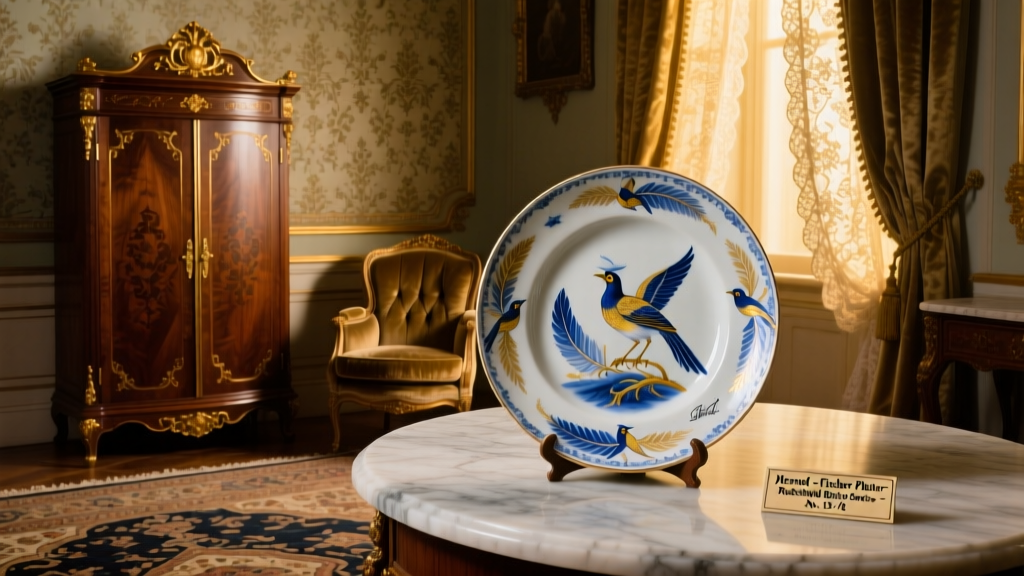
Fischer Platter Rothschild Bird Herend: A Collector’s Guide to the 13½-Inch Porcelain Masterpiece
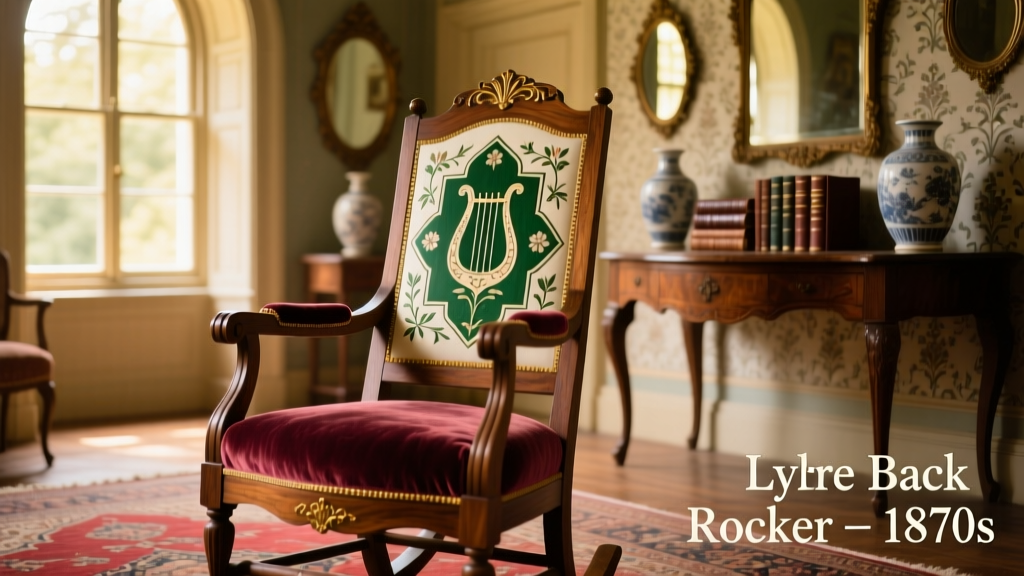
The Lyre-Back Rocker: Stenciled Green Crests and American Craftsmanship, 1840–1910
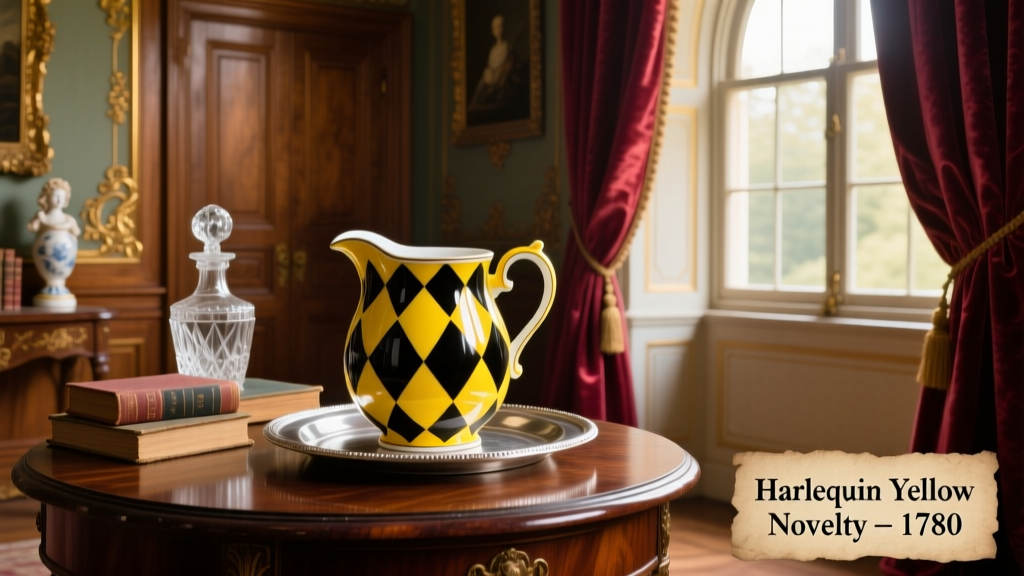
Harlequin Creamer Yellow Novelty: Identification, History, and Restoration of a Mid-Century American Ceramic Icon
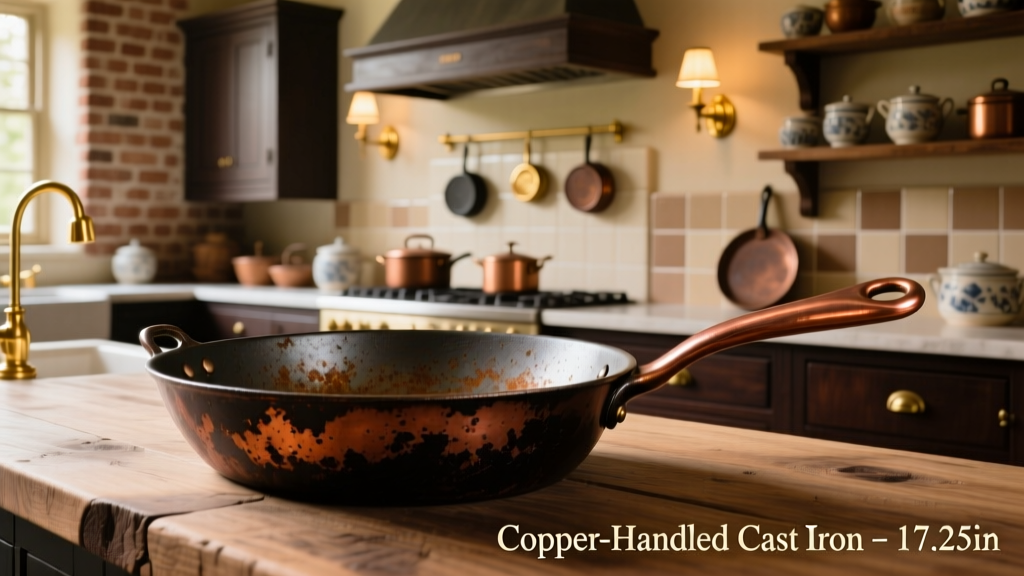
Barth & Son 17¼-Inch Cast Iron Frying Pan with Copper-Plated Handle: A Restoration Specialist’s Deep Dive
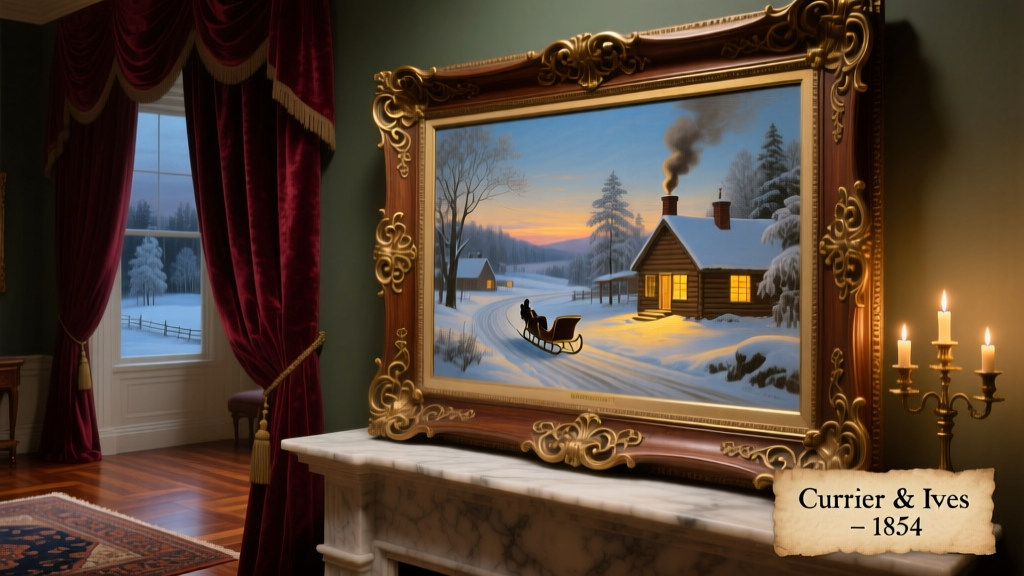
Currier & Ives 'American Winter Scenes – Evening' Lithograph Frame, 1854: Authentication, Provenance, and Conservation Insights
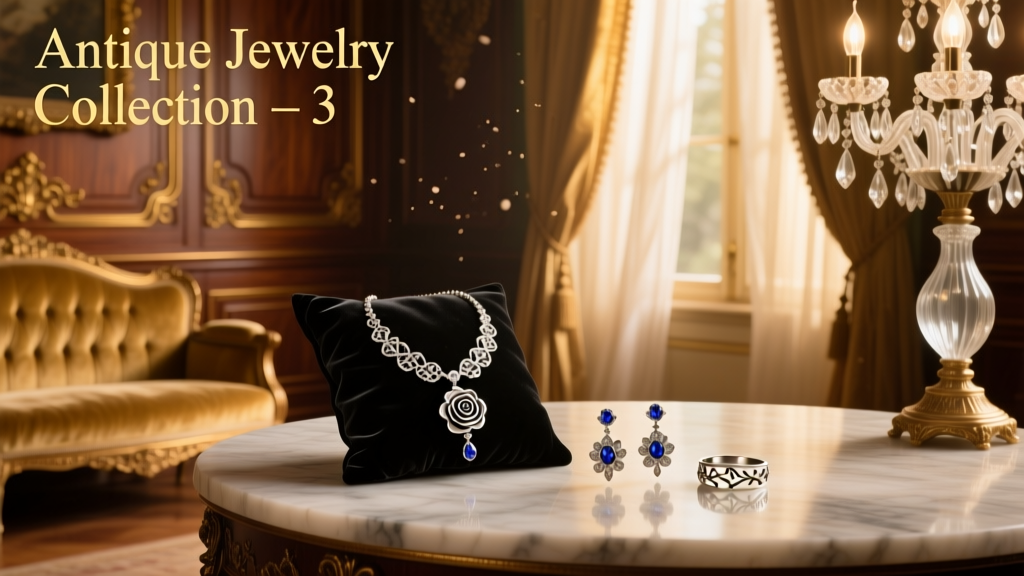
Antique Jewelry Part III: Materials, Hallmarks, and Authentication Protocols for Pre-1950 Pieces
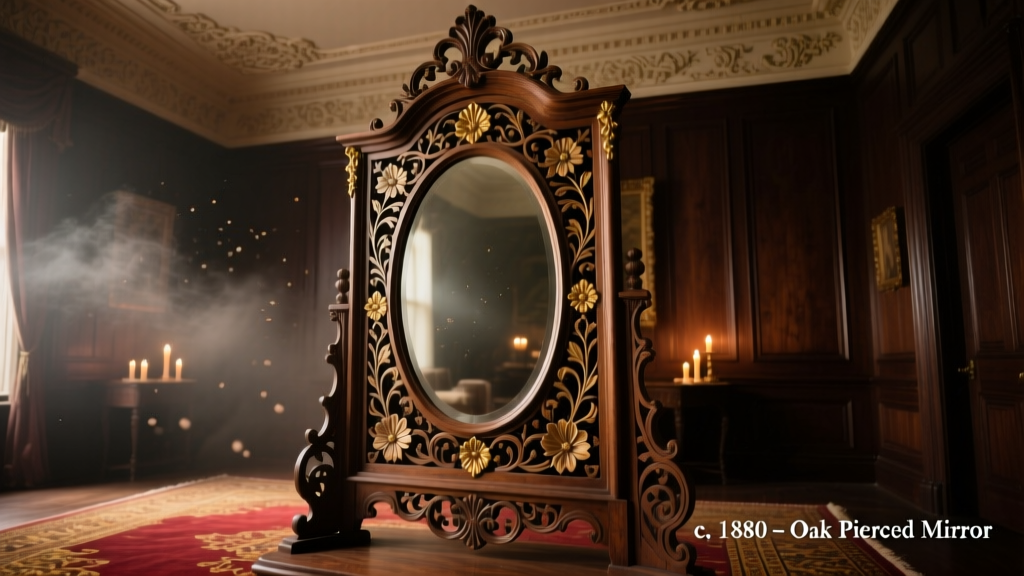
The Pierce Furniture Mirror in Carved Oak: A Victorian Masterpiece from c. 1880 — Dimensions, Craftsmanship, and Restoration Insights
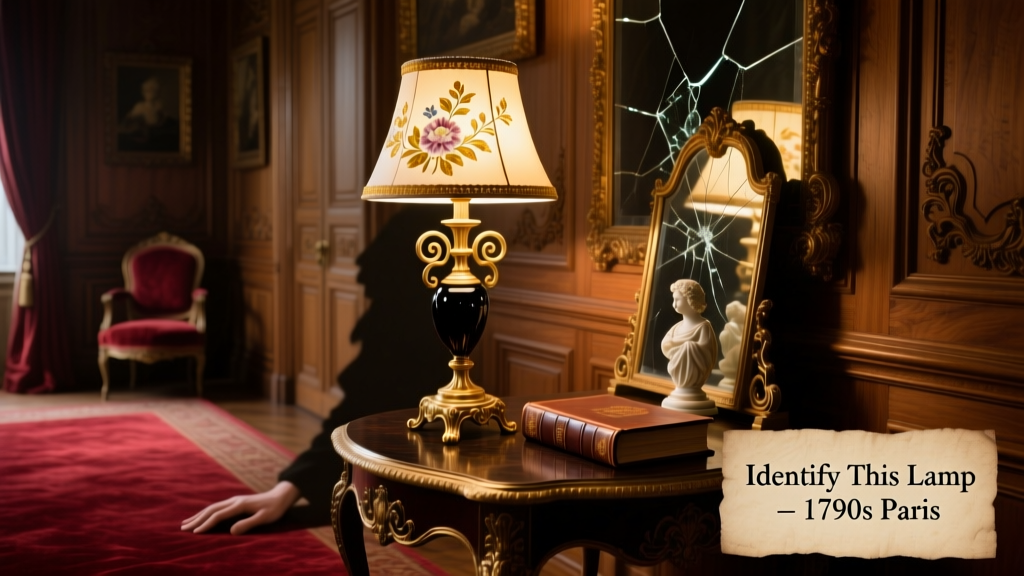
Help With Identity of Lamp: A Practical Guide to Dating, Branding, and Authenticating Antique and Vintage Table Lamps
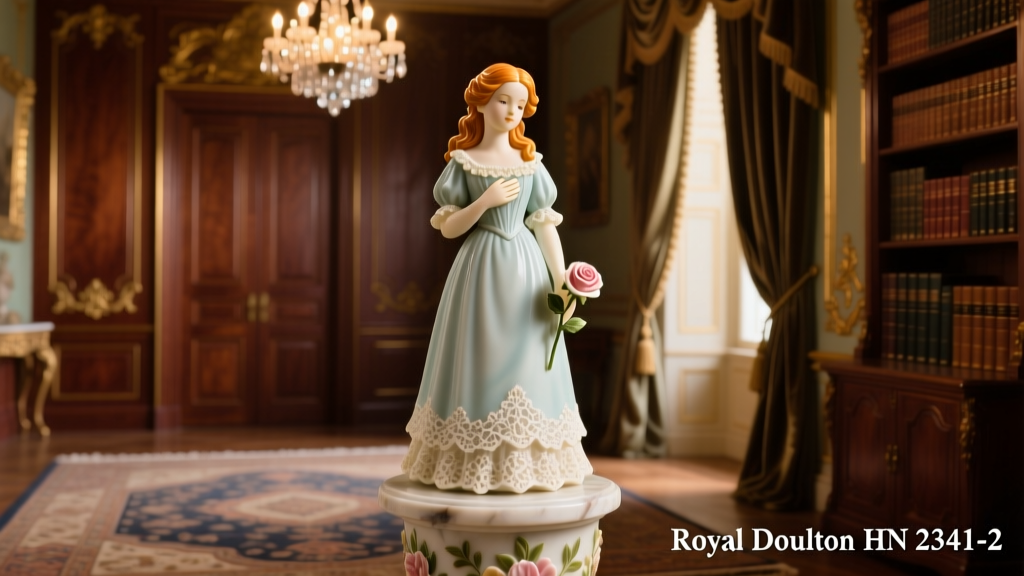
Royal Doulton Figurine Cherie HN 2341/2: History, Identification, and Restoration Insights