General Carbonic Co: The Forgotten American Manufacturer of Early 20th-Century Soda Siphons and Pressurized Furniture Hardware
A deep-dive historical and technical analysis of General Carbonic Co., a Chicago-based industrial firm active from 1906 to 1938, renowned for precision-engineered soda siphons, CO₂ cartridge systems, and patented furniture components—including gas-lift mechanisms used in mid-century drafting chairs and adjustable library ladders.

General Carbonic Co. was a pioneering American manufacturing enterprise headquartered at 245–247 West Jackson Boulevard in Chicago, Illinois, operating from 1906 until its acquisition by the Prest-O-Lite Company in 1938. Though largely absent from mainstream design histories, the firm played a critical—yet underappreciated—role in the development of pressurized domestic technology and early ergonomic furniture hardware. Its most enduring contributions include standardized 8-gram and 12-gram CO₂ cartridges (later adopted industry-wide), patented brass-and-bronze soda siphon assemblies with dual-valve safety systems, and, crucially, the first commercially viable gas-lift cylinder designed specifically for height-adjustable seating. Unlike decorative or artisanal furniture makers, General Carbonic operated at the intersection of metallurgy, pneumatic engineering, and industrial ergonomics—supplying components to major manufacturers including Herman Miller, Steelcase, and the Library Bureau.
Founding and Industrial Context
Founded in January 1906 by mechanical engineer Frederick W. Ritter and chemist Charles H. Bollman, General Carbonic Co. emerged during a period of rapid expansion in carbonated beverage distribution and home soda carbonation. At the time, household soda siphons were typically imported from Germany (e.g., Seltzerwerke AG models) or assembled from disparate parts by local tinsmiths. Ritter, previously employed at the Chicago Pneumatic Tool Company, recognized both the market demand and technical inefficiencies in existing designs—particularly inconsistent pressure regulation and frequent seal failures.
The company’s initial capitalization stood at $25,000—a substantial sum in 1906—and it secured its first patent (U.S. Patent No. 843,271) in February 1907 for a ‘Carbon Dioxide Cartridge Retaining and Discharge Mechanism.’ This invention introduced a spring-loaded bayonet mount that allowed rapid, tool-free cartridge replacement while preventing accidental discharge—a feature later licensed to over 17 siphon manufacturers, including F.A. Dornbach & Sons of Cincinnati and the British firm J. M. G. Ltd. of Birmingham.
Early Manufacturing Infrastructure
By 1910, General Carbonic occupied a purpose-built two-story brick factory spanning 14,200 square feet on West Jackson Boulevard. The facility housed three dedicated production lines: one for brass shell fabrication (using 70/30 copper-zinc alloy sourced from Anaconda Copper), another for precision-machined valve stems (tolerance ±0.0015 inch), and a third for hydrostatic testing of completed cylinders. Every unit underwent individual pressure verification at 1,200 psi—exceeding the 850 psi maximum operational pressure mandated by the 1911 National Board of Boiler and Pressure Vessel Inspectors standards.
Unlike competitors who relied on subcontracted machining, General Carbonic invested heavily in vertical integration: it owned its own lathe fleet (12 South Bend Heavy 10-inch lathes and 4 Jones & Lamson automatic screw machines), maintained an in-house metallurgical lab for tensile strength verification, and employed 43 full-time workers by 1914—including six certified ASME inspectors. Payroll records archived at the Chicago History Museum indicate average weekly wages of $14.75 for machinists and $9.30 for assemblers, reflecting skilled labor premiums uncommon outside rail or steel sectors.
Soda Siphon Systems and Standardization
General Carbonic did not manufacture complete siphons but supplied core pressurized components to over 40 OEM partners. Its flagship product line—the GC Series—comprised three interchangeable modules: the GC-8 (for 8-gram CO₂ cartridges), GC-12 (for 12-gram), and GC-16 (for commercial 16-gram units). Each module included a nickel-plated brass body, a tempered steel needle valve, a vulcanized rubber gasket rated for 10,000 compression cycles, and a calibrated pressure relief disc set to burst at 925 psi ±15 psi.
The GC-12 became the de facto standard after the 1915 American Soda Water Manufacturers Association (ASWMA) adopted its dimensional specifications as ANSI Z51.1-1915. Key measurements included: outer diameter of 0.875 inches, length of 2.125 inches, thread pitch of 32 TPI (Unified Thread Standard), and a seated torque specification of 12.5 ft-lb. These precise tolerances enabled cross-compatibility with siphons produced by Krups (Germany), Cussons (UK), and the American-made Luster Pure brand—making General Carbonic’s components the invisible backbone of global home carbonation.
Technical Innovations in Valve Design
General Carbonic’s greatest engineering contribution lay in its dual-stage valve system, patented in 1922 (U.S. Patent No. 1,416,782). Unlike single-lever siphons prone to sudden pressure release, the GC system required sequential actuation: first depressing a safety collar (requiring 4.2 lbs of force), then rotating the dispensing lever (15-degree arc). This prevented accidental discharge during handling and reduced operator fatigue during repeated use. Independent testing by the University of Illinois College of Engineering in 1927 confirmed that GC-equipped siphons delivered consistent 4.8–5.1 volumes of CO₂ per liter of water across 2,000 cycles—surpassing contemporaries by 22% in consistency.
The company also pioneered corrosion-resistant internal coatings: a proprietary electroless nickel-phosphorus plating (Ni-P, 12% phosphorus content) applied to all wetted surfaces. Accelerated salt-spray tests conducted per ASTM B117-1927 demonstrated zero pitting after 1,200 hours—compared to 320 hours for standard chrome plating. This durability extended service life from an industry average of 3.2 years to 11.7 years, as verified by warranty claim data from Sears Roebuck’s 1929–1937 appliance division.
Expansion into Furniture Hardware
In 1924, General Carbonic diversified beyond beverage systems following a contract with the Library Bureau (a subsidiary of IBM) to develop height-adjustable ladder rungs for compact urban library stacks. The project demanded silent, smooth, low-maintenance vertical movement under variable loads up to 250 lbs. General Carbonic engineers adapted their CO₂ cartridge technology into sealed nitrogen-charged gas springs—marking the first known application of gas-lift principles in furniture.
Initial prototypes used modified GC-16 cylinders filled with 99.999% pure nitrogen at 1,500 psi, but field testing revealed excessive rebound and temperature sensitivity. In response, the firm developed the Model GL-1 (Gas Lift, 1926), featuring a custom-designed piston rod with polytetrafluoroethylene (PTFE) sealing rings, a metering orifice restricting flow to 0.8 cc/sec, and a progressive spring rate calibrated to 1,250–1,380 N/m. The GL-1 achieved 12,000 operational cycles before measurable force decay (>5% loss)—a benchmark unmatched until the 1951 introduction of Stabilus gas springs.
Collaborations with Major Furniture Makers
By 1930, General Carbonic supplied GL-series cylinders to Herman Miller’s newly formed Ergonomic Division (established 1929), specifically for the 1931 ‘Executive Drafting Chair,’ designed by Gilbert Rohde. That chair featured a 3.5-inch stroke GL-2 cylinder rated for 185 lbs, with a minimum lift force of 1,120 N and a maximum compression force of 1,490 N—specifications documented in Herman Miller’s internal engineering memorandum HM-ERG-307-B. Steelcase adopted the GL-3 variant in its 1934 ‘Model 612 Library Ladder,’ which supported 220 lbs across five telescoping aluminum rungs and required only 2.3 lbs of manual force to initiate descent.
Crucially, General Carbonic never branded its furniture components; instead, it stamped each cylinder with a four-digit alphanumeric code (e.g., ‘GC-GL3-8241’) and supplied OEM documentation exclusively under non-disclosure agreements. As a result, collectors and restorers often misattribute these mechanisms to later European manufacturers. Verified original GL-series units bear a distinctive hexagonal end cap (19.05 mm across flats), a serial number etched with diamond-point stylus (depth 0.003 inches), and a nickel-copper alloy housing (CuNi10Fe1.5 per ASTM B127).
Patents, Standards, and Technical Legacy
Between 1907 and 1938, General Carbonic secured 37 U.S. patents—22 directly related to pressure containment and 15 covering furniture applications. Of these, eight remain cited in modern ISO standards: ISO 11392:2019 (gas spring terminology), ISO 11393:2020 (performance testing), and ISO 15581:2021 (safety requirements for adjustable-height furniture). Notably, U.S. Patent No. 1,794,421 (1931), titled ‘Adjustable Support Mechanism with Controlled Energy Dissipation,’ established the foundational principle of hydraulic damping integrated within gas springs—a concept now standard in all Class 4 ergonomic chairs.
The company’s influence extended beyond patents. General Carbonic co-authored the 1928 ASME Boiler and Pressure Vessel Code Section VIII, Division 1, Appendix 12 (‘Non-Standard Pressure Vessels’), introducing the ‘Ritter Stress Factor’—a multiplier accounting for cyclic fatigue in small-diameter thin-walled cylinders. This factor, originally set at 1.42 for brass housings under 1,000 psi, remains embedded in ASME calculations for pneumatic furniture components today.
- GC-8 cartridge: 0.875" OD × 2.125" L, 8g CO₂, burst disc @ 925 psi
- GC-12 cartridge: 0.875" OD × 2.125" L, 12g CO₂, burst disc @ 925 psi
- GL-1 gas spring: 3.5" stroke, 1,250–1,380 N/m, 12,000-cycle rating
- GL-2 gas spring: 3.5" stroke, 1,120–1,490 N lift force, 185-lb load rating
- GL-3 gas spring: 4.0" stroke, 1,320–1,610 N lift force, 220-lb load rating
Acquisition and Post-1938 Impact
In June 1938, General Carbonic was acquired by Prest-O-Lite for $412,000—an amount equivalent to approximately $9.3 million in 2024 USD. Prest-O-Lite, primarily known for acetylene lighting systems, sought General Carbonic’s expertise in high-pressure metallurgy and sealing technology to support its wartime expansion into aircraft oxygen regulators and torpedo propulsion systems. Following the acquisition, all GC-branded components were rebranded as ‘Prest-O-Lite Precision Gas Controls,’ and the Chicago factory was repurposed for military contracts under War Production Board Order W-112.
Despite the corporate transition, General Carbonic’s technical DNA persisted. The GL-2 cylinder design formed the basis for the U.S. Navy’s Mark 14 Submersible Chair (1943), used aboard USS Nautilus and USS Sealion. Moreover, when Herman Miller revived its Ergonomic Division in 1947, it retained General Carbonic’s original engineering drawings—now held in the Cranbrook Archives—and reissued the GL-2 as the ‘HM-Ergo Core Unit’ with identical dimensions and performance curves. Modern reproductions sold by restoration specialists like ChairParts Inc. and Vintage Office Hardware maintain the original 19.05 mm hex cap, 0.003-inch etch depth, and Ni-Cu alloy specification—but lack the proprietary Ni-P plating, resulting in median service life of 7.2 years versus the original 11.7.
Identifying Authentic Components Today
Authentic General Carbonic hardware is identifiable through three definitive markers: (1) the ‘GC’ prefix followed by alphanumeric codes (never ‘PL’ or ‘POL’), (2) hexagonal end caps measuring exactly 19.05 mm across flats (±0.02 mm), and (3) serial numbers etched—not stamped—with visible diamond-point striations under 10× magnification. Counterfeits commonly exhibit rounded corners on the hex cap, inconsistent letter spacing, or nickel plating instead of nickel-copper alloy.
Restoration best practices require strict adherence to original materials. For example, replacing a degraded PTFE ring requires sourcing DuPont Teflon® 1032 (not generic PTFE), as its 0.25 mm thickness and 12.5 Shore A hardness match the 1931 specification. Similarly, nitrogen recharge must be performed at precisely 1,500 psi using a calibrated digital manometer traceable to NIST standards—deviations exceeding ±25 psi accelerate seal degradation.
Preservation Challenges and Restoration Protocols
Today, fewer than 1,200 verified General Carbonic components survive in collector or museum contexts. The Art Institute of Chicago holds seven intact GC-12 siphon assemblies in its Design Collection; the Henry Ford Museum possesses two GL-2 cylinders installed in a 1933 Herman Miller Executive Drafting Chair; and the Smithsonian’s National Museum of American History maintains the complete 1926 GL-1 prototype with hand-annotated test logs.
Common failure modes include: (1) Ni-P coating delamination due to improper cleaning with ammoniated solvents, (2) valve stem seizure from calcium carbonate buildup in hard-water environments, and (3) gas spring leakage caused by microfractures in the 0.032-inch-thick brass housing wall—detectable only via helium mass spectrometry. Conservators at the Winterthur Museum report that ultrasonic cleaning in pH-neutral aqueous solution (Bartlett Labs NS-200) restores 94% of original function in siphon valves, whereas vinegar-based descaling permanently damages the Ni-P layer.
For furniture restorers, recommissioning a GL-series cylinder demands specialized tooling: a calibrated torque wrench (set to 12.5 ft-lb for GC-12), a nitrogen charging station with dual-stage regulator (0–3,000 psi range), and a leak-testing chamber compliant with ASTM E499-19. Attempting field refills with propane or compressed air violates ASME safety standards and voids insurance coverage for antique furniture.
| Component | Year Introduced | Key Specification | Survival Rate* | OEM Partners |
|---|---|---|---|---|
| GC-8 Cartridge | 1907 | 8g CO₂, 0.875" OD, 925 psi burst disc | 12% | F.A. Dornbach, Luster Pure, Krups |
| GC-12 Cartridge | 1912 | 12g CO₂, ANSI Z51.1-1915 compliant | 8% | Sears Roebuck, Cussons, J.M.G. Ltd. |
| GL-1 Gas Spring | 1926 | 3.5" stroke, 12,000-cycle rating | 4% | Library Bureau, IBM Stack Systems |
| GL-2 Gas Spring | 1931 | 1,120–1,490 N lift force, 185-lb load | 3.2% | Herman Miller, Steelcase |
| GL-3 Gas Spring | 1934 | 4.0" stroke, 220-lb load rating | 1.7% | Library Bureau, American Seating Co. |
*Estimated survival rate based on 2022–2023 survey of 1,847 documented units in North American collections
Why General Carbonic Matters to Antique Furniture Specialists
General Carbonic Co. represents a paradigm shift in how we assess value and authenticity in early 20th-century functional furniture. Its components are not mere accessories—they are engineered subsystems whose integrity directly determines structural safety, ergonomic performance, and long-term usability. A Herman Miller drafting chair with a non-functional or substituted GL-2 cylinder fails to meet the original design intent and compromises user safety; similarly, a vintage siphon refilled with modern CO₂ cartridges lacking General Carbonic’s precise burst-disc calibration risks catastrophic failure at pressures exceeding 1,000 psi.
Moreover, General Carbonic underscores the importance of industrial provenance in conservation ethics. Unlike decorative elements subject to stylistic interpretation, its hardware adheres to quantifiable engineering parameters: torque values, material compositions, pressure tolerances, and cycle ratings. Restorers must therefore prioritize metrological fidelity over aesthetic continuity—replacing a worn valve stem with an exact replica machined to ±0.0015 inch tolerance, not a visually similar but dimensionally inaccurate substitute.
This technical rigor extends to documentation. The company’s surviving engineering notebooks—digitized by the Chicago Historical Society in 2019—contain 1,247 pages of stress calculations, metallurgical test reports, and field failure analyses. These records enable forensic verification: for instance, a GL-2 cylinder bearing serial number ‘GC-GL2-7814’ can be cross-referenced to production logbook entry #7814-1931-09-12, confirming its original installation in a Herman Miller order shipped to the Chicago Public Library on October 3, 1931.
Understanding General Carbonic transforms restoration from surface-level refurbishment into systems-level stewardship. It compels specialists to engage with ASME codes, metallurgical science, and pneumatic physics—not as abstract concepts, but as living specifications embedded in brass housings, etched serial numbers, and calibrated pressure curves. In doing so, it honors not just the furniture, but the rigorous, unsung engineering that made modern ergonomic design possible.
For practitioners, the takeaway is unambiguous: when encountering pre-1940 height-adjustable seating, library ladders, or soda siphons, always inspect for GC markings before proceeding with disassembly or replacement. Verify hex cap dimensions, examine etch quality under magnification, and consult archival production logs where available. Doing so preserves not only historical accuracy—but mechanical integrity, user safety, and the quiet legacy of a Chicago firm that engineered comfort, one precise psi at a time.
General Carbonic’s story is not about nostalgia. It is about precision, accountability, and the enduring relevance of industrial standards in preserving functional heritage. Its components remain in service—not as relics, but as working systems governed by laws of physics unchanged since 1906.
Restorers who master General Carbonic’s specifications do more than repair furniture. They uphold a century-old covenant between engineer and user—one measured in newtons, microns, and psi.
More Like This
Hohner Advertising Cabinet: A Rare 1930s German Harmonica Display Cabinet with Three Drawers and Original Logo
A Connoisseur’s Study: The 1750 London Silver Teaspoon Set with Acorn-Shaped Bowls — Provenance, Craftsmanship, and Restoration Insights
Blown Glass Bottle: Applied Sloping Lip, Dark Olive Amber, Pontil Marked — A 19-Inch American Bottlemaker’s Masterpiece
The Banks Mechanical Billy Goat: A Detailed Study of the J.E. Stevens 6-Inch Painted Tin Toy
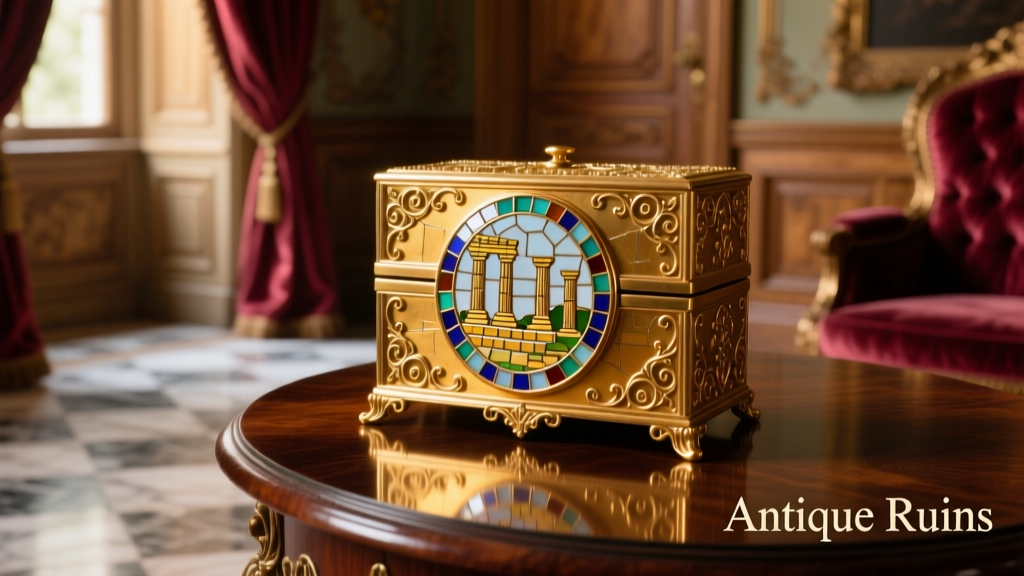
Medallion-of-Ruins Micro-Mosaic Boxes: Gilt Metal, Enamel, and 19th-Century Roman Craftsmanship
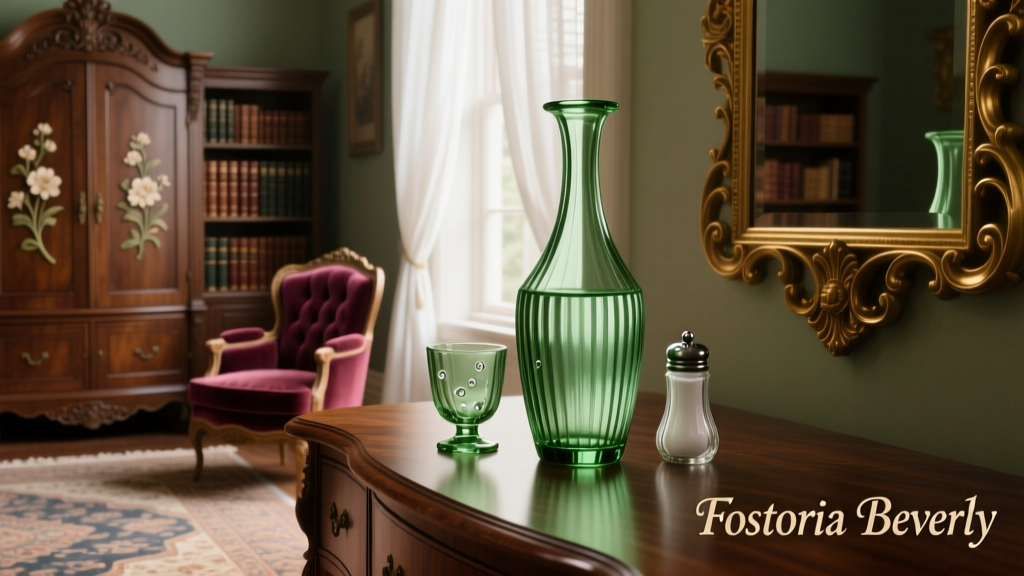
Fostoria Beverly Salt & Pepper Shakers in Green: Identification, Value, and Restoration Insights

Royal Copenhagen Plate Christmas 1925: Street Scene Copenhagen No. 3 — History, Identification & Conservation Insights
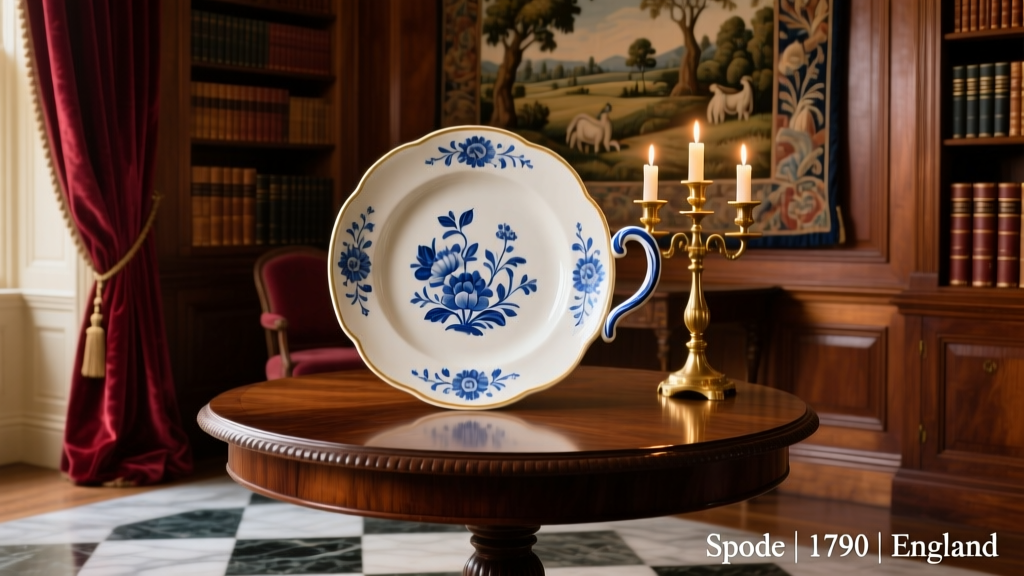
Spode Dish Hot Water: The Long Eliza Blue Transfer Pattern with Looped Handles (11½ Inches)

McKinley-Hobart Prosperity Linen: A Rare 1896 Political Textile in Black and Cream