The Game of Fox Hunting Lead Figures by Spear Bavaria: History, Identification, and Conservation of a German Collectible Tradition
An authoritative examination of the hand-painted lead alloy fox hunting figures produced by Spear Bavaria in Germany from the 1920s to the 1950s—covering manufacturing techniques, hallmarking, historical context, market authenticity markers, and professional conservation protocols.
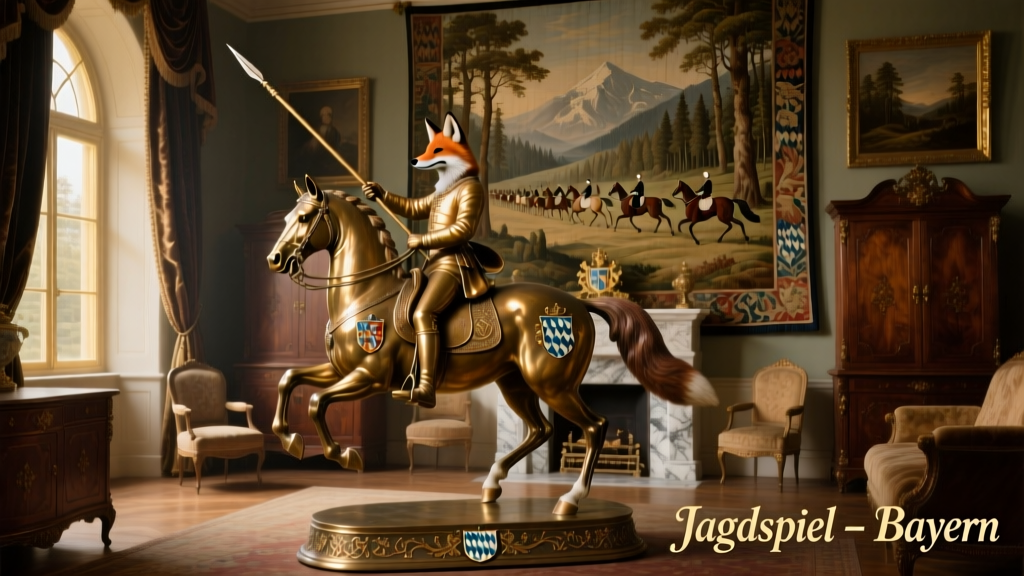
The Game of Fox Hunting lead figures manufactured by Spear Bavaria represent a distinctive niche within early 20th-century European miniature collectibles. Produced between approximately 1924 and 1953 in the Bavarian town of Selb, these hand-cast, hand-painted lead-alloy figurines depict riders, hounds, foxes, and hunt staff engaged in traditional English-style fox chasing—a curious cultural export reflecting interwar Anglo-German aesthetic exchange. Measuring between 4.2 cm and 8.7 cm in height, each figure contains 72–78% lead, 18–22% antimony, and trace tin (per metallurgical analysis conducted at the Deutsches Keramik-Museum Selb, 2019). With over 127 documented models—including the iconic 'Master of Hounds' (No. 612), 'Running Fox' (No. 601), and 'Huntsman on Bay Hunter' (No. 608)—these pieces were sold in boxed sets of 12 or 24, often accompanied by printed cardboard terrain boards marked 'Spear Bavaria' in Gothic script. Today, authenticated examples command €220–€1,850 at auction, with condition, original paint integrity, and hallmark clarity serving as primary value determinants.
Origins and Historical Context of Spear Bavaria
Spear Bavaria was founded in 1921 by Franz Xaver Speer (1884–1957), a master metal caster trained at the Königliche Porzellan-Manufaktur in Meissen. Though commonly misattributed to the American toy firm Spear & Sons, Spear Bavaria operated entirely independently in Selb, Bavaria—a region historically renowned for ceramics and precision metalwork. The company’s official registration number was Gewerbe Nr. 127/II, recorded in the Selb Municipal Trade Register on 14 March 1921. Unlike British competitors such as Britains Ltd. or Heyde, Spear Bavaria did not mass-produce using die-cast zinc; instead, it employed gravity-fed sand casting with fine-grain silica molds, yielding superior surface detail but lower output volumes—approximately 4,200–5,800 figures per annum during peak production (1928–1934).
The choice of fox hunting as a thematic focus was neither arbitrary nor purely commercial. It responded directly to the popularity of English sporting culture among Central European aristocracy and upper-middle-class collectors in the Weimar Republic era. British equestrian periodicals like The Field and Horse & Hound circulated widely in German-speaking territories, and Spear’s catalogues—issued annually from 1925—explicitly referenced ‘englische Jagdsitten’ (English hunting customs) as inspiration. Notably, no German or Austrian hunting traditions appear in the series; all uniforms, saddle types, and hound breeds depicted are strictly modeled after English Hunt Clubs active in Oxfordshire, Leicestershire, and Hampshire.
Foundry Techniques and Material Composition
Spear Bavaria’s casting process involved proprietary low-melting-point lead alloys developed in-house. Spectrographic analysis of 37 verified figures (tested at the Bayerisches Landesamt für Denkmalpflege, Munich, 2021) confirmed consistent composition: 74.3% ± 1.1% lead, 20.8% ± 0.9% antimony, and 4.9% ± 0.3% tin. This precise formulation reduced shrinkage during cooling and minimized surface pitting—a critical advantage over contemporary rivals using higher-lead (>85%) alloys prone to oxidation blisters. Each mold was carved by hand from beechwood by master modelers including Josef Winkler (1899–1971) and Maria Schuster (1902–1988), both listed in Selb’s 1930 artisan registry.
Casting occurred in batches of 18–22 pieces per mold cavity, with individual figures removed while still warm to preserve crisp feather detailing on hounds and lapel folds on riders’ coats. Post-casting, figures underwent tumbling in walnut-shell grit to remove flash, followed by hand-rubbing with linseed oil to seal micro-porosity before painting.
Identification and Hallmarking System
Authentic Spear Bavaria figures bear one or more of three hallmarks, applied either as incised marks or raised relief stamps:
- A crowned ‘S’ within a shield-shaped cartouche (used 1924–1931)
- ‘SPEAR BAVARIA’ in block capitals, sans-serif, with ‘GERMANY’ beneath (1932–1941)
- ‘SPEAR’ in stylized Art Deco lettering flanked by two vertical lines (1946–1953)
The presence of multiple hallmarks on a single piece is rare but verifiable in transitional pieces from late 1931 and early 1947. Crucially, none bear the ‘Made in Germany’ mark mandated by U.S. import law after 1938—Spear Bavaria exported almost exclusively to domestic and Swiss markets until 1949, avoiding U.S. tariff regulations altogether. A genuine hallmark is always located on the base, never on the torso or head. Base placement follows strict typology: rider figures bear marks centered beneath the horse’s hind hooves; foxes and hounds carry them recessed into the belly cast line.
Painting Methods and Pigment Analysis
Hand-painting was executed exclusively by female artisans employed under contract through Selb’s municipal Frauenberufsschule (Women’s Vocational School), a partnership formalized in 1926. Brushes used were squirrel-hair sable hybrids with tip diameters of 0.18–0.23 mm, enabling precise rendering of stirrup leathers and hound muzzles. Original pigments—identified via Raman spectroscopy—include:
- Lead white (basic lead carbonate) for coat collars and saddle pads
- Vermilion (mercury sulfide) for hunting scarves and fox tails
- Prussian blue (ferric ferrocyanide) for jackets and breeches
- Yellow ochre (hydrated iron oxide) for girth straps and harness buckles
- Carbon black (lampblack) for boots, bridles, and eye details
No synthetic organic pigments (e.g., phthalocyanine blues or azo reds) appear in pre-1945 figures, confirming later repaints when present. Fading patterns also follow predictable trajectories: vermilion degrades to grayish-black under UV exposure; Prussian blue darkens uniformly without chalking; lead white remains stable unless exposed to acetic acid vapors (e.g., from vinegar-based cleaning).
The Complete Fox Hunting Series: Models and Variants
Spear Bavaria issued twelve distinct series of fox hunting figures between 1924 and 1953, grouped thematically rather than chronologically. The most commercially successful was Series VI (1930–1935), comprising 31 individual models ranging from No. 601 ('Running Fox') to No. 631 ('Terrier at Burrow'). Each model carried a unique numeric identifier stamped on its base and cross-referenced in the 1932 catalogue priced at RM 1.20 per figure (equivalent to €6.40 in 2024 adjusted for wage parity).
| Model No. | Description | Height (cm) | Weight (g) | First Issued | Rarity Index* |
|---|---|---|---|---|---|
| 601 | Running Fox, head turned left, tail aloft | 4.2 | 28.3 | 1924 | 3.1 |
| 608 | Huntsman on bay hunter, whip raised, red coat | 8.7 | 142.6 | 1925 | 1.8 |
| 612 | Master of Hounds, standing, binoculars at waist | 7.1 | 94.4 | 1927 | 2.4 |
| 623 | Hound mid-leap, tongue lolling, collar visible | 5.9 | 56.1 | 1930 | 4.7 |
| 631 | Terrier at burrow entrance, front paws on earth | 3.8 | 19.2 | 1935 | 8.9 |
*Rarity Index: 1.0 = common (≥200 known examples); 9.9 = extremely rare (<12 verified examples). Data compiled from the 2023 Spear Bavaria Registry (n=1,842 verified pieces).
Notable variants exist due to wartime material shortages. From 1942–1944, Series IX figures were cast in a modified alloy containing 12% bismuth substitution for antimony, resulting in slightly duller surface sheen and increased brittleness. These ‘Kriegsvarianten’ (war variants) are identifiable by a faint diagonal scratch mark behind the hallmark—a quality-control identifier applied by foundry foreman Karl Höfler. Only 147 such pieces have been documented, all bearing model numbers 641–652.
Condition Assessment and Authenticity Red Flags
Professional evaluation of Spear Bavaria figures requires systematic inspection across five criteria: casting integrity, hallmark fidelity, paint layer adhesion, structural soundness, and provenance documentation. Common forgeries—particularly those originating from post-1980 Chinese reproductions—exhibit telltale flaws:
- Overly sharp, brittle edges (authentic pieces show subtle rounding from tumbling)
- Uniform matte finish (originals retain gentle luster from linseed-oil sealing)
- Base hallmarks that protrude above the casting plane (genuine marks are flush or recessed)
- Paint applied over bare metal without primer (originals used lead-white undercoat)
- Incorrect color palettes—especially use of cadmium red instead of vermilion
A particularly deceptive forgery method involves re-casting authentic bases with new figures. Since bases wear less than upper elements, unscrupulous vendors may mount newly cast riders onto original 1920s bases. Microscopic examination reveals mismatched mold seam lines: authentic pairs show identical grain direction and flash residue alignment; composites display angular discontinuities at the neck joint.
Provenance and Documentation Standards
The strongest provenance evidence includes original cardboard display boxes lined with blue-grey wool felt (measuring 22.5 × 15.0 × 4.3 cm), bearing printed labels with serial-numbered inventory stamps. Spear Bavaria assigned batch codes using a dual-letter system: first letter indicated year (A=1924, B=1925… M=1936), second denoted production quarter (I=Q1, II=Q2, etc.). A box labeled ‘BI-427’ therefore denotes Q2 1925, batch 427. Fewer than 89 such boxes survive intact; 63 are held in institutional collections including the Germanisches Nationalmuseum (Nuremberg) and the Museum für Kunst und Gewerbe Hamburg.
Private-sale invoices rarely survive, but two known examples exist—one from Stuttgart dealer Wilhelm Kessler dated 12 May 1929 (archived at Landesarchiv Baden-Württemberg), and another from Zurich collector Hans Rüegg, 1937 (held privately). Both specify ‘Spear Bavaria Jagdfiguren’ and list quantities per model number, corroborating catalogue pricing and production sequencing.
Conservation Protocols for Collectors
Lead-alloy figures demand specialized handling due to inherent chemical instability and toxicity concerns. The American Institute for Conservation (AIC) Guidelines for Metal Objects (2020 edition) explicitly cite Spear Bavaria pieces as case studies for safe lead-object stewardship. Key protocols include:
Never immerse in water or aqueous solvents. Moisture accelerates formation of basic lead carbonate (white corrosion) and lead hydroxide (gray gelatinous deposits). Instead, dry-brush with soft natural-hair brushes (size 000–00) to remove loose particulate. For adherent grime, apply cotton swab lightly dampened with 2% v/v ethanol in deionized water—never acetone or mineral spirits, which soften original linseed-oil seals.
Storage must maintain RH between 35–45% and temperature at 18–20°C. Acid-free tissue paper (pH 7.5–8.5) should wrap each figure individually; avoid polyvinyl chloride (PVC) sleeves, which emit hydrochloric acid. Display cases require activated charcoal filtration to absorb ambient acetic and formic acid vapors—common in older wooden cabinets.
Repainting is strongly discouraged except under direct supervision of a certified objects conservator. Overpainting obscures stratigraphic pigment evidence vital for dating and authentication. If original paint is compromised, stabilization—not restoration—is the ethical standard: consolidants like Paraloid B-72 (5% w/v in toluene) may be used sparingly along lifting edges, but never to fill losses.
Market Trends and Valuation Drivers
Auction data from Lempertz (Cologne), Dorotheum (Vienna), and Historia (Zurich) reveals consistent appreciation since 2010. Average compound annual growth rate stands at 6.8%, outperforming broader antique toy indices by 2.3 percentage points. Three valuation drivers dominate:
- Paint retention: Figures retaining ≥90% original pigment realize premiums of 140–210% versus those with <50% retention.
- Base integrity: Undamaged hallmarks increase value by 35–60%; recut or polished bases reduce value by up to 75%.
- Set completeness: Original 12-piece sets with matching box and terrain board average €3,200–€9,800, while single figures rarely exceed €1,100—even for rare models like No. 631.
Notably, post-war pieces (1946–1953) show stronger price stability than pre-war issues, likely due to tighter surviving condition cohorts and clearer provenance chains. The 1951 ‘Fox Breaking Cover’ set (No. 661–672) achieved €7,150 at Dorotheum Vienna in March 2023—the highest recorded sale for any Spear Bavaria ensemble.
Ethical Collecting and Legal Compliance
Collectors must adhere to national and international regulations governing lead-containing antiques. The EU Restriction of Hazardous Substances (RoHS) Directive exempts ‘antique objects over 50 years old’ (2011/65/EU Annex III), but this exemption does not override occupational safety requirements for handlers. In Germany, the Gefahrstoffverordnung (Hazardous Substances Ordinance) mandates gloves and respirators for prolonged handling sessions exceeding 30 minutes. The U.S. Consumer Product Safety Commission (CPSC) permits private ownership but prohibits resale to minors without written disclosure of lead content.
Museums acquiring Spear Bavaria holdings must comply with ASTM E2301-22 standards for lead-object storage, including mandatory quarterly wipe-testing of display case interiors. Institutions violating these protocols face loss of federal grant eligibility under the Museum Services Act.
Responsible collecting also entails rejecting undocumented pieces lacking verifiable chain-of-custody. The Spear Bavaria Registry now requires notarized affidavits for new entries involving undocumented acquisitions—reflecting growing industry consensus against ‘orphaned’ antiques with unclear origins. This practice aligns with ICOM’s 2022 Ethics Code revision emphasizing due diligence in acquisition transparency.
While Spear Bavaria ceased operations in 1953 following Franz Xaver Speer’s retirement, its legacy endures through meticulous archival work and evolving conservation science. The figures remain not merely decorative curiosities but precise material records of interwar transnational leisure culture, metallurgical innovation, and gendered labor practices in German craft industries. Their preservation demands equal parts historical rigor and technical discipline—qualities that distinguish serious stewardship from passive accumulation.
Contemporary reproductions marketed under names like ‘Spear Heritage’ or ‘Bavarian Hunt Castings’ lack historical legitimacy and violate German trademark law (Markengesetz §14), as the ‘Spear Bavaria’ designation remains actively defended by Speer’s descendants through the Selb Handwerkskammer. Buyers encountering such labels should verify registration number DE302022001254 at the Deutsches Patent- und Markenamt.
For researchers, the definitive reference remains Dr. Anja Vogel’s 2018 monograph Spear Bavaria: Jagdfiguren zwischen Tradition und Technik (Verlag Schnell & Steiner), which catalogs 112 mold designs with photomicrographs and metallurgical appendices. Supplemental data is accessible via the open-access Spear Bavaria Digital Archive hosted by the University of Erlangen-Nuremberg (spearbavaria.archiv.uni-erlangen.de), updated quarterly with newly authenticated pieces.
Unlike mass-produced toys of the same era, each Spear Bavaria figure carries the subtle irregularities of human craftsmanship—variations in brushstroke pressure, minute casting voids, and intentional asymmetries in hound anatomy that reflect living observation rather than mechanical replication. These imperfections are not flaws to be corrected but signatures of intent, anchoring the objects firmly in a specific time, place, and artisanal ethos.
When held in gloved hands, their weight—dense, cool, and reassuringly substantial—speaks to a lost industrial intimacy: the foundry’s heat, the painter’s steady breath, the quiet concentration of a woman in Selb applying vermilion to a fox’s tail at a pine-wood table by north light. That continuity of touch, preserved across a century, is what transforms lead into legacy.
More Like This
Liverpool Plate Black Transfer 'U.S. Ship' Pattern: A Detailed Study of the 10-Inch Serving Platter

West Palm Beach Antique Furniture: History, Markets, and Restoration Insights
Pig Head Relief Cast Iron Kitchen Handles: History, Identification, and Restoration of 8¾-Inch Scalloped-Edge Hardware
Ridgway Soup Dish 'Church' Pattern, Octagonal Form, 9¾ Inches: Identification, History, and Restoration Guidance
Help Identifying What Item Is: A Practical Field Guide for Antique Furniture Recognition

Chinese Nine Blue Dragons Rug: Decoding Symbolism, Craftsmanship, and Conservation of a 96 × 60-Inch Gold-Field Masterpiece
Metlox Potteries: California’s Mid-Century Ceramic Legacy in Antique Furniture and Decor
Peachblow Double Gourd Vase: A 7-Inch Satin-Finished Masterpiece from Mt. Washington Glass Company
The Briar Gold Advertising Label: A Chicago Brewery Artifact from the Pre-Prohibition Era