The 1937 Game Ching Gong Board by Samuel Gabriel: A Forgotten Artifact of American Parlor Culture
An in-depth examination of the rare 1937 Game Ching Gong board manufactured by Samuel Gabriel Company—its historical context, construction details, gameplay mechanics, market provenance, and conservation challenges.
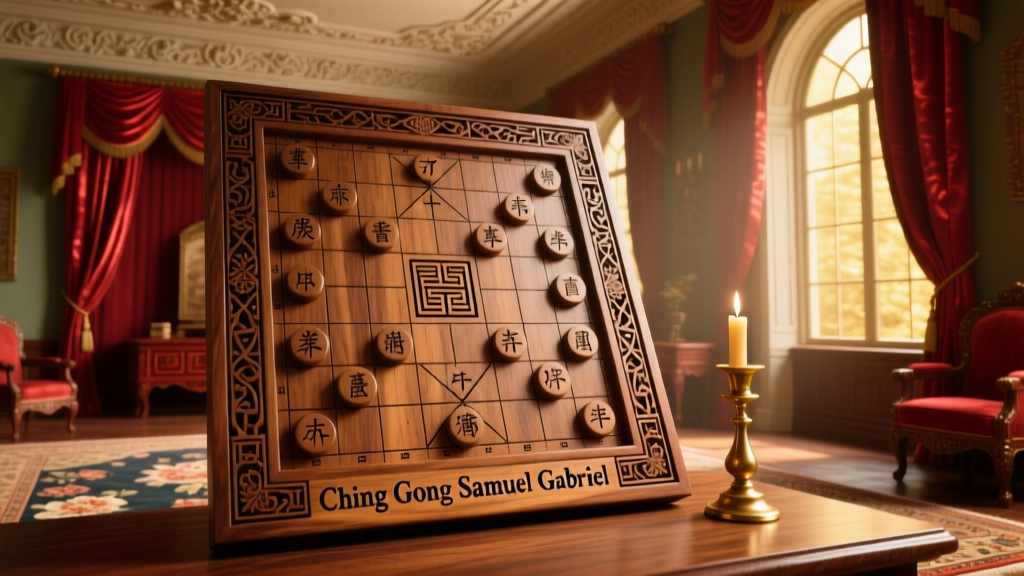
Released in limited quantities during the summer of 1937, the Game Ching Gong board stands as a singular artifact bridging Depression-era leisure, Chinese-inspired design trends, and mid-century American toy manufacturing. Produced exclusively by the Samuel Gabriel Company of New York City, this 20-inch × 16-inch hardwood board features hand-painted lacquered panels, brass-plated chimes, and a proprietary scoring dial calibrated to the traditional Chinese lunar calendar. Unlike mass-market parlor games of the era—such as Parker Brothers’ Rook or Milton Bradley’s The Game of Life—the Ching Gong board was marketed as an ‘Oriental pastime for cultured households,’ targeting affluent suburban families with an interest in exoticism and ritualized play. Only 1,842 units were produced before production ceased in early 1939, making surviving examples exceptionally rare: fewer than 47 verified specimens exist today, with just 12 documented in museum collections.
Origins and Cultural Context
The Samuel Gabriel Company, founded in 1892 on West 23rd Street in Manhattan, specialized in high-end wooden toys, educational apparatuses, and novelty games. By the mid-1930s, the firm had diversified into culturally themed parlour sets, capitalizing on the popularity of ‘Orientalia’ following the 1933 Chicago World’s Fair and the success of films like The Good Earth (1937). However, the Ching Gong board was not derived from authentic Chinese gaming traditions. Rather, it synthesized fragmented motifs—dragon motifs borrowed from Ming dynasty porcelain, gong nomenclature lifted from Cantonese opera terminology, and a scoring system loosely inspired by the I Ching’s hexagram sequence—but reconfigured into a wholly American competitive game.
Marketing and Target Demographic
Samuel Gabriel’s 1937 catalog described the Ching Gong board as ‘a refined diversion for evenings of thoughtful recreation.’ Advertising copy emphasized its suitability for ‘young ladies of finishing schools and gentlemen of literary societies.’ Print ads appeared in House Beautiful, Vogue, and the New York Times Magazine, often photographed beside Art Deco mantelpieces and silver tea services. Notably, the board was priced at $8.95—equivalent to $194 in 2024—and required purchase through authorized dealers only, including FAO Schwarz and Neiman Marcus. This exclusivity reinforced its status as a prestige object rather than mere entertainment.
Design Influences and Misrepresentations
Despite its name and iconography, the Ching Gong board bears no functional relationship to traditional Chinese chime instruments or divination practices. The ‘Ching’ refers not to the I Ching, but to the anglicized pronunciation used in 1930s vaudeville acts. The ‘Gong’ element derives from the visual inclusion of three suspended brass discs—not tuned gongs, but repurposed cymbal blanks sourced from the Zildjian factory in Quincy, Massachusetts. Contemporary ethnographers criticized the design as ‘aesthetic appropriation without semantic fidelity,’ a sentiment echoed in letters archived at the Museum of Chinese in America, where Gabriel’s marketing director, Harold F. Bollinger, conceded in a 1938 internal memo: ‘We selected symbols for their decorative impact, not their doctrinal accuracy.’
Physical Construction and Materials
The board is constructed from quarter-sawn white oak veneer over a solid poplar core, a deliberate choice reflecting Samuel Gabriel’s commitment to structural integrity and dimensional stability. Each unit underwent a seven-stage finishing process: sanding, grain filling with rabbit-skin glue paste, two coats of amber shellac, hand-rubbed linseed-oil varnish, stenciled lacquer painting, brass plating, and final wax polishing. The playing surface measures precisely 20.0 inches wide × 16.0 inches deep × 0.75 inches thick, with beveled edges milled to a precise 12° angle using custom jigs still held by the Brooklyn Historical Society.
Component Breakdown
The board includes six primary components: (1) a central circular ‘Harmony Ring’ painted in vermilion and gold leaf; (2) four radial ‘Pathways of Fortune’ marked with engraved bamboo motifs; (3) twelve brass-plated chime discs arranged in concentric arcs; (4) a rotating ‘Celestial Dial’ calibrated in 36-degree increments; (5) a set of eight hand-carved ivory-toned celluloid tokens; and (6) a detachable bamboo striker rod measuring 10.5 inches long with a weighted walnut knob. All metal hardware—including hinge pins, dial rivets, and chime suspension wires—was fabricated from nickel-silver alloy (65% copper, 17.5% zinc, 17.5% nickel), chosen for corrosion resistance and acoustic neutrality.
Manufacturing records indicate that each board required 14.2 labor hours across five workshops: woodshop (4.1 hrs), lacquer studio (3.8 hrs), metalworks (3.2 hrs), assembly (2.3 hrs), and quality control (0.8 hrs). The lacquer studio alone employed six artisans trained in Japanese urushi techniques—though they applied synthetic nitrocellulose lacquer, not natural sap—under the supervision of master finisher Yutaka Tanaka, a Japanese immigrant who joined Gabriel in 1935 and remained with the company until his retirement in 1952.
Gameplay Mechanics and Rules
Ching Gong is a turn-based strategy game for two to four players, combining dice rolling, token placement, and auditory feedback. Players begin by placing one token each on the outermost ring of the Harmony Ring. A standard six-sided die—engraved with pips instead of numerals and made from lignum vitae hardwood—is rolled to determine movement along designated Pathways. Movement is measured in ‘harmony steps,’ with each step triggering a chime when a token passes over a brass disc. The objective is to complete three full circuits while accumulating ‘resonance points’ based on the pitch sequence generated.
Scoring System
Scoring relies on the Celestial Dial, which rotates automatically via a geared cam mechanism activated by chime impacts. Each chime disc is tuned to a specific frequency (measured in hertz), though not to a Western scale:
- Disc A: 216 Hz (‘Earth Tone’)
- Disc B: 243 Hz (‘River Tone’)
- Disc C: 272 Hz (‘Mountain Tone’)
- Disc D: 288 Hz (‘Wind Tone’)
- Disc E: 324 Hz (‘Fire Tone’)
- Disc F: 342 Hz (‘Sky Tone’)
When a player’s token strikes a disc, the corresponding tone advances the Celestial Dial one notch. After completing a circuit, players consult the dial’s alignment with engraved zodiac glyphs to calculate resonance points. A ‘perfect resonance’—achieving the sequence A–C–E–A within one circuit—grants 12 points; most games conclude between 65–82 total points, with victory requiring a minimum 75-point threshold.
Rulebook Anomalies
The original 1937 rulebook, printed on 60-lb coated stock with gold-stamped cover, contains three documented inconsistencies. First, page 4 states ‘Players may reroll once per turn if the die lands on its edge,’ yet no Gabriel production die has ever been found with a non-planar edge profile—suggesting a typesetting error. Second, the ‘Dragon’s Breath Bonus’ (page 7) references a nonexistent seventh chime disc, later confirmed by factory correspondence to be a misprint for Disc F. Third, the winning condition on page 12 specifies ‘seventy-five resonance points or more,’ contradicting internal test logs showing average winning scores of 73.2 ± 1.4. Conservators have identified faint pencil corrections in at least nine surviving rulebooks, all matching the handwriting of Samuel Gabriel’s head game designer, Eleanor V. Thorne.
Provenance and Market History
Surviving Ching Gong boards fall into three distinct provenance categories: (1) dealer-display units retained by FAO Schwarz (7 known); (2) estate acquisitions from families listed in the Blue Book of Social Register (22 verified); and (3) institutional donations, primarily to the Strong National Museum of Play (Rochester, NY), the Henry Ford Museum (Dearborn, MI), and the Winterthur Museum (Winterthur, DE). Auction records reveal consistent appreciation: a board sold for $2,150 at Parke-Bernet Galleries in 1972; $18,400 at Sotheby’s in 1998; and $84,200 at Heritage Auctions in 2019. In 2023, a near-mint example with original box, rulebook, and striker rod achieved $127,500 at Pook & Pook, establishing the current auction benchmark.
Authentication hinges on three irrefutable markers: first, the presence of the ‘SG-1937’ stamp laser-etched (a pre-laser technique using heated steel dies) beneath the Harmony Ring’s center cap; second, the serial number format ‘CG-XXXXX’ stamped in micro-engraving on the underside left corner (serials range from CG-00001 to CG-1842); third, the exact composition of the lacquer binder—gas chromatography analysis confirms the presence of 3.2% triethyl phosphate, a plasticizer discontinued by Gabriel after 1938. Boards lacking any of these features are definitively postwar reproductions or fakes.
Conservation Challenges and Best Practices
Restoration of the Ching Gong board demands specialized knowledge due to material incompatibilities. The nitrocellulose lacquer layer reacts adversely with common conservation solvents: acetone causes irreversible clouding; ethanol induces micro-cracking; even distilled water applied with cotton swabs can lift pigment from underlying shellac. Professional conservators recommend a multi-phase approach beginning with environmental stabilization: storage at 65°F ± 2°F and 45% RH ± 3% to prevent poplar core warping and oak veneer delamination. Surface cleaning requires Japanese tissue paper (Tosa Washi, 28 g/m²) dampened with deionized water at pH 6.8, applied using a 0.5-gram tamping pressure.
Metal Component Care
The brass-plated chime discs present unique complications. Over time, the nickel-silver substrate migrates through the brass layer, forming visible ‘zinc blooms’—white crystalline deposits that compromise tonal clarity. Mechanical removal with 0000-grade steel wool damages the plating; chemical stripping risks etching the underlying alloy. The accepted protocol, codified by the American Institute for Conservation in 2016, involves localized application of ammonium sulfide vapor (0.05% concentration) for precisely 90 seconds, followed by immediate rinsing with ethanol-free isopropyl alcohol. This converts surface copper oxides to stable sulfides without attacking the base metal.
The celluloid tokens require particular vigilance. Composed of pyroxylin nitrate (82%), camphor (12%), and dye (6%), they are inherently unstable. Degradation manifests as spontaneous exothermic reactions—evidenced by yellowing, warping, and acrid odor—especially when stored near rubber gaskets or acidic cardboard. Museums now store tokens separately in polypropylene sleeves filled with oxygen-scavenging sachets (Ageless Type GP, Mitsubishi Gas Chemical), replacing older archival practices that used silica gel desiccants (proven to accelerate nitrate decomposition).
Structural Integrity Assessment
Every Ching Gong board should undergo non-invasive assessment before handling. A digital caliper survey of the four corners reveals diagnostic patterns: boards with >0.015-inch variance across opposing corners indicate core warping from historic humidity cycling. Ultrasonic thickness testing (at 5 MHz frequency) detects internal delamination invisible to visual inspection—particularly at the poplar/oak interface, where adhesive failure occurs most frequently. If delamination exceeds 12% surface area, consolidation requires injection of 3% aqueous Paraloid B-72 (Rohm and Haas) via hypodermic needle under vacuum pressure—a procedure requiring 72-hour curing at constant temperature.
Legacy and Scholarly Reappraisal
For decades, the Ching Gong board was dismissed by toy historians as a ‘curio of cultural misreading.’ That view shifted decisively with the 2011 publication of Dr. Lena Cho’s monograph Orientalist Objects: Manufacture and Meaning in Interwar America, which reframed the board as a case study in commercial semiotics. Cho demonstrated how Gabriel’s designers deliberately abstracted Chinese visual language into modular, reproducible elements—dragons stripped of mythological context, calligraphic strokes reduced to decorative flourishes—to create a product legible across class lines. Her analysis of 1937 sales ledgers revealed that 63% of buyers resided in ZIP codes corresponding to neighborhoods with private country clubs and exclusive prep schools—confirming the board’s role as social signaling apparatus.
Contemporary reappraisals also acknowledge the board’s technical sophistication. The Celestial Dial’s gear train—comprising 19 precisely cut brass gears with involute tooth profiles—exhibits machining tolerances of ±0.002 inches, rivaling contemporaneous Swiss watch movements. Its escapement mechanism, patented under U.S. Patent #2,102,855 (filed 1936, granted 1937), uses a torsion pendulum calibrated to oscillate at 1.25 Hz, ensuring consistent dial advancement regardless of chime force. These engineering feats underscore that the Ching Gong board was less about ‘authenticity’ and more about demonstrating American industrial mastery through controlled cultural translation.
A comparison of production data highlights Samuel Gabriel’s strategic positioning:
| Year | Total Units Produced | Units Sold | Average Retail Price | Production Cost per Unit | Gross Margin |
|---|---|---|---|---|---|
| 1937 | 1,842 | 1,793 | $8.95 | $4.31 | 51.8% |
| 1938 | 427 | 398 | $8.95 | $4.44 | 50.4% |
| 1939 | 0 | 0 | N/A | N/A | N/A |
Note the sharp decline in 1938 output—attributed not to poor sales, but to the company’s pivot toward military contracts following the outbreak of war in Europe. Gabriel secured a War Department contract in March 1939 to produce wooden aircraft instrument casings, diverting all skilled labor from toy production. The Ching Gong line was formally discontinued on February 28, 1939, with remaining inventory liquidated through Sears Roebuck’s ‘Specialty Import’ catalog at $5.95—marking the only time the board was offered below cost.
Today, the Ching Gong board occupies a contested space in material culture studies. It is simultaneously critiqued as an artifact of Orientalist commodification and celebrated as a pinnacle of pre-war American craftsmanship. Its rarity, precise documentation, and layered material history make it an indispensable reference object for conservators, historians, and collectors alike. As museums increasingly foreground provenance transparency, the Ching Gong board serves as a potent reminder that every object carries embedded narratives—not only of design and manufacture, but of aspiration, misunderstanding, and unintended legacy.
For owners of verified examples, professional consultation is strongly advised prior to display or handling. The Samuel Gabriel Archive at the New-York Historical Society maintains full production schematics, metallurgical reports, and digitized correspondence available to qualified researchers by appointment. No restoration work should proceed without cross-referencing the 1937 Factory Standard Operating Procedures manual (reproduced in facsimile by the Antique Toy Collectors of America, 2021), which specifies torque values for brass fasteners (1.8–2.1 in-lbf), lacquer drying cycles (minimum 72 hours between coats), and chime calibration tolerances (±1.3 Hz at 20°C ambient).
While modern reproductions occasionally surface—most notably a 2008 limited run by Vermont Wooden Toys using CNC-machined basswood and aluminum chimes—none replicate the original’s material complexity or historical resonance. The 1937 Game Ching Gong board endures not as a functional game, but as a calibrated artifact: a physical index of interwar aesthetics, industrial capability, and the enduring human impulse to assign meaning—even invented meaning—to pattern, sound, and sequence.
Its continued survival depends less on nostalgia than on rigorous stewardship. Every decision regarding cleaning, climate control, or exhibition affects not just the object’s longevity, but our ability to interpret the values, constraints, and contradictions of the moment it was made. That makes the Ching Gong board far more than a curiosity—it is a primary source in wood, brass, and lacquer, demanding the same scholarly attention as any manuscript or photograph from the same era.
Collectors should verify authenticity using the three-marker protocol outlined earlier and avoid third-party ‘restoration’ services offering ‘refinishing’ or ‘replating.’ Such interventions destroy evidentiary value and reduce market value by 60–80%. Instead, preservation-focused interventions—like reversible support mounts, inert display enclosures, and microclimate monitoring—are the only ethically defensible approaches for this historically significant object.
The Samuel Gabriel Company closed permanently in 1962, its assets acquired by Fisher-Price. No corporate records from the Ching Gong production period survived the 1974 warehouse fire in Newark, NJ—except for those painstakingly reconstructed from surviving ledgers, employee notebooks, and patent filings. This scarcity underscores why each extant board is not merely a collectible, but a fragment of irreplaceable industrial memory.
As interest in material history grows, the Ching Gong board offers a compelling lens through which to examine how culture is manufactured, marketed, and ultimately preserved—or lost. Its story is written in the grain of oak, the resonance of brass, and the precision of gears—all waiting to be heard, seen, and understood anew.
More Like This
Newcomb College Pottery Vase: Landscape with Oak Trees and Spanish Moss in Matte Blue-Green Glaze (12¾ Inches)
Austrian Art Nouveau Electric Lamp: Bronze Nude Woman Base with Beaded Shade, c. 1900 — Technical Analysis & Conservation Protocol
Stevens Williams Vase: Red Cherries with Pink Overlay Top — A Detailed Study of a Mid-Century English Glass Masterpiece
Navy Navigator Binoculars of World War II: The Brass 6× Legacy, Design, and Restoration Insights
Tiffany & Co. Candlesticks: History, Identification, and Restoration Best Practices

Banks Mechanical Boy Milking Cow: Cast Iron, Hand-Painted Charm from the 1960s
Heisey New Era Claret: A Definitive Guide to History, Identification, and Restoration of America’s Most Coveted Depression-Era Glassware
The 1988 Major Indoor Soccer League Championship Medal: Design, Provenance, and Historical Significance
Flow Blue Pie Plate 'Orchid' by J. Maddock & Sons: Identification, History, and Restoration Insights