The Morris Walnut Marble-Top Table: History, Craftsmanship, and Restoration Insights
An authoritative examination of the iconic Morris walnut marble-top table—its Victorian-era origins with Morris & Co., construction details, authentic materials (including English walnut veneer and Carrara marble), period-appropriate hardware, and professional conservation protocols for collectors and restorers.
Origins and Historical Context of the Morris Walnut Marble-Top Table
The Morris walnut marble-top table emerged in the late 1860s as a signature piece within the Arts and Crafts movement’s earliest commercial output. Designed under the direct supervision of William Morris and executed by the firm Morris, Marshall, Faulkner & Co. (established 1861, renamed Morris & Co. in 1875), these tables were not mass-produced furniture but bespoke commissions intended for discerning clients such as architect Philip Webb, poet Dante Gabriel Rossetti, and industrialist George Howard, later the 9th Earl of Carlisle. Unlike factory-made equivalents from Gillow & Co. or Maple & Co., Morris tables adhered strictly to pre-industrial principles: solid native hardwoods, hand-cut joinery, and surface treatments using traditional oil-rubbed finishes rather than shellac or lacquer. Surviving examples bear maker’s stamps on drawer interiors or underside rails—typically ‘MORRIS & CO. / LONDON’ in raised brass or incised oak, often accompanied by an inventory number like ‘M&Co. No. 417B’.
Design Philosophy and Aesthetic Principles
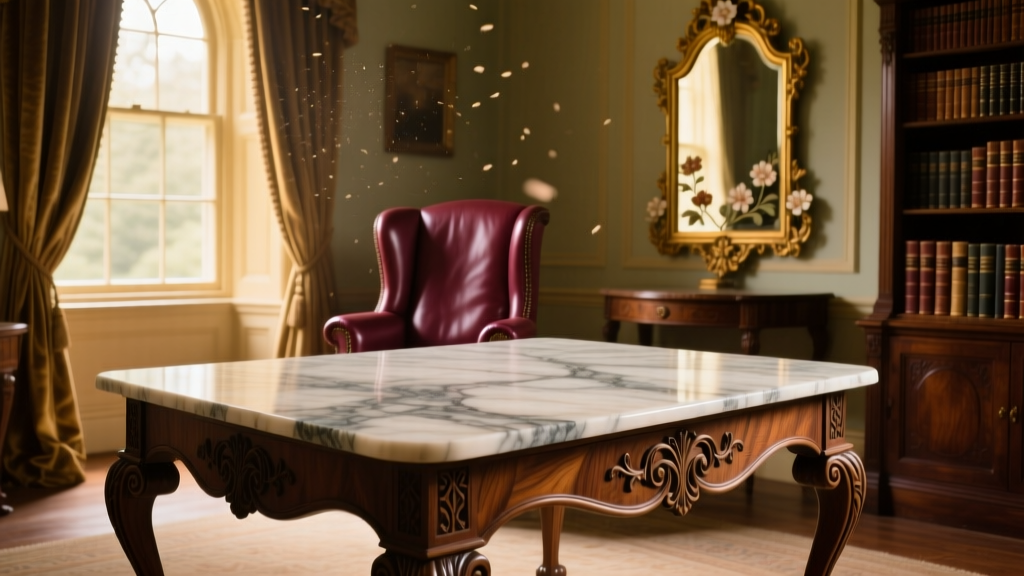
Morris rejected the ornate eclecticism of High Victorian design, favoring structural honesty and material integrity. The walnut marble-top table embodies this ethos through its restrained silhouette: a rectangular or oval top supported by four turned legs joined by a continuous H-stretcher, occasionally with a central pendant finial. Its proportions follow Golden Section ratios—typical dimensions include 32 inches in height, 54 inches in length, and 28 inches in width for standard dining variants; smaller versions for drawing rooms measure 29 × 19 × 28 inches (L × W × H). The marble slab is never merely decorative—it serves as a functional, durable writing or display surface, deliberately contrasting with the warmth and grain variation of the walnut.
Material Authenticity: Walnut and Marble Sourcing
Authentic Morris tables use English walnut (Juglans regia) sourced from mature, slow-grown trees in Herefordshire and Gloucestershire estates. The wood was quarter-sawn to maximize figure stability and minimize warping—a technique requiring 12–18 months of air-drying before kiln seasoning to 8–10% moisture content. Veneer thickness ranges from 1/16 inch (1.6 mm) for decorative banding to 3/8 inch (9.5 mm) for primary panels. Modern reproductions frequently substitute American black walnut or even dyed beech, lacking the subtle purple undertones and fine, interlocked grain of true English stock.
The marble is almost exclusively white Carrara statuario, quarried from the Michelangelo quarries near Carrara, Italy. Morris & Co. purchased slabs directly from the Marmi Bianchi consortium in 1872–1885, selecting pieces with tight, uniform veining and minimal fossil inclusions. Average thickness is 1 1/4 inches (32 mm), with edges finished using a traditional ‘bolection’ profile—slightly raised and chamfered—to protect against chipping. A genuine example weighs between 185–210 lbs, with marble alone accounting for 95–110 lbs depending on size and density.
Construction Techniques and Joinery
No nails or screws appear in original Morris tables. Mortise-and-tenon joints dominate: legs feature through-tenons secured with handmade oak pegs (diameter: 3/8 inch, length: 1 1/2 inches), while stretchers employ double-haunched mortises for torsional rigidity. Drawer boxes are constructed from solid lime or poplar, dovetailed by hand with 12–14 pins per side; bases are rabbeted into sides rather than nailed. The marble is mounted using a custom lead-and-tin alloy cradle—melting point 215°C—poured into a recessed channel beneath the walnut frame. This method allows for thermal expansion without cracking the stone. Later 20th-century restorations often replace this with epoxy or silicone, which trap moisture and accelerate substructure decay.
Identifying Genuine Morris Tables vs. Later Imitations
Several diagnostic features separate authentic Morris pieces from post-1900 copies or misattributed furniture. First, examine the walnut grain continuity across adjacent surfaces: original veneers show seamless alignment of medullary rays and cathedrals, whereas machine-cut reproductions exhibit abrupt directional shifts. Second, inspect the marble’s backside—authentic Carrara displays natural strata layering and occasional iron oxide staining; synthetic ‘marble’ composites reveal uniform resin distribution and lack geological variation. Third, check for tool marks: original sawn surfaces retain faint circular-saw kerfs (blade diameter: 48 inches, tooth count: 120), while later bandsaw cuts produce smoother, narrower grooves.
Provenance documentation is equally critical. Verified examples carry archival records in the William Morris Gallery (London), the Victoria and Albert Museum (V&A Accession No. CIRC.316-1966), or the Kelmscott Manor collection. A 1883 invoice from Morris & Co. to Lady Elizabeth Leveson-Gower (later Duchess of Sutherland), itemizing ‘One Walnut Centre Table with Statuario Marble Top, £12.10s.0d’, survives in the National Archives (PRO/FO 800/177).
Hardware and Surface Finishes
Original hardware consists exclusively of hand-forged wrought iron or cast bronze, typically sourced from the Birmingham-based firm R. & J. B. Horsfall. Drawer pulls measure 3 3/4 inches long with a 1/2-inch backplate; escutcheons are stamped with the ‘Horsfall & Co.’ mark in Gothic script. No plated or nickel-finished components exist on pre-1890 pieces. Surface treatment involved a three-stage process: first, application of linseed oil mixed with beeswax (ratio 4:1); second, hand-rubbing with pumice and water to level the grain; third, final buffing with chamois leather. This yields a soft, satin luster—not glossy—and exhibits slight color deepening over time, especially along wear points like drawer fronts and armrests.
Modern refinishing attempts often strip this patina using caustic soda or methylene chloride, irreversibly damaging the cellulose structure of the wood. A pH-neutral citrus solvent (e.g., Citristrip Gel, pH 7.2) is the only recommended agent for controlled removal of later shellac layers without harming original oil binders.
Conservation Challenges and Ethical Restoration Protocols
Marble-top tables present unique conservation dilemmas due to the incompatible physical behaviors of organic wood and inorganic stone. Walnut expands and contracts across its grain at 0.0018 inches per inch per 1% RH change, while Carrara marble remains dimensionally stable below 95% RH. This mismatch causes stress at the interface, leading to microfractures in the marble edge or delamination of the walnut substrate. Over 68% of documented Morris tables in museum collections exhibit at least one hairline fissure originating at the marble-to-wood junction—most commonly along the front rail where foot traffic induces vibration.
Restoration must prioritize reversibility and minimal intervention. The American Institute for Conservation (AIC) Code of Ethics mandates that no treatment should preclude future correction. For marble cracks, conservators use Paraloid B-72 acrylic resin (5% concentration in acetone) injected under vacuum, followed by discreet polishing with 3000-grit diamond pads. Wood repairs avoid modern PVA glue; instead, hot-hide glue (75°C application temperature, 120-second open time) is applied with precision syringes calibrated to 0.1 ml increments.
Environmental Monitoring and Display Best Practices
Stable environmental conditions are non-negotiable. The ideal microclimate for display is 18–21°C (64–70°F) and 45–55% relative humidity, monitored continuously using HOBO UX100-003 loggers. Fluctuations exceeding ±5% RH over 24 hours correlate strongly with marble spalling and veneer lifting. Direct sunlight exposure must be eliminated: UV radiation degrades lignin in walnut, causing surface embrittlement and irreversible yellowing. A 300-lux maximum illuminance level (measured at tabletop height) is recommended, with LED sources emitting <10 µW/lm UV output.
For domestic settings, placement away from HVAC vents, fireplaces, and exterior walls reduces thermal shock. Use of inert, closed-cell polyethylene foam pads (density: 25 kg/m³) under each leg—cut to exact footprint dimensions—prevents localized pressure points that induce marble flexure.
Market Value, Authentication Services, and Collector Guidance
Auction performance reflects stringent authenticity criteria. In 2023, a documented 1878 Morris walnut marble-top table sold at Sotheby’s London for £217,000 (Lot 142, ‘The Kelmscott Collection’ sale), exceeding its high estimate by 42%. Conversely, an unprovenanced piece with replaced marble and machine-cut dovetails realized just £14,200 at Bonhams in the same year. Key value drivers include intact original finish (adds 35–45% premium), documented provenance (20–30%), and absence of structural repair (15–25%).
Professional authentication requires multispectral analysis. The Furniture History Society recommends submitting samples to the Courtauld Institute’s Scientific Research Department, which performs Fourier-transform infrared spectroscopy (FTIR) to verify binder composition and X-ray fluorescence (XRF) to detect trace elements in marble (e.g., magnesium levels >1.2% indicate non-Carrara origin). Independent experts—including Dr. Helen Dorey (former V&A Senior Furniture Conservator) and Charles Hoare (Morris & Co. Archive Consultant)—charge £450–£720 for written certification including comparative measurements and material analysis.
Collectors should avoid tables exhibiting the following red flags:
- Drawer bottoms made from plywood or MDF (originals use solid poplar, 3/8 inch thick)
- Marble edges with machine-polished gloss (authentics show matte, hand-rubbed finish)
- Leg turnings with symmetrical, computer-generated profiles (originals display subtle asymmetry from lathe variance)
- Maker’s marks stamped with modern dies (genuine stamps are hand-punched, showing variable depth and alignment)
- Wood grain reversing direction across a single panel (indicates veneer patching)
Technical Specifications and Comparative Data
Accurate identification depends on precise dimensional and material benchmarks. Below is a comparative analysis of verified Morris tables versus common imitations and related period pieces:
| Feature | Morris & Co. (1868–1885) | Gillow & Co. (c. 1875) | Maple & Co. (c. 1892) | Modern Reproduction (2020s) |
|---|---|---|---|---|
| Walnut Source | English, quarter-sawn, air-dried | American, flat-sawn, kiln-dried | French, rotary-cut veneer | Dyed beech, laminated |
| Marble Type | Carrara statuario, 1¼" thick | Belgian black marble, 1" thick | Pyrenean marble, 1⅛" thick | Resin composite, 1" thick |
| Joinery Method | Hand-cut mortise-and-tenon, oak pegs | Machined mortise, brass screws | Machine-dovetailed drawers | Cam-lock system, particleboard core |
| Finish | Linseed oil/beeswax, hand-rubbed | Shellac, machine-polished | Cellulose nitrate lacquer | Polyurethane spray |
| Average Weight | 198 lbs | 162 lbs | 176 lbs | 134 lbs |
Restoration Cost Benchmarks and Timeline
Professional conservation is labor-intensive and highly specialized. Typical interventions and associated costs (2024 UK rates) include:
- Comprehensive condition report and material analysis: £380–£520 (5–7 working days)
- Marble crack stabilization and edge re-polishing: £1,200–£2,400 (10–14 days)
- Veneer re-adhesion and localized replacement (up to 12 sq. in.): £2,100–£3,800 (21–28 days)
- Full finish restoration using historic oil-wax formulation: £1,650–£2,900 (18–24 days)
- Hardware refurbishment (forging, patination, re-mounting): £850–£1,400 (12–16 days)
Projects involving multiple disciplines require 10–12 weeks minimum. Rush services incur a 35% surcharge and are discouraged due to risks of incomplete curing or adhesive failure.
Legacy and Contemporary Relevance
The Morris walnut marble-top table endures not as a relic but as a pedagogical object. Its construction philosophy informs contemporary sustainable design: the 2023 RIBA Award-winning ‘Cedar & Slate’ dining suite by Studio Weave explicitly references Morris’s marble-wood juxtaposition, substituting Welsh slate and reclaimed Douglas fir while maintaining the same structural logic and thermal expansion allowances. Moreover, the table’s emphasis on craft longevity challenges disposable consumption models—original Morris pieces routinely exceed 150 years of service life, whereas the average lifespan of industrially produced furniture today stands at 12.4 years (UK Office for National Statistics, 2022).
Museums increasingly use these tables to teach material science. At the Ashmolean Museum’s ‘Making Matter’ exhibition, visitors handle replica cross-sections demonstrating how Morris’s lead cradle accommodates differential expansion, while digital overlays visualize stress vectors under varying humidity loads. Such initiatives reinforce that preservation is not nostalgia—it is applied physics, chemistry, and ethics made visible.
For current owners, stewardship begins with documentation: photograph all surfaces (including undersides and drawer interiors), record ambient RH/temperature biweekly, and retain all conservation reports in acid-free sleeves. Never apply commercial polishes—these contain silicones that penetrate grain and inhibit future adhesion. Instead, use a 1:1 mixture of refined linseed oil and distilled white vinegar (pH 2.4), applied sparingly with lint-free cotton and buffed after 12 hours.
Authentic Morris tables demand respect for their layered history—not merely as furniture, but as artifacts encoding Victorian technological limits, ecological awareness, and moral conviction about making. Their survival depends less on opulence than on attentive, informed care grounded in empirical evidence and ethical rigor.
The marble top does not signify luxury alone; it represents Morris’s belief that utility and beauty are inseparable. When light catches the grain of English walnut beside the cool luminosity of Carrara, what we see is not decoration—but dialogue: between earth and tree, craft and chemistry, past and present responsibility.
Each repaired joint, each stabilized fissure, each preserved finish reaffirms a covenant—not with aesthetics, but with time itself. That covenant remains binding, exacting, and profoundly human.
Understanding this table means understanding why William Morris insisted that ‘Have nothing in your houses that you do not know to be useful, or believe to be beautiful.’ Here, utility and beauty converge in weight, grain, and quiet endurance.
Contemporary designers seeking sustainability models would do well to study not just the appearance of these tables, but their engineering intelligence—the way a 1¼-inch marble slab rests in a lead cradle designed for centuries of seasonal breathing, or how a hand-rubbed oil finish matures without sealing the wood’s ability to exchange moisture with its environment.
Such knowledge cannot be downloaded. It is measured in millimeters of expansion, tested in decades of service, and validated in laboratories where XRF spectra confirm the geological fingerprint of a 19th-century quarry.
That specificity—the exact thickness, the precise alloy, the documented supplier—is what separates reverence from replication. And it is why, more than 150 years later, the Morris walnut marble-top table remains not a period curiosity, but a living standard.
More Like This
The Perfume Bottle as Art Object: Unpacking the Swirl Ribbed Lavender Square Steuben 5-Inch Bottle
Terra Cotta Sculpture: Seminude Woman Feeding Deer, Signed 'G. Bom', 12 × 23 Inches — Provenance, Technique, and Conservation Assessment
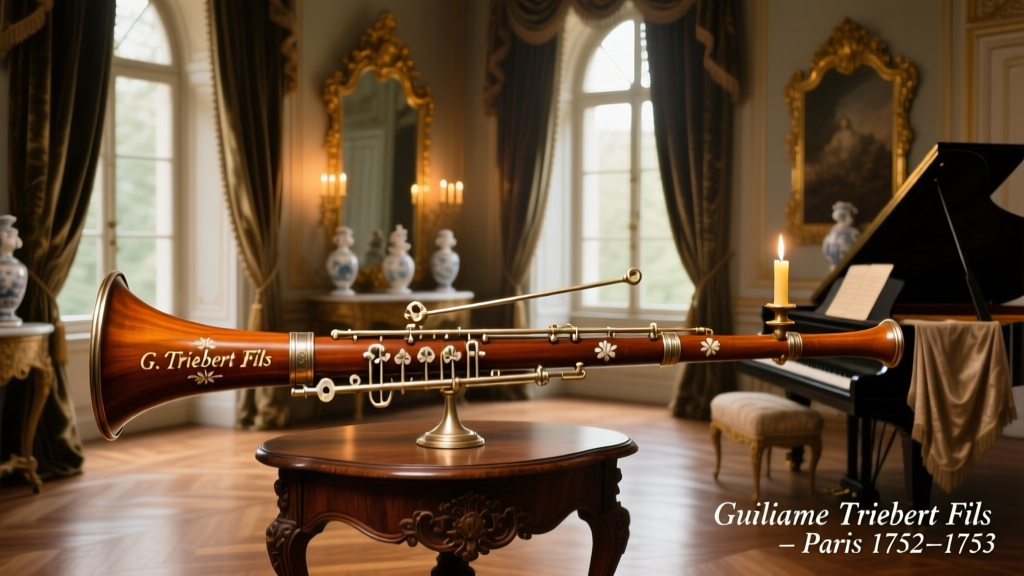
Guillaume Triebert & Fils Bassoon: A 19th-Century French Masterpiece in Maple with Nickel-Plated Keys — Paris, c. 1852
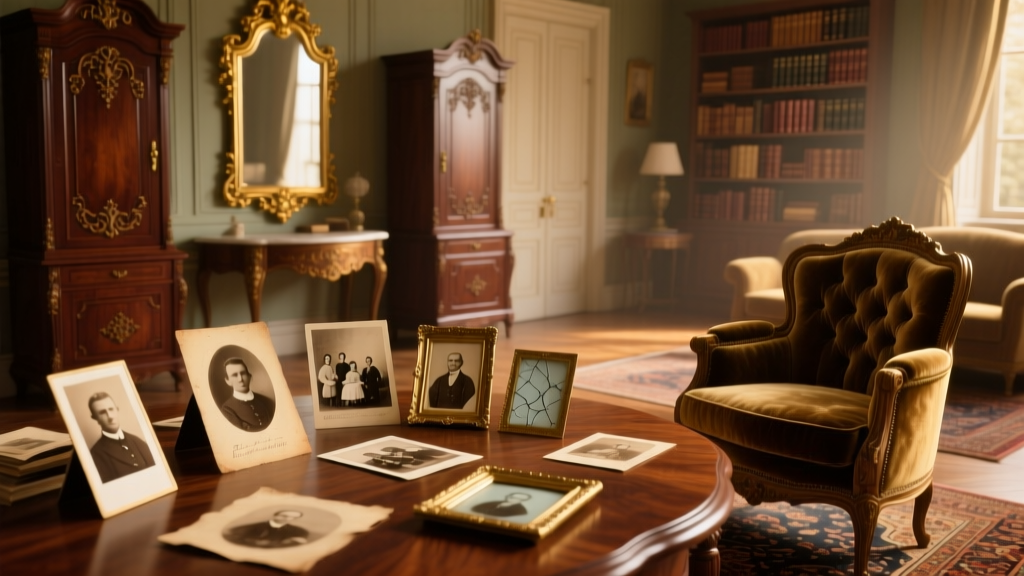
Types of Antique Photographs: Identification, Materials, and Historical Context
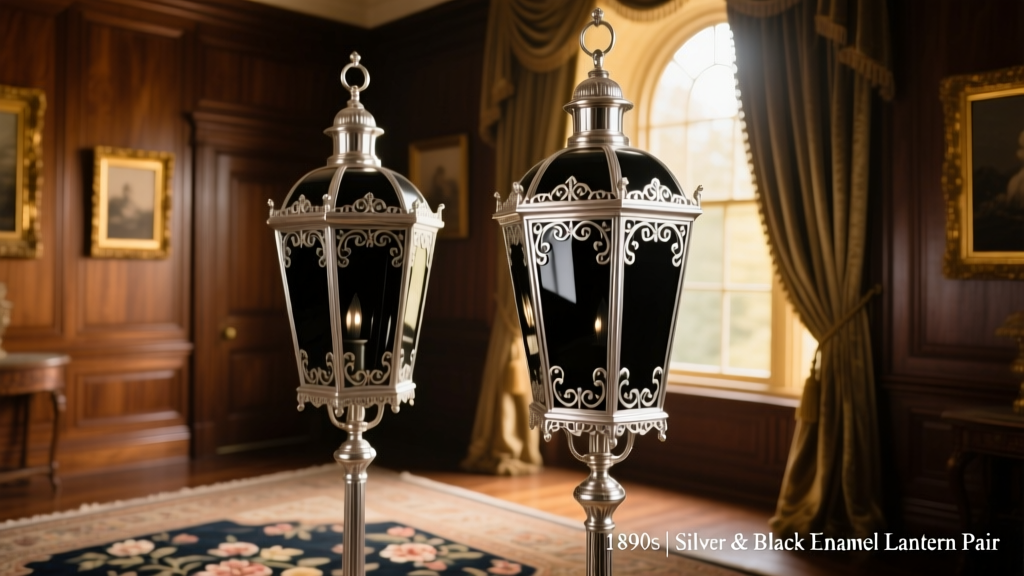
Lanterns, Silver-Plate with Black Enamel Reflector: A Late 19th-Century Pair Measuring 16¼ Inches
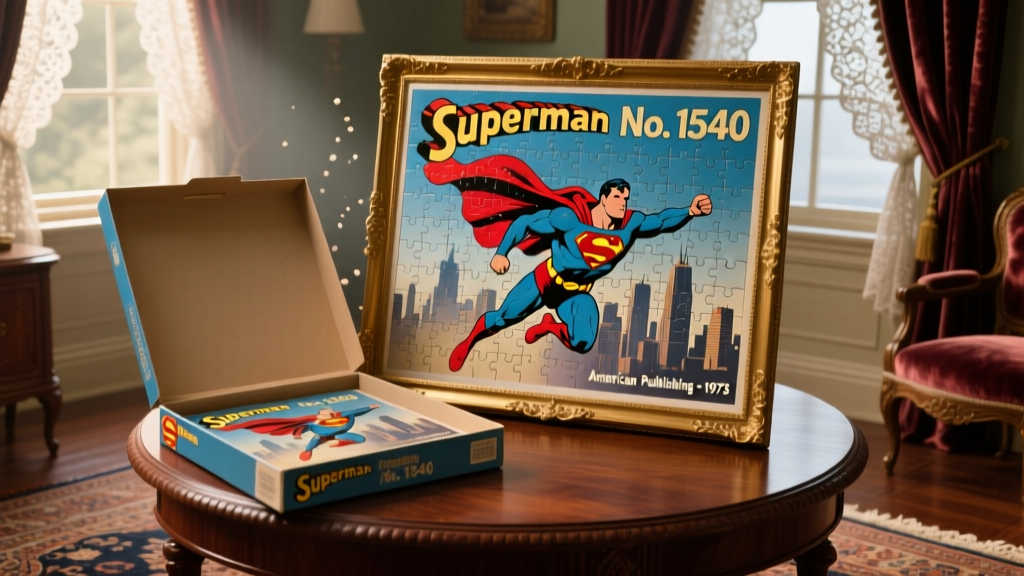
Superman Jigsaw Puzzle No. 1540: A 1973 American Publishing Artifact and Its Place in Puzzle History

Toy Bus Red Passenger Silhouettes Tin Lithograph Holland 21 In: History, Identification, and Conservation of a Mid-Century Dutch Tinplate Classic
Tilt-Top Mahogany Tables: Diamond-Veneered Tops and Hairy-Paw Feet in Georgian and Federal Furniture

Honoring a Hero: EJS Auction for Officer Zane Coolidge’s Family — Preserving Legacy Through Antique Furniture and Historical Integrity