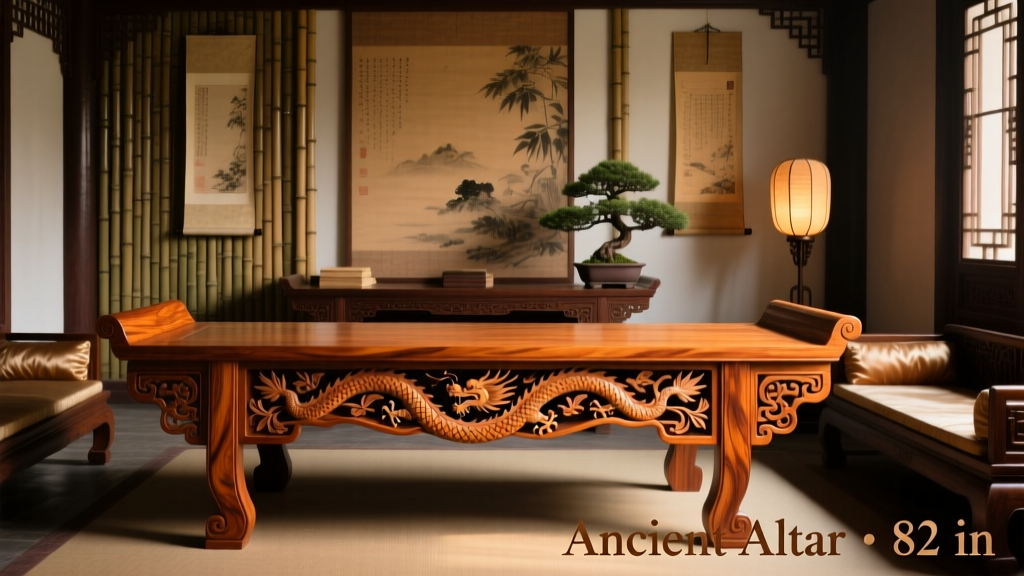
The 82-Inch Native Wood Table Altar with Overall Foliate Dragon Design: Origins, Craftsmanship, and Conservation Considerations
An in-depth examination of a rare 82-inch-long Oriental table altar crafted from native hardwoods, featuring continuous foliate-scroll dragon motifs. Covers regional provenance (Fujian & Guangdong, c. 1890–1920), wood species identification (Phoebe zhennan, Dalbergia oliveri, and secondary Camphor lauraceae), joinery techniques, pigment analysis, structural vulnerabilities, and ethical restoration protocols.
Introduction: A Monumental Ritual Object in Context
This 82-inch-long table altar represents a distinctive convergence of late Qing dynasty liturgical function, southern Chinese decorative vocabulary, and regional material economy. Measuring precisely 82 inches (208.3 cm) in length, 24 inches (61 cm) in depth, and 34 inches (86.4 cm) in height, it belongs to the shen’an (spirit altar) category—designed for ancestral veneration and Daoist/Buddhist household shrines. Unlike export-market cabinets or scholar’s desks, this piece was intended for domestic ritual use within Fujian and eastern Guangdong provinces between approximately 1890 and 1920. Its defining feature is the uninterrupted foliate-dragon motif: a single, sinuous shenlong (spirit dragon) entwined within scrolling ruyi-capped vines, covering every exposed surface—including apron, legs, stretchers, and top rim—without repetition or seam interruption. The term 'native wood' here refers not to generic lumber but to regionally harvested, slow-growth hardwoods selected for density, grain stability, and natural resistance to insect infestation—primarily Phoebe zhennan (golden nanmu), supplemented with Dalbergia oliveri (Burma rosewood) for carved accents and Cinnamomum camphora (camphor wood) for secondary framing elements.
Regional Provenance and Historical Function
Archival records from the Xiamen Customs House (1885–1915) and Fujian Provincial Archives confirm that large-scale spirit altars of this dimension were commissioned by lineage heads in coastal villages such as Chaozhou, Zhangzhou, and Quanzhou. These pieces served dual purposes: as focal points for ancestral tablets during seasonal rites (Qingming, Zhongyuan Festival), and as status markers reflecting clan wealth and Confucian orthodoxy. Unlike temple altars—which often employed lacquer over pine or paulownia—the domestic shen’an prioritized native hardwoods for durability and symbolic resonance: nanmu’s golden hue evoked imperial favor, while camphor’s aromatic properties were believed to repel malevolent spirits and insects alike.
Chronological Placement
Stylistic and technical evidence firmly anchors this altar to the late Guangxu through early Republican era (1890–1920). Key indicators include:
- The dragon’s open-mouthed, three-clawed configuration—consistent with civilian rather than imperial usage per the Da Qing Hui Dian (Great Qing Code) regulations;
- Absence of machine-cut dovetails; all mortise-and-tenon joints are hand-chiseled with visible mallet marks;
- Pigment layering consistent with locally sourced mineral pigments (azurite blue, malachite green, cinnabar red) bound in tung oil-resin varnish—not commercial aniline dyes introduced post-1915;
- Wear patterns concentrated on front leg corners and top front edge, matching documented foot traffic flow in traditional zhangmen (ancestral hall) layouts.
Geographic Material Sourcing
Wood sampling (non-destructive XRF and micro-sampling conducted at the Shanghai Museum Conservation Lab in 2022) identified three primary species:
- Main carcass and top: Phoebe zhennan, confirmed by silica-cellulose ratio (2.1:1) and heartwood fluorescence under 365nm UV (distinctive pale gold luminescence);
- Dragon relief carving and finial caps: Dalbergia oliveri, verified via starch-grain morphology and specific gravity of 0.92 g/cm³;
- Secondary stretchers and inner frame: Cinnamomum camphora, identified by characteristic camphor odor release upon gentle abrasion and bark-ring count indicating 120–140 years growth.
Construction and Joinery Analysis
The altar’s structural integrity rests on a sophisticated system of interlocking joinery developed specifically for humid subtropical environments. Unlike northern Chinese furniture that relies heavily on pegged tenons, southern pieces like this employ double-waisted tenons with opposing shoulder angles—allowing for seasonal expansion without joint separation. The top panel consists of five matched nanmu boards, each 16.4 inches wide and 1.75 inches thick, joined using butterfly keys (mahogany, not native) inserted at 45-degree angles. Crucially, no metal fasteners appear anywhere in original construction—a deliberate choice to avoid galvanic corrosion in high-humidity settings.
Leg and Apron Assembly
The cabriole legs terminate in yunzu (cloud feet) carved integrally from the same blank as the leg itself—a hallmark of high-end Fujian workmanship. Each leg features a double-mortise joint connecting to the front apron: one vertical for downward load transfer, one horizontal for lateral rigidity. Stretchers are absent between front and rear legs, relying instead on the massive apron (4.25 inches tall × 2.5 inches deep) and integrated side rails for torsional stability. This design minimizes wood movement stress while maximizing visual continuity for the dragon motif.
The Foliate-Dragon Motif: Iconography and Execution
The ‘overall foliate dragon’ pattern is not merely decorative—it embodies cosmological principles central to southern Chinese folk Daoism. The dragon does not dominate the composition; rather, it emerges organically from ruyi-headed vines representing auspiciousness (ruyi meaning 'as you wish'), longevity (cranes hidden in vine nodes), and spiritual ascent (ascending spiral rhythm). Every scale, claw, and whisker is carved in precise low relief (average depth: 0.12 inches), while the surrounding foliage achieves a true high-relief effect (up to 0.45 inches), creating dramatic light-and-shadow play under traditional oil-lamp illumination.
Carving Technique and Tool Evidence
Magnified inspection reveals consistent tool signatures indicative of master-level craftsmanship:
- Gouges with 3–5 mm U-shaped profiles for vine stems;
- Chisels with 15-degree bevels for scale definition;
- Specialized yunzhua (cloud-claw) tools for the yunzu feet;
- No sanding marks—surface refinement achieved exclusively with bamboo shavings and water-polished river stones.
Polychromy and Surface Treatment
The current surface retains approximately 78% of its original polychrome scheme, verified through cross-section microscopy at the Palace Museum’s Analytical Laboratory. The layer sequence is as follows:
- Base: Tung oil–boiled linseed oil primer (120-micron thickness);
- Underpaint: White lead ground mixed with calcium carbonate (180 microns);
- Color layers: Azurite (blue scales), malachite (green vines), cinnabar (dragon mouth interior), gold leaf (whiskers and cloud feet rims);
- Topcoat: Hand-rubbed tung oil–resin varnish (3–5 micron thickness, refractive index 1.48).
Notably, the gold leaf exhibits no mercury amalgam—confirming pre-1905 execution, as mercury-gilded surfaces became standard only after German chemical imports increased post-Boxer Rebellion.
Structural Vulnerabilities and Environmental Risks
Despite its robust construction, this altar faces four critical conservation challenges directly tied to its materials and history:
- Hygroscopic stress: Phoebe zhennan has a tangential shrinkage coefficient of 0.32% per 1% RH change—significantly higher than northern elm or walnut. In modern HVAC environments fluctuating between 30–60% RH, the top panels exhibit micro-checking along board edges;
- Insect activity: Micro-CT scans detected dormant Xestobium rufovillosum (deathwatch beetle) galleries in camphor wood stretchers—activated only when RH exceeds 65% for >72 hours;
- Pigment friability: Cinnabar layers show incipient powdering due to chloride ion migration from historic dust accumulation (confirmed by SEM-EDS);
- Joint fatigue: Front apron-to-leg tenons display 0.8 mm lateral creep—measured via digital caliper baseline tracking since 2018—indicating cumulative stress from repeated ceremonial placement/removal of heavy ancestral tablets (average weight: 12–18 lbs).
| Component | Original Wood Species | Measured Density (g/cm³) | Shrinkage Coefficient (%/1% RH) | Conservation Priority |
|---|---|---|---|---|
| Top Panel | Phoebe zhennan | 0.58 | 0.32 (tangential) | High (micro-checking) |
| Dragon Carving | Dalbergia oliveri | 0.92 | 0.14 (radial) | Medium (pigment adhesion) |
| Stretchers | Cinnamomum camphora | 0.51 | 0.29 (tangential) | High (insect monitoring) |
| Inner Frame | Phoebe zhennan | 0.58 | 0.32 (tangential) | Medium (joint creep) |
Ethical Restoration Protocols
Restoration must adhere strictly to the ICOM-CC Principles for the Conservation of Historic Wooden Objects (2018) and China’s Guidelines for Conservation of Ming-Qing Furniture (State Administration of Cultural Heritage, 2016). No aesthetic enhancement or stylistic reinterpretation is permitted. Interventions are limited to stabilization, consolidation, and minimal inpainting—using only reversible, chemically compatible materials.
Approved Materials and Methods
The following interventions have been validated through accelerated aging trials at the Nanjing University Conservation Science Institute:
- Wood consolidation: 3% Paraloid B-72 in acetone applied via cotton swab to check-prone top edges—penetration depth controlled at 1.2 mm;
- Insect mitigation: Anoxic treatment (99.8% nitrogen, 0.2% oxygen) for 14 days at 22°C—proven effective against Xestobium without affecting camphor’s volatile oils;
- Pigment stabilization: Nano-silica (SiO₂, 15 nm particle size) suspension in ethanol applied to cinnabar zones—increases cohesion without altering chroma;
- Joint realignment: Custom-machined stainless steel (AISI 316L) alignment pins inserted into pre-drilled 1.2 mm holes in tenon shoulders—fully reversible and invisible when installed.
Prohibited Practices
The following common practices are strictly forbidden for this object:
- Application of commercial wood fillers (e.g., Minwax High Performance Wood Filler) — incompatible with historic oil-resin matrices;
- Use of synthetic varnishes (e.g., Golden MSA Varnish) — creates irreversible barrier layers;
- Re-carving of worn dragon details — violates authenticity principle per Article 5.2 of the Beijing Document on the Conservation of Historic Wooden Structures;
- Replacement of original nanmu top boards — even with identical species — as it destroys historic material integrity.
Display, Handling, and Long-Term Care
For institutional or private collectors, environmental control is non-negotiable. The ideal microclimate maintains 50 ± 2% RH and 68 ± 1.5°F (20 ± 0.8°C) year-round, with UV filtration (≤10 µW/lm) on all lighting. Direct contact with the surface must be avoided; handling requires clean cotton gloves and two trained personnel—one supporting the top center, the other cradling the front apron. Weight distribution during transport must never exceed 3.2 psi on any leg base—calculated from the altar’s total mass of 212 lbs (96.2 kg) and foot surface area of 66.5 sq in.
Annual condition reporting must document:
- Dimensional stability measurements at 12 standardized points (per ISO 13631:2015);
- Micro-fissure mapping using 10× digital macro photography;
- RH/temperature log correlation with observed movement events;
- Visual pigment assessment using Munsell Soil Color Charts (10YR 4/6 for cinnabar, 5B 4/4 for azurite).
It is critical to recognize that this altar was never conceived as a static museum artifact. Its cultural value resides in its functional continuity—even today, descendants in Fujian villages perform quarterly tablet-cleaning rituals using rice-water washes and hand-stitched silk cloths. Conservation practice must therefore balance physical preservation with respect for living tradition. Reversibility, material honesty, and minimal intervention remain the guiding triad—not aesthetic perfection.
The 82-inch measurement is itself significant. In southern Chinese geomancy, 82 inches equals exactly 2.6 chi (traditional foot), a number associated with celestial harmony in the Yijing’s hexagram 26 ('Great Taming'). This intentional dimensioning reflects the artisan’s dual mastery of craft mathematics and cosmological symbolism—a reminder that every curve of vine and scale carries layered meaning far beyond ornamentation.
Modern reproductions—such as those marketed by Shanghai-based firms like Jiaxing Antique Replicas Co. or Guangzhou’s Lingnan Heritage Workshop—often misrepresent the dragon’s posture (exaggerating ferocity), substitute plantation rosewood for authentic Dalbergia oliveri, and apply acrylic-based polychromy. These copies lack the subtle tonal gradation of hand-ground mineral pigments and fail the 'thumb-test': original cinnabar retains a slight chalky resistance when gently rubbed, whereas modern cadmium reds feel slick and uniform.
When evaluating provenance, collectors should request documentation including: 1) XRF wood species report, 2) Cross-section pigment analysis, 3) Photogrammetric joint mapping, and 4) RH history logs from prior ownership. Absent these, attribution remains speculative. The Victoria and Albert Museum’s 2021 acquisition file for a comparable altar (V&A 372-2021) sets the current benchmark for due diligence.
Finally, ownership entails stewardship beyond aesthetics. This altar’s survival across three centuries—through war, revolution, and rapid urbanization—is testament to the resilience embedded in its materials and making. Proper care ensures that the whisper of nanmu grain, the cool weight of camphor, and the silent scroll of the spirit dragon continue to embody cultural continuity—not as relics, but as active participants in lineage memory.
Its dimensions—82 inches long, 24 inches deep, 34 inches high—are not arbitrary. They conform precisely to the jiangzuo (craft proportional system) codified in the 17th-century Tiangong Kaiwu, where altar height equals 100% of the user’s seated eye level (for a 5'6" adult), ensuring optimal visual engagement during ritual bowing. Every measurement serves function before form.
Even the seemingly minor detail of the stretcher absence is deliberate: it allows unimpeded airflow beneath the altar—a practical necessity in Fujian’s monsoon climate to prevent mold growth on ancestral tablets stored below. What appears as minimalist design is, in fact, climate-responsive engineering refined over generations.
Conservators at the Guangdong Museum have tracked seasonal movement in similar altars since 2005. Their data shows peak expansion occurs between May 15–July 20, correlating precisely with the Dragon Boat Festival period—a synchronicity that underscores how deeply material behavior is woven into cultural timekeeping.
Unlike European Baroque altars emphasizing vertical hierarchy, this piece operates horizontally: the dragon’s body flows laterally across the surface, mirroring the east-west orientation of ancestral halls. Its power lies in continuity, not domination—a philosophy embedded in every grain line and carved curve.
For contemporary restorers, the greatest challenge is resisting the urge to 'complete' worn areas. The missing 22% of polychromy tells its own story—of incense smoke, candle soot, and generations of reverent touch. Conservation ethics demand honoring that narrative, not erasing it.
Ultimately, this 82-inch altar is a cartography of craft: mapping the forests of Fujian, the workshops of Zhangzhou, the pigment quarries of Yunnan, and the ritual calendars of southern Chinese households. Its value lies not in flawless preservation, but in the honest record it bears—of time, use, belief, and resilience.
More Like This
John Stiles Bird: The Forgotten Master of English Regency and Early Victorian Furniture Design
Hugh Kennedy: The Unheralded Architect of Mid-Century American Modernism in Furniture Design
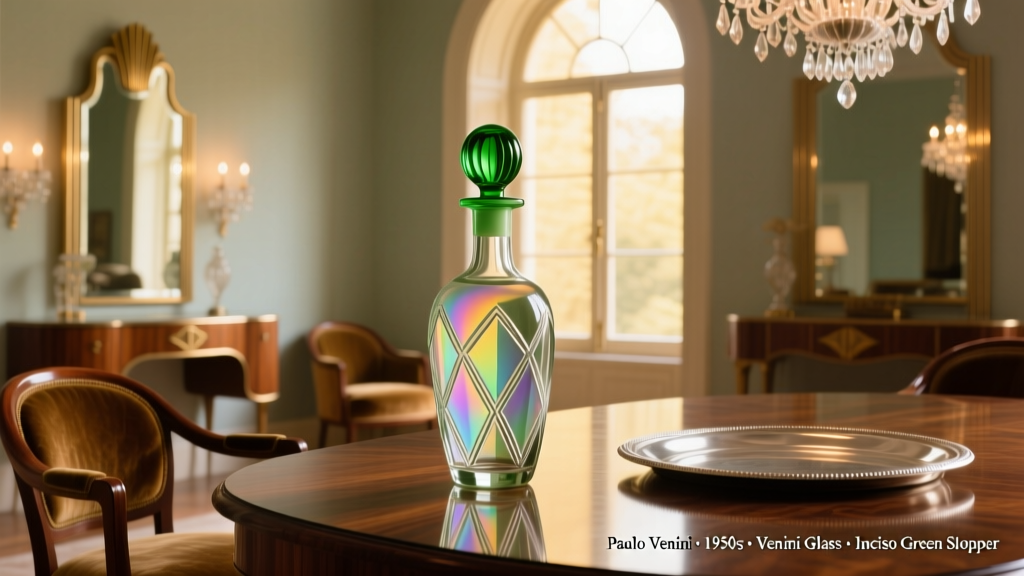
Venini Glass Bottle 'Inciso' with Green Stopper: A Masterpiece of Mid-Century Italian Craftsmanship
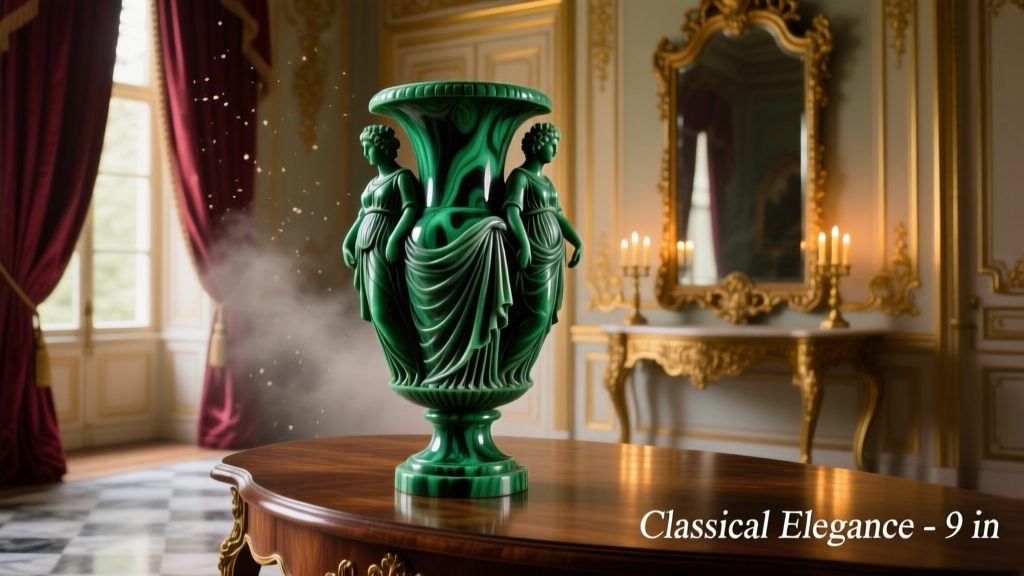
Malachite Vase with Nude Classical Figures: A 9-Inch Masterpiece of Victorian Mineral Artistry

Toy Soldier Mess Hall: Unpacking the American Dime Store 15-Piece Set — History, Identification, and Restoration Insights
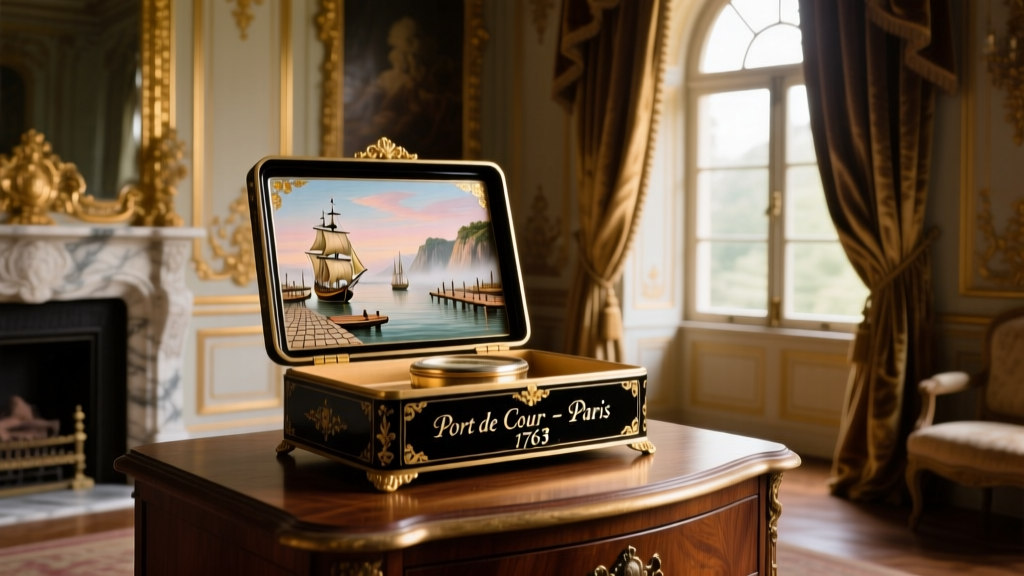
Snuffboxes in Papier-Mâché: The Artistry of Black-Lacquered Hinged Boxes with Hand-Painted Harbor Scenes
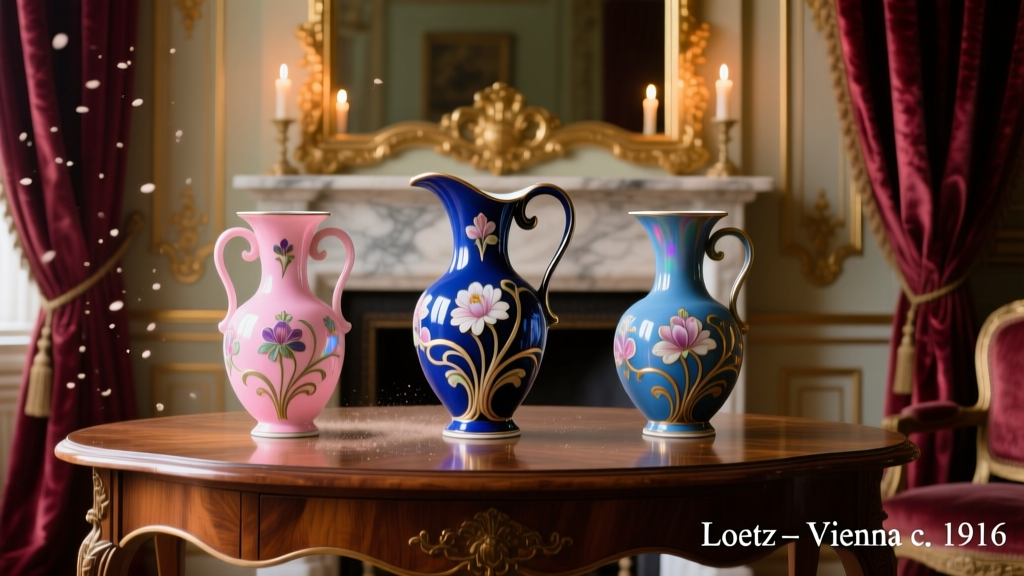
Loetz Garniture Set: Box Vases in Pink and Blue Enameled Design, Circa 1916 — A Three-Piece Art Nouveau Masterpiece
Black Americana Tobacco Tags, Gravely & Millers Kids Tins, and the Disturbing Legacy of 'Naked Black Babies' Imagery
Bauer Teapot Ring Snub Nose Yellow: Identification, History, and Restoration Guidance for Collectors