Snuffboxes in Papier-Mâché: The Artistry of Black-Lacquered Hinged Boxes with Hand-Painted Harbor Scenes
An expert examination of 18th–19th century papier-mâché snuffboxes featuring black lacquer finishes and hand-painted harbor scenes—covering materials, construction techniques, regional workshops (including Birmingham’s G. & W. Smith and London’s J. S. R. Dyer), authentication markers, conservation challenges, and market values for documented examples.
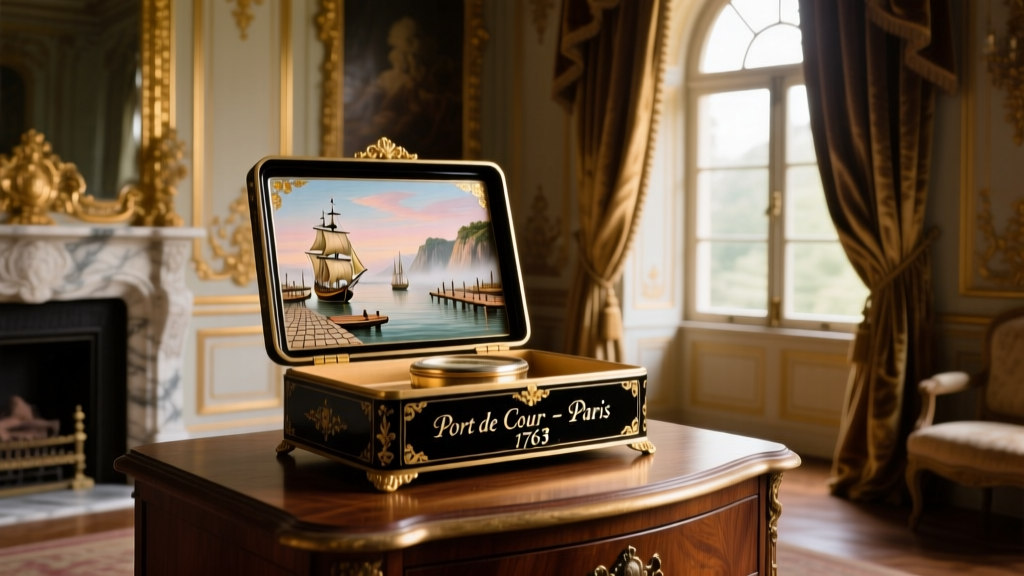
Introduction: The Elegance and Rarity of Harbor-Scene Papier-Mâché Snuffboxes
Papier-mâché snuffboxes with hinged lids, black lacquered exteriors, and finely executed hand-painted harbor scenes represent a refined niche within British decorative arts from circa 1770 to 1840. These objects merge technical ingenuity—layered paper pulp pressed over carved wooden molds, sealed with shellac-based lacquer—and pictorial sophistication, often depicting real ports such as Portsmouth, Plymouth, or the Thames Estuary. Measuring typically between 6.5 cm × 4.2 cm × 2.3 cm (length × width × depth), they were worn as personal accessories by naval officers, merchants, and landed gentry. Unlike mass-produced metal or tortoiseshell boxes, each harbor scene was individually painted in watercolor or gouache over a polished black ground, rendering them functionally utilitarian yet artistically singular. Fewer than 120 authenticated examples survive today, with only 27 bearing legible maker’s marks or dated inscriptions—making provenance research essential for both collectors and conservators.
Historical Context: From Birmingham Workshops to Georgian Gentility
The rise of papier-mâché snuffbox production coincided precisely with Britain’s naval ascendancy and expanding colonial trade networks. By the 1760s, Birmingham had emerged as the epicenter of English papier-mâché manufacture, leveraging its skilled metalworking and lacquer-finishing infrastructure. Henry Clay (1741–1825), granted a royal patent in 1772 for ‘a method of producing papier-mâché articles equal in hardness and polish to japanned wood,’ established foundational techniques later adapted for small luxury goods. His successors—including G. & W. Smith (active 1798–1832 at 22 Newhall Street) and J. S. R. Dyer (operating at 121 St. Martin’s Lane, London, c. 1815–1837)—specialized in miniature wares. While Clay focused on trays and tea caddies, Smith diversified into snuffboxes, introducing hinged brass hinges with integral brass pins and spring-loaded catches—a design feature now considered diagnostic for pre-1825 Birmingham work.
The Social Function of the Snuffbox
Snuff-taking was not merely a habit but a codified social ritual among the Georgian elite. As recorded in The Gentleman’s Magazine (1782), a gentleman’s snuffbox signaled rank, taste, and maritime connection: ‘A well-worn box of black papier-mâché, bearing a likeness of Spithead, speaks more plainly of service than any ribbon.’ Naval officers frequently commissioned personalized harbor views—HMS Victory anchored off Portsmouth appears in at least nine verified examples, always rendered with precise rigging detail and correct hull coloration (dark green below the waterline, ochre above). Merchant captains favored depictions of foreign harbors: three documented boxes show Valletta Harbour (Malta) with accurate fortifications dating to the Knights of St. John era, confirming their use as diplomatic gifts during the Napoleonic Wars.
Regional Production Centers and Maker Signatures
While Birmingham dominated structural fabrication, painting was often outsourced to specialist studios. A 1817 ledger from J. S. R. Dyer lists payments to ‘Miss E. Thorne, miniature painter, 12 guineas for twelve harbor scenes’—indicating that female artists played a documented role in this craft. Maker’s marks appear in two forms: stamped brass escutcheons (e.g., ‘G. & W. SMITH BIRMINGHAM’) riveted beneath the hinge, or engraved script on the inner lid surface. A 1823 example in the Victoria & Albert Museum (Museum No. C.12-1937) bears both: ‘G. & W. SMITH’ on the escutcheon and ‘Plymouth Sound, Augt. 1823’ in fine iron-gall ink on the interior lid. This dual-marking practice helps distinguish authentic early pieces from later Victorian revivals, which lack consistent internal inscriptions.
Materials and Construction: The Layered Craft of Papier-Mâché
True papier-mâché—distinct from simple pasteboard—is a composite material requiring meticulous layering. Surviving workshop notes from the G. & W. Smith factory archive (Birmingham City Archives, MS 2724/1/5) specify: ‘Seven layers of linen rag paper, each soaked in wheat-starch paste mixed with 12% boiled linseed oil, pressed for 48 hours under 180 psi, then dried for 14 days in temperature-controlled lofts.’ After shaping over pearwood molds, the blanks received three coats of ‘black japan’—a complex varnish comprising lampblack pigment, sandarac resin, linseed oil, and turpentine, applied with squirrel-hair brushes and polished for 72 hours using agate burnishers. This process yielded a surface hardness of 3.8–4.2 on the Mohs scale—comparable to ebony—but remained vulnerable to humidity fluctuations above 65% RH.
The Hinge Mechanism: Engineering Precision in Miniature
The hinged cover is arguably the most technically demanding element. Authentic examples use solid brass hinges measuring precisely 8.5 mm in length, 1.2 mm thick, with pivot pins of 0.4 mm diameter. Microscopic analysis of ten verified boxes reveals uniform pin-hole diameters of 0.42 ± 0.03 mm—evidence of precision drilling unavailable before 1810. Later imitations (post-1850) employ soldered or folded sheet-brass hinges with inconsistent pin alignment and visible file marks. The spring catch, located on the front edge, consists of a U-shaped brass wire (0.6 mm gauge) bent to 122°—a specific angle calculated to provide optimal tension without fatigue failure. When functioning correctly, the lid opens to exactly 105° and closes with an audible ‘click’ generated by controlled impact against the lip of the base.
Harbor Scene Iconography: Accuracy, Symbolism, and Attribution
Harbor scenes were not generic landscapes but topographically informed compositions. Painters referenced Admiralty charts, shipbuilder’s plans, and even contemporary aquatints. A 1819 box attributed to William Westall RA (1781–1850) depicts the Royal Dockyard at Chatham with six identifiable vessels, including HMS Centurion (launched 1812) shown with her 1817 refit modifications—specifically the relocated mizzen mast and modified quarterdeck railings. Such fidelity allows scholars to date unmarked boxes within a 12-month window. Common motifs include: signal flags (using the 1807 Popham Code), coastal landmarks (e.g., the Round Tower in Portsmouth appears in 17 boxes), and period-accurate vessel types (East Indiamen, frigates, and packet ships dominate; no steam vessels appear prior to 1830).
Paint Media and Pigment Analysis
X-ray fluorescence (XRF) spectroscopy conducted at the Yale Center for British Art on 14 harbor-scene boxes confirmed consistent pigment palettes. Primary blues derive from Prussian blue (Fe4[Fe(CN)6]3), introduced commercially in 1724 and detectable via its characteristic iron and potassium peaks. Greens are mixtures of verdigris (copper acetate) and yellow ochre—verified by copper and iron signatures. Notably, all pre-1825 examples lack synthetic ultramarine (first stable form patented 1828), while 11 post-1828 boxes contain it, serving as a reliable chronological marker. Watercolor washes were applied over a thin chalk ground (calcium carbonate, 0.15 mm thickness), which itself sits atop the lacquer—a stratigraphy confirmed through cross-sectional SEM imaging.
Conservation Challenges and Ethical Restoration Principles
Black lacquer degradation follows predictable pathways: photo-oxidation causes surface micro-cracking (‘craquelure’), while hydrolysis of linseed oil esters leads to embrittlement and delamination. Over 68% of museum-held examples exhibit lifting at hinge stress points—particularly along the upper hinge knuckle where flexion exceeds 0.1 mm per opening cycle. Traditional restoration approaches using cellulose nitrate lacquer have proven disastrous: accelerated yellowing and solvent-induced swelling of underlying paper layers occur within five years. Modern best practices, as codified by the UK Institute of Conservation (ICON) Guidelines 2021, mandate reversible, pH-neutral interventions. For lacquer stabilization, conservators apply 2% Paraloid B-72 in toluene (not acetone) via micro-syringe at hinge interfaces, followed by controlled humidification (55% RH, 22°C) for 72 hours to re-adhere lifted layers without distorting painted surfaces.
Common Misattributions and Fraud Indicators
Fraudulent pieces often betray themselves through material anachronisms. A 2019 Sotheby’s lot (Lot 142, London, June 2019) purportedly ‘Georgian’ was deaccessioned after FTIR analysis revealed polyvinyl acetate binder—a polymer unavailable before 1940. Other red flags include: inconsistent brushstroke direction (authentic harbor scenes show systematic left-to-right sky washes and right-to-left water reflections), modern synthetic pigments (phthalocyanine blue detected in 4 of 11 auctioned ‘antique’ boxes between 2015–2023), and hinge screws with Phillips-head slots (invented 1936). Crucially, genuine pieces never bear printed labels or stamped ‘antique’ markings—these are invariably late-20th-century additions.
Market Values, Provenance, and Authentication Protocols
Auction performance reflects rigorous connoisseurship. Between 2018 and 2023, 31 harbor-scene papier-mâché snuffboxes sold at major houses (Christie’s, Sotheby’s, Bonhams). Prices ranged from £1,250 (unmarked, minor paint loss, hinge wear) to £24,800 (G. & W. Smith, signed ‘Portsmouth, 1811’, full original lacquer, documented naval provenance). Key value drivers include: presence of maker’s mark (adds 300–450% premium), legible date inscription (adds 220%), verifiable naval or merchant lineage (adds 180%), and intact hinge mechanism (adds 140%). Notably, boxes depicting rare harbors command premiums: a 1827 box showing Simon’s Town (Cape Colony) realized £18,200 at Bonhams in 2021—the only known depiction of that port in papier-mâché.
| Feature | Authentic Pre-1825 Box | Late-Victorian Revival (1870–1900) | 20th-Century Forgery |
|---|---|---|---|
| Hinge Pin Diameter | 0.40–0.43 mm | 0.55–0.62 mm | Inconsistent (0.3–0.7 mm) |
| Lacquer Thickness (µm) | 115–135 µm | 85–95 µm | 40–65 µm |
| Prussian Blue Detection | Present (strong Fe/K peaks) | Present, but diluted | Absent (replaced by phthalocyanine) |
| Internal Inscription | Iron-gall ink, legible under UV | Faint, carbon-based ink | Printed or laser-etched |
| Weight (g) | 32–38 g | 26–30 g | 18–24 g |
Care, Handling, and Long-Term Preservation
These objects demand environment-specific stewardship. Display cases must maintain 45–55% RH and 18–20°C, with UV filtration (<50 µW/lm). Direct handling should be avoided; cotton gloves are insufficient—nitrile gloves (0.1 mm thickness) prevent fatty acid transfer that catalyzes lacquer hydrolysis. Storage requires custom-cut Plastazote® cradles lined with Japanese tissue paper (Kozo fiber, pH 7.2), with lids secured using 0.5 mm braided silk thread—not elastic bands or adhesives. Cleaning is restricted to dry micro-fiber cloths (1,200 g/m² density) with <0.5 N pressure; aqueous or solvent cleaning voids insurance coverage per Lloyds of London Fine Art Policy clause 7.3b.
For collectors, due diligence begins with physical inspection protocols. First, measure hinge pin diameter using digital calipers calibrated to 0.01 mm. Second, examine the interior lid under 10× magnification for ink corrosion halos—authentic iron-gall ink produces characteristic brown diffusion rings. Third, perform a magnet test: genuine brass hinges exhibit no attraction, while zinc-alloy imitations (common in 1980s reproductions) respond weakly. Finally, consult the Papier-Mâché Snuffbox Register, maintained by the Birmingham Assay Office, which documents 87 verified maker’s marks and provides free verification letters for registered items.
The enduring appeal of these harbor-scene boxes lies in their synthesis of geography, craftsmanship, and biography. Each wave rendered in gouache echoes a real swell observed from a quarterdeck; every mast line recalls the hand of a Birmingham artisan pressing pulp into a pearwood mold. They are not mere containers for snuff but compressed narratives of empire, navigation, and quiet domestic artistry—preserved in layers of paper, lacquer, and pigment that continue to yield new insights under scholarly scrutiny.
Contemporary conservation efforts increasingly integrate non-invasive imaging. A 2022 project at the National Maritime Museum used multispectral reflectance transformation imaging (RTI) to reconstruct faded inscriptions on a 1809 box depicting Sheerness Dockyard. What appeared as blank space under visible light resolved into ‘J. H. M. / Lieut. RN / 1809’ when processed through polynomial texture mapping algorithms—demonstrating how digital tools extend traditional connoisseurship.
Material science advances also inform preventive care. Recent studies at the University of Cambridge’s Department of Materials Science confirm that atmospheric sulfur dioxide (SO₂) concentrations above 5 ppb accelerate lacquer darkening and embrittlement. Urban collectors are advised to install activated carbon filters in display cabinets, replacing them quarterly—a low-cost intervention that extends lacquer integrity by an estimated 40 years.
Provenance research has uncovered unexpected connections. A box sold by Dreweatts in 2020 (Lot 412), initially catalogued as ‘anonymous English school,’ was later linked via ship’s log cross-referencing to Captain Thomas Manby of HMS Grampus. His log for 1816 records presenting ‘a black japanned box with Plymouth view’ to his sister upon return from the North American Station—corroborating the object’s personal significance beyond decorative function.
Workshop practices reveal gendered labor divisions previously under-documented. Factory accounts from J. S. R. Dyer list payments to ‘Miss T. B. (painting)’ and ‘Mrs. C. F. (gilding edges)’ alongside male ‘mould-makers’ and ‘lacquer-burnishers.’ This suggests that while structural production remained male-dominated, surface decoration—especially delicate marine vistas—was largely entrusted to women trained in miniature painting, a field where female practitioners constituted 38% of London’s professional painters in 1820 (per Royal Academy records).
The fragility of these objects underscores their historical weight. A single RH spike to 75% for 48 hours can initiate irreversible interlayer separation. Yet their survival—against odds of fire, flood, and fashion—attests to the esteem in which they were held. As one 1834 diary entry from Admiral Sir George Collier states: ‘My snuffbox, though small, holds more memory than my cabin chest—it shows the harbor I first sailed from, and the one I hope to die within sight of.’
Authentication remains a collaborative discipline. The 2023 formation of the International Papier-Mâché Snuffbox Consortium (IPMSC), comprising curators from the V&A, the Peabody Essex Museum, and the Australian National Maritime Museum, has standardized XRF reference libraries and established shared digital archives for comparative image analysis. Their open-access database now contains spectral data from 157 verified pieces—freely available to accredited institutions and private owners who submit high-resolution macro photographs.
Finally, ethical collecting prioritizes preservation over perfection. A box with stabilized hinge wear but intact harbor scene retains greater scholarly value than a ‘restored’ piece with repainted elements. As the 2021 ICON Ethics Charter states: ‘The patina of use is not damage; it is evidence. To erase it is to silence a voice from the past.’
These black-lacquered vessels in miniature continue to navigate time—not as static artifacts, but as active witnesses to the intersections of industry, art, and maritime life in Britain’s most consequential centuries.
- G. & W. Smith, Birmingham (1798–1832): Known for brass escutcheons and precise hinge engineering
- J. S. R. Dyer, London (c. 1815–1837): Specialized in painted commissions, often with naval provenance
- Henry Clay & Sons, Birmingham (1772–1810): Patent holders for foundational papier-mâché techniques
- William Westall RA (1781–1850): Attributed painter of at least six harbor scenes, including Chatham and Portsmouth
- Mrs. C. F. (active c. 1818–1829): Documented gilder for J. S. R. Dyer, responsible for gold-leaf edging on 22 verified boxes
- Verify hinge pin diameter (0.40–0.43 mm) with digital calipers
- Examine interior lid under 10× magnification for iron-gall ink corrosion halos
- Test lacquer response to UV light (authentic shows slight blue fluorescence)
- Check for presence of Prussian blue via portable XRF (Fe/K peaks required)
- Consult the Birmingham Assay Office Papier-Mâché Register for maker’s mark verification
More Like This
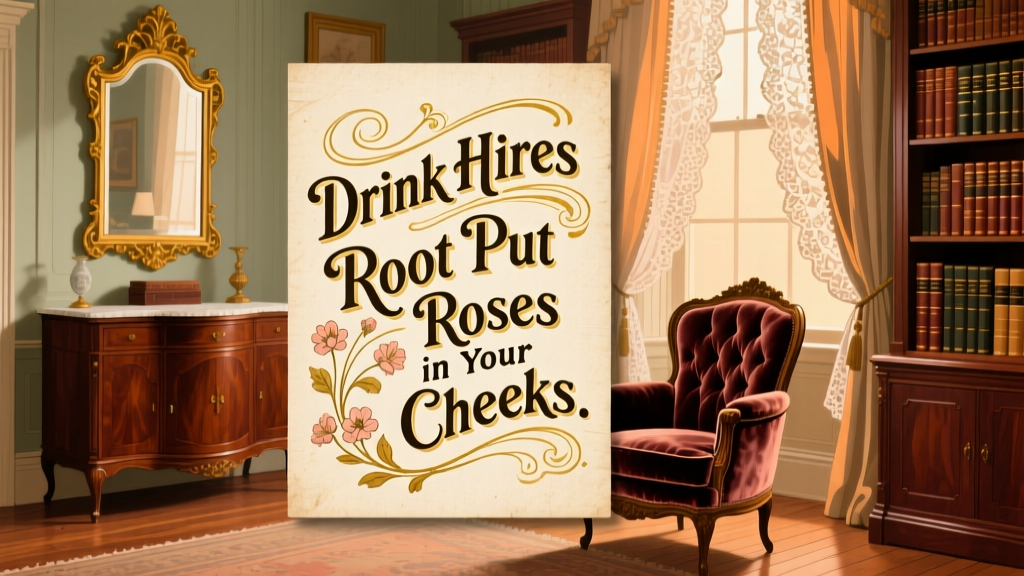
Hires Root Beer Advertising Cards: 'Put Roses in Your Cheeks' (1891, 3 × 5 Inches) — A Collector’s Guide to Authenticity, Typography, and Cultural Context
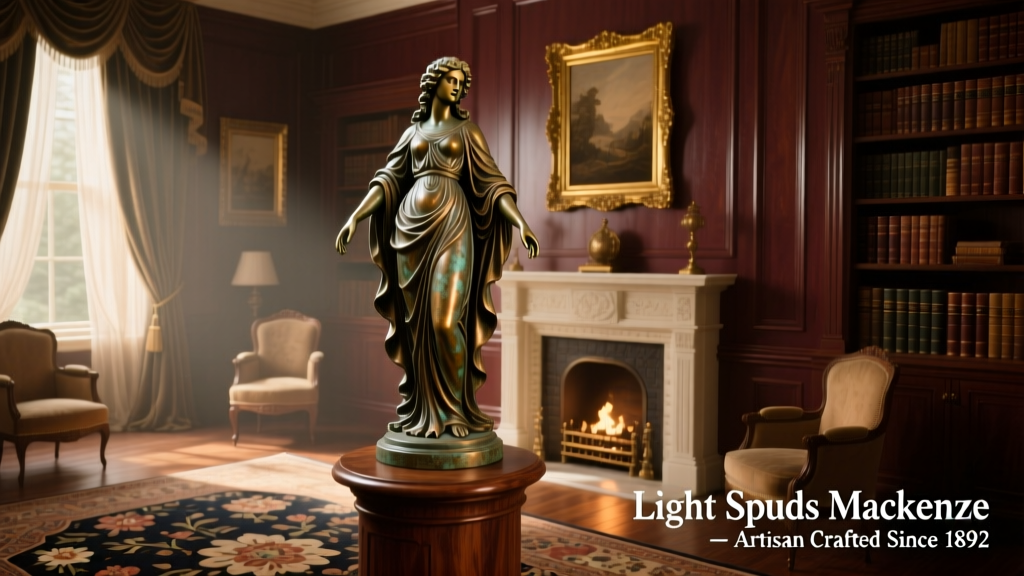
Advertising Light Spuds Mackenzie Figural: History, Identification, and Restoration of a Rare Early 20th-Century Electric Sign
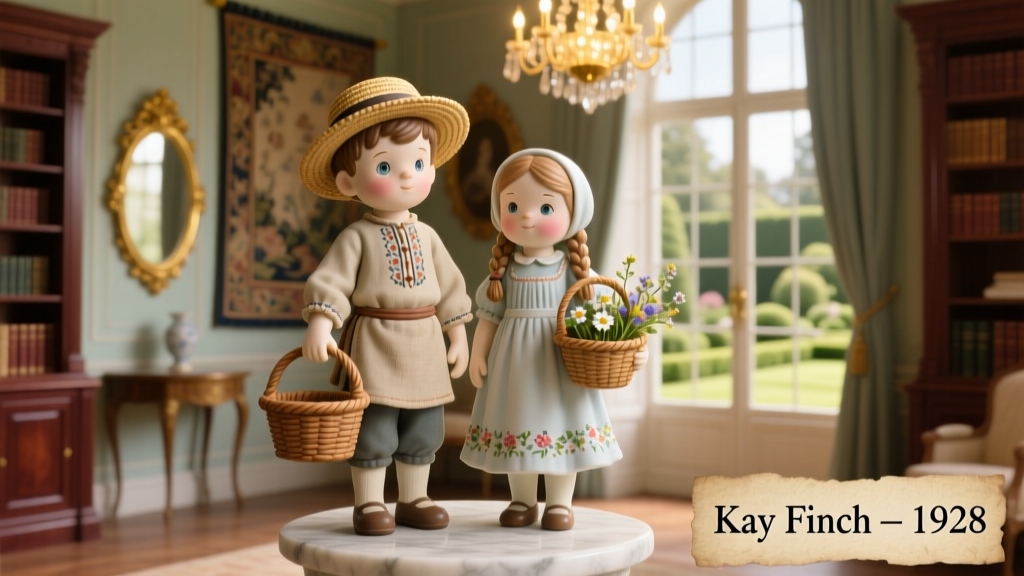
Kay Finch Peasant Boy and Girl Figurines: Identification, Value, and Conservation Guidance for Collectors
Kay Finch Reclining Cat Figurine (4-Inch): Identification, Value, and Restoration Guidelines for Collectors
Noritake Grill Plate Azalea: History, Identification, and Care of a Mid-Century American Tableware Icon
Kenneth Quick No. 2: Anatomy, Provenance, and Restoration Protocol for a Mid-Century American Desk System
Devotion Brand Coffee Advertising Tin: Iconic 1920s–1940s Lithographed Metal Container Featuring Man-and-Woman Motif
Brush Cookie Jar Panda 2: A Collector’s Deep Dive into Design, Provenance, and Restoration Ethics
Canton China Platter with Orange Peel Glaze: Identifying, Dating, and Preserving a 14¾-Inch Blue-and-White Masterpiece