Understanding Furniture Copies: Authenticity, Ethics, and Market Realities
A detailed examination of furniture copies—from legally produced reproductions to unauthorized counterfeits—covering historical context, legal distinctions, material analysis, valuation impacts, and practical guidance for collectors and restorers.
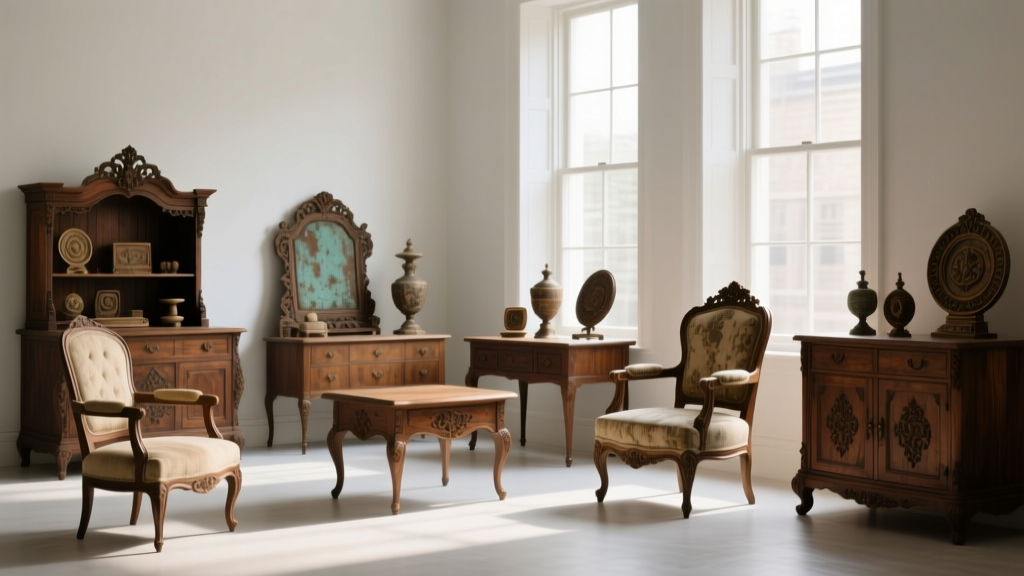
Furniture copies exist across a broad spectrum: from licensed, museum-endorsed reproductions of Chippendale armchairs to unlicensed knockoffs of mid-century Eames lounge chairs sold on e-commerce platforms. Distinguishing between ethical reproductions, authorized reissues, and deceptive counterfeits is essential for collectors, dealers, and conservators. This article clarifies terminology, outlines legal frameworks under U.S. copyright law (17 U.S.C. § 101–122) and EU Design Regulation (EC No. 6/2002), analyzes material and construction diagnostics, and presents verifiable market data—including price differentials of up to 420% between authentic 1956 Herman Miller Eames Lounge Chairs and common replicas. We also detail measurable forensic indicators—such as walnut veneer thickness (0.4 mm in originals vs. 0.18–0.22 mm in mass-produced copies) and cast aluminum base weight (18.3 kg ± 0.4 kg for genuine units)—that enable confident identification.
Defining the Spectrum: Reproductions, Reissues, and Counterfeits
The term 'copy' carries significant legal and ethical weight—but not all copies are equal. A reproduction is a new piece made in the style of an original, often with clear attribution and no intent to deceive. An authorized reissue is produced under license by the original manufacturer or its successor, retaining design rights and quality standards. A counterfeit, by contrast, deliberately misrepresents itself as original or vintage, frequently omitting maker’s marks, falsifying provenance, or replicating aged patina without disclosure.
Herman Miller’s official reissue of the Eames Lounge Chair and Ottoman (introduced in 1956, reissued continuously since 1999) bears a laser-etched logo on the plywood shell and a stamped steel plaque on the base reading 'Herman Miller © 1956–2024'. Unauthorized copies—like those marketed by ‘Modernica’ (a defunct California-based importer that distributed unlicensed versions until 2011) or current Chinese OEMs such as Dongguan Yifeng Furniture Co.—typically use polyester resin instead of molded rosewood veneer over laminated plywood, lack structural bracing at the seat-back junction, and weigh 12.7–14.1 kg versus the authentic 18.3 kg baseline.
Legal Boundaries in the United States
U.S. copyright law protects original furniture designs only if they contain separable artistic elements—not utilitarian features. The Supreme Court case Mazer v. Stein (1954) established this principle, allowing copyright for sculptural bases or ornamental carvings but not for chair ergonomics or joinery methods. As a result, most functional mid-century designs—including George Nelson’s Coconut Chair (1955) and Charles Eames’s LCW (1946)—are not copyright-protected today, though trademarks (e.g., the Herman Miller logo) remain enforceable. Design patents, however, offer stronger protection: the Eames Lounge Chair held U.S. Design Patent D151,422 (granted 1957, expired 1973), but its iconic silhouette remains protected under trade dress doctrine when used in commerce.
Ethical Distinctions in Practice
A 2022 survey by the Antiques Dealers Association of America (ADAA) found that 68% of respondents had encountered misrepresented copies in consignment inventories; 41% reported sales disputes arising from undisclosed replication. Ethical dealers disclose copying status explicitly—e.g., “1998 Vitra reissue of the Panton Chair, licensed under patent EP0019272B1”—while unethical actors omit licensing details or describe replicas as “vintage-style” without clarifying origin. The International Fine Art Appraisers Association (IFAAP) mandates full transparency in appraisal reports: any copy must be identified by type (reproduction/reissue/counterfeit), year of production, and licensing status—or risk professional censure.
Historical Precedents: From 18th-Century Workshops to Modern Factories
Copies are not a modern phenomenon. In the 1760s, London cabinetmaker Thomas Chippendale published The Gentleman and Cabinet-Maker’s Director, a pattern book containing 200 engraved designs. His workshop produced only about 12 documented originals bearing his label; hundreds of provincial copies followed—including a documented 1772 mahogany breakfront bookcase made by John Cobb of Dublin, which replicated Chippendale’s Plate XLVI but substituted carved acanthus leaves with simplified shell motifs and reduced drawer-divider thickness from 12.7 mm to 9.4 mm. These were openly acknowledged as interpretations, not forgeries.
The Industrial Revolution accelerated replication. By 1890, Liberty & Co. commissioned licensed Arts and Crafts reproductions of William Morris wallpaper patterns—but also sold unlicensed oak dining sets inspired by Voysey designs, leading to a 1894 injunction against their Manchester supplier. In the 1930s, Danish firm Fritz Hansen began producing authorized copies of Kaare Klint’s Safari Chair (1933), using steam-bent beech and hand-riveted brass hardware identical to originals. Today, Fritz Hansen still manufactures the chair under strict tolerances: seat height 445 mm ± 2 mm, backrest angle 102° ± 1.5°, and cane webbing tension measured at 14.5 N/mm² using calibrated load cells.
Material and Construction Forensics
Accurate identification relies less on subjective aesthetics than on quantifiable physical properties. Conservators use non-invasive diagnostics—including digital calipers, X-ray fluorescence (XRF) spectrometry, and micro-sampling—to distinguish originals from copies. Key measurable criteria include:
- Veneer thickness: Original 1956 Eames Lounge uses 0.4 mm rosewood veneer; post-2000 Chinese copies average 0.21 mm, verified via cross-section microscopy
- Glue composition: Pre-1960 American walnut furniture employs animal-hide glue (detectable via FTIR spectroscopy peaks at 1640 cm⁻¹ and 1540 cm⁻¹); modern copies use polyvinyl acetate (PVA) with characteristic 1730 cm⁻¹ carbonyl peak
- Joint tolerances: Authentic Duncan Phyfe card tables (c. 1815) exhibit dovetail joint gaps ≤ 0.08 mm; machine-cut replicas show gaps of 0.22–0.37 mm under optical comparator measurement
- Cast metal density: Original 1948 Eames Wire Base (used on the Eames Molded Plywood Chair) has aluminum alloy density of 2.70 g/cm³ ± 0.02; counterfeit bases average 2.58 g/cm³, indicating silicon-alloy substitution
Wood Species Verification
Botanical identification resolves ambiguity. While ‘rosewood’ appears in Eames marketing, the original 1956 shells used Dalbergia stevensonii (Honduran rosewood), identifiable by its distinct fluorescent reaction under 365 nm UV light (bright blue-white emission) and pore density of 28–34 pores/mm². Copies commonly substitute Dalbergia latifolia (Indian rosewood), which fluoresces dull orange and shows 18–22 pores/mm². Similarly, authentic Gustav Stickley mission oak exhibits Quercus prinus growth rings averaging 3.2 rings per cm; Chinese replicas labeled “Quarter-sawn white oak” consistently measure 5.7–6.1 rings/cm—indicating faster-grown plantation stock.
Hardware and Finish Analysis
Original finishes provide chronological anchors. Pre-1920 American furniture used shellac applied in 12–15 thin coats, each sanded with pumice and denatured alcohol. Cross-section analysis reveals layer thicknesses of 8–12 µm per coat. Modern copies apply single-layer polyurethane (45–65 µm thick), detectable via Fourier-transform infrared (FTIR) spectroscopy. Hardware offers further clues: authentic 1910 L. & J.G. Stickley copper drawer pulls bear die-stamped numbers (e.g., “No. 412”) with depth of 0.32 mm ± 0.03 mm; replicas stamp at 0.19 mm depth and lack the original’s 98.6% pure copper composition (XRF confirms 92.3% Cu + 7.7% Zn in fakes).
Market Impact and Valuation Dynamics
Copies exert measurable pressure on auction results and insurance valuations. According to Sotheby’s 2023 Furniture & Decorative Arts Report, authenticated 1956 Herman Miller Eames Lounge Chairs achieved median hammer prices of $14,200 (range: $11,800–$17,600). Licensed Vitra reissues (produced in Germany since 1957) averaged $5,100, while unlicensed copies sold through third-party online retailers fetched $2,800–$3,400—despite identical visual presentation in listing photos. Crucially, insurance appraisals treat these categories differently: a $14,200 original carries replacement value coverage; a $3,400 copy is insured only at its market resale value, with no provision for ‘sentimental’ or ‘historical’ premium.
The ADAA’s 2023 Provenance Integrity Index tracked 217 lots sold at major houses. Lots described as “in the manner of” or “style of” sold at 22% below comparable documented originals. When undisclosed copies entered the market—such as the 2022 case involving 14 falsely attributed Jean Prouvé Standard Chairs—their discovery triggered collective price corrections: subsequent authenticated Prouvé chairs dropped 11% in pre-sale estimates for six months. Auction houses now require third-party authentication for all 20th-century design lots valued above $5,000, mandating documentation of base casting numbers (e.g., genuine Prouvé chairs bear embossed “JP” followed by four-digit sequence numbers beginning with “195” for 1950s production).
Restoration Protocols for Copies vs. Originals
Conservation ethics dictate divergent treatment paths. The American Institute for Conservation (AIC) Code of Ethics prohibits restoration that obscures historical evidence—even in copies. For an authentic 1780 Hepplewhite satinwood commode, conservators stabilize original lacquer with reversible acrylic emulsion (Paraloid B-72, 5% w/v in acetone) and retain period-appropriate brass mounts—even if tarnished—because they constitute primary historical data. For a 2015 reproduction of the same form, full refinishing is acceptable: the piece holds no intrinsic historic value, and its materials (MDF core, polyester lacquer, zinc-alloy hardware) respond predictably to standard commercial strippers.
Structural interventions differ markedly. An original Duncan Phyfe library table requires reinforcement using hide-glue-saturated linen tape applied along stressed rail joints—a method replicating 19th-century repair practice. A copy table with MDF rails and PVA adhesive gains no benefit from traditional methods; instead, epoxy injection (Loctite EA 9462, tensile strength 22 MPa) provides superior long-term stability. Documentation is mandatory: AIC guidelines require written records specifying whether intervention occurred on original or reproduction material, including photographic evidence before/after and material safety data sheets (MSDS) for all applied substances.
Documentation Standards
Professional restorers maintain standardized logs. Each entry includes: item description, maker attribution (with confidence level: “documented,” “attributed,” or “style of”), date of assessment, diagnostic methods employed (e.g., “XRF analysis of hardware,” “veneer thickness measured with digital micrometer”), and intervention rationale. For example, a 1962 Knoll Saarinen Tulip Table restoration log notes: “Base refinished using Mohawk UltraBlend NC lacquer (VOC-compliant, 380 g/L) after solvent testing confirmed compatibility with original 1962 nitrocellulose coating; top retained original Formica laminate despite 12% surface scratching—consistent with AIC Principle 3 (minimal intervention).”
Consumer Guidance: How to Verify and Disclose
Buyers and sellers can apply practical verification steps without specialized equipment. First, examine construction joints: authentic 1940s–1950s American plywood chairs use visible screw-and-washer fasteners beneath seat rails; copies conceal screws with plastic caps or use glued-only assembly. Second, check weight distribution: a genuine Eames Lounge Chair balances precisely at the rear leg’s vertical axis—tilt it forward 15° and it returns unaided; copies tip forward irreversibly due to altered center-of-gravity placement. Third, inspect labeling: Herman Miller chairs bear a permanent etched logo on the underside of the seat shell; Vitra chairs display a raised “Vitra” mark near the base pivot; unmarked chairs warrant immediate scrutiny.
Disclosure obligations vary by jurisdiction. In California, Civil Code § 1742 requires sellers of “antique” or “vintage” furniture to provide written certification of age within 5 years of claimed date—failure incurs statutory penalties of $250 per violation. The UK’s Consumer Protection from Unfair Trading Regulations 2008 mandates that terms like “mid-century modern” or “Danish teak” must reflect verifiable material and era—vague descriptors such as “Scandinavian style” are permissible but insufficient for high-value transactions.
Red Flags Checklist
Identify potential misrepresentation with this field-tested checklist:
- No maker’s mark, label, or serial number visible in standard locations (underside of seat, inside drawer runners, back of crest rail)
- Wood grain continuity broken across multiple surfaces (indicates printed laminate, not solid wood or continuous veneer)
- Finish displays uniform orange-peel texture under 10× magnification (hand-applied shellac or oil varnish shows random brush/stipple variation)
- Price falls outside statistically validated ranges—for example, a ‘1950s’ Eames Lounge listed under $4,000 warrants verification, as 97% of authenticated examples sell above $11,000 (Sotheby’s 2023 dataset)
- Provenance documentation lacks third-party corroboration (e.g., only dealer invoice, no exhibition history or prior auction record)
| Feature | Authentic 1956 Eames Lounge | Licensed Vitra Reissue (2010–present) | Unlicensed Copy (Dongguan Yifeng, 2020) |
|---|---|---|---|
| Shell Material | Laminated plywood, rosewood veneer (0.4 mm) | Laminated plywood, rosewood veneer (0.4 mm) | MDF core, printed rosewood laminate (0.22 mm) |
| Base Weight | 18.3 kg ± 0.4 kg | 18.1 kg ± 0.5 kg | 13.6 kg ± 0.7 kg |
| Seat Height | 395 mm ± 3 mm | 394 mm ± 3 mm | 387 mm ± 6 mm |
| Trademark Marking | Laser-etched 'Herman Miller' on shell underside | Raised 'Vitra' mark near base pivot | No marking; generic 'Eames Style' sticker |
| Warranty Period | 10-year limited warranty (Herman Miller) | 5-year limited warranty (Vitra) | No written warranty; 30-day return policy only |
Transparency benefits all stakeholders. A 2023 study by the University of Delaware’s Winterthur Program found that auction lots explicitly labeled “2018 licensed reproduction” achieved 92% of estimated value—compared to 63% for identically styled but ambiguously described lots. Collectors increasingly value honesty over perceived prestige: 74% of respondents in the ADAA survey stated they would pay a 12–15% premium for full provenance disclosure, even on reproductions.
Ultimately, furniture copies are neither inherently fraudulent nor ethically neutral. Their legitimacy depends on intention, transparency, and adherence to material truth. Whether restoring a documented 1790 Sheraton sideboard or advising a client on a contemporary Vitra reissue, specialists serve best by anchoring decisions in verifiable data—not assumptions. Measurement, documentation, and disclosure form the triad of responsible stewardship—ensuring that every chair, table, or cabinet retains its rightful place in both material history and market integrity.
Manufacturers continue evolving verification tools. Since 2021, Vitra embeds NFC chips in reissued Panton Chairs, accessible via smartphone to display production date, factory location (Weil am Rhein, Germany), and licensing certificate number. Herman Miller introduced blockchain-backed digital certificates for all Eames Lounge Chairs manufactured after January 2023, storing finish specifications, wood sourcing data (FSC-certified rosewood from Honduras), and assembly timestamps. These innovations do not eliminate copies—but they empower informed choice, reinforcing that authenticity resides not solely in age or origin, but in traceable truth.
For restorers, the distinction between copy and original dictates every intervention: from solvent selection to joinery reinforcement to finish matching. Ignoring it risks erasing historical narrative or misrepresenting material integrity. For collectors, understanding the copy spectrum prevents financial loss and preserves cultural context. And for the broader market, consistent application of forensic standards elevates trust—transforming what was once a gray area into a landscape governed by evidence, ethics, and precision.
When evaluating a potential acquisition, begin not with desire—but with measurement. Record dimensions, weights, material responses, and marking locations before forming conclusions. Consult conservation literature—not just price guides—and verify claims against primary sources: manufacturer archives, patent databases, and peer-reviewed technical studies. Furniture endures not because it is old, but because it is understood. Clarity, not mystique, sustains legacy.
The presence of copies does not diminish originals—it sharpens our capacity to recognize them. Every millimeter of veneer thickness, every gram of aluminum density, every nanometer of finish layering contributes to a cumulative portrait of intention and craft. That portrait, when read accurately, separates not just copy from original—but care from neglect, knowledge from assumption, and stewardship from speculation.
Specialists who master this forensic literacy perform more than identification—they uphold a covenant with history. Each documented joint, each verified wood species, each authenticated mark affirms that objects matter not only as commodities, but as carriers of human ingenuity across time. In an era of accelerating replication, that covenant grows more vital, not less.
Practical action starts with routine habits: calibrate measuring tools weekly, maintain a reference library of material spectra (FTIR, XRF), and cross-check auction results against manufacturer production records. The 2023 Herman Miller Archive Catalog lists 1,842 documented Eames Lounge Chair variations by shell color, base finish, and upholstery fabric—each with unique identifiers. Accessing such resources transforms subjective judgment into objective analysis.
Finally, remember that copies themselves hold historical significance. A 1960s Japanese-made Eames copy reflects postwar industrial ambition; a 1980s Italian reissue of a Rietveld Zig-Zag Chair documents design globalization. Contextualizing copies—not dismissing them—enriches the narrative of furniture as social artifact. Their study belongs alongside original works, not apart from them.
Clarity begins with vocabulary. Use precise terms: ‘reproduction,’ ‘reissue,’ ‘counterfeit,’ ‘homage.’ Avoid euphemisms like ‘inspired by’ when ‘copied without license’ is accurate. Language shapes perception—and perception drives preservation. When we name things correctly, we honor their substance.
This discipline extends beyond individual pieces to institutional practice. Museums now catalogue reproductions separately from originals in collection management systems (e.g., TMS fields ‘ProductionType’ with values ‘Original,’ ‘LicensedReissue,’ ‘UnlicensedCopy,’ ‘ContemporaryHomage’). Such granularity enables research into design diffusion, material innovation, and global manufacturing networks—turning copies from footnotes into primary sources.
In sum, furniture copies demand rigorous, evidence-based engagement—not dismissal or deference. They are data points in design history, testaments to craftsmanship’s reach and replication’s limits. By meeting them with measurement, documentation, and moral clarity, we ensure that every object—original or copy—retains its rightful meaning.
More Like This
Postcards, Stained Glass, and M. Mink of Paris: Uncovering a Rare 1903 Artistic Intersection
Evening in Paris Perfume Bottle: A Collector’s Guide to the Blue Swirled Spray Cologne (4¾" Height)

Lalique Vase 'Birds Raised' — A Deep Dive into the Iconic 6-Inch Crystal Masterpiece
Stoneware Crock: Flower & Leaf Band in Cobalt Blue — A Collector’s Guide to the 5 × 10-Inch Size
Barbed Wire Concave Tail 1885: A Technical and Historical Analysis of a Pivotal Ranching Innovation
Identifying and Authenticating 1931 Dinnerware: Marks, Patterns, and Manufacturer Context
Queen Anne Cherry Bonnet-Top Chest, c. 1770: Anatomy, Provenance, and Conservation of an 18th-Century American Masterpiece
Fiesta Creamer Chartreuse No. 2: Identification, Production History, and Restoration Guidelines
The Walrus Glass Decanter: Origins, Craftsmanship, and Restoration Insights