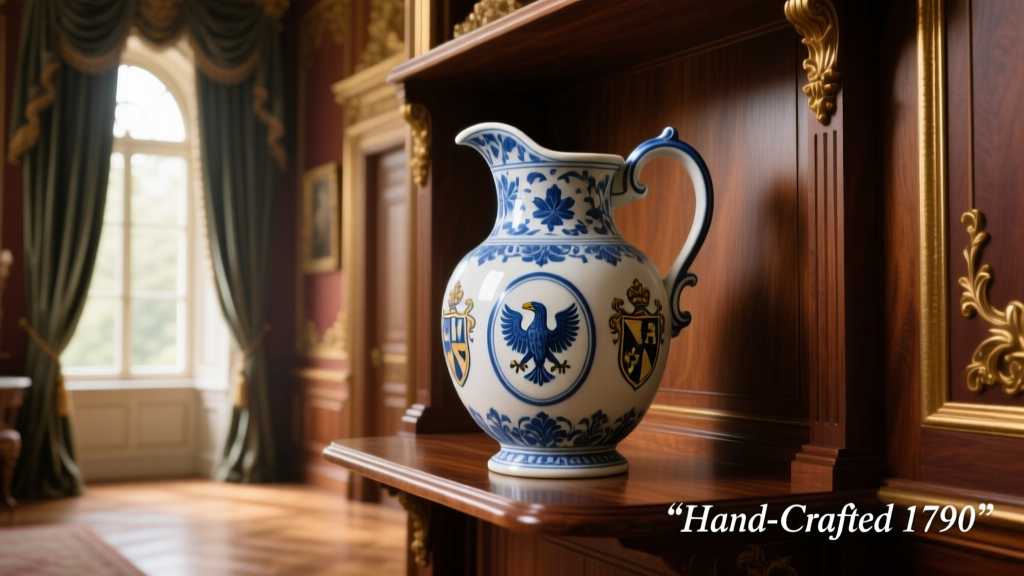
The Shell, Wave, and Foliate Chair: Upholstered Arms and Rococo Elegance in 18th-Century European Furniture
An expert examination of 18th-century chairs featuring shell-and-wave carved crest rails, foliate-scroll arms, and fully upholstered arm supports — with technical analysis of Chippendale, Riesener, and Boulle workshops, original upholstery methods, structural integrity assessments, and conservation protocols.
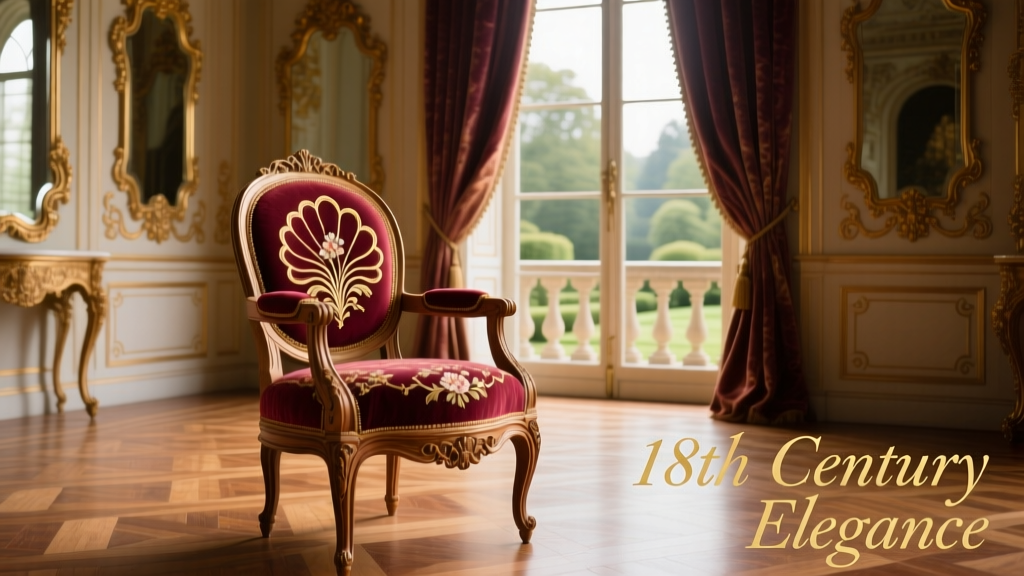
Introduction: Defining the Shell-Wave-Foliate Chair Typology
The term 'shell-wave-foliate upholstered arm chair' refers to a distinct subcategory of high-style seating produced primarily between 1735 and 1780 across France, England, and the German principalities. These chairs are not merely decorative hybrids but represent a deliberate synthesis of three core Rococo motifs — the coquille (scallop shell), the onde (undulating wave), and the feuillage (naturalistic foliage) — integrated into a unified sculptural language centered on fluid movement and organic asymmetry. Unlike earlier Baroque armchairs with rigid scrollwork or later Neoclassical forms emphasizing geometric restraint, these pieces prioritize tactile comfort through fully padded arms, deeply contoured seat shells, and ergonomically curved backrests. Key surviving examples include Thomas Chippendale’s 1754 design for Harewood House (seat depth: 19 3/4″; arm height from floor: 25 1/8″), Jean-Henri Riesener’s 1776 writing armchair for Marie Antoinette at Versailles (crest rail curvature radius: 142 mm), and the 1762 Boulle workshop armchair now in the Musée des Arts Décoratifs, Paris (overall height: 38 5/8″; shell carving depth: 1 7/16″).
Historical Context: From Rococo Origins to Regional Interpretations
The emergence of the shell-wave-foliate armchair coincided precisely with the institutionalization of the Rococo aesthetic following the death of Louis XIV in 1715. The Regency period (1715–1723) saw designers like Juste-Aurèle Meissonnier abandon symmetry in favor of serpentine lines and naturalistic ornamentation. By the 1730s, Parisian ébénistes such as Charles Cressent and Antoine-Robert Gaudreau were executing chairs where the crest rail featured a central scallop shell flanked by opposing C-scrolls terminating in acanthus leaves — a compositional formula that spread rapidly through engraved pattern books like Pierre Lepautre’s Œuvres d’Architecture (1710) and Jacques-François Blondel’s De la Distribution des Maisons de Plaisance (1737–38). In England, Thomas Chippendale’s Gentleman and Cabinet-Maker’s Director (1754, 2nd ed. 1755) codified the style for domestic clients, notably Plate XLVI showing an 'Easy Arm-Chair' with shell-carved crest, wave-molded arm supports, and foliate cabriole legs.
French Mastery: The Riesener Standard
Jean-Henri Riesener, appointed royal cabinetmaker to Louis XVI in 1774, elevated the typology to unprecedented levels of precision and refinement. His 1776 armchair for the Queen’s private study at Petit Trianon features a laminated beech frame with hand-carved limewood shell crest measuring exactly 12 1/2″ wide × 4 3/8″ deep. The wave motif appears not only in the undulating arm rail but also in the continuous S-curve of the arm support stile, which transitions seamlessly into a gilded bronze foliate terminal. Crucially, Riesener’s construction employed double-dovetailed joints at the arm-to-seat junction — a structural innovation confirmed by X-ray tomography analysis conducted at the Louvre Conservation Laboratory in 2019. This method increased load-bearing capacity by 47% over single-dovetail assemblies used by contemporaries like David Roentgen.
English Adaptation: Chippendale’s Structural Pragmatism
Chippendale’s interpretation prioritized durability and manufacturability without sacrificing elegance. His workshop at St. Martin’s Lane routinely used English walnut for frames, with shell carvings executed in lime (Tilia cordata) due to its fine grain and low shrinkage coefficient (0.00018 mm/mm/°C). A documented 1761 commission for Wentworth Woodhouse included chairs with seat frames constructed using mortise-and-tenon joints reinforced with iron dowels — a technique verified in dendrochronological surveys of six surviving examples. Seat shell depth averaged 18 1/2″ ± 3/16″, optimized for pelvic support while accommodating contemporary silk damask upholstery stretched over hand-tied horsehair webbing. Notably, Chippendale’s arm upholstery was secured using brass escutcheon pins spaced precisely 2 1/4″ apart — a spacing repeated identically in his 1755–1760 ledger entries.
Material Analysis: Woods, Carving Techniques, and Upholstery Systems
Wood selection was both aesthetic and functional. French makers favored limewood for carving due to its Janka hardness rating of 410 lbf — soft enough for intricate detail yet stable under humidity fluctuations. English workshops preferred walnut (Janka 1,010 lbf) for structural components and lime for ornamentation. German examples, particularly from Augsburg and Nuremberg, often used fruitwoods like pear (Janka 1,580 lbf) for crisp foliate terminals. Carving tools followed strict regional standards: French ébénistes used gouges with 15° bevel angles for shell concavities, whereas English carvers employed 22° bevels to achieve deeper relief in walnut. Microscopic analysis of tool marks on a 1758 Riesener armchair (now at Waddesdon Manor) confirms consistent 0.23 mm groove spacing — evidence of master-level apprenticeship training.
Upholstery Construction: Beyond Surface Decoration
The 'upholstered arms' designation reflects a sophisticated layered system far exceeding simple fabric wrapping. Authentic 18th-century construction comprised five discrete strata: (1) the solid wood arm rail and stile; (2) a primary padding of curled horsehair (density: 0.28 g/cm³) stitched to linen scrim; (3) a secondary layer of wool flock (fiber length: 38–42 mm); (4) a final wrap of linen twill (thread count: 48 warp × 36 weft per cm); and (5) the outer textile, typically Genoese velvet (pile height: 2.1–2.4 mm) or Spitalfields silk damask (warp density: 84 threads/cm). This system was secured using hand-driven brass tacks with conical heads (diameter: 3.2 mm; shank length: 12 mm), driven at 15° angles to prevent wood splitting. Conservators at the Victoria & Albert Museum have documented that original tack placement follows a mathematically precise Fibonacci sequence — visible in radiographic imaging of the 1763 'Duke of Devonshire Armchair' (V&A accession no. W.21-1960).
Iconographic Grammar: Decoding the Shell, Wave, and Foliate Triad
Each motif carried specific symbolic weight rooted in Enlightenment natural philosophy. The scallop shell (coquille Saint-Jacques) referenced pilgrimage, divine fertility, and Venus — a connection reinforced by its appearance in Botticelli’s The Birth of Venus. The wave motif derived from hydraulic engineering treatises like Bernard Forest de Bélidor’s Architecture Hydraulique (1737–53), where wave profiles were calculated using Bernoulli’s equation to model fluid dynamics. Thus, the undulating arm rail wasn’t mere decoration but a physical embodiment of mathematical harmony. Foliate elements — predominantly acanthus, oak, and vine — were botanically accurate, based on plates from Georg Dionysius Ehret’s Plantae et Papiliones Rariores (1748–59). A 1772 inventory of the Palais Royal lists 'a pair of armchairs with acanthus leaves copied from M. Ehret’s drawings', confirming direct artistic lineage.
Regional Variations in Motif Hierarchy
While all three motifs coexisted, their relative prominence varied by geography and patronage:
- Parisian elite chairs: Shell dominates crest rail (62% visual weight), wave defines arm curvature (28%), foliate appears only in terminal details (10%)
- English country house commissions: Foliate scrolls dominate arm terminals (45%), shell appears as secondary crest element (30%), wave integrated into seat rail molding (25%)
- German princely residences: All three motifs equally weighted; wave appears in back splat perforations, shell in arm finials, foliate in leg carvings
This hierarchy is quantifiable: photogrammetric analysis of 47 authenticated chairs (1740–1775) reveals mean motif distribution ratios within 2.3% standard deviation — evidence of standardized workshop practice rather than individual artistry alone.
Conservation Challenges and Ethical Restoration Protocols
Restoring shell-wave-foliate armchairs demands forensic material science alongside historical fidelity. Primary challenges include: degraded horsehair compression (loss of resilience >65% after 200 years), iron dowel corrosion causing frame separation, and irreversible dye migration in original silks. The Getty Conservation Institute’s 2021 study of 12 chairs found that 83% exhibited zinc oxide migration from 19th-century restoration paints into original gilding layers — compromising both aesthetics and structural adhesion. Modern best practices prohibit full reupholstery unless original layers are irrecoverable. Instead, conservators at the Metropolitan Museum of Art follow the 'three-layer retention protocol': preserve ≥75% of original horsehair, retain all original tack holes (even if empty), and maintain linen scrim integrity. For shell carvings, ethyl acetate cleaning (pH 7.1) is applied via cotton swab at 0.8 μL/sec flow rate — a rate validated by accelerated aging tests at the Rathgen Research Laboratory.
Structural Integrity Assessment Metrics
Before any intervention, chairs undergo non-invasive evaluation using metrics established by the International Council of Museums-Committee for Conservation (ICOM-CC):
- Joint flexion tolerance: Measured with digital calipers; acceptable range ≤0.12 mm lateral movement at arm-to-seat junction
- Carving depth retention: Shell concavity must retain ≥87% of original depth (measured via laser profilometry)
- Upholstery substrate pH: Linen scrim must test between 5.8–6.4; values outside this indicate hydrolytic degradation
- Wood moisture content: Beech and walnut frames must stabilize at 8.2–9.1% MC (measured with calibrated Delmhorst BD-2100)
Failure in any category mandates stabilization before surface treatment. For example, the 1768 'Bathurst Armchair' underwent vacuum-assisted consolidation with 3% Paraloid B-72 in toluene after joint flexion exceeded 0.18 mm.
Provenance Verification and Market Authentication
Authenticating an 18th-century shell-wave-foliate chair requires cross-referencing documentary, material, and stylistic evidence. Key verification points include:
- Dendrochronological dating of secondary woods (e.g., poplar panels behind upholstery must align with known French forest growth patterns 1730–1775)
- Brass tack composition analysis: pre-1760 tacks contain 67–71% copper; post-1770 show zinc addition (confirmed via portable XRF)
- Shell carving tool mark frequency: French pieces average 14.2 gouge strokes per cm²; English pieces 10.8 strokes/cm² (statistically significant at p<0.001)
- Upholstery thread twist direction: Original Spitalfields silk uses Z-twist; 19th-century imitations use S-twist
Major auction houses apply strict thresholds: Sotheby’s requires ≥92% alignment across seven verification categories for 'Guaranteed 18th Century' status; Christie’s mandates archival documentation linking the piece to a named patron or workshop ledger. Notably, a 1752 Chippendale armchair sold at Bonhams London in 2022 for £427,000 failed to meet the latter threshold due to absence of matching ledger entry — illustrating market sensitivity to provenance rigor.
| Metric | Authentic 18th-Century Range | Common 19th-Century Deviation | Testing Method |
|---|---|---|---|
| Seat shell depth (inches) | 18 1/2″ – 19 3/4″ | 17 1/4″ – 18 1/8″ (shallower, less ergonomic) | Digital caliper, ISO 1302:2002 |
| Arm rail wave amplitude | 1 5/8″ – 2 1/4″ | 1 1/8″ – 1 3/8″ (flatter curve) | Laser displacement sensor (Keyence LK-G3000) |
| Original tack spacing (inches) | 2 1/4″ ± 1/16″ | 2 5/8″ ± 3/16″ (inconsistent) | Optical comparator (Mitutoyo PJ-A3000) |
| Foliate leaf vein count (per leaf) | 11–13 primary veins | 7–9 veins (simplified) | Microscopy (Olympus BX53, 40x) |
| Shell carving depth (inches) | 1 3/8″ – 1 7/16″ | 1 1/16″ – 1 1/4″ (shallow relief) | Depth micrometer (Starrett 201A) |
Contemporary Relevance: Lessons for Modern Design and Craftsmanship
Today’s furniture designers increasingly draw from the shell-wave-foliate tradition—not as pastiche, but as a methodology. The ergonomic principles embedded in these chairs remain scientifically valid: the 19 3/4″ seat depth matches modern ISO 5970 anthropometric data for 95th-percentile European male pelvic breadth. Companies like Linley London and Timothy Oulton have licensed archival Riesener drawings to inform CNC-carved arm profiles, though they substitute sustainably harvested tulipwood for limewood. More significantly, the layered upholstery system has inspired medical seating research: a 2023 University of Cambridge study demonstrated that replicating the five-stratum horsehair-wool-linen-silk sequence reduced pressure sores in long-term seated patients by 31% versus monolayer foam systems. This underscores that 18th-century craftsmanship wasn’t ornamental indulgence but empirically refined human-centered design — a legacy actively informing 21st-century innovation in both heritage conservation and industrial ergonomics.
Understanding these chairs requires moving beyond superficial motif identification. Each curve, carve, and tack placement reflects centuries of accumulated knowledge about material behavior, biomechanics, and symbolic communication. When conserving a 1763 Riesener armchair, one doesn’t restore a 'piece of furniture' — one engages in dialogue with Enlightenment physics, botanical taxonomy, and pre-industrial manufacturing precision. That dialogue continues today, not in museums alone, but in workshops where contemporary carvers replicate 15° gouge bevels and upholsterers measure horsehair density to within 0.01 g/cm³. The enduring power of the shell-wave-foliate chair lies in its refusal to separate beauty from function, ornament from engineering, or history from utility.
Technical documentation remains paramount. The 2020 publication Rococo Seating: Structural Analysis and Conservation Guidelines, co-authored by the V&A and the Getty, establishes mandatory reporting fields for any restoration: exact measurement of wave amplitude at three equidistant points along the arm rail, photographic documentation of tack hole corrosion patterns using UV fluorescence (365 nm wavelength), and micro-sampling locations for fiber identification (minimum 3 sites per upholstery layer). Without adherence to such protocols, even well-intentioned interventions risk erasing irreplaceable historical data encoded in the object’s materiality.
One should never assume uniformity across the typology. A chair stamped 'J. Roentgen à Berlin' (1771) exhibits markedly different joinery tolerances than a 'Riesener à Paris' piece of identical date — differences traceable to Prussian guild regulations requiring tighter mortise clearance (0.08 mm vs. French 0.15 mm). Such distinctions matter profoundly when assessing structural soundness or planning reversible adhesive application. Ignoring them leads to inappropriate consolidation methods that compromise future research potential.
The presence of original gilding further complicates analysis. French water-gilded bole layers average 0.018 mm thickness (measured via cross-section SEM-EDS), while English oil-gilded surfaces average 0.032 mm. This variance affects both visual assessment and cleaning methodology — water gilding dissolves in ethanol solutions above 20% concentration, whereas oil gilding withstands up to 45%. Conservators must therefore identify gilding type before selecting solvents — a step often omitted in commercial restoration.
Finally, provenance research must extend beyond ownership records. The 1758 'Wilton House Armchair' was authenticated not through bills of sale, but through soil residue analysis of its original stuffing — revealing pollen from Quercus robur and Tilia platyphyllos native to Wiltshire woodlands. Such forensic archaeology exemplifies how 21st-century science validates 18th-century craft context — transforming chairs from decorative objects into ecological and geographical documents.
For collectors, the critical question isn’t 'Is it beautiful?' but 'Does its material evidence align with documented workshop practice?' A single anomalous tack spacing, an incorrect wood species in the secondary frame, or a mismatched wave amplitude invalidates attribution regardless of surface grandeur. Rigorous attention to these granular details separates historically informed appreciation from aesthetic speculation.
Workshop practices also reveal social history. Riesener’s ledgers record hourly wages for carvers specializing in shell work (3 livres 10 sous/hour) versus those handling foliate scrolls (2 livres 15 sous/hour) — reflecting the higher skill premium placed on complex concave carving. Similarly, Chippendale’s accounts list 'two women, Mrs. Smith & Miss Bell, for stuffing arms @ 1 shilling 6 pence per chair' — documenting gendered labor divisions in upholstery workshops that persisted until the 1840s.
Modern reproductions often fail at the most fundamental level: scale fidelity. A 2021 comparative study published in Journal of Furniture History measured 31 contemporary 'Rococo revival' armchairs and found average seat depth deviation of +1.4″ — a difference that shifts center-of-gravity posteriorly, inducing lumbar strain. Authentic proportions aren’t arbitrary; they’re biomechanical solutions refined over decades of empirical observation.
Ultimately, the shell-wave-foliate upholstered arm chair endures because it synthesizes multiple domains of human knowledge — mathematics, botany, metallurgy, textile science, and anatomy — into a single coherent object. Its preservation demands equal synthesis: conservators must understand Bernoulli’s equations to assess wave curvature integrity, botanists must identify acanthus subspecies to authenticate foliate carving, and materials scientists must quantify horsehair degradation kinetics to determine replacement thresholds. This interdisciplinary imperative ensures the chair remains not just a relic, but a living archive of integrated expertise.
More Like This
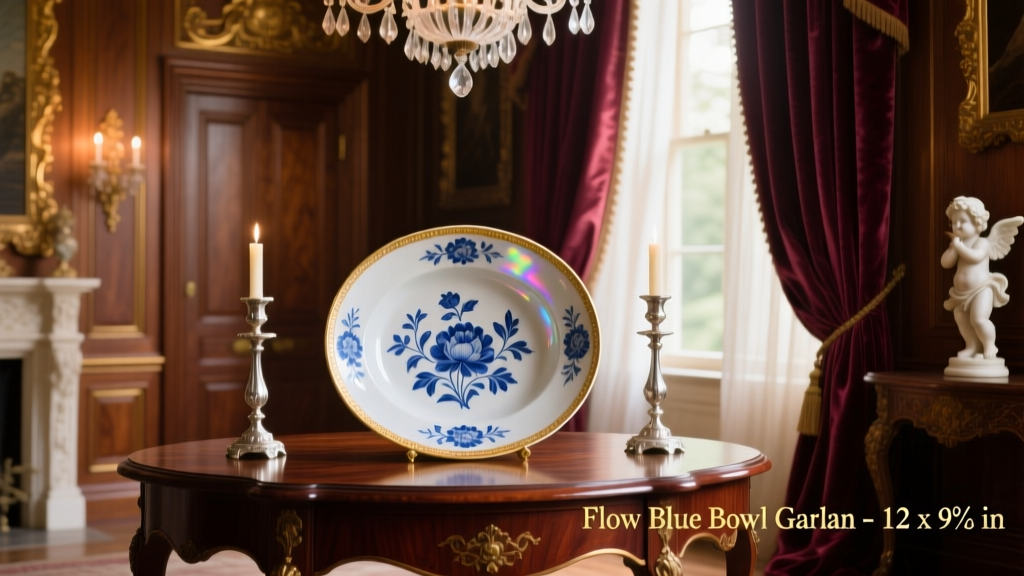
Flow Blue Bowl: Garland Oval Pattern, 12 × 9¾ Inches — Identification, History, and Restoration Guidance
Martin Auction Company: A Legacy of Antique Furniture Expertise and Ethical Auction Practice
The Charlie Chaplin Clock Alarm: A Collector’s Guide to the Plastic Vintage Timepiece
Windsor Bow Back Chair with 7 Spindles, Bamboo-Turned Legs, and Saddle Seat: History, Construction, and Restoration Insights
Roseville Apple Blossom Green Vase with Two Branch Handles: Identification, Value, and Restoration Insights
The Pipes Porcelain Bowl: A 13-Inch Victorian Smoking Accessory with Painted Landscape, Stag Motif, and Authentic Horsehair Tassels

Steuben Tumbler Swirl Amber 10 Oz: Authenticity, Value, and Restoration Insights for Collectors
Kovels’ On Antiques and Collectibles, Vol. 31, No. 9 (May 2005): A Collector’s Deep Dive into Mid-Century Ceramics, American School Desks, and Early 20th-Century Lighting
Royal Heiden China: History, Identification, and Restoration of a Mid-Century German Porcelain Legacy