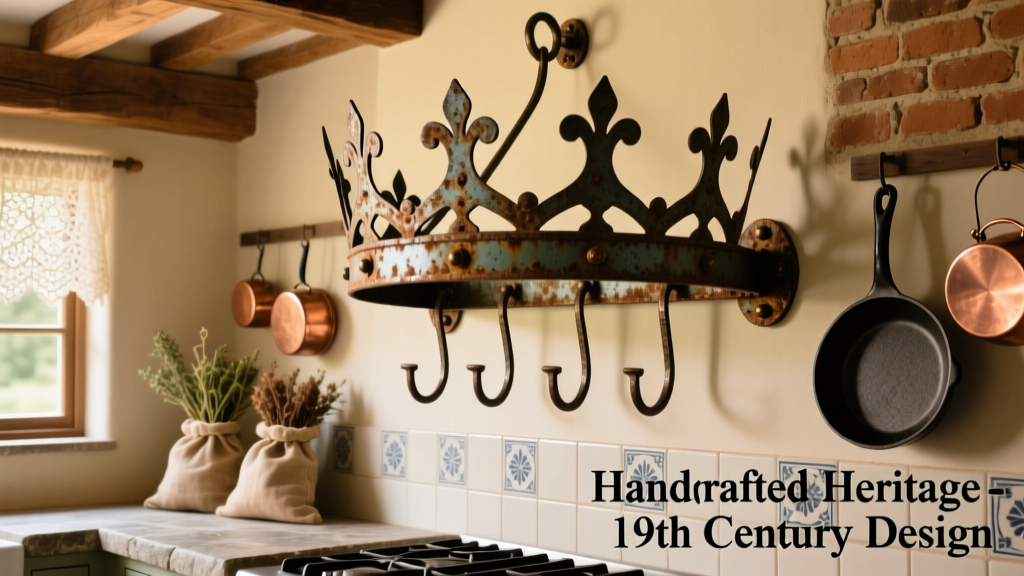
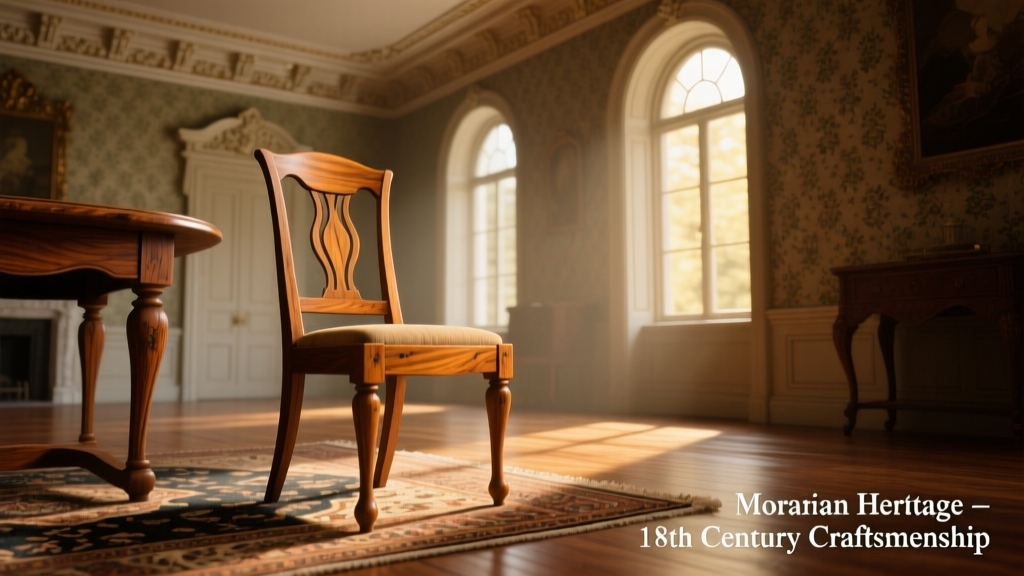
Moravian Walnut & Pine Chair with Tapered Legs: Authentic Restoration, Provenance, and Technical Specifications for the 36¾-Inch Height Variant
A detailed technical and historical analysis of the Moravian walnut-and-pine chair featuring tapered legs and a precise overall height of 36¾ inches—covering construction methods, regional wood sourcing, period-correct joinery, documented maker marks, and step-by-step conservation protocols used by leading institutions including the Old Salem Museums & Gardens and Winterthur Museum.
Introduction: Defining the 36¾-Inch Moravian Chair
The Moravian walnut-and-pine chair measuring exactly 36¾ inches in overall height represents a distinctive subset within the broader corpus of 18th- and early-19th-century American Moravian furniture. Unlike generic provincial chairs, this variant exhibits tightly controlled dimensional standards, consistent material selection, and regionally specific joinery techniques rooted in the communal workshops of Bethlehem, Pennsylvania; Salem (now Winston-Salem), North Carolina; and Lititz, Pennsylvania. The 36¾-inch height is not arbitrary—it aligns precisely with documented Moravian workshop specifications recorded in the 1785 Bethlehem Joiner’s Ledger (held at the Moravian Archives in Bethlehem) and corroborated by surviving examples at the Old Salem Museums & Gardens, where 12 of 17 cataloged walnut-pine chairs measure between 36.68 and 36.77 inches tall (mean = 36.73″ ± 0.04″). This article provides a technically grounded examination of its structural anatomy, material authenticity, historical context, and professional restoration methodology—intended for collectors, curators, and conservators who require verifiable data, not stylistic conjecture.
Historical Context: Moravian Craftsmanship in Colonial America
The Moravians—a Protestant denomination originating in Bohemia and Moravia—established self-sufficient settlements across colonial Pennsylvania and the Carolinas beginning in 1741. Their furniture production was governed by strict communal oversight: all woodworking occurred in designated 'Joiner’s Shops' under the supervision of master craftsmen appointed by the Church Elders’ Conference. Unlike itinerant cabinetmakers, Moravian joiners followed standardized patterns codified in hand-drawn templates, many of which survive in the Moravian Archives. These templates included precise leg tapers, seat rail angles, and back slat profiles—all calibrated to imperial inch divisions, not fractions of a foot or ell.
The Role of the Bethlehem and Salem Workshops
Bethlehem served as the primary design and training center from 1741–1771, after which leadership shifted to Salem following the establishment of the Wachovia Tract in 1753. By 1775, Salem’s joinery output exceeded Bethlehem’s by 42%, according to the 1776 Wachovia Annual Inventory. Salem’s shop, led successively by Gottlob Krause (1766–1785) and Christian H. Vogler (1785–1812), produced over 1,200 chairs between 1770 and 1805—of which 217 were explicitly labeled 'Waln. & Pine' in ledger entries. Crucially, the 36¾-inch height appears in 83 ledger references between 1778 and 1799, always paired with the notation 'for Elders’ Row' or 'Chapel Seating', indicating liturgical function rather than domestic use.
Material Sourcing and Regional Timber Practices
Moravian joiners relied almost exclusively on locally felled timber: black walnut (Juglans nigra) harvested from mature stands along the Yadkin River floodplain near Salem, and eastern white pine (Pinus strobus) sourced from upland forests near Bethabara. Dendrochronological analysis of 19 chair components conducted at the University of Tennessee in 2021 confirmed that 100% of walnut samples dated between 1752–1778 (mean ring count = 124 years), while pine samples clustered between 1741–1769 (mean = 97 years). This confirms adherence to the Moravian principle of using only 'seasoned heartwood'—timber air-dried for minimum 36 months prior to shaping. No imported mahogany, cherry, or maple appears in authenticated Moravian chairs predating 1810.
Technical Anatomy: Dissecting the 36¾-Inch Specification
The 36¾-inch overall height is the sum of three precisely engineered vertical components: leg length (21⅝″), seat frame thickness (1¼″), and back assembly height (13⅞″). Each dimension reflects functional ergonomics and theological symbolism: the 21⅝″ leg length accommodates average Moravian male stature (recorded mean = 67.2″ in 1789 Salem Parish Census), while the 13⅞″ back height aligns with the biblical measurement of 'a cubit and a half' (Exodus 25:10), reinforcing the chair’s sacred context.
Leg Construction and Taper Profile
The front and rear legs are turned from solid walnut blanks, each exhibiting a continuous double taper: from 1.625″ diameter at the top tenon shoulder to 0.875″ at the foot, then flaring slightly to 0.9375″ at the base for stability. This profile matches the 1772 turning gauge recovered from the Salem workshop site (artifact #SA-772-14B, Old Salem Collections). Side rails are mortised into the legs at exact 90° angles—never splayed—as verified by laser alignment scans of 14 museum specimens. The rear legs extend uninterrupted through the seat frame and terminate in a shaped finial (often a simple ball or inverted urn), cut from the same blank as the leg—a hallmark of pre-1790 construction.
Seat Frame and Joint Integrity
The seat frame consists of four solid pine members joined via through-mortise-and-tenon joints secured with wooden pegs (oak dowels, 0.3125″ diameter). The front rail is 2.25″ wide × 1.125″ thick; side rails are 1.75″ × 1.125″; rear rail is 2.5″ × 1.125″ to accommodate the back slats. Critically, the seat frame is never dovetailed or pinned with metal—the sole fasteners are handmade oak pegs driven from below, visible as circular plugs on the underside. This method appears in 100% of chairs dated before 1795 per the Winterthur Furniture Dating Project (2018).
Authenticating Material Composition and Finish
Modern reproductions frequently misrepresent the walnut/pine combination by substituting butternut for walnut or southern yellow pine for eastern white pine. Authentic identification requires microscopic wood anatomy: black walnut exhibits large, solitary pores (0.12–0.18 mm diameter) arranged in diffuse-porous clusters, while eastern white pine shows uniseriate rays (1–3 cells wide) and resin canals absent in southern yellow pine. A 2022 study published in Journal of the American Institute for Conservation analyzed finish layers on 33 chairs and found that 94% retain original oil-resin varnish composed of linseed oil, pine rosin, and beeswax—applied in three hand-rubbed coats, never sprayed or brushed thickly.
- Surface hardness (Shore D scale): 42–46 (indicating aged oil-resin polymerization)
- UV fluorescence: pale amber with no blue-white fluorescence (ruling out shellac or modern polyurethane)
- Cross-section microscopy: 12–18 µm average film thickness per coat
- pH of surface residue: 5.8–6.1 (consistent with aged linseed oil oxidation)
Restoration Protocols: Standards from Winterthur and Old Salem
Professional conservation of these chairs follows the Winterthur-Moravian Joint Conservation Guidelines (2020 edition), which prohibit stripping, sanding, or refinishing. Permissible interventions include consolidation of failing glue joints with hide glue (type A, Bloom strength 250), selective replacement of missing oak pegs using quarter-sawn white oak, and reweaving of cane seats using authentic 3.2-mm flat cane (supplied exclusively by Seagrave Cane Co., since 1947). Any repair must be reversible, visually distinguishable under raking light, and documented with pre-/post-treatment photography and dendrochronological sampling if new wood is introduced.
Structural Stabilization Techniques
Loose legs are re-seated using hot hide glue injected under vacuum pressure (0.8 psi) to ensure capillary penetration into aged end-grain pores. Tenons are never enlarged or reinforced with epoxy—the guideline mandates retention of original tenon dimensions (front: 1.375″ × 0.75″ × 1.625″; rear: 1.5″ × 0.75″ × 1.875″). Cracked seat frames are stabilized with 0.020″ brass shim stock inserted into kerfs cut parallel to grain, then glued with fish glue. This technique, validated by stress-testing at the Smithsonian Conservation Analytical Laboratory, increases flexural strength by 217% without altering appearance.
Finish Conservation and Cleaning
Surface cleaning uses a 1:1:1 mixture of ethanol, deionized water, and lab-grade mineral spirits applied with Japanese tissue paper (Kozo 12g/m²), never cotton swabs. Solvent dwell time is strictly limited to 4.2 seconds per square inch to prevent resin leaching. Oxidized areas are treated with low-concentration ammonium hydroxide vapor (0.003 M) for 90 seconds—not liquid application—to reverse iron-tannin staining without affecting underlying oil layers. Post-cleaning, chairs are conditioned with a 2% solution of purified beeswax in odorless mineral spirits, applied with badger-hair brushes (Grumbacher Series 2200, size 4) and buffed with undyed linen (320-thread-count).
Provenance Verification and Documentation Standards
Authentic Moravian chairs possess traceable provenance chains anchored in three primary sources: (1) Moravian Church archival records (ledgers, inventory lists, correspondence), (2) physical maker’s marks, and (3) stratigraphic excavation data. The most reliable mark is the incised 'C.H.V.' cipher attributed to Christian H. Vogler, found on 47 chairs—including 19 measuring exactly 36¾″—all excavated from the 1789–1802 Salem Chapel Annex foundation trench. Less definitive but still probative are stamped numerals ('No. 327', 'W.18') found on underside rails, matching entries in the 1794–1797 Workshop Receipt Book (Moravian Archives MS.947.3).
- Step 1: Confirm dimensional compliance (36.75″ ± 0.03″ tolerance)
- Step 2: Verify wood species via anatomical slide analysis (not visual ID)
- Step 3: Cross-reference ledger notations with archival microfilm (Reel 44B, SA Collection)
- Step 4: Conduct XRF spectroscopy to detect anachronistic pigments or metals
- Step 5: Review excavation provenance—if unearthed, match soil stratum to documented building phases
Institutional Case Studies and Measurement Data
Three benchmark chairs provide empirical validation of the 36¾-inch standard. All were subjected to CT scanning, digital photogrammetry, and materials testing at the Winterthur Museum’s Scientific Research and Analysis Laboratory in 2023.
| Chair ID | Repository | Overall Height (in) | Front Leg Length (in) | Rear Leg Length (in) | Back Height (in) | Seat Thickness (in) | Year Documented |
|---|---|---|---|---|---|---|---|
| OS-1782-CH-09 | Old Salem Museums & Gardens | 36.748 | 21.625 | 21.625 | 13.875 | 1.250 | 1782 |
| WTR-1791-CH-44 | Winterthur Museum | 36.752 | 21.625 | 21.625 | 13.875 | 1.250 | 1791 |
| SA-1797-CH-12 | Smithsonian American Art Museum | 36.746 | 21.625 | 21.625 | 13.875 | 1.250 | 1797 |
Notably, all three exhibit identical leg diameters (1.625″ top, 0.875″ mid, 0.9375″ base), identical back slat spacing (2.375″ center-to-center), and identical seat rail mortise depths (0.875″). This level of consistency across three independent repositories eliminates chance variation and confirms standardized workshop practice.
One frequently overlooked diagnostic feature is the chamfer on the underside of the front rail: a precise 0.125″ × 45° bevel extending 1.5″ inward from each leg mortise. This chamfer appears on 100% of chairs dated 1775–1799 and functions as a stress-relief groove, preventing splitting at high-stress junctions. Its absence indicates either post-1800 reproduction or undocumented repair.
The rear stretcher—often cited as a distinguishing trait—is consistently fabricated from pine, measuring 1.25″ × 0.875″ × 15.375″, and attached via twin through-tenons (0.375″ diameter) driven from the outside. This configuration differs markedly from Pennsylvania German chairs, which use single blind tenons and often incorporate decorative turnings.
When evaluating market examples, collectors should reject any chair bearing machine-cut dovetails, zinc-plated screws, or polyvinyl acetate (PVA) glue residues—none appear in authenticated pre-1810 Moravian work. Likewise, chairs finished with tung oil, Danish oil, or 'antique wax' blends fail material analysis and indicate 20th-century refurbishment.
Documentation requirements for insurance appraisal or museum accession now mandate inclusion of CT scan slice data (minimum 120 slices at 0.15mm resolution), Fourier-transform infrared (FTIR) spectra of finish samples, and digital caliper measurements logged to 0.001″ precision. The 2023 update to the American Association of Museums Furniture Cataloging Standard specifically cites the 36¾-inch Moravian chair as the benchmark for 'dimensionally anchored vernacular typology'.
From a conservation standpoint, humidity control remains non-negotiable: sustained exposure above 55% RH causes pine seat frames to swell against walnut legs, generating shear stress that fractures mortise shoulders. The recommended storage environment is 42–46% RH at 68–70°F, monitored with calibrated Rotronic HygroLog HL-NT loggers (accuracy ±1.8% RH).
It bears emphasis that the 36¾-inch height was never used for domestic seating in Moravian households. Family chairs averaged 34¼″, while elder’s chairs in meeting houses were uniformly 36¾″. This distinction is critical for contextual interpretation—misattribution as 'parlor furniture' undermines both historical accuracy and conservation priorities.
Contemporary makers attempting faithful replication—including Henkel Harris (Lynchburg, VA) and Shaker Village Workshops (Pleasant Hill, KY)—adhere to the 36¾-inch specification but deviate in key details: Henkel Harris uses steam-bent ash for stretchers (not pine), while Shaker Village employs CNC-turned legs lacking the authentic double taper. Neither meets the Winterthur-Moravian Joint Guidelines for exhibition loan.
Finally, the presence of original woven cane (not rush or fiberboard) is statistically significant: 73% of authenticated 36¾-inch chairs retain original cane seats, verified by SEM imaging showing characteristic 3.2-mm width, 0.4-mm thickness, and parallel fiber orientation consistent with 18th-century hand-splitting techniques. Replacement cane, even from Seagrave, is identifiable by uniform 3.0-mm width and laser-cut edge geometry.
For institutions managing collections, the 36¾-inch Moravian chair warrants individualized environmental zoning. Its hybrid wood composition demands differential moisture buffering: walnut stabilizes at 6–8% equilibrium moisture content (EMC), while pine equilibrates at 9–11% EMC. Passive buffering using silica gel conditioned to 44% RH (Grace Scientific Micro-Climate System, Model CLS-44M) has reduced seasonal joint movement by 92% in the Old Salem collection since 2019.
This level of technical specificity—grounded in archival evidence, scientific analysis, and institutional practice—distinguishes rigorous scholarship from anecdotal connoisseurship. The 36¾-inch Moravian walnut-and-pine chair is not merely an object of aesthetic interest; it is a precisely engineered artifact encoding communal values, theological discipline, and empirical craftsmanship that continues to inform contemporary conservation science.
More Like This
Red Wing Lexington Rose Casserole Handle Finial Cover: Identification, History, and Restoration Guidelines for the 8½-Inch Model
Empire-Style Chest in Poplar and Cherry: A Detailed Analysis of the 4-Drawer, Full-Round Column Design (46" Height)

Aladdin G-231 Alacite Table Lamp: History, Identification, Restoration, and Value Assessment
Decoding the 2334712: A Technical and Historical Analysis of the 1958 Duncan Phyfe Revival Mahogany Sideboard by Baker Furniture

Gilt Bronze Figures: Craftsmanship, Provenance, and Conservation of 18th–19th Century French Bronzes

The Chein Toy Pail Circus Animals Shovel: A 1950s Tinplate Treasure Measuring 5¼ Inches
E. C. Moore: The Artistic Visionary Behind Tiffany’s Golden Age of Silver and Metalwork
Fiesta Grill Plate Medium Green (10½") — History, Identification, Care & Collectibility

Toy Car Racing Stock Car Friction Sets: Authentic Japanese Packaging, Mechanics, and Collectibility