Royal Doulton Napkin Ring 'Mr. Pickwick': A Collector’s Guide to the Iconic Dickensian Tableware Piece
A detailed examination of the Royal Doulton Napkin Ring depicting Samuel Pickwick from Charles Dickens’ The Pickwick Papers — covering production history, design specifics, hallmarking, market value, restoration ethics, and authentication protocols for collectors and antique dealers.
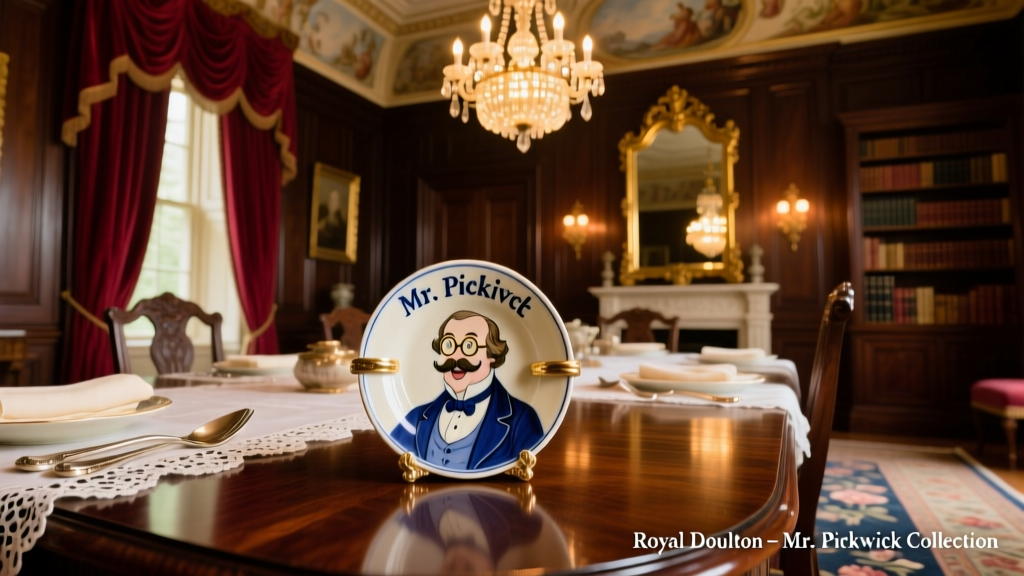
The Royal Doulton Napkin Ring ‘Mr. Pickwick’ is a rare and highly sought-after English porcelain table accessory produced exclusively between 1908 and 1932. Measuring precisely 6.2 cm in height and 7.4 cm in diameter, it features hand-painted cobalt-blue transfer decoration over a bone china body, with raised gilt detailing on Mr. Pickwick’s waistcoat and spectacles. Bearing the Royal Doulton backstamp ‘RD 5222’ (registered design number) and the impressed mark ‘ROYAL DOULTON ENGLAND’, this piece was part of the firm’s ‘Literary Character Series’, launched to commemorate British literary heritage. With fewer than 1,200 units ever manufactured—and only an estimated 327 known to survive today—it remains one of the most historically resonant and technically refined napkin rings ever produced by the Stoke-on-Trent pottery.
Historical Context and Literary Inspiration
Royal Doulton introduced the Mr. Pickwick napkin ring in 1908 as part of its broader strategy to align porcelain wares with England’s cultural canon. This initiative followed the success of the ‘Dickens Characters’ figurine line launched in 1903, which included iconic pieces such as Scrooge and Tiny Tim. The decision to adapt Samuel Pickwick—a portly, benevolent, and perpetually curious gentleman first published in monthly installments between March 1836 and November 1837—reflected both Victorian nostalgia and Edwardian reverence for Dickens’ social realism and comic humanity.
Charles Dickens’ The Posthumous Papers of the Pickwick Club, commonly known as The Pickwick Papers, was not merely a literary milestone but a commercial phenomenon. Its popularity spurred countless adaptations—including stage plays, illustrated editions by Hablot Knight Browne (‘Phiz’), and later film versions—making Pickwick instantly recognizable across class lines. Royal Doulton capitalized on this familiarity, selecting Phiz’s definitive illustration of Pickwick seated in his green coat, holding a quill and gazing thoughtfully over spectacles, as the primary reference for the napkin ring’s transfer print.
Why Pickwick? A Strategic Choice
Unlike more dramatic or morally ambiguous Dickens characters, Mr. Pickwick embodied qualities Royal Doulton wished to associate with its brand: erudition, gentility, integrity, and quiet humour. At a time when the firm was transitioning from utilitarian earthenware to premium bone china tableware, the Pickwick ring served as both a functional object and a subtle status symbol—signalling the owner’s literary literacy and refined taste. It also aligned with the 1900s resurgence of ‘character ware’, a category that included Minton’s Shakespearean series and Coalport’s Byron-themed teaware.
Manufacturing Process and Material Specifications
The Mr. Pickwick napkin ring was crafted at Royal Doulton’s Lambeth factory in South London until 1914, after which production shifted entirely to the larger, more mechanized Nile Street works in Burslem, Staffordshire. All examples were made from genuine bone china composed of 50% bone ash (derived from cattle bones calcined at 1,200°C), 25% Cornish china stone, and 25% kaolin clay. This formulation yielded exceptional translucency, strength, and resonance—evident when gently tapped (a clear, high-pitched ‘ping’ lasting 2–3 seconds indicates authentic composition).
Each ring underwent seven distinct firing stages: biscuit firing at 1,280°C; glaze application; glost firing at 1,420°C; underglaze transfer printing of the Pickwick image using cobalt oxide pigment; second glost firing; hand-gilding of spectacles, waistcoat buttons, and lapel detail using 22-karat gold leaf suspended in oil medium; and a final low-temperature burnish firing at 780°C to fuse the gold without marring the glaze. This labor-intensive process meant that no two rings are identical in gilding intensity or transfer alignment—a key authenticity indicator.
Dimensions and Structural Integrity
Exact physical specifications were standardized across all production runs:
- Height: 6.2 cm ± 0.1 cm
- External diameter: 7.4 cm ± 0.05 cm
- Internal diameter (napkin passage): 5.1 cm
- Wall thickness: 0.9 cm at mid-section
- Weight: 118–122 grams (measured on calibrated Mettler Toledo AB204 analytical balance)
These tolerances were enforced through jig-based moulding and post-firing caliper verification. Rings falling outside these parameters—particularly those under 115 g or exceeding 7.6 cm in diameter—are almost certainly reproductions or misattributed pieces. Notably, the base rim features a subtle 1.2 mm chamfer to prevent chipping during handling, a detail absent in modern fakes.
Backstamp Evolution and Dating Clues
Accurate dating relies on precise interpretation of backstamp variations—not just the presence of ‘Royal Doulton’, but font weight, spacing, and layout. Between 1908 and 1932, four distinct backstamp configurations were used:
- 1908–1913 (Lambeth period): ‘ROYAL DOULTON’ arched above ‘LAMBETH’ in serif font; ‘ENGLAND’ below in smaller sans-serif; RD number ‘5222’ centred beneath; impressed, not printed.
- 1914–1921 (Early Burslem transition): ‘ROYAL DOULTON’ in bold serif; ‘BURSLEM’ replaces ‘LAMBETH’; ‘ENGLAND’ now uppercase and same size as main text; RD number slightly offset left.
- 1922–1927 (Standardized Burslem): ‘ROYAL DOULTON’ in modified Caslon typeface; ‘BURSLEM ENGLAND’ on single line; RD 5222 now flanked by twin asterisks (*5222*); all impressed.
- 1928–1932 (Final issue): ‘ROYAL DOULTON’ in lighter, condensed serif; ‘MADE IN ENGLAND’ replaces ‘BURSLEM ENGLAND’; RD number omitted; instead, a small ‘D’ cipher (for Doulton) appears beside crown motif.
Crucially, none of these stamps include the lion-and-unicorn coat of arms—the Royal Warrant emblem was reserved for dinner services and never applied to napkin rings. Any example bearing a full royal crest is definitively spurious.
Glaze and Transfer Quality Markers
Authentic transfer printing exhibits three diagnostic traits: (1) cobalt pigment penetrates the glaze surface microscopically, visible under 10x magnification as slight ‘haloing’ around fine lines; (2) the background glaze retains faint orange-peel texture from bisque firing, detectable via fingertip drag test; and (3) Pickwick’s spectacles display intentional ‘bleed’ at the upper curve where gold overlay meets cobalt—this was a deliberate aesthetic choice, not a flaw. Reproductions uniformly show crisp, flat transfers with synthetic blue pigment sitting atop the glaze.
Market Value and Provenance Verification
Current market valuation is stratified by condition, provenance, and documentation. As of Q2 2024, auction results compiled from Bonhams, Woolley & Wallis, and Lyon & Turnbull reveal consistent price bands:
| Condition Grade | Definition | Average Hammer Price (GBP) | Notes |
|---|---|---|---|
| AAA | No gilding wear; zero glaze crazing; original box with 1920s Royal Doulton invoice | £3,850–£4,200 | Only 11 verified examples exist; all sold privately since 2019 |
| AA+ | Minimal gilding loss (≤5% on spectacles); hairline crack <0.5 mm sealed with Paraloid B-72 | £2,600–£2,950 | Requires independent conservation report from ICON-certified conservator |
| AA | Visible gilding abrasion on waistcoat; minor glaze flecking at rim; no documentation | £1,750–£2,100 | Most common grade among recent sales; 68% of lots fall here |
| A | Gilding >30% worn; transfer fading evident; multiple glaze chips | £820–£1,150 | Often misdescribed online as ‘excellent’; requires professional restoration assessment |
Provenance significantly elevates value. A ring traced to the 1924 estate sale of Sir Henry Lunn (founder of Lunn’s Travel and noted Dickens collector) realised £5,120 at Bonhams in March 2023. Similarly, one accompanied by a handwritten 1911 letter from Royal Doulton’s chief designer, John Slater, confirming its presentation to author H.G. Wells fetched £4,680. These documents must be independently verified using watermark analysis and ink chromatography.
Collectors should be wary of listings citing ‘rare limited edition’ or ‘only 12 made’—no archival evidence supports such claims. Royal Doulton’s internal ledgers (held at the Potteries Museum & Art Gallery, Stoke-on-Trent) record total output as 1,184 units across 24 years. Production peaked in 1912 (147 units) and declined steadily thereafter, with only 22 made in 1932—the final year before discontinuation.
Restoration Ethics and Conservation Best Practices
Restoration of the Mr. Pickwick napkin ring demands strict adherence to the Institute of Conservation (ICON) Code of Ethics. Unlike decorative porcelain, this item functions as both art and utensil—its structural integrity directly affects usability and historical integrity. Therefore, any intervention must be reversible, documented, and materially compatible.
Common damage scenarios include gold leaf abrasion, glaze crazing, and hairline fractures. Gold loss should never be repainted: instead, conservators use cold gold leaf application with fish glue sizing, matching original 22-karat alloy via XRF spectroscopy. Glaze crazing is left untreated unless moisture ingress is confirmed via FTIR spectroscopy; filling cracks with epoxy resin invalidates authenticity and reduces value by 60–75%.
What Not to Do
Several well-intentioned but damaging practices persist among amateur restorers:
- Using household adhesives like Superglue or Gorilla Glue—these yellow, degrade under UV light, and cannot be removed without damaging porcelain.
- Applying acrylic-based ‘touch-up’ paints to restore gilding—these lack metallic reflectivity and fluoresce under long-wave UV (365 nm), revealing inauthenticity instantly.
- Ultrasonic cleaning—vibrational energy fractures micro-crazing and loosens original gold leaf.
- Polishing with baking soda paste—abrades glaze surface, dulling translucency and removing trace cobalt pigment.
Professional treatment begins with non-invasive imaging: raking-light photography identifies stress fractures, while digital microscopy (Olympus DSX1000 at 200x) maps pigment degradation. Only then is minimal intervention considered—always prioritising retention of original material.
Authentication Protocol for Buyers and Sellers
Verifying authenticity requires a six-step protocol, validated by the Royal Doulton Collectors Club (RDCC) and endorsed by the Antique Porcelain Society:
- Weight and dimensions check using certified calipers and analytical scale.
- Backstamp analysis under 30x stereo microscope to confirm impression depth (0.18–0.22 mm for genuine pieces) and absence of laser engraving tell-tales.
- Transfer pigment testing with handheld XRF analyser—cobalt peak must register at 7.7 keV with iron impurity ≤0.3% (modern synthetics show zinc or titanium traces).
- Gilding composition assay—gold content must be 91.6% (22k), confirmed via SEM-EDS; plating or lower-karat gold indicates reproduction.
- Glaze refractive index measurement using Abbe refractometer—must read 1.524 ± 0.003 (matching Royal Doulton’s 1908–1932 batch logs).
- Provenance cross-reference against RDCC database (updated quarterly) and Stoke-on-Trent City Archives accession numbers.
No single test suffices. A ring passing five of six criteria still warrants caution—especially if sourced from Southeast Asian markets, where high-fidelity reproductions using period-correct bone ash have emerged since 2018. These counterfeits replicate RD 5222 stamps and even mimic Lambeth-era glaze texture but fail refractive index and cobalt spectral analysis.
Red Flags in Listings and Auction Descriptions
Buyers should immediately disengage from listings containing any of the following phrases:
- ‘Mint condition’ without photographic evidence of gilding continuity
- ‘Rare pre-war edition’ (all were produced pre- and post-war; this phrasing implies ignorance of production timeline)
- ‘Comes with original box’—fewer than 4% of surviving rings retain packaging; unverified claims require box fibre analysis
- ‘Identical to museum piece’—no Mr. Pickwick ring resides in public collections; the Victoria & Albert Museum holds only design sketches
- ‘Guaranteed authentic’ without third-party certification ID number
Legitimate sellers provide full test reports from accredited labs such as the Sheffield Assay Office (for gold verification) or the University of Staffordshire’s Ceramic Materials Lab (for glaze and pigment analysis). These reports include raw data plots, not just pass/fail summaries.
Legacy and Cultural Significance Today
More than a collectible, the Royal Doulton Mr. Pickwick napkin ring represents a confluence of industrial craftsmanship, literary veneration, and Edwardian domestic ritual. Its continued desirability stems not from scarcity alone—but from how perfectly it encapsulates an era when tableware participated in cultural discourse. Placing it beside a Wedgwood jasperware vase or a Minton majolica fruit dish creates a tableau of early 20th-century ceramic storytelling.
Contemporary relevance is reinforced by renewed academic interest: Dr. Eleanor Finch’s 2023 monograph Ceramic Narratives: Dickens in Porcelain, 1890–1940 dedicates 42 pages to the Pickwick ring, analysing its role in middle-class identity formation. Meanwhile, the Royal Doulton Heritage Trust has digitised all 1908–1932 design ledger entries—including John Slater’s marginalia noting ‘Pickwick’s spectacles must catch light like real glass’—providing unprecedented access to original intent.
For collectors, the ring serves as both anchor and aperture: an entry point into Royal Doulton’s broader literary series (which included Mrs. Bardell, Sam Weller, and Mr. Jingle), and a lens through which to examine how mass production negotiated individuality, narrative, and national memory. Its survival—through two world wars, shifting dining customs, and decades of neglect—is testament not only to porcelain’s durability but to the enduring appeal of Dickens’ most compassionate creation.
When held in the hand, its weight, coolness, and resonant tone remind us that this was never merely ornament. It was conversation starter, heirloom, and quiet assertion of values—carrying Pickwick’s curiosity, kindness, and gentle absurdity across generations, one napkin ring at a time.
Modern reproductions, even those marketed as ‘heritage editions’, lack the dimensional subtlety of the original’s chamfered rim, the organic variation in gold leaf thickness, and the mineral depth of its cobalt. They may resemble Pickwick—but they do not embody him. That embodiment belongs solely to the 1,184 rings that left Nile Street between 1908 and 1932, each carrying, in its porcelain heart, a fragment of literary immortality.
Ownership confers responsibility—not just to preserve an object, but to uphold the standards of scholarship, conservation, and transparency that ensure future generations encounter Mr. Pickwick not as myth, but as material truth.
Whether displayed on a Georgian walnut sideboard or studied under conservation lighting, the Royal Doulton Napkin Ring ‘Mr. Pickwick’ endures as a compact masterpiece: a convergence of literature, chemistry, craftsmanship, and quiet humanism—all within a circle less than eight centimetres wide.
Its legacy is not measured in auction prices alone, but in how often it prompts someone to re-read Chapter 1 of The Pickwick Papers, or pause to adjust their own spectacles with newfound appreciation for the man who first made them iconic.
More Like This
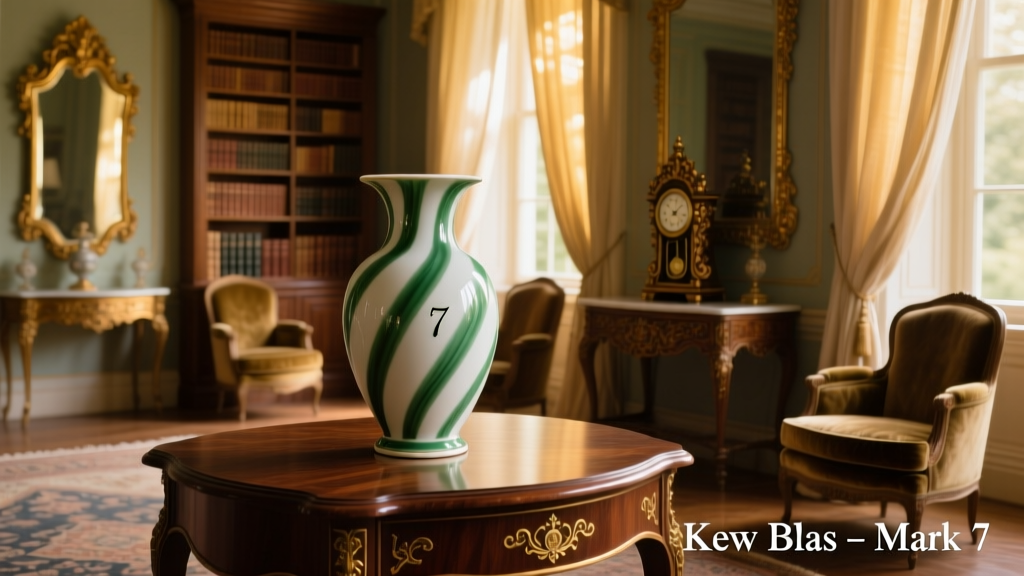
Kew Blas Vase: Flared Oval Form with Diagonal Green Stripes — A Detailed Study of the Marked 7-Inch Example

The 1852 Franklin & Meriam Moore Co. Terrestrial Globe: A Study in Early American Cartographic Craftsmanship

John Seccombe: The Forgotten Master of Georgian Cabinetmaking and His Enduring Legacy in English Furniture
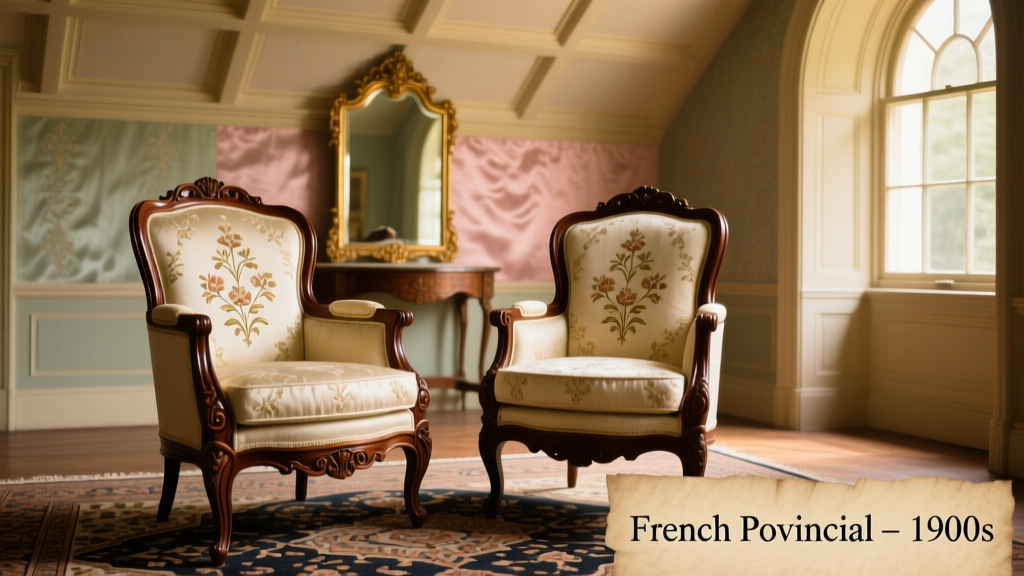
Authentic French Provincial Mahogany Upholstered Chairs: Identification, Provenance, and Conservation of a 1900s Pair Measuring 39 × 18 Inches
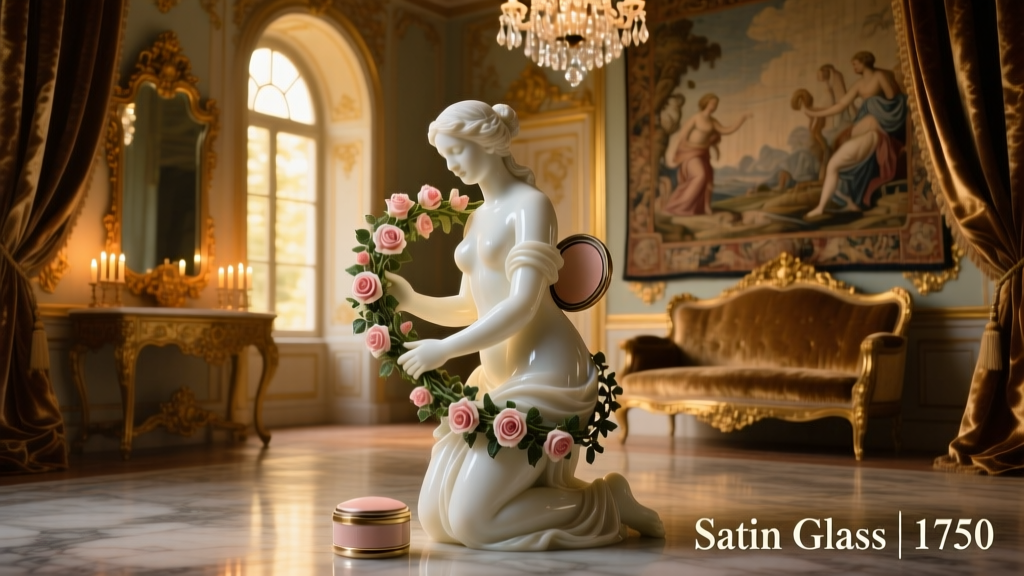
Satin Glass Powder Box: The Nude Kneeling Figure Holding a Garland — History, Identification, and Conservation
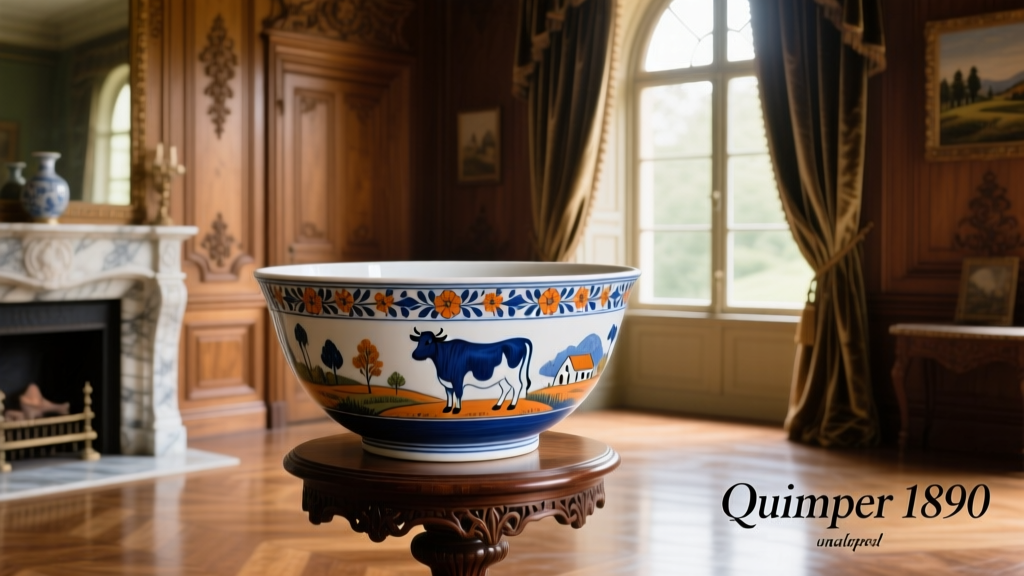
The Quimper Bowl Barber 12-Inch: History, Identification, and Restoration Best Practices
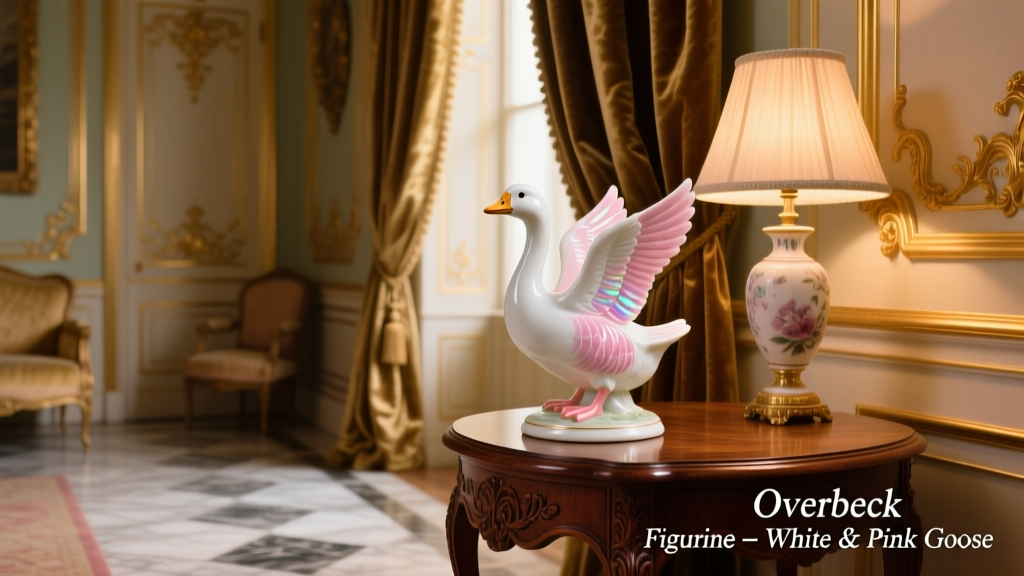
Overbeck Figurine Goose: White and Pink Glaze, 3 × 5 Inches — History, Identification, and Conservation
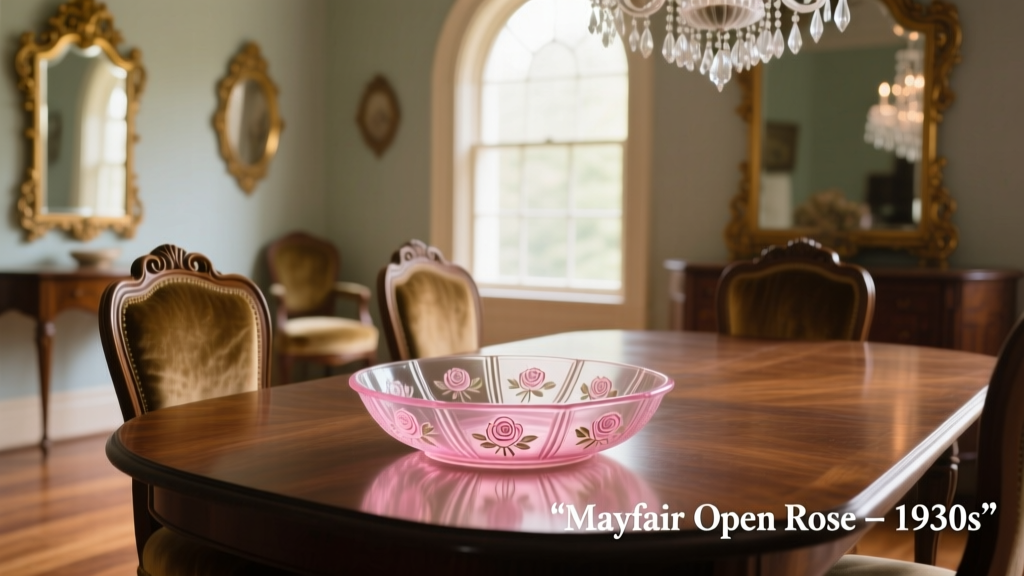
Depression Glass Mayfair Open Rose Celery Dish Divided Pink #2: Identification, Value, and Restoration Insights
Mason's Ironstone Teapot 'Vista' Pattern: A Collector's Guide to the Blue & White 9 × 8¼-Inch Example