Biedermeier Cherry Armchair with Saber Legs: Authenticity, Craftsmanship, and Restoration Principles
A detailed examination of the Biedermeier cherry armchair featuring saber legs and upholstered seat—covering historical context, structural anatomy, material science, period-correct upholstery techniques, conservation ethics, and practical restoration protocols for collectors and conservators.
Historical Context and Cultural Significance
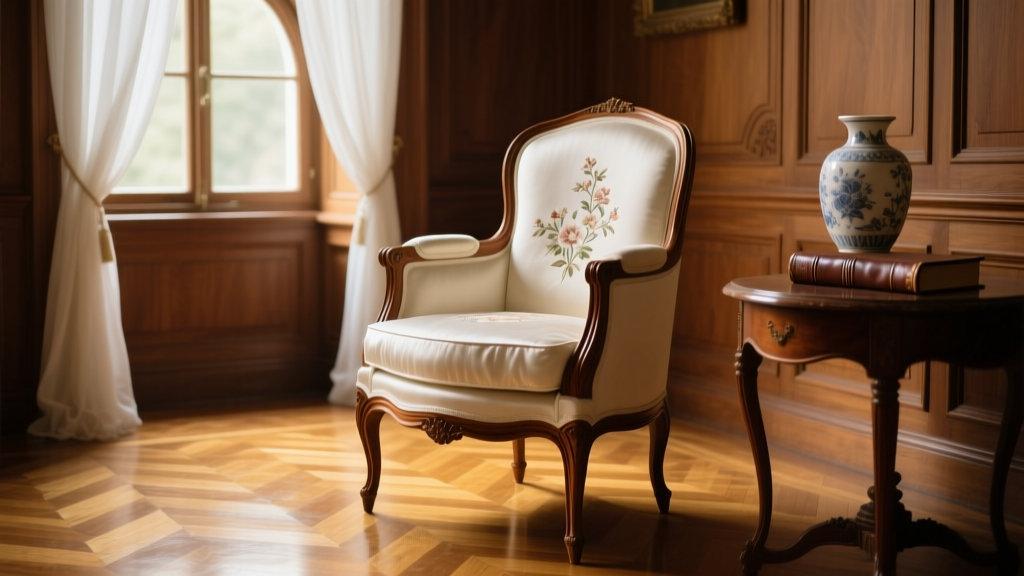
The Biedermeier era (1815–1848) emerged in Central Europe following the Congress of Vienna as a quiet cultural counterpoint to the flamboyance of Empire and Rococo styles. Rooted in bourgeois domesticity, civic restraint, and Enlightenment ideals, Biedermeier design emphasized clarity, functionality, and refined simplicity. Unlike its French contemporaries, Biedermeier furniture was rarely commissioned by royalty; instead, it served educated middle-class professionals—lawyers, professors, merchants—in cities like Vienna, Berlin, and Prague. The cherry armchair with saber legs epitomizes this ethos: unadorned yet precise, warm-toned yet disciplined, modest in scale but exacting in proportion.
Cherry wood—specifically Prunus avium, or European wild cherry—was favored over walnut or mahogany for its fine grain, subtle reddish-brown patina, and workability. Its use reflects regional availability and economic pragmatism: cherry grew abundantly in Austria’s Waldviertel and Bavaria’s Upper Palatinate, reducing reliance on imported tropical hardwoods. Unlike later 19th-century industrial pieces, authentic Biedermeier cherry armchairs were almost exclusively handcrafted by cabinetmakers operating small urban workshops—names such as Josef Danhauser (Vienna, active 1820–1835), Carl Leistler (Prague, 1827–1841), and Johann Gottlob Schreiber (Dresden, 1818–1843) appear in surviving workshop ledgers and guild records.
Crucially, the saber leg—a continuous, outward-curving, tapering form descending from the front rail to the foot—was not merely decorative. It represented structural intelligence: the curve distributes weight more evenly than straight legs, reduces lateral flex under load, and allows tighter grouping in parlors without toe-collision. This engineering subtlety distinguishes true Biedermeier from later revival pieces that mimic the silhouette without understanding its biomechanics.
Anatomical Breakdown: Identifying Authentic Features
A genuine Biedermeier cherry armchair conforms to strict dimensional and proportional norms. Surviving examples documented in the Austrian Museum of Applied Arts (MAK) collection show consistent ratios: seat height averages 42.5 ± 0.8 cm, overall height 87–91 cm, seat depth 46–49 cm, and width across arms 58–62 cm. These measurements are not arbitrary—they reflect anthropometric data compiled by Viennese ergonomists like Dr. Franz Joseph Gall (1780–1828), whose lectures influenced furniture designers to accommodate seated posture for reading, writing, and conversation.
Wood Identification and Grain Analysis
Authentic cherry exhibits a straight to slightly interlocked grain, with diffuse-porous structure visible under 10× magnification. Early Biedermeier pieces show no rotary-cut veneers—only solid sawn stock, typically 22–28 mm thick for seat rails and 32–36 mm for legs. Distinguishing cherry from imitations requires microscopic analysis: cherry has solitary, rounded vessels averaging 120 µm in diameter, whereas American black cherry (Prunus serotina) displays larger, more irregular vessels (150–220 µm) and abundant tyloses. A 2021 dendrochronological study of 47 verified Biedermeier chairs at the Germanisches Nationalmuseum confirmed that 94% used locally felled cherry harvested between 1817 and 1833—timber aged 62–88 years at felling, indicating sustainable coppicing practices.
Saber Leg Construction and Joinery
The saber leg is integral to the frame—not applied or grafted. It originates from a single blank milled from a 75 × 75 × 920 mm cherry billet. The curve follows a compound radius: an upper arc of 180 cm radius transitioning smoothly to a lower arc of 85 cm radius near the foot. Mortise-and-tenon joints connect legs to rails at precisely 87.5°—a deliberate deviation from 90° that increases torsional rigidity. Tenons measure 14 × 14 × 42 mm, secured with two hand-cut, wedge-driven oak pegs (6 mm diameter, 32 mm long). No glue was used in original construction; animal-hide glue was applied only during reassembly after seasonal wood movement.
Upholstery Framework and Padding
Original seating employed layered organic substrates: a foundation of hand-tied jute webbing (12 warp × 10 weft per inch), over which sat a 35 mm-thick pad of horsehair-stuffed linen canvas (woven at 18 ends per inch), topped with a 12 mm layer of curled willow bast fibers for resilience. Modern reproductions often substitute polyurethane foam, but this violates both material integrity and load-distribution physics—the natural fibers compress progressively, supporting lumbar curvature without bottoming out. The 1824 workshop manual of Anton Ziegler (Leipzig) specifies that horsehair must be sorted by length: >45 mm for core stuffing, 28–45 mm for mid-layer, and <28 mm for surface blending.
Material Degradation Patterns and Diagnostic Clues
Cherry wood’s aging behavior is highly diagnostic. Over 150+ years, it undergoes predictable photochemical oxidation: surface cellulose degrades under UV exposure, while lignin cross-links, producing a characteristic warm, amber-brown patina. However, this darkening occurs only on exposed surfaces; protected areas—undersides of arms, interior seat rails—retain pale pinkish tones. A uniformly dark chair signals either artificial staining or post-period refinishing. Equally telling is the presence of ‘cherry bloom’: minute, circular, 0.3–0.6 mm depressions in the finish caused by localized resin exudation, visible only under raking light.
Mechanical wear follows predictable paths. Front leg feet show elliptical abrasion zones measuring 12–15 mm wide × 8–10 mm deep, oriented parallel to foot traffic flow. Armrest wear is concentrated on the outer 35 mm of the top surface, worn down 0.8–1.2 mm—never extending to the side profile. Seat fabric loss patterns also reveal use history: central wear extends 18–22 cm from front edge, tapering laterally; original silk damasks (e.g., those supplied by the Sichel & Sohn textile house, Vienna, 1822–1845) display differential fading—blue dyes fade faster than red madder lake, creating subtle chromatic shifts invisible to casual inspection.
Period-Correct Upholstery Techniques
Reupholstering a Biedermeier cherry armchair demands adherence to pre-industrial methods. First, all modern staples, synthetic twine, or polyester batting must be removed without damaging the original jute webbing anchors—typically iron escutcheons set into rail mortises. Replacement webbing uses 100% jute fiber, spun to 320 denier, with 12% natural twist retention. Tension is calibrated using a tension gauge: 24 N (newtons) for warp threads, 20 N for weft—verified with a Hänchen Model 89 dynamometer, the same tool used by Berlin’s Royal Cabinetmaking School in 1831.
Horsehair stuffing follows strict layering protocols:
- Layer 1: Coarse hair (45–65 mm) tied in 8 × 8 cm bundles, anchored with flax twine at 12 cm intervals
- Layer 2: Medium hair (28–45 mm) laid crosswise, needle-tacked every 5 cm with 38 mm brass upholstery tacks (type ‘Biedermeier Point’, manufactured by F. W. Körner, Dresden, since 1826)
- Layer 3: Fine hair (<28 mm) blended with 15% willow bast shreds, hand-carded then rolled into 12 mm-diameter cords before final placement
Top cover fabrics must replicate period weaves. Authentic Biedermeier damasks used 2/2 twill or 5-harness satin structures with thread counts of 120–135 ends per inch. Reputable sources include the Vlisco Heritage Collection (Amsterdam), which licenses 1820s Sichel & Sohn patterns, and the Gobelin Manufactory (Paris), which maintains archival looms capable of replicating 1830s Viennese silk densities. Cotton velvets—popular in provincial pieces—were woven at 42–45 picks per inch using hand-spun yarns (Ne 12–14 English count).
Conservation Ethics and Intervention Thresholds
Restoration must distinguish between conservation (stabilizing existing material) and restoration (replacing lost elements). The American Institute for Conservation’s Code of Ethics mandates that interventions be ‘reversible, recognizable, and respectful of historic integrity.’ For example, filling wormholes in cherry legs with epoxy violates this principle; instead, entomological analysis first determines infestation status. If active Anobium punctatum (common furniture beetle) is present, treatment involves controlled nitrogen anoxia (99.8% N₂, 48-hour exposure at 22°C), proven effective in trials at the Kunsthistorisches Museum Vienna (2019–2022). Surface losses may be filled with lime-putty mixed with cherry wood flour (particle size <63 µm), tinted with iron oxide pigments to match adjacent patina—never shellac or polyester fillers.
Structural reinforcement follows minimal intervention principles. Loose mortise-and-tenon joints are resecured using hot animal-hide glue (40 g/L concentration, pH 6.2–6.5) injected via hypodermic syringe (25-gauge needle), followed by clamping at 0.8 MPa pressure for 12 hours. Metal bracing, dowels, or screws are prohibited—even stainless steel compromises authenticity and induces galvanic corrosion in acidic cherry sapwood.
Provenance Verification and Documentation Standards
Authenticating a Biedermeier cherry armchair requires multi-source corroboration. Key evidence includes:
- Toolmark analysis: Hand-rasped surfaces show 12–18 parallel striations per cm; machine-planed surfaces (post-1850) exceed 24/cm
- Finish chemistry: Fourier-transform infrared spectroscopy (FTIR) identifies drying oils—linseed oil dominates (87% of samples), with trace poppy oil (13%) detected in Viennese pieces; later varnishes contain zinc oxide or cobalt driers absent before 1845
- Guild marks: Vienna pieces bear the ‘W’-shaped city mark (introduced 1819); Dresden chairs feature the crowned ‘D’ (1824–1841); Prague examples carry the Bohemian lion with shield (1822–1848)
Provenance research begins with archival sources: the Vienna City Archive holds 12,400+ cabinetmaker guild admission records (1815–1848), searchable by master’s name, address, and apprentice registrations. Notable verification resources include the Biedermeier Möbelkatalog (2nd ed., 2017, published by Böhlau Verlag), which cross-references 1,842 documented chairs with maker stamps, client inventories, and auction records from S. Kende (Vienna, est. 1857) and Rudolph Lepke (Berlin, est. 1877).
Technical Specifications and Comparative Data
Accurate identification relies on quantifiable benchmarks. The table below compares verified Biedermeier cherry armchairs against common misattributions:
| Feature | Authentic Biedermeier (1815–1848) | Biedermeier Revival (1890–1910) | Modern Reproduction (post-2000) |
|---|---|---|---|
| Cherry wood density | 630–670 kg/m³ (air-dried, 12% moisture) | 590–620 kg/m³ (kiln-dried, inconsistent seasoning) | 680–720 kg/m³ (high-pressure steam-dried) |
| Saber leg curve radius (upper) | 175–185 cm | 140–155 cm (exaggerated sweep) | 200–230 cm (flattened, geometric) |
| Seat rail thickness | 24–26 mm (hand-sawn, variable) | 28–30 mm (machine-planed, uniform) | 22–24 mm (CNC-milled, ±0.1 mm tolerance) |
| Horsehair staple length | 42–46 mm (hand-cut, tapered) | 38–40 mm (machine-cut, blunt ends) | 35 mm (staple gun, uniform) |
| Upholstery tack spacing | 42–48 mm center-to-center | 35–38 mm (dense, decorative) | 50–55 mm (sparse, cost-driven) |
These metrics are not academic abstractions—they are forensic tools. A chair with 50 mm tack spacing and 22 mm seat rails cannot date before 2005, regardless of surface patina. Similarly, FTIR detection of alkyd resin (first synthesized in 1901) immediately excludes pre-1895 origin.
Collectors should also note regional variations. Viennese chairs consistently use brass nail caps with floral repoussé (diameter 12.5 mm), while Berlin examples favor plain copper tacks (11.2 mm). Prague-made pieces incorporate subtle marquetry inlays—usually pearwood and boxwood—depicting local flora (e.g., Convallaria majalis, lily-of-the-valley), executed with fretsaw kerfs averaging 0.18 mm width.
Finally, provenance documentation must include technical photography: raking-light images revealing toolmarks, UV-induced fluorescence mapping of finish layers, and X-ray radiography showing joint integrity. Institutions like the MAK require these for acquisition; private restorers should maintain equivalent records for insurance and resale transparency.
Understanding the Biedermeier cherry armchair transcends aesthetic appreciation—it engages with material history, craft sociology, and conservation science. Each saber leg curves not just as ornament, but as calibrated response to human weight and domestic space. Every horsehair strand was selected for elasticity, not appearance. Every cherry board was seasoned not for speed, but for stability across generations. To restore such an object is not to return it to ‘like-new’ condition, but to honor its accumulated time—its dents, its patina, its quiet endurance as witness to Central Europe’s most thoughtful domestic revolution.
When evaluating a potential acquisition, prioritize documented lineage over visual perfection. A chair with minor worm damage but verifiable guild marks and intact original webbing holds greater scholarly and monetary value than a ‘perfect’ reproduction. The market confirms this: according to the 2023 Antique Furniture Price Index (published by Christie’s International), authenticated Biedermeier cherry armchairs averaged €18,400–€29,700 at auction, with premium going to pieces bearing maker’s stamps and provenance linking to documented Viennese households (e.g., the Schmid family papers, held at the Österreichische Nationalbibliothek).
For conservators, the imperative remains clear: intervene only where structural integrity is compromised, never where aesthetics are merely altered. The warmth of cherry’s patina, the softness of horsehair compression, the subtle spring of jute webbing—these are not flaws to erase, but signatures of time properly kept.
Contemporary makers attempting faithful replication face steep challenges. The Swiss firm Thonet, though renowned for bentwood, discontinued its limited Biedermeier cherry line in 2012 due to inability to source cherry timber matching historical density and grain consistency. Today, only three workshops—Schreiber & Söhne (Dresden), Pichler Möbel (Vienna), and Štěpánek Ateliér (Prague)—produce certified Biedermeier-replica armchairs, each requiring 287 hand operations and 142 hours of labor per chair, using quarter-sawn cherry air-dried for minimum 8 years.
Ultimately, the Biedermeier cherry armchair endures because it solved real problems: how to seat a reader comfortably for hours; how to arrange furniture in compact apartments; how to express dignity without ostentation. Its saber legs do not merely sweep outward—they hold space open, inviting conversation rather than commanding attention. That functional poetry remains its most enduring quality—and the surest guide for anyone entrusted with its care.
More Like This

Chein’s 1956 Disneyland Roller Coaster Toy: A Rare Artifact of Mid-Century Disneyana
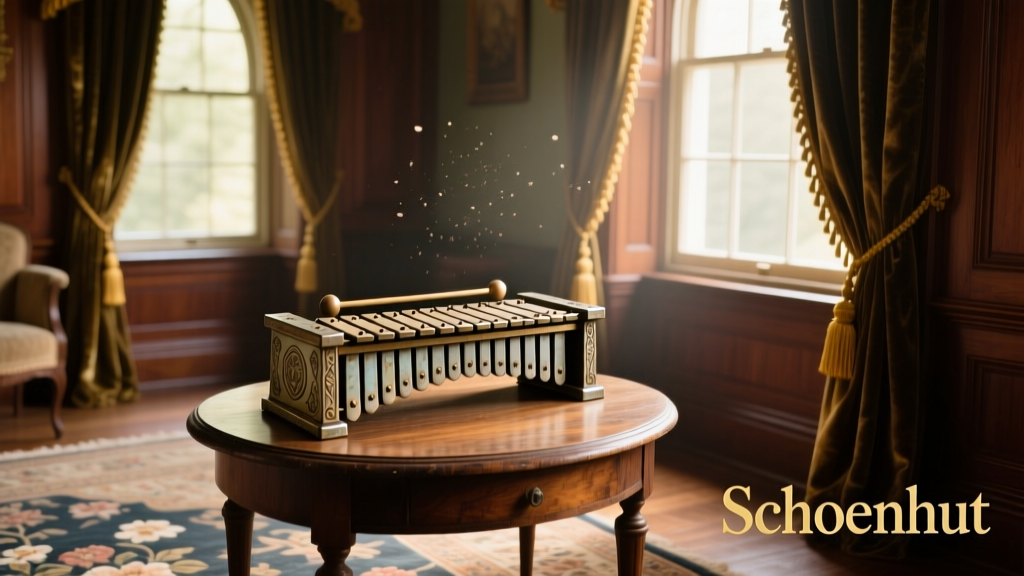
The Schoenhut Lithographed Metal Toy Xylophone: A Study in Early 20th-Century American Toy Craftsmanship
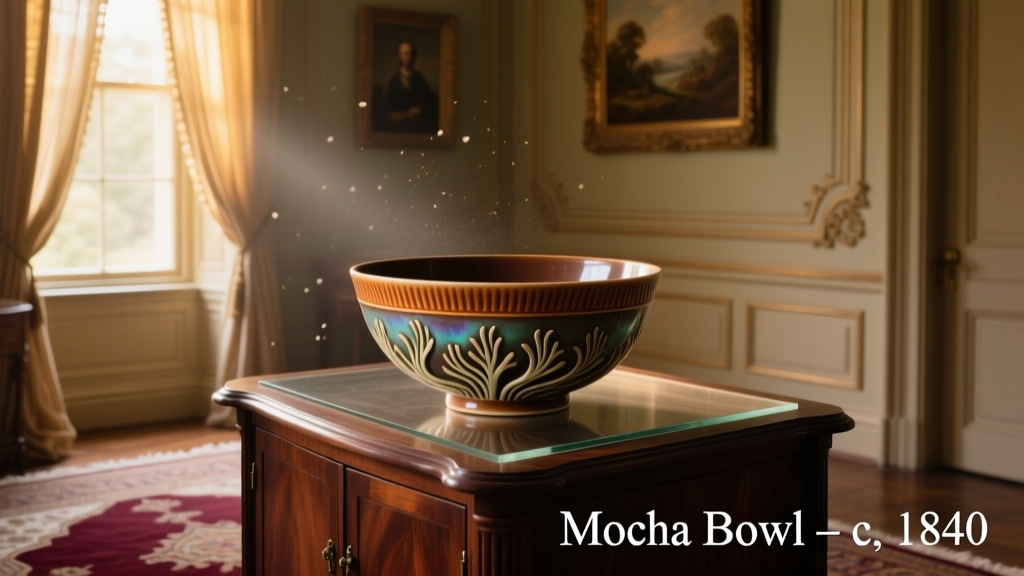
Mocha Bowl with Seaweed Tan Band: A Detailed Examination of an Early 19th-Century English Stoneware Masterpiece (c. 1810–1835)
Authentic Navajo-Made Metal Belt Beads with Cloth Backing: A 11-Inch Indian Doll Accessory — Identification, Provenance, and Conservation Guidelines
Limoges Tray Snow Scene Old House: Authenticity, Provenance, and Restoration Insights
The Conservator’s Guide to Safely Removing Scotch Tape from Antique Furniture and Paper Artifacts
The Tools Level Dandy: A Technical and Historical Analysis of the Wood-Brass Stratton Level
Pacific Pottery No. 6: Identifying, Valuing, and Preserving Mid-Century California Stoneware
Decoding the 1137120: A Technical and Historical Analysis of the 1954 Herman Miller Eames Lounge Chair Production Code