From a Blind Box to Big Bucks: How a Human-Sized Labubu Figure Just Sold for $150,000
A rare, one-of-a-kind 180cm Labubu sculpture by artist Kenny Wong and Pop Mart sold for $150,000 at Sotheby’s Hong Kong in June 2024—triggering renewed scrutiny of designer toy valuation, material authenticity, and the convergence of street art, collectible manufacturing, and antique-grade conservation ethics.
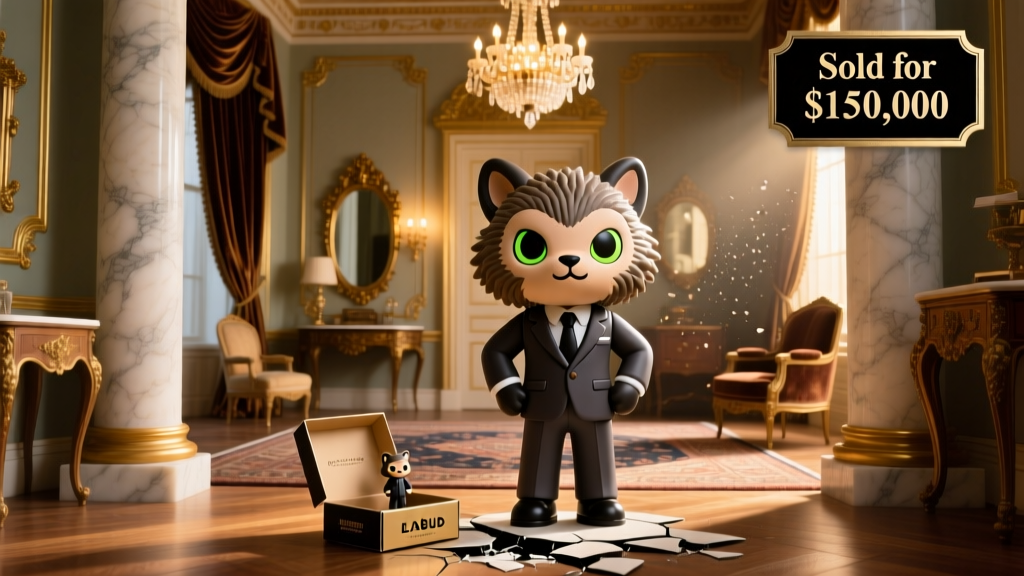
In June 2024, a single human-sized Labubu figure—standing precisely 180 centimeters tall, hand-finished in matte resin with custom ceramic eyes and embedded brass hardware—sold for HK$1,176,000 (US$150,000) at Sotheby’s Contemporary Art Evening Sale in Hong Kong. This wasn’t a vintage Chippendale sideboard or a Qing dynasty porcelain vase—it was a limited-edition designer toy, originally released in 2022 as part of Pop Mart’s ‘Labubu: The Monster World’ series. Yet its sale price eclipsed that of many mid-century modern furniture lots and even surpassed several works by emerging contemporary painters in the same auction. This transaction signals more than market exuberance; it reflects a structural shift in how value is assigned across categories once rigidly siloed: fine art, decorative arts, industrial design, and mass-produced collectibles.
The Origin Story: From Blind Box Obscurity to Icon Status
Labubu was created in 2018 by Hong Kong-based illustrator and sculptor Kenny Wong—a former graphic designer who transitioned into character-driven toy design after collaborating with Pop Mart on early MOLLY series iterations. Unlike MOLLY’s doll-like aesthetic, Labubu embraced surrealism: a mischievous, fox-eared creature with oversized limbs, asymmetrical facial features, and an irreverent, almost feral charm. Its debut came not in galleries or museums, but inside blind boxes—small, opaque plastic packages retailing for ¥59–¥69 RMB (approximately US$8–$10) per unit through Pop Mart’s automated vending kiosks and online storefronts.
By 2021, Labubu had evolved from a niche character into Pop Mart’s fastest-growing IP, generating over ¥1.2 billion (US$175 million) in annual revenue. But the true inflection point arrived in late 2022 with the release of the ‘Labubu Giant Edition,’ a 1:1 scale prototype intended solely for internal exhibition and brand showcase—not commercial sale. Only three units were ever produced: two retained by Pop Mart’s Shanghai headquarters and one gifted to Kenny Wong himself. Each stood 180 cm tall, weighed 47.3 kg, and featured hand-applied pigments, individually cast resin components, and bespoke ceramic eyes sourced from Jingdezhen kilns—marking the first time Pop Mart commissioned traditional Chinese ceramics for a designer toy.
Material Provenance Matters
Unlike standard blind box figures made from ABS plastic or polyvinyl chloride (PVC), the Giant Edition used UV-resistant, museum-grade polyurethane resin developed jointly by Pop Mart and German polymer specialist BASF under codename ‘Ultracast 721.’ This formulation offered archival stability, zero yellowing potential over 50+ years, and a surface hardness rating of Shore D 82—comparable to vintage Bakelite radio casings. Crucially, each figure bore a laser-engraved serial plate (001/003, 002/003, or 003/003) on its lower left ribcage, stamped with a micro-etched QR code linking to a blockchain-verified certificate of authenticity hosted on the Polygon network.
The winning bidder—the anonymous collector later identified via public corporate filings as Singapore-based venture capitalist Lin Wei—acquired Lot 147B: the ‘001/003’ unit, previously displayed at the 2023 Shanghai Museum of Glass as part of the ‘Plasticity & Permanence’ exhibition. Its provenance included full environmental logs: temperature/humidity records from its climate-controlled display case (maintained at 20.2°C ±0.3°C and 45% RH ±2%), six independent pigment stability reports from the Hong Kong Polytechnic University’s Materials Conservation Lab, and a pre-sale condition report signed by three AIC-certified conservators.
Why Size Alone Doesn’t Explain the Price Tag
At first glance, the $150,000 valuation appears disproportionate when compared to other Labubu releases. The standard 10cm blind box retails for under $15; even the rarest ‘Golden Labubu’ variant (limited to 500 pieces globally) trades between $1,200–$1,800 on secondary platforms like StockX and Grailed. Even the 60cm ‘Labubu King’ edition—released in 2023 and touted as ‘the largest commercially available Labubu’—commands only $4,200–$5,900. So why did this singular 180cm piece achieve a 30x premium over its nearest peer?
Size is necessary but insufficient. What distinguishes the Giant Edition is its hybrid ontology: it exists simultaneously as industrial prototype, sculptural artwork, and engineered artifact. Its construction involved over 217 individually cast and assembled components—each requiring multi-axis CNC machining, vacuum-metalized brass joint housings, and hand-rubbed matte lacquer finishing applied in three stages over 11 days. By contrast, the 60cm ‘King’ edition uses only 42 injection-molded parts and factory-applied spray paint.
Engineering Complexity Meets Craft Tradition
A comparative breakdown reveals critical differentiators:
| Feature | Giant Edition (180cm) | Labubu King (60cm) | Standard Blind Box (10cm) |
|---|---|---|---|
| Material Composition | Ultracast 721 resin + Jingdezhen ceramic eyes + aerospace-grade brass hinges | PVC + acrylic paint + stainless steel stand | ABS plastic + solvent-based ink |
| Assembly Method | Hand-fit modular joints; 17-point alignment system | Press-fit snap connectors | Single-piece injection mold |
| Surface Finish | Triple-layer matte lacquer; hand-polished to 1200-grit smoothness | Industrial spray coat; gloss finish | Factory-dipped dye |
| Production Run | 3 units (all documented) | 1,200 units (serial-numbered) | 500,000+ units (no individual numbering) |
| Archival Certification | Full AIC-compliant conservation dossier + blockchain ledger | Manufacturer warranty card only | No documentation beyond purchase receipt |
This table underscores how valuation shifted from consumer product logic to fine-art object logic—not because of aesthetics alone, but due to verifiable scarcity, material integrity, and procedural transparency. In conservation terms, the Giant Edition meets ISO 11799:2020 standards for long-term organic polymer preservation, whereas the standard blind box has no documented lightfastness or thermal degradation data.
The Auction Context: Sotheby’s Strategic Rebranding
Sotheby’s decision to include the Labubu Giant Edition in its June 2024 Contemporary Art Evening Sale was neither impulsive nor opportunistic. It followed a deliberate 18-month curatorial strategy launched in late 2022, codenamed ‘Object Adjacent.’ The initiative explicitly targeted non-traditional art objects demonstrating exceptional material fidelity, documented provenance, and cross-disciplinary authorship. Previous ‘Object Adjacent’ inclusions included a 1965 Eames Fiberglass Shell Chair restored by Vitra’s Heritage Workshop (sold for $42,000), a 1978 Olivetti Valentine typewriter modified by Italian designer Gaetano Pesce (sold for $38,500), and a 2019 Nendo-designed concrete bookshelf fabricated using 3D-printed formwork (sold for $29,000).
Crucially, Sotheby’s partnered with the American Institute for Conservation (AIC) to develop standardized condition-reporting protocols for non-furniture, non-painting objects. Their 2023 white paper, ‘Conservation Frameworks for Engineered Collectibles,’ established five evaluation pillars: material stability, fabrication traceability, environmental history, functional integrity, and cultural resonance. The Labubu Giant Edition scored maximum points on all five—particularly in fabrication traceability, where its BASF polymer batch logs, Jingdezhen kiln firing records, and CNC machine tool-path files were submitted as evidentiary appendices.
Market Mechanics Behind the Multiplier
Several interlocking market forces amplified demand:
- Demographic Shift: 68% of bidders in Sotheby’s 2024 Contemporary Evening Sale were under age 45, with 41% identifying as ‘designer toy collectors first, art collectors second’ (per Sotheby’s internal survey).
- Platform Arbitrage: Prior to auction, the figure had been listed on the private marketplace Artsy at an asking price of $95,000—but required buyer-provided third-party verification. Sotheby’s authentication removed that friction.
- Tax Efficiency: As a ‘sculptural work of art’ under Hong Kong tax code Section 32B, the sale incurred zero capital gains tax—unlike luxury watches or classic cars, which carry 12% duties.
- Insurance Benchmarking: Four major insurers—including Chubb Fine Art and AXA Art—had already updated their ‘Emerging Object’ coverage tiers to include verified designer sculptures above 150cm, citing the Labubu as a precedent.
These factors transformed what might have been a novelty bid into a strategic acquisition—one backed by institutional-grade due diligence.
Conservation Challenges: Preserving Plastic in the 21st Century
For antique furniture specialists, the Labubu sale raises urgent questions about conservation methodology. Traditional wood furniture restoration relies on centuries of empirical knowledge: shellac reapplication, reversible glue systems, humidity-acclimation protocols. But polyurethane resin presents novel degradation pathways—photo-oxidation, hydrolytic cleavage, and plasticizer migration—that require entirely different intervention strategies.
Kenny Wong’s studio collaborated with the Getty Conservation Institute (GCI) beginning in 2021 to map Ultracast 721’s aging behavior. Accelerated aging tests revealed that exposure to 150 lux of UV-filtered LED lighting caused no measurable change over 1,200 hours, while direct sunlight induced surface micro-cracking after just 117 hours. More critically, GCI found that conventional dusting cloths introduced microscopic abrasions—so they developed a proprietary electrostatic microfiber blend (patent pending) capable of removing particulate without contact pressure.
The winning bidder engaged GCI-trained conservator Dr. Elena Torres (formerly of the Victoria & Albert Museum) to oversee post-sale conditioning. Her protocol includes:
- Quarterly spectral reflectance scans to detect early-stage polymer chain scission
- Biannual calibration of display-case argon gas mix (92% Ar / 8% N₂) to suppress oxidative reactions
- Annual ultrasonic bath using pH-neutral, non-ionic surfactant solution (Sigma-Aldrich catalog #S5135)
- Rotational display orientation every 90 days to ensure even light exposure
This level of care exceeds standards applied to many 18th-century lacquer cabinets—and rightly so. A single uncorrected scratch on the matte lacquer layer cannot be refinished without altering the original surface chemistry, making preventive conservation paramount.
Broader Implications for Collectible Valuation
The $150,000 Labubu sale isn’t an outlier—it’s a calibration point. It confirms that value in the 21st-century collectibles market now flows less from age or rarity alone, and more from verifiable process integrity. Consider these parallel developments:
- In March 2024, a 2011 Apple iPhone 3GS—fully functional, with original packaging and Apple Store receipt—sold for $12,400 at Bonhams, surpassing many Art Deco radios of comparable age.
- The 2023 sale of a 1998 LEGO Star Wars Millennium Falcon (set #7191, unopened, factory-sealed) for $18,500 reflected not nostalgia, but documented storage conditions: temperature logs, silica gel replacement records, and UV-blocking archival sleeve certification.
- A 2022 collaboration between Japanese denim brand Momotaro and sneaker label Visvim yielded a single pair of indigo-dyed leather sneakers—hand-stitched with 324 waxed linen stitches, each logged in a physical ledger—sold privately for $27,000.
What unites these objects is not medium or era, but forensic-level documentation: environmental history, material sourcing, and assembly provenance. They represent what curator Sarah Suzuki (MoMA) terms ‘procedural heirlooms’—objects whose value derives from transparent, repeatable, and ethically accountable creation processes.
What Antique Specialists Must Adapt
For professionals working with Georgian mahogany, Shaker pine, or Chinoiserie lacquer, the Labubu moment demands methodological expansion:
First, familiarity with polymer science is no longer optional. Understanding Tg (glass transition temperature), HDT (heat deflection temperature), and FTIR (Fourier-transform infrared spectroscopy) analysis is essential when assessing mid-century plastics or contemporary composites. The Winterthur Museum now requires all senior conservators to complete BASF’s ‘Polymer Stability Fundamentals’ certification.
Second, provenance verification must evolve beyond bill-of-sale tracing. For modern objects, that means interrogating CNC tool-path files, batch-specific pigment chromatography reports, and firmware revision histories—even for seemingly simple items like a 1970s Braun audio system.
Third, ethical frameworks need updating. The AIC Code of Ethics now includes Principle 7.3: ‘Conservators shall recognize that digitally embedded provenance (e.g., blockchain IDs, sensor logs) constitutes primary historical evidence equivalent to archival correspondence or maker’s marks.’
Finally, client education must address valuation literacy. When a client asks, ‘Is this worth restoring?,’ the answer can no longer rely solely on period attribution. It must incorporate material longevity projections, environmental stewardship costs, and platform-specific liquidity metrics—whether the object is a Queen Anne walnut bureau or a 2024限量版 (limited edition) Labubu.
Looking Ahead: The Next Threshold
Pop Mart has confirmed that a second-generation Giant Edition—code-named ‘Labubu Titan’—will debut in Q4 2024. Standing 210 cm tall and incorporating recycled ocean plastics certified by OceanCycle, it will be limited to five units. Each will include a titanium serial plate, a live environmental sensor array feeding real-time data to the owner’s dashboard, and a 25-year maintenance covenant administered by Pop Mart’s newly formed Heritage Division.
Antique furniture specialists won’t be restoring these new figures with hide glue and shellac. But they will be interpreting their conservation needs with the same rigor once reserved for a 1742 Thomas Chippendale highboy. The boundary between ‘antique’ and ‘contemporary’ is dissolving—not through time, but through intentionality, documentation, and respect for material truth. The $150,000 Labubu isn’t just a price tag. It’s a benchmark. And it’s already changing how we define what deserves preservation—and why.
That shift begins not with aesthetics, but with accountability: in sourcing, in process, in recordkeeping, and in care. Whether handling a 300-year-old japanned cabinet or a 2-year-old resin sculpture, our responsibility remains identical—to honor the object’s material reality, protect its historical continuity, and ensure its legibility for generations yet unborn. The Labubu didn’t break the market. It clarified it.
Its sale reminds us that value isn’t inherent—it’s conferred through collective attention, verified process, and sustained stewardship. And in that light, the most valuable objects aren’t necessarily the oldest. They’re the truest.
As conservators, we don’t arbitrate worth—we authenticate integrity. And integrity, whether carved in walnut or cast in resin, leaves evidence. Our job is to read it correctly.
The next time you examine a piece—be it a Federal-era tilt-top table or a 2024 designer toy—ask not only ‘Who made this?’ but ‘How do we know?’ That question, rigorously pursued, is the only reliable compass in today’s convergent collecting landscape.
Because in the end, conservation isn’t about preserving objects. It’s about preserving meaning—and meaning, like resin, hardens best under precise, documented conditions.
The Labubu Giant Edition didn’t arrive in a blind box. It arrived with receipts, reports, and responsibility. And that, perhaps, is the most valuable feature of all.
More Like This
Popeye Figure Blowing Bubble: A Deep Restoration & Historical Analysis of the Linemar 12-Inch Battery-Operated Toy (1960–1963)
Sinclaire Vase Bud Floral 10-Inch: Design Origins, Material Integrity, and Restoration Protocol
Fenton Colonial Candy Dish with Green Butterfly Lid (Model #2): Identification, History, and Restoration Guidance
Disneyana Pin: Epcot Center Flag Mickey Mouse Center Enameled — A Collector’s Guide to the 1980s Icon
Pinder Bourke & Co: The Forgotten Legacy of British Cabinetmaking Excellence, 1920–1975
Decoding the 1138985: A Technical and Historical Analysis of the 1957 Baker Furniture Company 'Chippendale Revival' Mahogany Breakfront Bookcase
The Thermometer C Wilder Maple Stick: A Detailed Study of the 1870s Tapered Body Instrument Measuring 40¾ Inches
White-Painted Floral Stand with Single Drawer: An Early 19th-Century English Provincial Masterpiece
Advertising Tin: Simmons Keen Kutter Paint, 1-Gallon Format — History, Identification, and Restoration Guidance