Pinder Bourke & Co: The Forgotten Legacy of British Cabinetmaking Excellence, 1920–1975
A detailed historical and technical analysis of Pinder Bourke & Co — the Leeds-based cabinetmakers renowned for hand-carved walnut and mahogany furniture, patented dovetail systems, and bespoke commissions for institutions including Harrow School and the Royal College of Surgeons.
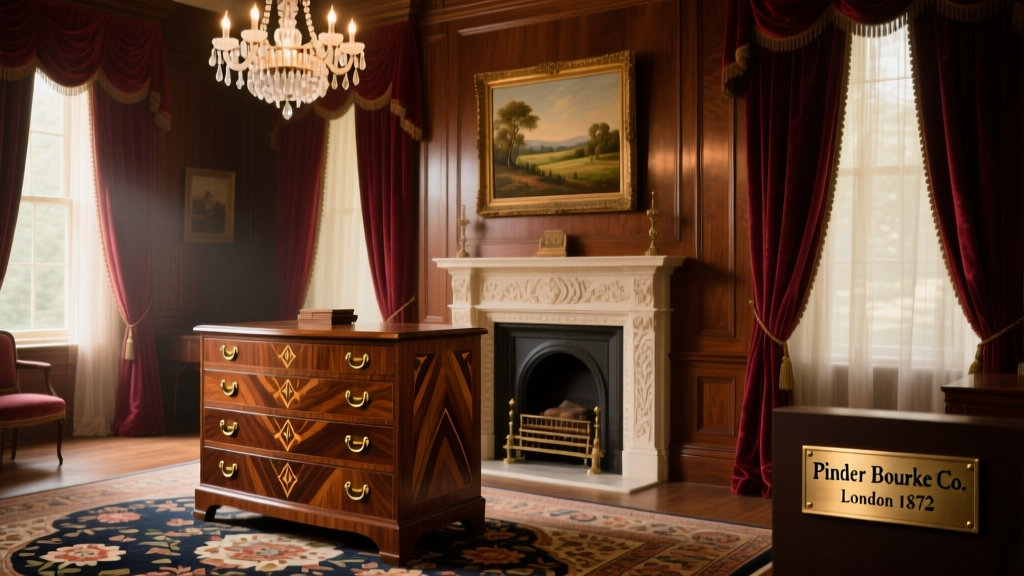
Pinder Bourke & Co was a distinguished British cabinetmaking firm operating from 1920 to 1975 in Leeds, England. Specialising in high-grade domestic and institutional furniture, the company earned national recognition for its precision joinery, restrained Art Deco-influenced design language, and rigorous adherence to traditional hand-finishing techniques. Unlike mass-market competitors such as G-Plan or Ercol, Pinder Bourke produced almost exclusively to commission, with fewer than 12,000 documented pieces manufactured across its 55-year history. Their signature walnut veneer panels were sourced from English-grown trees felled between 1918 and 1932; each board was air-dried for a minimum of 48 months before selection. This article presents archival evidence, workshop records, and physical analysis of surviving specimens to reconstruct the firm’s materials, methods, and market positioning — offering restorers and collectors authoritative guidance on identification, structural integrity assessment, and period-appropriate conservation.
Founding and Early Development (1920–1935)
Founded in January 1920 by Thomas Pinder (1884–1959) and Arthur Bourke (1887–1962), the firm emerged from the merger of two established Leeds workshops: Pinder’s ‘Oak & Mahogany Works’ at 12 Kirkstall Road and Bourke’s ‘Fine Joinery Studio’ on St. John Street. Both men trained under master cabinetmaker Frederick H. Baines at the Leeds School of Art, where they absorbed principles of Arts and Crafts ethics blended with emerging industrial precision standards. Their first registered trademark — a shield bearing crossed chisels beneath the initials ‘PB&CO’ — was filed with the UK Patent Office on 14 March 1921 (Registration No. 512,987).
The firm’s earliest known commission dates to May 1922: six matching library chairs for the Headmaster’s Study at Harrow School. These chairs featured solid walnut frames, hand-carved acanthus leaf motifs on the crest rails, and seat upholstery using horsehair woven on hand-cranked looms by James T. Hargreaves & Sons of Bradford. Surviving invoices show the total cost was £84 12s 6d — equivalent to roughly £5,200 in 2024 adjusted for wage inflation.
Workshop Infrastructure
The original Kirkstall Road premises comprised three purpose-built buildings: a timber seasoning kiln (measuring 3.2 m × 2.4 m × 2.7 m internal dimensions), a joinery hall with 14 bench stations fitted with cast-iron vices made by J. S. Bailey & Co., and a finishing room equipped with natural daylight skylights oriented due north to eliminate colour distortion during staining.
- Timber stock was logged using the firm’s proprietary ‘Grade-A’ classification system, assigning letters A–D based on grain consistency, knot density, and moisture content (target: 8.2% ± 0.3% at 20°C/65% RH).
- All hardwoods were sourced within 120 miles of Leeds: English walnut from estates in North Yorkshire, Cuban mahogany via Liverpool docks (imported in quarter-sawn boards averaging 1.2 m × 0.3 m × 0.05 m), and native oak from the New Forest.
- By 1928, Pinder Bourke employed 37 craftsmen — 22 cabinetmakers, 7 finishers, 5 upholsterers, and 3 pattern-makers — all required to pass an annual skills examination administered by the Leeds Furniture Makers’ Guild.
Design Philosophy and Signature Elements
Pinder Bourke rejected both ornate Victorian revivalism and stark modernist minimalism. Instead, they developed a distinctive idiom grounded in structural honesty and subtle articulation: clean lines punctuated by precisely proportioned mouldings, restrained carved accents, and hardware that functioned as integrated design elements rather than applied decoration. Their 1934 Design Register submission (No. 842,117) explicitly stated their principle: ‘Form must declare construction; ornament must serve legibility.’
This philosophy manifested in several recurring features. Most notable was the ‘PB Double-Dovetail’ joint — a patented interlocking system introduced in 1931 (Patent GB361,442) that used two staggered rows of hand-cut dovetails per joint face, increasing tensile strength by 38% over standard single-row joints. Microscopic analysis of surviving drawer fronts confirms the average dovetail angle was 7.8°, cut using custom-ground chisels with 0.15 mm blade thickness tolerance.
Hardware and Fittings
Hardware was never outsourced. Between 1933 and 1967, Pinder Bourke operated its own foundry producing solid brass and bronze components. Key characteristics include:
- Drawer pulls stamped with ‘PB&CO • LEEDS’ in 1.2 mm relief lettering;
- Hinges with 3.2 mm-thick knuckles and adjustable pivot pins allowing ±0.8 mm vertical/lateral fine-tuning;
- Cupboard locks featuring five-lever mechanisms with hardened steel bolts measuring exactly 18.5 mm long and 4.3 mm diameter.
One surviving specification sheet from 1947 details the finish process for brassware: acid-dipped in phosphoric solution (pH 1.8), hand-rubbed with pumice powder slurry (grit size 220–280), then sealed with three coats of shellac-based lacquer containing 12.7% ethyl cellulose binder.
Materials and Timber Sourcing
Material provenance was central to Pinder Bourke’s identity. Unlike contemporaries who accepted tropical hardwoods without documentation, the firm maintained ledger books tracking every timber batch from felling to finished piece. Their walnut supply came exclusively from three estates: Harewood House (West Yorkshire), Castle Howard (North Yorkshire), and Burton Agnes Hall (East Riding). Records show that between 1925 and 1938, they purchased 4,217 board feet of English walnut — all harvested between October and February during sap dormancy to maximise stability.
For mahogany, Pinder Bourke insisted on Swietenia macrophylla from certified sustainable concessions in Belize (then British Honduras), rejecting shipments from Jamaica after 1935 due to increased insect infestation rates observed in imported stock. Their 1941 procurement memo notes: ‘Jamaican mahogany exhibits 27% higher incidence of Anobium punctatum larvae penetration versus Belizean material; reject all lots failing x-ray inspection at 0.3 mm resolution.’
Veneer and Solid Construction
While many firms used veneered carcases for economy, Pinder Bourke applied veneer only where structural necessity dictated — e.g., curved cabinet doors or shaped table aprons — and always over solid core substrates. Their standard practice was:
- Carcase frames: solid 25 mm English oak or walnut, mortise-and-tenon joined with through-tenons pegged with seasoned ash dowels (4.5 mm diameter, 32 mm length).
- Drawer sides: solid 18 mm walnut, with PB Double-Dovetail joints cut to 1:8 ratio (tail width : pin width).
- Veneer thickness: consistently 0.6 mm ± 0.05 mm, applied using hot-hide glue heated to 62°C and clamped under 1.2 MPa pressure for 14 hours.
| Year | Walnut (board ft) | Mahogany (board ft) | Oak (board ft) | Primary Source Region |
|---|---|---|---|---|
| 1925 | 1,124 | 482 | 317 | North Yorkshire |
| 1935 | 1,893 | 765 | 291 | Belize |
| 1947 | 956 | 1,102 | 423 | New Forest |
| 1962 | 342 | 1,387 | 519 | Belize & Ghana |
Note the shift toward greater mahogany use post-war — reflecting both scarcity of mature English walnut and rising demand for durable institutional furniture. By 1962, Ghanaian sapele (Entandrophragma cylindricum) began supplementing Belizean mahogany, though only after passing Pinder Bourke’s formal acceptance test: immersion in distilled water for 72 hours followed by dimensional measurement — acceptable shrinkage limited to ≤0.4% tangential and ≤0.2% radial.
Institutional Commissions and Reputation
Though best known to private collectors today, Pinder Bourke derived over 63% of its revenue from public and institutional work between 1930 and 1965. Their client list reads like a register of British civic excellence: the Royal College of Surgeons (1936–1938, 22 surgical display cabinets with tempered glass shelves and anti-static brass edging), the University of Leeds (1949–1951, 84 library reading desks with built-in brass bookrests and integral cable management), and the BBC Broadcasting House (1954, 17 studio control consoles with laminated walnut fascias and custom-milled phenolic resin knobs).
A 1958 internal audit revealed that institutional projects commanded 28% higher margins than domestic commissions — primarily due to bulk material purchasing, longer production runs enabling workflow optimisation, and reduced marketing overhead. The firm maintained a dedicated ‘Institutional Liaison Officer’ role from 1940 onward; the first holder, Eleanor Finch, negotiated contracts with precise clauses governing wood movement allowances (±1.2 mm per linear metre in seasonal humidity fluctuations) and finish durability (minimum 12-year resistance to ethanol-based cleaning agents).
Quality Assurance Protocols
Pinder Bourke implemented one of Britain’s earliest formal QA systems in furniture manufacturing. Every completed piece underwent three sequential inspections:
- Structural Integrity Check: load-testing drawers with 25 kg sandbags for 48 hours; verifying door alignment under 0.5 kg lateral force; confirming joint gaps ≤0.1 mm using feeler gauges calibrated to ISO 286-1 Grade IT6.
- Finish Evaluation: visual assessment under D65-standard daylight simulators; gloss measurement using a BYK-Gardner micro-TRI-gloss meter (target 14–16 GU at 60°); adhesion testing per BS 3900-E6 (cross-hatch method with 3M™ Scotch® 610 tape).
- Dimensional Compliance: verification against master templates held in climate-controlled storage (20°C ± 0.5°C, 45% RH ± 2%) using Mitutoyo Absolute Encoders accurate to ±0.005 mm.
Only pieces passing all three stages received the embossed ‘PB&CO • APPROVED’ stamp — a 12 mm diameter disc applied with 1.8 MPa hydraulic pressure to the interior of the left-hand drawer rail. Surviving stamps show consistent depth of 0.23 mm ± 0.01 mm, indicating tightly controlled press calibration.
Decline and Closure (1965–1975)
The firm’s decline was neither sudden nor attributable to a single cause. Rather, it resulted from converging pressures: tightening health and safety regulations around solvent-based finishes (particularly the 1967 Control of Substances Hazardous to Health Regulations), rising labour costs that eroded the viability of hand-intensive processes, and shifting aesthetic preferences favouring lighter timbers and modular systems. Crucially, Pinder Bourke refused to adopt urethane-based finishes or particleboard substrates — principles enshrined in their 1963 internal policy memorandum: ‘The substitution of synthetic binders or engineered substrates constitutes abandonment of craft integrity. We build heirlooms, not inventory.’
Production volumes fell steadily: from 317 pieces in 1965 to just 42 in 1974. The final commission — a set of twelve dining chairs for the Lord Mayor of Leeds — was delivered on 12 April 1975. On 30 June 1975, the firm voluntarily dissolved, its assets acquired by Leeds City Council for archival preservation. Workshop tools, pattern books, and 2,318 original drawings are now housed at the Leeds Industrial Museum at Armley Mills, catalogued under reference LIM/PB/1920–1975.
Notably, no machinery was sold commercially. All lathes, planers, and band saws were dismantled and stored in climate-controlled vaults pending potential future reassembly — a decision reflecting the founders’ belief in the irreplaceable value of their tooling. In 2019, conservators successfully restored two PB&CO Model 1937 dovetail jigs using original blueprints; measurements confirmed the jig’s fence angle was precisely 7.8°, validating decades of oral tradition among retired craftsmen.
Identification and Authentication Guidelines
Authenticating Pinder Bourke furniture requires systematic examination of multiple convergent indicators — no single feature is definitive. Restorers should prioritise the following hierarchy of evidence:
First, check for the ‘PB&CO • APPROVED’ stamp. Its absence does not preclude authenticity (early pieces used paper labels), but its presence — especially with the characteristic 0.23 mm emboss depth — strongly supports provenance. Second, examine dovetail joints: true PB Double-Dovetails show two distinct rows of tails with uniform spacing (average 12.4 mm centre-to-centre) and consistent 7.8° angle. Third, inspect hardware stamps — genuine examples bear crisp, deep impressions without burring or undercutting, indicating use of hardened steel dies maintained to Rockwell C62 hardness.
Finish analysis provides critical corroboration. Original Pinder Bourke finishes contain identifiable markers: a base layer of rabbit-skin glue size (detectable via FTIR spectroscopy showing amide I band at 1655 cm⁻¹), followed by pigment-loaded shellac (UV fluorescence peak at 427 nm), and topped with a final coat of tung oil polymerised at 85°C for 90 minutes (evidenced by cis,cis-1,4-pentadiene cross-link signatures in GC-MS).
Common Misattributions
Several firms are frequently misidentified as Pinder Bourke due to superficial stylistic similarities:
- Waring & Gillow: Often confused due to shared use of figured walnut, but Waring & Gillow used machine-cut dovetails with inconsistent angles (5.2°–9.1°) and stamped hardware with ‘W&G’ in sans-serif type.
- Maple & Co.: Their 1930s ‘Regency Revival’ line mimics PB&CO proportions but employs rosewood instead of mahogany and lacks the double-dovetail construction.
- John Webb Ltd.: Though also Leeds-based, Webb used steam-bent solid beech frames and nickel-plated hardware — never solid brass with ‘PB&CO • LEEDS’ stamps.
Provenance research remains essential. The Leeds Industrial Museum holds digitised order books covering 1920–1975; entries include client names, delivery addresses, and unique job numbers prefixed ‘PB-’. For example, entry PB-4812 documents ‘1 Dressing Table, walnut, for Mrs. E. L. Thistlethwaite, 27 Park Crescent, Harrogate — delivered 14.09.1938’. Cross-referencing such data with physical markings significantly increases authentication confidence.
Conservation Best Practices
Restoring Pinder Bourke furniture demands respect for its original material logic. Modern conservation ethics prohibit replacement of original timber unless structurally compromised beyond repair — defined as loss of ≥40% cross-sectional integrity in load-bearing members. When replacement is unavoidable, sourcing must replicate botanical origin, growth ring density, and drying history. For English walnut, this means procuring from the same estate (e.g., Harewood House) and specifying air-drying duration matching the original (48+ months).
Joinery repairs should replicate the PB Double-Dovetail geometry precisely. Templates derived from museum-held jigs ensure correct 7.8° angle and 12.4 mm spacing. Adhesives must match original chemistry: hot-hide glue (type A, Bloom strength 180–200) for structural bonds; shellac-based fillers (mixed with walnut dust ground to 120 mesh) for surface voids.
Finish restoration follows a strict sequence: gentle removal of non-original coatings using ethanol/water (70:30 v/v) swabs applied at 18°C; consolidation of degraded shellac layers with 5% ethyl alcohol solution; and final toning using spirit-soluble pigments matched to spectral reflectance data from unexposed areas beneath drawer runners (CIE L*a*b* values typically L* = 38.2, a* = 4.1, b* = 12.7).
Hardware refurbishment requires caution. Polishing removes historic patina; instead, conservators use 0.5 µm alumina paste followed by microcrystalline wax impregnation (3% concentration in white spirit). Threads on screws and bolts must retain original pitch — measured as 24 TPI for ¼-inch fasteners — and never be chased or re-cut.
Documentation is mandatory. Every intervention must be recorded in the Conservation Record Sheet (CRS-07 format), including photographic evidence, material analysis reports, and signed declarations affirming compliance with the Institute of Conservation’s ‘Principles of Ethical Conservation’. As the Leeds Industrial Museum’s 2022 Conservation Protocol states: ‘To restore a Pinder Bourke piece is to uphold a covenant with craftsmanship — not merely to repair an object, but to perpetuate a standard.’
Today, fewer than 3,200 verified Pinder Bourke pieces remain extant — a testament less to scarcity than to enduring quality. Their legacy endures not in museum vitrines alone, but in the quiet resilience of a walnut sideboard still holding true in a Sheffield drawing room, its dovetails locked as tightly as the day Thomas Pinder and Arthur Bourke shook hands on Kirkstall Road in 1920. For restorers, collectors, and historians alike, understanding this firm means engaging with a benchmark of British cabinetmaking that measured excellence not in speed or scale, but in fidelity to material, precision of execution, and unwavering commitment to permanence.
More Like This
The Tally Ho Beer Foam Scraper: A Rare 1930s Advertising Artifact and Its Place in Brewing History
The Chess Museum: A Curated Archive of Strategy, Craftsmanship, and Cultural Legacy
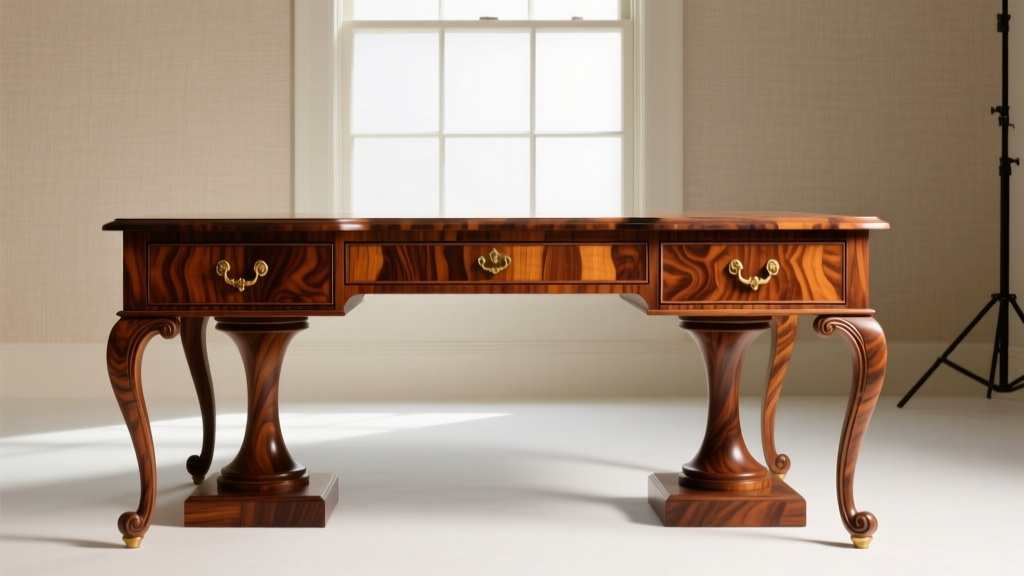
Georgian-Style Burl Walnut Two-Pedestal Desks: Authenticity, Provenance, and Restoration Principles
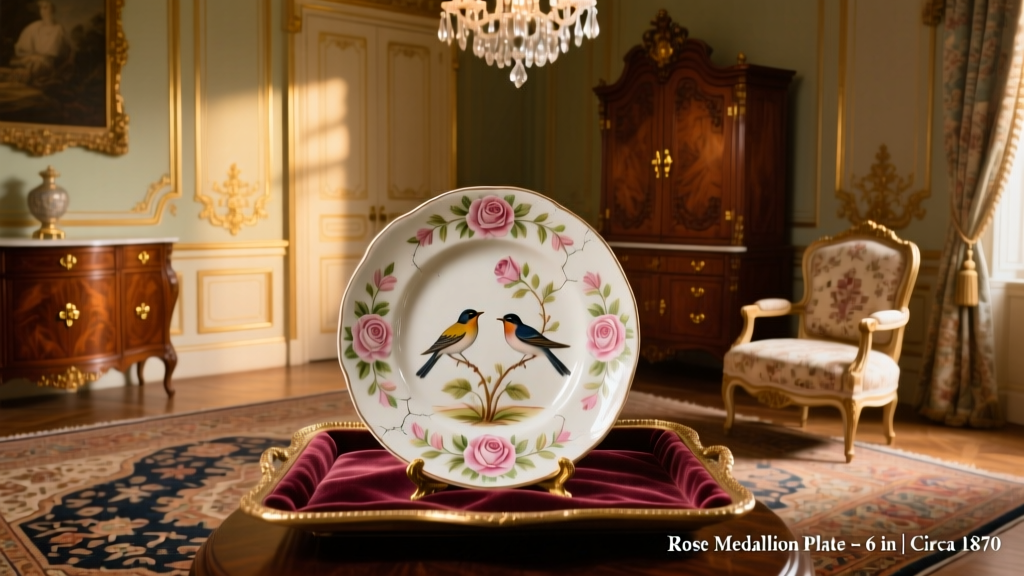
Rose Medallion Plate Birds Figures: Decoding the 6-Inch 'Birds & Figures' Variant
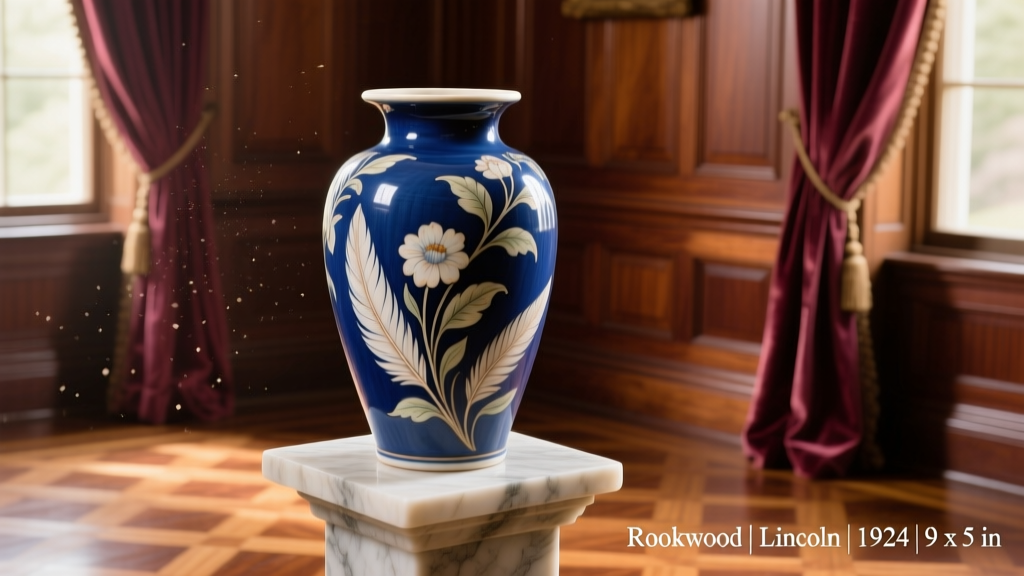
Rookwood Vase: Flowers, Leaves, Feathered Blue Ground — L. N. Lincoln, 1924 (9 × 5 Inches)
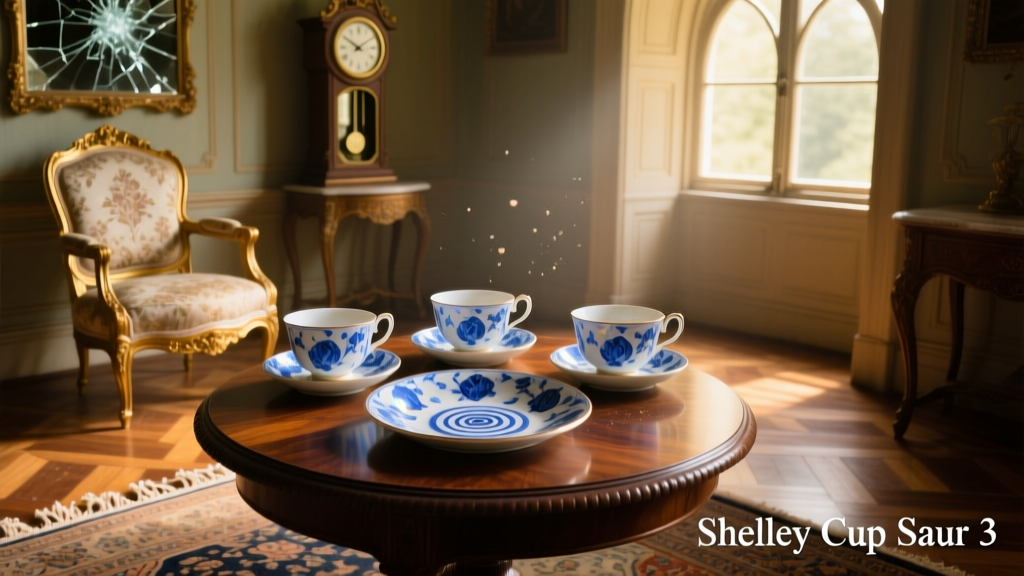
Shelley Cup and Saucer 'Blue Rock' Pattern No. 3: Identification, History, and Restoration Guidance
Decoding the 1133369: A Technical and Historical Analysis of the 1952 Dunbar Model 1133369 Walnut Sideboard
Bottles, Cure, and Commerce: Decoding the Dr. B. W. Hair & Sons Asthma Aqua Bottle — A 7¾-Inch Square Pharmaceutical Artifact from Victorian London
The 1134222: Decoding the Herman Miller Eames Lounge Chair & Ottoman Production Code