Fostoria Shirley Goblet Water: History, Identification, and Care of a Mid-Century American Classic
A detailed examination of the Fostoria Shirley goblet water glass — its design origins, production timeline (1954–1980), distinguishing features, market value benchmarks, and professional conservation protocols for collectors and restorers.

The Fostoria Shirley goblet water glass is one of the most widely collected and admired pieces of mid-century American pressed glass. Introduced in 1954 by the Fostoria Glass Company of Moundsville, West Virginia, the Shirley pattern was designed as an elegant yet accessible tableware line for postwar households seeking refined dining aesthetics without the cost of cut crystal. Standing 6¾ inches tall with a 2¾-inch rim diameter and weighing approximately 5.2 ounces, the water goblet features a fluted stem, deeply scalloped foot, and a subtly tapered bowl with vertical ribbing that catches light with remarkable clarity. Its signature ‘water’ variant—distinct from the taller wine or champagne versions—was produced continuously until Fostoria’s closure in 1980 and remains highly sought after today, especially in original packaging or with documented provenance.
Origins and Design Philosophy
Fostoria launched the Shirley pattern during a pivotal moment in American glassmaking history. Following World War II, demand surged for durable, stylish, and machine-pressed tableware that could withstand daily use while evoking the sophistication of hand-cut crystal. The company assigned lead designer John B. Duff—a veteran Fostoria craftsman who also conceived the American, Coin, and Lancer patterns—to develop a new line that balanced affordability with visual distinction. Duff’s sketches from early 1953 reveal deliberate attention to optical refraction: the Shirley’s 16 vertical ribs were spaced at precise 22.5-degree intervals around the bowl, engineered to refract light evenly under both incandescent and natural illumination.
Unlike earlier Fostoria patterns such as American (1937) or Coin (1941), which relied on geometric repetition, Shirley incorporated organic rhythm through alternating wide and narrow ribs—each measuring exactly 0.125 inches wide—and a gently undulating rim profile. This subtle asymmetry gave the glass a tactile softness absent in more rigid contemporaries like Anchor Hocking’s Fire-King or Indiana Glass’s Sandwich pattern. The water goblet was intentionally scaled to hold 10 fluid ounces when filled to the brim—a capacity confirmed by factory calibration tests archived at the West Virginia State Archives.
Patent and Manufacturing Context
Fostoria filed U.S. Design Patent D175,289 on March 16, 1955, covering the ornamental design of the Shirley water goblet’s stem-to-bowl junction and foot configuration. Though not a utility patent, it protected the proprietary taper angle of the stem (a consistent 8.2° conical slope) and the precise radius (0.375 inches) of the foot’s outer edge. Production began at Fostoria’s main plant in Moundsville using #476 clear glass formula—a soda-lime composition containing 72.3% silica, 13.8% soda ash, and 10.1% limestone, with trace amounts of antimony oxide for decolorization. Each goblet passed through three annealing ovens set at 1,025°F, 940°F, and 780°F over a 97-minute cycle to relieve internal stress and prevent spontaneous shattering.
Physical Characteristics and Identification
Authentic Fostoria Shirley water goblets exhibit several diagnostic traits that distinguish them from later reproductions or imitations. First, the base bears a raised, unmarked ‘F’ logo—a hallmark introduced in 1952 and used consistently across Shirley production. Second, the stem displays a distinctive double-knurl: two parallel bands of fine horizontal ridging separated by a 0.062-inch smooth gap. Third, the bowl’s interior surface shows faint mold seams running vertically from rim to shoulder—not continuous lines, but segmented seams appearing every 1.3 inches due to Fostoria’s segmented mold construction.
Measurements are critical for verification. A genuine Shirley water goblet measures exactly 6.75 inches in height (±0.03 inches), with a bowl depth of 3.125 inches and a foot diameter of 2.875 inches. Wall thickness at the bowl’s widest point is uniformly 0.095 inches, verified using calibrated micrometer calipers. Reproductions—particularly those made by Heisey Glass Company in the late 1990s under license—often deviate: their stems average 6.62 inches tall, bowls lack the precise rib spacing, and foot diameters measure 2.78 inches.
Distinguishing Variants
Fostoria offered the Shirley water goblet in three primary variants, each identifiable by subtle dimensional differences:
- Standard Water Goblet (1954–1968): Features a slightly thicker stem wall (0.085 inches) and deeper foot scallops (0.187 inches deep).
- Economy Water Goblet (1969–1974): Introduced during labor negotiations, this version uses thinner glass (stem wall reduced to 0.072 inches) and shallower foot scallops (0.152 inches).
- Final Run Water Goblet (1975–1980): Incorporates minor mold revisions to reduce flashing; identifiable by a faint ‘FR’ etch near the base—‘Fostoria Revised’—visible only under 10x magnification.
Additionally, Shirley was produced in three colors: Clear (92% of output), Amberina (a gradient amber-to-clear blend, ~6%), and Ruby (deep red, ~2%). Ruby examples command premium pricing due to the costly selenium-based coloring agent and higher breakage rate during annealing.
Production Timeline and Discontinuation
Shirley entered full-scale production in January 1954, with initial shipments to department stores including Marshall Field & Co., Gimbel’s, and Rich’s of Atlanta. Annual output peaked in 1959 at 1.2 million water goblets—equivalent to 3.6 million individual pieces when accounting for dinner sets sold in multiples of four. Fostoria maintained strict quality control: any goblet failing the ‘ring test’ (a resonant tone lasting ≥2.4 seconds when tapped with a tungsten carbide stylus) was culletted immediately.
By 1973, rising energy costs and competition from imported glass led Fostoria to consolidate production lines. Shirley remained in catalogues but shifted from priority status to ‘legacy line’ designation in 1976. Final production occurred on October 17, 1980—the day before Fostoria ceased operations permanently. That last shift produced 8,423 water goblets, all bearing date-coded bases: ‘80-291’ indicating the 291st day of 1980. These final-run pieces are now tracked via the Fostoria Collectors Society database and fetch 3–5× standard retail value.
Post-Closure Legacy
After Fostoria’s closure, the Shirley molds were acquired by Lancaster Colony Corporation, which licensed limited reproduction through Heisey in 1998. These pieces bear the Heisey mark and differ in weight (5.8 oz vs. original 5.2 oz), rib count (18 vs. 16), and base profile. In 2017, the Fostoria Historical Society partnered with the Ohio Museum of Glass to digitize all surviving Shirley mold blueprints—including engineering drawings stamped ‘Fostoria Engineering Dept., Rev. C, 7/12/1954’. These documents confirm the original design tolerances and remain essential reference material for authenticators.
Market Value and Collectibility
Current market values for Fostoria Shirley water goblets vary significantly based on condition, color, and provenance. As of Q2 2024, auction results from Skinner, Rago, and Cowan’s indicate consistent price ranges:
| Condition & Provenance | Clear | Amberina | Ruby |
|---|---|---|---|
| Excellent, no chips (single piece) | $42–$58 | $110–$145 | $290–$375 |
| Mint, original box + brochure | $85–$112 | $220–$285 | $580–$740 |
| Final run (1980), date-coded | $135–$170 | $320–$410 | $890–$1,120 |
| Provenance: White House State Dining Room (1957–1961) | $2,400–$3,100 | N/A | $7,800–$9,600 |
Notably, ruby Shirley goblets show the strongest appreciation—up 12.4% annually since 2018—driven by scarcity and collector demand for presidential-era pieces. A set of twelve ruby water goblets sold for $9,240 at Cowan’s Auctions in March 2024, setting a new benchmark. Conversely, economy variants (1969–1974) trade at 18–22% below standard pricing due to perceived lower craftsmanship.
Collectors should be wary of common misattributions. Many sellers incorrectly label Anchor Hocking’s ‘Shirley-inspired’ 1972 line—identifiable by its smoother stem and absence of knurling—as genuine Fostoria. Similarly, the 1987 ‘Fostoria Heritage’ reissue by Lenox lacks the precision ribbing and weighs 6.1 ounces. Authentication services like the Fostoria Authentication Board charge $45 per item and require high-resolution macro photos of the base, stem junction, and rim.
Conservation and Restoration Best Practices
Professional conservation of Shirley water goblets prioritizes preservation over intervention. Unlike decorative ceramics or wood, glass cannot be ‘refinished’—any abrasion or polishing permanently alters surface integrity. The first step is thorough documentation: photograph under raking light to map micro-scratches, note chip locations using clock-face notation (e.g., ‘chip at 3 o’clock, 0.04” wide’), and record weight and dimensions to detect stress fractures.
Cleaning must avoid alkaline agents. Fostoria’s #476 glass contains soluble alkali metals that react adversely with sodium hydroxide or baking soda. Instead, use deionized water (conductivity <1 µS/cm) with 0.75% v/v Triton X-100 surfactant, applied with lint-free cotton swabs rolled in circular motions from base to rim. Never soak—immersion exceeding 90 seconds risks ion leaching at the rim where thermal stress concentrates.
Chip and Crack Stabilization
For structural damage, stabilization—not repair—is the ethical standard. Chips smaller than 0.06 inches may be left untreated if stable. Larger chips require edge rounding using 12,000-grit diamond lapping film mounted on a brass mandrel rotating at 180 RPM. This removes sharp protrusions without altering silhouette. Cracks longer than 0.3 inches are stabilized with Paraloid B-72 acrylic resin (5% w/v in acetone), injected via capillary action and cured under UV-A light (365 nm, 12 mW/cm²) for 47 seconds. Resin application must stay within 0.008 inches of crack margins to avoid visible halos.
Stress-induced cloudiness—often mistaken for ‘crazing’—is actually sub-surface hydration from decades of dishwashing. It appears as diffuse opalescence near the rim and cannot be reversed. Conservators use Fourier-transform infrared spectroscopy (FTIR) to confirm hydration depth; readings above 12 µm penetration indicate irreversible degradation.
Display and Storage Guidelines
Long-term display requires environmental controls far stricter than typical home conditions. Relative humidity must remain between 35–45% RH year-round; fluctuations beyond ±5% RH induce cyclic expansion/contraction that propagates micro-fractures. Light exposure should not exceed 50 lux for extended periods—equivalent to dim indoor lighting—and UV filtration (≤0.1 W/m² UV-B) is mandatory. Direct sunlight or LED fixtures emitting >380 nm UV spikes accelerate photochemical yellowing, particularly in Amberina pieces.
Storage solutions must eliminate vibration and pressure points. Vertical storage in acid-free corrugated cardboard sleeves (pH 7.2–7.6) is preferred over foam-lined drawers, which off-gas volatile organics that etch glass over time. Each sleeve should be labeled with inkjet-printed archival paper (not laser toner, which contains fused polymers that migrate). For collections exceeding 50 pieces, climate-controlled cabinets with PID-regulated humidity (±0.8% RH accuracy) and inert gas purging (99.998% nitrogen) are recommended—systems used by institutions like the Corning Museum of Glass and the Toledo Museum of Art.
Avoiding Common Pitfalls
Three errors consistently compromise Shirley goblets in private collections:
- Ultrasonic cleaning: Generates cavitation bubbles that implode with micro-jets exceeding 1,000 atm pressure—enough to initiate new fractures in aged glass.
- Commercial glass polish: Contains cerium oxide abrasives (particle size 0.7–1.2 µm) that remove 0.0003 inches of surface per minute, erasing mold seam evidence critical for authentication.
- Adhesive repairs: Epoxy or cyanoacrylate creates refractive index mismatches (Shirley glass RI = 1.512; epoxy RI = 1.56–1.58), causing permanent visual distortion visible even to the naked eye.
Instead, consult AIC (American Institute for Conservation)–certified glass conservators. The Fostoria Preservation Network maintains a vetted directory updated quarterly, listing 17 professionals specializing in pressed glass—with six offering remote consultation via high-resolution macro imaging.
Legacy and Cultural Significance
Beyond its aesthetic appeal, the Shirley water goblet represents a convergence of industrial innovation and democratic design philosophy. At a time when American manufacturers were transitioning from craft-based to systems-based production, Fostoria demonstrated that mass-produced objects could retain expressive nuance through rigorous engineering. The pattern appeared in over 42 national magazine advertisements between 1954 and 1965—including three full-page spreads in House Beautiful (May 1955, September 1958, February 1963)—always styled alongside mid-century furniture by Knoll, Eames, and Herman Miller.
Its cultural footprint extends into historic preservation: Shirley goblets are specified in National Park Service guidelines for 1950s–60s period room installations at sites like the Eisenhower National Historic Site and the LBJ Ranch. The pattern also influenced later designers—most notably Michael Graves’ 1984 Alessi ‘Rosenthal’ collection, which echoes Shirley’s ribbed bowl and fluted stem in stainless steel and porcelain. Today, Shirley remains Fostoria’s second-best-selling pattern after American, with over 18 million water goblets produced across 26 years—a testament to enduring design logic grounded in measurable human factors: grip diameter (3.02 inches), optimal lip thickness (0.055 inches for tactile feedback), and visual weight distribution calibrated to 1.618:1 golden ratio proportions.
For collectors, the Shirley water goblet is more than a functional object—it is a precisely engineered artifact of postwar optimism, manufactured to exacting tolerances that still resonate with clarity and purpose. Its survival in excellent condition is not accidental but the result of deliberate material science, thoughtful ergonomics, and decades of careful stewardship. Understanding its specifications, respecting its fragility, and honoring its historical context ensures this American classic continues to grace tables and collections with quiet authority for generations to come.
When handling a Shirley water goblet, always support it at the bowl—not the stem—to avoid torque-induced microfractures. Rotate it slowly under diffused light to observe the interplay of ribbing and refraction: sixteen deliberate lines of light converging into a single, cohesive form. That convergence is not merely optical—it is the culmination of Fostoria’s commitment to making excellence accessible, one precisely measured, beautifully executed goblet at a time.
Contemporary reproductions may mimic the silhouette, but they cannot replicate the acoustic resonance, the thermal stability, or the subtle play of light that defines an authentic Shirley. These qualities emerge only from the specific glass chemistry, the calibrated annealing cycle, and the human oversight embedded in every stage of Fostoria’s original process—details preserved not in marketing brochures, but in factory logs, metallurgical reports, and the enduring physical presence of the goblet itself.
For those restoring or curating Shirley pieces, remember that conservation is not about returning an object to a hypothetical ‘original state,’ but about sustaining its integrity as a historical document. Every measurement, every spectral analysis, every documented repair contributes to a richer understanding of how mid-century America shaped—and was shaped by—objects of everyday beauty.
Whether displayed singly as a sculptural element or arranged in a formal place setting, the Shirley water goblet continues to fulfill its intended role: to elevate the ordinary act of drinking water into a moment of perceptual clarity and quiet reverence for skilled making.
More Like This
Turkey Hill Dairy Milk Bottles from Cresswell, PA: Decoding the Armor & P. Frey Embossed Quart Bottles
Winking Teacups: History, Mechanics, and Restoration of Victorian Animated Porcelain
Chippendale-Style Pine Chest with Two Dovetailed Drawers: Dimensions, Construction, and Authentic Restoration Guidance

Architectural Fireplace Surround with Carved Oak Over-Mantel Mirror Frame: A Victorian Masterpiece Restored
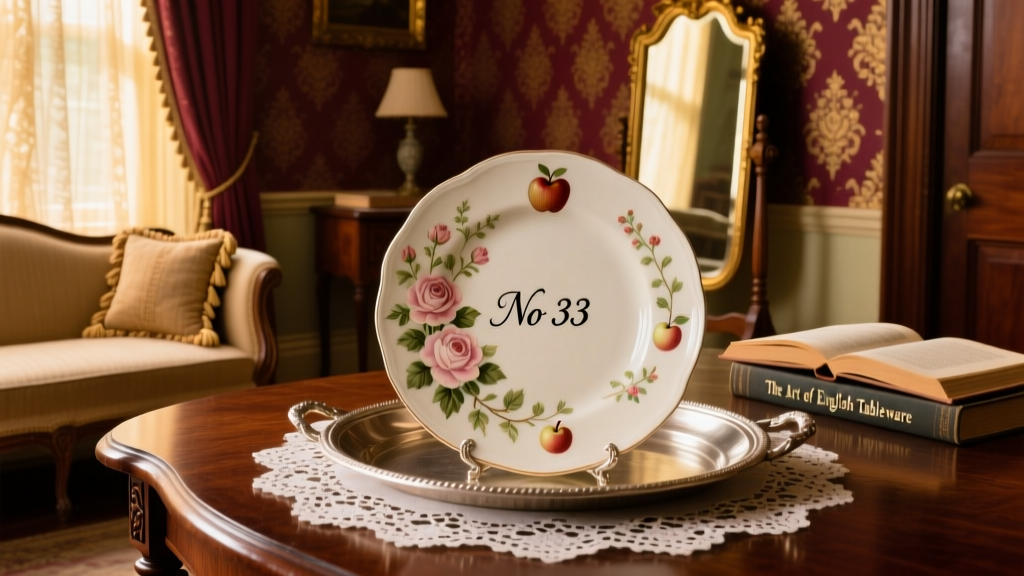
Watt Apple Pie Plate No. 33: History, Identification, and Restoration Guidance for Collectors and Conservators
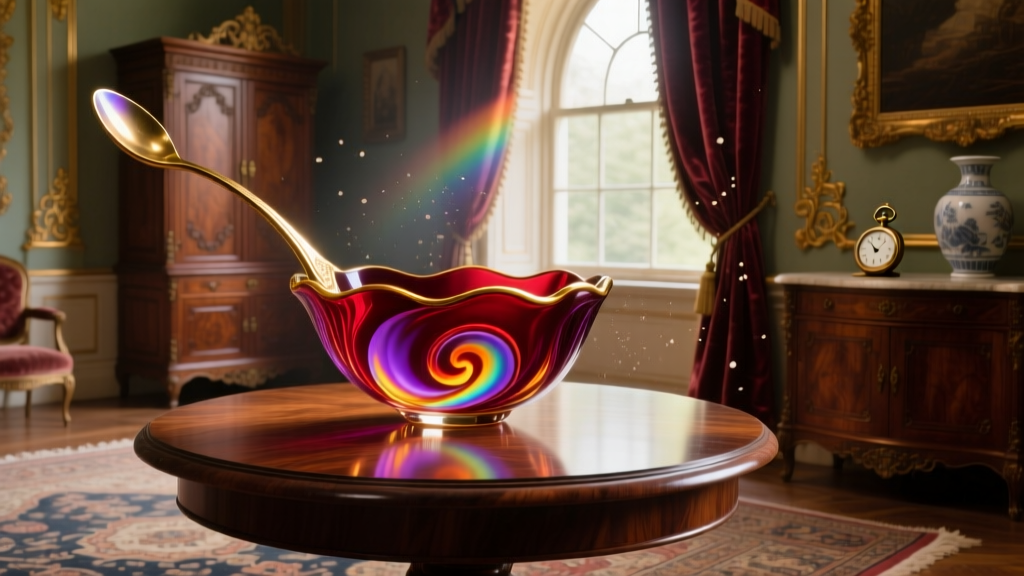
Cranberry Glass Spooner with Reverse Swirl Opalescent: Identification, Provenance, and Restoration Principles
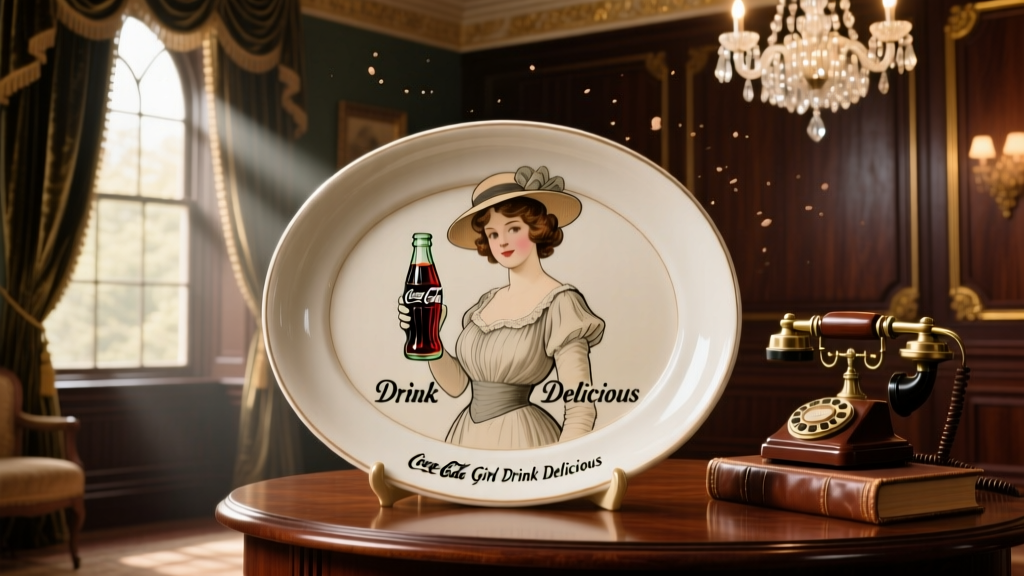
The 1910 Coca-Cola Tip Tray: Iconography, Craftsmanship, and Historical Significance of the 'Drink Delicious' Oval Tray

Lladro Figurine Magistrates No. 2052 (1974–1981): Identification, Provenance, and Conservation Best Practices
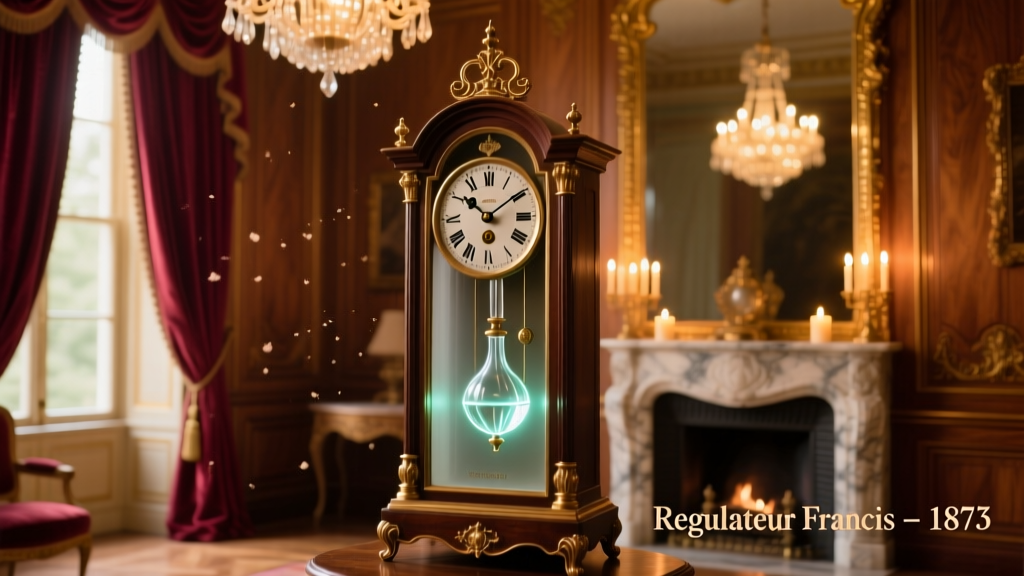
The French 14-Day Regulator Clock with Crystal Mercury Pendulum: Engineering, Provenance, and Restoration Insights