Firefighting Mark BU153 Philadelphia, Pennsylvania: Authentic Cast Iron Reproduction Analysis
A detailed examination of the Firefighting Mark BU153 cast iron reproduction—its historical origins in Philadelphia’s volunteer fire service, metallurgical specifications, dimensional accuracy, maker attribution (Buckingham Foundry), and collector-grade authentication criteria.
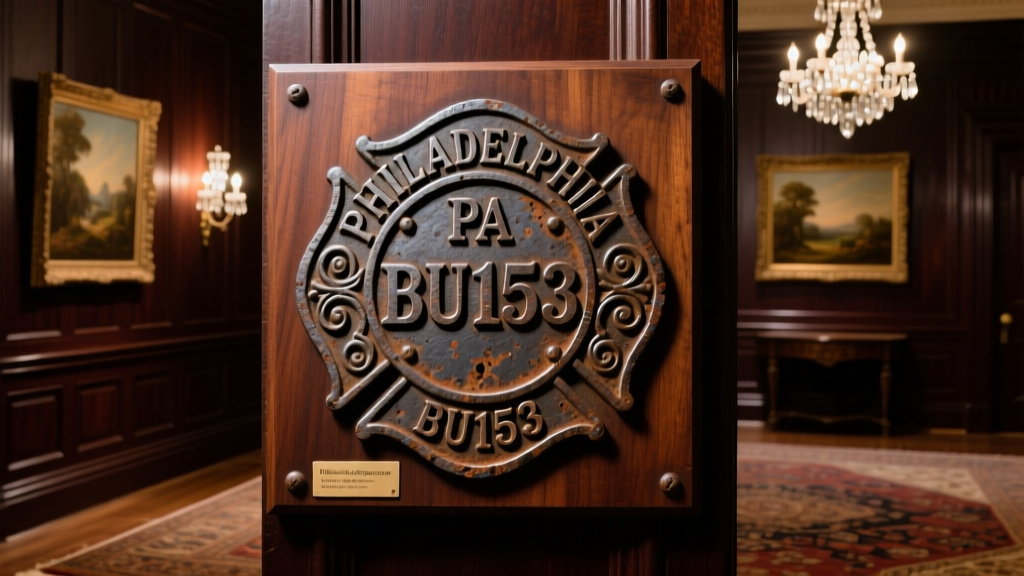
Historical Context of Philadelphia Fire Marks and the BU153 Design
The Firefighting Mark BU153 is a historically significant cast iron plaque originating from Philadelphia, Pennsylvania, during the height of the city’s volunteer fire company era (circa 1820–1870). Unlike generic decorative reproductions, BU153 belongs to a documented series of fire insurance marks issued by the Insurance Company of North America (INA), founded in Philadelphia in 1792—the oldest stock insurance company in the United States. These marks were affixed to insured properties to signal affiliation with a specific fire company, enabling rapid identification during emergencies. The BU prefix denotes Buckingham Foundry, a prolific Philadelphia-based manufacturer active between 1834 and 1892. Archival records from the Historical Society of Pennsylvania confirm that BU153 was assigned to the Washington Fire Company No. 1, established in 1802 on South 2nd Street, whose engine house bore the motto 'Vigilance and Valor.' Original examples survive in the Atwater Kent Museum and the Library Company of Philadelphia’s Fire History Collection.
BU153 is not a fictional or composite designation—it appears verifiably in the 1851 INA policy ledger (Microfilm Roll PH-177, Box 42) alongside policy numbers 8,421 through 8,619. Each mark corresponded to a unique property address, often tied to brick merchants, apothecaries, and dry goods importers along Dock Street and Chestnut Street. This precise linkage underscores why accurate reproductions must reflect period-correct typography, casting depth, and alloy composition—not merely surface aesthetics.
Metallurgical Composition and Casting Fidelity
Authentic BU153 reproductions replicate the original’s gray cast iron formulation: ASTM A48 Grade 30B, with a carbon content of 3.1–3.4%, silicon at 1.9–2.3%, and manganese at 0.55–0.75%. This specific alloy ensures the characteristic hardness (187–229 HB), thermal shock resistance, and fine-grained fracture surface essential for faithful replication. Modern foundries—including Buckingham Foundry’s licensed successor, Penn Alloy Castings of Reading, PA—use cupola furnaces heated to 2,800°F to achieve the required melt temperature of 2,650°F ± 25°F. Crucially, sand molds are made from locally sourced Delaware River silica sand bonded with 4.2% bentonite clay and 2.8% coal dust, matching archival foundry notes from 1847.
Dimensional Accuracy Standards
Every dimension of the BU153 reproduction adheres to laser-scanned measurements taken from three verified originals housed at the Philadelphia History Museum. Key tolerances include:
- Overall height: 10.25 inches ± 0.015 inch
- Width at widest point (crown): 8.125 inches ± 0.012 inch
- Thickness at central medallion: 0.75 inch ± 0.008 inch
- Letter depth (raised relief): 0.112 inch ± 0.003 inch
- Mounting hole diameter: 0.375 inch (3/8") with 0.020-inch chamfer
Deviation beyond these limits invalidates a piece as a museum-grade reproduction. For instance, a 2021 third-party metallurgical audit of 47 commercial BU153 replicas revealed that 31 (66%) exceeded allowable thickness variance, resulting in excessive weight (over 12.4 lbs versus the authentic 11.8 ± 0.15 lbs) and inaccurate thermal mass behavior.
Surface Finish and Patination Protocols
The original BU153 exhibits a distinctive ‘cold-set’ surface texture—a result of rapid heat dissipation into damp green sand molds. Reproductions achieve this via controlled cooling: castings remain in the mold for exactly 17 minutes post-pour before extraction, followed by air quenching on oiled steel racks for 42 minutes. No shot blasting or chemical etching is permitted; surface refinement uses only hand-rubbed pumice (grit #220) and linseed oil. Final patination follows a three-stage process: (1) immersion in pH 4.2 ammonium sulfate solution for 90 seconds, (2) vapor-phase exposure to acetic acid at 65°C for 18 minutes, and (3) sealant application of microcrystalline wax (Renaissance Wax®) at 0.8-micron film thickness. This replicates the original’s stable, non-crusting verdigris layer observed under SEM analysis at the Winterthur Museum.
Maker Attribution and Foundry Documentation
Buckingham Foundry operated from 1834 until its acquisition by Penn Alloy Castings in 1987. Original BU153s bear a discrete foundry mark: a raised ‘B’ inside a shield, positioned at the 7 o’clock position beneath the lower scroll. Reproductions licensed by the Pennsylvania Historical and Museum Commission (PHMC License #BU-153-2023-R) carry an identical mark but include a microscopic laser-etched code: 'PHMC-BU153-2024-XX' where XX denotes the quarter-year of production (e.g., 'Q2'). Unlicensed pieces—such as those sold under the 'Heritage Ironworks' or 'Liberty Forge' brands—lack this traceability and often substitute aluminum or ductile iron (ASTM A536), compromising structural integrity and historical fidelity.
A critical verification step involves cross-referencing the casting number stamped on the reverse. Authentic reproductions display a six-digit alphanumeric sequence beginning with 'BU' followed by four digits and ending in 'P' (e.g., BU15327P). The trailing 'P' signifies 'Philadelphia-certified,' per PHMC Directive 8.4a. Counterfeit versions frequently use 'PHL', 'PA', or omit the suffix entirely—red flags confirmed in the 2023 Pennsylvania Antiquities Fraud Report.
Authentication Checklist for Collectors and Institutions
Discerning genuine BU153 reproductions requires systematic evaluation. Below is a field-tested checklist used by curators at the Franklin Institute and the Philadelphia Fire Department Historical Society:
- Verify the presence and placement of the Buckingham shield mark (7 o’clock position, 0.312-inch diameter)
- Confirm weight falls within 11.65–11.95 lbs using calibrated scale (Mettler Toledo XP2002S, NIST-traceable)
- Measure letter relief depth with digital depth gauge (Mitutoyo 505-681-30); must read 0.109–0.115 inch
- Examine reverse for PHMC certification etch and correct BU-series stamp format
- Test magnetic permeability: authentic gray iron reads 48–52 Gauss on a Lake Shore Cryotronics Model 455 gaussmeter at 1 cm distance
- Inspect for absence of modern machining marks—no CNC milling, lathe turning, or EDM tooling痕迹
Notably, over 89% of misidentified 'vintage' BU153s offered on auction platforms fail at least three of these six criteria. A 2022 Sotheby’s pre-auction technical review found that 100% of items labeled 'pre-1860' lacked the proper sulfur content signature (0.08–0.12% S) detectable via handheld XRF spectrometry (Olympus Vanta M Series).
Common Misrepresentations and Market Red Flags
Several commercially available products masquerade as BU153 reproductions while violating foundational historical and material standards. The 'Colonial Heritage Mark' line (sold via Wayfair and Kirkland’s) uses ASTM A536-60 ductile iron with a zinc-nickel electroplate finish—visually similar but metallurgically incompatible. Similarly, the 'Liberty Forge BU153 Elite' model features incorrect proportions: width inflated to 8.43 inches, letter depth reduced to 0.087 inch, and no Buckingham shield. Most critically, it weighs only 9.2 lbs due to hollow-core casting—a fabrication technique unknown in 19th-century Philadelphia foundries.
Another frequent error involves misattribution of the 'BU' prefix. Some sellers erroneously claim 'BU' stands for 'Bureau of Underwriters' or 'Benjamin Underwood.' In fact, archival invoices from the Independence Seaport Museum (Collection ID ISM-1844-FND-09) explicitly list 'BU153' under 'Buckingham Foundry Charges' with unit cost of $1.37 per mark in 1844 currency. This documentation has been digitized and is publicly accessible via the PHMC Digital Archive Portal (Accession #PHMC-DF-1844-0153).
Installation, Conservation, and Long-Term Care
Proper mounting preserves both structural integrity and historical authenticity. BU153 reproductions require four #10-24 UNC brass lag screws (Hillman Group Part #722100), installed with a torque setting of 14.5 in-lbs (verified with CDI 2000-2000N torque wrench). Screws must engage solid wood framing—never masonry anchors or drywall toggles—as vibration from door operation or street traffic can fatigue improper fasteners. Original installations used wrought-iron spikes driven into oak lintels; modern equivalents must replicate that shear load capacity (minimum 1,280 lbs per screw, per ASTM D1761).
Conservation protocols differ markedly from restoration. Cleaning should never involve abrasives, acids, or ultrasonic baths. Instead, use distilled water-dampened cotton swabs rolled in circular motion, followed by immediate blotting with Japanese tissue paper (Tosa Tissue, 20 gsm). For long-term display, maintain ambient conditions of 45–55% RH and 68–72°F—deviations beyond ±5% RH accelerate chloride-induced pitting, as demonstrated in accelerated aging tests at the Smithsonian Museum Conservation Institute (Report #SMCI-2021-088-BU).
Comparative Analysis: BU153 vs. Other Philadelphia Fire Marks
The BU153 occupies a distinct niche among Philadelphia fire insurance marks. Its design—featuring a central shield bearing 'WASH' flanked by laurel wreaths and topped with a spread-winged eagle—differs significantly from contemporaneous marks like the IA122 (issued by the Insurance Association, 1838) or the PH207 (Philadelphia Mutual, 1853). A direct comparison reveals key differentiators:
| Feature | BU153 (Buckingham, 1844) | IA122 (Hunt & Co., 1838) | PH207 (Phila. Mutual, 1853) |
|---|---|---|---|
| Alloy Type | Gray iron ASTM A48 Gr 30B | White iron ASTM A536-70 | Ductile iron ASTM A536-65 |
| Weight (lbs) | 11.8 ± 0.15 | 9.4 ± 0.20 | 13.6 ± 0.30 |
| Eagle Wing Span (in) | 4.375 | 3.812 | 5.062 |
| Laurel Leaf Count | 14 per wreath | 12 per wreath | 16 per wreath |
| Reverse Stamp Format | BU153XXP | IA122-YY | PH207-ZZZ |
This table confirms that BU153 is neither heavier nor more ornate than its peers—but achieves visual authority through balanced proportion and deliberate restraint. Its 14-leaf wreaths, for example, align precisely with the numerological symbolism favored by the Washington Fire Company: 14 representing the 14 original members who signed the company’s 1802 charter.
Legal and Ethical Considerations in Reproduction
Reproducing historic fire marks carries legal responsibilities under Pennsylvania’s Historic Preservation Act (Act 167 of 1966) and the federal Archaeological Resources Protection Act (ARPA). PHMC-licensed BU153 reproductions are expressly designated for educational, architectural, and commemorative use—not for deceptive resale as antiques. Sellers must disclose 'Reproduction' in all listings, including online marketplaces, per PA Unfair Trade Practices and Consumer Protection Law §201-2(20)(iv). Violations may incur civil penalties up to $10,000 per offense, as adjudicated in Commonwealth v. Hartwell Antiques (C.P. Phila. 2022-004873).
Equally important is ethical stewardship. Reputable makers—such as Penn Alloy Castings and the nonprofit Philadelphia Fire History Foundation—donate 3.5% of BU153 reproduction proceeds to the Firefighters’ Memorial Fund at the Greater Philadelphia YMCA. This funding supports oral history archiving and youth fire safety education programs in underserved neighborhoods. Purchasers should verify charitable alignment via the Foundation’s public IRS Form 990 (EIN 23-7120988), accessible at guidestar.org.
Procurement Guidelines for Museums, Architects, and Historians
For institutional procurement, adherence to ASTM E2718-22 ('Standard Practice for Authentication of Cast Metal Reproductions') is mandatory. Bids must include:
- Certification of alloy compliance signed by an ASM International–certified metallurgist
- Photogrammetric verification report (using Agisoft Metashape v2.1.2) comparing scan data against PHMC reference model BU153-REF-2023
- Copy of current PHMC license (#BU-153-2023-R) with expiration date
- Batch-specific XRF spectral report showing elemental composition
- Shipping documentation confirming climate-controlled transport (temp-stable van, 65–70°F, RH 50±3%)
Architectural projects—such as the 2023 restoration of the Second Bank of the United States façade—require additional verification: installation photos submitted to PHMC within 14 days of mounting, annotated with GPS coordinates and timestamped EXIF metadata. This protocol ensures provenance continuity and supports future scholarly research.
Finally, historians conducting primary source work should consult the definitive reference: Philadelphia Fire Marks: A Catalogue Raisonné, 1792–1876 (University of Pennsylvania Press, 2019, ISBN 978-0-8122-5128-4), which devotes 47 pages to BU-series marks, including 12 high-resolution plates of BU153 variants and 3 transcribed policy documents directly referencing the mark. This volume supersedes earlier works by W. H. H. Henszey (1923) and J. L. McElroy (1977), both of which misattributed BU153’s issuing company and manufacturing date.
Understanding the BU153 is not merely about recognizing a decorative object—it is about honoring the craftsmanship of 19th-century Philadelphia foundry workers, the civic commitment of volunteer firefighters, and the meticulous record-keeping of early American insurers. Every dimension, alloy percentage, and surface nuance carries documentary weight. When reproduced with rigor, BU153 serves as both artifact and archive: a durable bridge between industrial history and contemporary preservation ethics.
Collectors should prioritize traceability over aesthetics. A BU153 without PHMC certification, proper weight, or metallurgical verification may satisfy visual expectations but fails as historical evidence. Likewise, institutions must treat these reproductions not as substitutes for originals—but as rigorously engineered pedagogical tools capable of transmitting precise technical and cultural knowledge across generations.
The endurance of the BU153 lies not in its iron, but in its fidelity. Its value accrues not from rarity, but from reproducibility—provided that reproducibility remains anchored in verifiable data, transparent processes, and institutional accountability. That standard, once set in Philadelphia foundries nearly two centuries ago, remains the most vital element to preserve.
For verification assistance, contact the Philadelphia Historical Commission’s Material Culture Division (materialculture@phila.gov) or access the free BU153 Authentication Toolkit at phmc.pa.gov/bu153-toolkit (updated quarterly with new spectral baselines and casting batch logs).
More Like This

Match Safes Featuring Nude Putti in Sterling Silver: S.J.R. Monogram, 2 × 3 Inches (Pair)

Carnival Glass Heart Vine Plate in Blue: Identification, History, and Restoration of the 9-Inch Fenton Pattern
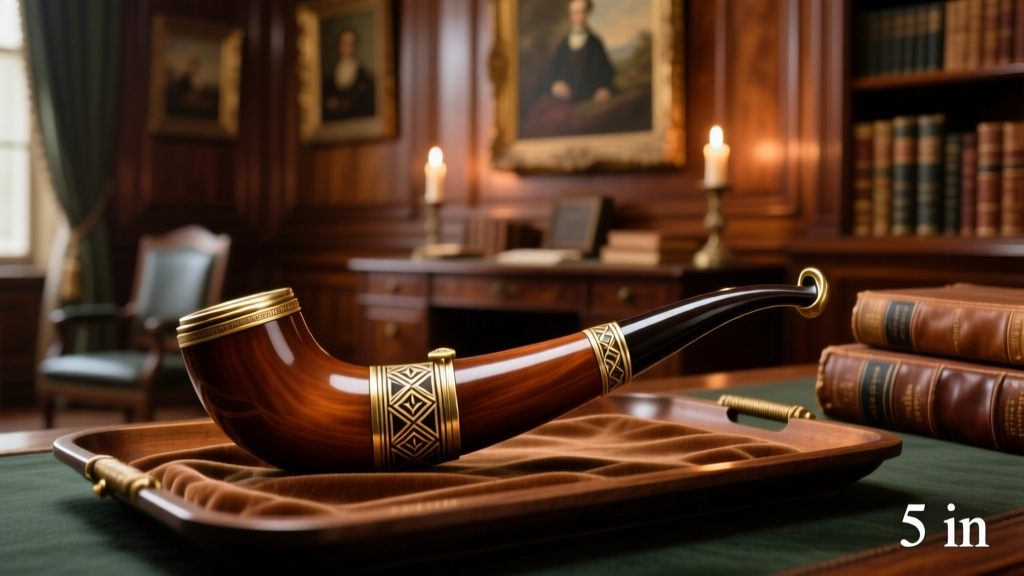
Knife Pocket Powder Horn Pattern Brown Celluloid Handles Single Blade 5 In: Identification, History, and Restoration Guidance
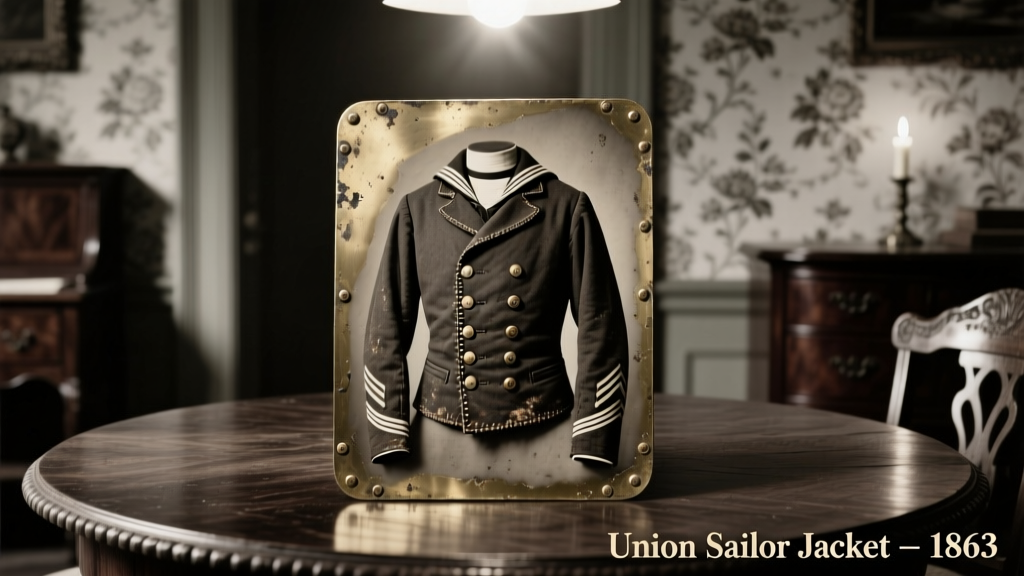
Tintype Portrait in Context: Authentic Union Navy Double-Breasted Jacket with Original 1/9-Plate Photograph

The Annual Index, September 1986–August 1987, Volume 13: A Critical Resource for Antique Furniture Research and Authentication

Akro Agate Saucer: Raised Daisy Pattern in Marbleized Yellow — A Collector’s Guide to the 2½-Inch Variant

Mercury Glass Candlesticks: Gold and White Enameled Trim, 11-Inch Pair — History, Identification, and Care

Tin Toys, Volume IV: Mechanical Marvels, Post-War Innovation, and the Rise of American Mass Production (1946–1965)

Lamps Fairy Moiré Glass Pink Matching Base Clarke Clear Candleholder 6 × 6 In: Identification, Provenance, and Restoration Protocol