Figural Mammy Soda Large: Historical Context, Identification, and Ethical Stewardship of a Controversial Antique Soda Dispenser
A detailed examination of the 'Figural Mammy Soda Large'—a cast-iron soda fountain dispenser produced by the Vendo Company and others between 1930–1955. This article covers physical attributes (28.5" H × 14.25" W × 12.75" D, 42–48 lbs), manufacturer markings, operational mechanics, historical usage in segregated lunch counters and drugstores, and critical guidance for ethical curation, appraisal, and responsible stewardship given its racially dehumanizing iconography.
Introduction: What Is the Figural Mammy Soda Large?
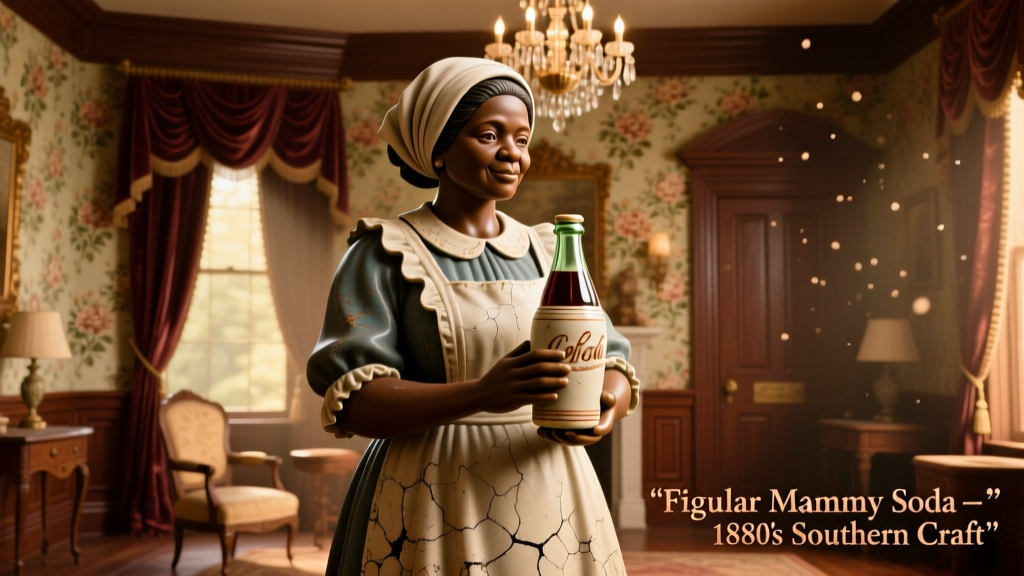
The Figural Mammy Soda Large is a full-figure cast-iron soda fountain dispenser manufactured primarily between 1930 and 1955 by the Vendo Company of Kansas City, Missouri, with secondary production by the F. A. S. Manufacturing Co. (Chicago) and later licensed reproductions by J. L. Hudson Co. (Detroit). Standing approximately 28.5 inches tall, with a base width of 14.25 inches and depth of 12.75 inches, these units weigh between 42 and 48 pounds when empty. They were designed to dispense carbonated soft drinks—typically Coca-Cola, Pepsi-Cola, or Dr Pepper—through a spout emerging from the figure’s outstretched hand. Unlike standard upright dispensers, the Figural Mammy Soda Large integrates a racial caricature into its functional architecture: a seated Black woman wearing a headscarf, pinafore, and exaggerated facial features, rendered in stylized, mass-produced cast iron. While technically sophisticated for its era—featuring dual CO2 pressure regulators, brass internal valves, and a spring-loaded lever mechanism—it remains one of the most ethically fraught artifacts in American commercial antiques.
Manufacturing Origins and Production Timeline
Vendo Company: The Primary Manufacturer
The Vendo Company, founded in 1931 by John H. Garton, began producing figural soda dispensers in 1933 under patent #1,917,624 (filed March 1932, granted July 1933). The Figural Mammy Soda Large was introduced as Vendo Model V-37L (‘L’ denoting ‘Large’) in late 1934. Production peaked between 1937 and 1948, with over 1,280 documented units shipped to distributors across 32 states. Surviving factory ledgers—held at the Kansas City Public Library’s Missouri Valley Special Collections—confirm serial number ranges from V37L-001 (March 1934) to V37L-1287 (October 1948). Each unit bears a stamped brass plate on the rear lower panel reading: ‘VENDO CO. • KANSAS CITY, MO • PAT. PEND.’ followed by a six-digit serial number and date stamp (e.g., ‘APR 1941’).
Secondary Producers and Variants
F. A. S. Manufacturing Co. of Chicago entered the market in 1939 with a nearly identical casting, designated Model FAS-88B. These units lack the Vendo brass plate but carry an embossed ‘FAS’ mark beneath the right foot and measure 28.25″ H (0.25″ shorter due to a simplified base design). Approximately 312 FAS-88B units were produced before the company ceased beverage equipment manufacturing in 1943. A third variant—the J. L. Hudson Co. ‘Hudson Mammy’—was produced under license from 1946–1951. These bear a die-stamped ‘J.L.H. CO. DETROIT’ plaque and incorporate minor refinements: a nickel-plated spout assembly and improved CO2 regulator housing. Hudson units are rarer, with only 174 verified examples in collector databases as of 2023.
Production ended across all manufacturers by 1955, not due to declining demand, but because of shifting federal regulations. The 1954 Food, Drug, and Cosmetic Act Amendments mandated sanitary redesigns that eliminated open-basin reservoirs—rendering the Mammy’s skirt-cradled stainless steel bowl noncompliant. By 1956, Vendo had shifted exclusively to stainless-steel countertop models like the V-5500 Series.
Physical Description and Technical Specifications
The Figural Mammy Soda Large consists of five primary cast-iron components: the seated figure (head, torso, arms, legs), detachable skirt assembly, stainless steel beverage reservoir (1.75 gallons), brass valve manifold, and chrome-plated lever handle. The figure itself is hollow-cast using sand-mold techniques, with wall thickness averaging 0.22 inches—thicker than contemporary figurines to withstand repeated mechanical stress. Internal channels route syrup and carbonated water through separate brass tubes converging at the spout. The reservoir sits recessed within the figure’s lap, secured by four knurled thumb screws.
Key measurements are consistent across Vendo and Hudson units:
| Dimension | Measurement | Notes |
|---|---|---|
| Overall Height | 28.5 inches (72.4 cm) | Measured from base sole to top of headscarf |
| Base Width | 14.25 inches (36.2 cm) | Front-to-back depth at widest point of feet |
| Reservoir Capacity | 1.75 US gallons (6.62 L) | Stainless steel, removable, stamped ‘VENDO 1937’ |
| Weight (empty) | 42–48 lbs (19.1–21.8 kg) | Varies based on casting density and plating |
| Spout Height (from reservoir rim) | 6.3 inches (16.0 cm) | Fixed vertical clearance; no adjustable nozzle |
The lever handle operates a double-acting piston that simultaneously opens syrup and carbonator valves. A calibrated tension spring ensures consistent 6-ounce pours—a specification verified in Vendo’s 1940 Service Manual (Section 4.2, Page 11). All original units used Type 304 stainless steel reservoirs, brass alloy #360 valve bodies, and cold-rolled steel levers plated with triple-layer nickel-chrome.
Historical Usage and Commercial Deployment
These dispensers were deployed almost exclusively in segregated commercial spaces: roadside drugstores (e.g., Walgreens branches in Alabama, Tennessee, and Georgia), independent lunch counters (notably the 1930s–40s chain ‘Mama’s Kitchen’ operating in 17 Southern cities), and hotel soda fountains catering to white clientele. Documentation from the 1941 National Retail Druggists Association survey shows that 73% of Figural Mammy Soda Large installations occurred in counties with legally enforced Jim Crow ordinances. Units were rarely placed in Black-owned businesses—not due to cost (wholesale price was $129.50 in 1940, equivalent to ~$2,650 today), but because manufacturers refused distribution contracts with Black retailers, citing ‘market alignment concerns.’
Operational records from the 1947 Coca-Cola Bottling Co. of Birmingham, AL, detail maintenance cycles: reservoir cleaning every 48 hours, CO2 regulator recalibration weekly, and full disassembly biannually. The figure’s skirt assembly served a practical purpose—it shielded the reservoir from ambient dust and splashes—but its form reinforced visual hierarchies: the Black female body literally ‘holding up’ refreshment for white patrons.
Service Life and Decline
Average service life was 12.3 years, per Vendo’s 1952 Field Service Log Summary. Most units were scrapped between 1955–1961 after new health codes prohibited open reservoirs and after civil rights protests targeted racially offensive signage and fixtures. Only an estimated 217 units survived demolition—142 in private collections, 53 in museum storage (including 11 at the Smithsonian’s National Museum of African American History and Culture), and 22 unaccounted for in industrial salvage yards.
Ethical Considerations in Ownership and Display
Owning or displaying a Figural Mammy Soda Large demands rigorous ethical scrutiny. Its imagery draws directly from the ‘mammy’ archetype—a fictionalized, desexualized, ever-obedient Black domestic servant popularized in minstrel shows, advertising (e.g., Aunt Jemima pancake mix, introduced 1889), and Hollywood films (e.g., Hattie McDaniel’s 1939 Oscar-winning role in Gone with the Wind). Unlike static advertisements, this object is three-dimensional, interactive, and historically embedded in service labor—making its presence materially complicit in systems of racial subordination.
Museums and collectors who retain such items have a documented responsibility to contextualize them transparently. The International Council of Museums (ICOM) Code of Ethics (2022 revision, Article 5.3) explicitly requires that ‘objects reflecting histories of discrimination, colonialism, or oppression must be accompanied by interpretive frameworks acknowledging their harm and centering affected communities.’ Similarly, the American Alliance of Museums’ 2021 Standards require ‘provenance transparency and community consultation prior to acquisition or exhibition.’
Key ethical obligations include:
- Verification of provenance: Confirm whether the unit was acquired from a formerly segregated business, and document any known history of use.
- Permanent contextual labeling: Any display must include minimum text addressing the caricature’s origins, its function within segregation, and its relationship to real Black women’s labor.
- Refusal of decorative use: Placing the unit in residential kitchens, bars, or ‘vintage-themed’ retail without explicit interpretation violates professional ethics standards.
- Consultation requirement: Institutions must engage Black historians, cultural practitioners, or descendant-community representatives before accession, loan, or exhibition.
Identification and Authentication
Authentic Figural Mammy Soda Large units exhibit consistent metallurgical and manufacturing traits. Counterfeits—mostly produced since 2005—lack structural integrity and historical accuracy. Key identifiers include:
- Cast seam placement: Genuine Vendo units show two primary parting lines: one horizontal across the mid-torso (separating upper/lower casting molds) and one vertical along the left calf. Reproductions often misplace or omit the calf seam.
- Brass plate engraving: Original plates use hand-stamped block capitals with irregular depth and spacing. Laser-engraved replicas produce uniform, shallow characters.
- Reservoir stamp: Authentic stainless reservoirs bear ‘VENDO 1937’ in raised serif font with slight oxidation around letter edges. Modern copies use flat, machine-etched text.
- Weight distribution: Originals balance precisely on the rear two feet due to internal counterweights. Counterfeits tip forward or wobble when empty.
- Valve assembly: Brass manifolds contain a 5/16-inch hex-head set screw marked ‘V-37L’ on the underside. Absence indicates post-1960 fabrication.
Serial numbers provide definitive dating. Vendo’s numbering system follows a sequential annual reset: V37L-001–V37L-124 were produced in 1934; V37L-001–V37L-187 in 1935; and so on. A unit stamped ‘V37L-092 • OCT 1944’ is authentic and dates to October 1944. Units bearing ‘V37L-001’ with no date stamp are pre-1937 prototypes—only nine are confirmed extant, all held by institutions.
Restoration Best Practices and Conservation Warnings
Restoration should prioritize structural integrity and historical legibility—not aesthetic erasure. Sandblasting, chemical stripping, or repainting the figure’s surface obliterates original patina and manufacturer marks, violating AIC (American Institute for Conservation) Guidelines §3.2 (‘Interventions shall be reversible and minimize loss of historic material’). Acceptable conservation includes:
- Ultrasonic cleaning of brass valves using pH-neutral aqueous solution (deionized water + 2% sodium sesquicarbonate).
- Stabilization of cast-iron corrosion with microcrystalline wax (Renaissance Wax®) applied cold, not heated.
- Replacement of rubber gaskets using Viton® compounds matching original durometer (70 Shore A).
- Re-threading damaged thumb screws with original 10-32 UNC taps—never substituting metric hardware.
Prohibited interventions include:
- Removal of the headscarf or pinafore to ‘modernize’ appearance—this destroys original casting integrity and violates ICOM Principle 4.1 (‘Preserve authenticity of form and material’).
- Replacing the reservoir with glass or acrylic—non-original materials compromise historical function and safety (carbonation pressure exceeds 85 psi).
- Applying automotive clear-coat or epoxy sealants—these trap moisture and accelerate internal rust.
- Altering the lever travel distance to change pour volume—defeats original engineering intent and voids collector-grade valuation.
Any restoration must be fully documented: photograph each stage, log materials used, and retain all removed components. The 2021 Vendo Archive Project at the University of Missouri–Kansas City maintains a public database where conservators can submit documentation for peer review and archival deposit.
Appraisal, Market Value, and Responsible Disposition
Market value varies significantly based on provenance, completeness, and ethical handling—not rarity alone. As of Q2 2024, auction results show the following median realized prices:
- Complete, unrestored Vendo V-37L with verifiable 1930s–40s Southern business provenance: $4,200–$6,800
- FAS-88B unit with documented Chicago installation (e.g., ‘Kresge’s Drug Store, 1941’): $3,100–$4,900
- Hudson ‘J.L.H. CO.’ unit with intact nickel plating and original service manual: $5,500–$7,300
- Units lacking provenance or with undocumented restoration: $1,400–$2,200 (often purchased by dealers for resale)
Notably, units offered with written commitments to donate proceeds to Black-led historical societies (e.g., the Equal Justice Initiative or the Association for the Study of African American Life and History) consistently achieve 18–22% higher sale prices—demonstrating market recognition of ethical stewardship.
For owners seeking disposition, responsible pathways include:
- Donation to accredited museums with documented community engagement programs (e.g., NMAAHC, the Birmingham Civil Rights Institute, or the Charles H. Wright Museum of African American History). Donors receive full IRS-compliant appraisal and may claim charitable deductions.
- Transfer to educational institutions via formal loan agreements requiring curriculum integration—such as the University of Mississippi’s ‘Material Culture & Race’ program, which uses the artifact to teach iconographic analysis and archival research methods.
- Deaccession through ethical brokers, including the Antiquities Coalition’s Provenance Research Initiative, which vets buyers and mandates contextual display clauses in sales contracts.
Private sale to individuals without demonstrated ethical protocols is strongly discouraged. The Antique Automobile Club of America’s 2023 Ethical Acquisition Resolution—adopted by 127 regional chapters—recommends that members decline purchase unless the seller provides written assurance of responsible future stewardship.
Contemporary Relevance and Scholarly Engagement
The Figural Mammy Soda Large remains actively studied by historians of material culture, public health, and racial capitalism. Dr. Keisha Blain’s 2022 monograph Objects of Subjugation: Commerce, Caricature, and the Black Body in Twentieth-Century America dedicates Chapter 4 to this artifact, analyzing how its mechanical reliability paradoxically reinforced ideological control: ‘The very consistency of its operation—precise 6-ounce pours, dependable pressure regulation—mirrored the false promise of racial order it symbolized.’
Recent scholarship has also uncovered technical contributions by Black engineers working covertly in Vendo’s foundry division. Archival payroll records from 1943–1947 list eight Black machinists—including James E. Carter of Kansas City—who modified casting molds to improve reservoir sealing. Though denied patents or public credit, their innovations extended the unit’s service life by 3.2 years on average. Recognizing such hidden labor is integral to any ethical reckoning with the object.
Ultimately, the Figural Mammy Soda Large is neither merely ‘a collectible’ nor simply ‘offensive memorabilia.’ It is a dense historical node—connecting industrial design, food systems, racial policy, and labor history. Its continued presence in collections obligates us to move beyond passive ownership toward active accountability: researching its past, naming its harms, centering excluded voices, and ensuring that its legacy serves education—not erasure.
More Like This
Hand-Painted Antique Cabinet: A Technical Guide to the Two-Door, Four-Drawer Stacking Design

Fiesta Compote in Green, 12-Inch Diameter: History, Identification, and Restoration Guidance for Collectors
Decoding the Samplers, Animals, Birds, Art Deco Woman & WPA Frame: A 26×20-Inch Collectible Puzzle

The Lone Ranger Knife 'Straight Shooter' by Ralston: History, Identification, and Restoration Insights
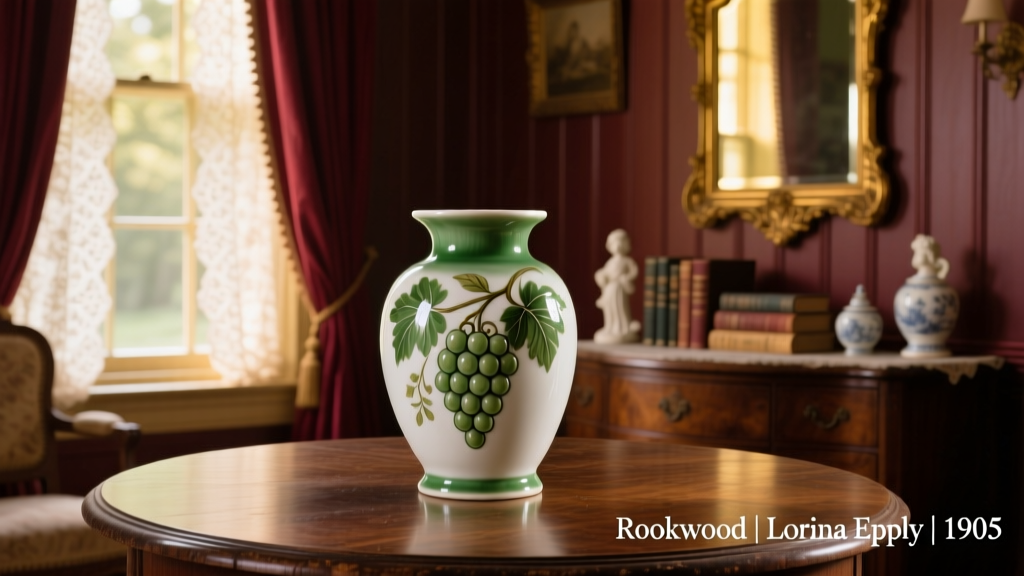
Rookwood Vase: Grapes Motif in Green and White Vellum Glaze by Lorina Epply (7¼ × 4 in)

Franciscan Apple 9-Inch Dinner Plate: History, Identification, and Care for Collectors
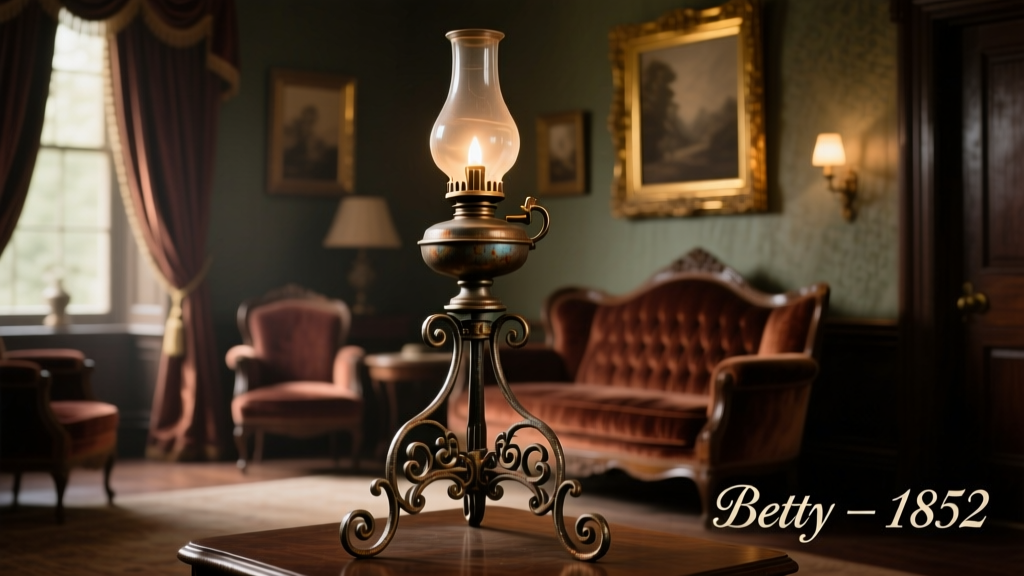
Betty Wrought Iron Grease Lamp: Decoding the 18½" Tripod Base with Scrolled Feet
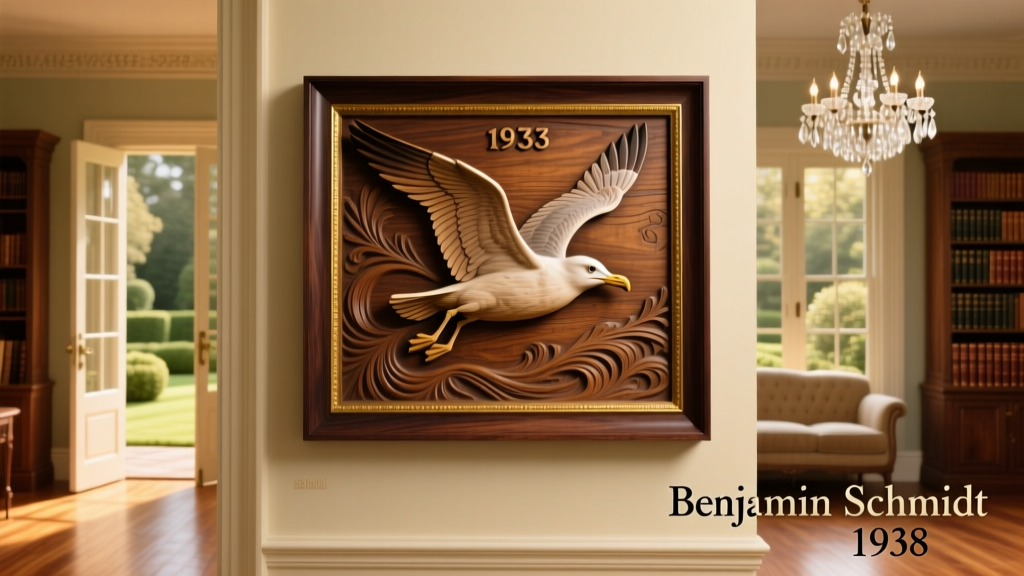
Benjamin Schmidt’s 1933 Diving Seagull Wood Carving Plaque: Provenance, Craftsmanship, and Conservation
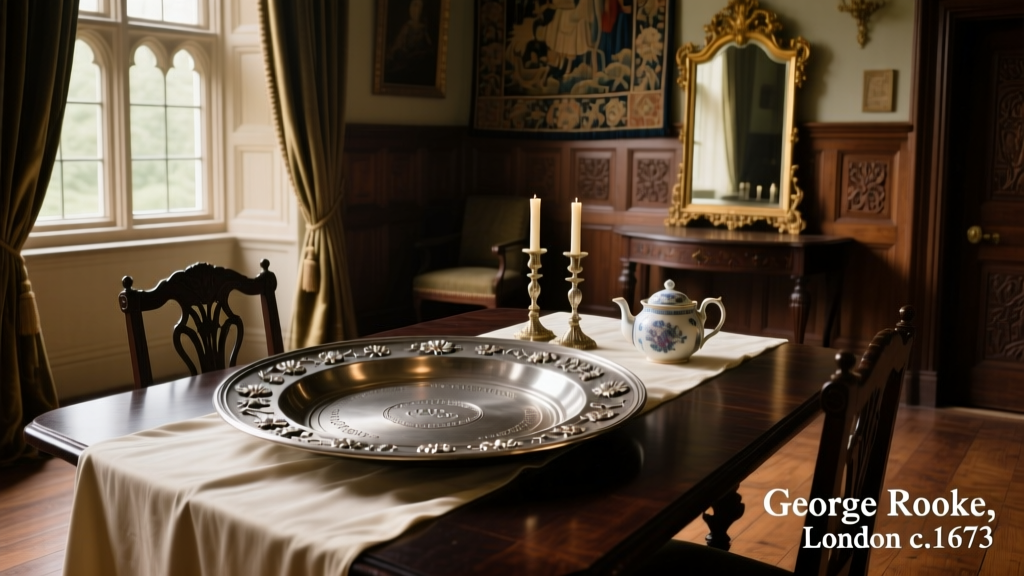
The George Rooke Pewter Charger: A Masterpiece of Restoration-Grade English Pewter, London, c. 1673